Fergusson AdamABAA
68 résultats
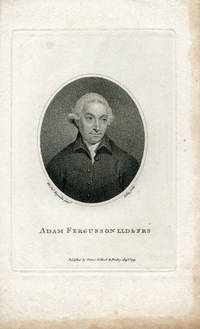
179941799Vernor & Hood 1799. Plate: 165x113 mm. Margin: 235x146 mm. Marginal discoloration light foxing. Vernor & Hood unknown books
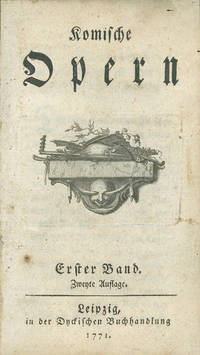
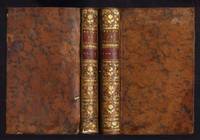
177242975Leipzig: Dyckische Buchhandlung 1772. Zweyte und Vermehrte Auflage. Marbled paper-covered boards with gilt label on spine. Spine ends worn boards lightly scuffed front hinge starting in Vol. I worm holes along front hinge in Vol. II contemporary notations on free front endpapers scattered foxing overall still very good copies. 304 pp.; 360 4 pp. 16mo. Five comic operas. Volume I: Lottchen auf dem Lande and Die Liebe auf dem Lande. Volume II: Die verwandelten Weiber oder: Der Teufel ist los; Der lustige Schuster; Der Dorfhalbier: eine comische Oper. Dyckische Buchhandlung hardcover books
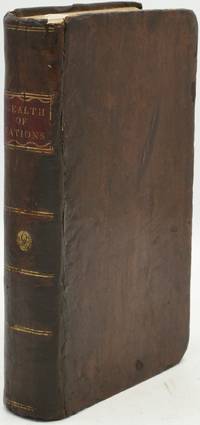
178820792Philadelphia: Pr. by W. Young and J. M'Cullouch 1788. 8vo. xii 17388 pp. <br><br>Includes the list of subscribers. First published in Edinburgh in 1786. <br>Â Â Â Â <br>Â Â Â Â ESTC W4733; Evans 21114. Original sheep worn dry rubbed joints partially open; loss of spine leather top and bottom. Staining along edges of endpapers last few leaves and title-page. Ex-library with white-lettered call number at base of spine; rubber-stamp on paper bottoms; and bookplate rubber-stamp call number in pencil inside. Early ownership signature in ink at top margin of title-page. Pr. by W. Young and J. M'Cullouch hardcover books
1788WRCLIT47538London: Printed for the Author and Sold by Edwards in Pallmall &.in Halifax 1788. iv271pp. plus 25 leaves with etched vignettes and text captions; 2111 plus 25 leaves with etched vignettes and text captions. Quarto signed in 2s. Modern cloth gilt spine label. Title has old inscription and repair along top edge last few leaves have a modest stain in the lower margin old binder's endsheets preserved and quite foxed scattered occasional foxing and dust-spotting to a few leaves; generally a good copy. First joint edition without designation of Part I of the first two parts of this work intended as a supplement to Pennant's TOUR. An additional two parts were published in 1793. These parts relate to Collegiate Churches and Hospitals. ESTC N54857. Printed for the Author, and Sold by Edwards, in Pallmall [&]...in Halifax hardcover books
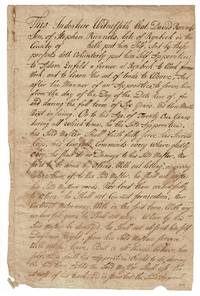
178957019Rhineback N.Y.: May 25 1789. Folio approx. 12" x 8" 42 lines approx. 300 words; a few minor breaks at the edges but overall very good and legible. This indenture binds David Runnels son of Stephen Runnels in the town of "Rynbeck" i.e. Rhinebeck Dutchess County New York to a farmer and weaver named Adam Zufeld 1760-1849 as a servant and apprentice "to work farmers work and to learn the art of trade to weave." Although a wax seal is affixed the document is unsigned. David Runnels b. ca. 1774 signed up for six years and three months until age 21 and vows to "faith fully serve his secrets keep his lawful commands every where gladly obey . not commet fornication nor contract matremony with any lawful games he shall not play nor absent himself from his master's service day or night." In return for this service Zufeld agrees to "teach and instruct the said apprentice in the trade of Weaven and shall send Runnels to school to lern English read and write" and to provide "sufficient meat drink apperal washing and lodging fitting for an apprentice." After the apprenticeship is over Zufelf agrees to "give the said apprentice a new cloth or garment and a mare colt." <br/><br/> May 25 hardcover books
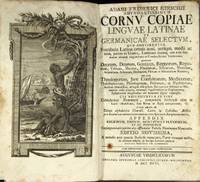
179648977Avgvstae Vindelicorvm i.e. Augsburg: officinae librariae Joseph Wolffianae 1796. Thick 8vo pp. xxviii 3028 columns; engraved frontispiece; contemporary full calf gilt-paneled spine in 6 compartments old brown morocco label in 1 edges stained red; several old ownership inscription on the front flyleaf some cracking at the tops of both joints; good and sound. A comprehensive German-Latin dictionary. Vancil p. 139 cites the 1750 and 1754 editions; Zaunmuller col. 254. <br/><br/> officinae librariae Joseph Wolffianae unknown books
172741751Amsterdam: Isaak vander Putte 1727. Later printing. Vellum. A good copy with top half of backstrip perished soiling on boards dampstain to top edge to preliminaries and rear blanks and end-papers some leaves quite dark; binding secure. 16 576 pp. Illus. with engraved title. 16mo. This traditional book of homilies prayers and hymns for seamen was first published in 1625 and reprinted a number of times until 1743. Contains sections on whaling. Isaak vander Putte hardcover books
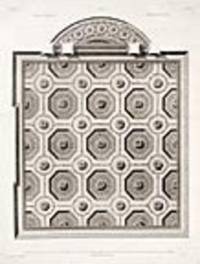
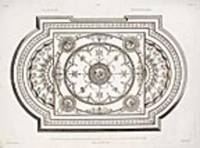
177717132London 1777. Copper engraving. Engraved by Roe. In excellent condition. An elegant engraving of the elaborate ceiling in the dining room of Sir Watkin Williams Wynn's celebrated house in St. James's Square London.<br/> <br/>Robert and his brother James Adam forever changed the face of British architecture by introducing innovative Classical design ideas. From 1754-57 Robert lived in Italy where he had a long productive friendship with Piranesi which was inspirational for both men. Adam's first book on Diocletian's palace in Dalmatia is clearly very like the archaeological investigations Piranesi was making at the same time of similar ruins. Piranesi's friendship and passion for Roman Classicism were seminal influences on Adam and the greatest single factor other than his own talent in the work Adam produced on his return to England. Upon his return the brothers launched their career by building the Adelphi from the Thames to the Strand in London which although not a commercial success at the time included one of London's most cherished buildings the Adlephi Theatre. Together the Adam brothers designed and built some of the most famous buildings in England including such bastions of English architecture as Kenwood House Keddlestone Manor and Syon House. To the interiors of their English country houses the Adams brought wonderful ornamental elements in niches lunettes festoons and reliefs. Their classically designed buildings were so numerous in London that they changed the prevailing feel of the city and established their brand of neo-Classicism as the model of elegance and importance. It is asserted that the brothers originated the concept of the uniform facade attached to the typical English row house an architectural device that distinguishes London buildings. This monumental contribution is evidenced in the Adams' designs for Portland Place and Fitzroy Square and these were used as architectural models for the whole city. The brothers brought their talents into other areas by designing furniture to complement their beautiful interiors and by creating and publishing a treatise of design entitled 'Works in Architecture'. The work was published in three volumes over an extended span of time beginning in 1773 with the final volume being published posthumously in 1822.<br/> <br/>Cf. Brunet I.47; cf. Lowndes I p.8; DNB; Wilton-Ely The Mind and Art of Giovanni Battista Piranesi. unknown books
171241752Amsterdam: Gysbert de Groot 1712. Later printing. Paper-covered boards. A good copy with chipped spine and front board text block almost detached but holding writing on front pastedown dampstain to margin or top edge of a few leaves. 22 580 36 pp. 16mo. This traditional book of homilies prayers and hymns for seamen was first published in 1625 and reprinted a number of times until 1743. Contains sections on whaling. OCLC locates three copies of this edition. Gysbert de Groot hardcover books
178956256Hamburg 1789. With four folding charts in vol. I. Pp.2 xxx 14 contents 578; xii 2 contents 556. 2 vols. 8vo. Contemporary quarter calf and boards. Rubbed. About very good. With four folding charts in vol. I. Pp.2 xxx 14 contents 578; xii 2 contents 556. 2 vols. 8vo. First and only edition of this important documentary source publishing letters and papers of Frederick IV of Denmark Queen Anna Sophia of Dänemark correspondence with the King of Prussia as well as texts concerning Copenhagen the judiciary police and city council changes in the Danish language etc.<br/><br/>A further continuation volume appeared in 1790. unknown books
177517114London 1775. Engraving by T. Vivares. In excellent condition. An elegant elevation of the north and southe sides of Sutton Park in North Yorkshire the seat of the Earl of Bute.<br/> <br/>Robert and his brother James Adam forever changed the face of British architecture by introducing innovative Classical design ideas. From 1754-57 Robert lived in Italy where he had a long productive friendship with Piranesi which was inspirational for both men. Adam's first book on Diocletian's palace in Dalmatia is clearly very like the archaeological investigations Piranesi was making at the same time of similar ruins. Piranesi's friendship and passion for Roman Classicism were seminal influences on Adam and the greatest single factor other than his own talent in the work Adam produced on his return to England. Upon his return the brothers launched their career by building the Adelphi from the Thames to the Strand in London which although not a commercial success at the time included one of London's most cherished buildings the Adlephi Theatre. Together the Adam brothers designed and built some of the most famous buildings in England including such bastions of English architecture as Kenwood House Keddlestone Manor and Syon House. To the interiors of their English country houses the Adams brought wonderful ornamental elements in niches lunettes festoons and reliefs. Their classically designed buildings were so numerous in London that they changed the prevailing feel of the city and established their brand of neo-Classicism as the model of elegance and importance. It is asserted that the brothers originated the concept of the uniform facade attached to the typical English row house an architectural device that distinguishes London buildings. This monumental contribution is evidenced in the Adams' designs for Portland Place and Fitzroy Square and these were used as architectural models for the whole city. The brothers brought their talents into other areas by designing furniture to complement their beautiful interiors and by creating and publishing a treatise of design entitled 'Works in Architecture'. The work was published in three volumes over an extended span of time beginning in 1773 with the final volume being published posthumously in 1822.<br/> <br/>Cf. Brunet I.47; cf. Lowndes I p.8; DNB; Wilton-Ely The Mind and Art of Giovanni Battista Piranesi. unknown books
1785318437London 1785. The Sixth Edition. First published in 1678 as 'Linguæ Latinæ liber dictionarius quadripartitus'. With 2 maps one of Italy coloured and the other of Rome. 1430pp. Thick 4to. Bound in modern three quarters mottled tan calf and marbleds boards. Fine minor worming in small part of margin. The Sixth Edition. First published in 1678 as 'Linguæ Latinæ liber dictionarius quadripartitus'. With 2 maps one of Italy coloured and the other of Rome. 1430pp. Thick 4to. ESTC T84402 unknown books
17745594London 1774. Engraving by J. Roberts. Expert repairs to lower left corner. A fine architectural engraving of the interior of Kenwood House in Hampstead London re-modelled in 1761-1773 and now home to the Iveagh Bequest picture collection.<br/> <br/>Robert and his brother James Adam forever changed the face of British architecture by introducing innovative Classical design ideas. From 1754-57 Robert lived in Italy where he had a long productive friendship with Piranesi which was inspirational for both men. Adam's first book on Diocletian's palace in Dalmatia is clearly very like the archaeological investigations Piranesi was making at the same time of similar ruins. Piranesi's friendship and passion for Roman Classicism were seminal influences on Adam and the greatest single factor other than his own talent in the work Adam produced on his return to England. Upon his return the brothers launched their career by building the Adelphi from the Thames to the Strand in London which although not a commercial success at the time included one of London's most cherished buildings the Adlephi Theatre. Together the Adam brothers designed and built some of the most famous buildings in England including such bastions of English architecture as Kenwood House Keddlestone Manor and Syon House. To the interiors of their English country houses the Adams brought wonderful ornamental elements in niches lunettes festoons and reliefs. Their classically designed buildings were so numerous in London that they changed the prevailing feel of the city and established their brand of neo-Classicism as the model of elegance and importance. It is asserted that the brothers originated the concept of the uniform facade attached to the typical English row house an architectural device that distinguishes London buildings. This monumental contribution is evidenced in the Adams' designs for Portland Place and Fitzroy Square and these were used as architectural models for the whole city. The brothers brought their talents into other areas by designing furniture to complement their beautiful interiors and by creating and publishing a treatise of design entitled 'Works in Architecture'. The work was published in three volumes over an extended span of time beginning in 1773 with the final volume being published posthumously in 1822.<br/> <br/>Cf. Brunet I.47; cf. Lowndes I p.8; DNB; Wilton-Ely The Mind and Art of Giovanni Battista Piranesi. unknown books
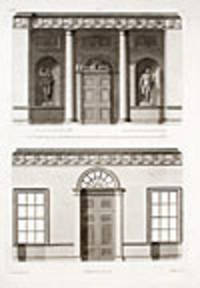
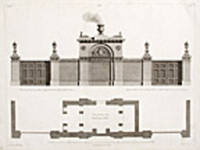
177817136London 1778. Copper engraving. Engraved by P. Mazell. In excellent condition. An elegant engraving the Porter's Lodge at Shelburne House in Berkeley Square in London.<br/> <br/>Robert and his brother James Adam forever changed the face of British architecture by introducing innovative Classical design ideas. From 1754-57 Robert lived in Italy where he had a long productive friendship with Piranesi which was inspirational for both men. Adam's first book on Diocletian's palace in Dalmatia is clearly very like the archaeological investigations Piranesi was making at the same time of similar ruins. Piranesi's friendship and passion for Roman Classicism were seminal influences on Adam and the greatest single factor other than his own talent in the work Adam produced on his return to England. Upon his return the brothers launched their career by building the Adelphi from the Thames to the Strand in London which although not a commercial success at the time included one of London's most cherished buildings the Adlephi Theatre. Together the Adam brothers designed and built some of the most famous buildings in England including such bastions of English architecture as Kenwood House Keddlestone Manor and Syon House. To the interiors of their English country houses the Adams brought wonderful ornamental elements in niches lunettes festoons and reliefs. Their classically designed buildings were so numerous in London that they changed the prevailing feel of the city and established their brand of neo-Classicism as the model of elegance and importance. It is asserted that the brothers originated the concept of the uniform facade attached to the typical English row house an architectural device that distinguishes London buildings. This monumental contribution is evidenced in the Adams' designs for Portland Place and Fitzroy Square and these were used as architectural models for the whole city. The brothers brought their talents into other areas by designing furniture to complement their beautiful interiors and by creating and publishing a treatise of design entitled 'Works in Architecture'. The work was published in three volumes over an extended span of time beginning in 1773 with the final volume being published posthumously in 1822.<br/> <br/>Cf. Brunet I.47; cf. Lowndes I p.8; DNB; Wilton-Ely The Mind and Art of Giovanni Battista Piranesi. unknown books
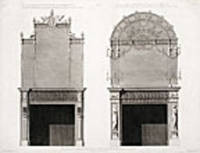
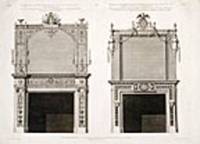
177517123London 1775. Engraving by Joshua Record. In excellent condition. An elegant engraving showing the two chimneys in Lord Derby's house in Grosvenor Square London.<br/> <br/>Robert and his brother James Adam forever changed the face of British architecture by introducing innovative Classical design ideas. From 1754-57 Robert lived in Italy where he had a long productive friendship with Piranesi which was inspirational for both men. Adam's first book on Diocletian's palace in Dalmatia is clearly very like the archaeological investigations Piranesi was making at the same time of similar ruins. Piranesi's friendship and passion for Roman Classicism were seminal influences on Adam and the greatest single factor other than his own talent in the work Adam produced on his return to England. Upon his return the brothers launched their career by building the Adelphi from the Thames to the Strand in London which although not a commercial success at the time included one of London's most cherished buildings the Adlephi Theatre. Together the Adam brothers designed and built some of the most famous buildings in England including such bastions of English architecture as Kenwood House Keddlestone Manor and Syon House. To the interiors of their English country houses the Adams brought wonderful ornamental elements in niches lunettes festoons and reliefs. Their classically designed buildings were so numerous in London that they changed the prevailing feel of the city and established their brand of neo-Classicism as the model of elegance and importance. It is asserted that the brothers originated the concept of the uniform facade attached to the typical English row house an architectural device that distinguishes London buildings. This monumental contribution is evidenced in the Adams' designs for Portland Place and Fitzroy Square and these were used as architectural models for the whole city. The brothers brought their talents into other areas by designing furniture to complement their beautiful interiors and by creating and publishing a treatise of design entitled 'Works in Architecture'. The work was published in three volumes over an extended span of time beginning in 1773 with the final volume being published posthumously in 1822.<br/> <br/>Cf. Brunet I.47; cf. Lowndes I p.8;DNB; Wilton-Ely The Mind and Art of Giovanni Battista Piranesi. unknown books
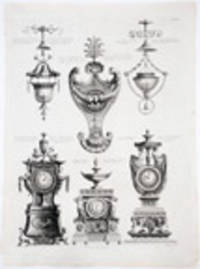
177517574London 1775. Engraving by P. Begbie. In excellent condition with the exception of being trimmed just outside the platemark on the left margin. An elegant engraving depicting various furnishings designed by Robert and James Adam including decorative clocks an ornamental knocker and two elaborate hanging lights.<br/> <br/>Robert and his brother James Adam forever changed the face of British architecture by introducing innovative Classical design ideas. From 1754-57 Robert lived in Italy where he had a long productive friendship with Piranesi which was inspirational for both men. Adam's first book on Diocletian's palace in Dalmatia is clearly very like the archaeological investigations Piranesi was making at the same time of similar ruins. Piranesi's friendship and passion for Roman Classicism were seminal influences on Adam and the greatest single factor other than his own talent in the work Adam produced on his return to England. Upon his return the brothers launched their career by building the Adelphi from the Thames to the Strand in London which although not a commercial success at the time included one of London's most cherished buildings the Adlephi Theatre. Together the Adam brothers designed and built some of the most famous buildings in England including such bastions of English architecture as Kenwood House Keddlestone Manor and Syon House. To the interiors of their English country houses the Adams brought wonderful ornamental elements in niches lunettes festoons and reliefs. Their classically designed buildings were so numerous in London that they changed the prevailing feel of the city and established their brand of neo-Classicism as the model of elegance and importance. It is asserted that the brothers originated the concept of the uniform facade attached to the typical English row house an architectural device that distinguishes London buildings. This monumental contribution is evidenced in the Adams' designs for Portland Place and Fitzroy Square and these were used as architectural models for the whole city. The brothers brought their talents into other areas by designing furniture to complement their beautiful interiors and by creating and publishing a treatise of design entitled 'Works in Architecture'. The work was published in three volumes over an extended span of time beginning in 1773 with the final volume being published posthumously in 1822.<br/> <br/>Cf. Brunet I.47; cf. Lowndes I p.8; DNB; Wilton-Ely The Mind and Art of Giovanni Battista Piranesi. unknown books
1796289419Philadelphia: Printed By Thomas Dobson 1796. Second American Edition. Hard Cover. Very Good binding. Volume 2 only of 3 volumes; the Second American Edition. Scattered foxing. Full sheep binding. Edgewear to spine with some small loss of leather at top. Front board has been discreetly reattached. A quite serviceable copy of this volume from this early edition. Very Good binding. Printed By Thomas Dobson unknown books
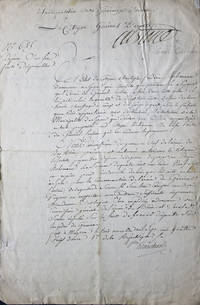
1792304899Speyer Austria 1792. 4 pp. pen and ink on paper in French in various hands with embossed seal. Old folds and light soiling paper repairs at folds. 4 pp. pen and ink on paper in French in various hands with embossed seal. Document payorder for firewood for the French Army encamped at Speyer "pour le chauffage de l'armée au Camp et Corps de Gardes" signed by General Adam Philippe Comte de Custine and Claude Blanchard. Both Custine 1740-1793 and Blanchard 1742-1802 fought in the American Revolution. Custine who lead the French forces in the Rhine campagins that seized Speyer and Mainz was guillotined in 1793 during the Reign of Terror. unknown books
1783039834Paris: la Veuve Desaint Libraire 1783. First Edition. Hardcover Full Leather. Very Good Condition. The first French edition of Ferguson's influential work on civil society. A friend of Hume Adam Smith and Voltaire and a major figure of the Scottish Enlightenment Ferguson published Essay on the History of Civil Society in 1767. It was widely published and his views on political participation and community were influential on the thinking of the founding fathers of the American Revolution and later on the French. Size: Octavo 8vo. 2-volume set complete. Text is clean and unmarked. Quantity Available: 1. Shipped Weight: Under 1 kilo. Category: Philosophy; Antiquarian & Rare. Inventory No: 039834. la Veuve Desaint, Libraire hardcover books
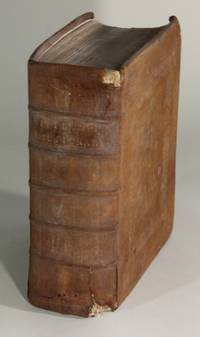
170342900London: printed for W. Rawlins R. Chiswel et al. 1703. Fourth edition thick 4to pp. 18 unpaginated lexicon in triple column 18; engraved frontispiece and 2 engraved maps Italy and Ancient Rome; full contemporary blind-tooled reverse calf some soiling spine in 6 compartments gilt-lettered in 1 gilt faded; small losses to spine ends late 18th or early 19th century ownership signatures including that of Wm. Chichester of Balliol on front free endpaper; textblock fine. One of the most famous Latin dictionaries by one of the best-known lexicographers of the Restoration a link in Latin-English lexicography between Holyoke and Cole on the one hand and Ainsworth on the other. See Starnes Renaissance Dictionaries Austin 1954 who devotes a whole chapter to it. Kennedy 2848; Vancil p. 151. <br/><br/> printed for W. Rawlins, R. Chiswel [et al.] unknown books
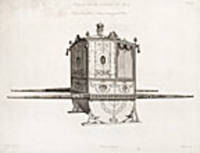
177517100London 1775. Engraving by P. Begbie. In excellent condition with the exception of some paper discolouration on the upper margin. A fine engraving of the sedan chair designed for Queen Charlotte.<br/> <br/>Robert and his brother James Adam forever changed the face of British architecture by introducing innovative Classical design ideas. From 1754-57 Robert lived in Italy where he had a long productive friendship with Piranesi which was inspirational for both men. Adam's first book on Diocletian's palace in Dalmatia is clearly very like the archaeological investigations Piranesi was making at the same time of similar ruins. Piranesi's friendship and passion for Roman Classicism were seminal influences on Adam and the greatest single factor other than his own talent in the work Adam produced on his return to England. Upon his return the brothers launched their career by building the Adelphi from the Thames to the Strand in London which although not a commercial success at the time included one of London's most cherished buildings the Adlephi Theatre. Together the Adam brothers designed and built some of the most famous buildings in England including such bastions of English architecture as Kenwood House Keddlestone Manor and Syon House. To the interiors of their English country houses the Adams brought wonderful ornamental elements in niches lunettes festoons and reliefs. Their classically designed buildings were so numerous in London that they changed the prevailing feel of the city and established their brand of neo-Classicism as the model of elegance and importance. It is asserted that the brothers originated the concept of the uniform facade attached to the typical English row house an architectural device that distinguishes London buildings. This monumental contribution is evidenced in the Adams' designs for Portland Place and Fitzroy Square and these were used as architectural models for the whole city. The brothers brought their talents into other areas by designing furniture to complement their beautiful interiors and by creating and publishing a treatise of design entitled 'Works in Architecture'. The work was published in three volumes over an extended span of time beginning in 1773 with the final volume being published posthumously in 1822.<br/> <br/>Cf. Brunet I.47; cf. Lowndes I p.8; DNB; Wilton-Ely The Mind and Art of Giovanni Battista Piranesi. unknown books
177717133London 1777. Copper engraving. Engraved by T. Morris. In excellent condition with the exception of a small area of foxing in the sheet. An elegant engraving of the elaborate ceiling in the music room of Sir Watkin Williams Wynn's celebrated house in St. James' Square London.<br/> <br/>Robert and his brother James Adam forever changed the face of British architecture by introducing innovative Classical design ideas. From 1754-57 Robert lived in Italy where he had a long productive friendship with Piranesi which was inspirational for both men. Adam's first book on Diocletian's palace in Dalmatia is clearly very like the archaeological investigations Piranesi was making at the same time of similar ruins. Piranesi's friendship and passion for Roman Classicism were seminal influences on Adam and the greatest single factor other than his own talent in the work Adam produced on his return to England. Upon his return the brothers launched their career by building the Adelphi from the Thames to the Strand in London which although not a commercial success at the time included one of London's most cherished buildings the Adlephi Theatre. Together the Adam brothers designed and built some of the most famous buildings in England including such bastions of English architecture as Kenwood House Keddlestone Manor and Syon House. To the interiors of their English country houses the Adams brought wonderful ornamental elements in niches lunettes festoons and reliefs. Their classically designed buildings were so numerous in London that they changed the prevailing feel of the city and established their brand of neo-Classicism as the model of elegance and importance. It is asserted that the brothers originated the concept of the uniform facade attached to the typical English row house an architectural device that distinguishes London buildings. This monumental contribution is evidenced in the Adams' designs for Portland Place and Fitzroy Square and these were used as architectural models for the whole city. The brothers brought their talents into other areas by designing furniture to complement their beautiful interiors and by creating and publishing a treatise of design entitled 'Works in Architecture'. The work was published in three volumes over an extended span of time beginning in 1773 with the final volume being published posthumously in 1822.<br/> <br/>Cf. Brunet I.47; cf. Lowndes I p.8; DNB; Wilton-Ely The Mind and Art of Giovanni Battista Piranesi. unknown books
177817144London 1778. Copper engraving. Engraved by Robert Blyth. In excellent condition. An elegant engraving of the gateway and porters lodge at Ashburnham House on Dover Street in London.<br/> <br/>Robert and his brother James Adam forever changed the face of British architecture by introducing innovative Classical design ideas. From 1754-57 Robert lived in Italy where he had a long productive friendship with Piranesi which was inspirational for both men. Adam's first book on Diocletian's palace in Dalmatia is clearly very like the archaeological investigations Piranesi was making at the same time of similar ruins. Piranesi's friendship and passion for Roman Classicism were seminal influences on Adam and the greatest single factor other than his own talent in the work Adam produced on his return to England. Upon his return the brothers launched their career by building the Adelphi from the Thames to the Strand in London which although not a commercial success at the time included one of London's most cherished buildings the Adlephi Theatre. Together the Adam brothers designed and built some of the most famous buildings in England including such bastions of English architecture as Kenwood House Keddlestone Manor and Syon House. To the interiors of their English country houses the Adams brought wonderful ornamental elements in niches lunettes festoons and reliefs. Their classically designed buildings were so numerous in London that they changed the prevailing feel of the city and established their brand of neo-Classicism as the model of elegance and importance. It is asserted that the brothers originated the concept of the uniform facade attached to the typical English row house an architectural device that distinguishes London buildings. This monumental contribution is evidenced in the Adams' designs for Portland Place and Fitzroy Square and these were used as architectural models for the whole city. The brothers brought their talents into other areas by designing furniture to complement their beautiful interiors and by creating and publishing a treatise of design entitled 'Works in Architecture'. The work was published in three volumes over an extended span of time beginning in 1773 with the final volume being published posthumously in 1822.<br/> <br/>Cf. Brunet I.47; cf. Lowndes I p.8; DNB; Wilton-Ely The Mind and Art of Giovanni Battista Piranesi. unknown books
177717125London 1777. Engraving by J. Zucchi. In excellent condition. An elegant engraving depicting two chimneys in Lord Derby's celebrated house in Grosvenor Square London.<br/> <br/>Robert and his brother James Adam forever changed the face of British architecture by introducing innovative Classical design ideas. From 1754-57 Robert lived in Italy where he had a long productive friendship with Piranesi which was inspirational for both men. Adam's first book on Diocletian's palace in Dalmatia is clearly very like the archaeological investigations Piranesi was making at the same time of similar ruins. Piranesi's friendship and passion for Roman Classicism were seminal influences on Adam and the greatest single factor other than his own talent in the work Adam produced on his return to England. Upon his return the brothers launched their career by building the Adelphi from the Thames to the Strand in London which although not a commercial success at the time included one of London's most cherished buildings the Adlephi Theatre. Together the Adam brothers designed and built some of the most famous buildings in England including such bastions of English architecture as Kenwood House Keddlestone Manor and Syon House. To the interiors of their English country houses the Adams brought wonderful ornamental elements in niches lunettes festoons and reliefs. Their classically designed buildings were so numerous in London that they changed the prevailing feel of the city and established their brand of neo-Classicism as the model of elegance and importance. It is asserted that the brothers originated the concept of the uniform facade attached to the typical English row house an architectural device that distinguishes London buildings. This monumental contribution is evidenced in the Adams' designs for Portland Place and Fitzroy Square and these were used as architectural models for the whole city. The brothers brought their talents into other areas by designing furniture to complement their beautiful interiors and by creating and publishing a treatise of design entitled 'Works in Architecture'. The work was published in three volumes over an extended span of time beginning in 1773 with the final volume being published posthumously in 1822.<br/> <br/>Cf. Brunet I.47; cf. Lowndes I p.8; DNB; Wilton-Ely The Mind and Art of Giovanni Battista Piranesi. unknown books
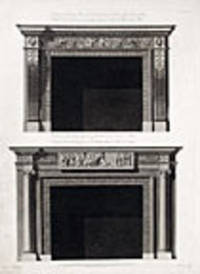
177517099London 1775. Engraving by D. Cunego. In excellent condition with the exception of being trimmed just outside the platemark on left margin. Some paper discolouration on left margin and 1" loss lower left corner. A fine engraving of the fireplaces at St. James's Palace and the Queen's House in London.<br/> <br/>Robert and his brother James Adam forever changed the face of British architecture by introducing innovative Classical design ideas. From 1754-57 Robert lived in Italy where he had a long productive friendship with Piranesi which was inspirational for both men. Adam's first book on Diocletian's palace in Dalmatia is clearly very like the archaeological investigations Piranesi was making at the same time of similar ruins. Piranesi's friendship and passion for Roman Classicism were seminal influences on Adam and the greatest single factor other than his own talent in the work Adam produced on his return to England. Upon his return the brothers launched their career by building the Adelphi from the Thames to the Strand in London which although not a commercial success at the time included one of London's most cherished buildings the Adlephi Theatre. Together the Adam brothers designed and built some of the most famous buildings in England including such bastions of English architecture as Kenwood House Keddlestone Manor and Syon House. To the interiors of their English country houses the Adams brought wonderful ornamental elements in niches lunettes festoons and reliefs. Their classically designed buildings were so numerous in London that they changed the prevailing feel of the city and established their brand of neo-Classicism as the model of elegance and importance. It is asserted that the brothers originated the concept of the uniform facade attached to the typical English row house an architectural device that distinguishes London buildings. This monumental contribution is evidenced in the Adams' designs for Portland Place and Fitzroy Square and these were used as architectural models for the whole city. The brothers brought their talents into other areas by designing furniture to complement their beautiful interiors and by creating and publishing a treatise of design entitled 'Works in Architecture'. The work was published in three volumes over an extended span of time beginning in 1773 with the final volume being published posthumously in 1822.<br/> <br/>Cf. Brunet I.47; cf. Lowndes I p.8; DNB; Wilton-Ely The Mind and Art of Giovanni Battista Piranesi. unknown books