SMITH, AdamBiblio.com
252 résultats
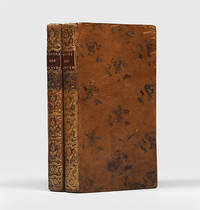
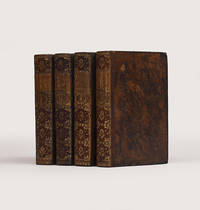
1778184198A La Haye though Zweibrücken: no publisher stated though the ducal French press of Deux-Ponts 1778-79. The first foreign-language appearance of a milestone in economics Very rare first edition in French of the Wealth of Nations the first translation following its publication in English in 1776. "This translation of the 1776 English edition of WN has remained a mystery. Was it printed in The Hague If not where was it printed Who was M identified on the title pages as the translator Copies are rare within French libraries" Carpenter p. 20. Carpenter & Sabbagh's recent scholarship identifies the printer as the ducal press of Deux-Ponts now Zweibrücken. Though a commercial venture the press used a fictitious imprint to avoid problems when printing French-language works that risked running afoul of the censor. The translator was Jean-Louis Carra 1742-1793 an active contributor to the Encyclopédie d'Yverdon later in the French Revolution to join the Jacobins where he was appointed joint head of the Bibliothèque nationale but clashed with Robespierre and was guillotined in 1793. The text follows the original closely omitting a section on religious instruction alongside other minor religious changes. The edition was preceded in French translation only by an extract Fragment sur les colonies en général et sur celles des anglois en particulier translated by Reverdil which had been published in Lausanne and Basel earlier in 1778 to test public demand for the work. 4 vols duodecimo in 4s and 8s 162 x 95 mm collates complete with half-titles and blank "table des matieres" bound following title pages rather than at rear. Contemporary calf twin brown and green labels smooth spines with gilt floral decoration marbled endpapers red edges. Contemporary ownership signature of Mats Zachrisson to front free endpaper. Light rubbing and insect abrasion with some loss to lettering on labels bindings otherwise with little wear and without repair staining to Vol. IV and a few leaves in Vol. I else fresh. A very good copy. Goldsmiths' 11664; Kress B155; Tribe 16; Vanderblue 24. Kenneth E. Carpenter The Dissemination of the Wealth of Nations in French and in France 2002; Kenneth Carpenter & Gabriel Sabbagh "Unveiling the First French Translation of Adam Smith's Wealth of Nations" in Oeconomia vol. 14 no. 1 2024. unknown
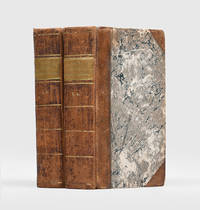
1781159019Yverdon: De Felice 1781. An attractive set Second edition in book form of Blavet's translation of The Wealth of Nations the earliest obtainable. Jean-Louis Blavet 1719-c.1809 was librarian for the prince du Conti; he had already published a translation of The Theory of Moral Sentiments in 1774-75. Blavet later claimed that Smith personally requested he translate The Wealth of Nations and sent him a copy. Blavet's translation was first published periodically in the Journal de l'agriculture from February 1779 to December 1780 and in book form in Paris earlier in 1781 in an edition of only 20 copies offprinted from the Journal de l'agriculture appearance. Only two copies of that edition are now known Carpenter p. 33. This edition was printed in Switzerland and apparently distributed largely outside France. Blavet claimed to not have been involved but "evidence suggests otherwise" ibid. p. 36. The Wealth of Nations was first published in French in 1778-79 by an unknown translator; Carpenter notes it as full of errors. Blavet's translation marks the second appearance in the language. 6 vols duodecimo 161 x 95 mm. Contemporary mottled calf twin orange and green spine labels marbled endpapers red edges. Contemporary annotation to vol. V p. 240. Slight wear at extremities slight worming to spines still a very attractive set contents clean. Tribe 24. Kenneth E. Carpenter The Dissemination of the Wealth of Nations in French and in France 1776-1843 2002. unknown
178842376Londres Pierre J. Duplain 1788. 8vo Two nice uniform contemporary full calf bindings with gilt spines. Some loss of leather to back hinge and lower capital of volume one and minor loos of leather to spine of volume two all due to worming. Worming is not bad and does not affect anything but outer layer of small parts of the bindings. Apart from the worming a very nice fresh and clean copy indeed. 8 IV 503; 4 496 pp. With both half-titles the advertisment both prefaces and the table of contents. <br/><br/><em>Rare early French translation of Adam Smith's political and economic classic the "Wealth of Nations". Translated by Blavet. The present edition constitutes the third reprint of the second French translation. The second French translation was done by Blavet and is the first translation into French of which the translator and publisher are known. "The reprint of Blavet's version appeared at Yverdon in 1781 in 6 volumes 12mo and at Paris in the same year in 3 volumes 12mo and again at London and Paris in 1788 in 2 volumes 8vo the present edition and revised and corrected with Blavet's name as translator at Paris An ix 1800-01 in 4 volumes 8vo.He Blavet had no intention of publishing it until his friend M. Ameilhon happened to complain of scarcity of interesting articles for his Journal de l'Agriculture du Commerce des Arts et des Finances which had just come under the control of the Mercantilist. It struck him that he might offer it to him which he did with the explanation that it was far from perfect. It was accepted and appeared in the issues of the Journal between January 1779 and December 1780. He did not anticipate that it would go further. The edition of 1788 likewise appeared without his knowledge or consent and was still more marred by errors than that of Yverdon". Lai Cheng-chung. Adam Smith Across Nations: Translations and Receptions of The Wealth of Nations Clarendon Press UK 2000. Hailed as the "first and greatest classic of modern thought" PMM 221 Adam Smith's tremendously influential main work has had a profound impact on thought and politics and is considered the main foundation of the era of liberal free trade that dominated the nineteenth century. Adam Smith 1723-1790 is considered the founder of Political Economy in Britain mainly due to his groundbreaking work the "Wealth of Nations" from 1776. The work took him 12 years to write and was probably in contemplation 12 years before that. It was originally published in two volumes in 4to and was published later the same year in Dublin in three volumes in 8vo. The book sold well and the first edition the number of which is unknown sold out within six months which came as a surprise to the publisher and probably also to Smith himself partly because the work "requires much thought and reflection qualities that do not abound among modern readers to peruse to any purpose." Letter from David Hume In: Rae Life of Adam Smith 1895 p. 286 partly because it was hardly reviewed or noticed by magazines or annuals. In spite of this it did evoke immense interest in the learned and the political world and Buckle's words that the work is "in its ultimate results probably the most important book that has ever been written" and that it has "done more towards the happiness of man than has been effected by the united abilities of all the statesmen and legislators of whom history has preserved an authentic account" History of Civilisation 1869 I:214 well describes the opinion of a great part of important thinkers then as well as now. Considering the groundbreaking views presented in "Wealth of Nations" it comes as no surprise that the work was considered part of the revolutionary cultural development in France. As Adam Smith's friend the Marquis of Lansdowne said after quoting Smith's work: "With respect to French principles as they had been denominated those principles had been exported from us to France and could not be said to have originated among the population of the latter country." Quoted in: Rae p. 291. The ideas of Adam Smith were often considered so dangerously closely connected with French ideas at the time that the term "political economy" almost became synonymous with questions concerning the constitution of governments. "The French Revolution seems to have checked for a time the growing vogue of Smith's book and the advance of his principles in this country just as it checked the progress of parliamentary and social reform because it filled men's mind with a fear of change with a suspicion of all novelty with an unreasoning dislike of anything in the nature of general principle." Rae p. 293. There can be no question that this seminal work greatly influenced French opinion at the time. </em> hardcover
1790189815Naples: Giuseppe Policarpo Merande 1790-91. Adam Smith in the birthplace of political economy First edition in Italian of the Wealth of Nations among the scarcest of the 18th-century translations. Barring certain insubstantial references in journals "Smith's ideas did not reach Italy until 1790" Gioli p. 153. The translation was a quintessential product of the Neapolitan Enlightenment which had seen the development of political economy itself by Galiani and Genovesi in the 1750s. According to the preface the anonymous translator had corresponded with Smith and had received advice as to his translation. The edition takes its wider lead from Blavet's French translation which appeared from 1779 to 1780 while adapting various phrases and concepts to an Italian context. The second edition in Italian was not published until 1851. 5 vols octavo 173 x 114 mm. Complete with all half-titles and index leaves; vols. I III and V lacking rear free endpaper final leaf of vol. II fixed as rear pastedown. Contemporary vellum spines with orange calf label vol. IV with additional brown calf label edges sprinkled blue and red. Light soiling slight foxing and damp staining to contents paper flaw to leaf E2 of vol. III touching several words: a very good copy. Einaudi 5343; Goldsmiths' 14107; Kress B.1987; Tribe 39; Vanderblue p. 29 but lacking the fifth volume. Gabriella Gioli "The Knowledge of Adam Smith's Wealth of Nations in Italy in the Eighteenth Century shortened and translated by the author" in Cheng-chung Lai ed. Adam Smith Across Nations: Translations and Receptions of The Wealth of Nations 2000. hardcover
1797179182Scotland: Boog junior des. P. Kempson fecit 1797. A very good example of the one ounce Penny of Scotland commemorating Adam Smith. The portrait of Smith is after the Tassie medallion of 1787 which is described by John M. Gray as follows: 'The head which appears turned in pure profile to the right of the spectator shows a particularly full forehead a full nose slightly aquiline in its curve; a long thin upper lip and a lower lip that protudes a little; and a firm well-shaped chin and jaw. The eyebrow is strongly curved the upper eyelid heavy and drooping the eyeball particularly prominent; and beneath the lower eyelid the skin is loose and wrinkled. A wig is worn tied behind in a bag with ribbons showing small curls in front and two large curls at the side which cover and conceal the ear' quoted in Bonar A Catalogue of the library of Adam Smith 1932 p. xxi. The reverse of the penny entitled 'Wealth of Nations' depicts the various elements of commerce; in the foreground of a harbour scene are a plough and a spinning wheel along with other symbols of agriculture and industry in addition to which there are a wool-pack and a barrel standing on the quayside with two three-masted ships sailing out of the harbour. Penny token cast in bronze 35 mm in diameter with portrait of Adam Smith after Tassie on the obverse and scene entitled 'Wealth of Nations' depicting various elements of commerce on the reverse. Housed in a red leatherette velvet-lined case. In very good condition. Scott Adam Smith as Student and Professor 1937. Dalton and Hamer Fifeshire no. 1. hardcover
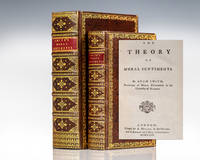
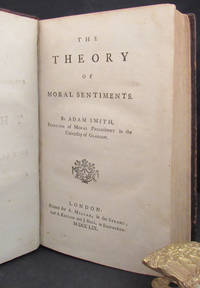
1759150275London: For A. Milar and A. Kincaid and J. Bell 1759. Rare first edition of Adam Smith's first book with a recorded “print run of 1000 copies†Sher “Editions of Adam’s Smith’s Books†13. Octavo bound in full calf gilt titles and tooling to the spine front and rear panels morocco spine label marbled endpapers. In near fine condition. Housed in a custom full calf clamshell box. Rare. Adam Smith's Theory of Moral Sentiments his first book is "one of the truly outstanding books in the intellectual history of the world" Amartya Sen. First published in 1759 it laid the foundation for Wealth of Nations and proposed the theory repeated in the later work: that self-seeking men are often "led by an invisible hand… without knowing it without intending it to advance the interest of the society." "The fruit of his Glasgow years… Moral Sentiments would be enough to assure the author a respected place among Scottish moral philosophers and Smith himself ranked it above the Wealth of Nations… Its central idea is the concept closely related to conscience of the impartial spectator who helps man to distinguish right from wrong. For the same purpose Immanuel Kant invented the categorical imperative and Sigmund Freud the superego" Niehans 62. Basing moral sentiment on "the power one man has of putting himself in the place of another" in contrast to Hume's idea of self-interest "Smith was henceforth recognized as one of the first authors of the day" DNB. With Moral Sentiments and Wealth of Nations Smith created "not merely a treatise on moral philosophy and a treatise on economics but a complete moral and political philosophy in which the two elements of history and theory were to be closely conjoined" Palgrave III:412-13. To Smith when man pursues "his own private interests the original and selfish sentiments of Moral Sentiments he will in the economic realm choose those endeavors which will best serve society. Herein lies the connection between the two great works which make them the work of a single and largely consistent theorist" Paul "Adam Smith" 293. In his Theory of Moral Sentiments Smith develops an ethics based on a “unifying principle—in this case of sympathy—which would shed light on the harmonious and beneficial order of the moral world. As such it was of considerable interest to Smith’s contemporaries who were groping for an ethics that would flow from man’s impulses or sentiments rather than from his reason from ‘innate ideas’ or from theological precepts. If Smith had written only The Theory of Moral Sentiments he would enjoy in the philosophers hall of fame a niche not unlike that reserved for Shaftesbury or Hutcheson.†Both Moral Sentiments and Wealth of Nations reflect Smith’s “attempt to anchor the new science of political economy in a Newtonian universe mechanical albeit harmonious and beneficial in which society is shown to benefit from the unintended consequences of the pursuit of individual self-interest. There is thus a considerable affinity between the structure of The Theory of Moral Sentiments and that of The Wealth of Nations. Each work is integrated by a great unifying principle. What sympathy accomplishes in the moral world self-interest does in the economic one. Either principle in its respective realm is shown to produce a harmony such as the one that characterizes Newton’s order of nature… Smith’s ethics is one of self-command or self-reliance just as is his laissez faire economics…. Smith’s ethics and his economics are integrated by the same principle of self-command or self-reliance which manifests itself in economics in laissez faire†Spiegel Growth of Economic Thought 229-231. For A. Milar, and A. Kincaid and J. Bell unknown
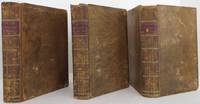
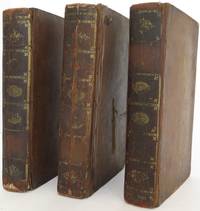
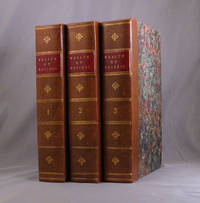
17912406110London: Printed for A. Strahan and T. Cadell 1791. 6th. hardcover. 6th edition as stated on title page 1791. One of 2000 sets published. All 3 books are in very good condition. Vol.1 has paper tape repair to front and rear gutters. All volumes have foxing soiling discoloration some water stains former owner's name on end papers or title page. Printed for A. Strahan and T. Cadell unknown
17912306072London: Strahan 1791. 6th edition. hardcover. Very good. A handsome three volume set of the 6th edition. One of only 2000 copies published. Spines repaired but appear to be the original covers. The greatest work in the history of economics. Recounts not just the concept of the "invisible hand" but redefined national wealth in terms of products labor and productivity instead of government stashes of gold. Identical To The Last Revision By Smith And The First Published After His Death in 1790. Strahan unknown
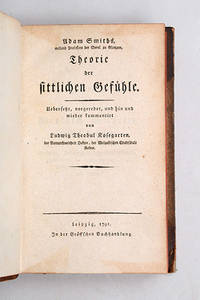
1791140940981Leipzig: In der Graffschen Buchhandlung 1791. First Edition Thus. Very Good. 463 pp. First edition of this second German translation overall of The Theory of Moral Sentiments made from the fifth English edition; no other German translation was published until 1926. Contemporary calf over speckled boards. Very Good. Binding lightly rubbed and marked spine with two small paper shelf tickets. Upper joint started but binding remains firm. Pages a little toned and with occasional foxing. In der Graffschen Buchhandlung unknown
1791104689Leipzig: In der Gräffschen Buchhandlung 1791-95. First complete German translation of Smith's Theory of Moral Sentiments the second German translation overall volume II providing a translation of the additional material contained in the English sixth edition published shortly before Smith's death in 1790. The first German translation of 1770 was made from the third edition of 1767. "The Kosegarten translation of 1791 had more impact than the 1770 one partly because of its timing and also because it did provide some contextualization for work and author" Tribe. 2 vols bound in one octavo 197 x 120 mm. Contemporary half sheep and sprinkled boards spine ruled gilt in compartments morocco spine label edges stained red. Corners and extremities slightly rubbed occasional light spotting; an excellent copy. Tribe 40 & 54; Vanderblue p. 42 listed but not apparently held although Harvard locates 3 copies in its various libraries. hardcover
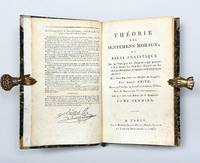
1774146600Paris: Chez Valade 1774-75. First edition of the second French translation of Scottish moral philosopher and economist Adam Smith's ground-breaking first work The Theory of Moral Sentiments London 1759 in an attractive contemporary binding. This work introduced the concept of the "invisible hand" guiding individuals to advance community interest laying the philosophical ground work for his Wealth of Nations. Smith evidently dissatisfied in the quality of the first French translation Metaphysique de l'ame Paris 1764 made by Marc-Antoine Eidous and based on the second English edition is reported by the translator of this edition as having been "mortified" by the first attempt. Jean-Louis Blavet 1719-1809 translator and librarian of the Prince de Conti was recommended to Smith by Madame des Boufflers the Prince's mistress and duly undertook this entirely new translation from the third English edition of 1767 adding an extensive table of contents. The work was far from a commercial success which according to Dugald Stewart Smith blamed on Blavet leading to the eventual commission of a third French translation by Sophie de Grouchy the prominent salon hostess during the early French Revolution and under Napoleon and was the wife of the philosopher the Marquis de Condorcet. 2 vols duodecimo 168 x 97 mm. Contemporary cat's paw calf titles in gilt to red morocco spine labels floral motifs tooled in gilt direct to spine French curl marbled endpapers blued mottled edges. A hint of wear to extremities the bindings otherwise firm and unrestored very occasional faint damp staining else internally fresh; a very good set indeed. Tribe 7; Vanderblue p. 41. unknown
1798157475Paris: chez F. Buisson 1798. Containing the first appearance of de Grouchy's Lettres sur la sympathie First edition of Sophie de Grouchy's translation "the best available in her language" Ross p. 365 which brought Smith's work to a much broader French audience following two ineffectual translations and which remains the standard French text. The edition includes the first appearance of de Grouchy's Lettres sur la sympathie her major contribution to moral philosophy. The translation was preceded in French editions by Marc-Antoine Eidous's translation of 1764 roundly criticized for its low quality and held by Smith to be responsible for the poor reception of his work on the continent and Jean-Louis Blavet's translation of 1774-5 which was poorly disseminated. A manuscript translation by Louis Alexandre Duc de la Rochefoucauld 1774 was abandoned and unpublished. In contrast de Grouchy's translation was praised from the start and commended for its faithfulness to the original text. "Smith was no longer alive by the time Grouchy published her own translation 1798; he died in 1790 but it is safe to say that he would have been happier with hers as she followed the text as precisely as she could attempting to capture the tone and rhythm as well as the multilayered meanings of his sentences" Bergès and Schliesser p. 9. The edition also includes a translation of Smith's Dissertation on the Origin of Language first published in The Philological Miscellany and thereafter appended to the third and subsequent editions of the Theory of Moral Sentiments. The translation was reprinted in 1830 1860 and 1981. De Grouchy was a prominent salon hostess during the French Revolution and under Napoleon. The Lettres sur la Sympathie appended to the translation form a response to Smith's Moral Sentiments but also offer an original and important contribution to moral philosophy. The text written from around 1791 to 1793 takes the form of eight letters addressed to C sometimes surmised as her husband the philosopher Condorcet more probably her brother-in-law the physiologist and philosopher Pierre Jean Georges Cabanis. De Grouchy in the first letter sets out her project to find the origins of sympathy and over the following letters sustains her argument that they are physiological based on experienced or imagined pain and pleasure. The Lettres have long been recognized in French scholarship - Jean-Paul de Lagrave's French edition of 1994 lists at least 15 works in French dealing with her from 1887 to 1987. In English scholarship her work has been recognized only more recently. English translations were published - independent from Smith's Theory - in 2008 edited and translated by Karin Brown and James E. McClellan III and 2019 edited and translated by Sandrine Bergès and Eric Schliesser both containing lengthy introductory monographs confirming the originality and importance of the Lettres. Karin Brown in 2008 bemoaned de Grouchy's then-invisibility in English scholarship - "the Lettres are certainly a notable if overlooked Enlightenment text. But more specifically there is significant recent interest in sympathy and sensibility in the literature of the eighteenth century and Sophie de Grouchy is the one contemporary woman philosopher who thought and wrote critically about sympathy. This otherwise informed and eye-opening scholarly reinterpretation of the role of sentiment in late-eighteenth century thought is unaware of Sophie de Grouchy or her contributions" Brown and McClellan p. xvi. 2 vols octavo 192 x 120 mm. With half-titles. Contemporary quarter sheep mottled sides spines lettered in gilt vellum tips plain endpapers marbled edges. Bookplate of Jules C. Alciatore 1901-1974 professor of literature at the University of Georgia whose research focused on the work of Stendhal. A few minor pencilled annotations. Bindings fresh and well preserved with only very minor rubbing contents lightly browned and foxed a few gatherings a little more substantially paper flaw to C4 and F1 in vol. II the former with loss affecting a few letters; an attractive copy in a well-preserved contemporary binding. Tribe 66. Sandrine Bergès & Eric Schliesser introduction to Sophie de Grouchy's Letters on Sympathy Oxford University Press 2019; Karin Brown & James E. McClellan Sophie de Grouchy: Letters on Sympathy 1798 a Critical Edition 2008; Ian Simpson Ross Life of Adam Smith 1995. hardcover
1782143496London: Printed for J. Murray 1782. First edition of this anonymously published epistolary account in 72 letters written during the course of a trip to India dealing largely with the government and economies of the East Indies and with notes on Adam Smith's Wealth of Nations. At the Cape of Good Hope in April 1799 one Daniel Barwell lent the author his copy of Adam Smith's Wealth of Nations - 'a work of great labour and ingenuity; I had heard of it and anxiously desired to see it because it treated of such commercial and political matters as have long furnished a subject of speculation in my solitude. It is a performance that every statesman and legislator should study and digest. - Yet I have presumed to differ in opinion in a few instances from that great source of knowledge' I 206-7. The 'Observations' written 'on a cursory reading' of Smith are provided in an lengthy two-column appendix in volume II pp. 432-479 which juxtaposes quotations with insightful commentary especially on the relationship of labour and value and real and nominal prices. Macintosh presented a copy of his Travels to Smith 'With Mr. MacIntosh's compliments. Mr. M - having been abroad when these letters were printed had not an opportunity of transmiting sic them in manuscripts'. The Travels' authorship although attributed by DNB Halkett & Laing Kress and Allibone to William Thomson 1746-1817 who was a clergyman in Perthshire until October 1778 and whose role was most probably editorial has also been credited to the Irish-born British politician and pamphleteer Sir Philip Francis 1740-1818 who was also the chief antagonist of the first Governor-General of Bengal Warren Hastings. It is however generally accepted as being William MacIntosh's: "the author was given out to be one Macintosh whose name occurs in Philip Francis's Indian journal. But it runs so minutely into defence of Francis and vituperation of his enemies especially of Hastings. that some assigned the authorship of these portions of it to Francis in person" Parkes. In his Memoirs of Sir Philip Francis 1867 Parkes notes "some people indeed denied the existence of Macintosh altogether. But one of Captain Price's grotesque pamphlets describes him as 'a swarthy and ill-looking man'. of colour born in the West Indies" p. 206. These Travels were translated into German Des Herrn Macintosh's Reisen in 1785 and twice so in French: 1786 and 1792. This copy has the crested bookplate of the banker Thomas Coutts "Strand London" one of the wealthiest men in Britain to the front pastedowns transposed over from an earlier binding. 2 vols octavo 211 x 126 mm. Recent quarter calf red and green morocco labels marbled sides vellum tips. Bindings fine interior remarkably clean and fresh occasionally foxed; a very good copy. ESTC T97734; Goldsmiths' 12256; Kress B.523; Mizuta "Adam Smith's Library" 1660; Joseph Parkes "Memoirs of Sir Philip Francis K.C.B." vol. 2 pp. 205-6; Sowerby E.M. Catalogue of the Library of Thomas Jefferson 3934; Zachs 314; not in Vanderblue. hardcover
1779158759Copenhagen: Gyldendal 1779-80. Adam Smith in Danish First edition in Danish of The Wealth of Nations translated from the first edition of 1776 by Frants Draebye published together with a translation of Thomas Pownall's critical Letter. to Adam Smith of the same year. Draebye had been in England in 1776 as part of his role of tutor on a continental tour to two sons of a Norwegian merchant James Collett. Smith acknowledged the translation in two letters of 1780 the first written to Andreas Holt Commissioner of the Danish Board of Trade and Economy to whom he wrote "it gives me great pleasure to hear that Mr Dreby has done me the distinguished honour of translating my book into the Danish language." the second to Peter Anker Consul General of Denmark in Great Britain sending him three copies of the second edition of 1778 and asking him to forward them to Draebye and Holt. 2 vols octavo 192 x 114 mm pp. xii 575 1; viii 775 3. Contemporary sprinkled sheep spines decorated in gilt between five raised bands yellow paper labels lettered in gilt marbled paper pastedowns red edges. Joints of vol. I strengthened head and tail of both vols repaired gilt decoration to vol. II largely eroded; marginal tear to one leaf occasional light spotting; a very good set. Tribe 19: Vanderblue p. 23. Mossner & Ross The Correspondence of Adam Smith 1987. hardcover
177947455Kiøbenhavn Copenhagen 1779-80. 8vo. Two very nice contemporary brown half calf bindings with raised bands gilt ornamentations and gilt leather title- and tome-labels. Volume two with a bit of wear to upper capital. Corners slightly bumped. Pencil annotations to verso of title-page in volume one; title-page in volume two mounted to cover up a small hole caused by the removal of an old owner's name. Internally very clean and bright. All in all a very nice clean fresh and tight copy. Engraved by Weise 1784 armorial book plate to inside of front boards Gregorius Christianus Comes ab Haxthausen. 12 575; 8 775 3 - errata pp. <br/><br/><em>The extremely scarce first Danish edition of Adam Smith's seminal main work "the first and greatest classic of modern economic thought" PMM 221 the main foundational work of the era of liberal free trade. This publication constitutes the first Danish work worth mentioning in the history of economic thought - in spite of the great interest in political economy that dominated Danish political thought in the last quarter of the 18th century. The value of Smith's work was not immediately recognized in Denmark at the time of its appearance and a quarter of a century had to go by for its importance to be acknowledged and for Danish political economy to adapt the revolutionizing theories of Adam Smith. Few copies of the translation were published and sold and the book is now a great scarcity. As opposed to for instance the German translation of the work Smith concerned himself a great deal with this Danish translation. As is evident from preserved correspondence about it he reacted passionately to it and was deeply concerned with the reaction to his work in Scandinavia see "Correspondence of Adam Smith" Oxford University Press 1977.- As an example Smith writes in a letter to Andreas Holt on Oct. 26th 1780: "It gives me the greatest pleasure to hear that Mr. Dreby has done me the distinguished honour of translating my Book into the Danish language. I beg you will present to him my most sincere thanks and most respectful Compliments. I am much concerned that I cannot have the pleasure of reading it in his translation as I am so unfortunate as not to understand the Danish language." The translation was made by Frants Dræby 1740-1814 the son a whiskey distiller in Copenhagen who mastered as a theologian and was then hired by the great Norwegian merchant James Collett as tutor to his son. There can be no doubt that Dræbye's relation to the Collett house had a great impact upon his interest in economics. In the middle of the 1770'ies Dræbye accompanied Collett's son on travels throughout Europe which took them to England in the year 1776 the same year that the "Wealth of Nations" was published for the first time. Through the Colletts Dræbye was introduced to the mercantile environment in England and here became thoroughly acquainted with English economics and politics at the time. It is presumably here that he gets acquainted with Adam Smith's freshly published revolutionary work. When Dræbye returned to Denmark at the end of 1776 he was appointed chief of the Norwegian secretariat of the Board of Economics and Trade. He began the translation of the "Wealth of Nations" that he brought back with him from England immediately after his return."WN i.e. Wealth of Nations was translated into Danish by Frants Dræbye and published in 1779 three years after the first English edition. The translation was initiated by Andreas Holt and Peter Anker who were acquainted with Smith. Dræbye was a Dane who lived mainly in Norway reflecting the fact that Norway was much more British-oriented than Denmark proper Denmark and Norway were united until 1814 when Sweden took Norway away from the Danes; in 1905 Norway became an independent state. Norwegian merchants lived from exporting timber to Britain and tended on the whole to be adherents of a liberal economic policy whereas the absolutist government in Copenhagen was more German-oriented and had economic views similar to those in contemporary Prussia." Cheng-chung Lai edt.: "Adam Smith Across Nations" p. 37. The last quarter of the eighteenth century in Denmark was dominated by a lively discussion of monetary policy and the institutional framework best suited to realize that policy. There was a vital interest in questions of economic concern and contemporary Danish sources refer to the period as "this economic age" and state things such as "never was the world more economically minded" both from "Denmark and Norway's Economic Magazine". During this period Smith's revolutionary ideas did not play a major role however and only at the beginning of the 19th century did Danish politicians and economists come to realize the meaning of Smith's views. "Without exaggeration it can essentially be said that a quarter of a century was to pass from the time of the publication of the book in Denmark before Danish political economy fully made Adam Smith's theories and points of view its own. It took so long a time because the economic conditions as a whole in the years from 1780-1800 did not make desirable or necessary the changing of their concepts. That glorious commercial period had to pass before it was understood that we had altogether too little help in our own natural resources and that a different course was therefore necessary. Only when one had come so far could the new thinking find a nourishing soil so that it could develop strength with which to push aside the old ideas."Hans Degen: "On the Danish Translation of Adam Smith and Contemporary Opinion Concerning It." Translated by Henrietta M. Larson. In: Adam Smith Across Nations p. 51. This first Danish translation is one of the very earliest translations of "Wealth of Nations"; it is only preceded by the German 1776-78 and the extremely scarce French 1778-79. As a comparison the Italian translation does not appear until 1790-91 the Spanish 1792 the Swedish 1800-1804 the Russian 1802 etc.Adam Smith Across Nations: A4 - nr. 1. "All five books were translated; appears to be a complete translation. The long letter from Governor Pownall to Adam Smith 25 Sept. 1776 is added as the Appendix vol. 2 pp. 683 ff."PMM 221 - first edition </em> hardcover
177950523Kiøbenhavn Copenhagen 1779-80. 8vo. Two nice contemporary half calf bindings with four raised bands and gilt leather title label to spines. Volume one lacking one cm of upper part of spine. Volume two with a small tear to lower part of spine. Both volumes with light brown spotting throughout however mainly affecting first and last five leaves of both volumes. A fine set. 12 575; 8 775 3 - errata pp. <br/><br/><em>The extremely scarce first Danish edition of Adam Smith's seminal main work "the first and greatest classic of modern economic thought" PMM 221 the main foundational work of the era of liberal free trade. This publication constitutes the first Danish work worth mentioning in the history of economic thought - in spite of the great interest in political economy that dominated Danish political thought in the last quarter of the 18th century. The value of Smith's work was not immediately recognized in Denmark at the time of its appearance and a quarter of a century had to go by for its importance to be acknowledged and for Danish political economy to adapt the revolutionizing theories of Adam Smith. Few copies of the translation were published and sold and the book is now a great scarcity. As opposed to for instance the German translation of the work Smith concerned himself a great deal with this Danish translation. As is evident from preserved correspondence about it he reacted passionately to it and was deeply concerned with the reaction to his work in Scandinavia see "Correspondence of Adam Smith" Oxford University Press 1977.- As an example Smith writes in a letter to Andreas Holt on Oct. 26th 1780: "It gives me the greatest pleasure to hear that Mr. Dreby has done me the distinguished honour of translating my Book into the Danish language. I beg you will present to him my most sincere thanks and most respectful Compliments. I am much concerned that I cannot have the pleasure of reading it in his translation as I am so unfortunate as not to understand the Danish language." The translation was made by Frants Dræby 1740-1814 the son a whiskey distiller in Copenhagen who mastered as a theologian and was then hired by the great Norwegian merchant James Collett as tutor to his son. There can be no doubt that Dræbye's relation to the Collett house had a great impact upon his interest in economics. In the middle of the 1770'ies Dræbye accompanied Collett's son on travels throughout Europe which took them to England in the year 1776 the same year that the "Wealth of Nations" was published for the first time. Through the Colletts Dræbye was introduced to the mercantile environment in England and here became thoroughly acquainted with English economics and politics at the time. It is presumably here that he gets acquainted with Adam Smith's freshly published revolutionary work. When Dræbye returned to Denmark at the end of 1776 he was appointed chief of the Norwegian secretariat of the Board of Economics and Trade. He began the translation of the "Wealth of Nations" that he brought back with him from England immediately after his return."WN i.e. Wealth of Nations was translated into Danish by Frants Dræbye and published in 1779 three years after the first English edition. The translation was initiated by Andreas Holt and Peter Anker who were acquainted with Smith. Dræbye was a Dane who lived mainly in Norway reflecting the fact that Norway was much more British-oriented than Denmark proper Denmark and Norway were united until 1814 when Sweden took Norway away from the Danes; in 1905 Norway became an independent state. Norwegian merchants lived from exporting timber to Britain and tended on the whole to be adherents of a liberal economic policy whereas the absolutist government in Copenhagen was more German-oriented and had economic views similar to those in contemporary Prussia." Cheng-chung Lai edt.: "Adam Smith Across Nations" p. 37. The last quarter of the eighteenth century in Denmark was dominated by a lively discussion of monetary policy and the institutional framework best suited to realize that policy. There was a vital interest in questions of economic concern and contemporary Danish sources refer to the period as "this economic age" and state things such as "never was the world more economically minded" both from "Denmark and Norway's Economic Magazine". During this period Smith's revolutionary ideas did not play a major role however and only at the beginning of the 19th century did Danish politicians and economists come to realize the meaning of Smith's views. "Without exaggeration it can essentially be said that a quarter of a century was to pass from the time of the publication of the book in Denmark before Danish political economy fully made Adam Smith's theories and points of view its own. It took so long a time because the economic conditions as a whole in the years from 1780-1800 did not make desirable or necessary the changing of their concepts. That glorious commercial period had to pass before it was understood that we had altogether too little help in our own natural resources and that a different course was therefore necessary. Only when one had come so far could the new thinking find a nourishing soil so that it could develop strength with which to push aside the old ideas."Hans Degen: "On the Danish Translation of Adam Smith and Contemporary Opinion Concerning It." Translated by Henrietta M. Larson. In: Adam Smith Across Nations p. 51. This first Danish translation is one of the very earliest translations of "Wealth of Nations"; it is only preceded by the German 1776-78 and the extremely scarce French 1778-79. As a comparison the Italian translation does not appear until 1790-91 the Spanish 1792 the Swedish 1800-1804 the Russian 1802 etc.Adam Smith Across Nations: A4 - nr. 1. "All five books were translated; appears to be a complete translation. The long letter from Governor Pownall to Adam Smith 25 Sept. 1776 is added as the Appendix vol. 2 pp. 683 ff." </em> hardcover
177860523Leipzig Weidmann 1776-78. 8vo. Bound in two nice uniform contemporary half calf bindings with five raised bands black title-label and gilt lettering to spine. Small paper-label to upper compartment Catalogue-number from an estate-library. Light wear to extremities otherwise a very nice set. VIII 632 pp; XII 740 pp. <br/><br/><em>First German edition also being the very first overall translation of Adam Smith's ground-breaking main work the "Inquiry into the Nature and Causes of the Wealth of Nations". This seminal first translation of the work was undertaken by J.F. Schiller who finished the first part of the translation in time for it to appear as soon as 1776 the same year as the original English edition. The second part appeared in 1778 the same year as the exceedingly scarce first French translation. This first German translation has been of the utmost importance to the spreading of Smith's ideas throughout Europe and after the true first this must count as the most important edition of the work."The influence of the Wealth of Nations . in Germany . was so great that 'the whole of political economy might be divided into two parts - before and since Adam Smith; the first part being a prelude and the second a sequel." Backhouse Roger E. The Methodology of Economics: Nineteenth-Century British Contributions Routledge 1997."The first review of the translation which appeared in the Göttingische gelehrte Anzeigen for March 10 1777 by J. G. H. Feder professor of Philosophy at the University of Göttingen was very favorable. In the words of the reviewer: "It is a classic; very estimable both for its thorough not too limited often far-sighted political philosophy and for the numerous frequently discursive historical notes" but the exposition suffers from too much repetition." Lai Cheng-chung. Adam Smith Across Nations: Translations and Receptions of The Wealth of Nations Clarendon Press UK 2000.Until 1797 . the work of Adam Smith received scant attention in Germany. While Frederick II was living Cameralism held undisputed sway in Prussia and the economic change which began with the outbreak of the French Revolution had still not gained sufficient momentum to awake the economic theorists from their dogmatic slumber." Lai Cheng-chung. Adam Smith Across Nations: Translations and Receptions of The Wealth of Nations Clarendon Press UK 2000.Various German economist read the german translations and was inspired by it."Christian Garve . must be considered as among the important contributors to the spread of Smith's views. Himself a popularizer of philosophical doctrines he was early attracted by the Scotch writers and became one of their foremost exponents in Germany." In 1791 Garve began a second translation of the Smith's work and in the introduction to the the translation he wrote: "It Smith's work attracted me as only few books have in the course of my studies through the number of new views which it gave me not only concerning the actual abject of his investigations but concerning all related material from the philosophy of civil and social life". Georg Sartorius August Ferdinand Lueder and perhaps the most important economist of the period Christian Jacob Kraus were all important figures in the spread of Smith's thought. "The most significant of Kraus' works and that also which shows his conception of economic science most clearly is the five-volume work entitled State Economy. The first four volumes of this work are little more than a free paraphrase of the Wealth of Nations". Kraus was: "to a large extent responsible for the economic changes which took place in Prussia after 1807 in so far as they can be ascribed to Smithan influence." Lai Cheng-chung. Adam Smith Across Nations: Translations and Receptions of The Wealth of Nations Clarendon Press UK 2000.Kraus wrote of the present volume: "The world has seen no more important book than that of Adam Smith. Certainly since the times of the New Testament no writing has had more beneficial results than this will have. Smith's doctrines form the only true great beautiful just and beneficial system." Fleischacker Samuel A Third Concept of Liberty Princeton University Press 1999._____________Hailed as the "first and greatest classic of modern thought" PMM 221 Adam Smith's tremendously influential main work has had a profound impact on thought and politics and is considered the main foundation of the era of liberal free trade that dominated the nineteenth century. Adam Smith 1723-1790 is considered the founder of Political Economy in Britain mainly due to his groundbreaking work the "Wealth of Nations" from 1776. The work took him 12 years to write and was probably in contemplation 12 years before that. It was originally published in two volumes in 4to and was published later the same year in Dublin in three volumes in 8vo. The book sold well and the first edition the number of which is unknown sold out within six months which came as a surprise to the publisher and probably also to Smith himself partly because the work "requires much thought and reflection qualities that do not abound among modern readers to peruse to any purpose." Letter from David Hume In: Rae Life of Adam Smith 1895 p. 286 partly because it was hardly reviewed or noticed by magazines or annuals. In spite of this it did evoke immense interest in the learned and the political world and Buckle's words that the work is "in its ultimate results probably the most important book that has ever been written" and that it has "done more towards the happiness of man than has been effected by the united abilities of all the statesmen and legislators of whom history has preserved an authentic account" History of Civilisation 1869 I:214 well describes the opinion of a great part of important thinkers then as well as now. Kress S. 2567Goldsmith 11394Menger 521Not in Einaudi </em> hardcover
1794177518Breslau: Wilhelm Gottlieb Korn 1794-96. The Wealth of Nations in the German Enlightenment First edition of the German translation by Garve 1742-1798 the second overall after Schiller's edition of 1776-8. Of the two this second was arguably the more influential in disseminating Smithian economics throughout the German-speaking world as it built on a wider overall familiarity with Scottish philosophy. Garve was a prominent Enlightenment philosopher in his own right and a respected opponent of Kant. 4 vols bound in 2 octavo 204 x 119 mm. Tables in the text woodcut headpieces. Contemporary half sheep spines ruled and lettered in gilt and with yellow morocco labels marbled sides and pastedowns edges green. Light wear to extremities minor browning and foxing short tear to head of spine of first volume contents otherwise clean: a very good copy. Tribe 52. Vanderblue p. 26. Kenneth E. Carpenter: Dialogue in Political Economy 1977 p. 46. unknown
177648982Leipzig Weidmann 1776-78. 8vo. Bound in two nice uniform contemporary half calf bindings with five raised bands and gilt lettering to spine. Ex-libris pasted on to pasted down front free end-papers and a small embossed stamp to front free end paper on volume 1 "Buchhändler u. Antiquar Carl Helf". Stamp to p. 1 of both volumes. Spines with light soiling and capital on volume 1 lacking a small part of the leather. A few light brown spots throught. A fine set. VIII 632 pp; XII 740 pp. <br/><br/><em>First German edition also being the very first overall translation of Adam Smith's ground-breaking main work the "Inquiry into the Nature and Causes of the Wealth of Nations". This seminal first translation of the work was undertaken by J.F. Schiller who finished the first part of the translation in time for it to appear as soon as 1776 the same year as the original English edition. The second part appeared in 1778 the same year as the exceedingly scarce first French translation. This first German translation has been of the utmost importance to the spreading of Smith's ideas throughout Europe and after the true first this must count as the most important edition of the work."The influence of the Wealth of Nations . in Germany . was so great that 'the whole of political economy might be divided into two parts - before and since Adam Smith; the first part being a prelude and the second a sequel." Backhouse Roger E. The Methodology of Economics: Nineteenth-Century British Contributions Routledge 1997."The first review of the translation which appeared in the Göttingische gelehrte Anzeigen for March 10 1777 by J. G. H. Feder professor of Philosophy at the University of Göttingen was very favorable. In the words of the reviewer: "It is a classic; very estimable both for its thorough not too limited often far-sighted political philosophy and for the numerous frequently discursive historical notes" but the exposition suffers from too much repetition." Lai Cheng-chung. Adam Smith Across Nations: Translations and Receptions of The Wealth of Nations Clarendon Press UK 2000.Until 1797 . the work of Adam Smith received scant attention in Germany. While Frederick II was living Cameralism held undisputed sway in Prussia and the economic change which began with the outbreak of the French Revolution had still not gained sufficient momentum to awake the economic theorists from their dogmatic slumber." Lai Cheng-chung. Adam Smith Across Nations: Translations and Receptions of The Wealth of Nations Clarendon Press UK 2000.Various German economist read the german translations and was inspired by it."Christian Garve . must be considered as among the important contributors to the spread of Smith's views. Himself a popularizer of philosophical doctrines he was early attracted by the Scotch writers and became one of their foremost exponents in Germany." In 1791 Garve began a second translation of the Smith's work and in the introduction to the the translation he wrote: "It Smith's work attracted me as only few books have in the course of my studies through the number of new views which it gave me not only concerning the actual abject of his investigations but concerning all related material from the philosophy of civil and social life". Georg Sartorius August Ferdinand Lueder and perhaps the most important economist of the period Christian Jacob Kraus were all important figures in the spread of Smith's thought. "The most significant of Kraus' works and that also which shows his conception of economic science most clearly is the five-volume work entitled State Economy. The first four volumes of this work are little more than a free paraphrase of the Wealth of Nations". Kraus was: "to a large extent responsible for the economic changes which took place in Prussia after 1807 in so far as they can be ascribed to Smithan influence." Lai Cheng-chung. Adam Smith Across Nations: Translations and Receptions of The Wealth of Nations Clarendon Press UK 2000.Kraus wrote of the present volume: "The world has seen no more important book than that of Adam Smith. Certainly since the times of the New Testament no writing has had more beneficial results than this will have. Smith's doctrines form the only true great beautiful just and beneficial system." Fleischacker Samuel A Third Concept of Liberty Princeton University Press 1999._____________Hailed as the "first and greatest classic of modern thought" PMM 221 Adam Smith's tremendously influential main work has had a profound impact on thought and politics and is considered the main foundation of the era of liberal free trade that dominated the nineteenth century. Adam Smith 1723-1790 is considered the founder of Political Economy in Britain mainly due to his groundbreaking work the "Wealth of Nations" from 1776. The work took him 12 years to write and was probably in contemplation 12 years before that. It was originally published in two volumes in 4to and was published later the same year in Dublin in three volumes in 8vo. The book sold well and the first edition the number of which is unknown sold out within six months which came as a surprise to the publisher and probably also to Smith himself partly because the work "requires much thought and reflection qualities that do not abound among modern readers to peruse to any purpose." Letter from David Hume In: Rae Life of Adam Smith 1895 p. 286 partly because it was hardly reviewed or noticed by magazines or annuals. In spite of this it did evoke immense interest in the learned and the political world and Buckle's words that the work is "in its ultimate results probably the most important book that has ever been written" and that it has "done more towards the happiness of man than has been effected by the united abilities of all the statesmen and legislators of whom history has preserved an authentic account" History of Civilisation 1869 I:214 well describes the opinion of a great part of important thinkers then as well as now. Kress S. 2567Goldsmith 11394Menger 521Not in Einaudi </em> hardcover
1799216336Frankfurt und Leipzig 1799. Hardcover kartoniert Zustand: Exemplar einer Privatbibliothek mit Kennungen. Keine Beschädigungen keine Eintragungen. Rücken Ecken Kanten leicht berieben/bestoßen. Frankfurt und Leipzig, hardcover
178620767London: for A. Strahan and T. Cadell 1786. 3 volumes. An especially early printing the fourth only the second of the octavo editions the last edition with any changes includes a new preface never before printed issued only 10 years after the first 2 vol. quarto edition. 8vo beautiful three-quarter polished calf in fine antique style over marbled paper covered boards red morocco lettering labels gilt the spine in compartments separated by gilt bands gilt central devices in the compartments. viii 499 errata; vi 518 5 Appendix errata; v errata 465 47 index 1 ad pp. A remarkably fine and handsome set the text blocks completely untrimmed and with the original deckled edges as issued from the printer. Bindings in excellent condition. A BEAUTIFUL SET OF THIS EXTRAORDINARY WORK. Smith's classic work was begun at Toulouse in 1763-64 where he had travelled as guardian of Henry Scott the young duke of Buccleuch and in the company of David Hume historian and fellow professor at Glasgow University. The work took shape over the next ten years and was finally published in 1776. At one point during its composition Hume wrote that Smith was "cutting himself off entirely from human society." But his labors however severe his methods yielded the "first and greatest classic of modern economic thought" Printing and the Mind of Man.<br> "It may be said that the WEALTH OF NATIONS certainly operated powerfully through the harmony of its critical side with the tendencies of the half-century which followed its publication to the assertion of personal freedom and 'natural rights.' It discredited the economic policy of the past and promoted the overthrow of institutions which had come down from earlier times but were unsuited to modern society. As a theoretic treatment of social economy and therefore as a guide to social reconstruction and practice in the future it is provisional not definitive. But when the study of its subject comes to be systematized on the basis of a general social philosophy more complete and durable than Smith's no contribution to that final construction will be found so valuable as his" Britannica.<br> The fourth edition contains a special ‘advertisement’ first appearing here in which Smith declares that he is now ‘at liberty to acknowledge my very great obligations to Mr. Henry Hop of Amsterdam. To that gentleman I owe the most distinct as well as liberal information concerning a very interesting and important subject the Bank of Amsterdam’. Eighteenth century editions of Smith’s magnum opus are now becoming very scarce. for A. Strahan and T. Cadell hardcover
17951169901795. First Edition. SMITH Adam. Essays on Philosophical Subjects To Which Is Prefixed an Account of the Life and Writings of the Author by Dugald Stewart. London: for T. Cadell Jun. and W. Davies et al. 1795. Large quarto 9 by 11-1/4 inches period-style full speckled brown calf raised bands red morocco spine label; pp. i-iii iv v-vi vii-ix x-xcv blank 1-3 4-93 94-97 98-111 112-115 116-129 130-133 134-184 185-187 188-194 195-197 198-244; slipcase. $13800.First edition of this core volume of Smith's essays issued posthumously featuring the important first publication of History of Astronomy that seeks ""to explain what drives 'philosophers' to ask the questions they do"" an impressive wide-margined volume handsomely bound.Though Essays on Philosophical Subjects appeared five years after Smith's death most were likely written before the publication of his Theory of Moral Sentiments in 1759. Essays was compiled by his literary executors physicist Joseph Black and geologist James Hutton. Prior to his death Smith ""instructed them to destroy his manuscripts but allowed them at their discretion to publish a set of essays"" Berry Cambridge Companion 116. As noted herein Smith had begun work early in his career on ""a connected history of the liberal sciences and elegant arts"" but ""found it necessary to abandon that plan as far too extensive."" These writings thus represent Smith's longstanding attempts at such a ""connected history"" and range over philosophy aesthetics and the history of science. A biographical Account of Smith and his work is followed by the extensive History of Astronomy which was the only writing Smith did not want destroyed; indeed he specifically arranged for its posthumous publication. Black and Hutton used their authority to incorporate its momentous first publication into this collection. Astronomy ""was probably begun decades before Smith's death perhaps as early as 1746 and was at one time intended to form a chapter of a much larger work Astronomy purports to explain what drives 'philosophers' to ask the questions they do and to seek explanations for the things they observe"" Otteson Adam Smith 22-3. Astronomy ""has occasioned much scholarship Just as The Wealth of Nations was titled an enquiry into its 'natures and causes' so Smith says at the end of the preliminary section of Astronomy that the design of the essay is to consider the 'nature and causes of the three sentiments""identified by him as ""Wonder Surprise and Admiration."" Citing Galileo Copernicus Kepler Newton Descartes and others Astronomy aims ""to illustrate how philosophy is an activity that addresses itself to the imagination"" Berry 116-117 123. Also included in this volume are his essays on ""Ancient Physics"" ""Ancient Logics and Metaphysics"" and the ""Imitative Arts"" along with a concluding essay on perception in the five ""External Senses."" One of 1000 copies. Containing the first publication in book form of Dugald Stewart's Account of the Life and Writings of Adam Smith which had appeared in the Transactions of the Royal Society of Edinburgh in 1794. Stewart's Account ""formed the basis upon which everyone drew for biographies of Smith that began to appear in the early 19th century"" Tribe 55. Without initial blank. Goldsmith 16218. Kress B3038. Rothschild 1902. Trace of early owner signature above title page.Interior very fresh period-style calf fine. An elemental Adam Smith work. hardcover
179523048London: For T. Cadell Jun. and W. Davies and W. Creech in Edinburgh 1795. First Edition. 4to in a handsome and correct period style binding of three-quarter calf over marbled boards. The spine with raised bands gilt ruled and with chain device in gilt red morocco label ruled stippled and lettered in gilt additional gilt lettering in two other compartments edges dyed. xcv 244 pp. xcv 1 blank 244 pp. A4 a4-l4 B4-Z4 AA4-II2 A fine fresh copy quite clean and crisp the binding in excellent condition small and unobtrusive blank embossed exlibris on the top corners of several signatures. SCARCE FIRST EDITION of the posthumously published essays of Adam Smith. Though thought of today primarily as an economist due to the fame of his WEALTH OF NATIONS these essays demonstrate the diverse range of philosophical sciences to which Smith applied himself. They were arranged and edited by his close friends James Black and William Hutton. Black and Hutton had attended to Smith in his old age and had made his literary executors. Shortly before his death Smith had forced them to burn the vast majority of his unpublished papers over sixteen volumes worth of manuscripts. These few which remained were intended according to the editors as “parts of a connected history of the liberal sciences and elegant arts" but that Smith had "long since . found it necessary to abandon that plan as far too extensive". The range over fields as diverse as philosophy aesthetics the history of science astronomy physics metaphysics music and sensory perception. Most of them were originally written prior to 1759 long before his remarkable success with WEALTH OF NATIONS.<br> Stewart’s account of Smith’s life was the first biography written of him and remains an important source. It was originally delivered as a series of lectures at the Royal Society of Edinburgh. For T. Cadell Jun. and W. Davies, and W. Creech in Edinburgh hardcover
17751240791775. AMERICAN REVOLUTION BURKE Edmund TUCKER Josiah D.D. An Humble Address and Earnest Appeal to Those Respectable Personages in Great-Britain and Ireland Whether a Connection with or a Separation from the Continental Colonies of America Be Most for the National Advantage and the Lasting Benefit of these Kingdoms. Gloucester: R. Raikes Sold by T. Cadell 1775. Slim octavo period-style half brown morocco and marbled boards raised bands; pp. 1-3 4-93 3. $3200.First corrected edition second overall issued within days of the same year's first edition of the ""important and influential"" British economist's seminal rebuke of Edmund Burke charging him with a crucial misunderstanding how the political economics of self-interest would best prevent further ""Disturbances and Disputes"" with America urging Britain in 1775 to ""separate totally from the Colonies to enter into Alliances of Friendship and Treaties of Commerce as with any other sovereign independent States"" handsomely bound.""A controversial figure during his lifetime"" particularly in his views on the economics of Britain's stance toward the American colonies Tucker was well known to Adam Smith and Founding Fathers Madison and Jefferson who each owned copies of his writings. ""Increasingly recognized as an important and original 18th-century theorist"" ODNB Tucker was ""espousing the cause of American separation as early as 1766 before the Americans themselves had considered this eventuality with any seriousness"" To key scholars ""Tucker analyzed the American conflict more accurately than his contemporaries yet so different were his views from all those around him that he has been noted as a 'visionary' Trevelyan or a 'fanatic' Clark"" Rashid ""Tucker's Proposal"" in Journal of the History of Ideas V43 No.3 439. His assessment of American independence was not motivated ""by any sympathy for the Americans."" Instead ""their rapid economic growth and dislike of regulation would he believed eventually lead them to separate from Britain through self-interest and the developing American crisis over taxation touched upon all Tucker's major interests: the need to maintain a mutually self-interested and beneficial trade between Britain and her colonies his dislike of war and mock patriotism and his distrust of political radicalism"" ODNB. ""Central to Tucker's philosophy of economy is the concept of 'self-love' which became part of Adam Smith's concept of the 'invisible hand' Tucker regarded trade as Britain's glory and went so far as to suggest that the colonies should be detached from Britain to allow greater freedom of trade a view which brought him into conflict with Edmund Burke"" Dictionary of 18th-Century British Philosophers V2:898.When Burke attacked Tucker in the famed March 22 1775 Speech on Conciliation with America Tucker quickly responded with Humble Address. Here he marshals arguments and evidence to counter claims that Britain would lose its profitable commerce if America broke free. Tucker contended the ""greater part of the colonial trade was motivated by self-interest and it was a simple corollary that neither shipping nor navigation could be hurt by the independence of the colonies."" To further support his position he details ""customs-house figures from 1765-72 to show that it was not Americans but Germany and Holland who purchased more British exports than the Americans"" Rashid 454. To F.P. Lock ""Tucker anticipated one of Adam Smith's shrewdest insights that regulations and restrictions impeded commerce rather than protecting it. For Tucker imperialism was uneconomic Let the Americans be independent and they will continue to trade with Britain as long as British goods are competitive Thus Tucker like Smith denied the economic value conventionally attributed to the possession of colonies. Burke disagreed in the 1770s Burke still held to the mercantilist belief that exclusive or preferential trade with its colonies benefits the home country"" Edmund Burke I:388. Copies of Tucker's works ""including those on the colonies are found to be in Adam Smith's library"" Rashid 456 and works by Tucker in Jefferson's library included Humble Address ""initialed by Jefferson"" Sowerby 3061. ""Second Edition Corrected"" on title page. With folding chart of exports; rear advertisement leaf. Engraved ornamental initials heading and tailpiece. Preceded by the November 1775 first edition. ESTC T36739. Adams American Controversy 75-144b. Sabin 97350. Goldsmith's 11300. Kress 7174. A fine copy. hardcover
175931208London: Printed for A. Millar in the Strand and A. Kincaid and J. Bell in Edinburgh 1759 1759. First Edition. Thick 8vo 202 x 123 mm. bound in its original contemporary binding of full calf neatly and very sympathetically and skillfully restored at the back with the original spine panel laid down preserving all but ca. 2cm at the foot a nearly invisible sophistication the original morocco label replaced free endleaves renewed sympathetically with antique paper. xii 551 1 errata uncorrected in the text with an error: 412 should read 413; pp. 317-336 omitted from pagination as usual; complete with the half-title pp. A very handsome copy crisp and unpressed clean throughout the binding strong and in good order the occasional spot as to be expected but truly a pleasing copy of this monumental work. THE ESPECIALLY RARE FIRST EDITION IN ORIGINAL CONTEMPORARY BINDING OF ADAM SMITH'S FIRST BOOK PUBLISHED IN 1759. A TRULY RARE BOOK AND ONE OF THE MOST IMPORTANT WORKS IN ALL OF ENGLISH PHILOSOPHY. <br> 'THE THEORY OF MORAL SENTIMENTS was a true scientific breakthrough. It shows that our moral ideas and actions are a product of our very nature as social creatures. It argues that this social psychology is a better guide to moral action than is reason. It identifies the basic rules of prudence and justice that are needed for society to survive and explains the additional beneficent actions that enable it to flourish.<br> As individuals we have a natural tendency to look after ourselves. That is merely prudence. And yet as social creatures explains Smith we are also endowed with a natural sympathy – today we would say empathy – towards others. When we see others distressed or happy we feel for them – albeit less strongly. Likewise others seek our empathy and feel for us. When their feelings are particularly strong empathy prompts them to restrain their emotions so as to bring them into line with our less intense reactions. Gradually as we grow from childhood to adulthood we each learn what is and is not acceptable to other people. Morality stems from our social nature.<br> So does justice. Though we are self-interested we again have to work out how to live alongside others without doing them harm. That is an essential minimum for the survival of society. If people go further and do positive good – beneficence – we welcome it but cannot demand such action as we demand justice.<br>Virtue. Prudence justice and beneficence are important. However the ideal must be that any impartial person real or imaginary – what Smith calls an impartial spectator – would fully empathize with our emotions and actions. That requires self-command and in this lies true virtue.<br> Morality says Smith is not something we have to calculate. It is natural built into us as social beings. When we see people happy or sad we feel happy or sad too. We derive pleasure when people do things we approve of and distress when we believe they are doing harm.<br> Of course we do not feel others’ emotions as strongly as they do. And through our natural empathy with others we learn that an excess of anger or grief or other emotions distresses them. So we try to curb our emotions to bring them into line with those of others. In fact we aim to temper them to the point where any typical disinterested person – an impartial spectator says Smith – would empathise with us.<br> Likewise when we show concern for other people we know that an impartial spectator would approve and we take pleasure from it. The impartial spectator is only imaginary but still guides us: and through experience we gradually build up a system of behavioural rules – morality.<br> Punishments and rewards have an important social function. We approve and reward acts that benefit society and disapprove and punish acts that harm it. Nature has equipped us with appetites and aversions that promote the continued existence of our species and our society. It is almost as if an invisible hand were guiding what we do.<br> For society to survive there must be rules to present its individual members harming each other. As Smith comments it is possible for a society of robbers and murderers to exist – but only insofar as they abstain from robbing and murdering each other. These are the rules we call justice.<br> If people do not help others when they could or fail to return a good deed we may call them uncharitable or ungrateful. But we do not punish people to force them to do good: only for acts of real or intended harm. We force them only to obey the rules of justice because society could not otherwise survive.<br> But nature has given us something even more immediate than punishment namely our own self-criticism. We are impartial spectators not only of other people’s actions thanks to conscience. It is nature’s way of reminding us that other people are important too.<br> In the process of making such judgments on a countless number of actions we gradually formulate rules of conduct. We do not then have to think out each new situation afresh: we now have moral standards to guide us.<br> This constancy is beneficial to the social order. By following our conscience we end up surely but unintentionally promoting the happiness of mankind. Human laws with their punishments and rewards may aim at the same results; but they can never be as consistent immediate or effective as conscience and the rules of morality engineered by nature.<br> Smith ends THE THEORY OF MORAL SENTIMENTS by defining the character of a truly virtuous person. Such a person he suggests would embody the qualities of prudence justice beneficence and self-command.<br> Prudence moderates the individual’s excesses and as such is important for society. It is respectable if not endearing. Justice limits the harm we do to others. It is essential for the continuation of social life. Beneficence improves social life by prompting us to promote the happiness of others. It cannot be demanded from anyone but it is always appreciated. And self-command moderates our passions and reins in our destructive actions.<br> Freedom and nature Smith concludes are a surer guide to the creation of a harmonious functioning society than the supposed reason of philosophers and visionaries.' The Adam Smith Institute <br> The phrase that he is especially known for is first used here and would be repeated in THE WEALTH OF NATIONS: that the rich ".led by an invisible hand to make nearly the same distribution of the necessities of life which would have been made had the earth been divided into equal portions among all its inhabitants and thus without intending it without knowing it advance the interest of the society and afford means to the multiplication of the species." Part IV Section 1 pp. 350.<br> Both THE THEORY OF MORAL SENTIMENTS Adam Smith's first book and his later WEALTH OF NATIONS demonstrate "a great unifying principle.Smith's ethics and his economics are integrated by the same principle of self-command or self-reliance which manifests itself in economics in laissez faire" Spiegel.<br> "The fruit of his Glasgow years The Theory of Moral Sentiments would be enough to assure the author a respected place among Scottish moral philosophers and Smith himself ranked it above the Wealth of Nations. Its central idea is the concept closely related to conscience of the impartial spectator who helps man to distinguish right from wrong. For the same purpose Immanuel Kant invented the categorical imperative and Sigmund Freud the superego" Niehans 62 Printed for A. Millar, in the Strand and A. Kincaid and J. Bell, in Edinburgh, 1759 unknown