Schmidt, Johann AdamBiblio.com
252 résultats
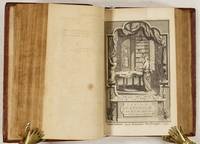
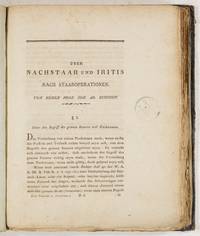
180048396ca. 1800. Abh. k.k. med.-chir. Josephs-Acad. 2. - Wien Bey Albert Camesina 1801 4° 16 435 1 Frontispice Pappband d.Zt.; St.a.Tit. u. Seitenränder; feies Expl. Frist Edition! "Inflammation of the iris was named iritis by Johann Adam Schmidt 1759-1809. In 1801 with Himly he founded the first journal devoted to ophthalmology the ophthalmolische Bibliothek." Further by Johann Adam Schmidt: Reflexionen über die Phänomene einer geschwächten Lebensthätigkeit bey lymphatischen Geschwülsten und über den grund der Tödlichkeit derselben pp.327-324. Ueber eine neue durch Verusche zuverlässig bestättigte Heilungsart der Augenliedlähmung und des Augenliedkrampfes pp.365-386. Garison & Morton No.5836 unknown
176910123000361769. Unknown Binding. Very Good. Framed copper engraving in excellent condition. 17 1/4 x 23 inches. Minimal marking to surface and image is crisp and detailed. Minor edge wear to frame. This is an elegant engraving of the gateway and porters' lodge at Ashburnham House on Dover Street in London. Robert and his brother James Adam forever changed the face of British architecture by introducing innovative Classical design ideas such as can be found in this well-preserved piece. From 1754 until 1759 Adam lived in Italy where he befriended Giovanni Battista Piranesi. Both shared a passion for Roman Classicism and this inspirational friendship pushed both to grow and improve in their crafts. Take a look at our pictures of this exceptional engraving in our photo section. unknown
178436554Stkh. 1784. 8vo. Nyere shirtingryggbd. med marmorerte dekler. 14 355 3 s. Svensk. <br/><br/><em>Med navnestpl. på forsatsbl. Ryggen noe bleket. </em> unknown
17686033NÜRNBERG: George Peter Monath 1768. Tercera edición.- 8º.- Encuadernación en media piel posterior.- Portada a dos tintas.- 6 hojas de Introducción e ÃÂndice de ilustraciones.- 696 páginas.- 4 hojas de ÃÂndice.- 45 láminas grabadas fuera de texto de las cuales 27 plegadas. Excelente ejemplar de esta obra clásica sobre el modo de cazar pájaros la más extensa y completa en su género que dedica un apartado amplio a la crÃÂa del canario. Los grabados representan formas diversas de jaulas trampas reclamos e ingenios para la captura de aves. Nissen 716 - Souhart p. 587 George Peter Monath unknown
176875715G. P. Monath Nürnberg 1768. 1768. priv. Pappband . 696s 44 Kupfer. Frontispiz und Tafel 8 Fehlen. teilw.etw. fleckig sonst in gutem Zustand AZC35.- HC G. P. Monath, Nürnberg 1768.,, unknown
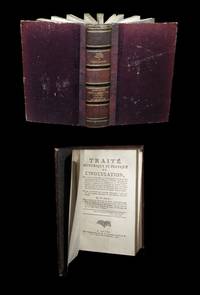
1789283741789. A Reims chez Jeunehomme PÂre et Fils 1789 - A Paris chez Allut 1806. 2 ouvrages reliÂŽs en un fort vol. au format in-8 203 x 128 mm de 1 f. bl. 7 ff. n.fol. et 251 pp. ; xiv - 304 pp. Reliure XIXÂme de demi-chagrin maroquinÂŽ violine dos lisse ornÂŽ de filets gras en noir doubles filets maigres dorÂŽs titre dorÂŽ tranches mouchetÂŽes. Deux ouvrages reliÂŽs en un volume le second est ici amputÂŽ de son deuxiÂme tome. Edition originale pour le premier ; imprimÂŽ ˆ Reims. ''Je n'ai eu d'autre objet en composant cet ÂŽcrit que de substituer une vÂŽritÂŽ prÂŽcieuse ˆ une erreur funeste. Car l'inoculation a toujours beaucoup de sectateurs et d'ennemis mais ne cesserai de dire que ses bienfaits en sont certains.'' LÂŽgÂres altÂŽrations superficielles affectant la reliure. Claires rousseurs dans le corps d'ouvrage du second volume. Du reste belle condition. Rare. b42961 unknown
1794015303Edinburgh: Printed for John Martin 1794. Book measures 16.5x10.cm. 71pp. Bound in modern boards with title label on top cover. Binding in very good clean firm condition. Internally pages clean throughout. A nice clean copy. . First Edition. Hardcover. Very Good. Small 8 Vo. Printed for John Martin Hardcover
1787mon0003248103Leipzig: Johann Friedrich Junius 1787. Hardcover. Good. . Half-leather cover with plain boards shows heavy wear rubbing joints starting some loss at the spine ends. Pages are lightly tanned and foxed. Leipzig: Johann Friedrich Junius hardcover
1787mon0003248102Leipzig: Johann Friedrich Junius 1787. Hardcover. Good. . Half-leather cover with plain boards shows heavy wear and rubbing joints starting some loss at the spine ends. Bookplate and label of former owner on the front endpaper. Pages lightly tanned and foxed. Leipzig: Johann Friedrich Junius hardcover
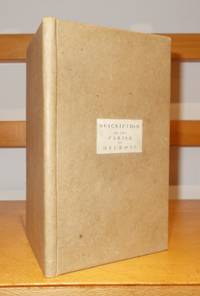
1770357207Bern.: Neue Buchhandlung. 1770. 1st Edition. 8vo. Publisher’s plain gray boards. Spine darkened otherwise very good. 19x12x1.5 cm. German text. An uncommon treatise on potatoes with information on history culture uses storage and cooking. weight: 0.4 lb. Neue Buchhandlung. hardcover
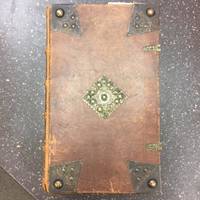
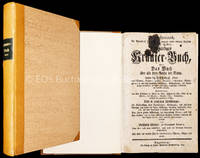
17831277019Augsburg Bavaria Germany: Joseph Wolffischen 1783. Hardcover. Folio 750 pages 24 pages 136 pages. In Very Good condition. Bound in brown leather with blank paneled spine. Front board with metal corner pieces and metal diamond-shaped ornament to center of board. Remnants of clasps present: two metal hooks on fore edge of front board and two torn leather strips affixed to rear board. Boards moderately rubbed. Front free end paper partially detached. Title page shows 1.25 in-long area of damage to lower edge repaired but resulting in loss of publication information. Title page also shows small tear repaired to center of page minimally impacting legibility. Minor repairs to pages 165/166 571/572 633/634 649/650 687/688 701/702 705/706 719/720.<br> <br> Plates preface Parts Two and Three pp. 165 and 567 respectively. Profusely illustrated with over 800 black and white woodcut illustrations including genre scenes individual plants and animals and distilling apparatus. Shelved in Case 4. Adam Lonicer was a German botanist who studied at Marburg and the University of Mainz obtaining his Magister degree at sixteen years of age. After becoming a Doctor of Medicine in 1554 he became the town physician in Frankfurt am Main. His true interest though was herbs and the study of botany. His first important work on herbs the Kräuterbuch was published in 1557 with a large part dealing with distillation. He married Magdalena Egenolff the daughter of Christian Egenolff his Frankfurt publisher and a printer who specialized in herbals. The work that made his name famous is this popular herbal the Kräuterbuch. Lonicer provides us with one of the early descriptions of local flora as well as being one of the first to differentiate deciduous trees from conifers. <br> <br> Complete collation: page 110 misprinted as 100 160 as 142 217 as 21 271 as 217 523 as 532 524 as 534 554 as 454 732 as 571. Pagination consistent with this edition. 1277019. Shelved Dupont Bookstore. Joseph Wolffischen hardcover
17834143DB1783. 2 Teile in 1 Band von 2. Augsburg Wolf 1783. 4 Bl. 566 S. Mit zahlr. Textholzschnitten Moderner Halblederband. Nissen 1218. Äusserst erfolgreiches Destillier- und Kräuterbuch erschien erstmals 1557 in Frankfurt. Es fehlt der zoologische und der mineralogische Teil. Das Papier durchgehend stockfleckig. Das Titelblatt mit grösserem Titenfleck. unknown
1785318437London 1785. The Sixth Edition. First published in 1678 as 'Linguæ Latinæ liber dictionarius quadripartitus'. With 2 maps one of Italy coloured and the other of Rome. 1430pp. Thick 4to. Bound in modern three quarters mottled tan calf and marbleds boards. Fine minor worming in small part of margin. The Sixth Edition. First published in 1678 as 'Linguæ Latinæ liber dictionarius quadripartitus'. With 2 maps one of Italy coloured and the other of Rome. 1430pp. Thick 4to. ESTC T84402 unknown
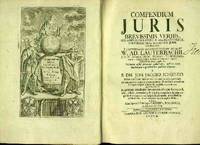
1722950613Tübingen Frankfurt & Leipzig: Cotta ca. 1722. hardcover. Gut. 8 Blatt 745 Seiten 7 Blatt. Halbpergament der Zeit mit Pergamentecken und handschriftlichem Rückenschild. Oktav 215 x 175 cm Rücken mit Fehlstelle im Pergament Einband berieben bestoßen und etwas fleckig Besitzvermerk von alter Hand auf Titel sehr zahlreiche zeitgenössische Marginalien innen wenig fleckig im Ganzen ordentlich erhalten. "Wolfgang Adam Lauterbach 1618 - 1678 war einer der bedeutendsten Juristen des usus modernus pandectarum in Württemberg. Im November 1648 erhielt er an der Universität Tübingen einen Lehrstuhl für Pandekten. . Neben der Lehrtätigkeit hatte Lauterbach auch mehrfach Ämter in der Universitätsverwaltung inne er wurde achtmal zum "rector magnificus" und oft zum Dekan der juristischen Fakultät gewählt. . Sein bekanntestes Werk ist das >Compendium Juris<. Dieses Werk wurde aber nicht von ihm selbst sondern von seinem Schüler Johann Jacob Schütz Pietist und Jurist 1640 - 1690 herausgegeben. Das Buch war eine der verbreitetsten Erläuterungen der Pandekten es wurde von 1679 bis 1744 vielfach aufgelegt." vgl. wikipedia. Seine besondere Bedeutung bekommt das vorliegende sehr breitrandige Exemplar durch die überbordenden Marginalien von Johann Friedrich Anton Meier Hildesheim 1724 - 1796 Paderborn der seinen vollen Namen selbstbewußt auf dem Vorsatz zu wissen gibt. Der Eintrag ist "Erfurt 1745" datiert Meier war damals dort Student. Später wurde er einer der angesehensten Juristen in Paderborn wo er Hofrichter Geheimer Rat und Kanzler war. vgl. Zeitschrift für vaterländische Geschichte und Alterthumskunde Westfalens 1843 Seite 311 ff. - Weitere Bilder auf Anfrage oder auf unserer Homepage. Wegen Urlaub kann Ihre Bestellung / Anfrage erst nach dem 21.06.2026 bearbeitet werden. - Because of holidays your order / question can be handled only after 06/21/2026. Cotta hardcover
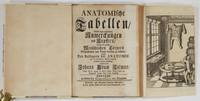
1725687051725. Danzig zu finden bey Cornelius von Beughem gedruckt von Thomas Johann Schreiber 1725 8° 24 Bl. 28 Kupfer auf 10 Taf.; Danzig 1725 36 Bl. Halbpergamenteinband; feines Expl. Sehr seltene dritte Ausgabe der "Anatomischen Tabellen" nebst erster Auflage der "Anmerkungen welche den Anatomischen Tabellen zu mehrer Erläuterung und deutlichem Begrieffe beygefüget" welche erstmals hier 1725 beigefügt worden sind. Diese beiden Teile wurden dann in den späteren Auflagen vereinigt und zu dem bekanntesten Kompendium der Anatomie des 18.Jhdts. Dieses Werk "stellte den ersten erfolgreichen Versuch dar den Wissensstoff der Anatomie der in den vergangenen zwei Jahrhunderten seit dem Erscheinen des Buches von Andreas Vesals "De corporis humani fabrica" im Jahre 1543 gewaltig angewachsen war in übersichtlicher und leicht lernbarer Form zusammenzufassen und mit Bildern zu erläutern." H.Goerke Die Beziehungen Japans zur europäischen Medizin im 18.Jhdt. J.Jap.Soc.Med.Hist. 20 1974 pp.418-388 Johann Adam Kulmus 1689-1745 aus Breslau war Schüler von Herman Boerhaave 1668-1738 und des Anatomen Bernhard Albinus 1833-1721 in Leiden. Nach einer Studienreise durch Holland war er als Arzt in Danzig tätig und Professor für Medizin und Physik am Gymnasium in Danzig und hatte dort für seine Schüler und für Wundärzte die "Anatomischen Tabellen" verfaßt. Durch holländische Seefahrer gelangte sein Werk auch nach Japan und wurde übersetzt und unter dem Titel "Kaitai shinsho" von R.Mayeno herausgegeben. Dieses Buch war der Grundstein westlicher Medizin in Japan. Foundation of western Medicine in Japan! The rare third and first complete of edition "Die Anatomische Tabellen" is the first edition of "Anmerkungen welche den Anatomischen Tabellen zu mehrer Erläuterung und deutlichem Begrieffe beygefüget". The later editions combined these two parts. The Compendium became very well known and wide-spread and it was the first anatomical compendium of modern medicine v. Goecke. The first edition is extremely rare since it was only designed for the use of Kulmus' students. The "Anatomische Tabellen" were even translated into Japanese. After the Japanese physicians MAYENO RYOTAKU 1723-1804 GENPAKU SUGITA 1733-1817 and JUN'AN NAKAGAWA 1739-1786 had convinced themselves the 4th of March 1771 in Kotsukappara near Edo by the dissection of an executed about 50 years old Japanese woman Aocha-Baba Mother Green Tea that those "Tabellen" presented the true anatomical relations thus demonstrated that anatomy as it had been taught in Japan up to that time was false. "The book in no way differed from what we saw before us. If we could translate parts of this Tâheru Anatomia we could gain a clear understanding entirely and advance medicine beyond its present level." Genpaku Sugita Rangaku katohajime 1815. So Kaitai Shinsho New Book on Human Dissections was the first complete translation of a medical work which originated on a German text. It represented an empirical approach to nature which was undermining the prestige of Chinese medicine in Japan. It took about 4 years and eleven attempts to translate it and was edited by GENPAKU SUGITA in 1774. The translator MAYENO RYOTAKU didn't sign it because of his extreme modesty. -cf. Hirsch-H. III 632; Heinrich Vianden Die Einführung der deutschen Medizin in Japan der Meiji-Zeit p.23ff.; Y.Fujikawa Der Arzt in der Japanischen Kultur p.58. unknown
1759636031759. Neue vermehrtes und verbesserte Auflage. - Leipzig Caspar Fritschen Handlung 1759 8° 10 121 6 pp. mit 26 Kupfertafeln inkl. Portr.-Frontisp num. II bis XXVIII Halbledereinband der Zeit; feines Expl. Vollständiges Exemplar dieses bekanntesten Kompendiums der Anatomie des 18.Jhdts. Johann Adam Kulmus aus Breslau 1689-1745 studierte an verschiedenen europäischen Universitäten. Nach einer Studienreise durch Holland war er als Arzt in Danzig tätig. Durch holländische Seefahrer gelangte sein Werk auch nach Japan und wurde übersetzt und unter dem Titel "Kaitai shinsho" von R. Mayeno herausgegeben. Dieses Buch war der Grundstein westlicher Medizin in Japan. Kulmus practiced at Danzig and his Tabulae anatomicae were very popular and have been repeatedly reprinted and translated. The "Anatomische Tabellen" were even translated into Japanese after a Japanese physician named MAYENO had satisfied himself by a dissection of a Japanese woman Aocha-Baba that they presented the true anatomical relations and thus demonstrated that such anatomy as had been taught in Japan up to that time was absolutely false. cf. Hirsch-H. III 632; Choulant-Frank p.34 unknown
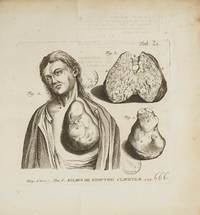
1732583831732. Disp. chir. 5/162. - Hrsg. v. Albrecht v. Haller. - Lausannae Sumptibus Marci-Michael Bousquet & Socior 1756 4° pp.653-666 1 gefalt. Kupferstichtafel Rückenbroschur. Zweiter Abdruck "Dissertationem anatomico-chirurgicam de exostosi steatomatode claviculae eiusque felici sectione . / Joannes Adamus Kulmus Präses; Paull. Henr. Gerard. Moehring Resp." Praeses: Johann Adam Kulmus 1689-1745. Resp.: Paul Heinrich Gerhard Möhring 1710-1792. Paul Heinrich Gerhard Moehring "geb. in Jever Oldenburg 21. Juli 1710 studirte in Danzig unter KULMUS und KLEIN in Breslau Dresden und Wittenberg promovirte hier 1733 liess sich dann in seiner Vaterstadt nieder wo er 1742 Bezirksphysicus und 1743 zum 1. Arzt des Fürsten von Anhalt-Zerbst ernannt wurde. Er starb 28. Oct. 1792. M. war ein tüchtiger Botaniker und Zoolog; die Pflanzengattung "Moehringia" aus der Familie der Caryophylleen ist ihm zu Ehren so benannt. Ausser einer sehr grossen Zahl von Abhandlungen im Commerc. litterar. Norimbergense und in den Acta der k. k. Leopold. Akad. hat er noch verfasst: "Schediasma de quibusdam praejudiciis medicis" Danzig 1732 - "Primae lineae horti parvi etc." Oldenburg 1736 - "Historiae medicinales junctis fere ubique corollariis praxin medicam illustrantibus" Amsterdam 1739 ; 1761 -"Kurzer Entwurf der jetzt in den Niederlanden befindlichen pestilenzialischen Viehseuchen" Aurich 1745 - "Arnum gencrau Bremen 1752 u. A. m." Pagel Hirsch-H. IV p.226 siehe - Boerner II p. 171; III p. 419 738; Biogr. méd. VI p. 279; Dict hist. III p. 586. unknown
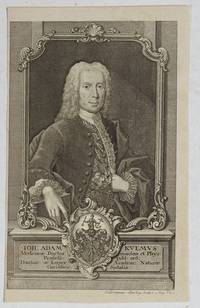
1730640741730. Disp. chir. 4/143. - Hrsg. v. Albrecht v. Haller. - Lausannae Sumptibus Marci-Michael Bousquet & Socior 1755 4° pp.275-294 Rückenbroschur. Johann Adam Kulmus "wurde geboren am 18. März 1689 zu Breslau. Er besuchte das Gymnasium in seiner Vaterstadt später in Danzig und studirte von 1711-1715 in Halle Leipzig Straßburg und Basel Medicin und Naturwissenschaften. Nachdem er sein Examen bestanden hatte hielt er sich zunächst einige Zeit in Holland auf und ließ sich nach seiner Rückkehr als praktischer Arzt in Danzig nieder. Im Jahre 1725 wurde er zum Professor der Medicin und der Naturwissenschaften an dem dortigen Gymnasium ernannt. Kulmus war Mitglied der Leopoldinischen Akademie und der Berliner Gesellschaft der Wissenschaften. Er starb am 29. Mai 1745 zu Danzig. Außer zahlreichen medicinischen Schriften schrieb er: "Elementa philosophiae naturalis" Gedani 1722 sowie verschiedene kleine naturwissenschaftliche Abhandlungen wie: "Dis. de lapidibus" Gedani 1727; "Exercitatio de Insectis" Gedani 1729 u. a. m." Wilhem Heß ADB XVII 1883 p.364 Kulmus Johann Adam Präses Knapio Johannes Jacobo Resp. unknown
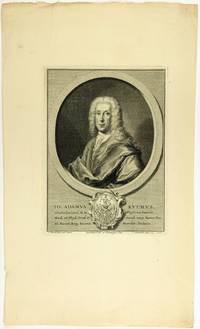
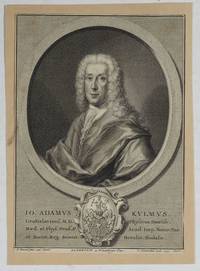
1740276281740. Kupferstich I.Wessel pinx 1740. Dantzig; J.Houbraken sculp. 1743. Amsterdamm 192x144 auf 366x244 mm. Johann Adam Kulmus was born on Danzig in 1689 and studied medicine at Halle Strassburg and Basel. In 1725 he became a lecturer in medicine at the Gymnasium in Danzig where he died in 1745. His most noted work was the anatomical textbook Anatomischen Tabellen first published in Danzig 1722. The work was extremely popular and was translated into Latin French Dutch and eventually Japanese. Most of the illustrations are imitations of those in Philippe Verheyen's Corporis humani anatomia which are themselves heavily patterned after Vesalius. By 1770 Japan had been cut off from the rest of the world for well over a century with the exception of limited trade with the Netherlands and China. About that time a group of Japanese physicians led by Maeno Ryotaku 1733-1803 and Genpaku Sugita 1733-1817 undertook the study of Dutch medicine and in 1771 managed to obtain copies of the Dutch translation of Kulmus' anatomical work entitled Ontleedkundige tafelen published in Amsterdam in 1734. Taking the book with them to the dissection of an executed criminal's corpse they were enthralled by the accuracy of the Dutch work and decided to translate it into Japanese. After years of work which involved finding a new vocabulary in Japanese for many anatomical terms the work was published under the title Kaitai shinsho in Tokyo in 1774. Kaitai shinsho is considered to be the first Western book published in Japan in the Japanese language. It was also a large step in the development of European medicine in Japan mainly because it called into question the Chinese anatomical theories of Japan's kampo medicine. -cf. NLM unknown
1741277431741. Hieronymus Sperling Sculps. Aug. Vind Leipzig bey Caspar Fritsch 1741 121 x 202 cm. Kulmus practised at Danzig and his Tabulae anatomicae were very popular and have been repeatedly reprinted and translated. The "Anatomische Tabellen" were even translated into Japanese after a Japanese physician named MAYENO had satisfied himself by a dissection of a Japanese woman Aocha-Baba that they presented the true anatomical relations and thus demonstrated that such anatomy as had been taught in Japan up to that time was absoltely false. cf. Hirsch-H. III 632; Choulant-Frank p.34. unknown
1740647551740. Kupferstich I.Wessel pinx 1740. Dantzig; J.Houbraken sculp. 1743. Amsterdamm 192x144 auf 10ßx133 mm. mm. Johann Adam Kulmus was born on Danzig in 1689 and studied medicine at Halle Strassburg and Basel. In 1725 he became a lecturer in medicine at the Gymnasium in Danzig where he died in 1745. His most noted work was the anatomical textbook Anatomischen Tabellen first published in Danzig 1722. The work was extremely popular and was translated into Latin French Dutch and eventually Japanese. Most of the illustrations are imitations of those in Philippe Verheyen's Corporis humani anatomia which are themselves heavily patterned after Vesalius. By 1770 Japan had been cut off from the rest of the world for well over a century with the exception of limited trade with the Netherlands and China. About that time a group of Japanese physicians led by Maeno Ryotaku 1733-1803 and Genpaku Sugita 1733-1817 undertook the study of Dutch medicine and in 1771 managed to obtain copies of the Dutch translation of Kulmus' anatomical work entitled Ontleedkundige tafelen published in Amsterdam in 1734. Taking the book with them to the dissection of an executed criminal's corpse they were enthralled by the accuracy of the Dutch work and decided to translate it into Japanese. After years of work which involved finding a new vocabulary in Japanese for many anatomical terms the work was published under the title Kaitai shinsho in Tokyo in 1774. Kaitai shinsho is considered to be the first Western book published in Japan in the Japanese language. It was also a large step in the development of European medicine in Japan mainly because it called into question the Chinese anatomical theories of Japan's kampo medicine. -cf. NLM unknown
173233240-153Amsterdam Janssonius van Waesberge 1732. With 27 of 28 engr. folding plates numbered II-XXVIII lacks plate 1: frontispiece illus. 16/17 and 22/23 equalling two plates woodcut end-pieces. 2 cols. 6 unn. leaves incl. title 179 10 leaves. 8vo. Contemp. calf slightly rubbed. Sm. stamp J.A. Schmid on title. Amsterdam Janssonius van Waesberge 1732. A work on anatomy for medical students by the Danzig physician J. A. Kulmus or Kulm 1689-1745 first published in Latin in 1722. Incorporated are the latest researches of Verheyen Bartholinus and others. The author's sources in what amounts to a history of anatomy are detailed in the first chapter. The remaining 28 sections are given to a detailed description and illustration of anatomy and histology. With its detailed plates this work attained a wide circulation all over Europe; there were numerous editions and translations wiht partly new plates. It was the first Western book to be translated and published in Japan 1774. A final German edition was done by Carl Gottlob Kühn in 1814.- Slightly foxed throughout. - Cf. Choulant History and bibliography of Anatomic Illustration p. 34. SCIENCE: MEDICINE ; ANATOMY ; MED ; Amsterdam, Janssonius van Waesberge unknown
1732398561732. Amsterdam Janssonico-Waesbergios 1732 8° 12 179 19 1 Erores pp. mit 28 Frontisp. = 1.Taf. 1617 2223 Doppeltafeln Ledereinband d.Zt; feines Expl. Seltene und frühe lateinische Ausgabe der "Anatomischen Tabellen" des bekanntesten Kompendium der Anatomie des 18.Jhdts. Dieses Werk "stellte den ersten erfolgreichen Versuch dar den Wissensstoff der Anatomie der in den vergangenen zwei Jahrhunderten seit dem Erscheinen des Buches von Andreas Vesals "De corporis humani fabrica" im Jahre 1543 gewaltig angewachsen war in übersichtlicher und leicht lernbarer Form zusammenzufassen und mit Bildern zu erläutern." H.Goerke Die Beziehungen Japans zur europäischen Medizin im 18.Jhdt. J.Jap.Soc.Med.Hist. 20 1974 p.418-388 Johann Adam Kulmus 1689-1745 aus Breslau war Schüler von Herman Boerhaave 1668-1738 und des Anatomen Bernhard Albinus 1833-1721 in Leiden. Nach einer Studienreise durch Holland war er als Arzt in Danzig tätig und Professor für Medizin und Physik am Gymnasium in Danzig und hatte dort für seine Schüler und für Wundärzte die "Anatomischen Tabellen" verfaßt. Durch holländische Seefahrer gelangte sein Werk auch nach Japan und wurde übersetzt und unter dem Titel "Kaitai shinsho" von R. Mayeno herausgegeben. Dieses Buch war der Grundstein westlicher Medizin in Japan. Foundation of western Medicine in Japan! The rare Latin edition printed in Amsterdam of "Die Anatomische Tabellen". The Compendium became very well-known and wide-spread and it was the first anatomical compendium of modern medicine v. Goecke. The first edition is extremely rare since it was only designed for the use of Kulmus' students. The "Anatomische Tabellen" were even translated into Japanese. After the Japanese physicians MAYENO RYOTAKU 1723-1804 GENPAKU SUGITA 1733-1817 and JUN'AN NAKAGAWA 1739-1786 had convinced themselves the 4th of March 1771 in Kotsukappara near Edo by the dissection of an executed about 50 years old Japanese woman Aocha-Baba Mother Green Tea that those "Tabellen" presented the true anatomical relations thus demonstrated that anatomy as it had been taught in Japan up to that time was false. "The book in no way differed from what we saw before us. If we could translate parts of this Tâheru Anatomia we could gain a clear understanding entirely and advance medicine beyond its present level." Genpaku Sugita Rangaku katohajime 1815. So Kaitai Shinsho New Book on Human Dissections was the first complete translation of a medical work which originated on a German text. It represented an empirical approach to nature which was undermining the prestige of Chinese medicine in Japan. It took about 4 years and eleven attempts to translate it and was edited by GENPAKU SUGITA in 1774. The translator MAYENO RYOTAKU didn't sign it because of his extreme modesty. -cf. Hirsch-H. III 632; Heinrich Vianden Die Einführung der deutschen Medizin in Japan der Meiji-Zeit p.23ff.; Y. Fujikawa Der Arzt in der Japanischen Kultur p.58. Vorgebunden / bound in the front: DOUGLAS James 1675-1742. Bibliographiae anatomicae specimen: sive catalogus omnium pene auctorum qui ab Hippocrate ad Harveaum. Leiden: Gisbert Langerak 1734 8° Title printed in red and black 24 263 13 pp. Second edition enlarged of "the first attempt at a systematic medical bibliography" Garrison-Morton 6745 1st ed. 1715. This bio-bibliography which is also the first bibliography of anatomy describes about 2000 titles. Nachgebunden / bound in the back: DEL PAPA Giuseppe 1648-1735: De praecipuis humoribus qui humano corpore reperiuntur deque eorum historia qualitatibus et officiis exercitatio . . . Accedit Hieronymi Barbati exercitatio de sanguine et eius sero. Leiden: Conrad Wishoff 1736 8° 4 203 1 pp. Work on humoral pathology first published in 1733 also reprinting the 1667 tract on the blood by Girolamo Barbato announcing the discovery of serum. See Hirsch I 284. unknown
17341409656Amsterdam: Janssons à Waesberge 1734. First French Edition. Hardcover. Octavo 14 227 7 pages plus frontispiece and plates iii-xvi xviii-xxii xxiv-xxvi xxviii 24 total. In Very Good minus condition. In plum leather quarter binding with marbled paper boards; spine with gilt fillets ant titling. Mild shelf wear to boards with some rubbing along edges of leather elements and shallow chipping to the head of the spine. Text block shows light wear along edges. Lightly age toned and sparsely foxed throughout. Faint stain on front endpaper with some other scattered faint stains throughout. Shelved in Room A. 1409656. Special Collections - Upstairs. Janssons à Waesberge hardcover
177520371Wien 1775. Zwei Teile in einem Band Rücken lädiert Wasserrand auf den ersten Seiten ansonsten gute Erhaltung Editio novissima Emerici Felicis Bader 8°. Ldr. Philologie unknown