Walker AdamABAA
68 résultats
17994947London: Printed for the Author. 1799. First edition. First edition. Lg. 4to. xviii572pp. Index. Plus 4pp. subscriber's list bound in near front. Lacking the half-title. Illustrated with 47 copper engraved folding plates. Cont. spotted calf nicely rebacked red calf spine label. The 1799 original edition is quite scarce. With some great engravings such as the "Extinguishing Fire Machine" "Walker's Improved Steam Engine" etc. Printed for the Author. unknown books
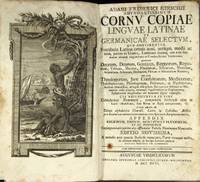
179648977Avgvstae Vindelicorvm i.e. Augsburg: officinae librariae Joseph Wolffianae 1796. Thick 8vo pp. xxviii 3028 columns; engraved frontispiece; contemporary full calf gilt-paneled spine in 6 compartments old brown morocco label in 1 edges stained red; several old ownership inscription on the front flyleaf some cracking at the tops of both joints; good and sound. A comprehensive German-Latin dictionary. Vancil p. 139 cites the 1750 and 1754 editions; Zaunmuller col. 254. <br/><br/> officinae librariae Joseph Wolffianae unknown books
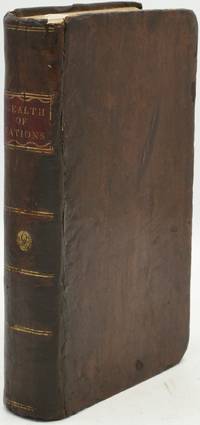
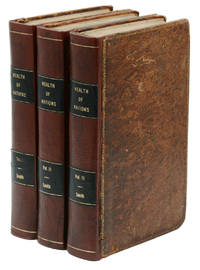
1796289419Philadelphia: Printed By Thomas Dobson 1796. Second American Edition. Hard Cover. Very Good binding. Volume 2 only of 3 volumes; the Second American Edition. Scattered foxing. Full sheep binding. Edgewear to spine with some small loss of leather at top. Front board has been discreetly reattached. A quite serviceable copy of this volume from this early edition. Very Good binding. Printed By Thomas Dobson unknown books
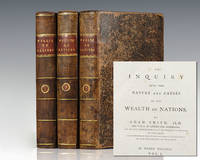
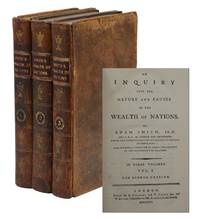
17862442London: A. Strahan and T. Cadell 1786. Fourth edition. Contemporary calf. Very Good. HANDSOME EIGHTEENTH-CENTURY EDITION OF THE "GREATEST CLASSIC OF MODERN ECONOMIC THOUGHT.". This classic work of the Scottish Enlightenment - originally published in the same year as the Declaration of Independence and Gibbon's History of the Decline and Fall of the Roman Empire - is a magisterial study of the sources of national wealth and of the political and institutional arrangements that foster or suppress it. Based on a 2016 analysis of data from Google Scholar The Wealth of Nations is the second only to Marx's Das Kapital as the most-frequently cited among books in the social sciences published before 1950. And while Smith recognized the economic benefits that flow from voluntary transactions between individuals and is as a result sometimes thought of as the apostle of laissez faire capitalism he supported several forms of government intervention in the economy either to create and maintain the necessary conditions for economic growth or to ameliorate the incidental harms that such conditions could create.<br /> <br /> The Wealth of Nations proposed that "no society can surely be flourishing and happy of which the far greater part of the members are poor and miserable. It is but equity besides that they who feed cloath and lodge the whole body of the people should have such a share of the produce of their own labour as to be themselves tolerably well fed cloathed and lodged." WN this edition vol. 1 page 119. Smith believed that this condition of society could be achieved only through the higher productivity that is made possible by the division of labor. As an example of the division of labor Smith offered the example of the "trade of the pin-maker" which he apparently learned about from Diderot and d'Alembert's Encyclopédie in which "one man draws out the wire another straights it a third cuts it a fourth points it a fifth grinds it at the top for receiving the head ." and so forth. WN this edition vol. 1 pages 7-8.<br /> <br /> In a famous passage Smith explains that such arrangements arise naturally from voluntary transactions between individuals based on their common recognition of the benefits that division of labor creates:<br /> <br /> This division of labour from which so many advantages are derived is not originally the effect of any human wisdom which foresees and intends that general opulence to which it gives occasion. It is the necessary though very slow and gradual consequence of a certain propensity in human nature which has in view no such extensive utility; the propensity to truck barter and exchange one thing for another.<br /> <br /> . Man has almost constant occasion for the help of his brethren and it is in vain for him to expect it from their benevolence only. He will be more likely to prevail if he can interest their self-love in his favour and shew them that it is for their own advantage to do for him what he requires of them. Whoever offers to another a bargain of any kind proposes to do this. Give me that which I want and you shall have this which you want is the meaning of every such offer; and it is in this manner that we obtain from one another the far greater part of those good offices which we stand in need of. It is not from the benevolence of the butcher the brewer or the baker that we expect our dinner but from their regard to their own interest. We address ourselves not to their humanity but to their self-love and never talk to them of our own necessities but of their advantages. WN this edition vol. 1 pages 19-21.<br /> <br /> "Throughout the book Smith's 'system of natural liberty and justice' . plays a pervasive role as explanatory model and regulatory ideal though the famous image of an 'invisible hand' appears late and only once in the whole work . It appears at volume 3 page 181 of this edition. A quasi-Newtonian treatment is given to those forces which act like gravity when market price departs from natural price and it always carries with it a normative implication that policies or practices that prevent these forces from acting are detrimental to the public interest. Monopolies special privileges informal combinations by merchants or employers to raise prices and keep down wages import duties export bounties as well as institutions such as apprenticeships and restrictions on labour mobility . are all condemned from this perspective." Dictionary of National Biography.<br /> <br /> Smith was not unmindful of possible deleterious consequences of the division of labor: "The man whose whole life is spent in performing a few simple operations of which the effects too are perhaps always the same or very nearly the same has no occasion to exert his understanding or to exercise his invention in finding out expedients for removing difficulties which never occur. He naturally loses therefore the habit of such exertion and generally becomes as stupid and ignorant as it is possible for a human creature to become." WN this edition vol. 3 pages 182-83. Smith believed that public elementary education would compensate for this tendency.<br /> <br /> Edition: This copy of The Wealth of Nations is the fourth edition 1786 issued ten years after the first. It was the penultimate edition published during Smith's lifetime the last being the fifth edition of 1789. It carried forward the significant changes made in the third edition of 1784 without making any material additional changes of its own as Smith specifically admitted in the prefatory Advertisement to this edition. A detailed collation of the first five editions is provided in Edwin Cannan's 1904 edition of Smith's work.<br /> <br /> Provenance: With the armorial bookplate of Thomas Howitt bearing the motto "Aquila Non Capit Muscas" "Eagles do not catch flies" on the front pastedown of each volume. Howitt may have been the Lancaster physician of that name 1785-1832; see archives of the Royal College of Surgeons of England ref no. GB 0114 MS0092 the entry for Howitt's son also named Thomas Howitt. It is possible that Howitt's son Thomas Jr. 1830-1922 was responsible for the additions to these volumes described below.<br /> <br /> Volume 2 is bound with additional pages at the end on which a prior owner has pasted articles on the California gold rush of 1849 citing a discussion on page 354 of the volume in which Smith argues that "of all those expensive and uncertain projects however which bring bankruptcy upon the greater part of the people who engage in them there is none perhaps more perfectly ruinous than the search after new silver and gold mines." Another extract pasted at the beginning of volume 1 from an unknown source recommends the reduction of taxes.<br /> <br /> London: A. Strahan and T. Cadell 1786. Octavo contemporary full calf with elaborately gilt-decorated spines; vol 1 rebacked with original spine laid-down. Bound without half-titles. Vol 1 spine darker more toned than the other two. Light flaking to spines a little chipping to leather at extremities. Some foxing to title and first few leaves of each volume; otherwise text clean. A lovely early set of Smith's masterpiece. A. Strahan and T. Cadell unknown books
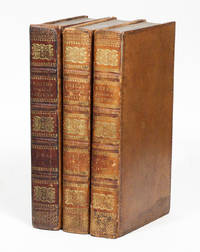
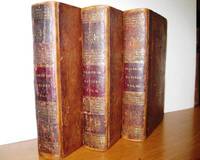
1799124769London: A. Strahan and T. Cadell 1799. Rare 18th century edition of Adam Smith's magnum opus and cornerstone of economic thought. Octavo 3 volumes. Bound in full contemporary tree calf gilt titles to the spine morocco spine labels. In very good condition. A very nice set of this classic work. Adam Smith's masterpiece first published in 1776 is the foundation of modern economic thought and remains the single most important account of the rise of and the principles behind modern capitalism. "The history of economic theory up to the end of the nineteenth century consists of two parts: the mercantilist phase which was based not so much on a doctrine as on a system of practice which grew out of social conditions; and the second phase which saw the development of the theory that the individual had the right to be unimpeded in the exercise of economic activity. While it cannot be said that Smith invented the latter theory.his work is the first major expression of it. He begins with the thought that labour is the source from which a nation derives what is necessary to it. The improvement of the division of labour is the measure of productivity and in it lies the human propensity to barter and exchange.Labour represents the three essential elements-wages profit and rent-and these three also constitute income. From the working of the economy Smith passes to its matter -'stock'- which encompasses all that man owns either for his own consumption or for the return which it brings him. The Wealth of Nations ends with a history of economic development a definitive onslaught on the mercantile system and some prophetic speculations on the limits of economic control.The Wealth of Nations is not a system but as a provisional analysis it is complete convincing. The certainty of its criticism and its grasp of human nature have made it the first and greatest classic of modern economic thought" PMM. A. Strahan and T. Cadell unknown books
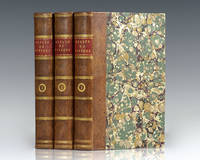
1793124986London: A. Strahan and T. Cadell 1793. Rare 18th century edition of Adam Smith's magnum opus and cornerstone of economic thought. Octavo 3 volumes bound in half calf over marbled boards gilt titles to the spine morocco spine labels. In near fine condition. A very nice set of this classic work. Adam Smith's masterpiece first published in 1776 is the foundation of modern economic thought and remains the single most important account of the rise of and the principles behind modern capitalism. "The history of economic theory up to the end of the nineteenth century consists of two parts: the mercantilist phase which was based not so much on a doctrine as on a system of practice which grew out of social conditions; and the second phase which saw the development of the theory that the individual had the right to be unimpeded in the exercise of economic activity. While it cannot be said that Smith invented the latter theory.his work is the first major expression of it. He begins with the thought that labour is the source from which a nation derives what is necessary to it. The improvement of the division of labour is the measure of productivity and in it lies the human propensity to barter and exchange.Labour represents the three essential elements-wages profit and rent-and these three also constitute income. From the working of the economy Smith passes to its matter -'stock'- which encompasses all that man owns either for his own consumption or for the return which it brings him. The Wealth of Nations ends with a history of economic development a definitive onslaught on the mercantile system and some prophetic speculations on the limits of economic control.The Wealth of Nations is not a system but as a provisional analysis it is complete convincing. The certainty of its criticism and its grasp of human nature have made it the first and greatest classic of modern economic thought" PMM. A. Strahan and T. Cadell hardcover books
1791140941390London: Printed for A. Strahan; and T. Caddell 1791. Sixth Edition. Very Good. The Sixth Edition. Complete in three volumes In contemporary full tree calf rebacked with new spines. Bindings worn former owner bookplate to pastedowns. Old tidemarks to preliminary pages and faintly to textblock edge light foxing and browning to pages light and sporadic pencil marks in text. Printed for A. Strahan; and T. Caddell unknown books
1796140940161London: A. Strahan; and T. Caddell jun and W. Davies 1796. Eighth Edition. Very Good. The Eighth Edition. Complete in three volumes bound with half-title present by Pigge of Lynne with a small circular binder's label to front pastedown of each volume; in contemporary full tree calf with smooth spines divided into compartments with double gilt rule lettered on new red goatskin labels and numbered in a new small circular green goatskin label with gilt stamped urns of trophies to top compartment. Binding worn at corners and spine ends; outer joints cracked though binding remains firm. Previous owner names at front pages toned occasional crease occasional foxing heaviest at preliminary and terminal pages. Small dampstain to upper corner of last few pages of Volume II. An early set published in the late 18th century in a charming contemporary binding. A. Strahan; and T. Caddell jun and W. Davies unknown books
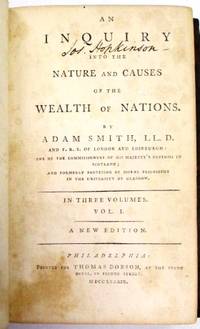
178932679Philadelphia: Thomas Dobson 1789. viii 9-412; vi 7-430; v 1 blank 7-387 55 pp. Volumes I and II with the ownership signature of Joseph Hopkinson prominent Philadelphia and Jersey lawyer who defended Justice Samuel Chase in his impeachment trial and the Whiskey Rebellion defendants; son of the Signer Francis Hopkinson. Volume III with the ownership signature of "J.P. Cilley 1873". The three volumes bound in original calf the first two volumes with gilt borders rebacked with gilt-lettered morocco spine labels. Minor wear clean text Very Good.<br/><br/> The first American edition. 'Printing and the Mind of Man' describes this work as "the first and greatest classic of modern economic thought." <br/>Evans 31196. PM 221 London 1776. Kress 3288. Thomas Dobson unknown books
179630670Philadelphia: Thomas Dobson 1796. 412; 430; 387 1 blank 53 1 blank pp. Contemporary tree calf some chipping rebacked with remnants of original spines laid down. Scattered toning generally light foxing lightly worn. Good. <br/><br/> The second American edition the first having issued in 1789 also published by Dobson. 'Printing and the Mind of Man' describes this work as "the first and greatest classic of modern economic thought." <br/>Evans 31196. PMM 221 London 1776. Kress 3288. Thomas Dobson unknown books
179048326Dublin: printed by P. Byrne 1790. 6 volumes 8vo engraved frontispiece 2 folding engraved maps and 5 folding tables; contemporary full mottled calf red and black morocco labels on spines 2 lacking; spine ends chipped extremities rubbed and worn but in all a good serviceable set. Engraved bookplates of Alexander Crofts. First published in 2 volumes folio in 1762. Anderson 1693-1765 was a Scottish economist and for 40 years was a clerk in South Sea House the headquarters of the South Sea Company. Late in his life Anderson traveled to the American colonies begetting a son Adam E. Anderson later noted for being an early settler and planner of the Ohio Territory. <br/><br/> printed by P. Byrne unknown books
1787000055Göttengen: J. C. Dieterich 1787. Half Calf. Very Good . Folio 39.2 x 24.6 cm Large paper copy bound in later half calf and marble boards. Collation: 2 iii-xlv 1 Err. 1-124 8 pp. 31 3 folding engraved plates. The present half calf binding replaced the original green-paper boards. The new binding has raised bands and gilt decorated panels with brief gilt title and author stamped into red morocco label in upper panel. The boards and corners are in very good condition. There is upper edge paper repair to front free end paper and title page presumably replacing removed early ownership information. The text proper including the half title not mentioned by Sabin is very clean and bright. The personal circular stamp of previous owner Inz. Mgr. M. Kubiak is in the blank area of the fore edge on p. xxxix and the lower right corner of Tab. III. The plates are generally very clean except for Tab XVIII XXVI XXIX and XXXI where there is striking from the printing of the plate or minor spot in center area away from image Tab. XXXI. Plate XXVI has the most striking near the stub area. It is also the only plate that was placed on the stub too high and the upper edge with Tab number was trimmed during the rebinding with number unreadable. The table on pp. xxxviii- xlv lists properties of 21 North American trees with aspects of growth roots base location/habitat bark wood/lumber leaves sex flowering time seeds seed maturity beginning of growth life span propagation and uses of timber. <br/><br/>Each tree illustrated is discussed separately in the text portion of this work. Wangenheim gives the German Latin and English name for each tree along with Latin description and cites authors who have named and described the tree previously. Several of the trees were new and are described by Wangenheim who cites Linneaus Species Plantarum and Gronovius Flora Virginiana for the other trees. This is one of the first systematic treatment of North American trees with illustrations that would be suitable for a climate outside North America other than Catesby's 1763 Hortus britanno-americannus… and predates Michaux's first illustrated work on oakes by 14 years. There was an earlier publication by Wangenheim that was more of a catalog of trees he observed in his travels as an Hessian soldier with the British troops during the War of Independence. All of the plates were made from field drawings done by Wangenheim although none of them is signed. Johnston notes Cleveland Collection p. 537 that Wangenheim returned to "Prussia where he engaged in forestry. This is the first edition of this work on introducing North American trees into Germany. This is the first edition of this work on introducing North American trees into Germany." Cleveland 574; Lib. Arnold Arboretum p. 730; Nissen BBI 2105; Rehder I 304; Sabin 101238 J. C. Dieterich unknown books
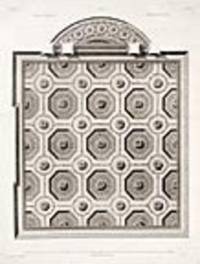
177717132London 1777. Copper engraving. Engraved by Roe. In excellent condition. An elegant engraving of the elaborate ceiling in the dining room of Sir Watkin Williams Wynn's celebrated house in St. James's Square London.<br/> <br/>Robert and his brother James Adam forever changed the face of British architecture by introducing innovative Classical design ideas. From 1754-57 Robert lived in Italy where he had a long productive friendship with Piranesi which was inspirational for both men. Adam's first book on Diocletian's palace in Dalmatia is clearly very like the archaeological investigations Piranesi was making at the same time of similar ruins. Piranesi's friendship and passion for Roman Classicism were seminal influences on Adam and the greatest single factor other than his own talent in the work Adam produced on his return to England. Upon his return the brothers launched their career by building the Adelphi from the Thames to the Strand in London which although not a commercial success at the time included one of London's most cherished buildings the Adlephi Theatre. Together the Adam brothers designed and built some of the most famous buildings in England including such bastions of English architecture as Kenwood House Keddlestone Manor and Syon House. To the interiors of their English country houses the Adams brought wonderful ornamental elements in niches lunettes festoons and reliefs. Their classically designed buildings were so numerous in London that they changed the prevailing feel of the city and established their brand of neo-Classicism as the model of elegance and importance. It is asserted that the brothers originated the concept of the uniform facade attached to the typical English row house an architectural device that distinguishes London buildings. This monumental contribution is evidenced in the Adams' designs for Portland Place and Fitzroy Square and these were used as architectural models for the whole city. The brothers brought their talents into other areas by designing furniture to complement their beautiful interiors and by creating and publishing a treatise of design entitled 'Works in Architecture'. The work was published in three volumes over an extended span of time beginning in 1773 with the final volume being published posthumously in 1822.<br/> <br/>Cf. Brunet I.47; cf. Lowndes I p.8; DNB; Wilton-Ely The Mind and Art of Giovanni Battista Piranesi. unknown books
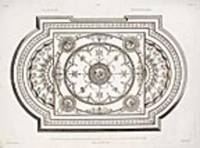
177717133London 1777. Copper engraving. Engraved by T. Morris. In excellent condition with the exception of a small area of foxing in the sheet. An elegant engraving of the elaborate ceiling in the music room of Sir Watkin Williams Wynn's celebrated house in St. James' Square London.<br/> <br/>Robert and his brother James Adam forever changed the face of British architecture by introducing innovative Classical design ideas. From 1754-57 Robert lived in Italy where he had a long productive friendship with Piranesi which was inspirational for both men. Adam's first book on Diocletian's palace in Dalmatia is clearly very like the archaeological investigations Piranesi was making at the same time of similar ruins. Piranesi's friendship and passion for Roman Classicism were seminal influences on Adam and the greatest single factor other than his own talent in the work Adam produced on his return to England. Upon his return the brothers launched their career by building the Adelphi from the Thames to the Strand in London which although not a commercial success at the time included one of London's most cherished buildings the Adlephi Theatre. Together the Adam brothers designed and built some of the most famous buildings in England including such bastions of English architecture as Kenwood House Keddlestone Manor and Syon House. To the interiors of their English country houses the Adams brought wonderful ornamental elements in niches lunettes festoons and reliefs. Their classically designed buildings were so numerous in London that they changed the prevailing feel of the city and established their brand of neo-Classicism as the model of elegance and importance. It is asserted that the brothers originated the concept of the uniform facade attached to the typical English row house an architectural device that distinguishes London buildings. This monumental contribution is evidenced in the Adams' designs for Portland Place and Fitzroy Square and these were used as architectural models for the whole city. The brothers brought their talents into other areas by designing furniture to complement their beautiful interiors and by creating and publishing a treatise of design entitled 'Works in Architecture'. The work was published in three volumes over an extended span of time beginning in 1773 with the final volume being published posthumously in 1822.<br/> <br/>Cf. Brunet I.47; cf. Lowndes I p.8; DNB; Wilton-Ely The Mind and Art of Giovanni Battista Piranesi. unknown books
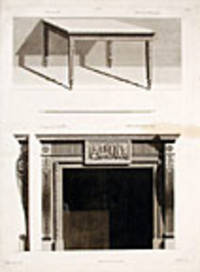
177817139London 1778. Copper engraving. Engraved by Caldwell. In excellent condition with the exception of a waterstain in middle of sheet. Left margin is trimmed just outside platemark. An elegant engraving of a fireplace and table at Shelburne House in Berkeley Square in London.<br/> <br/>Robert and his brother James Adam forever changed the face of British architecture by introducing innovative Classical design ideas. From 1754-57 Robert lived in Italy where he had a long productive friendship with Piranesi which was inspirational for both men. Adam's first book on Diocletian's palace in Dalmatia is clearly very like the archaeological investigations Piranesi was making at the same time of similar ruins. Piranesi's friendship and passion for Roman Classicism were seminal influences on Adam and the greatest single factor other than his own talent in the work Adam produced on his return to England. Upon his return the brothers launched their career by building the Adelphi from the Thames to the Strand in London which although not a commercial success at the time included one of London's most cherished buildings the Adlephi Theatre. Together the Adam brothers designed and built some of the most famous buildings in England including such bastions of English architecture as Kenwood House Keddlestone Manor and Syon House. To the interiors of their English country houses the Adams brought wonderful ornamental elements in niches lunettes festoons and reliefs. Their classically designed buildings were so numerous in London that they changed the prevailing feel of the city and established their brand of neo-Classicism as the model of elegance and importance. It is asserted that the brothers originated the concept of the uniform facade attached to the typical English row house an architectural device that distinguishes London buildings. This monumental contribution is evidenced in the Adams' designs for Portland Place and Fitzroy Square and these were used as architectural models for the whole city. The brothers brought their talents into other areas by designing furniture to complement their beautiful interiors and by creating and publishing a treatise of design entitled 'Works in Architecture'. The work was published in three volumes over an extended span of time beginning in 1773 with the final volume being published posthumously in 1822.<br/> <br/>Cf. Brunet I.47; cf. Lowndes I p.8; DNB; Wilton-Ely The Mind and Art of Giovanni Battista Piranesi. unknown books
177717127London 1777. Copper engraving with lovely early colour. Engraved by B. Pastorini. In excellent condition. An elegant engraving depicting a collection of ornate furniture in the Earl of Derby's celebrated house in Grosvenor Square London.<br/> <br/>Robert and his brother James Adam forever changed the face of British architecture by introducing innovative Classical design ideas. From 1754-57 Robert lived in Italy where he had a long productive friendship with Piranesi which was inspirational for both men. Adam's first book on Diocletian's palace in Dalmatia is clearly very like the archaeological investigations Piranesi was making at the same time of similar ruins. Piranesi's friendship and passion for Roman Classicism were seminal influences on Adam and the greatest single factor other than his own talent in the work Adam produced on his return to England. Upon his return the brothers launched their career by building the Adelphi from the Thames to the Strand in London which although not a commercial success at the time included one of London's most cherished buildings the Adlephi Theatre. Together the Adam brothers designed and built some of the most famous buildings in England including such bastions of English architecture as Kenwood House Keddlestone Manor and Syon House. To the interiors of their English country houses the Adams brought wonderful ornamental elements in niches lunettes festoons and reliefs. Their classically designed buildings were so numerous in London that they changed the prevailing feel of the city and established their brand of neo-Classicism as the model of elegance and importance. It is asserted that the brothers originated the concept of the uniform facade attached to the typical English row house an architectural device that distinguishes London buildings. This monumental contribution is evidenced in the Adams' designs for Portland Place and Fitzroy Square and these were used as architectural models for the whole city. The brothers brought their talents into other areas by designing furniture to complement their beautiful interiors and by creating and publishing a treatise of design entitled 'Works in Architecture'. The work was published in three volumes over an extended span of time beginning in 1773 with the final volume being published posthumously in 1822.<br/> <br/>Cf. Brunet I.47; cf. Lowndes I p.8; DNB; Wilton-Ely The Mind and Art of Giovanni Battista Piranesi. unknown books
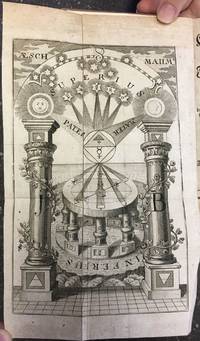
17821334227Berlin: Friedrich Maurer 1782. Second Edition. Hardcover. Octavo 16 429 1; VG; bound in brown library cloth gilt titling to spine; ex-library label removed from spine pencil erased from recto of title page; 2 vignettes folding frontispiece plate symbolic content some tape repair to rear wear and separation at folds; very mild foxing; faint orange underlining to three words on title page scattered pencil to title page;<br /> <br><br /> <br><br /> Scarce; AG consignment; shelved case 3. Rare and early freemasonry work by the German Adam Michael Birkholz. The First Masonic Grand Lodge was founded in England in 1717 spreading to the continent in the decades following. This history was first published in 1779 and republished in 1782.;<br /> <br><br /> <br><br /> "Birkholz was a Rosicrucian writer.Der Compass der Weisen.is a well known work though not trustworthy as to history. He wrote under the name of Adamah Booy" Adolph Frederick Alexander Woodford;<br /> <br><br /> <br><br /> "Birkholz maintained that he was one of the "members of the inner Constitution of the genuine and right Freemasonry" and with this book he intended "to present clearly and faithfully the history of this illustrious Order from the beginning of its founding." Florian Ebeling;<br /> <br><br /> <br><br /> "The history of the Order was described in detail in the book The Compass of Wisemen which was extremely popular in the masonic milieu" Konstantin Burmistrov Maria Endel;. 1334227. Shelved Dupont Bookstore. Friedrich Maurer hardcover books
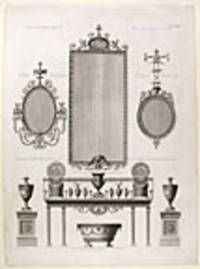
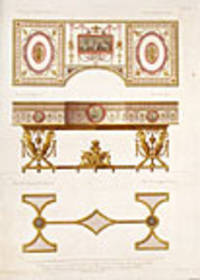
177517573London 1775. Engraving by P. Begbie. In excellent condition with the exception of two tears on right margin. A fine architectural engraving of ornate mirrors and tables from Robert Adam's seminal work on British architecture.<br/> <br/>Robert and his brother James Adam forever changed the face of British architecture by introducing innovative Classical design ideas. From 1754-57 Robert lived in Italy where he had a long productive friendship with Piranesi which was inspirational for both men. Adam's first book on Diocletian's palace in Dalmatia is clearly very like the archaeological investigations Piranesi was making at the same time of similar ruins. Piranesi's friendship and passion for Roman Classicism were seminal influences on Adam and the greatest single factor other than his own talent in the work Adam produced on his return to England. Upon his return the brothers launched their career by building the Adelphi from the Thames to the Strand in London which although not a commercial success at the time included one of London's most cherished buildings the Adlephi Theatre. Together the Adam brothers designed and built some of the most famous buildings in England including such bastions of English architecture as Kenwood House Keddlestone Manor and Syon House. To the interiors of their English country houses the Adams brought wonderful ornamental elements in niches lunettes festoons and reliefs. Their classically designed buildings were so numerous in London that they changed the prevailing feel of the city and established their brand of neo-Classicism as the model of elegance and importance. It is asserted that the brothers originated the concept of the uniform facade attached to the typical English row house an architectural device that distinguishes London buildings. This monumental contribution is evidenced in the Adams' designs for Portland Place and Fitzroy Square and these were used as architectural models for the whole city. The brothers brought their talents into other areas by designing furniture to complement their beautiful interiors and by creating and publishing a treatise of design entitled 'Works in Architecture'. The work was published in three volumes over an extended span of time beginning in 1773 with the final volume being published posthumously in 1822.<br/> <br/>Cf. Brunet I.47; cf. Lowndes I p.8; DNB; Wilton-Ely The Mind and Art of Giovanni Battista Piranesi. unknown books
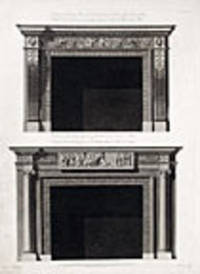
177517099London 1775. Engraving by D. Cunego. In excellent condition with the exception of being trimmed just outside the platemark on left margin. Some paper discolouration on left margin and 1" loss lower left corner. A fine engraving of the fireplaces at St. James's Palace and the Queen's House in London.<br/> <br/>Robert and his brother James Adam forever changed the face of British architecture by introducing innovative Classical design ideas. From 1754-57 Robert lived in Italy where he had a long productive friendship with Piranesi which was inspirational for both men. Adam's first book on Diocletian's palace in Dalmatia is clearly very like the archaeological investigations Piranesi was making at the same time of similar ruins. Piranesi's friendship and passion for Roman Classicism were seminal influences on Adam and the greatest single factor other than his own talent in the work Adam produced on his return to England. Upon his return the brothers launched their career by building the Adelphi from the Thames to the Strand in London which although not a commercial success at the time included one of London's most cherished buildings the Adlephi Theatre. Together the Adam brothers designed and built some of the most famous buildings in England including such bastions of English architecture as Kenwood House Keddlestone Manor and Syon House. To the interiors of their English country houses the Adams brought wonderful ornamental elements in niches lunettes festoons and reliefs. Their classically designed buildings were so numerous in London that they changed the prevailing feel of the city and established their brand of neo-Classicism as the model of elegance and importance. It is asserted that the brothers originated the concept of the uniform facade attached to the typical English row house an architectural device that distinguishes London buildings. This monumental contribution is evidenced in the Adams' designs for Portland Place and Fitzroy Square and these were used as architectural models for the whole city. The brothers brought their talents into other areas by designing furniture to complement their beautiful interiors and by creating and publishing a treatise of design entitled 'Works in Architecture'. The work was published in three volumes over an extended span of time beginning in 1773 with the final volume being published posthumously in 1822.<br/> <br/>Cf. Brunet I.47; cf. Lowndes I p.8; DNB; Wilton-Ely The Mind and Art of Giovanni Battista Piranesi. unknown books
177517101London 1775. Copper engraving with hand colour. Engraving by P. Begbie. In excellent condition with the exception of being trimmed just on the platemark on the left margin. Mild soiling mostly marginal. A fine engraving of an ornate harpsichord designed for the Empress of Russia.<br/> <br/>Robert and his brother James Adam forever changed the face of British architecture by introducing innovative Classical design ideas. From 1754-57 Robert lived in Italy where he had a long productive friendship with Piranesi which was inspirational for both men. Adam's first book on Diocletian's palace in Dalmatia is clearly very like the archaeological investigations Piranesi was making at the same time of similar ruins. Piranesi's friendship and passion for Roman Classicism were seminal influences on Adam and the greatest single factor other than his own talent in the work Adam produced on his return to England. Upon his return the brothers launched their career by building the Adelphi from the Thames to the Strand in London which although not a commercial success at the time included one of London's most cherished buildings the Adlephi Theatre. Together the Adam brothers designed and built some of the most famous buildings in England including such bastions of English architecture as Kenwood House Keddlestone Manor and Syon House. To the interiors of their English country houses the Adams brought wonderful ornamental elements in niches lunettes festoons and reliefs. Their classically designed buildings were so numerous in London that they changed the prevailing feel of the city and established their brand of neo-Classicism as the model of elegance and importance. It is asserted that the brothers originated the concept of the uniform facade attached to the typical English row house an architectural device that distinguishes London buildings. This monumental contribution is evidenced in the Adams' designs for Portland Place and Fitzroy Square and these were used as architectural models for the whole city. The brothers brought their talents into other areas by designing furniture to complement their beautiful interiors and by creating and publishing a treatise of design entitled 'Works in Architecture'. The work was published in three volumes over an extended span of time beginning in 1773 with the final volume being published posthumously in 1822.<br/> <br/>Cf. Brunet I.47; cf. Lowndes I p.8; DNB; Wilton-Ely The Mind and Art of Giovanni Battista Piranesi. unknown books
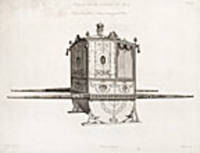
177517100London 1775. Engraving by P. Begbie. In excellent condition with the exception of some paper discolouration on the upper margin. A fine engraving of the sedan chair designed for Queen Charlotte.<br/> <br/>Robert and his brother James Adam forever changed the face of British architecture by introducing innovative Classical design ideas. From 1754-57 Robert lived in Italy where he had a long productive friendship with Piranesi which was inspirational for both men. Adam's first book on Diocletian's palace in Dalmatia is clearly very like the archaeological investigations Piranesi was making at the same time of similar ruins. Piranesi's friendship and passion for Roman Classicism were seminal influences on Adam and the greatest single factor other than his own talent in the work Adam produced on his return to England. Upon his return the brothers launched their career by building the Adelphi from the Thames to the Strand in London which although not a commercial success at the time included one of London's most cherished buildings the Adlephi Theatre. Together the Adam brothers designed and built some of the most famous buildings in England including such bastions of English architecture as Kenwood House Keddlestone Manor and Syon House. To the interiors of their English country houses the Adams brought wonderful ornamental elements in niches lunettes festoons and reliefs. Their classically designed buildings were so numerous in London that they changed the prevailing feel of the city and established their brand of neo-Classicism as the model of elegance and importance. It is asserted that the brothers originated the concept of the uniform facade attached to the typical English row house an architectural device that distinguishes London buildings. This monumental contribution is evidenced in the Adams' designs for Portland Place and Fitzroy Square and these were used as architectural models for the whole city. The brothers brought their talents into other areas by designing furniture to complement their beautiful interiors and by creating and publishing a treatise of design entitled 'Works in Architecture'. The work was published in three volumes over an extended span of time beginning in 1773 with the final volume being published posthumously in 1822.<br/> <br/>Cf. Brunet I.47; cf. Lowndes I p.8; DNB; Wilton-Ely The Mind and Art of Giovanni Battista Piranesi. unknown books
177431062London 1774. Engraving by B. Pastorini. A fine engraving of a painted plaster and stucco ceiling from the interior at Kenwood House in Hampstead London re-modelled in 1761-1773 and now home to the Iveagh Bequest picture collection.<br/> <br/>Robert and his brother James Adam forever changed the face of British architecture by introducing innovative Classical design ideas. From 1754-57 Robert lived in Italy where he had a long productive friendship with Piranesi which was inspirational for both men. Adam's first book on Diocletian's palace in Dalmatia is clearly very like the archaeological investigations Piranesi was making at the same time of similar ruins. Piranesi's friendship and passion for Roman Classicism were seminal influences on Adam and the greatest single factor other than his own talent in the work Adam produced on his return to England. Upon his return the brothers launched their career by building the Adelphi from the Thames to the Strand in London which although not a commercial success at the time included one of London's most cherished buildings the Adlephi Theatre. Together the Adam brothers designed and built some of the most famous buildings in England including such bastions of English architecture as Kenwood House Keddlestone Manor and Syon House. To the interiors of their English country houses the Adams brought wonderful ornamental elements in niches lunettes festoons and reliefs. Their classically designed buildings were so numerous in London that they changed the prevailing feel of the city and established their brand of neo-Classicism as the model of elegance and importance. It is asserted that the brothers originated the concept of the uniform facade attached to the typical English row house an architectural device that distinguishes London buildings. This monumental contribution is evidenced in the Adams' designs for Portland Place and Fitzroy Square and these were used as architectural models for the whole city. The brothers brought their talents into other areas by designing furniture to complement their beautiful interiors and by creating and publishing a treatise of design entitled 'Works in Architecture'. The work was published in three volumes over an extended span of time beginning in 1773 with the final volume being published posthumously in 1822.<br/> <br/>Cf. Brunet I.47; cf. Lowndes I p.8; DNB; Wilton-Ely The Mind and Art of Giovanni Battista Piranesi. unknown books
177434076London 1774. Engraving coloured by hand by B. Pastorini old dampstain to upper left margin. A fine engraving with contemporary hand colouring of a painted plaster and stucco ceiling from the interior at Kenwood House in Hampstead London re-modelled in 1761-1773 and now home to the Iveagh Bequest picture collection.<br/> <br/>Robert and his brother James Adam forever changed the face of British architecture by introducing innovative Classical design ideas. From 1754-57 Robert lived in Italy where he had a long productive friendship with Piranesi which was inspirational for both men. Adam's first book on Diocletian's palace in Dalmatia is clearly very like the archaeological investigations Piranesi was making at the same time of similar ruins. Piranesi's friendship and passion for Roman Classicism were seminal influences on Adam and the greatest single factor other than his own talent in the work Adam produced on his return to England. Upon his return the brothers launched their career by building the Adelphi from the Thames to the Strand in London which although not a commercial success at the time included one of London's most cherished buildings the Adlephi Theatre. Together the Adam brothers designed and built some of the most famous buildings in England including such bastions of English architecture as Kenwood House Keddlestone Manor and Syon House. To the interiors of their English country houses the Adams brought wonderful ornamental elements in niches lunettes festoons and reliefs. Their classically designed buildings were so numerous in London that they changed the prevailing feel of the city and established their brand of neo-Classicism as the model of elegance and importance. It is asserted that the brothers originated the concept of the uniform facade attached to the typical English row house an architectural device that distinguishes London buildings. This monumental contribution is evidenced in the Adams' designs for Portland Place and Fitzroy Square and these were used as architectural models for the whole city. The brothers brought their talents into other areas by designing furniture to complement their beautiful interiors and by creating and publishing a treatise of design entitled 'Works in Architecture'. The work was published in three volumes over an extended span of time beginning in 1773 with the final volume being published posthumously in 1822.<br/> <br/>Cf. Brunet I.47; cf. Lowndes I p.8; DNB; Wilton-Ely The Mind and Art of Giovanni Battista Piranesi. unknown books
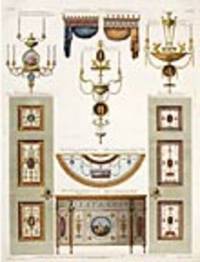
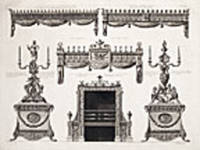
177517116London 1775. Engraving by B. Pastorini. In excellent condition. An elegant engraving showing the decorations of the chimney piece and curtain cornices at Sutton Park House in North Yorkshire.<br/> <br/>Robert and his brother James Adam forever changed the face of British architecture by introducing innovative Classical design ideas. From 1754-57 Robert lived in Italy where he had a long productive friendship with Piranesi which was inspirational for both men. Adam's first book on Diocletian's palace in Dalmatia is clearly very like the archaeological investigations Piranesi was making at the same time of similar ruins. Piranesi's friendship and passion for Roman Classicism were seminal influences on Adam and the greatest single factor other than his own talent in the work Adam produced on his return to England. Upon his return the brothers launched their career by building the Adelphi from the Thames to the Strand in London which although not a commercial success at the time included one of London's most cherished buildings the Adlephi Theatre. Together the Adam brothers designed and built some of the most famous buildings in England including such bastions of English architecture as Kenwood House Keddlestone Manor and Syon House. To the interiors of their English country houses the Adams brought wonderful ornamental elements in niches lunettes festoons and reliefs. Their classically designed buildings were so numerous in London that they changed the prevailing feel of the city and established their brand of neo-Classicism as the model of elegance and importance. It is asserted that the brothers originated the concept of the uniform facade attached to the typical English row house an architectural device that distinguishes London buildings. This monumental contribution is evidenced in the Adams' designs for Portland Place and Fitzroy Square and these were used as architectural models for the whole city. The brothers brought their talents into other areas by designing furniture to complement their beautiful interiors and by creating and publishing a treatise of design entitled 'Works in Architecture'. The work was published in three volumes over an extended span of time beginning in 1773 with the final volume being published posthumously in 1822.<br/> <br/>Cf. Brunet I.47; cf. Lowndes I p.8; DNB; Wilton-Ely The Mind and Art of Giovanni Battista Piranesi. unknown books
1785318437London 1785. The Sixth Edition. First published in 1678 as 'Linguæ Latinæ liber dictionarius quadripartitus'. With 2 maps one of Italy coloured and the other of Rome. 1430pp. Thick 4to. Bound in modern three quarters mottled tan calf and marbleds boards. Fine minor worming in small part of margin. The Sixth Edition. First published in 1678 as 'Linguæ Latinæ liber dictionarius quadripartitus'. With 2 maps one of Italy coloured and the other of Rome. 1430pp. Thick 4to. ESTC T84402 unknown books