Smith, AdamBiblio.com
252 résultats
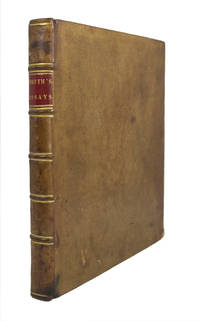
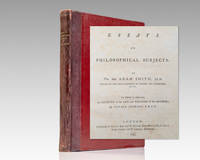
1795151270London: Printed for T. Cadell Jun. and W. Davies 1795. First edition of this important collection of Smith's essays featuring the important first publication of his History of Astronomy. Quarto bound in quarter calf with gilt titles to the spine. One of 1000 copies. Containing the first publication in book form of Dugald Stewart's Account of the Life and Writings of Adam Smith which had appeared in the Transactions of the Royal Society of Edinburgh in 1794. Stewart's Account "formed the basis upon which everyone drew for biographies of Smith that began to appear in the early 19th century" Tribe 55. Goldsmith 16218. Kress B3038. Rothschild 1902. In very good condition. Though Essays on Philosophical Subjects appeared five years after Smith's death most were likely written before the publication of his Theory of Moral Sentiments in 1759. Essays was compiled by his literary executors physicist Joseph Black and geologist James Hutton. Prior to his death Smith "instructed them to destroy his manuscripts but allowed them at their discretion to publish a set of essays" Berry Cambridge Companion 116. As noted herein Smith had begun work early in his career on "a connected history of the liberal sciences and elegant arts" but "found it necessary to abandon that plan as far too extensive." These writings thus represent Smith's longstanding attempts at such a "connected history" and range over philosophy aesthetics and the history of science. A biographical Account of Smith and his work is followed by the extensive History of Astronomy which was the only writing Smith did not want destroyed; indeed he specifically arranged for its posthumous publication. Black and Hutton used their authority to incorporate its momentous first publication into this collection. Astronomy "was probably begun decades before Smith's death perhaps as early as 1746 and was at one time intended to form a chapter of a much larger work… Astronomy purports to explain what drives 'philosophers' to ask the questions they do and to seek explanations for the things they observe" Otteson Adam Smith 22-3. Astronomy "has occasioned much scholarship… Just as The Wealth of Nations was titled an enquiry into its 'natures and causes' so Smith says at the end of the preliminary section of Astronomy that the design of the essay is to consider the 'nature and causes of the three sentiments"—identified by him as "Wonder Surprise and Admiration." Citing Galileo Copernicus Kepler Newton Descartes and others Astronomy aims "to illustrate how philosophy is an activity that addresses itself to the imagination" Berry 116-117 123. Also included in this volume are his essays on "Ancient Physics" "Ancient Logics and Metaphysics" and the "Imitative Arts" along with a concluding essay on perception in the five "External Senses." Printed for T. Cadell Jun. and W. Davies unknown
1795126439Dublin: Printed for Messrs. Wogan Byrne J. Moore and 5 others in Dublin 1795. First Dublin edition same year as the first London edition. The Essays were published five years after Smith's death and edited by the Scottish philosopher Dugald Stewart 1753-1828. Stewart's "Account of the Life and Writings of Adam Smith" is one of the earliest biographical notices of Smith and "until Stewart's Biographical Memoir of 1811. formed the basis upon which everyone drew for the biographies of Smith that began to appear in the early 19th century" Tribe. The editors Joseph Black and James Hutton state that Smith's essays were intended as parts of "a connected history of the liberal sciences and elegant arts" but that Smith "long since. found it necessary to abandon that plan as far too extensive". The essays range over philosophy aesthetics and the history of science. Most were probably written before the appearance of the Theory of Moral Sentiments in 1759 but were withheld from publication as part of Smith's "extensive plan". Kress lists the Dublin printing first and calls the London "another issue" while Tribe calls the Dublin edition a piracy. Neither is correct. Dublin booksellers at the time had a well-established exemption from the copyright laws and could legally reprint any new publication first published in London without having to pay for copy. The London edition precedes this legal Dublin reprint. Scarce: neither Einaudi nor Goldsmiths' list this Dublin edition. Octavo 205 x 125 mm. Early 19th-century tan calf and marbled boards neatly rebacked using a piece of diced Russia gilt roll decoration to head and tail of spine gilt device stamped around the spine. Ownership stamp of William Brough to rear free endpaper. Somewhat inelegantly rebacked with diced russia salvaged from another binding inner hinges cracked but firm corners worn some toning to leaf edges and a few small spots; overall a good copy. Jessop p. 172; Kress B.3037; Tribe 56; Vanderblue p. 43. hardcover
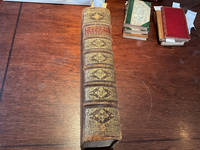
179568261London: Printed for T. Cadell Jun. and W. Davies etc. 1795. London: Printed for T. Cadell Jun. and W. Davies. 1795.<br> <br> First edition. Quarto 10 3/4 x 8 1/2 inches; 273 x 215 mm. xcv 1 blank 244 pp.<br> <br> Contemporary speckled calf. Board edges ruled in gilt. Spine ruled in gilt. Red morocco spine label lettered in gilt. Edges speckled brown. Green silk page-marker. Board edges a bit rubbed and corners bumped. Previous owner's old ink signature on title-page not affecting text. Occasional minor foxing or staining. Otherwise a fine copy.<br> <br> A posthumously published collection of essays mainly of a scientific and philosophical nature. Smith had instructed lis literary editors Joseph Black and James Hutton to destroy almost all of his manuscript material amounting to some sixteen volumes. These essays were exempted because the editors perceived them to "be part of a plan he had once formed for giving a connected history of the liberal sciences and elegant arts" even though Smith had to abandon the plan because it was too extensive.<br> <br> The essays illustrate the diversity of Adam Smith's interests and comprise: "The Principles which lead and direct Philosophical Enquiries; illustrated by the History of Astronomy;" "The Principles which lead and direct Philosophical Enquiries; History of the Ancient Physics;" "The Principles which lead and direct Philosophical Enquiries; History of the Ancient Logics and Metaphysics; "Of the Nature of that Imitation which takes place in what are called the Imitative Arts;" "Of the Affinity between Music Dancing and Poetry;" "Of the Affinity between certain English and Italian Verses;" "Of the External Senses."<br> <br> ESTC T33499 . Goldsmiths' 16218. Kress B. 3038. Rothschild 1902.<br> <br> HBS 68261.<br> <br> $9500. Printed for T. Cadell Jun. and W. Davies, etc. unknown
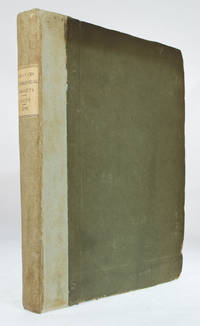
179566518London: Printed for T. Cadell Jun. and W. Davies etc. 1795. First edition. Quarto. xcv 244 pp.<br> <br> Contemporary boards rebacked. Small library stamp on title and verso and on last page a small ink smudge on title previous owner's bookplate. Overall a very good large paper copy totally uncut.<br> <br> A posthumously published collection of essays mainly of scientific and philosophical nature. Smith had instructed his literary editors Joseph Black and James Hutton to destroy almost all of his manuscript material amounting to some sixteen volumes. These essays were exempted because the editors perceived them to "be part of a plan he had once formed for giving a connected history of the liberal sciences and elegant arts" even though Smith had to abandon the plan because it was too extensive.<br> <br> HBS 66518.<br> <br> $10000. Printed for T. Cadell Jun. and W. Davies, etc. unknown
1795882052Dublin: Wogan Byrne J. Moore Etc. 1795. Original boards rebacked in leather with black labels and gold lettering. Contemporary owner's inscription above title page. Essays on astronomy and physics.In beautiful condition. First Irish Edition. Full Leather. Excellent. 8vo - over 7¾" - 9¾" tall. Wogan, Byrne, J. Moore Etc. Hardcover
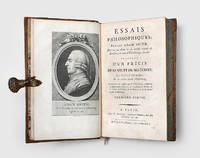
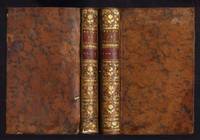
179727583Paris: H. Agasse 1797. Very Good . Paris: H. Agasse 1797. First French Edition. Two volumes bound in one; octavo; 19th-century calf over papier-peint boards gilt-tooled spine; 4316; 42831pp. collated complete with half titles. Small abrasions to boards somewhat clumsily repaired else a Very Good or better internally clean and exceptionally fresh copy.<br /> <br /> First appearance in French of Adam Smith's posthumously collected work "Essays on Philosophical Subjects" which includes most notably his "Principles which lead and direct philosophical enquiries illustrated by the history of astronomy." This edition as with the first in English preceded by a lengthy account of Smith's Life by the Scottish philosopher and mathematician Dugald Stewart. H. Agasse unknown
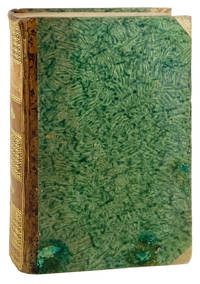
1797009266Paris: Agasse 1797. Due volumi in 8vo 12x20 cm di 4-283 pp e 4-316 pp. Ritratto inciso di Smith all'antiporta del primo volume. Graziosa legatura ottocentesca in mezza pelle avana dorso dorato e ornato piatti con carta marmorizzata. First edition in French of Smith's "Essays on philosophical subjects 1795. Traduits de l'anglais par P. Prevost. Ottime condizioni. Agasse unknown
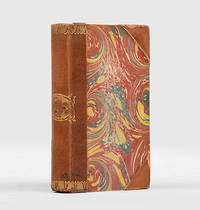
1797166730Paris: H. Agasse 1797. A handsome copy of Smith's essays in French First edition in French this a superior copy preserving the half-titles and the fine portrait frontispiece often missing. "The writings that Joseph Black and James Hutton brought together in 1795 under the title Essays on Philosophical Subjects together with Dugald Stewart's 'Account' and Smith's 1755 letter to the Edinburgh Review were translated and published by Pierre Prévost as Essais philosophiques in 1797. Prévost added ten notes in the form of commentary directed to specific points as well as a more general essay 'Reflexions sur les oeuvres posthumes d'Adam Smith'" Tribe. Octavo 196 x 117 mm in 2 parts. Engraved portrait frontispiece of Smith by Benoît-Louis Prévost. Contemporary French speckled calf spine decorated in gilt black morocco label triple gilt fillet border to covers marbled endpapers and edges. Head of spine and front joint skilfully restored contents faintly browned else an attractive copy. Einaudi 5325; Goldsmiths' 16932; Jessop p. 172; Kress B.3505; Tribe 65; Vanderblue p. 44. unknown
1783039834Paris: la Veuve Desaint Libraire 1783. First Edition. Hardcover Full Leather. Very Good Condition. The first French edition of Ferguson's influential work on civil society. A friend of Hume Adam Smith and Voltaire and a major figure of the Scottish Enlightenment Ferguson published Essay on the History of Civil Society in 1767. It was widely published and his views on political participation and community were influential on the thinking of the founding fathers of the American Revolution and later on the French. Size: Octavo 8vo. 2-volume set complete. Text is clean and unmarked. Quantity Available: 1. Shipped Weight: Under 1 kilo. Category: Philosophy; Antiquarian & Rare. Inventory No: 039834. la Veuve Desaint, Libraire hardcover
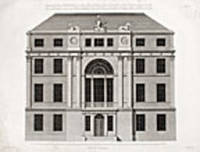
17745593London 1774. Engraving by T. Vivares. Neat repairs to two small marginal tears. A fine engraving of two of the exterior elevations of Luton Park House a project undertaken by Robert Adam in about 1764.<br/> <br/> Robert and his brother James Adam forever changed the face of British architecture by introducing innovative Classical design ideas. From 1754-57 Robert lived in Italy where he had a long productive friendship with Piranesi which was inspirational for both men. Adam's first book on Diocletian's palace in Dalmatia is clearly very like the archaeological investigations Piranesi was making at the same time of similar ruins. Piranesi's friendship and passion for Roman Classicism were seminal influences on Adam and the greatest single factor other than his own talent in the work Adam produced on his return to England. Upon his return the brothers launched their career by building the Adelphi from the Thames to the Strand in London which although not a commercial success at the time included one of London's most cherished buildings the Adlephi Theatre. Together the Adam brothers designed and built some of the most famous buildings in England including such bastions of English architecture as Kenwood House Keddlestone Manor and Syon House. To the interiors of their English country houses the Adams brought wonderful ornamental elements in niches lunettes festoons and reliefs. Their classically designed buildings were so numerous in London that they changed the prevailing feel of the city and established their brand of neo-Classicism as the model of elegance and importance. It is asserted that the brothers originated the concept of the uniform facade attached to the typical English row house an architectural device that distinguishes London buildings. This monumental contribution is evidenced in the Adams' designs for Portland Place and Fitzroy Square and these were used as architectural models for the whole city. The brothers brought their talents into other areas by designing furniture to complement their beautiful interiors and by creating and publishing a treatise of design entitled 'Works in Architecture'. The work was published in three volumes over an extended span of time beginning in 1773 with the final volume being published posthumously in 1822.<br/> <br/> Cf. Brunet I.47; cf. Lowndes I p.8; DNB; Wilton-Ely The Mind and Art of Giovanni Battista Piranesi. unknown
17745327London 1774. Engraving by T. Miller expert repairs to old fold touching image area. A fine architectural engraving of Kenwood House in Hampstead London re-modelled in 1761-1773 and now home to the Iveagh Bequest picture collection.<br/> <br/> Robert and his brother James Adam forever changed the face of British architecture by introducing innovative Classical design ideas. From 1754-57 Robert lived in Italy where he had a long productive friendship with Piranesi which was inspirational for both men. Adam's first book on Diocletian's palace in Dalmatia is clearly very like the archaeological investigations Piranesi was making at the same time of similar ruins. Piranesi's friendship and passion for Roman Classicism were seminal influences on Adam and the greatest single factor other than his own talent in the work Adam produced on his return to England. Upon his return the brothers launched their career by building the Adelphi from the Thames to the Strand in London which although not a commercial success at the time included one of London's most cherished buildings the Adlephi Theatre. Together the Adam brothers designed and built some of the most famous buildings in England including such bastions of English architecture as Kenwood House Keddlestone Manor and Syon House. To the interiors of their English country houses the Adams brought wonderful ornamental elements in niches lunettes festoons and reliefs. Their classically designed buildings were so numerous in London that they changed the prevailing feel of the city and established their brand of neo-Classicism as the model of elegance and importance. It is asserted that the brothers originated the concept of the uniform facade attached to the typical English row house an architectural device that distinguishes London buildings. This monumental contribution is evidenced in the Adams' designs for Portland Place and Fitzroy Square and these were used as architectural models for the whole city. The brothers brought their talents into other areas by designing furniture to complement their beautiful interiors and by creating and publishing a treatise of design entitled 'Works in Architecture'. The work was published in three volumes over an extended span of time beginning in 1773 with the final volume being published posthumously in 1822.<br/> <br/> Cf. Brunet I.47; cf. Lowndes I p.8. unknown
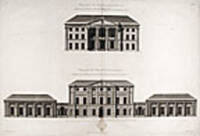
177517114London 1775. Engraving by T. Vivares. In excellent condition. An elegant elevation of the north and southe sides of Sutton Park in North Yorkshire the seat of the Earl of Bute.<br/> <br/> Robert and his brother James Adam forever changed the face of British architecture by introducing innovative Classical design ideas. From 1754-57 Robert lived in Italy where he had a long productive friendship with Piranesi which was inspirational for both men. Adam's first book on Diocletian's palace in Dalmatia is clearly very like the archaeological investigations Piranesi was making at the same time of similar ruins. Piranesi's friendship and passion for Roman Classicism were seminal influences on Adam and the greatest single factor other than his own talent in the work Adam produced on his return to England. Upon his return the brothers launched their career by building the Adelphi from the Thames to the Strand in London which although not a commercial success at the time included one of London's most cherished buildings the Adelphi Theatre. Together the Adam brothers designed and built some of the most famous buildings in England including such bastions of English architecture as Kenwood House Keddlestone Manor and Syon House. To the interiors of their English country houses the Adams brought wonderful ornamental elements in niches lunettes festoons and reliefs. Their classically designed buildings were so numerous in London that they changed the prevailing feel of the city and established their brand of neo-Classicism as the model of elegance and importance. It is asserted that the brothers originated the concept of the uniform facade attached to the typical English row house an architectural device that distinguishes London buildings. This monumental contribution is evidenced in the Adams' designs for Portland Place and Fitzroy Square and these were used as architectural models for the whole city. The brothers brought their talents into other areas by designing furniture to complement their beautiful interiors and by creating and publishing a treatise of design entitled 'Works in Architecture'. The work was published in three volumes over an extended span of time beginning in 1773 with the final volume being published posthumously in 1822.<br/> <br/> Cf. Brunet I.47; cf. Lowndes I p.8; DNB; Wilton-Ely The Mind and Art of Giovanni Battista Piranesi. unknown
177517106London 1775. Engraving by T. Miller. In excellent condition with the exception of a water stain at the bottom of the sheet. Top left corner of sheet is missing. A fine architectural engraving of Kenwood House in Hampstead London re-modelled in 1761-1773 and now home to the Iveagh Bequest picture collection.<br/> <br/> Robert and his brother James Adam forever changed the face of British architecture by introducing innovative Classical design ideas. From 1754-57 Robert lived in Italy where he had a long productive friendship with Piranesi which was inspirational for both men. Adam's first book on Diocletian's palace in Dalmatia is clearly very like the archaeological investigations Piranesi was making at the same time of similar ruins. Piranesi's friendship and passion for Roman Classicism were seminal influences on Adam and the greatest single factor other than his own talent in the work Adam produced on his return to England. Upon his return the brothers launched their career by building the Adelphi from the Thames to the Strand in London which although not a commercial success at the time included one of London's most cherished buildings the Adlephi Theatre. Together the Adam brothers designed and built some of the most famous buildings in England including such bastions of English architecture as Kenwood House Keddlestone Manor and Syon House. To the interiors of their English country houses the Adams brought wonderful ornamental elements in niches lunettes festoons and reliefs. Their classically designed buildings were so numerous in London that they changed the prevailing feel of the city and established their brand of neo-Classicism as the model of elegance and importance. It is asserted that the brothers originated the concept of the uniform facade attached to the typical English row house an architectural device that distinguishes London buildings. This monumental contribution is evidenced in the Adams' designs for Portland Place and Fitzroy Square and these were used as architectural models for the whole city. The brothers brought their talents into other areas by designing furniture to complement their beautiful interiors and by creating and publishing a treatise of design entitled 'Works in Architecture'. The work was published in three volumes over an extended span of time beginning in 1773 with the final volume being published posthumously in 1822.<br/> <br/> Cf. Brunet I.47; cf. Lowndes I p.8; DNB; Wilton-Ely The Mind and Art of Giovanni Battista Piranesi. unknown
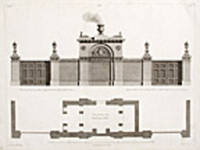
177817144London 1778. Copper engraving. Engraved by Robert Blyth. In excellent condition. An elegant engraving of the gateway and porters lodge at Ashburnham House on Dover Street in London.<br/> <br/> Robert and his brother James Adam forever changed the face of British architecture by introducing innovative Classical design ideas. From 1754-57 Robert lived in Italy where he had a long productive friendship with Piranesi which was inspirational for both men. Adam's first book on Diocletian's palace in Dalmatia is clearly very like the archaeological investigations Piranesi was making at the same time of similar ruins. Piranesi's friendship and passion for Roman Classicism were seminal influences on Adam and the greatest single factor other than his own talent in the work Adam produced on his return to England. Upon his return the brothers launched their career by building the Adelphi from the Thames to the Strand in London which although not a commercial success at the time included one of London's most cherished buildings the Adlephi Theatre. Together the Adam brothers designed and built some of the most famous buildings in England including such bastions of English architecture as Kenwood House Keddlestone Manor and Syon House. To the interiors of their English country houses the Adams brought wonderful ornamental elements in niches lunettes festoons and reliefs. Their classically designed buildings were so numerous in London that they changed the prevailing feel of the city and established their brand of neo-Classicism as the model of elegance and importance. It is asserted that the brothers originated the concept of the uniform facade attached to the typical English row house an architectural device that distinguishes London buildings. This monumental contribution is evidenced in the Adams' designs for Portland Place and Fitzroy Square and these were used as architectural models for the whole city. The brothers brought their talents into other areas by designing furniture to complement their beautiful interiors and by creating and publishing a treatise of design entitled 'Works in Architecture'. The work was published in three volumes over an extended span of time beginning in 1773 with the final volume being published posthumously in 1822.<br/> <br/> Cf. Brunet I.47; cf. Lowndes I p.8; DNB; Wilton-Ely The Mind and Art of Giovanni Battista Piranesi. unknown
177517117London 1775. Engraving by R. Blyth. In excellent condition except for mild discolouration lower left. An elegant engraving showing the facade of a house in Whitehall used as the offices for Chelsea Hospital.<br/> <br/> Robert and his brother James Adam forever changed the face of British architecture by introducing innovative Classical design ideas. From 1754-57 Robert lived in Italy where he had a long productive friendship with Piranesi which was inspirational for both men. Adam's first book on Diocletian's palace in Dalmatia is clearly very like the archaeological investigations Piranesi was making at the same time of similar ruins. Piranesi's friendship and passion for Roman Classicism were seminal influences on Adam and the greatest single factor other than his own talent in the work Adam produced on his return to England. Upon his return the brothers launched their career by building the Adelphi from the Thames to the Strand in London which although not a commercial success at the time included one of London's most cherished buildings the Adlephi Theatre. Together the Adam brothers designed and built some of the most famous buildings in England including such bastions of English architecture as Kenwood House Keddlestone Manor and Syon House. To the interiors of their English country houses the Adams brought wonderful ornamental elements in niches lunettes festoons and reliefs. Their classically designed buildings were so numerous in London that they changed the prevailing feel of the city and established their brand of neo-Classicism as the model of elegance and importance. It is asserted that the brothers originated the concept of the uniform facade attached to the typical English row house an architectural device that distinguishes London buildings. This monumental contribution is evidenced in the Adams' designs for Portland Place and Fitzroy Square and these were used as architectural models for the whole city. The brothers brought their talents into other areas by designing furniture to complement their beautiful interiors and by creating and publishing a treatise of design entitled 'Works in Architecture'. The work was published in three volumes over an extended span of time beginning in 1773 with the final volume being published posthumously in 1822.<br/> <br/> Cf. Brunet I.47; cf. Lowndes I p.8; DNB; Wilton-Ely The Mind and Art of Giovanni Battista Piranesi. unknown
177517118London 1775. Engraving by T. Vivares. In excellent condition with the exception of some paper discolouration in the bottom right corner of the sheet. A fine architectural engraving of a part of the vast Adelphi development in London; the largest project undertaken by the Adam brothers.<br/> <br/> Robert and his brother James Adam forever changed the face of British architecture by introducing innovative Classical design ideas. From 1754-57 Robert lived in Italy where he had a long productive friendship with Piranesi which was inspirational for both men. Adam's first book on Diocletian's palace in Dalmatia is clearly very like the archaeological investigations Piranesi was making at the same time of similar ruins. Piranesi's friendship and passion for Roman Classicism were seminal influences on Adam and the greatest single factor other than his own talent in the work Adam produced on his return to England. Upon his return the brothers launched their career by building the Adelphi from the Thames to the Strand in London which although not a commercial success at the time included one of London's most cherished buildings the Adelphi Theatre. Together the Adam brothers designed and built some of the most famous buildings in England including such bastions of English architecture as Kenwood House Keddlestone Manor and Syon House. To the interiors of their English country houses the Adams brought wonderful ornamental elements in niches lunettes festoons and reliefs. Their classically designed buildings were so numerous in London that they changed the prevailing feel of the city and established their brand of neo-Classicism as the model of elegance and importance. It is asserted that the brothers originated the concept of the uniform facade attached to the typical English row house an architectural device that distinguishes London buildings. This monumental contribution is evidenced in the Adams' designs for Portland Place and Fitzroy Square and these were used as architectural models for the whole city. The brothers brought their talents into other areas by designing furniture to complement their beautiful interiors and by creating and publishing a treatise of design entitled 'Works in Architecture'. The work was published in three volumes over an extended span of time beginning in 1773 with the final volume being published posthumously in 1822.<br/> <br/> Cf. Brunet I.47; cf. Lowndes I p.8; DNB; Wilton-Ely The Mind and Art of Giovanni Battista Piranesi. unknown
176910123000361769. Unknown Binding. Very Good. Framed copper engraving in excellent condition. 17 1/4 x 23 inches. Minimal marking to surface and image is crisp and detailed. Minor edge wear to frame. This is an elegant engraving of the gateway and porters' lodge at Ashburnham House on Dover Street in London. Robert and his brother James Adam forever changed the face of British architecture by introducing innovative Classical design ideas such as can be found in this well-preserved piece. From 1754 until 1759 Adam lived in Italy where he befriended Giovanni Battista Piranesi. Both shared a passion for Roman Classicism and this inspirational friendship pushed both to grow and improve in their crafts. Take a look at our pictures of this exceptional engraving in our photo section. unknown
17152091202133211835D.Brown A and F.hurchill M.Lawrence etc. 1715. Soft Cover. Fine. Volume: 1 D.Brown, A and F.hurchill, M.Lawrence etc. paperback
1785318437London 1785. The Sixth Edition. First published in 1678 as 'Linguæ Latinæ liber dictionarius quadripartitus'. With 2 maps one of Italy coloured and the other of Rome. 1430pp. Thick 4to. Bound in modern three quarters mottled tan calf and marbleds boards. Fine minor worming in small part of margin. The Sixth Edition. First published in 1678 as 'Linguæ Latinæ liber dictionarius quadripartitus'. With 2 maps one of Italy coloured and the other of Rome. 1430pp. Thick 4to. ESTC T84402 unknown
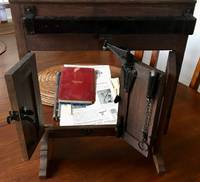
171956262Cedar Falls IA & Tigard OR: Wagner Manufacturing Co.; Orlo R.W. Hossack Architect & Salesman for H.F. Bonesteele 1917-1927. 1st - 4to. Approx. 150 pp sections separately paginated inserts. w/ four linen-backed silver gelatin photos sized 6.5 x 7 in. up to 8 x 10 in. 3 mounted on white linen hinges w/ whole punches at gutter margin colour inserts mimeographed price lists & order forms over 100 text illustrations & diagrams blue printed softcovers all preserved in limp leather 3-ring binder gilt lettering stamped on front cover minor shelfwear rubbing; 2nd - 4to. 15 1 pp. With text illustrations photos self-printed colour softcovers cover art of garage door being opened minor shelfwear; 3rd - 4to. 32 pp unpaginated. colour-printed title numerous text illustrations Gray-green illustrated softcovers split-pin binding yapp edges minor rubbing edgewear creasing to couple corners; 5th -- 2 copies. 16mo. 8 pp unpaginated. printed leporello accordion-style format illustrated & printed in red & black minor shelfwear; 6th - Folio. 9 x 16 in. 4 pieces. 2 pp unpaginated. broadsides text illustrations photos fold creases still VG; 7th -- 8vo. Approx. 100 leaves mostly carbon copies of orders all written in manuscript most located dated and signed at lower right corner by Hossack salesman limp red leatherette covers silk moire endpapers gilt stamping front cover some chipping edgewear rubbing; together with 8th -- Salesman Sample Case containing garage door sliding Model No. 58 from quarter-sawn oak featuring full-sized hardware sized 18.5 x 18 in. two Wagner rolling garage door & elevator door sets steel brackets all preserved in hardshell sample case sized 20 x 30.25 x 5 in. fitted w/ nickel-plated corners bosses on bottom handle and clasps khaki-coloured cloth lining and pockets scuffing edgewear still VG exemplar originally owned and used by Orlo Ray William Hossack 1891-1937 a Portland architect real estate developer and salesman for Bonesteele to his clients. First editions thus of these catalogues and exceedingly rare complete salesman sample kit for the Wagner Manufacturing garage door hardware in the 1920s. After World War I the explosion and popularity of automobile ownership in the United States created a desperate need to house these often cantankerous and essential machines for homes businesses and commercial fleets. By quickly adapting their hardware sets for elevator doors first introduced before World War I Wagner was able to quickly capitalize on the market growth and need for door hardware to retrofit existing garages as well as new construction. Often coupled with doors produced by Johnson Fimbel Hartford Barber-Colman Overhead and Crawford the Wagner hardware sets proved durable and popular. In addition this sample kit features the specialized steel stud brackets developed by Wagner to help brace garages and sheds adapted for garage doors to hold automobiles as the weight of the doors could damage existing construction as Americans were interested in rolling doors and sectional garage doors rather than traditional swing-out barn-type doors. Wagner 1871-1937 originally founded his company in Cedar Falls IA in 1904 to manufacture children’s sleds coaster wagons and hay rack fixtures with a variety of door hardware. They merge with Star Elevator Doors before World War I and later with Boardman Elevator Control of Chicago with primary customers as Otis Elevator and Westinghouse. In 1934 Wagner began producing the iconic Wagner Overhead Garage Door and by the 1950s had become one of the largest garage door manufacturers in the country. Worldcat locates 1 copy of No. 25 Harvard; and 1 of Wagner-Star Elevator Door Cat Univ. of Kansas; no copies of the other catalogues or examples of the Salesman Sample Model in case. Wagner Manufacturing Co.; Orlo R.W. Hossack, Architect & Salesman for H.F. Bonesteele, paperback
1798EBS100467Paris: Chez Théophile Barrois 1798. 1st Edition. Hardcover. Very Good/No Jacket. Weikard wrote the earliest reference to attention deficit hyperactivity disorder ADHD. He was progressive for his time believing that diseases have physical causes and not the result of moral wrongs or spiritual influences. A rare work. By the late 18th century Brown's Elementa Medicinae 1780 had sparked intense controversy across Europe. His system proposed that all diseases stemmed from either excessive or insufficient excitability in the body a radical departure from humoral and mechanical theories. Weikard an influential German physician sought to explain Brown s ideas in more accessible terms addressing both supporters and skeptics. BOOK DETAILS. 8vo 2 vols in one leather worn int. VG. Has internally pressed flower pieces. Interesting. Paris: Chez Théophile Barrois hardcover
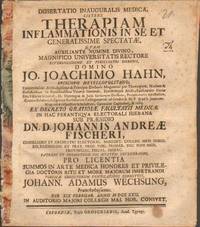
172221374Erfurt: Druck bei Grosch 1722. perfect. Gut. 24 Seiten 1 Blatt. Orig.-Broschur. Oktav 197 x 16 cm ohne Einband gering wellig und gebräunt recht frisch. Dissertation über die Behandlung von Entzündungen. Angebunden ein Blatt mit einem Huldigungsgedicht von J. F. de Pre an Wechsung. Wechsung stammte aus Frankenhausen Schwarzburg-Rudolstadt. - Weitere Bilder auf Anfrage oder auf unserer Homepage. Wegen Urlaub kann Ihre Bestellung / Anfrage erst nach dem 21.06.2026 bearbeitet werden. - Because of holidays your order / question can be handled only after 06/21/2026. Druck bei Grosch unknown
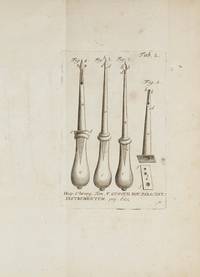
1723582731723. Disp. chir. 5/160. - Hrsg. v. Albrecht v. Haller. - Lausannae Sumptibus Marci-Michael Bousquet & Socior 1756 4° pp.611-622 1 Kupferstichtafel Rückenbroschur. Zweitabdruck "Observationum Domesticarum Specimen Offerens Novum Paracenteseos Instrumentum Einen zur Abzapffung der Wassersüchtigen bequämen Troiscart . : Dissertationis Inauguralis Pro Gradu Doctoris publicae . submitti / Michael Adamus Gusovius . Ad Diem XV. Octobris MDCCXXIII". unknown
1706019498Johann Maximilian von Sand. 1706. 3rd Edition . Hardcover. Very Good. Contemporary sprinkled calf spine gilt red morocco label half-title title in red & black with engraved vignette. Spine ends rubbed corners bumped. Edge wear to the cover. Pages heavily toned. Complete in one volume. Library label dated 1860 to the back of the front cover. <br/> <br/> Johann Maximilian von Sand. hardcover
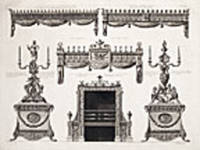
177517116London 1775. Engraving by B. Pastorini. In excellent condition. An elegant engraving showing the decorations of the chimney piece and curtain cornices at Sutton Park House in North Yorkshire.<br/> <br/> Robert and his brother James Adam forever changed the face of British architecture by introducing innovative Classical design ideas. From 1754-57 Robert lived in Italy where he had a long productive friendship with Piranesi which was inspirational for both men. Adam's first book on Diocletian's palace in Dalmatia is clearly very like the archaeological investigations Piranesi was making at the same time of similar ruins. Piranesi's friendship and passion for Roman Classicism were seminal influences on Adam and the greatest single factor other than his own talent in the work Adam produced on his return to England. Upon his return the brothers launched their career by building the Adelphi from the Thames to the Strand in London which although not a commercial success at the time included one of London's most cherished buildings the Adlephi Theatre. Together the Adam brothers designed and built some of the most famous buildings in England including such bastions of English architecture as Kenwood House Keddlestone Manor and Syon House. To the interiors of their English country houses the Adams brought wonderful ornamental elements in niches lunettes festoons and reliefs. Their classically designed buildings were so numerous in London that they changed the prevailing feel of the city and established their brand of neo-Classicism as the model of elegance and importance. It is asserted that the brothers originated the concept of the uniform facade attached to the typical English row house an architectural device that distinguishes London buildings. This monumental contribution is evidenced in the Adams' designs for Portland Place and Fitzroy Square and these were used as architectural models for the whole city. The brothers brought their talents into other areas by designing furniture to complement their beautiful interiors and by creating and publishing a treatise of design entitled 'Works in Architecture'. The work was published in three volumes over an extended span of time beginning in 1773 with the final volume being published posthumously in 1822.<br/> <br/> Cf. Brunet I.47; cf. Lowndes I p.8; DNB; Wilton-Ely The Mind and Art of Giovanni Battista Piranesi. unknown