252 résultats
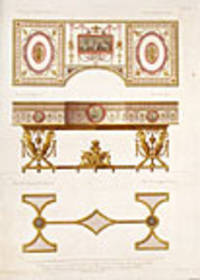
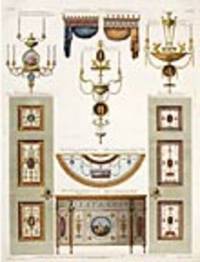
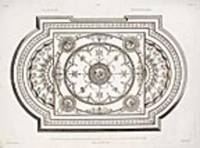
177731054London 1777. Copper engraving. Engraved by B. Pastorini. In excellent condition. An elegant engraving depicting the beautiful ceiling design in the countess of Derby's dressing room in her celebrated house in Grosvenor Square London.<br/> <br/> Robert and his brother James Adam forever changed the face of British architecture by introducing innovative Classical design ideas. From 1754-57 Robert lived in Italy where he had a long productive friendship with Piranesi which was inspirational for both men. Adam's first book on Diocletian's palace in Dalmatia is clearly very like the archaeological investigations Piranesi was making at the same time of similar ruins. Piranesi's friendship and passion for Roman Classicism were seminal influences on Adam and the greatest single factor other than his own talent in the work Adam produced on his return to England. Upon his return the brothers launched their career by building the Adelphi from the Thames to the Strand in London which although not a commercial success at the time included one of London's most cherished buildings the Adlephi Theatre. Together the Adam brothers designed and built some of the most famous buildings in England including such bastions of English architecture as Kenwood House Keddlestone Manor and Syon House. To the interiors of their English country houses the Adams brought wonderful ornamental elements in niches lunettes festoons and reliefs. Their classically designed buildings were so numerous in London that they changed the prevailing feel of the city and established their brand of neo-Classicism as the model of elegance and importance. It is asserted that the brothers originated the concept of the uniform facade attached to the typical English row house an architectural device that distinguishes London buildings. This monumental contribution is evidenced in the Adams' designs for Portland Place and Fitzroy Square and these were used as architectural models for the whole city. The brothers brought their talents into other areas by designing furniture to complement their beautiful interiors and by creating and publishing a treatise of design entitled 'Works in Architecture'. The work was published in three volumes over an extended span of time beginning in 1773 with the final volume being published posthumously in 1822.<br/> <br/> Cf. Brunet I.47; cf. Lowndes I p.8; DNB; Wilton-Ely The Mind and Art of Giovanni Battista Piranesi. unknown
177434076London 1774. Engraving coloured by hand by B. Pastorini old dampstain to upper left margin. A fine engraving with contemporary hand colouring of a painted plaster and stucco ceiling from the interior at Kenwood House in Hampstead London re-modelled in 1761-1773 and now home to the Iveagh Bequest picture collection.<br/> <br/> Robert and his brother James Adam forever changed the face of British architecture by introducing innovative Classical design ideas. From 1754-57 Robert lived in Italy where he had a long productive friendship with Piranesi which was inspirational for both men. Adam's first book on Diocletian's palace in Dalmatia is clearly very like the archaeological investigations Piranesi was making at the same time of similar ruins. Piranesi's friendship and passion for Roman Classicism were seminal influences on Adam and the greatest single factor other than his own talent in the work Adam produced on his return to England. Upon his return the brothers launched their career by building the Adelphi from the Thames to the Strand in London which although not a commercial success at the time included one of London's most cherished buildings the Adlephi Theatre. Together the Adam brothers designed and built some of the most famous buildings in England including such bastions of English architecture as Kenwood House Keddlestone Manor and Syon House. To the interiors of their English country houses the Adams brought wonderful ornamental elements in niches lunettes festoons and reliefs. Their classically designed buildings were so numerous in London that they changed the prevailing feel of the city and established their brand of neo-Classicism as the model of elegance and importance. It is asserted that the brothers originated the concept of the uniform facade attached to the typical English row house an architectural device that distinguishes London buildings. This monumental contribution is evidenced in the Adams' designs for Portland Place and Fitzroy Square and these were used as architectural models for the whole city. The brothers brought their talents into other areas by designing furniture to complement their beautiful interiors and by creating and publishing a treatise of design entitled 'Works in Architecture'. The work was published in three volumes over an extended span of time beginning in 1773 with the final volume being published posthumously in 1822.<br/> <br/> Cf. Brunet I.47; cf. Lowndes I p.8; DNB; Wilton-Ely The Mind and Art of Giovanni Battista Piranesi. unknown
177517101London 1775. Copper engraving with original hand colouring. Engraving by P. Begbie. A fine engraving of an ornate harpsichord designed for the Empress of Russia.<br/> <br/> Robert and his brother James Adam forever changed the face of British architecture by introducing innovative Classical design ideas. From 1754-57 Robert lived in Italy where he had a long productive friendship with Piranesi which was inspirational for both men. Adam's first book on Diocletian's palace in Dalmatia is clearly very like the archaeological investigations Piranesi was making at the same time of similar ruins. Piranesi's friendship and passion for Roman Classicism were seminal influences on Adam and the greatest single factor other than his own talent in the work Adam produced on his return to England. Upon his return the brothers launched their career by building the Adelphi from the Thames to the Strand in London which although not a commercial success at the time included one of London's most cherished buildings the Adelphi Theatre. Together the Adam brothers designed and built some of the most famous buildings in England including such bastions of English architecture as Kenwood House Keddlestone Manor and Syon House. To the interiors of their English country houses the Adams brought wonderful ornamental elements in niches lunettes festoons and reliefs. Their classically designed buildings were so numerous in London that they changed the prevailing feel of the city and established their brand of neo-Classicism as the model of elegance and importance. It is asserted that the brothers originated the concept of the uniform facade attached to the typical English row house an architectural device that distinguishes London buildings. This monumental contribution is evidenced in the Adams' designs for Portland Place and Fitzroy Square and these were used as architectural models for the whole city. The brothers brought their talents into other areas by designing furniture to complement their beautiful interiors and by creating and publishing a treatise of design entitled 'Works in Architecture'. The work was published in three volumes over an extended span of time beginning in 1773 with the final volume being published posthumously in 1822.<br/> <br/> Cf. Brunet I.47; cf. Lowndes I p.8; DNB; Wilton-Ely The Mind and Art of Giovanni Battista Piranesi. unknown
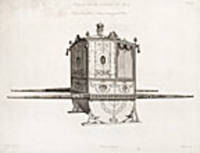
177517100London 1775. Engraving by P. Begbie. In excellent condition with the exception of some paper discolouration on the upper margin. A fine engraving of the sedan chair designed for Queen Charlotte.<br/> <br/> Robert and his brother James Adam forever changed the face of British architecture by introducing innovative Classical design ideas. From 1754-57 Robert lived in Italy where he had a long productive friendship with Piranesi which was inspirational for both men. Adam's first book on Diocletian's palace in Dalmatia is clearly very like the archaeological investigations Piranesi was making at the same time of similar ruins. Piranesi's friendship and passion for Roman Classicism were seminal influences on Adam and the greatest single factor other than his own talent in the work Adam produced on his return to England. Upon his return the brothers launched their career by building the Adelphi from the Thames to the Strand in London which although not a commercial success at the time included one of London's most cherished buildings the Adlephi Theatre. Together the Adam brothers designed and built some of the most famous buildings in England including such bastions of English architecture as Kenwood House Keddlestone Manor and Syon House. To the interiors of their English country houses the Adams brought wonderful ornamental elements in niches lunettes festoons and reliefs. Their classically designed buildings were so numerous in London that they changed the prevailing feel of the city and established their brand of neo-Classicism as the model of elegance and importance. It is asserted that the brothers originated the concept of the uniform facade attached to the typical English row house an architectural device that distinguishes London buildings. This monumental contribution is evidenced in the Adams' designs for Portland Place and Fitzroy Square and these were used as architectural models for the whole city. The brothers brought their talents into other areas by designing furniture to complement their beautiful interiors and by creating and publishing a treatise of design entitled 'Works in Architecture'. The work was published in three volumes over an extended span of time beginning in 1773 with the final volume being published posthumously in 1822.<br/> <br/> Cf. Brunet I.47; cf. Lowndes I p.8; DNB; Wilton-Ely The Mind and Art of Giovanni Battista Piranesi. unknown
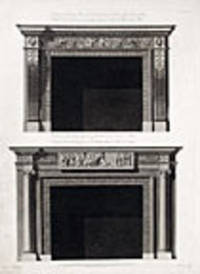
177517099London 1775. Engraving by D. Cunego. In excellent condition with the exception of being trimmed just outside the platemark on left margin. Some paper discolouration on left margin and 1" loss lower left corner. A fine engraving of the fireplaces at St. James's Palace and the Queen's House in London.<br/> <br/> Robert and his brother James Adam forever changed the face of British architecture by introducing innovative Classical design ideas. From 1754-57 Robert lived in Italy where he had a long productive friendship with Piranesi which was inspirational for both men. Adam's first book on Diocletian's palace in Dalmatia is clearly very like the archaeological investigations Piranesi was making at the same time of similar ruins. Piranesi's friendship and passion for Roman Classicism were seminal influences on Adam and the greatest single factor other than his own talent in the work Adam produced on his return to England. Upon his return the brothers launched their career by building the Adelphi from the Thames to the Strand in London which although not a commercial success at the time included one of London's most cherished buildings the Adlephi Theatre. Together the Adam brothers designed and built some of the most famous buildings in England including such bastions of English architecture as Kenwood House Keddlestone Manor and Syon House. To the interiors of their English country houses the Adams brought wonderful ornamental elements in niches lunettes festoons and reliefs. Their classically designed buildings were so numerous in London that they changed the prevailing feel of the city and established their brand of neo-Classicism as the model of elegance and importance. It is asserted that the brothers originated the concept of the uniform facade attached to the typical English row house an architectural device that distinguishes London buildings. This monumental contribution is evidenced in the Adams' designs for Portland Place and Fitzroy Square and these were used as architectural models for the whole city. The brothers brought their talents into other areas by designing furniture to complement their beautiful interiors and by creating and publishing a treatise of design entitled 'Works in Architecture'. The work was published in three volumes over an extended span of time beginning in 1773 with the final volume being published posthumously in 1822.<br/> <br/> Cf. Brunet I.47; cf. Lowndes I p.8; DNB; Wilton-Ely The Mind and Art of Giovanni Battista Piranesi. unknown
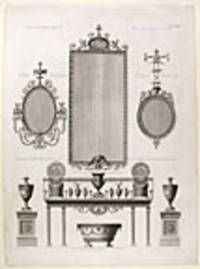
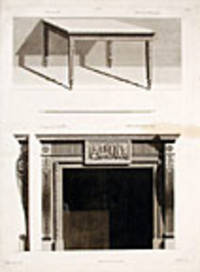
177517110London 1775. Engraving by P. Begbie. In excellent condition with the exception of two tears on right margin. A fine architectural engraving of ornate mirrors and tables from Robert Adam's seminal work on British architecture.<br/> <br/> Robert and his brother James Adam forever changed the face of British architecture by introducing innovative Classical design ideas. From 1754-57 Robert lived in Italy where he had a long productive friendship with Piranesi which was inspirational for both men. Adam's first book on Diocletian's palace in Dalmatia is clearly very like the archaeological investigations Piranesi was making at the same time of similar ruins. Piranesi's friendship and passion for Roman Classicism were seminal influences on Adam and the greatest single factor other than his own talent in the work Adam produced on his return to England. Upon his return the brothers launched their career by building the Adelphi from the Thames to the Strand in London which although not a commercial success at the time included one of London's most cherished buildings the Adlephi Theatre. Together the Adam brothers designed and built some of the most famous buildings in England including such bastions of English architecture as Kenwood House Keddlestone Manor and Syon House. To the interiors of their English country houses the Adams brought wonderful ornamental elements in niches lunettes festoons and reliefs. Their classically designed buildings were so numerous in London that they changed the prevailing feel of the city and established their brand of neo-Classicism as the model of elegance and importance. It is asserted that the brothers originated the concept of the uniform facade attached to the typical English row house an architectural device that distinguishes London buildings. This monumental contribution is evidenced in the Adams' designs for Portland Place and Fitzroy Square and these were used as architectural models for the whole city. The brothers brought their talents into other areas by designing furniture to complement their beautiful interiors and by creating and publishing a treatise of design entitled 'Works in Architecture'. The work was published in three volumes over an extended span of time beginning in 1773 with the final volume being published posthumously in 1822.<br/> <br/> Cf. Brunet I.47; cf. Lowndes I p.8; DNB; Wilton-Ely The Mind and Art of Giovanni Battista Piranesi. unknown
177517573London 1775. Engraving by P. Begbie. In excellent condition with the exception of two tears on right margin. A fine architectural engraving of ornate mirrors and tables from Robert Adam's seminal work on British architecture.<br/> <br/> Robert and his brother James Adam forever changed the face of British architecture by introducing innovative Classical design ideas. From 1754-57 Robert lived in Italy where he had a long productive friendship with Piranesi which was inspirational for both men. Adam's first book on Diocletian's palace in Dalmatia is clearly very like the archaeological investigations Piranesi was making at the same time of similar ruins. Piranesi's friendship and passion for Roman Classicism were seminal influences on Adam and the greatest single factor other than his own talent in the work Adam produced on his return to England. Upon his return the brothers launched their career by building the Adelphi from the Thames to the Strand in London which although not a commercial success at the time included one of London's most cherished buildings the Adlephi Theatre. Together the Adam brothers designed and built some of the most famous buildings in England including such bastions of English architecture as Kenwood House Keddlestone Manor and Syon House. To the interiors of their English country houses the Adams brought wonderful ornamental elements in niches lunettes festoons and reliefs. Their classically designed buildings were so numerous in London that they changed the prevailing feel of the city and established their brand of neo-Classicism as the model of elegance and importance. It is asserted that the brothers originated the concept of the uniform facade attached to the typical English row house an architectural device that distinguishes London buildings. This monumental contribution is evidenced in the Adams' designs for Portland Place and Fitzroy Square and these were used as architectural models for the whole city. The brothers brought their talents into other areas by designing furniture to complement their beautiful interiors and by creating and publishing a treatise of design entitled 'Works in Architecture'. The work was published in three volumes over an extended span of time beginning in 1773 with the final volume being published posthumously in 1822.<br/> <br/> Cf. Brunet I.47; cf. Lowndes I p.8; DNB; Wilton-Ely The Mind and Art of Giovanni Battista Piranesi. unknown
1730640741730. Disp. chir. 4/143. - Hrsg. v. Albrecht v. Haller. - Lausannae Sumptibus Marci-Michael Bousquet & Socior 1755 4° pp.275-294 Rückenbroschur. Johann Adam Kulmus "wurde geboren am 18. März 1689 zu Breslau. Er besuchte das Gymnasium in seiner Vaterstadt später in Danzig und studirte von 1711-1715 in Halle Leipzig Straßburg und Basel Medicin und Naturwissenschaften. Nachdem er sein Examen bestanden hatte hielt er sich zunächst einige Zeit in Holland auf und ließ sich nach seiner Rückkehr als praktischer Arzt in Danzig nieder. Im Jahre 1725 wurde er zum Professor der Medicin und der Naturwissenschaften an dem dortigen Gymnasium ernannt. Kulmus war Mitglied der Leopoldinischen Akademie und der Berliner Gesellschaft der Wissenschaften. Er starb am 29. Mai 1745 zu Danzig. Außer zahlreichen medicinischen Schriften schrieb er: "Elementa philosophiae naturalis" Gedani 1722 sowie verschiedene kleine naturwissenschaftliche Abhandlungen wie: "Dis. de lapidibus" Gedani 1727; "Exercitatio de Insectis" Gedani 1729 u. a. m." Wilhem Heß ADB XVII 1883 p.364 Kulmus Johann Adam Präses Knapio Johannes Jacobo Resp. unknown
1708418911708. Halae Magdeb. Literis Christiani Henckelii 1708 Kl.4° 48 pp. orig. Broschur. unknown
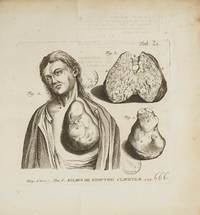
1732583831732. Disp. chir. 5/162. - Hrsg. v. Albrecht v. Haller. - Lausannae Sumptibus Marci-Michael Bousquet & Socior 1756 4° pp.653-666 1 gefalt. Kupferstichtafel Rückenbroschur. Zweiter Abdruck "Dissertationem anatomico-chirurgicam de exostosi steatomatode claviculae eiusque felici sectione . / Joannes Adamus Kulmus Präses; Paull. Henr. Gerard. Moehring Resp." Praeses: Johann Adam Kulmus 1689-1745. Resp.: Paul Heinrich Gerhard Möhring 1710-1792. Paul Heinrich Gerhard Moehring "geb. in Jever Oldenburg 21. Juli 1710 studirte in Danzig unter KULMUS und KLEIN in Breslau Dresden und Wittenberg promovirte hier 1733 liess sich dann in seiner Vaterstadt nieder wo er 1742 Bezirksphysicus und 1743 zum 1. Arzt des Fürsten von Anhalt-Zerbst ernannt wurde. Er starb 28. Oct. 1792. M. war ein tüchtiger Botaniker und Zoolog; die Pflanzengattung "Moehringia" aus der Familie der Caryophylleen ist ihm zu Ehren so benannt. Ausser einer sehr grossen Zahl von Abhandlungen im Commerc. litterar. Norimbergense und in den Acta der k. k. Leopold. Akad. hat er noch verfasst: "Schediasma de quibusdam praejudiciis medicis" Danzig 1732 - "Primae lineae horti parvi etc." Oldenburg 1736 - "Historiae medicinales junctis fere ubique corollariis praxin medicam illustrantibus" Amsterdam 1739 ; 1761 -"Kurzer Entwurf der jetzt in den Niederlanden befindlichen pestilenzialischen Viehseuchen" Aurich 1745 - "Arnum gencrau Bremen 1752 u. A. m." Pagel Hirsch-H. IV p.226 siehe - Boerner II p. 171; III p. 419 738; Biogr. méd. VI p. 279; Dict hist. III p. 586. unknown
1709419091709. Halae Magdeb. Literis Christiani Henckelii 1709 Kl.4° 39 1 pp. orig. Broschur. Adam Friedrich Pezoldt 1679-1761 unknown
177717127London 1777. Copper engraving with original hand colouring. Engraved by B. Pastorini. An elegant engraving depicting a collection of ornate furniture in the Earl of Derby's celebrated house in Grosvenor Square London.<br/> <br/> Robert and his brother James Adam forever changed the face of British architecture by introducing innovative Classical design ideas. From 1754-57 Robert lived in Italy where he had a long productive friendship with Piranesi which was inspirational for both men. Adam's first book on Diocletian's palace in Dalmatia is clearly very like the archaeological investigations Piranesi was making at the same time of similar ruins. Piranesi's friendship and passion for Roman Classicism were seminal influences on Adam and the greatest single factor other than his own talent in the work Adam produced on his return to England. Upon his return the brothers launched their career by building the Adelphi from the Thames to the Strand in London which although not a commercial success at the time included one of London's most cherished buildings the Adelphi Theatre. Together the Adam brothers designed and built some of the most famous buildings in England including such bastions of English architecture as Kenwood House Keddlestone Manor and Syon House. To the interiors of their English country houses the Adams brought wonderful ornamental elements in niches lunettes festoons and reliefs. Their classically designed buildings were so numerous in London that they changed the prevailing feel of the city and established their brand of neo-Classicism as the model of elegance and importance. It is asserted that the brothers originated the concept of the uniform facade attached to the typical English row house an architectural device that distinguishes London buildings. This monumental contribution is evidenced in the Adams' designs for Portland Place and Fitzroy Square and these were used as architectural models for the whole city. The brothers brought their talents into other areas by designing furniture to complement their beautiful interiors and by creating and publishing a treatise of design entitled 'Works in Architecture'. The work was published in three volumes over an extended span of time beginning in 1773 with the final volume being published posthumously in 1822.<br/> <br/> Cf. Brunet I.47; cf. Lowndes I p.8; DNB; Wilton-Ely The Mind and Art of Giovanni Battista Piranesi. unknown
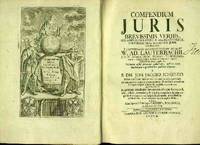
1722950613Tübingen Frankfurt & Leipzig: Cotta ca. 1722. hardcover. Gut. 8 Blatt 745 Seiten 7 Blatt. Halbpergament der Zeit mit Pergamentecken und handschriftlichem Rückenschild. Oktav 215 x 175 cm Rücken mit Fehlstelle im Pergament Einband berieben bestoßen und etwas fleckig Besitzvermerk von alter Hand auf Titel sehr zahlreiche zeitgenössische Marginalien innen wenig fleckig im Ganzen ordentlich erhalten. "Wolfgang Adam Lauterbach 1618 - 1678 war einer der bedeutendsten Juristen des usus modernus pandectarum in Württemberg. Im November 1648 erhielt er an der Universität Tübingen einen Lehrstuhl für Pandekten. . Neben der Lehrtätigkeit hatte Lauterbach auch mehrfach Ämter in der Universitätsverwaltung inne er wurde achtmal zum "rector magnificus" und oft zum Dekan der juristischen Fakultät gewählt. . Sein bekanntestes Werk ist das >Compendium Juris<. Dieses Werk wurde aber nicht von ihm selbst sondern von seinem Schüler Johann Jacob Schütz Pietist und Jurist 1640 - 1690 herausgegeben. Das Buch war eine der verbreitetsten Erläuterungen der Pandekten es wurde von 1679 bis 1744 vielfach aufgelegt." vgl. wikipedia. Seine besondere Bedeutung bekommt das vorliegende sehr breitrandige Exemplar durch die überbordenden Marginalien von Johann Friedrich Anton Meier Hildesheim 1724 - 1796 Paderborn der seinen vollen Namen selbstbewußt auf dem Vorsatz zu wissen gibt. Der Eintrag ist "Erfurt 1745" datiert Meier war damals dort Student. Später wurde er einer der angesehensten Juristen in Paderborn wo er Hofrichter Geheimer Rat und Kanzler war. vgl. Zeitschrift für vaterländische Geschichte und Alterthumskunde Westfalens 1843 Seite 311 ff. - Weitere Bilder auf Anfrage oder auf unserer Homepage. Wegen Urlaub kann Ihre Bestellung / Anfrage erst nach dem 21.06.2026 bearbeitet werden. - Because of holidays your order / question can be handled only after 06/21/2026. Cotta hardcover
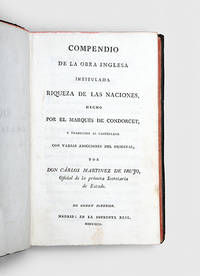
1792164946Madrid: en la Imprenta Real 1792. THE FIRST APPEARANCE OF ADAM SMITH IN SPANISH First Spanish translation of Condorcet's summary of Smith's Wealth of Nations the first appearance of any of his work in Spanish prior to the complete translation by J. A. Ortiz in 1794. The translator of the present summary is the young marqués de Casa Carlos Martinez de Yrujo y Tacón 1763-1824. "This is a translation of the Roucher/Blavet condensation of Wealth of Nations in the Bibliothèque de l'homme publique. to which Condorcet lent his name. The translator restores to the text a summary of Smith's Digression on the Bank of Amsterdam WN IV iii. b 479-88 a five-line qualification of the argument for free trade. The criticism of Catholic clergy is omitted." Tribe. Octavo 174 x 108 mm. Contemporary tree sheep flat spine ruled and decorated in gilt red morocco label marbled endpapers red edges. 19th-century ownership inscription to front free blank leaf extremities lightly rubbed one corner slightly worn; a crisp clean copy in fine condition. Palau 59126; Tribe 47. This edition not listed in Goldsmiths' Kress or Vanderblue. unknown
1800215997LEdinburgh 1800. First Edition . Hardcover. Fair. Exhibiting alphabetically the proper names with a short account of the several deities heroes and other persons mentioned in the ancient classic authors; and a more particular description of the most distinguished characters among the Romans. 415 pp. Foxing on endpapers with previous owners' names on both front endpapers. Leather-bound with gilt titles and raised bands. Corners bumped wear along the edges and the spine. FAIR. <br/> <br/> hardcover
177817139London 1778. Copper engraving. Engraved by Caldwell. In excellent condition with the exception of a waterstain in middle of sheet. Left margin is trimmed just outside platemark. An elegant engraving of a fireplace and table at Shelburne House in Berkeley Square in London.<br/> <br/> Robert and his brother James Adam forever changed the face of British architecture by introducing innovative Classical design ideas. From 1754-57 Robert lived in Italy where he had a long productive friendship with Piranesi which was inspirational for both men. Adam's first book on Diocletian's palace in Dalmatia is clearly very like the archaeological investigations Piranesi was making at the same time of similar ruins. Piranesi's friendship and passion for Roman Classicism were seminal influences on Adam and the greatest single factor other than his own talent in the work Adam produced on his return to England. Upon his return the brothers launched their career by building the Adelphi from the Thames to the Strand in London which although not a commercial success at the time included one of London's most cherished buildings the Adlephi Theatre. Together the Adam brothers designed and built some of the most famous buildings in England including such bastions of English architecture as Kenwood House Keddlestone Manor and Syon House. To the interiors of their English country houses the Adams brought wonderful ornamental elements in niches lunettes festoons and reliefs. Their classically designed buildings were so numerous in London that they changed the prevailing feel of the city and established their brand of neo-Classicism as the model of elegance and importance. It is asserted that the brothers originated the concept of the uniform facade attached to the typical English row house an architectural device that distinguishes London buildings. This monumental contribution is evidenced in the Adams' designs for Portland Place and Fitzroy Square and these were used as architectural models for the whole city. The brothers brought their talents into other areas by designing furniture to complement their beautiful interiors and by creating and publishing a treatise of design entitled 'Works in Architecture'. The work was published in three volumes over an extended span of time beginning in 1773 with the final volume being published posthumously in 1822.<br/> <br/> Cf. Brunet I.47; cf. Lowndes I p.8; DNB; Wilton-Ely The Mind and Art of Giovanni Battista Piranesi. unknown
177717133London 1777. Copper engraving. Engraved by T. Morris. In excellent condition with the exception of a small area of foxing in the sheet. An elegant engraving of the elaborate ceiling in the music room of Sir Watkin Williams Wynn's celebrated house in St. James' Square London.<br/> <br/> Robert and his brother James Adam forever changed the face of British architecture by introducing innovative Classical design ideas. From 1754-57 Robert lived in Italy where he had a long productive friendship with Piranesi which was inspirational for both men. Adam's first book on Diocletian's palace in Dalmatia is clearly very like the archaeological investigations Piranesi was making at the same time of similar ruins. Piranesi's friendship and passion for Roman Classicism were seminal influences on Adam and the greatest single factor other than his own talent in the work Adam produced on his return to England. Upon his return the brothers launched their career by building the Adelphi from the Thames to the Strand in London which although not a commercial success at the time included one of London's most cherished buildings the Adlephi Theatre. Together the Adam brothers designed and built some of the most famous buildings in England including such bastions of English architecture as Kenwood House Keddlestone Manor and Syon House. To the interiors of their English country houses the Adams brought wonderful ornamental elements in niches lunettes festoons and reliefs. Their classically designed buildings were so numerous in London that they changed the prevailing feel of the city and established their brand of neo-Classicism as the model of elegance and importance. It is asserted that the brothers originated the concept of the uniform facade attached to the typical English row house an architectural device that distinguishes London buildings. This monumental contribution is evidenced in the Adams' designs for Portland Place and Fitzroy Square and these were used as architectural models for the whole city. The brothers brought their talents into other areas by designing furniture to complement their beautiful interiors and by creating and publishing a treatise of design entitled 'Works in Architecture'. The work was published in three volumes over an extended span of time beginning in 1773 with the final volume being published posthumously in 1822.<br/> <br/> Cf. Brunet I.47; cf. Lowndes I p.8; DNB; Wilton-Ely The Mind and Art of Giovanni Battista Piranesi. unknown
179751566Vienne A. Blumauer 1797. Hardcover. Covers slightly sprung sun-darkened and foxed; minor bumps at bottom edge and corner of vol. 1's rear cover; foxing throughout with occasional small stains; dampstain at bottom corner of last pages and folding plates in vol. 1; otherwise very good condition. . Two volumes separately paged. Four folding plates in vol. 1 and a frontispiece in each volume. Vienne, A. Blumauer hardcover
17981010981798. Vienne J.V. Degen 1798. xviii 124 ix pp. Original marbled paper wrappers. Catalogue of all the prints by Lucas van Leyden preceded by a biography. Lucas van Leyden 1494 8 August 1533 also named either Lucas Hugensz or Lucas Jacobsz was a Dutch engraver and painter born and mainly active in Leiden. He was among the first Dutch exponents of genre painting and is generally regarded as one of the finest engravers in the history of art. Lucas was first trained by his father Huygh Jacobszoon; later he entered the workshop of Cornelis Engelbrechtszoon a painter of Leiden. His paintings as well as his prints reveal his unique approach to subject matter and style though Lucas is more highly regarded today as a printmaker than as a painter. He was extraordinarily precocious. unknown
17970082728WVienna: A. Blumauer 1797. early edition. Hardcover. Very Good. 1797 early edition. Hardcover. 2 volumes in 1. 302 208 pp. Frontis of Rembrandt plus 3 fold-outs and 1 engraved plate. Rebound in later 1/2 leather with gilt titles. Very Good. Leather scuffed at corners and joints. Light foxing throughout; occasional faint pencil marginalia; previous owner's bookplate. An early revised edition of the works of Rembrandt. Digital images available upon request. A. Blumauer hardcover
1797193687Vienne: A. Blumauer 1797. Hardcover. Good- Both boards which are not originals are entirely detached from the text block and moderately detriorated; first page with bookplate and last endpaper are separated from the textblock; pages are age-toned with light foxing chipping at edges; some top corners have been dog-eared. Half-bound red cloth and light yellow boards; illustrated endpapers; frontispiece; XLI 302 pp.; some illustrations. Text in French. THIS IS VOLUME ONE ONLY. This volume has some nice fold-out illustrations in the back. A. Blumauer hardcover
174214246Officina Libraria Mayeriana: Prostat Francofurti & Manhemii 1742. Book. Good. Hardcover. 16mo - over 5¾ - 6¾" tall. 792pp index full old leather with raised bands at spine extremities worn through spine leather loosed from text block but holding at rear outer hinge section of leather missing at rear board old ink signature noted at front pastedown and first fly small library stamp at title-page contents generally clean and bright with very little foxing. Prostat, Francofurti & Manhemii Hardcover
178436554Stkh. 1784. 8vo. Nyere shirtingryggbd. med marmorerte dekler. 14 355 3 s. Svensk. <br/><br/><em>Med navnestpl. på forsatsbl. Ryggen noe bleket. </em> unknown
1789246431789-1791. Wien bey Stahel u. in Commission bey Gräffer 1789-1791 8° 861 822 pp. mehrere gest. Titelvignetten und 4 gefalt. Kupfertafeln nebst 2 gef. Tab. Pappbände der Zeit; St.a.Tit. Erstdruck dieses seltenen Periodikums. Das 1792 erschiene erste Stück des dritten Bandes fehlt wie in fast allen nachweisbaren Exemplaren siehe KVK. Vorzüglich zur Fortbildung der k.k. Feldchirurgen herausgegeben. Von Botanik über Physik Chemie Pharmakologie Hygiene und über Anatomie & Physiologie bis zu den speziellen Themen der Allgemein- und Kriegschirurgie spannt sich der Bogen der dargebotenen Themen. Vielfach werden die grundlegenden Werke der in u. ausländischen medizinischen Standardwerke besprochen. J.Hunczovsky Assistent Brambillas in Wien wurde auf dessen Empfehlung und auf Kosten des Kaisers für mehr als 3 Jahre zur Fortbildung nach Frankreich und England geschickt. Danach fand er eine Anstellung an der vormaligen militärärztlichen Schule in Gumpendorf. Nach Gründung der militärärztlichen Josephs-Akademie am 7. Nov. 1785 wurde er dort Professor für Chirurgie und später zum Leibchirurgen des Kaisers ernannt. Prof. J.A.Schmidt war ein ausgezeichneter Augenarzt. Beethoven den er behandelt hatte dankte ihm in seinem Heiligenstätter Testament. -cf.Schönbauer Das Medizin. Wien 175: Puschmann Med. in Wien p.99-101. unknown
179945697Kiøbenhavn Johan Rudolph Thiele 1799. 4to. Without wrappers. In: "Nye Samling af det Kongelige Danske Videnskabernes Selskabs Skrifter." Vol. V. Pp. 18-27 samt 1 stor dobbeltsidet kobberstukket planche. <br/><br/><em>Hauch beviste med dette af ham selv forbedrede udgave af Dumotiers Gazometer at vandets bestanddele består af brint og ilt. Hermed bidrog han væsentligt til at indføre den nye kemi i Danmark anført af Lavoisier. </em> unknown