252 résultats
179951235Kiøbenhavn Schultz 1799. 2 samtidige hldrbd. Rygforgyldning og forgyldte skindtitler. Papirsetiket pålimet øverst på rygge. Stempler på titelblade. XX774 pp Register. unknown
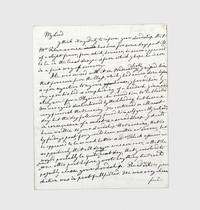
1760167445Glasgow: 10 March 1760. Smith nurses his student One of very few remaining Adam Smith autograph letters in private hands written to the Earl of Shelburne to detail the sickness of his son Thomas Petty-Fitzmaurice Smith's student and lodger. Mossner & Ross's census counts 232 letters written by Smith 53 of which could not be traced p. vii. Virtually all are in public collections. While serving as professor of logic and moral philosophy at Glasgow University Smith shared his residence with his more prominent students giving direct tutoring and scholastic supervision. Smith's renown was such that he attracted members of notable and aristocratic families to Glasgow: the 1st Earl of Shelburne sent his son there rather than Oxford on Lord Minto's recommendation. Thomas Petty-Fitzmaurice 1742-1793 the earl's youngest son lodged and studied with Smith from 1759 to 1761. Petty-Fitzmaurice later served as MP from 1762 to 1780; his brother William served as prime minister from 1782 to 1783. "In a series of letters to Fitzmaurice's father Smith went into great detail regarding the boy's studies and behaviour providing a number of insights into both the rigour of Smith's approach and the subjects he considered suitable for the education of a young noble . . . Fitzmaurice would spend two to three hours a day with Smith going over 'very regularly' the subjects he had covered in his lecture . . . It's clear from Smith's correspondence that the overall rigour and intensity of this schedule was an important part of his approach to teaching" Bonnyman p. 46. Here Smith writes to reassure Shelburne of his son's welfare in his care. "I think it my Duty to inform your Lordship that Mr. Fitzmaurice has been for some days past ill of a slight fever from which however he never appeared to be in the least danger and from which I hope he is now in a fair way of recovery. He was seized with it on Wednesday last. I missed him that forenoon from the Class which I had never done before and upon my return to my own house I found him lying upon his bed and complaining of a headache. I immediately sent for a Physician who ordered him to be blooded. He was a good deal relieved by the bleeding but became very feverish that evening. He continued so all next day but the day following found himself greatly relieved in consequence of a sweat and a sound Sleep. I should have written to your Lordship that evening that is by Fridays post for I could have written no sooner but he appeared to be so much better and Dr. Black assured me positively that all danger was now over and that he would probably be quite well next day that I resolved to wait one other post before I wrote anything that could possibly alarm your Lordship". Smith then gives a day-by-day account of Petty-Fitzmaurice's fluctuating health. He continues "Your Lordship perhaps may think that as I ventured to delay writing to you by last post I ought not to have written by this: and I shall readily acknowledge that my behaviour in this respect is not very consistent. But when Mr. Fitzmaurice had a slight relapse on Saturday evening I felt so much uneasiness for not having written to your Lordship the day before that I resolved never to expose myself to the like; your Lordship may depend upon his being treated with the utmost care and attention". Smith writes of his faith in the two doctors who attended him who are both with him at least five times a day; they did not deem the illness serious enough to alarm Shelburne. He signs himself "My Lord your Lordship's most obedient obliged servant Adam Smith". The letter dates less than a year after the publication of his classic work of sentiment and sympathy The Theory of Moral Sentiments. The letter is published in The Correspondence of Adam Smith pp. 62-3 where the editors note Smith's solicitude parallels that shown for his later pupils the Duke of Buccleuch and Hew Campbell Scott when they were struck with illness. Provenance: Bowood House in Wiltshire the estate of the Earls of Shelburne since 1754; the letter was part of the family's historic archive sold by the current Earl of Shelburne in 1994 to pay for the upkeep of the house; since then in private hands. Bifolium folded to 228 x 186 mm manuscript on 3 pages comprising 568 words entirely in Smith's hand fourth page with note in hand of recipient on the letter's contents. Housed in a black cloth flat-back box by the Chelsea Bindery. Central fold with 10 cm split at foot a few words a little smudged at time of writing; in very good condition. Brian Bonnyman Third Duke of Buccleuch and Adam Smith 2014; Ernest Campbell Mossner & Ian Simpson Ross The Correspondence of Adam Smith 1987. hardcover
179048326Dublin: printed by P. Byrne 1790. 6 volumes 8vo engraved frontispiece 2 folding engraved maps and 5 folding tables; contemporary full mottled calf red and black morocco labels on spines 2 lacking; spine ends chipped extremities rubbed and worn but in all a good serviceable set. Engraved bookplates of Alexander Crofts. First published in 2 volumes folio in 1762. Anderson 1693-1765 was a Scottish economist and for 40 years was a clerk in South Sea House the headquarters of the South Sea Company. Late in his life Anderson traveled to the American colonies begetting a son Adam E. Anderson later noted for being an early settler and planner of the Ohio Territory. printed by P. Byrne unknown
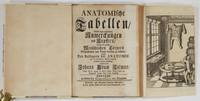
1725687051725. Danzig zu finden bey Cornelius von Beughem gedruckt von Thomas Johann Schreiber 1725 8° 24 Bl. 28 Kupfer auf 10 Taf.; Danzig 1725 36 Bl. Halbpergamenteinband; feines Expl. Sehr seltene dritte Ausgabe der "Anatomischen Tabellen" nebst erster Auflage der "Anmerkungen welche den Anatomischen Tabellen zu mehrer Erläuterung und deutlichem Begrieffe beygefüget" welche erstmals hier 1725 beigefügt worden sind. Diese beiden Teile wurden dann in den späteren Auflagen vereinigt und zu dem bekanntesten Kompendium der Anatomie des 18.Jhdts. Dieses Werk "stellte den ersten erfolgreichen Versuch dar den Wissensstoff der Anatomie der in den vergangenen zwei Jahrhunderten seit dem Erscheinen des Buches von Andreas Vesals "De corporis humani fabrica" im Jahre 1543 gewaltig angewachsen war in übersichtlicher und leicht lernbarer Form zusammenzufassen und mit Bildern zu erläutern." H.Goerke Die Beziehungen Japans zur europäischen Medizin im 18.Jhdt. J.Jap.Soc.Med.Hist. 20 1974 pp.418-388 Johann Adam Kulmus 1689-1745 aus Breslau war Schüler von Herman Boerhaave 1668-1738 und des Anatomen Bernhard Albinus 1833-1721 in Leiden. Nach einer Studienreise durch Holland war er als Arzt in Danzig tätig und Professor für Medizin und Physik am Gymnasium in Danzig und hatte dort für seine Schüler und für Wundärzte die "Anatomischen Tabellen" verfaßt. Durch holländische Seefahrer gelangte sein Werk auch nach Japan und wurde übersetzt und unter dem Titel "Kaitai shinsho" von R.Mayeno herausgegeben. Dieses Buch war der Grundstein westlicher Medizin in Japan. Foundation of western Medicine in Japan! The rare third and first complete of edition "Die Anatomische Tabellen" is the first edition of "Anmerkungen welche den Anatomischen Tabellen zu mehrer Erläuterung und deutlichem Begrieffe beygefüget". The later editions combined these two parts. The Compendium became very well known and wide-spread and it was the first anatomical compendium of modern medicine v. Goecke. The first edition is extremely rare since it was only designed for the use of Kulmus' students. The "Anatomische Tabellen" were even translated into Japanese. After the Japanese physicians MAYENO RYOTAKU 1723-1804 GENPAKU SUGITA 1733-1817 and JUN'AN NAKAGAWA 1739-1786 had convinced themselves the 4th of March 1771 in Kotsukappara near Edo by the dissection of an executed about 50 years old Japanese woman Aocha-Baba Mother Green Tea that those "Tabellen" presented the true anatomical relations thus demonstrated that anatomy as it had been taught in Japan up to that time was false. "The book in no way differed from what we saw before us. If we could translate parts of this Tâheru Anatomia we could gain a clear understanding entirely and advance medicine beyond its present level." Genpaku Sugita Rangaku katohajime 1815. So Kaitai Shinsho New Book on Human Dissections was the first complete translation of a medical work which originated on a German text. It represented an empirical approach to nature which was undermining the prestige of Chinese medicine in Japan. It took about 4 years and eleven attempts to translate it and was edited by GENPAKU SUGITA in 1774. The translator MAYENO RYOTAKU didn't sign it because of his extreme modesty. -cf. Hirsch-H. III 632; Heinrich Vianden Die Einführung der deutschen Medizin in Japan der Meiji-Zeit p.23ff.; Y.Fujikawa Der Arzt in der Japanischen Kultur p.58. unknown
1759636031759. Neue vermehrtes und verbesserte Auflage. - Leipzig Caspar Fritschen Handlung 1759 8° 10 121 6 pp. mit 26 Kupfertafeln inkl. Portr.-Frontisp num. II bis XXVIII Halbledereinband der Zeit; feines Expl. Vollständiges Exemplar dieses bekanntesten Kompendiums der Anatomie des 18.Jhdts. Johann Adam Kulmus aus Breslau 1689-1745 studierte an verschiedenen europäischen Universitäten. Nach einer Studienreise durch Holland war er als Arzt in Danzig tätig. Durch holländische Seefahrer gelangte sein Werk auch nach Japan und wurde übersetzt und unter dem Titel "Kaitai shinsho" von R. Mayeno herausgegeben. Dieses Buch war der Grundstein westlicher Medizin in Japan. Kulmus practiced at Danzig and his Tabulae anatomicae were very popular and have been repeatedly reprinted and translated. The "Anatomische Tabellen" were even translated into Japanese after a Japanese physician named MAYENO had satisfied himself by a dissection of a Japanese woman Aocha-Baba that they presented the true anatomical relations and thus demonstrated that such anatomy as had been taught in Japan up to that time was absolutely false. cf. Hirsch-H. III 632; Choulant-Frank p.34 unknown
1796mon0003328626London: A. Strahan; T. Cadell 1796. Hardcover. Acceptable. . Volume 2 only. Lacking the top board. Rubbing to the spine and rear board minor loss at the spine ends. Pages with light scattered foxing. London: A. Strahan; T. Cadell hardcover
17897269Philadelphia: Thomas Dobson 1789. First American Edition Volumes II & III Only. First American Edition Volumes II & III ONLY. Measuring approximately 6.5" x 4" with 430 and 387 numbered pages respectively. Bound in contempory full leather.<br /> <br /> Both volumes are in good condition. Heavy wear and chipping to the original leather boards. Front pastedowns have come away from the boards. Both front endpaper versos with the name stamp "Jack Cunningham". Page 61-62 in Volume II has a large tear with no loss. Pages 23-26 in Volume III are detached.<br /> <br /> Please view the many other rare titles available for purchase at our store. We are always interested in purchasing individual or collections of fine books.<br /> <br /> Inventory #P11-15. Thomas Dobson unknown
1789mon0001636593A.Strahan & T.Cadell 1789. Hardcover. Good. . Leather binding. Front board detached.Boards and spine scuffed. Hinges and binding firm with no loose pages.Edges tanned.Text clean. A.Strahan & T.Cadell hardcover
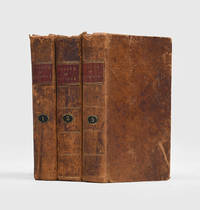
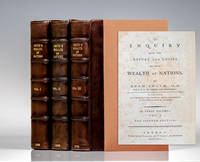
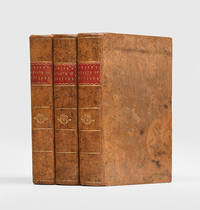
178620767London: for A. Strahan and T. Cadell 1786. 3 volumes. An especially early printing the fourth only the second of the octavo editions the last edition with any changes includes a new preface never before printed issued only 10 years after the first 2 vol. quarto edition. 8vo beautiful three-quarter polished calf in fine antique style over marbled paper covered boards red morocco lettering labels gilt the spine in compartments separated by gilt bands gilt central devices in the compartments. viii 499 errata; vi 518 5 Appendix errata; v errata 465 47 index 1 ad pp. A remarkably fine and handsome set the text blocks completely untrimmed and with the original deckled edges as issued from the printer. Bindings in excellent condition. A BEAUTIFUL SET OF THIS EXTRAORDINARY WORK. Smith's classic work was begun at Toulouse in 1763-64 where he had travelled as guardian of Henry Scott the young duke of Buccleuch and in the company of David Hume historian and fellow professor at Glasgow University. The work took shape over the next ten years and was finally published in 1776. At one point during its composition Hume wrote that Smith was "cutting himself off entirely from human society." But his labors however severe his methods yielded the "first and greatest classic of modern economic thought" Printing and the Mind of Man.<br> "It may be said that the WEALTH OF NATIONS certainly operated powerfully through the harmony of its critical side with the tendencies of the half-century which followed its publication to the assertion of personal freedom and 'natural rights.' It discredited the economic policy of the past and promoted the overthrow of institutions which had come down from earlier times but were unsuited to modern society. As a theoretic treatment of social economy and therefore as a guide to social reconstruction and practice in the future it is provisional not definitive. But when the study of its subject comes to be systematized on the basis of a general social philosophy more complete and durable than Smith's no contribution to that final construction will be found so valuable as his" Britannica.<br> The fourth edition contains a special ‘advertisement’ first appearing here in which Smith declares that he is now ‘at liberty to acknowledge my very great obligations to Mr. Henry Hop of Amsterdam. To that gentleman I owe the most distinct as well as liberal information concerning a very interesting and important subject the Bank of Amsterdam’. Eighteenth century editions of Smith’s magnum opus are now becoming very scarce. for A. Strahan and T. Cadell hardcover
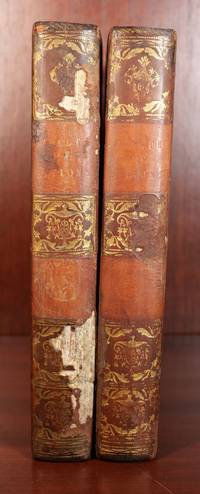
1776144265London: Printed for W. Strahan; and T. Cadell 1776. First edition of Adam Smith's magnum opus and cornerstone of economic thought. Quarto 2 volumes bound in full brown calf elaborately gilt-decorated spines front and rear panels red morocco spine labels marbled endpapers. In near fine condition. Remarkably clean throughout with some light toning. Housed in a custom half morocco calf clamshell box elaborately gilt decorated spines. An exceptional example of this landmark work. First published in 1776 Adam Smith's masterpiece The Wealth of Nations is the foundation of modern economic thought and remains the single most important account of the rise of and the principles behind modern capitalism. It took Smith ten years to produce An Inquiry into the Wealth of Nations. His commentary during such an incremental time the first years of the Industrial Revolution sought to reform outdated theories of mercantilist and physiocratic economic thought with broader concepts that we are all familiar with today such as the division of labor productivity and free markets. An important theme that persists throughout the work is the idea that the economic system is automatic and when left with substantial freedom able to regulate itself. This is often referred to as the “invisible hand.†The ability to self-regulate and to ensure maximum efficiency however is limited by a number of external forces and “privileges†extended to certain members of the economy at the expense of others. The 1776 publication of An Inquiry into The Wealth of Nations was the first of only five editions that were published in Adam Smith’s lifetime and greatly influenced a number of economists and philosophers of his time and those that followed including Jean-Baptiste Say Alexander Hamilton Thomas Malthus and Ludwig von Mises. "The history of economic theory up to the end of the nineteenth century consists of two parts: the mercantilist phase which was based not so much on a doctrine as on a system of practice which grew out of social conditions; and the second phase which saw the development of the theory that the individual had the right to be unimpeded in the exercise of economic activity. While it cannot be said that Smith invented the latter theory.his work is the first major expression of it. He begins with the thought that labour is the source from which a nation derives what is necessary to it. The improvement of the division of labour is the measure of productivity and in it lies the human propensity to barter and exchange.Labour represents the three essential elements-wages profit and rent-and these three also constitute income. From the working of the economy Smith passes to its matter -'stock'- which encompasses all that man owns either for his own consumption or for the return which it brings him. The Wealth of Nations ends with a history of economic development a definitive onslaught on the mercantile system and some prophetic speculations on the limits of economic control.The Wealth of Nations is not a system but as a provisional analysis it is complete convincing. The certainty of its criticism and its grasp of human nature have made it the first and greatest classic of modern economic thought" PMM. Printed for W. Strahan; and T. Cadell unknown
1786173725London: printed for A. Strahan; and T. Cadell 1786. An uncut copy Fourth edition of "the first and greatest classic of modern economic thought" PMM an uncut and partly unopened copy in a contemporary binding a reprint of the third edition of 1784 with minor variations. In his Wealth of Nations Smith "begins with the thought that labour is the source from which a nation derives what is necessary to it. The improvement of the division of labour is the measure of productivity and in it lies the human propensity to barter and exchange The Wealth of Nations ends with a history of economic development a definitive onslaught on the mercantile system and some prophetic speculations on the limits of economic control" PMM. "The Wealth of Nations had no rival in scope or depth when published and is still one of the few works in its field to have achieved classic status meaning simply that it has sustained yet survived repeated reading critical and adulatory long after the circumstances which prompted it have become the object of historical enquiry" ODNB. "The 'Advertisement to the Fourth Edition' announces that no alterations of any kind have been made. Cannan noted some small variations which can be attributed to small misreadings or unauthorised corrections by the printers. The division between volumes is identical to that in the 3rd Edition and Vol. II Bk. IV Ch. 8 is this time included in the Table of Contents" Tribe. Provenance: engraved armorial bookplate of Talbot of Gonvile's Hall in Wymondham Norfolk to each front pastedown; earlier ownership signature of B. C. Hingham dated June 1787 above. Binder's note in ink on front blank endpaper of vol. I: "3 V. 0.18.0 in hf bind." 3 vols octavo 228 x 138 mm pp. Complete with the conjugate blank leaf before title in vol. III the top edge unopened. viii 499 1; vi 518 6; v iv-v 1 465 1 50 index. Contemporary half calf and marbled boards red morocco spine labels. Housed in a brown leather entry slipcase by the Chelsea Bindery. Spines with some surface wear and vertical cracks consolidated at the head one joint partly cracked but sound minimal loss of the marbled paper covering; very occasional light spotting and the odd short marginal tear; a lovely example of a modest provincial binding entirely uncut and partly unopened. Goldsmiths' 13148; Kress B.1129; Tribe 30; Vanderblue p. 3. See Printing and the Mind of Man 221; Loudon J. H. James Scott and William Scott bookbinders Scolar Press 1980. hardcover
1778001569London: W. Strahan and T. Cadell 1778. Two volumes complete - Volume One - 9 2-510pp and Volume Two - 9 2-589pp 1. Full contemporary calf smooth back divided into six panels by gilt rule title label to second panel contrasting volume label to third. Rebacked with original back strips laid on volume label of first volume chipped with some loss some wear to outer joints with a couple of minor splits corners bumped. Closed tear to fore edge margin of G1 in volume one O-P2 lightly foxed a few notes in pencil to margins former owner's name and address in ink to ffep William Philip Haslewood. Signature N in the second volume is lightly foxed the bottom corner of 3U4 is torn away not affecting text and there is a minor worm trail to lower pastedown and rear free endpapers. Half title to volume two only as called for but both volumes lack the final blank. With a modern cloth slipcase. An attractive copy one of five hundred printed of the second edition of Smith's magnum opus the only other quarto edition after the first of 1776. Smith did slightly revise this edition with Todd noting "a number of alterations large and small some providing new information some correcting matters of fact some perfecting the idiom and a large number now documenting references in footnotes" Todd 'The Text and Apparatus' in volume one of the 1976 edition of the 'Wealth of Nations' page 62. Einaudi 5329; Goldsmith's 11663; Kress B.154; see PMM 221 for the first edition. Second Edition. Hardback. Good. 4to. W. Strahan and T. Cadell Hardcover
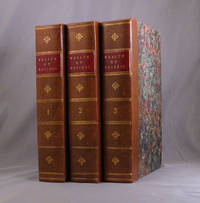
1789178702London: Printed for A. Strahan; and T. Cadell 1789. Political economy at the time of the French Revolution Fifth edition the last to be published in Smith's lifetime of this foundational work of political economy. "The Wealth of Nations had no rival in scope or depth when published and is still one of the few works in its field to have achieved classic status meaning simply that it has sustained yet survived repeated reading critical and adulatory" ODNB. The work "begins with the thought that labour is the source from which a nation derives what is necessary to it. The improvement of the division of labour is the measure of productivity and in it lies the human propensity to barter and exchange. The Wealth of Nations ends with a history of economic development a definitive onslaught on the mercantile system and some prophetic speculations on the limits of economic control" PMM. Smith's ultimate aim was to provide legislators with a set of principles to guide their regulation of commerce. Some of these principles advocated improvements in existing policies others aimed to alter the overall climate within which these policies operated. 3 vols octavo 205 x 126 mm. Tables in the text. Contemporary tree calf spines ruled and decorated in gilt and with red and green morocco labels edges yellow. Extremities professionally restored and labels replaced. With 20th-century bookplate of "T & M James" to front pastedowns. Light rubbing and scuffing very minor foxing and offsetting to contents: a very good copy. Goldsmiths' 13794; Kress B.1722; Tribe 33 Vanderblue p. 3. See Printing and the Mind of Man 221 first edition. unknown
1796180931Philadelphia: Printed by Thomas Dobson 1796. In an unrestored binding from the early years of the republic Second American edition of the "greatest classic of modern economic thought" PMM a key influence on the founding fathers and the development of the young republic. First published in 1776 the Wealth of Nations includes several sections focusing on specifically American concerns. The work analyses the deteriorating British-American relationship at length and reflects approvingly on several aspects of American life most particularly the colonial separation between church and state. The work consequently won praise and attention from the founding fathers: Madison included it in his list of core items for the proposed congressional library while Jefferson judged it "the best book extant" on political economy quoted in Fleischacker p. 903. For Fleischacker the influence was still more fundamental: "America has a Constitution that in the functions it gives to government the structure its sic provides for the military and the strict separation it proclaims between religious and secular powers fits Smith's conception of politics better than any government of his day" p. 924. 3 vols duodecimo 172 x 103 mm. Contemporary tree sheep spines ruled in gilt and with red and green morocco labels. Light wear slight loss to spine ends minor browning foxing and offsetting to contents: a very good copy. ESTC W13002; Evans 31196; Kress B3288; Vanderblue p. 20; not in Tribe. Samuel Fleischacker "Adam Smith's Reception among the American Founders 1776-1790" William and Mary Quarterly Vol. 59 No. 4 Oct. 2002. unknown
1789149720London: Printed for A. Strahan and T. Cadell in the Strand 1789-1793. Mixed early edition set of Adam Smith's magnum opus and cornerstone of economic thought. Octavo 3 volumes bound in one quarter modern calf over cloth-covered boards with gilt titles and five raised bands to the spine. Volumes I and III are seventh editions 1793 Vol. II is a fifth edition 1789. In near fine condition. An attractive set. Adam Smith's masterpiece first published in 1776 is the foundation of modern economic thought and remains the single most important account of the rise of and the principles behind modern capitalism. "The history of economic theory up to the end of the nineteenth century consists of two parts: the mercantilist phase which was based not so much on a doctrine as on a system of practice which grew out of social conditions; and the second phase which saw the development of the theory that the individual had the right to be unimpeded in the exercise of economic activity. While it cannot be said that Smith invented the latter theory.his work is the first major expression of it. He begins with the thought that labour is the source from which a nation derives what is necessary to it. The improvement of the division of labour is the measure of productivity and in it lies the human propensity to barter and exchange.Labour represents the three essential elements-wages profit and rent-and these three also constitute income. From the working of the economy Smith passes to its matter -'stock'- which encompasses all that man owns either for his own consumption or for the return which it brings him. The Wealth of Nations ends with a history of economic development a definitive onslaught on the mercantile system and some prophetic speculations on the limits of economic control.The Wealth of Nations is not a system but as a provisional analysis it is complete convincing. The certainty of its criticism and its grasp of human nature have made it the first and greatest classic of modern economic thought" PMM. Printed for A. Strahan and T. Cadell, in the Strand hardcover
179655618London: Printed for A. Strahan; T. Cadell jun. and W. Davis 1796. Eigth edition/ Seventh edition Vol.s 2 3. Hardcover. Fair to good condition. Octavo. x 499 vi 512 5 v. 465 50pp. Original brown leather marbled for vols. 2 and 3 with gilt lettering and ruling on spine Vol. 1 volumes two and three with gilt lettering on black and red labels of spine gilt ruling and tooling. <br /> <br /> Magnus opus of Scottish economist and philosopher Adam Smith reflecting on economics at the beginning of the industrial revolution. Contains index of fifty pages at rear of vol. 3. Smith was one of the commissioners of his Majesty's Customs in Scotland; and formerly Professor of Moral Philosophy in the University of Glasgow.<br /> <br /> Binding of volume one with wear along edges front joint cracked back joint partially cracked both holding together. Volumes two and three with light to medium wear along edges and three to four inches of front joints cracked. Binding of volume one rubbed some light damp-staining of first and last few pages. Front free endpapers of volume one with some staining. Initials and name inked to title page of all volumes name offsetting to facing page. Printed for A. Strahan; T. Cadell jun. and W. Davis hardcover
1791188047London: Printed for A. Strahan; and T. Cadell 1791. An appealing copy in tree calf Sixth edition of Smith's magnum opus and the first to be published after his death in 1790. "The first and greatest classic of modern economic thought" PMM first published in 1776 offers a persuasive manifesto for free markets and free trade. It is no exaggeration to say that all major economic works which followed were written to advance or challenge the principles of Smith. 3 vols octavo 208 x 129 mm pp. 2 x 499 1; 2 vi 518 6; 2 v 1 465 51: collates complete with initial blanks. Contemporary tree calf red morocco labels volume numbers in gilt to spines. Joints and extremities neatly restored a few marks to calf splash mark to volume I p. 19 scattered light foxing else clean and fresh. A very attractive copy. ESTC T95383; Goldsmiths' 14612; Kress B.2209; Tribe 41; Vanderblue p. 3. See Printing and the Mind of Man 221 first edition. unknown
1796187836London: Printed for A. Strahan; and T. Cadell jun. and W. Davies 1796. The foundation of modern economics Eighth edition of Smith's masterpiece "the first and greatest classic of modern economic thought" PMM following its first publication in 1776. "The Wealth of Nations had no rival in scope or depth when published and is still one of the few works in its field to have achieved classic status meaning simply that it has sustained yet survived repeated reading critical and adulatory long after the circumstances which prompted it have become the object of historical enquiry" ODNB. 3 vols octavo 206 x 126 mm. Contemporary tree calf red morocco spine labels board edges tooled in gilt. Ownership stamps and signatures of historian Kenneth Porter Kirkwood 1899-1968. Spines dry and cracked restoration to ends loss to head of vol. II printing error to vol. II sig. T7r loss to outer margins of vol. II sig. Z3 and vol. III sig. G7: in very good condition. Goldsmiths' 16558; Kress B.3289; Tribe 58; Vanderblue p. 4. unknown
17931356061Dublin: printed by William Porter for G. Burnet L. White W. Wilson P. Byrne W. McKenzie J. Moore and W. Jones 1793. Fifth Edition. Hardcover. Octavos Two Volumes. In Very Good condition. Bound in modern brown patterned cloth with green labels gilt titling and gilt tooling to spines. Complete with both half-titles. Some tide-marks Volume 1 with bottom half of text block for the first half of the volume then expanding to cover the entirety of the leaves. Volume 2 the top half of the text block for the first few gatherings then reducing to just the top edge and upper gutter. Removed bookplate to rear pastedowns. Front free end page and rear free end page of Volume 1 bound in upside down. Shelved case 5. Smith's masterpiece being "the first and greatest classic of modern economic thought" PMM - was first published in 1776 in London with the first Dublin edition published that same year. ESTC: T95114. 1356061. Shelved Dupont Bookstore. printed by William Porter, for G. Burnet, L. White, W. Wilson, P. Byrne, W. McKenzie, J. Moore, and W. Jones hardcover
1799137589London: A. Strahan and T. Cadell 1799. Early edition of Adam Smith's magnum opus and cornerstone of economic thought. Octavo 3 volumes bound in full calf gilt titles to the spine morocco spine labels. In near fine condition rebacked. An exceptional set of this classic work. Adam Smith's masterpiece first published in 1776 is the foundation of modern economic thought and remains the single most important account of the rise of and the principles behind modern capitalism. "The history of economic theory up to the end of the nineteenth century consists of two parts: the mercantilist phase which was based not so much on a doctrine as on a system of practice which grew out of social conditions; and the second phase which saw the development of the theory that the individual had the right to be unimpeded in the exercise of economic activity. While it cannot be said that Smith invented the latter theory.his work is the first major expression of it. He begins with the thought that labour is the source from which a nation derives what is necessary to it. The improvement of the division of labour is the measure of productivity and in it lies the human propensity to barter and exchange.Labour represents the three essential elements-wages profit and rent-and these three also constitute income. From the working of the economy Smith passes to its matter -'stock'- which encompasses all that man owns either for his own consumption or for the return which it brings him. The Wealth of Nations ends with a history of economic development a definitive onslaught on the mercantile system and some prophetic speculations on the limits of economic control.The Wealth of Nations is not a system but as a provisional analysis it is complete convincing. The certainty of its criticism and its grasp of human nature have made it the first and greatest classic of modern economic thought" PMM. A. Strahan and T. Cadell unknown
179651283London A. Strahan and T. Cadell and W. Davies 1796. Hardcover. In a 20th century binding quarter morocco over marbled boards with gold-on-black spine labels. Bound without half titles. Three different circular embossed stamps blind stamps are noted each about 1.5 inches in diameter. The first reading "LIBRARY OF ARTHUR BEISS" on the circumference and "ABJ" in the center appears on an early blank in each volume. The second is essentially the same but reads "LIBRARY OF JUDITH BEISS" on the circumference and "JBA" in the center and is found on a rear blank in each volume. A third circular embossed stamp of the same size is not entirely legible. It reads "THE illegible LIBRARY ASSOCIATION" on the circumference with two smaller illegible lines and a year probably 1885 in the center. It is found on page 5 of each volume and also on page 345 of volume 2 and page 327 of volume 3. The volumes contain no other ownership markings or annotations or markings of any kind. The pages are mildly foxed but without tears or other damage. . Three volumes separately paged. London, A. Strahan and T. Cadell and W. Davies hardcover
17785444London: for W. Strahan and T. Cadell 1778. Second edition. Very Good. 2 volumes quarto 282 × 225 mm half title in volume 2 as called for bound without the final blanks in each volume: 8 510; 8 589 1 blank. Contemporary tree calf rebacked preserving original red morocco spine labels plain endpapers. Engraved armorial bookplate of the Leigh family of Stoneleigh Abbey "Tout Vient de Dieu" and two Japanese bookseller's tickets to the front paste-down. Some insect damage to the leather boards corners worn light to moderate foxing throughout mostly in volume 1 a few tears or blemishes one or two signs of a contemporary reader's engagement with the text; a very good copy overall.<br /> <br /> Second edition first published in 1776 of this classic of economic thought the only other edition to be published in quarto format one of 500 copies. Long considered a straight reprint this edition in fact contains "a number of alterations large and small some providing new information some correcting matters of fact some perfecting the idiom and a large number now documenting references in footnotes" Todd. <br /> <br /> Published in the same year as the American Declaration of Independence Adam Smith's The Wealth of Nations was a magnum opus that shaped not only the future of a new republic but that also urged longstanding sovereign governments to reconsider how and when they regulated markets. Arguing that economic growth comes not from government planning "but as the natural outcome of many people pursuing their own self-interest in the confines of an ordered polity" Smith encouraged economists and political policy-makers to leave free markets to their own operations and focus instead on fulfilling the duties of peace keeping education and public infrastructure that they owed their citizenry The Wall Street Journal. <br /> <br /> ESTC T95117. Einaudi 5329; Goldsmiths' 11663; Kress B.154; Tribe 15; Vanderblue 3; see also PMM 221. Very Good. for W. Strahan and T. Cadell unknown
179327911London: A. Strahan and T. Cadell. Very Good with no dust jacket. 1793. Seventh Edition. Hardcover. All three volumes professionally rebacked keeping the original speckled leather boards. Not xlib. Owner's sticker inside the front c overs Bloomfield Jervis Beach 1820-1894. A very nice clean attractive set. ; 8vo 8" - 9" tall . A. Strahan and T. Cadell hardcover
179362455London: A. Strahan and T. Cadell. Very Good. 1793. Seventh Edition. Hardcover. Three volumes published in 1793 three years after his death; still stiff to open with bright crisp pages with very occasional age spot; in full contemporary tree calf still in very good condition; front board of volume one detached and nearly so to volume 3; unmarked but for name and bookplate to each volume. Spines are numbered with gilt decoration and red and black labels. Photos on request. . A. Strahan and T. Cadell hardcover
179630670Philadelphia: Thomas Dobson 1796. 412; 430; 387 1 blank 55 pp. Contemporary tree calf some chipping rebacked with remnants of original spines laid down. Toned scattered foxing lightly worn. Good. <br /> <br /> The second American edition the first having issued in 1789 also published by Dobson. 'Printing and the Mind of Man' describes this work as "the first and greatest classic of modern economic thought." <br /> Evans 31196. PMM 221 London 1776. Kress 3288. Thomas Dobson unknown