54 résultats
19772091202132802997Not Available 1977. Soft Cover. Fine. Number of books: 12 books in total Not Available paperback
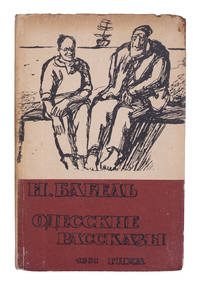
19311913Moscow: GIKHL 1931. 140 3 pp. 19x125 cm. In original illustrated cardboards. Slightly rubbed and bumped otherwise mint.<br /> <br /> First full edition of the well-known literary cycle.<br /> <br /> Jewish writer Isaak Babel 1894-1940 was born in Odesa. He graduated from the Odesa Commercial School and the Kyiv Commercial Institute. While studying Babel made his literary debut with a story “Old Shloime†1913.<br /> In the early Soviet period Babel was under the patronage of M. Gorky and M. Koltsov. In 1921 he worked in the Odesa Provincial Committee being the producing editor of the 7th Soviet printing house a reporter in Tiflis and Odesa at the State Publishing House of Ukraine. It was the period when he began to create the cycle “ Odesa Storiesâ€. At the same time Babel published in the Odesa periodicals “Lava†Drift and “Moriak†Sailor. In 1923-1924 the magazines “Lef†“Krasnaya Novâ€<br /> and other large publications published a row of his stories which later formed the cycles “Cavalry†and “ Odesa Storiesâ€. Babel immediately received wide recognition as a brilliant master of words. “ Odesa stories†are set in the Odesa ghetto of Moldavanka both before and after the October Revolution. Separately the works were published in periodicals in 1921-1924 but were finally collected in the 1931 book.<br /> <br /> During the struggle with formalism and the start of the social realist era Babel noted ironically that “he mastered a new literary genre the genre of silenceâ€. In 1932 he went to Paris and stayed there for a while doubting whether he needed to return to the USSR. He also managed to visit France in 1935 as part of the delegation of Soviet writers to the International Congress of Writers. In 1939 Babel was arrested and executed. Republished several times until the murder of the<br /> author “ Odesa Stories†were returned to print in the de-Stalinization period.<br /> <br /> Worldcat shows paper copies located in Texas University and Vassar College. GIKHL unknown
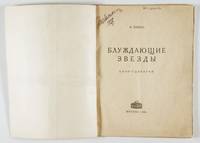
192654867Moscow МоÑква: Kinopechat Кинопечать 1926. First edition. Softcover. Good to very good condition. Octavo. 80pp. Dark blue and white wrappers with constructivist typography on the front cover housed in modern blue heavy paper portfolio with printed typographic design of original cover pasted to cover flap. Publisher's device on title page. This scarce published screenplay for the film adaptation of Sholem Aleichem's novel "Wandering Stars" by the acclaimed Russian-Jewish novelist playwright and journalist Isaac Babel 1894-1940. The film was premiered in Kiev on January 4th 1927 and was directed by Grigori Gritscher-Tscherikower 1883-1945. It was produced by VUFKU studios the national film studios of the Ukrainian SSR.<br /> <br /> This book contains the entirety of the film's screenplay accompanied by three striking b/w illustrations by Soviet artist and designer Alexander Bykhovskii 1888-1978 who likely also created the striking cover. The final three pages contain publisher's ads listing other work on the topic of cinema.<br /> <br /> The story tells of the love between Leibel the son of a wealthy shtetl family and Reizel a poor cantor's daughter in Bessarabia. The two run off to join a traveling Yiddish theater group. They are later separated with each becoming successful in their own right only to eventually reunite in America. The work was first serialized and originally appeared in the Warsaw newspapers between 1909 and 1911. It has come to be seen as the third in an unofficial trilogy of novels by the writer centering on musicians or performers preceded by Stempenyu 1888 and The Nightingale 1889.<br /> <br /> In 1925 the Moscow State Jewish Theater suggested that the Goskino the Soviet State Film Studio produce a film adaptation of Sholem Aleichem’s novel. The order was commissioned to Isaac Babel for translation and adaptation from the book's original Yiddish language to Russian for the screenplay. During this period Babel had been working on other translations of Yiddish literature into Russian including the collected works of Sholem Aleichem and work by David Bergelson. According to Babel's foreword printed here he faced a number of difficulties adapting the novel including the modification of petty bourgeoisie motifs as well as the changes of film directors and their differing requirements. Because of certain elements in the script of which the main committee of the Goskino did not approve the film's production had to ultimately be switched to VUFKU studios in Odessa. In a letter during the period of production Babel apparently wrote: “I will have to be present on the set. if I am not there the director will ruin everything" and later upon hearing of further changes made by Gritscher-Tscherikower wrote that "it is more profitable for me not to participate in this shameful productionâ€. Regardless of Babel's opinion of the final product the film was well received by Soviet audiences at the time.<br /> <br /> Text in Russian. Portfolio with minor wear. Wraps partially restored with minor wear. Previous owner's names and date at top of title page one near gutter. Light water staining along right half of bottom edge of first 30 pages reappearing from pages 40 to end though along lower part of foredge more pronounced on pages 75/76 and light fraying along foredge from pages 67 to 76. Block lightly age-toned. Kinopechat (Кинопечать) unknown
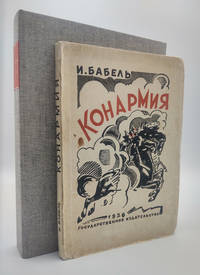
1926279<p>First edition of Isaac Babel's <em>Red Cavalry</em> transliterated as Konarmiya or Konarmiia. First printing. Original wraps. Octavo with deckle edges. Margins lightly yellowed; occasional light soiling; some pencil underlining. Original illustrated wrappers printed in red and black. Rebacked with small repairs and spine title apparently refreshed. Corners rounded with two small areas reinforced to reverse of covers. In custom grey cloth clamshell case.</p><p>True first edition in the original Russian of Babel's masterpiece frequently cited as the greatest literary work of the Russian Revolution and a high spot of both Russian and European Jewish modernism. Few copies extant having needed to survive the chaos of the early Soviet Union; the destruction of copies following Babel's banning purge and eventual murder under Stalin; the burning of copies by the Nazi regime where it appeared on the "combustion lists"; the massive widespread destruction of the Second World War; and the chaos at the end of the Soviet Union.</p> Gosudrastvennoe Izdatel'stvo paperback