Della Bella, Stefano; Engraved By IsraelBiblio.com
27 résultats
1645037795Circa 1645 1645. Original Engraving . No Binding. Very Good. 12.5 x 6 Cm. Single Unidentified Engraving. Part Of A Large Collection Of Original Antique Engravings Formed By A Southern California Artist In The Early To Middle Twentieth Century. Each Plate Has Small Glue Marks On Reverse Where They Were Tipped In To An Album. Information About Title And Publisher And Date Would Be Much Appreciated By The Seller. <br/> <br/> unknown
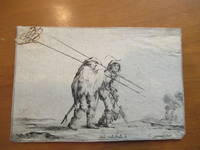
1645037796Circa 1645 1645. Original Engraving . No Binding. Very Good. 12.5 x 6 Cm. Single Unidentified Engraving. 3 7/8" X 2 1/2". Large Inked Initials At Upper Left. Part Of A Large Collection Of Original Antique Engravings Formed By A Southern California Artist In The Early To Middle Twentieth Century. Each Plate Has Small Glue Marks On Reverse Where They Were Tipped In To An Album. Information About Title And Publisher And Date Would Be Much Appreciated By The Seller. <br/> <br/> unknown
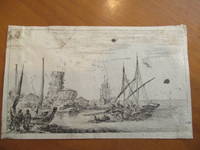
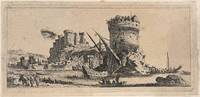
1645037801Circa 1645 1645. Original Engraving . No Binding. Very Good. Single Unidentified Engraving Of Seafront Fort And Three Ships. 4 7/8" X 3". Two 1/8" Diameter Foxing Spots. Part Of A Large Collection Of Original Antique Engravings Formed By A Southern California Artist In The Early To Middle Twentieth Century. Each Plate Has Small Glue Marks On Reverse Where They Were Tipped In To An Album. Information About Title And Publisher And Date Would Be Much Appreciated By The Seller. <br/> <br/> unknown
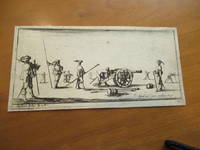
16440377971644. Original Engraving . No Binding. Very Good. 12.5 x 6 Cm. Single Engraving Of Cannon And Eleven Soldiers With Number 10 At Lower Right. Part Of A Large Collection Of Original Antique Engravings Formed By A Southern California Artist In The Early To Middle Twentieth Century. Each Plate Has Small Glue Marks On Reverse Where They Were Tipped In To An Album. Information About Title And Publisher And Date Would Be Much Appreciated By The Seller. <br/> <br/> unknown
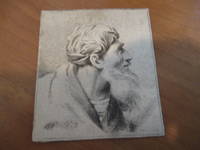
1660037802Circa 1660 1660. Original Engraving . No Binding. Very Good . 5 x 6.5 Cm. Original Engraving Signed I.S Numbered 3 . 2 1/2" X 2 1/4". Part Of A Large Collection Of Original Antique Engravings Formed By A Southern California Artist In The Early To Middle Twentieth Century. Each Plate Has Small Glue Marks On Reverse Where They Were Tipped In To An Album. Information About Title And Publisher And Date Would Be Much Appreciated By The Seller. <br/> <br/> unknown
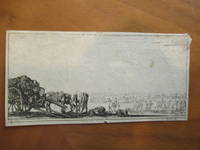
1625015915Paris circa 1625: Israel Silvestre 1625. Early Printing . No Binding. Very Good. 16 Cm x 12 Cm. An Archivally Matted Example Of Callot's Work A Military Print Showing A Large Mounted Horseman At Lower Right Depicted From The Rear Overlooking Several Formations Of Soldiers Advancing To The Right With A Horse-Drawn Cannon At Center Left. A Strong Impression With Ample Margins. Tr Bottom "Callot Inuenit Et Fecit / Israewl Excudit Cum Privilegio Regis". <br/> <br/> Israel Silvestre unknown
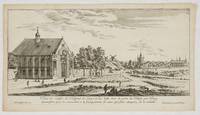
1640710661640. Paris um 1640-1660. Kupferstich. Plattengröße 130 × 249 mm; Blattgröße 144 x 259 mm. - "Israel Silvestre delin. et fe." "Israel excud. cum privil. Regis". Weitwinklige Außenansicht der Kapelle des Hôpital Saint-Louis vor der Porte du Temple die Kirche in leicht schräger Frontalansicht umgeben von einfachen Gebäuden und freiem Gelände; im Vordergrund Figurenstaffage mit Passanten und Kranken die den hospitalen Kontext andeuten. Die Kapelle erscheint als schlichter spät-renaissancezeitlicher Bau mit klassizierender Fassadengliederung in noch wenig überbauter Umgebung. Frühe topographische Vedute der Kapelle des 1607-1610 gegründeten Pest- und Seuchenhospitals Saint-Louis die das Hospital als königliche Stiftung Heinrichs IV. extra muros und als Ort der Fürsorge für "ceaux qui sont attaquez de la maladie contagieuse" ausweist. Innerhalb der Ikonographie des Hôpital Saint-Louis gehört das Blatt zu den frühesten bildlichen Zeugnissen die das Ensemble in ländlicher Randlage zeigen und betont die Kapelle als geistlich-symbolisches Zentrum des Hospitals lange bevor spätere Darstellungen das dicht bebaute Krankenhausareal dokumentieren. Im Ouvre Silvestres steht die Ansicht in einer Reihe von Pariser Hospital- und Kirchenveduten u. a. Quinze-Vingts und macht das Hôpital Saint-Louis ikonographisch zu einem repräsentativen vom König gestifteten Gnaden- und Seuchenbau. Silvestre Israël 1621-1691 Zeichner und Radierer. - Paris Musée du Louvre Département des Arts graphiques Inv.-Nr. RF 29325 unknown
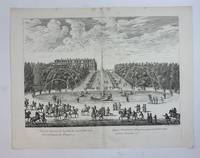
167613763511676. Israel Silvestre 1621-1691. Original French <br /> engraving "View of Versailles from the side of Dragon Fountain." Measurements: Image: 13"h x 19"w; Sheet: 17"h x 22"w. Condition: Very Good. Light age toning and foxing to upper edge; original horizontal crease fold at center; minimal curl at lower right corner. Shelved at Rockville Room G. 1376351. Special Collections - Upstairs. unknown
16802290Paris: Israël Henriet 1680. Etching with engraving on cream laid paper laid down to a cream laid paper matrix 3 1/8 x 7 1/8 inches 78 x 180 mm the full sheet with thread margins. A reverse image copy likely printed late 18th century. Third state of 3. Israël Henriet unknown
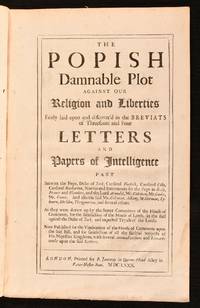
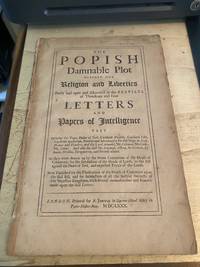
1680858P33London: R. Janeway 1680. Disbound. Good. 11.5" by 7.5". None. A very scarce contemporary pamphlet condemning the fictitious Popish Plot and those involved. Very scarce.ESTC citation number R28265. This is the variant with 'Sr. Germain's' to page 6 line 13 and 'French Kings' to the final complete line of text on page 9.Collated complete.A detailed explanation of the Popish Plot written and published whilst the Plot was still unfolding in England and Scotland. This volume takes the view that the Popish Plot was real laying out the evidence against the men involved.This work is sometimes attributed to Ezerel Tonge also spelt as Israel Tonge. He was an informer in and likely one of the inventors of the Popish Plot. He was a paranoid figure and staunchly anti-Catholic working in allegiance with Oates. though it has never been made clear whether Tonge believed Oates' lies or whether he was also a perjurer. The Popish Plot was a fictitious conspiracy formed by Titus Oates in which he alleges that there was a Catholic conspiracy to assassinate Charles II. This led to a fraught anti-Catholic hysteria in England and Scotland. At least 22 men were executed on Oates' accusations. Unbound as issued. Internally firmly bound. Pages are a little age-toned with only a few light spots and handling mark. Tide mark to the tail of the text. Good R. Janeway unknown
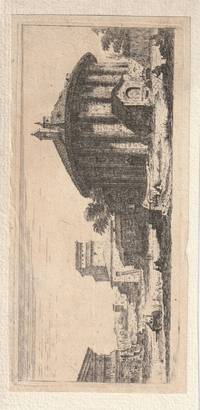
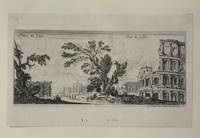
16407381640. Etching on hand made cream laid paper 2 7/8 x 6 1/4 inches 72 x158 mm 1/4 inch margins. In very good condition with minor edge wear. Adhered with adhesive along the left top sheet edge to an oblong archival paper matrix. <br /> <br /> This impression is a reverse image copy of the original work from Silvestre's series of 12 etchings entitled Antiche et moderne vedute di Roma first published around 1640. Subsequent to its initial publication the edition was republished with the image in reverse by Melchoir Kusel in the later part of the 17th century and by renowned British publisher Thomas Major in the middle part of the 18th century. Given the nature of the paper and the lack of text in the image we believe this to be a 18th century impression perhaps from the edition published by Thomas. unknown
165012531650. Etching and engraving on handmade cream laid paper 3 7/8 x 6 7/8 inches 97 x 173 mm full margins. In good condition consistent with age. Several small notations in pencil in the lower margin recto as well as some toning at the sheet edges. On the verso there are several small spots of adhesive residue in the margin does not show through to recto. The sheet is mounted at the lower right and left corners with archival material. unknown
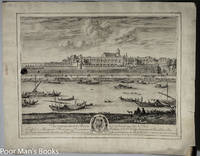
169034874Paris: Israel Silvestre. Very Good with no dust jacket. 1690. Engraving. Engraving; 24" x19" engraving pasted in a mat of the same laid paper so it apears to be one continuous piece. Light pressed out crease in center. Two small tears to rt margin see graphic. Light soiling. Overall quite pleasing. Engraving was made about 1690 by Israel Silvestre a prolific French draftsman etcher and print dealer who specialized in topographical views and perspectives of famous buildings. He maintained a large atelier in the galleries of the Louvre and was appointed a member of the Royal Academy of Painters and Sculptors. This beautifully detailed engraving is dedicated to the fifth Archbishop of Paris Francois De Harlay known for his persecution of the Hugenots. As the crest indicates De Harlay became a cardinal. The unframed engraving is 24" x 19". . Israel Silvestre unknown
168155492R. Janeway London 1681. First Edition. Softcover. Good Condition. Size: 4to 9 3/4 - 12". Unbound as issued. Pages browned. Some chips to margins. Ex-library with minimal stamps and markings Woodbrooke Quaker Study Centre. This set is published over the period 1678-81. 1 The Popish Damnable Plot against our Religion and Liberties R. Janeway: London 1680 31pp attributed to Israel Tonge. Cover loosening. 2 The Second Part of the Collection of Letters and Other Writings relating to the Horrid Popish Plot: Printed from the Original in the Hands of Sir George Treby Samuel Heyrick: London 1681 34pp. 3 A Collection of the Substance of Several Speeches and Debates made in the Honourable House of Commons relating to the Horrid Popish Plot Francis Smith: London 1681 20pp. Front cover loose and chipped. 4 The Depositions and Examinations of Mr. Edmund Everard Concerning the Horrid Popish Plot against the Life of His Sacred Majesty the Government and the Protestant Religion Dorman Newman: London 1679 16pp. 5 The Popish Massacre as it was discovered to the Honorable House of Commons: Sitting in a Grand Committee for the Suppression of Popery John Smith: London 1679 8pp. 6 An Impartial Account of Divers Remarkable Proceedings The Last Sessions of Parliament Relating to the Horrid Popish Plot London 1679 10pp. 7 The Pardon of Thomas Earl of Danby 1678 3-10pp. No title page. 8 The Reasons & Narrative of Proceedings Betwixt the Two Houses: Which were delivered by the House of Commons to the Lords 1679 15-26pp. 1 & 2 bound together as are 4 5 6 7 & 8. Quantity Available: 1. Shipped Weight: Under 500 grams. Category: History; England; Renaissance 16thc to 17thc; Politics & Government. Pictures of this item not already displayed here available upon request. Inventory No: 55492. . R. Janeway paperback
1698147<p>Very rare. 1st English edition. Complete with frontispiece and 1 folding plate. Formerly property of Sion library and has a stamp "sold by order of the President and Governors1938" Rebacked at some point Boards show signs of age see Photographs</p> W. Downing hardcover
1636173379Paris: Chez Israel Henriet 1636. Leather bound. VG- some light soiling to sheets especially edges plates are clean and attractive binding is solid. With bookplate of American Artist Claude Cluadius Edmund Delbos tipped in at front. 1/2 leather with marbled paper-covered boardsblank endpapers. 123 sheets including title-page and frontispiece with almost 500 engravings representing days of the years and associated Saints on 121 sheets. Some days have more than one engraving. After the title-page and frontispiece there are 121 sheets with four prints to each page. The prints on the first 14 sheets of 4-prints-to-a-sheet all have captions in the boxes under the images; the 15th sheet has a caption under one image for February 12 then there is only the name of the Saint in the box under the image until the boxes are empty beginning with March 1 and the Saint's names are printed above the image. Old stain on Sept 12. Frontispiece appears to be the 3rd state sheets 12 of the plates have 8 numbered plates. A sheet with 4 additional numbered days appears to be lacking or not bound in. Sheet 3 begins the calendar days of January. The plates for Jan. 7-10 are not numbered as such in the plate. Chez Israel Henriet hardcover
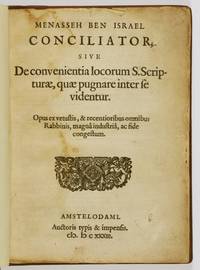
163355772Amsterdam: by the Author 1633. First edition. Modern calf. Good-. Quarto 19 by 14.6 cm. Collation: asterisk4 A-2G4. 8 240 pp. Woodcut printer's device at title; 4 half-titles; printed marginalia. Text in Latin. Recent full polished calf to style spine with raised bands. Text lightly toned with damstaining/spotting especially at outermost leaves; occasional slight chips or small tears at margins; one leaf with perforation resulting in loss of several letter on each side of page; small perforation in blank field at title. A fairly good copy.<br /> <br /> First part only of the first Latin edition of this classic work on Jewish apologetics written by the celebrated rabbi religious thinker and printer-publisher Menasseh ben Israel 1604-1657. The work was first published in Spanish at Amsterdam in four parts between 1632 and 1651. By providing a harmonization of all the apparent contradictions within the Hebrew Scriptures he hoped to encourage converso Jews of Iberian descent who had lost touch with their religious heritage to make the return to rabbinic Judaism. The present volume deals with the Pentateuch Five Books of Moses; the second volume treats the Prophetic books and the Hagiographa Writings. The work was first published a year earlier in a Spanish language edition.<br /> <br /> The work attempts resolution to no less than 180 seeming discrepancies in the Pentateuch. The breadth of Menasseh's encyclopedic knowledge is vast the Conciliador contains citations from 221 Jewish and 54 non-Jewish authorities. "No reader could fail to be impressed by the amazing range of titles which the author proudly appended to the work" Roth. References: Kayserling p. 69; C. Roth A Life of Menasseh ben Israel: Rabbi Printer and Diplomat Philadelphia 1945 p. 88. Silva Rosa 16. <br /> <br /> Full title and imprint: Conciliator sive De convenientia locorum S. Scripturae quae pugnare inter se videntur. Opus ex vetustis & recentioribus omnibus Rabbinis magnâ industriâ ac fide congestum. Amstelodami. Auctoris typis & impensis. M.D C XXXIII. by the Author unknown
164269492Amsterdam: Printed by the Author 1642. Full Description:<br> <br> MENASSEH BEN ISRAEL. Dissertatio de Fragilitate Humana ex Lapsu Adami Deque Divino in Bono Opere Auxilio. Amsterdam: Printed by the Author 1642.<br> <br> First edition. Small octavo 5 3/4 x 3 1/2 inches; 146 x 90 mm. 16 141 1 errata pp. Text in Latin interspersed with Hebrew. A woodcut device on title-page. Woodcut initials.<br> <br> Bound after:<br> <br> MENASSEH BEN ISRAEL. De Resurrectione Mortuorum Libri III. Amsterdam: Printed by the Author 1636.<br> <br> First edition. Small octavo . 22 133 11 137-241 11 245-346 6 index pp. Text in Latin interspersed with Hebrew. The woodcut printer's device on the title-page is a 'magical square' in Hebrew letters. Woodcut initials.<br> <br> Full contemporary vellum. Front inner hinge cracked but firm. Spine with torn paper label titled in ink manuscript. Some ink call numbers on spine but no other library markings. Vellum a bit soiled. Title-page of Dissertatio is backed with loss to fore-edge margin but not affecting text. Leaf A2 of the same book with repair to top margin just touching headline. Leaf T2 in Resurrectione with small closed tear touching some letters but with no loss. Front pastedown with bookplate from Rochester Theological Seminary. Overall very good.<br> <br> "Dissertatio de Fragilitate Humana ex Lapsu Adami" or "Dissertation on the Fragility of Man from the Fall of Adam" is a work in which Menasseh disputed the Christian doctrine of original sin. The work was also published in Latin in the same year.<br> <br> "As per many theological works by Amsterdam scholar and Hebrew printer Menasseh ben Israel Dissertatio de Fragilitate Humana was directed primarily to a Gentile audience. Dedicated to Gerbrandt Anslo a Christian Hebraist who was a pupil of Menasseh this study focuses upon the issue of predestination. In opposition to the Christian doctrine of Original Sin Menasseh was a staunch proponent of the traditional Jewish teaching that Man is born into the world pure and innocent." Kestenbaum and Company.<br> <br> De Resurrectione Mortuorum Libri III or 'Three books on the resurrection of the dead' is in Latin which suggests it was for a Christian audience. A Spanish version also exists however which indicates that this text was also written for a Jewish audience which in 1636 was split by theological dissent. This and the Sefer Nishmat hayim can be seen as a response to the challenges of Uriel Acosta 1585-1640. Acosta was a sceptic philosopher who in 1624 had published 'An Examination of the Traditions of the Pharisees'. Acosta was suggesting that rabbis were descended from the Pharisees. The Pharisees were theologically opposed by the Sadducees. Menasseh notes that his work is written "contra Zaducaeos" "against the Sadducee" almost certainly a reference to Acosta. Acosta questioned the idea of the immortality of the soul regarding it as a concept invented by the rabbis without any biblical foundation." University of Leeds.<br> <br> "Menasseh ben Israel 1604-1657 was among the most accomplished and cosmopolitan rabbis of his time and a pivotal intellectual figure in early modern Jewish history. He was one of the three rabbis of the "Portuguese Nation" in Amsterdam a community that quickly earned renown worldwide for its mercantile and scholarly vitality. Born in Lisbon Menasseh and his family were forcibly converted to Catholicism but suspected of insincerity in their new faith. To avoid the horrors of the Inquisition they fled first to southwestern France and then to Amsterdam where they finally settled. Menasseh played an important role during the formative decades of one of the most vital Jewish communities of early modern Europe and was influential through his extraordinary work as a printer and his efforts on behalf of the readmission of Jews to England." Menasseh ben Israel Rabbi of Amsterdam by Steven Nadler.<br> <br> "Menasseh ben Israel bridged the Jewish and the Christian worlds. He was a rabbi a scholar and a publisher who authored and printed works in Latin Portuguese Spanish and Hebrew. He also collaborated with Rembrandt who etched his portrait. Menasseh ben Israel is particularly interesting to Hebrew scholars and librarians. He revolutionised Hebrew printing and made Amsterdam the capital of Hebrew publishing. He helped create a new standard of Hebrew typography that became widely known imitated and pirated as "Defus Amsterdam" Amsterdam print and "Otiyot Amsterdam" Amsterdam Letters." University of Leeds.<br> <br> HBS 69492.<br> <br> $4000. Printed by the Author unknown
1640B5741Paris c. 1650 1640-1670. . This near fine and very rare example with plates clean and crisp except for additional plate. Edition: First Edition Binding: Bound in recent blue boards; Plates approx.170x130mm trimmed and carefully attached to portefolio sheets. Notes: Titles in both Italian and French.<br><br>Israel Sylvestre or Silvestre was “an eminent French engraver and son of Gilles Silvestre… . He formed his style on Stefano Della Bella and Jacques Callot and in turn appears to have been imitated by Sebastian Le Clerc. He designed etched and engraved numerous landscapes and views decorating them with small figures minutely drawn and touched with uncommon spirit. His merit recommended him to Louis XIV. who employed him in designing and engraving views of royal palaces public festivals and the places Louis had conquered. He was appointed drawing-master to the Dauphin and was made a member of the Academy. He went to Italy twice where he found many subjects. His plates amount to upwards of one thousand. He died in Paris in 1691.†<br>The present suite comprises:<br>1.Chiesa di Sta Francisca Romana in Campo Vaccine. <br>2.Parte del Ponte Ste Maria<br>3.Veduta del Coliseo<br>4.Veduta del ponte S.te Maria <br>5.Veduta di una Parte del Campidoglio – first and second states <br>6.Veduta del Arco di Septimio Seuero et del Campidoglio <br>7.Veduta del Tempio di Bacco a S.ta Agnesa fuor di Roma<br>8.Veduta di Campo Vaccina<br>9.Veduta del Arco di Constantino et del Coliseo – first and second states<br>10.Altra veduta di Interno Roma <br>11.Veduta e Prospetiua della Piaza di St Marco di Venezia – first and second states<br>12.Veduta della Dogana di Venezia – first and second states<br><br>Additional plate of Piranesi inserted between plates numbers four and five 255x125mm; entitled : « Ponte Senatorio oggi detto Ponte rotto « with small marginal stain. <br> Size: Oblong small folio. Illustration: Illustrated with 17 copper engravings; this includes the complete and rare suite of twelve views according to Faucheux in their first state along with four duplicates added in their second state plus one unrelated engraving by G.B.Piranesi. Plates depicting mostly views of Rome and two of Venice. Provenance: E.P. Goldschmidt 64 Drayton Gardens SW 10 9SB purchased and in private collection since. References: Faucheux L. E. ‘Catalogue raisonne de toutes les estampes qui forment l’œuvre d’Israel Silvestre. Paris 1857 pp. 50-51 cited ; Brunet V p.389. Category: Book Art Architecture & Design; Book Europe Italy; Book Europe France; hardcover
16041612150011Francofurti ad Moenum : Ex officina Wolfgangi Richteri 1604-01-01. Hardcover. Very Good. 2 parts in one volume. Folio 30 cm. Elegantly bound in modern full red levant moroccan raised bands all edges gilt gilt rule. Fine binding. Engraved vignette on general title; 8 127 pp 1; 1 26 leaves of half-page engraved illustrations. Occasional light browning. Marginal dampstaining to final 20 text pages in first part. Minor spotting in second part plates. First edition first issue of the sixth volume of de Bry's Little Voyages. This volume covers the first-hand account of Pieter de Marees's first Dutch expedition to Guinea 1600-01. <br> Pieter de Marees' history of Guinea originally published in 1602 is one of the earliest detailed European descriptions of West African society and an essential reference for the precolonial period. De Marees wrote primarily about the Gold Coast Ghana but his work also covers Cape Verde Senegal. This work he "discusses the Slave Coast and the Portuguese participation in the traffic". Postma The Dutch in the Atlantic Slave Trade 1600-1815 p. 13. These trade ties would drive European interest in the region leading to the propagation of the Slave Trade. Brunet 1338. Crawford p. 173. Church 213. Francofurti ad Moenum : Ex officina Wolfgangi Richteri hardcover
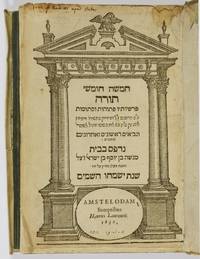
163155459Amsterdam: printed by Menasseh ben Israel for Henricus Laurentius 1631. First edition. Hardcover. Very good-. Octavo 16.8 by 11.4 cm. Collation: aleph-lamed-zayin8 = 296 leaves. 612 i.e. 592 pp: p. 464 erroneously numbered 484 465 as 485 and so on throughout. Two column text in unvocalized Hebrew; every fifth verse numbered in the margin. Title within architectural border; half titles with letterpress ornamentation for the Former and Latter Prophets. Contemporary vellumwith exposed thongs edges stained blue; yapp fore-edges; front joint cracked but holding strong. Intermittent light toning to text outmost leaves a bit more darkened; very occasional small stains. Title-page slighltly trimmed 4 mm at bottom edge; expert marginal repairs at bottom corners of 2 leaves; 1 leaf re-margined at fore-edge with no loss of text else a very good copy with crisp clean text.<br /> <br /> First Hebrew Bible published in Amsterdam printed by the rabbi diplomat publisher and religious thinker Menasseh ben Israel 1604-1657 one of the most distinguished members of the Portuguese Jewish community of Amsterdam and the first Jewish printer in the Northern Netherlands. The Amsterdam printer and publisher Hendrick Laurensz Lauretius provided the financing for this edition along with two other Bible editions and two editions of the Hebrew Psalms printed by Menasseh between 1631 and 1646. "These publications were not only made for the local market but mainly for international trade. Thanks to this financial help Menasseh was able to organize his printing office in a more professional way" Fuks hiring a Jewish compositor Judah Leb ben Mordecai Gimple from Posen and a gentile compositor Bartholomeus Laurensz. <br /> <br /> The printing activity of Menasseh was especially important in the steadily growing productions of the Hebrew press in the Northern Netherlands. Fulfilling the needs of the Sephardic community for Jewish ritual texts eliminated the need for expensive imports from Venice and Poland. Menasseh undersood that the relatively cheap paper and tools available in Amsterdam made it possible to compete in quality and prices with the Hebrew presses of Poland Italy and Basel. "Gentile publishers and booksellers in Amsterdam such as Jansonius and Laurentius were quick to see the opportunity of the opening Eastern European market and financed several of Menasseh's publications" Fuks. Menasseh was the first to introduce in the Netherlands waybertaytsch types for Yiddish publications along with illustrated Hebrew books. He was also the first Jewish printer to adopt the Dutch pocket-book format made famous by the Elzeviers.<br /> <br /> Notes on publication date and issue: The title is dated 1630 in Arabic numerals; the colophon notes the date of completion in Hebrew characters as 5 Adar 5391 = 7 February 1631 along with the printer's apology for being unable to provide the index of pericopes promised on the title-page due to lack of printing material. Darlow and Moule describe this issue as Variant A with a Latin imprint appearing in the cartouche beneath the Hebrew title.<br /> <br /> Provenance and annotations: early entry in brown ink at front paste-down with short Greek inscription Theos. dated 1700; old Latin inscription in black ink at top margin title in reference to Hebrew roots; date of 1812 beside Yiddish entry penned in black ink within imprint cartouche at title; old entry in German penned in black ink at verso title beneath which is an oval cartouche in imitation of the one at the title in which an owner has penned in black ink the Hebrew imprint information regarding Hendrick Laurensz as it would appear in the Varient B issue; old library shelf marks at rear paste-down; recent owner entry in blue ink in Hebrew at front paste-down. References: Darlow and Moule 5123a; Fuks/Fuks-Mansfeld no. 152; pp. 105; 111f.; Steinschneider no. 453; Vinograd Amsterdam 22.<br /> <br /> Full title and imprint: חמשה חומשי תורה פרשיותיו פתוחות וסתומות ×¢"פ ×”×¨×ž×‘× ×–"ל ומדוייק בחסירו' ויתרות להעתק ס"ת ×¢× ×œ×•×— בסופו מועיל לסופרי' ×•× ×‘×™××™× ×¨××©×•× ×™× ×•××—×¨×•× ×™× ×•×›×ª×•×‘×™×: × ×“×¤×¡ בבית ×ž× ×©×” בן ישר×ל ז׳׳צל והוגה בעיון × ×ž×¨×¥ על ידו ×©× ×ª ישמחו השמי×<br /> Amstelodami sumptibus Henrici Laurentii 1630. printed by Menasseh ben Israel for Henricus Laurentius hardcover
162740628Frankfurt 1627. 15 1/8 x 12 7/16. Copper engraved map. Uncoloured on laid paper. The first Modern European map of India.<br/> <br/> Copper engraved map of modern-day India Pakistan and Bangladesh published by Wilhelm Fitzer the successor to Johann Theodor de Bry 1561-1623 and Johann Israel de Bry 1565-1609 the sons of Theodor de Bry. This version of the map includes the original Mughal seal with its contents in Persian Script. The map is closely related to that of William Baffin its use of original script in Jahangir's dynastic seal in the upper right precludes the De Bry edition having been derived directly from the printed Baffin map. Baffin is widely understood to be the author of the manuscript map on which the printed map is based having prepared it for Sir Thomas Roe's 1617 geographical commpendium on India. Susan Gole in Early Maps of India lists six states or editions of the Baffin map of India but did not record the present version. A comparison of this edition with the original Baffin and Purchas edition suggests that the Purchas was followed most closely with some material changes to toponyms such as "The Gate" having been replaced by "Porta Suretana". The map appears in the very rare Volume XII the penultimate volume of De Bry's "Petite" Voyages which was first published in 1627.<br/> <br/> Susan Gole Early Maps of India refers. unknown
163518006Amsterdam 1635. the author 2 works in 1 volume. 8vo. Contemporary calf rebacked with the original backstrip laid down. With a letterpress decoration on title-page Hebrew text of Psalm 85.11 in a frame a so-called "magical square" in which the the text can be read both horizontally as well as vertically some woodcut initials and some Hebrew passages in the text. 16 156 2 2 blank; 40 346 6 pp. Ad 1: First edition of a work on God's creation of Earth by the well-known Portuguese rabbi writer and printer Menasseh Ben Israel 1604-1657 who established the first Jewish printing office in the Netherlands. The work presents 30 questions or "problems" concerning God's creation of the Earth which Menasseh tries to answer and explain citing or referring to passages of the Tenach. Problems include "on which day were demons created" and "was there another world or earth before God created this one". The preliminaries including an important poem by Caspar Barlaeus which caused the Amsterdam authorities to consider the reintroduction of censorship for Jewish publications. As this didn't happen Barlaeus's poem can be seen as an indicator of the relationship between Jews and Christians and the religious tolerance in Amsterdam during the Golden Age.Ad 2: First edition of a work on the resurrection of the dead by the same author. The work is divided into three "books" and opens with several dedicatory letters an index of the chapters and 3 laudatory poems. The last page of the preliminaries gives a short list is of books translated from Hebrew into Spanish. The main text deals with the Last Judgment the resurrection of the dead and the immortality of the soul.With a bookseller's ticket and bookplate. Title-page of ad 1 slightly smudged browned throughout some water stains and small spots but still in good condition. Binding rubbed along the extremities and sides somewhat scratched rebacked with the original backstrip laid down.l Ad 1: Fuks & Fuks-Mansfeld p. 107; STCN 843242612 7 copies; ad 2: STCN 084840250 9 copies; for Menasseh in general: Fuks & Fuks-Mansfeld pp. 99-135; NNBW X cols. 604-613. unknown
1660B6282Paris: N. Langlois n/a c.1660’s-1670’s. Expertly rebacked; few tear repairs mostly marginal; overall in near fine condition with plates clean and crisp. . Binding: Contemporary mottled full calf; expertly rebacked; spine with five 5 raised bands; gilt lettered title on morocco label on two; compartments with central gilt floral ornament; dated; endpapers renewed; all edges cut. Notes: PERELLE GABRIEL 1603/or 10/ or 20 - 1675/or77/ or 80 an eminent French designer and engraver born at Paris. He excelled in drawing and engraving landscapes and views of which we have a prodigious number which prove the fertility of his invention and an extraordinary facility of execution rather than an observant study of nature. They are however composed in a very pleasing style and executed with neatness and taste. He usually enriched them with ruins and other objects which give an agreeable variety to his scenery. His principal defect is in the management of his masses and his lights are scattered and in spots by which the general effect of his prints is materially injured. Although by far the greater part of his plates are from his own compositions he also engraved from the designs of several other masters particularly Paul Brill Gaspar Poussin Jan Asselyn and above all after Silvestre. He was assisted in his numerous works by his sons ADAM 1638/ or 40-1695 and Nicholas b.1631/ or 38- 1695 PERELLE who after his death engraved a great number of plates of architectural views landscapes &c. but which are inferior to those of their father. <br>He is considered the Hollar of France both in his style of engraving and the esteem in which his views are held. His large views of public buildings and gardens in France Italy and Spain were published with those of Silvestre in 1680; and there is a set of smaller views by these artists.<br><br> Size: oblong folio 285x370mm Illustration: Illustrated with 164 architectural etchings of palaces great houses and churches detailed views of their gardens gates squares fountains etc. The album of Perelle engravings depict four 4 overall areas 1. Paris and surroundings 2. Versailles 3. France and 4. A collection on Rome - the latter containing six 6 plates etchings after drawings by Asselyn. This attractive album consists solely of large views no plan outlines or small sized half-paged etchings otherwise often featured as part of these albae. Title pages point to the publication being very early – not yet including the imprints printed in later publications.<br>The album on Paris containing 61 plates starts with a title without imprint but signatures by Perelle and Langlois; perspective views of Paris follow with its bridges the Seine the Louvre and Tuileries the Palais-Royal the Luxembourg or ‘Palais d'Orleans’ the Place Dauphine the College des quatre nations; the small island of the Notre Dame on the Seine the city hall the famous entrance gates to the city: Porte de la Conference St.Honore St. Denis St. Martin St.Bernard and St.Anthoine; depictions of monuments and buildings as the l'Arc de Triomphe the Notre Dame the ‘Monastere Royal de Val de Grace’ fountains and the observatory the ‘Invalides’ l'Hospital de la Salpestriere gardens of the Hotel de Conde and St. Victor. The views of the surrounding Paris feature the Chateau de Vincennes Conflans the Chateau of St. Maur the Chateau of Madrid the Chateau of St. Cloud the Chateau of Meudon the House of Boisfrant at St.Ouen the Grotte of Ruel.<br>The album on Versailles with 36 plates # 62- 97 starts with its title page without imprint then depicts perspectives of the castle the gardens and castle grounds the king's stables the great entrance cascades grottes water-fountains bassins dedicated to gods and the menagerie.<br>Perelle’s great houses of France with 45 plates #98-142 begins with its titlepage with no imprint except signatures followed by more buildings in the environs of Paris of Chaville St. Germain en Laye Maison Sceaux Rincy Pompone Choisi; this is followed by views of Fontaine-bleau the Chateau of the Vaux le Vicomte of Villiers-Coste-Rez Monceaux Liencour Chantilly Richelieu and Ancy.<br>The Rome or fourth album with 22 etchings starts with a title leaf without imprint but signatures of Perelle and N. Langlois; followed by magnificent views of St. Peter St. Angelo the new capitol and the arc of Constantin and the Colisseum the arc of Septimus Severus the bath of Emperor Diocletian; a group of six unsigned plates after I. Asselin e. showing Charles V Rome’s aquaeduct the Colisseum 2 ruins of the Palais Maior ruins of Marius’ trophies; this is followed by views of the Vigne Pamphili with its entrance garden amphitheatre and the fountain of Venus; at the end a plate depicting the fountain of Tivoli.<br> References: Michael Bryan Dictionary of Painters and Engravers Biographical and Critical 1849 p.560; Berlin Katalog 2483&2675; BNF - Getty Research Institute 2015 pp. 90-115 chap. II: Architecture and engraved views; Brunet IV p. 494; Fowler p. 245; Ganay Category: Book Art Architecture & Design; Book Plate Books General; Book Europe France; Book Europe Italy; N. Langlois hardcover
1606K8NDD6WJMUR8Frankfurt: Wolfgang Richter 1606. 20th-century half green morocco title in gold on spine marbled sides and endpapers. Folio 32.5 x 20 cm. With the letterpress title within an engraved architectural border an individual letterpress title-page for the Icones an engraved coat of arms on the dedication leaf 20 engravings in text and 2 double-page engraved plates. First edition of the Latin translation of book seven of Théodore de Bry's Petits voyages the greatest single collection of material on early voyages to the East Indies which is considered unique in its extraordinary wealth of cartographical and visual material. Crucially this much-sought volume includes Gasparo Balbi's groundbreaking account of the Middle East first published in 1590 as Viaggio dell' Indie Orientali - a mere 16 years before this present edition making this the second appearance in print altogether and the first Latin translation. Balbi a Venetian jewel merchant travelled extensively in the Arabian Peninsula in search of precious stones. From Venice he sailed for Aleppo proceeding to Bir and from there overland to Baghdad descending the Tigris to Basra where he embarked for India. While in the Persian Gulf he studied the pearl industry noting that the best pearls were to be found at Bahrain and Julfar. He refers to islands in the Emirate of Abu Dhabi including Sir Bani Yas and Das and to several coastal settlements that were to become permanently established such as Dubai and Ras al Khaima. Balbi was the first to record the place names along the coast of modern Qatar the United Arab Emirates and Oman. Practically "none of the names of places on the coast between Qatar and Ras al Khaima occur in other sources before the end of the eighteenth century" Slot. The volume also comprises the account of Joris von Spilbergen's voyage to Ceylon in 1601-1604 with excellent plates.A note with red pencil on the second leaf browned some small spots otherwise in good condition.l Brunet I col. 1334; cf. Carter Sea of pearls p. 79; Howgego to 1800 B7; Slot The Arabs of the Gulf 1602-1784; United Arab Emirates yearbook 2006 p. 20. Wolfgang Richter, unknown