Augustinus; Saint AugustineBiblio.com

4 résultats
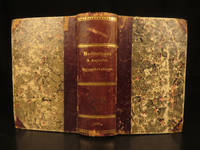
152812359Cologne: Johann Gymnich. Good with no dust jacket. 1528. First Edition Thus. Softcover. 36 ff. A-D8 E4.16mo but in 8s. Date publisher place are from VD 16 ZV 24258. Bound in older marbled card covers. Covers and text have minimal wear. Gymnich was part of a family dynasty of Cologne printers. He was apparently putting together Augustine's Opera in pieces between 1528-1530 but as far as we can find the whole was never published. His printing of Augustine's Immortaility of the Soul is uncommon in libraries and very hard to find in commerce. A typical Gymnich imprint with crisp clear Roman type and lovely little initials many with lively putti. ; 8vo 8" - 9" tall; 72 pages . Johann Gymnich paperback
158729543<p>Printed in Lyon in 1587 by Antonium Gryphium this small Latin devotional presents meditative writings attributed to Saint Augustine and Saint Bernard along with contributions from Vincent Ferrer and Saint Bonaventure. The contents reflect spiritual concerns of the Catholic Reformation and the text was printed in a compact size ideal for devotional use. The Gryphius press issued a wide array of religious titles during the 16th century and this volume fits well within their output. Good condition. Bound in leather with marbled boards showing rubbing at the edges. Binding is firm and pages show moderate foxing and fading. Format: Sextodecimo 16mo single volume. Collation: 853 21 pp. No illustrations. Edition: 1587. References: USTC 142464. #29543. PHOTOS AVAILABLE UPON REQUEST.</p> Apud Antonium Gryphium hardcover
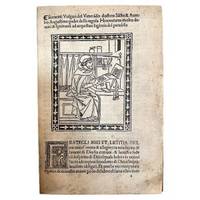
1505RMP655<p>Florencia Gian Stefano di Carlo da Pavia CA 1505. <strong>Post-incunable</strong></p><p><em><strong>"Sermoni Volgari del Venerado Doctore Sancto & Aurelio Augustino: Padre della Regola Heremitana Molto Devoti & Spirituali ad Acquistare la Gloria del Paradiso"</strong> </em></p><p>4o ff. 34. Encuadernación en tafilete rojo reciente; filetes dorados; dentelles interiores dorados; bordes dorados. Pequeña reparación marginal en título; algunas manchas menores en textos.</p><p>Un muy buen ejemplar de esta muy rara y escasa edición florentina impresa de manera impecable.</p><p>Atribuidos durante mucho tiempo a San Agustín estos 18 sermones invitan a la contemplación del ascetismo<br />con la traducción italiana de Agostino da Scarperia siglo XIV médico de la Sorbona y uno de los teólogos<br />más importantes del Studio Fiorentino una universidad fundada en 1348. Sus traducciones al italiano de los<br />sermones de San Agustín se consideran textos fundacionales de la literatura vernácula en prosa.</p><p>Los <em>Sermones ad fraters in eremo</em> o <em>Sermones ad heremitas</em> son textos apócrifos atribuidos a san Agustín que empezaron a circular conjuntamente a partir de los inicios del siglo XIV.</p><p>En lo que respecta a la tradición impresa latina italiana y española se verifica asimismo una oscilación en el número de sermones dependiendo de las ediciones. A partir de aquí hemos podido distinguir dos grupos diferentes a la hora de imprimir los <em>Sermones ad heremitas</em> entre 1477 fecha de la primera edición latina del texto y 1515 fecha de la primera edición italiana en las prensas venecianas.</p><p>La presente edición pertenece al grupo de las ediciones florentinas: Florencia: Francesco di Dino 1493 5 de junio; Florencia: Antonio Miscomini 1493 28 de junio; y <strong>Florencia: Gian Stephano di Carlo da Pavia ca. 1505-1510 presente edición</strong>. Estos impresos se caracterizan por el número de sermones que incluyen solamente 18 y se singularizan por ser los primeros en no incluir los textos añadidos al final de los <em>Sermones</em>.</p><p>Elegantemente impreso fechado por Goff alrededor de 1500 y atribuido a las imprentas de <em>Lorenzo Morgiani</em><br /><em>y Johannes Petri</em> está ilustrado por un fino grabado en madera sobre un fondo negro de San Agustín en su<br />scriptorium.</p><p>Goff A-1323; Sander 689; IGI 1042; BMC VII 1209; GW 3011; Kristeller 11a.</p> Gian Stefano di Carlo da Pavia hardcover
1584118<p>Rare French edition of St Augustine's<i>De Civitate Dei</i> <i>The City of God</i> one of the founding texts of European culture.</p><p>A beautiful copy preserved in its 17th century morocco binding.</p><p><b>A rare edition of St Augustine's</b><b><i>De Civitate Dei Contra Paganos</i></b><b> <i>The City of God</i> one of the founding texts of european culture. </b></p><p>This was the translation by Gentian Hervet d'Orléans canon of Reims complemented by the commentaries of Louis Vivès.</p><p>'<b>Montaigne was an attentive reader of <i>La</i> <i>Cité de Dieu</i> </b><b><i>The City of God</i></b><b></b><b>and he kept a copy of the 1570 edition containing the commentary by Vivès</b>' Gisèle Mathieu-Castellani.</p><p>'The name of Jean-Louis Vivès was mentioned by Montaigne in his writings as the commentator of <i>La Cité de Dieu</i> which confirms that the edition of <i>La Cité de Dieu</i> owned by Montaigne did indeed include the comments by Vivès. <b>The Vivès commentaries seem to have contributed to the commentary constituted by the <i>Essais</i>.</b>' Jean Céard</p><p>'In <i>The City of God</i> theology is shown in relation to the history of mankind and God's action in the world is explained. The book remained authoritative until the seventeenth and eighteenth centuries when Bossuet was the last "Augustinian" historian.' PMM 3 for the 1467 edition</p><p>A rare and beautiful edition with commentaries by Vivés. There were close links between the Protestant religion and Augustinianism which made Catholics suspicious of St Augustine's texts. Hence all ancient editions of St Augustine's work are rare and particularly in French. </p><p>In his preface Jean Louis Vivés declares that he added these commentaries on the request of Erasmus who had not time to do so himself. </p><p>'<i>De Civitate Dei</i><i>The City of God</i>is an apology of Christianity written by St Augustine 354–430 CE towards the end of his life. It is all at once a philosophy of the historical evolution of human society the metaphysics of society and an interpretation of individual and social life in the light of the fundamental principles of Christianity. </p><p>Luther Calvin Voltaire and many theologies and philosophies were inspired by this major work.</p><p><b>An attractive copy preserved in its old morocco binding.</b></p> Michel Sonnius hardcover