4 résultats
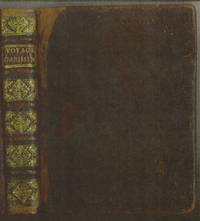
1764WRCAM19511Lisbon: Miguel Rodrigues 1764. 2171pp. Folio. Dbd. Except for the lightest fore-edge dampstaining a near fine copy. A rare work describing the trial and verdicts in the case of nineteen men accused of the 1762 murder of Portugal's local auditor/councilor Joao Vieira de Andrade in the Cape Verde Islands off West Africa. The accused all Portuguese subjects were convicted resulting in eleven decapitations. The NUC cites only the John Carter Brown copy. Miguel Rodrigues unknown books
176347346Paris: Ches Guillyn 1763. First edition. 3 figures and a folding map. xxxvi 380 pp. 1 vols. 16mo. Quarter modern vellum gilt spine uncut. Fine. First edition. 3 figures and a folding map. xxxvi 380 pp. 1 vols. 16mo. Nicolas Louis De La Caille 1713-62 an eminent French mathematician and astronomer arrived at the Cape of Good Hope on March 30 1751 and began a study of the parallax of the moon. In this diary he gives descriptions of Rio Janeiro the Cape Bourbon and Ascension. De La Caille's account of the Hottentot and other customs and societies dissented from and superseded Kolbe's narrative although he made almost as great errors as his predecessor. However after the publication of this journal by De La Caille Kolbe was no longer considered a standard author on the topic. See Theal History of South Africa 1691-1795. Mendelssohn I p. 434; for de la Caille: Dictionary of Scientific Biography VII pp. 542-545 Ches Guillyn unknown books
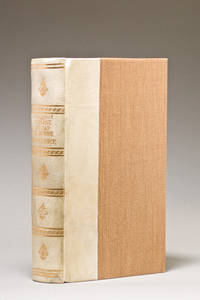
1728BOOKS00671225144 contents and errata2 pages with 2 folding maps lacks frontispiece. Small Quarto 10" x 7 3/4". Rebacked in the 19th century leather retaining the original spine with raised bands and gilt decorative stamping and lettering to spine. Translated from the original Portuguese manuscripts by Jackim le Grande. First edition.<br /><br />Born in Lisbon he entered the Order of Jesus at the age of sixteen. In 1621 he was ordered as a missionary to India and in 1622 he arrived at Goa. With the intention of proceeding to Abyssinia whose Negus emperor Segued had been converted to Roman Catholicism by Pedro Páez he left India in 1624. He disembarked on the coast of Mombasa and attempted to reach his destination through the Galla country but was forced to return. In 1625 he set out again accompanied by Mendez the patriarch of Ethiopia and eight missionaries. The party landed on the coast of the Red Sea and Lobo settled in Abyssinia as superintendent of the missions in Tigre. He remained there until death deprived the Catholics of their protector the emperor Segued. Forced by persecution to leave the kingdom in 1634 Lobo and his companions fell into the hands of the Turks at Massawa who sent him to India to procure a ransom for his imprisoned fellow-missionaries. In this he was successful but could not induce the Portuguese viceroy to send an armament against Abyssinia. Intent upon accomplishing this cherished project he embarked for Portugal and after he had been shipwrecked on the coast of Natal and captured by pirates arrived at Lisbon. Neither at this city however nor at Madrid and Rome was any countenance given to Lobo's plan. He accordingly returned to India in 1640 and was elected rector and afterwards provincial of the Jesuits at Goa. After some years he returned to his native city and died there January 29 1678.<br /><br />Lobo wrote an account of his travels in Portuguese which appears never to have been printed but is deposited in the monastery of St. Roque Lisbon. Balthazar Telles made large use of the information therein in his Historia geral da Ethiopia a Alta Coimbra 1660 often erroneously attributed to Lobo see Machado's Bibliotheca Lusitana. Lobo's own narrative was translated from a manuscript copy into French in 1728 by the Abbe Joachim le Grand under the title of Voyage historique d'Abissinie. In 1669 a translation by Sir Peter Wyche of several passages from a manuscript account of Lobo's travels was published by the Royal Society translated in Melchisédech Thévenot<i>Relation des voyages</i> in 1673. An English abridgment of Le Grand's edition by Dr. Johnson was published in 1735 reprinted 1789. In a <i>Mémoire justificatif en réhabilitation des pères. Pierre Paëz et Jérôme Lobo</i> Dr. C. T. Beke maintains against Bruce the accuracy of Lobo's statements as to the source of the Abai branch of the Nile. See A. de Backer <i>Bibliothèque de la Compagnie de Jésus</i> edited by C. Sommervogel iv. 1893.<br /><br /><b>Condition:</b><br /><br />Old stamp and inscription on title page first folding map conspicuously restored second map tear restored else a very good copy notes to front end paper in period pen else about very good. La Veuve d'Antoine-Urbain Co hardcover books
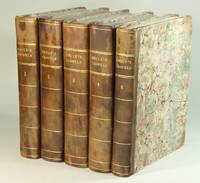
179052509Edinburgh: J. Ruthvan for G. G. J. and J. Robinson London 1790. First edition published later in London the same year; 5 volumes 4to engraved vignette title page in each volume 58 engraved charts battle plans and plates 3 engraved folding maps 7 typographic pages of Ethiopic characters between pp. 400 and 401 of the first volume and the list of plates at the back of vol. V which is usually lacking; contemporary marbled boards neatly rebacked in calf gilt-lettered spine; a few marginal tears neatly repaired light occasional foxing but in all a very good sound and absolutely complete copy with the requisite half-titles in each volume. Bruce arrived in Alexandria in June 1768 committed to discovering the source of the Nile which he thought began somewhere in Abyssinia. He traveled across the northern desert in the guise of a Turkish sailor and finally reached Abyssinia in early 1770. In November of that year he found the previously unknown source of the Blue Nile which he claimed mistakenly to be the Nile of the ancients and therefore more important than the larger White Nile. Bruce's difficult return in 1771 was highlighted by another first: he became the first to trace the Blue Nile to its confluence with the White Nile. The last major obstacle was a dangerous trip back into the desert to recover his journals and baggage which had been left behind after his camels died. Though his Travels was criticized by some contemporaries "the substantial accuracy of every statement concerning his Abyssinian travels has since been amply demonstrated" Ency. Britannica. Bruce's account is also notable for its famous plate of the figure of a harpist in the tomb of Rameses III "the first picture of a scene in the royal tombs to be published" Romer Valley of the Kings 36. Blackmer 221; Cox I 398-99; Howgego III B171; Ibrahim-Hilmy p. 91. <br/><br/> J. Ruthvan for G. G. J. and J. Robinson, London hardcover books