BRITISH EGYPTBiblio.com
2 résultats
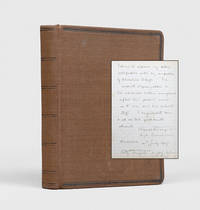
1653136102Alexandria: 1916-53. Politics power and position under empire A rich document of empire pageantry and elite education in British Egypt bearing some 150 dated signatures of leading political military and cultural figures from the first half of the 20th century. Among them are successive British High Commissioners - McMahon Wingate and Allenby - alongside royalty senior officials diplomats and figures from commerce and the press reflecting Victoria College's status as a focal point of imperial authority and social power. Founded in 1902 with the backing of Sir Evelyn Baring Lord Cromer Victoria College educated the sons of the Anglo-Egyptian elite and staged annual speech days that became ritualized displays of British rule. Before the Second World War when British influence was at its height the college was regularly visited by high commissioners and their entourages even during wartime. Early entries include Sultan Hussein Kamal's visit of June 1916 followed by Sir Henry McMahon and senior military and diplomatic figures connected to Kitchener and the Cairo administration. McMahon's successor Reginald Wingate contributed a full-page endorsement of the school in 1917 and Prince Arthur Duke of Connaught visited in 1918 during Allenby's Egyptian campaign. In the interwar years Victoria remained a symbol of British cultural power despite Egypt's formal independence. Edmund Allenby signed repeatedly between 1919 and 1922 later joined by his successors George Lloyd and Percy Loraine often alongside Egyptian ministers. The book also records visits connected to major political developments including members of the Milner Mission in 1920 Gilbert Clayton Sultan Fuad I and George Antonius a former pupil and later a key Arab nationalist intellectual. Other signatories range from the Sultan of Zanzibar to senior churchmen naval officers journalists artists publishers and statesmen underscoring the college's place at the intersection of British and Middle Eastern elites. The final entries chart the end of the imperial era. A 1949 inscription by Said Taha Bey marked "Visit of the Hero of Faluja" poignantly closes this compendium - a compact first-hand chronicle of shifting power personalities and allegiances in modern Middle Eastern history. Quarto. Original brown buckram ledger spine and covers ruled in black grey-green endpapers joints lined with green linen tape as issued marbled and rounded edges pages with printed blue rules approximately 65 pages with one or more signatures nearly all in ink remaining pages blank. Binding sturdy boards and contents soiled in places leaves with light foxing and browning signatures well preserved: an excellent example. Samir Raafat "Victoria College - Educating the Elite 1902-1956" Egyptian Mail 30 March 1996 available online hardcover
1696000273Amsterdam: Gerardus Brostius 1696. Second Edition. . Hardcover. See Description. 4to pp. 16 492. Includes extra engraved title page. Library stamp on main title accompanied by a second perforated library stamp near the printer's device. The outer edges to the first few prelims are slightly worn. Pages are generally clean with occasional mild marginal spotting. A small piece is missing from bottom margin of the final leaf. Page 492 is a bit soiled. Bound in brown library buckram; title and shelf number in gilt on the spine; pocket on inside front cover. Hermann Witsius 1636-1708 was a Dutch theologian and a professor of divinity at Franeker 1675 Utrecht 1680 and Leiden 1698. EB11. His Aegyptiaca first printed in 1683 compares the religious rites of the Jews and the Egyptians. He argues against the theory put forth by Sir John Marsham and by John Spencer that Jewish traditions were derived from Egyptian practices. This second edition has been expanded from the first. Ibrahim-Hilmy p. 339; Caillet 11462 - listing the 1683 and 1717 editions; Jouin - Bibl. occultiste 797; Brunet V 1468 . <br/> <br/> Gerardus Brostius hardcover
