5 résultats
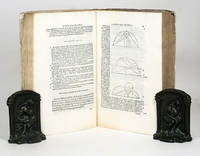
15882080Pesaro: Girolamo Concordia 1588. First edition. original boards. Very Good. FIRST EDITION of arguably the most important source book for the works of the Greek mathematicians. The magnificent Horblit copy in contemporary probably original boards. Pappus of Alexandria fl 320AD was "the most important mathematical author writing in Greek during the later Roman Empire known for his Synagoge "Collection" a voluminous account of the most important work done in ancient Greek mathematics. Pappus seldom claimed to present original discoveries but he had an eye for interesting material in his predecessors' writings many of which have not survived outside of his work. As a source of information concerning the history of Greek mathematics he has few rivals." Pappus's principal work "was the Synagoge c. 340 a composition in at least eight books corresponding to the individual rolls of papyrus on which it was originally written. The only Greek copy of the Synagoge to pass through the Middle Ages lost several pages at both the beginning and the end; thus only Books 3 through 7 and portions of Books 2 and 8 have survived. A complete version of Book 8 does survive however in an Arabic translation. Book 1 is entirely lost along with information on its contents. Such a range of topics is covered that the Synagoge has with some justice been described as a mathematical encyclopedia. "The Synagoge deals with an astonishing range of mathematical topics; its richest parts however concern geometry and draw on works from the 3rd century BC the so-called Golden Age of Greek mathematics. The longest part of the Synagoge Book 7 is Pappus's commentary on a group of geometry books by Euclid Apollo Eratosthenes of Cyrene and Aristaeus collectively referred to as the "Treasury of Analysis." "Analysis" was a method used in Greek geometry for establishing the possibility of constructing a particular geometric object from a set of given objects. The analytic proof involved demonstrating a relationship between the sought object and the given ones such that one was assured of the existence of a sequence of basic constructions leading from the known to the unknown rather as in algebra. The books of the "Treasury" according to Pappus provided the equipment for performing analysis. With three exceptions the books are lost and hence the information that Pappus gives concerning them is invaluable. "Pappus's Synagoge first became widely known among European mathematicians after 1588 when a posthumous Latin translation by Federico Commandino was printed in Italy. For more than a century afterward Pappus's accounts of geometric principles and methods stimulated new mathematical research and his influence is conspicuous in the work of René Descartes 1596-1650 Pierre de Fermat 1601-1665 and Isaac Newton 1642 Old Style-1727 among many others. As late as the 19th century his commentary on Euclid's lost Porisms in Book 7 was a subject of living interest for Jean-Victor Poncelet 1788-1867 and Michel Chasles 1793-1880 in their development of projective geometry" Britannica. Provenance: Harrison D. Horblit with his bookplate on front pastedown. Pesaro: Girolamo Concordia 1588. Folio 315x220mm contemporary probably original boards; old paper spine label and ink "Pappus" written on spine; "Pappi Alexandrini" written neatly on bottom edge. Soiling and light wear to boards. Early cross-out of early signature on title very light marginal dampstaining to a few early gatherings. An outstanding copy with exceptionally wide margins. Girolamo Concordia unknown books
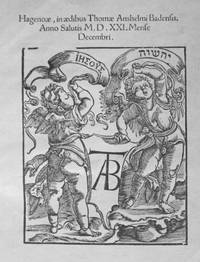
1521D6762Haguenau: Thomas Anshelm Badensis December 1521. First Edition. Hardcover. Very Good. Folio 319 x 203mm. Signatures: a-z in 8s; A-B in 6s. Double column numbered to 776 text in Greek. Woodcut initial beginning letter A. Large woodcut printers device on final leaf by Hans Baldung Grien d.1545 German artist and printmaker is called one of his best works Butsch I p. 48 pl. 75. Period limp vellum neatly rebacked remnants of old index tabs; light staining or wear with use otherwise very good. Few instances of marginalia in Greek mostly in letter A; Armorial bookplate of Reverend William B. Hayne Master of the free grammar school of Hinton Maurice in Devon; sold by Thomas Baker to Cuthbert H. Turner 1860-1930 English ecclesiastical historian and Biblical scholar his ownership inscription dated 1919 Magdalen College Oxford; John Waynflete Carter 1905-1975 English author diplomat and book collector his book label on front pastedown; BL early emblematical bookplate on front pastedown; gilt monogram on covers CML. <br/><br/>First edition printed in a German speaking country of Hesychius Lexicon of obscure Greek words this copy with an interesting scholarly provenance. First Edition printed in a German-speaking country correcting the Aldine edition of 1514. The Lexicon suffered substantial alterations including abridgements and additions on its way from the author to the only surviving manuscript of the fifteenth century. This production gives all-important information about the manuscript and the work of earlier scholars. Hesychius of Alexandria lived in the fifth century A.D. and compiled this dictionary of unusual or difficult Greek words with explanations in Greek. Approximately 51000 entries make it the richest surviving Greek lexicon compiled until the invention of printing. Hesychius Lexicon is of great importance to Ancient Greek studies because it contains countless words and expressions from poetry administration medicine and so on that are otherwise unknown or insufficiently explained. In particular this work preserves numerous words from the Greek dialects that are important not only for Greek but also for Indo-European philology. Staikos says A unique source book Hesychius Lexicon deals mainly with words that exist in unusual forms or have more than one meaning that is to say rare words that were not in everyday use. It also quotes a great many passages from lost works by orators poets historians and medical writers. Excellent survival and passed through many learned hands. Adams H509; Staikos I 348. Thomas Anshelm Badensis hardcover books
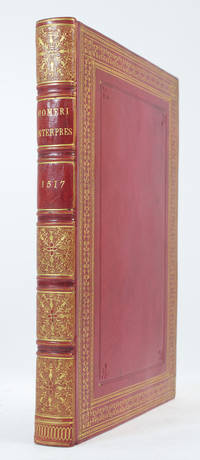
151766901Editio Princeps and the First Book Printed at the press of the Greek Gymnasium HOMER. DIDYMUS OF ALEXANDRIA. LASCARIS Janus editor. Homeric Scholia on the Iliad. Homeri interpres pervetustus in Greek. Edited by Janus Lascaris Rome: Vittore Carmelio and/or Zacharias Callierges for Angelo Colocci at the Press of the Greek Gymnasium caballini montis gymnasium. Not before 7 September 1517. Editio Princeps and the first book that was printed at the press of the Greek Gymnasium in Rome. Folio 10 1/2 x 7 3/4 inches; 265 x 197 mm. 172 leaves. Text in Greek. With "To the Reader" and "Address to Pope Leo X" which is dates 7 September 1517 in Latin. Colophon and register in Greek. This is the Longleat Beriah Botfield copy. We were not able to locate any copies besides the present copy at auction in the past fifty years and only one library on OCLC with a copy. Beautifully bound in early 19th Century straight-grain morocco by Francois Bozerian His stamp "Rel. F. Bozerian jeune" at bottom of the spine. Boards tooled in gilt and blind. Spine elaborately stamped and lettered in gilt. Boards edges gilt. Gilt dentelles. All edges gilt. Silk endpapers. Blue silk page marker. Two old circular previous ownership stamps on recto of first leaf not affecting text. Stamps are one of which is red and one of which is black are from the Seminaire des Missions Etrangeres. "Pope Leo X Giovanni de' Medici called Janus Lascaris to Rome to found a Greek College in 1513 and three years later it began to issue Greek texts principally edited by Lascaris. The printer was once thought to be Angelo Colocci a rich Roman proponent of Greek learning in whose house the press almost certainly operated but it was most likely Vittore Carmelio Hobson foreman to Callierges first printer of Greek at Rome or Callierges himself Layton. The types were designed by Lascaris cut possibly by Callierges and first used in 1494-96 by Lorenzo di Alopa at Florence to print books Lascaris edited. Cf. A. Hobson 'The Printer of the Greek Editions "In gymnasio Mediceo ad Caballinum montem"' Studi di biblioteconomia e storia del libro in onore di Francesco Barberi Rome: 1976: 331-335; E. Layton The 16th-century Greek Book in Italy pp.323-329; D.E. Rhodes 'The Printing of a Group of Greek Books in Rome' Studies in Early Italian Printing London: 1982 pp.111-113; Barker Greek Script pp.74-75. This first edition of the Homeric scholia on the Iliad has no author attribution although it is sometimes given erroneously to Didymus c.65 B.C.-10 A.D. It was a standard text in the study of Homer and clearly a required text for the students at the Greek Gymnasium." Christies 2002 HBS 66901RSL. $40000 Vittore Carmelio and/or Zacharias hardcover books
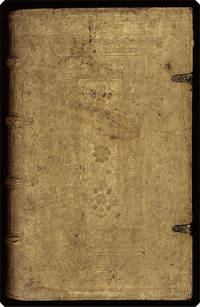
156624827Basileae: Per Thomam Guarinum 1566. Folio 33.5 cm; 13.125". 364 pp. 8 ff. <br><br>also bound in Vermigli Pietro Martire. In selectissimam D. Pauli priorem ad Corinthios Epistolam. Tiguri: apud C. Froschouerum 1567. Folio. 6 242 17 ff. lacks final blank.<br>Â Â Â Â Wonderful large folio volume containing the Works in Latin translation of St. Clement of Alexandria ca. 150 ca. 215 here in the second edition as edited by Gentian Hervet 14991584; the first was in 1556 from Isengrin's press. In this edition Isengrin's device appears on the title-page and the verso of the final leaf. As with the first edition this has scholia at the end notes including sidenotes and an index. The contents are Liber adhortatorius adversus gentes qui Protrepticus inscribitur; Paeagogi libri tres; and Stromaton sive Commentariorum de varia multiplicique literatura ad instituendum Christianum philosophum libri octo.<br>Â Â Â Â The second work is Peter Martyr's commentaries on Corinthians here in the second edition. It has a full-page woodcut => portrait of him on the recto of leaf aa6. The printer's woodcut device is on the title-page and there are numerous woodcut initials. The sidenotes are printed in italic while the text proper is in roman.<br>Â Â Â Â Peter Martyr 8 September 1499 12 November 1562 was an Italian theologian who began his religious life as an Augustinian friar converted to the Protestant cause was closely associated on the continent with Ochino Bucer and some prominent Lutherans and while in England where he held the Regius Chair of Divinity at Oxford was an intimate of Thomas Cranmer and Bishop Jewel.<br>Â Â Â Â Both works are uncommon in these editions in the U.S.: We locate three institutions reporting ownership of the first title and three totally different institutions owning the Vermigli.<br>Â Â Â Â Binding: Contemporary alum-tawed pig over wooden boards with bevelled edges and metal and leather clasps; one clasp perished. Leather tooled elaborately in blind using a variety of rolls and fillets including one roll incorporating the date 1546 a medallion of David and his harp and another medallion depicting John the Baptist with the words below the image "Ecce Agnus Dei. <br>Â Â Â Â <br>Â Â Â Â Clement: VD16 C4070; Index Aurel. 104.903; Adams C2106. Vermigli: VD16 B5054; Adams M788. Bound as above. Ex-library with bookplate on front pastedown small blind pressure- not perf. stamp on title-page and remnant of charge pocket at rear; six-digit number stamped in lower margin of one leaf. Early inked ownership indicia on title-page and old private ownership stamp on front free endpaper; a little old marginalia and underlining. A very little foxing and the odd spot only. => Excellent copies of both works in a handsome contemporary binding. Per Thomam Guarinum hardcover books
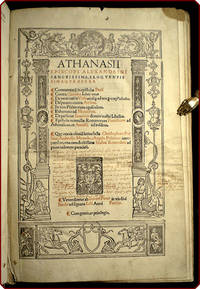
151919915Parisiis: Joanne Paruo i.e. Jean Petit 1519. Folio extra. 6 255 66 ff. <br><br>also bound in: Basil Saint Bishop of Caesarea. Basilii Magni Caesariensium in Cappadocia Antistitis sanctissimi opera plane diuina variis e locis sedulo collecta: & accuratione ac impensis Iodici Badii Ascesii recognita & coimpressa quorum index proxima pandetur charta. Paris: Venundantur eidem Ascensio i.e. Badius Ascensius 1520. Folio extra. 10 178 ff.<br>Â Â Â Â Two editions of Church Fathers from two scholar/printer presses. St. Athanasius's text was translated into Latin by three noted Renaissance scholars edited by Nicholas Beraldus and has the added prestige of apparatus by Erasmus. The title-page is printed with a four-piece woodcut border with the title in red and black and bears the famous Petit printer's device. => The text enjoys handsome typography side- and shouldernotes and large woodcut initials.<br>Â Â Â Â The works of St. Basil is from Badius Ascensius's press and he acted as the editor the translators having been Johannes Argyropoulos Georgius Trapezuntius and others. The title-page uses the same four-part woodcut title-page border as found on the St. Athanasius bound in at the front which makes much sense given the familial relationship between Ascensius and Petit. <br>Â Â Â Â <br>Â Â Â Â Athanasius: Index Aurel. 109.388; Moreau II 1982. Basil: Index Aurel. 114.440; Renouard Ascensius II 145/146; Moreau II 2246. Alum-tawed pigskin elaborately tooled in blind over wooden boards with metal and leather clasps; binding dust-soiled with one clasp perished head pulled one corner tip broken off small hole in leather on rear board. Inside some early marginalia and underlining in red; narrow arc of old light waterstaining to fore-edges of one part. Pages generally very clean. Joanne Paruo [i.e., Jean Petit] hardcover books