5 résultats
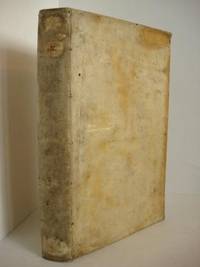
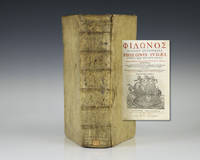
164018000Paris: Lutetiae Parisiorum 1640. Folio contemporary blind-stamped vellum. Greek and Latin text in parallel. Moderate wear to the binding from the library of the Bishop of Vermont generally sound otherwise. The Opera of the Hellenistic Jewish Biblical philosopher Philo Judaeus 20 BC-50 AD who blended Greek philosophy and Judaism. Philo used philosophical allegory to attempt to fuse and harmonize Greek philosophy with Jewish philosophy. His method followed the practices of both Jewish exegesis and Stoic philosophy. His allegorical exegesis was important for several Christian Church Fathers but he has barely any reception history within Rabbinic Judaism. He believed that literal interpretations of the Hebrew Bible would stifle humanity's view and perception of a God too complex and marvelous to be understood in literal human terms. "In the Diaspora Judaism was forced to come to terms with Hellenism in a manner that could be avoided in Palestine itself. There was a movement within Judaism that sought to show the compatibility between the ancient faith and the best of Hellenistic culture. The high point of this entire tradition was Philo of Alexandria. who sought to show that the best of pagan philosophy agreed with the Hebrew Scriptures" Gonzalez I:13. According to Charles Duke Yonge who translated this volume into English in the 19th century these treatises prove Philo "deeply versed in Greek literature of every age and description and of considerable skill in the sciences of music geometry and astronomy. It is impossible to deny him the praise of acuteness and ingenuity set off to their best advantage by neatness of language and felicity of expression." French scholar-printer Adrian Turnebe who was both Royal Reader in Greek and directory of the Imprimerie Royale uncovered a trio of Greek manuscripts in the king's library that he used to compile this volume. Lutetiae Parisiorum hardcover books
16174700Cologne: Sumptibus Antonii Hierat. 1617. Folio 15" x 10". 1254183pp. Double column text. Indices. Title printed in red & black with a large woodcut device. Cont. vellum soiled. Cont. ownership signature on title dated 1666. The Patron Saint of Alexandria Athanasius died in 373. Sumptibus Antonii Hierat. hardcover books
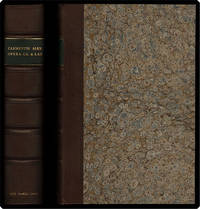
164135424Lutetiae Parisiorum: Typis Regiis 1641. Tall folio 32.7 cm 12.9". 28 854 74 lacking 7579 index pp. some pagination erratic; 823/24 repeated. <br><br>Works of the second-century Greek theologian Clement of Alexandria ca. 150215 reissued from the 1616 Patius printing and here handsomely printed by the French Royal Press. This edition was apparently also issued with the title-page in a different state sporting the imprint as "Apud Matthaeum Guillemot via Iacobaea sub signo Bibliothecae."<br>Â Â Â Â Set forth is Heinsius's edition of the text with Greek and Latin in parallel columns additionally offering the earlier revisions and alternate readings by Friedrich Sylburg; the title-page is printed in red and black with an impressive sailing ship publisher's device while the main text pages are ornamented with head- and tailpieces and decorative capitals.<br>Â Â Â Â Provenance: Title-page with inked inscription "J.D. Michaeli" presumably Orientalist biblical scholar and Göttingen professor Johann David Michaelis 171791. Later manuscript notes as below in the hand of the early 19th-century scholar August Neander; his library sold to the Colgate Rochester Crozer Divinity School properly deaccessioned.<br>Â Â Â Â Evidence of readership: Three pages completely covered in Neander's hand with annotations in Greek and Latin tipped in at the front; pencilled marks of emphasis inked underlining and inked marginal annotations in what appear to be two different early hands. <br>Â Â Â Â <br>Â Â Â Â Brunet II 93. Period-style quarter speckled calf and marbled papercovered sides spine with raised bands and gilt-stamped leather title-label all edges red; final three index leaves only lacking. Trimmed closely in some instances touching headers and often the marginalia; approximately 30 leaves with a finger's-breadth portion of upper edge chewed affecting headers but never text; several leaves with repaired tears or reinforced margins; one leaf with flaw in outer margin touching three letters. Markings as above; occasional small areas of light staining or inkblots one small burn hole and two pages with dripped red wax. => A solid and very readable copy in an attractive recent binding with provenance worthy of note. Typis Regiis hardcover books
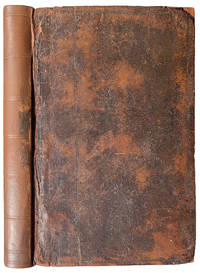
1682PW1341London:: Printed by M. Flesher for Thomas Fickus 1682. 1682. 8vo. 54 166 pp. Original calf boards rebacked with calf new endleaves; small tear to lower corner of p. 165 far from text block. Signed by Alfred Keene 1839. First English edition. This is one of the first books Norris published. "Norris John 1657–1712 Church of England clergyman and philosopher was born on 2 January 1657 at Collingbourne Kingston Wiltshire the third surviving child of John Norris bap. 1614 d. 1682 and his wife Elizabeth d. 1696. His father was vicar of Collingbourne Kingston under the Commonwealth and he moved to the living of Aldbourne Wiltshire in 1660. Norris was educated at Winchester College and entered Exeter College Oxford in 1676. A keen student at both Winchester and Oxford he early abandoned his inherited Calvinism and concentrated his reading on Platonist authors. On graduating BA in 1680 he was appointed a fellow of All Souls by Archbishop Sancroft on the recommendation of Thomas Jeames the warden during a dispute with the fellows over the filling of the vacancies in the college. Norris always retained a great esteem for All Souls and the college in turn erected a bust of h His early writings show him to have been at that time a strong tory and high-churchman but also show that he deliberately turned aside from political involvement. All the writings that he considered to be worth preserving were included in A Collection of Miscellanies which appeared in 1687. im in the Codrington Library when this was built in the following century. . . . Norris's writings have tended to be neglected by historians of philosophy partly perhaps because of Locke's dismissive attitude and partly because many of his theories are so close to those of Malebranche that it is difficult to disentangle their influence. He has been better treated by historians of literature who see his poetry much of which continues to be republished as marking especially clearly the transition from the spirit of the Renaissance to that of modern times. Much of Norris's poetry which has its roots in the metaphysical tradition is somewhat laboured. At his best however he has a lyrical spirit . . . In private life Norris seems to have been a kindly person a devoted parish clergyman and the friend and supporter of several of the learned ladies of his time. In the history of English thought he is a transitional figure. In contrast to the Cambridge Platonists he adopted wholeheartedly the Cartesian dualism of mind and matter. His theory of knowledge was a Cartesian Platonism similar to that of Malebranche to whose more developed theories he was at times too inclined to defer. In the history of English philosophy religion and literature he deserves to be remembered." – DNB. Lowndes The Bibliographer's Manual of English Literature vol. 3 p. 928. See: W. J. Mander The Philosophy of John Norris. Printed by M. Flesher, for Thomas Fickus, 1682. hardcover books
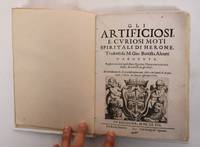
1647179140Bologna: Per Carlo Zenero 1647. Hardcover. VG overall wear and staining to the white boards text/illustrations/diagrams are very clean and clear with light age toning as expected with age. Bound in simple white boards utility binding only bw illustrated title page 8 103 8 pages bw illustrations and diagrams throughout. Text in Italian. " Aggiontoui dal medesimo Quattro theoremi non men belli. Et il modo con che si fà artificiosamente salir vn canale d'acqua viua ò morta in cima d'ogn'alta torre." - title page translated: Added by the same Quattro theoremi non less belli. And the way in which it is artificially made to rise in a channel of water is dead on top of every high tower. The "Quattro theoremi" p. 87-103--has special title page. Per Carlo Zenero hardcover books