SCHOUSBOE, PKA - FLORA OF MOROCCO P K ABiblio.com
6 résultats
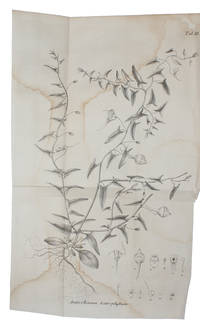
180059729Copenhagen 1800. 4to. Uncut without wrappers as issued in "Det Kongelige danske Videnskabernes Selskabs Skrifter". 204 pp. and 7 large folded engraved plates. <br/><br/><em>First edition of the first systematic description of the flora of Morocco. Schousboe was Danish consul-general in Morocco and sponsored by the Dane Johann v. Bülow he travlled round Morocco in the years 1791-93 to describe the flora. The catalogue descibes the plants in Danish and Latin. The work was translated the year after into German and many years later into French 1874. - Pritzel: 8343. - Jackson p. 351 The French edition. </em> unknown
180058368Copenhagen 1800. 4to. Uncut without wrappers as issued in "Det Kongelige danske Videnskabernes Selskabs Skrifter". 204 pp. and 7 large folded engraved plates. Faint scattered brownspots. <br/><br/><em>First edition of the first systematic description of the flora of Morocco. Schousboe was Danish consul-general in Morocco and sponsored by the Dane Johann v. Bülow he travlled round Morocco in the years 1791-93 to describe the flora. The catalogue descibes the plants in Danish and Latin. The work was translated the year after into German and many years later into French 1874. - Pritzel: 8343. - Jackson p. 351 The French edition. </em> unknown
180045498Copenhagen 1800. 4to. No wrappers as issued in "Det Kongelige danske Videnskabernes Selskabs Skrifter". 204 pp. and 7 large folded engraved plates. <br/><br/><em>First edition of the first systematic description of the flora of Morocco. Schousboe was Danish consul-general in Morocco and sponsored by the Dane Johann v. Bülow he travlled round Morocco in the years 1791-93 to describe the flora. The catalogue descibes the plants in Danish and Latin. The work was translated the year after into German and many years later into French 1874. - Pritzel: 8343. - Jackson p. 351 The French edition. </em> unknown
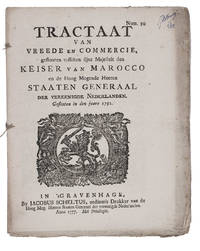
1777K5MA7TN6ZXX1The Hague 1777. Small 4to 21 x 16.5 cm. Jacobus Scheltus Disbound. With the woodcut arms of the States General on the title-page. 26 2 blank pp. Second edition published in several issues of a treaty concluded between the Dutch States General and Abdullah bin Ismail 1694-1757 Sultan of Morocco on and off from 1734 to his death in 1757. The 23 articles of the treaty are followed by a form for the passports that Dutch ships were to carry a note on the treaty's ratification at Fez and a translation of a letter originally in Arabic from the Sultan of Morocco to the States General. The treaty was negotiated by Mohamed Lucas governor of Tétouan acting for Morocco and Francisco and Louis Butler granted power of attorney by the States General. It guarantees access free trade and safety for ships of the States General and its subjects and their crews and passengers in ports under Moroccan authority. Goods they sell there are subject to the usual taxes but military and shipbuilding supplies are exempt gunpowder timber wheel-lock muskets etc. The treaty was concluded on 21 November 1752/14 Muharram 1166. A further note says it was ratified at Fez on 4 December/28 Muharram and Sultan Abdullah's letter to the States General bears the same date.With a brief inscription on the title-page. Last two leaves detached and with worm holes only slightly affecting the text. Otherwise a good copy.l STCN 161081134; not in Knuttel. unknown
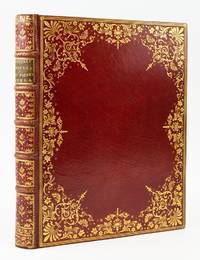
1772ST18628bBirminghamiae: Typis Joannis Baskerville 1772. First Baskerville Edition. 310 x 260 mm. 11 7/8 x 9 3/4". 1 p.l. 200 221-372 pp. but complete. <br/> SUPERB CONTEMPORARY RED MOROCCO LAVISHLY GILT IN THE STYLE OF DEROME covers with wide dentelle frame composed of botanical elements and many small tools raised bands spines gilt in compartments with central floral sprig surrounded by acorns flowers stars and dots volute cornerpieces green morocco labels gilt turn-ins marbled endpapers all edges gilt. Front pastedowns with engraved bookplate of P. Dupont and with morocco heraldic book label. Gaskell 44. ◆A breath of rubbing to extremities title page a little browned final page a bit foxed other trivial imperfections but AN EXCEPTIONALLY FINE COPY internally clean smooth and bright and in a sparkling binding.<br/> <br/> This is the impressive quarto edition of a trio of great Roman love poets in a premier binding befitting the elegant printing. In a sheet dated 1760 which Baskerville issued appended to a specimen of his folio Bible the printer discusses his proposed "Baskerville Classics": "Many gentlemen" he says "have wished to see a sett of the Classicks . . . in the Manner Letter and Paper of the 'Virgil' already published" and he vows to print the same with the poetical classics first. The present items are from what turned out to be seven Baskerville quarto printings of the classics mostly done late in the printer's career but according to Reed bearing "the marks of unabated genius." These volumes says Reed would "suffice had Baskerville printed nothing else to distinguish him as the first typographer of his time." In the present works the stately typography the luxurious paper textured but feeling rather like vellum and the spacious design combine to give the reader a particularly gratifying feeling of strength and serenity. The extraordinarily smooth surface of our leaves provides a tactile experience not available from any other 18th century printer Bodoni included. The beautiful binding here is unsigned but is clearly the product of a first-rate workshop; while it is not uncommon to see a volume from the Baskerville quartos in a decorative contemporary binding the present one would have a place in the front row of any assemblage. Typis Joannis Baskerville unknown
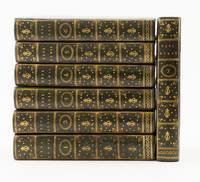
1775ST17825Paris: Joseph-Gérard Barbou rue Mathurins 1775. 163 x 96 mm. 6 3/8 x 3 3/4". Seven volumes. Edited by J. N. Lallemand; preface by Jean Baptiste Louis Crévier. <br/> EXTREMELY ATTRACTIVE CONTEMPORARY GREEN ARMORIAL MOROCCO perhaps by Derome covers with triple gilt rule border central gilt coat of arms of the Blanche family featuring a seated fox with one paw raised above it a row of three five-pointed stars smooth spine divided into compartments containing a gilt lyre surrounded by stars and dots floral sprigs at corners volume number within a laurel wreath gilt lettering marbled endpapers all edges gilt. With printer's two-swans device on title pages volume I with frontispiece portrait engraved by L. J. Cathelin after J. C. Philips. With pencilled note on front flyleaf attributing the binding to Derome. Brunet III 1108 "Edition estimée"; Dibdin II 171. For the binding: Olivier Pl. 2279. ◆Spines slightly and uniformly sunned very light shelf wear to bindings occasional faint foxing in volume IV but A SUPERB SET almost entirely absent of any signs of use.<br/> <br/> This is a fine-paper copy in a binding both charming and handsome of what Dibdin deems "a truly beautiful and accurate edition" of Livy's Roman history. Brunet called it an "esteemed edition" and notes that fine paper copies like the present set sold for twice what regular copies cost. First printed by Sweynheym and Pannartz in 1469 the "Histories" of Titius Livius Patavani 59 B.C. - 17 A.D. follow the rise of Rome from the founding of the city through its triumphs in the Punic Wars and up through the reign of the author's contemporary emperor Augustus. His account is notable for its emphasis on the glorious triumphs and accounts of heroism of the Romans stemming in his eyes from their virtue; his history is intended not just to inform but also to elevate the reader. The present edition according to Dibdin builds on the fine editions edited by Crevier and Drakenborch incorporating their useful notes and additions. It was beautifully printed by Joseph-Gérard Barbou 1723-90 scion of a family that had begun printing in Lyon in 1529 moving to Paris in 1540. Joseph apparently specialized in Latin classics producing editions of Cicero Lucretius Pliny Caesar and Martial among others. The fine binding here does not have Derome's ticket but is well executed enough to make the attribution written in at front plausible. There were no fewer than 18 members of the Derome family not to mention workshop associates who made their livings as binders in Paris from the middle of the 17th century until the first quarter of the 19th. Our binding is tasteful--perfect for a scholarly edition of a classic--and conceivably the work of one of the Deromes or of an extremely competent associate. Olivier attributes our armorial stamp to the 18th century Blanche family of Burgundy and he finds it on a copy of Barbou's 1771 Sallust in the library of Madame la Comtesse de Cossé. The "country house" condition of the present set suggests an aristocratic owner more concerned with owning fine books than with reading them. [Joseph-Gérard] Barbou, rue Mathurins unknown