36 résultats
1983127872New York: A La Vieille Russie 1983. Softcover. VG. Dark blue wraps with gold lettering color illustration; 154 pp. with color photographs throughout. A catalogue showing and describing works for sale by ALVR April 22-May 21 1983. A La Vieille Russie unknown books
1993257591993. Softcover. VG. Black wraps. 47 pp. 71 color & mostly bw plates. A four-page introductory essay by Mark A. Schaffer accompanies the illustrated and annotated catalogue of 71 works. Wonderful illustrations. paperback books
1933184675Garden City Publishing Co. 1933. Hardcover. Very Good. 1933. Red cloth boards no dust jacket. Book is clean has a tight binding no marks or notations. Corners are lightly bumped and scuffed spine is slightly sunned but otherwise in excellent condition. Published the year of the Grand Duke's Death. HB HS Garden City Publishing Co. hardcover books
197390054Stanford: Hoover Institution Press 1973. Hardcover. Very Good. photos xi 462p. Original blue cloth. 22cm. Minor cover spotting and streaking. Former owner's name and address label on front free endpaper. No jacket. Foreword by Ivan Bydzan later Anthony J. Bittsonthe only non-Bolshevik member of the Petrograd Military Revolutionary Committee. Laid in is a small folded sheet "With my compliments Sincerely Anthony Bittson 5/14/76" and a printed publisher's slip "With the compliments of Anthony J. Bittson". <br/><br/> Hoover Institution Press hardcover books
19492222023<p>First edition later printing title page all in black; no limitation statement on verso. 11 3/4" x 9". Foreword by Sacheverell Sitwell. Frontispiece b/w portrait 17 color plates and 109 b/w illustrations. Bibliographical references. Dust jacket price clipped. Very good. 169 pages. No signatures or bookplates.</p><p>Notable for Sitwell's 5-page foreword and Bainbridge's dedication to Queen Mary.</p><p>See Fifoot SB 34 and Ritchie B 40; variant dated approximately 1952 Ritchie Page 252.</p> B. T. Batsford Ltd. hardcover books
1907653411907. The First Edition of the Nakaz Published in the Twentieth Century Catherine II 1762-1796 Empress of Russia. Chechulin Nikolai Dmitrevich 1863-1927 Editor. Nakaz Imperatritsy Ekateriny II Dannyi Kommissii o Sochinenii Proekta Novago Ulozheniia. St. Petersburg: Izd. Iurid. Knizhnago Sklada "Pravo" 1907. ii cliv 174 pp. Three folding plates of facsimile manuscript leaves. Text of Nakaz in Russian with parallel French translation. Contemporary pebbled cloth light rubbing to extremities with minor wear to spine ends and corners which are bumped. Light toning to text a few leaves have carefully repaired tears. Early inscription and owner inkstamp to title page interior otherwise clean. $1250. The first edition published in the twentieth century. Title two in the series Pamiatniki Russkago Zakonodatel'stva 1649-1832. The Nakaz or Instruction is a statement of legal principles written by Catherine II between 1764 and 1766. It was among her most ambitious and significant undertakings. Infused with the ideas of the French Enlightenment and copied mostly from the work of Voltaire Montesquieu and Beccaria it was compiled as a guide for the All- Russia Legislative Commission convened by the Empress in 1767 to create a new code to replace the 1649 Muscovite Code. Revised in consultation with Frederick the Great and Voltaire the Instruction proclaimed the equality of all men before the law and denounced torture and the death penalty. Unfortunately her proposed code was never completed. The first two editions one with parallel texts in Russian and German were published in 1767. Our 1907 edition may have been inspired by a spirit of reform fired by the Russian Revolution of 1905. OCLC locates 1 copy in a North American law library Columbia. Another copy located at Harvard Law School. Butler The Nakaz of Catherine the Great 526 Entry 19. unknown books
1960475Marc Chagall B. 1887 VITEBSK RUSSIA; D. 1985 SAINT-PAUL-DE-VENCE FRANCE DRAWINGS FOR THE BIBLE as published for Verve.<br /> Verve Vol. X no. 37/38. 1960. Text by Gaston Bachelard. Folio. With 24 original lithographs in color including the cover by Chagall and 96 reproductions in black and white. Complete as issued. Verve hardcover books
1920591131920. COMMUNISM - RUSSIA. DAS PROGRAMM DER KOMMUNISTISCHEN PARTEI RUSSLAND BOLSCHEWIKI. Angenommen aufdem 8. Parteikongress 18. bis 23 Marz 1919. Mit Einfuhrung von Karl Radek. Zurich: Internationaler Verlag 1920. 67 pp. Pamphlet format: 8 3/4 by 6 1/4inches 22 x15.5 cm printed paper wrappers. The text is clean; however the paper is of inferior quality and is uniformly toned throughout. There is a faint dampstain along the fore-edge; the last two leaves have tears which extend into the text without loss. The wrappers are edge-chipped creased and reinforced with paper tape at the spine. There is a small label affixed to the front panel as well as a closed tear. As is. unknown books
19981341463St. Petersburg: The State Russian Museum Palace Editions 1998. Hardcover. Quarto; Fair/G; Hardcover with DJ; DJ spine red and yellow with yellow print; DJ has light edgewear but is clean and bright; Boards in glossy illustrated paper cocked spine else clean and strong; Text block has intermittent spine breaks clean text; 263 pages frontispiece illustrated color. Shelf: Russian Slavic Eastern European Art <br /> <br /> Oversized books. Additional postage necessary for expedited/international orders. Economy International shipping unavailable due to size/weight restrictions. For international/expedited customers please inquire for rates. 1341463. FP New Rockville Stock. The State Russian Museum, Palace Editions hardcover books
198846769New York: Atlantic IntÕl Pub 1988 . First American edition. Hardcover. Very good/Very good. New York: Atlantic IntÕl Pub 1988 . First American edition. Numerous b/w photographs. 262 17 pp. Hardcover. 8vo. Dark red cloth. A very good tight clean copy in a very good dust wrapper. Very good/Very good. Atlantic IntÕl Pub hardcover books
1933298648Garden City: Garden City Publishing Co 1933. hardcover. very good. Illustrated in black and white. 299 pages 8vo red cloth lightly worn at extremities. Garden City: Garden City Publishing Co. 19.3. A very good copy.<br/><br/> Garden City Publishing Co unknown books
1927WebOneAbe-371Paris: Rieder 1927. Performing arts Paris: Rieder 1927. Square 8vo original printed wrappers. Top of spine pulling else fine. With 176 pp. ads for art films and 20 heliogravure plates. Printed Wrappers. Very Good. 8vo. Paris: Rieder, Paperback books
1931W42344New York: The Viking Press 1931. Original black cloth gilt top edge stained magenta. Map endpapers. Many photographs. Author extravagant signature on the half title. Dust jacet chipped at spine ends and on edges with some small closed tears. . Signed by Author. Fifth Printing. Cloth. Very Good/Fair. 8vo - over 7¾" - 9¾" tall. Trade. The Viking Press Hardcover books
197390052Stanford: Hoover Institution Press 1973. Hardcover. Very Good. 4 photos index xii 325p. Original red cloth. 22cm. Modest cover soil. Former owner's name and sticker on front free endpaper. No jacket. Foreword by Ivan Bydzan later known as Afred J. Bittson who had been a member of the Petrograd Military Revolutionary Committee. Laid in is a friendly 2-page 1976 letter on both sides of a single note-sized sheet from Bittson in which he describes in rapturous terms spending a couple of hours with Aleksandr Solzhenitsyn the morning after attending a dinner at the Hoover Institution honoring Solzhenitsyn. <br/><br/> Hoover Institution Press hardcover books
19985385NY: Abrams. Fine in Fine dust jacket. 1998. Hardcover. 0810932776 . Translated from the Russian by Marian Schwartz and Antonina W Bouis. First American edition. Fine in a fine dust jacket. . Abrams hardcover books
193034630Russia 1930. 1 vols. Folio 39 x 24 1/4 inches. Linen backed. 1 vols. Folio 39 x 24 1/4 inches. unknown books
1921234513No place 1921. Printed broadside. 1 vols. Folio 375 x 285 mm. Fold mark across middle. Expertly backed with linen. Browned three short tears can be seen though repaired by the backing. Very good. Printed broadside. 1 vols. Folio 375 x 285 mm. This appeal printed above the names of A. Kerensky Victor Tchernoff Chernov and other Russian Social Revolutionaries for the 32 former members of the Russian Constituent Assembly protests the hardships inflicted upon Russia by communism. They accuse the Bolshevik government and its New Economic Policy of selling Russia's natural resources to the greed of international capitalism. The NEP was announced by Lenin in March 1921 and inaugurated an interim policy guaranteeing freedom of trade in internal commerce and a system of concessions for the investment of foreign capital. European states and busineses were pleased with the NEP and saw in it Lenin's capitulation to capitalism. However what they considered a weakness eventually turned out to be a mark of strength and flexibility of Bolshevik policy. unknown books
1950D15992Moscow: Iskusstvo 1950. Hardcover. Very Good. Large octavo. Full red cloth with decoration and titling gilt to upper board. 1f. title 19 ff. with 17 full-color and gilt illustrations 1f. colophon. In Cyrillic. Binding slightly faded and stained. Beautiful plates. <br/><br/> Iskusstvo hardcover books
1917234515Petrograd: Gosudarstvennaya Tipografia 1917. Small folio. Stitched mostly unopened. A bit browned but still very good. Small folio. The stenographic minutes of the above meetings Session V of the State Duma. Gosudarstvennaya Tipografia unknown books
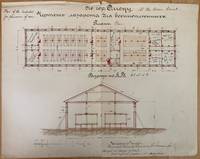
1916List1025Siberia Petrograd et al. 1916. First Edition. Various documents and letters most legal format roughly 200 pages in total with three publications and several newspapers on the subject and thirteen hand drawn architectural plans for a new camp at Omsk measuring between 25 x 17 and 13 x 8 inches. During World War One a staggering number of prisoners - roughly 2.4 of the five million in total who were sent to the Eastern Front - ended up as prisoners of war in Russia. Of that number roughly two million were from Austria-Hungary. Though often neglected by historians due to the attention given to the Russian Civil War and the atrocities of World War Two the subject has drawn increased historical interest with the historian Gerald H. Davis and others calling attention to its importance in the 1980s. Davis and others have written on the relationship between the large prisoner population and the dissolution of their nations as well as the abhorrent conditions many were forced to endure partially due to hierarchical structure of treatment due to differing attitudes by their Russian hosts toward different nations and ethnicities and partially due to the lack of appropriate infrastructure and resources to support such a large prisoner population. <br /> <br /> Offered here are the papers of Herbert H.D. Pierce the Special Aide to Embassador George T. Marye in Petrograd containing a substantial amount of firsthand accounts of prison conditions from the early years of the war as well as a striking series of manuscript architectural plans for a new prison camp that was built in Omsk. Pierce a diplomat who was most famously involved with a case involving seal fishing in the Berings Strait was appointed as a Special Aide out of his retirement and served until his death in 1916. It is possible that he was assigned the task of dealing with the prisoner of war situation as nearly all of his papers that we recovered from his estate from this period deal with the subject. Pierce was involved specifically with the disbursal of relief funds received from the German and Austro-Hungarian governments that were to be disbursed to their citizens. <br /> <br /> The highlight of the collection is a series of hand drawn architectural plans for a series of POW camp structures in Omsk bearing the signature of a N. Alexandrow architect. It is unclear what Pierce's exact relationship was to this project. The plans are translated into English in ink. Of particular interest are the separate officers' barracks plans as one of the violations of POW laws in Russia was the varying levels of treatment given to different prisoners in particular in their recognition of German and Austro-Hungarian ranking officers. There were twenty-eight prison camps in Omsk this one is not identified specifically. The Siberian camps often held up to 35000 prisoners this one shows plans for 10000. There were 128 camps in the Moscow region where camps typically housed 2000-5000 prisoners. The conditions of the camps were generally abysmal with camp capacities routinely exceeded by roughly 50-100%. Frequent disease outbreaks killed thousands of prisoners during the conflict in Omsk Novo-Nikolaevsk Sretensk and Totskoe specifically. <br /> <br /> The group includes letters written to Marye describing conditions in the camps as well as reports of the Americans' own observations in Siberia Moscow and elsewhere. Most are in English though several original documents in German are included. Also included are Pierce's working copies of the Second Hague Convention guidelines of 1907 Order 697 of the War Department that established the regulations regarding prisoners of war in 1914 and a copy of the agreement made between Germany and Russia in August of 1914 which allowed for all women and all men over 45 years and younger than 17 to leave the country unheeded. Some of the letters document violations of this agreement for example a fifty-five year old Austrian man writing to the embassy stating that he had been detained. The authorship of some of the reports is often unclear - one report is credited to "A Russian Lady" another from Krasnaya-Ratchka near Khabaraovsk is an uncredited 18 page description of prisoner conditions. One uncredited report nineteen pages long on the conditions of prisoners in the Moscow Circuit may have been written by Pierce himself and is addressed to Marye. Another 44 page report on Siberian prison conditions is uncredited and likely produced by the embassy itself. A portion - perhaps 25% or so - of the reports are incomplete or unclear in origin though there is much to glean from them regardless. <br /> <br /> Also included are three printed publications. The first is entitled Rapport du Conseiller Prive E.G. Chinkevitch Membre du Comte special de secours aux prisonniers de guerre sur la visite des camps des prissoniers Austro-Hongrois dans l'arrondissement militair d'Omsk printed in 1915. OCLC locates a single copy in France. The report outlines the observed conditions and includes twenty-six photographs of prisoners. The second is a forty-three page report addressed to James Gerard the American ambassador in Berlin by an unidentified author which outlines the prisoner of war conditions in England written in February of 1915. The third is a scarce map of Russian prisoner of war camps printed by L. Friederichsen in Hamburg in 1915 entitled Karte vom Europäischen und Asiatischen Russland mit Angabe der hauptsächlichsten Orte in denen sich Kriegsgefangene und zurückgehaltene Zivilpersonen befinden sowie mit Bestimmungen über den Postverkehr nach diesen Orten. The map shows locations of prison camps throughout the Russian Empire and also shows the mail routes. It is in fine condition overall and we locate six copies in OCLC. <br /> <br /> Overall a scarce survival of primary source material on a somewhat overlooked but important period in Russian history with relevance to diplomatic historians as well worthy of further study. <br /> <br /> Works cited: <br /> <br /> Grekov N. V.: Germanskie i avstriiskie plennye v Sibiri 1914-1917 German and Austrian prisoners in Siberia 1914-1917 in: Vibe P. P. ed.: Nemtsy. Rossiia. Sibir' Germans. Russia. Siberia Omsk 1997 p. 159.<br /> <br /> Nachtigal Reinhard: Seuchen unter militärischer Aufsicht in Rußland. Das Lager Tockoe als Beispiel für die Behandlung der Kriegsgefangenen 1915/16 in: Jahrbücher für Geschichte Osteuropas 48/3 2000 pp. 367-368; Brändström Kriegsgefangenen 1922 pp. 41-48.<br /> <br /> Nachtigal Reinhard; Radauer Lena: Prisoners of War Russian Empire. In: 1914-1918 Online. https://encyclopedia.1914-1918-online.net/article/prisoners_of_war_russian_empire Accessed 5/21. unknown books
197528631New York: G.P. Putnam's Son 1975. First American Edition. Photographs by Klaus Beyer. 1 vols. 4to. Cloth. Fine in fine slipcase. First American Edition. Photographs by Klaus Beyer. 1 vols. 4to. G.P. Putnam's Son unknown books
199744813Novato CA: Presidio Press 1997. First Edition. Octavo; black cloth with titles stamped in silver on spine; dustjacket; xviii240pp; illus. Fine in a Near Fine dustjacket unclipped with light wear to extremities vertical fold to front flap and a short tear to upper edge of rear panel. Recently published memoir of a 25 year old American soldier a drafter school teacher who fought the Bolshevik's in Russia between 1918-1919. Presidio Press unknown books
1919223031919. Photographs measuring 6 x 4 inches and smaller. 1 vols. Oblong 8vo 8 3/4 x 6 1/2 inches. Contemporary gray cloth ms. title to upper board upper joint wearing but holding nicely. Photographs measuring 6 x 4 inches and smaller. 1 vols. Oblong 8vo 8 3/4 x 6 1/2 inches. RARE PHOTOGRAPHS OF THE NORTH RUSSIAN RELIEF FORCE 1919. A rare survival from a distinguished World War One veteran. Born in India Nightingale was educated at Rugby and Sandhurst and joined the Royal Fusiliers in 1910. He survived the landing on V beach Cape Helles Gallipoli April 25th 1915 and the following year he was awarded both the Military Cross and the Legion D'Honneur for his services. <br/>Nightingale subsequently served with the 46th Battalion Royal Fusiliers in the North Russian Relief Force part of the invasion of Russia by the English Irish and the Americans. The operation was conducted under the command of General H. de V. Sadleir-Jackson.<br/>Arriving in Archangel on 5 June 1919 the 46th proceeded along the Dvina River to Osinova where preparations were made for an attack on rail and river transport. The objective was to repel the Red Army from their established positions and generally improve the position of the White Russian forces. The hope was that the NRRF would be able to subsequently withdraw without significant casualties. In addition smaller raids on Red Army positions were carried out to the south partly to destabilize them partly as reconnaissance. Nightingale was in command of the Borok Column on the right bank of the Dvina River for the August 10 offensive.<br/>The first photos are of the H.M.T. "War Summit" & H.M.T. "Pretorian" chugging through the Arctic Ocean and White Sea in Midsummer June 1919 on its way to Archangel. They were billeted at Troitsa and among the many images of the town and its surroundings is one of where the mutiny of Dyer's Battalion took place. Equally there are shots of Russian batteries Allied defenses company headquarters and regimental aid posts as well as images of the Dvina River Yaroslovskoe and Selso. A page is devoted to "Col. Davies Headquarters at Commencement of Action Aug 10th" and shows how the British troops organized themselves in the Selmenga Forest namely with three shots of "Piccadilly Circus Selmenga Forest with Shaftesbury Avenue and Regent Street."<br/>The attack commenced at noon and despite the difficulty of the terrain was successful. We know that Borok Nightingale's objective was reported captured along with 80 POWs by eleven o'clock that evening. Nightingale was evacuated in late September.<br/>This is not only a record of the battle but includes many poignant personal touches too. Namely there are several shots of men with whom he served and the Russians with whom he stayed. The captions not only name the men in each photograph but in many cases reveal their fate: "Lt Taylor killed Aug 10th Lt Grant wounded Aug 1st Capt. Driver killed Aug 10th."<br/>The album also includes a typed order - dated September 9 1919 - which is a reminder that despite the success of the August attack the Russian Civil War was ongoing and would ultimately be won by the Bolsheviks. "You will send one platoon to SELMENGA to hold the SELMENGA BRIDGE and the beach road to GORODOK. The enemy are known to be in force in the vicinity of BOROK and GORODOK and may attempt an outflanking movement . The platoon remain in position there and will withdraw when Captain de Miremont with the GORODOK Infantry comes through there tonight . The Platoon should form a right flank guard to Captain de Miremont from SALMENGA to PLESS."<br/>The photographs of Russia occupy the first half of the album the rest is devoted to Nightingale's time in Ireland with the 7th Cadet Battalion. Despite his distinguished service in the military Nightingale's fate was a melancholy one. He died in 1935 reportedly either by suicide using his own revolver of from alcoholism. unknown books
1930317605London: Herbert Jenkins 1930. First Printing. Illus. 320pp. 8vo. Bound in modern three quarters mottled brown calf marbled sides leather title label. Fine. First Printing. Illus. 320pp. 8vo. Herbert Jenkins unknown books
192361783New York: The Macmillan Company 1923. Second impression. Illustrated. ix 400 pp. 1 vols. 8vo. Brown cloth decorated in green and gilt. Fine. Second impression. Illustrated. ix 400 pp. 1 vols. 8vo. The Macmillan Company unknown books