76 résultats
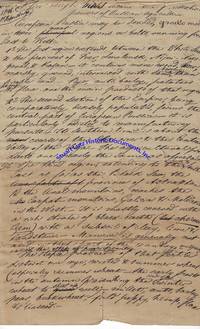
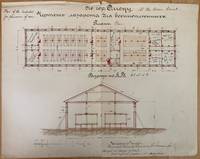
1916List1025Siberia Petrograd et al. 1916. First Edition. Various documents and letters most legal format roughly 200 pages in total with three publications and several newspapers on the subject and thirteen hand drawn architectural plans for a new camp at Omsk measuring between 25 x 17 and 13 x 8 inches. During World War One a staggering number of prisoners - roughly 2.4 of the five million in total who were sent to the Eastern Front - ended up as prisoners of war in Russia. Of that number roughly two million were from Austria-Hungary. Though often neglected by historians due to the attention given to the Russian Civil War and the atrocities of World War Two the subject has drawn increased historical interest with the historian Gerald H. Davis and others calling attention to its importance in the 1980s. Davis and others have written on the relationship between the large prisoner population and the dissolution of their nations as well as the abhorrent conditions many were forced to endure partially due to hierarchical structure of treatment due to differing attitudes by their Russian hosts toward different nations and ethnicities and partially due to the lack of appropriate infrastructure and resources to support such a large prisoner population. <br /> <br /> Offered here are the papers of Herbert H.D. Pierce the Special Aide to Embassador George T. Marye in Petrograd containing a substantial amount of firsthand accounts of prison conditions from the early years of the war as well as a striking series of manuscript architectural plans for a new prison camp that was built in Omsk. Pierce a diplomat who was most famously involved with a case involving seal fishing in the Berings Strait was appointed as a Special Aide out of his retirement and served until his death in 1916. It is possible that he was assigned the task of dealing with the prisoner of war situation as nearly all of his papers that we recovered from his estate from this period deal with the subject. Pierce was involved specifically with the disbursal of relief funds received from the German and Austro-Hungarian governments that were to be disbursed to their citizens. <br /> <br /> The highlight of the collection is a series of hand drawn architectural plans for a series of POW camp structures in Omsk bearing the signature of a N. Alexandrow architect. It is unclear what Pierce's exact relationship was to this project. The plans are translated into English in ink. Of particular interest are the separate officers' barracks plans as one of the violations of POW laws in Russia was the varying levels of treatment given to different prisoners in particular in their recognition of German and Austro-Hungarian ranking officers. There were twenty-eight prison camps in Omsk this one is not identified specifically. The Siberian camps often held up to 35000 prisoners this one shows plans for 10000. There were 128 camps in the Moscow region where camps typically housed 2000-5000 prisoners. The conditions of the camps were generally abysmal with camp capacities routinely exceeded by roughly 50-100%. Frequent disease outbreaks killed thousands of prisoners during the conflict in Omsk Novo-Nikolaevsk Sretensk and Totskoe specifically. <br /> <br /> The group includes letters written to Marye describing conditions in the camps as well as reports of the Americans' own observations in Siberia Moscow and elsewhere. Most are in English though several original documents in German are included. Also included are Pierce's working copies of the Second Hague Convention guidelines of 1907 Order 697 of the War Department that established the regulations regarding prisoners of war in 1914 and a copy of the agreement made between Germany and Russia in August of 1914 which allowed for all women and all men over 45 years and younger than 17 to leave the country unheeded. Some of the letters document violations of this agreement for example a fifty-five year old Austrian man writing to the embassy stating that he had been detained. The authorship of some of the reports is often unclear - one report is credited to "A Russian Lady" another from Krasnaya-Ratchka near Khabaraovsk is an uncredited 18 page description of prisoner conditions. One uncredited report nineteen pages long on the conditions of prisoners in the Moscow Circuit may have been written by Pierce himself and is addressed to Marye. Another 44 page report on Siberian prison conditions is uncredited and likely produced by the embassy itself. A portion - perhaps 25% or so - of the reports are incomplete or unclear in origin though there is much to glean from them regardless. <br /> <br /> Also included are three printed publications. The first is entitled Rapport du Conseiller Prive E.G. Chinkevitch Membre du Comte special de secours aux prisonniers de guerre sur la visite des camps des prissoniers Austro-Hongrois dans l'arrondissement militair d'Omsk printed in 1915. OCLC locates a single copy in France. The report outlines the observed conditions and includes twenty-six photographs of prisoners. The second is a forty-three page report addressed to James Gerard the American ambassador in Berlin by an unidentified author which outlines the prisoner of war conditions in England written in February of 1915. The third is a scarce map of Russian prisoner of war camps printed by L. Friederichsen in Hamburg in 1915 entitled Karte vom Europäischen und Asiatischen Russland mit Angabe der hauptsächlichsten Orte in denen sich Kriegsgefangene und zurückgehaltene Zivilpersonen befinden sowie mit Bestimmungen über den Postverkehr nach diesen Orten. The map shows locations of prison camps throughout the Russian Empire and also shows the mail routes. It is in fine condition overall and we locate six copies in OCLC. <br /> <br /> Overall a scarce survival of primary source material on a somewhat overlooked but important period in Russian history with relevance to diplomatic historians as well worthy of further study. <br /> <br /> Works cited: <br /> <br /> Grekov N. V.: Germanskie i avstriiskie plennye v Sibiri 1914-1917 German and Austrian prisoners in Siberia 1914-1917 in: Vibe P. P. ed.: Nemtsy. Rossiia. Sibir' Germans. Russia. Siberia Omsk 1997 p. 159.<br /> <br /> Nachtigal Reinhard: Seuchen unter militärischer Aufsicht in Rußland. Das Lager Tockoe als Beispiel für die Behandlung der Kriegsgefangenen 1915/16 in: Jahrbücher für Geschichte Osteuropas 48/3 2000 pp. 367-368; Brändström Kriegsgefangenen 1922 pp. 41-48.<br /> <br /> Nachtigal Reinhard; Radauer Lena: Prisoners of War Russian Empire. In: 1914-1918 Online. https://encyclopedia.1914-1918-online.net/article/prisoners_of_war_russian_empire Accessed 5/21. unknown books
1960475Marc Chagall B. 1887 VITEBSK RUSSIA; D. 1985 SAINT-PAUL-DE-VENCE FRANCE DRAWINGS FOR THE BIBLE as published for Verve.<br /> Verve Vol. X no. 37/38. 1960. Text by Gaston Bachelard. Folio. With 24 original lithographs in color including the cover by Chagall and 96 reproductions in black and white. Complete as issued. Verve hardcover books
1698112625London: R. Baldwin 1698. First edition of this work. Octavo bound in modern wrappers 28 p<span class="match">a</span>ges. In very good condition with some browning and toning to the text. Rare with no other examples appearing at auction in the last 80 years. R. Baldwin unknown books
1919223031919. Photographs measuring 6 x 4 inches and smaller. 1 vols. Oblong 8vo 8 3/4 x 6 1/2 inches. Contemporary gray cloth ms. title to upper board upper joint wearing but holding nicely. Photographs measuring 6 x 4 inches and smaller. 1 vols. Oblong 8vo 8 3/4 x 6 1/2 inches. RARE PHOTOGRAPHS OF THE NORTH RUSSIAN RELIEF FORCE 1919. A rare survival from a distinguished World War One veteran. Born in India Nightingale was educated at Rugby and Sandhurst and joined the Royal Fusiliers in 1910. He survived the landing on V beach Cape Helles Gallipoli April 25th 1915 and the following year he was awarded both the Military Cross and the Legion D'Honneur for his services. <br/>Nightingale subsequently served with the 46th Battalion Royal Fusiliers in the North Russian Relief Force part of the invasion of Russia by the English Irish and the Americans. The operation was conducted under the command of General H. de V. Sadleir-Jackson.<br/>Arriving in Archangel on 5 June 1919 the 46th proceeded along the Dvina River to Osinova where preparations were made for an attack on rail and river transport. The objective was to repel the Red Army from their established positions and generally improve the position of the White Russian forces. The hope was that the NRRF would be able to subsequently withdraw without significant casualties. In addition smaller raids on Red Army positions were carried out to the south partly to destabilize them partly as reconnaissance. Nightingale was in command of the Borok Column on the right bank of the Dvina River for the August 10 offensive.<br/>The first photos are of the H.M.T. "War Summit" & H.M.T. "Pretorian" chugging through the Arctic Ocean and White Sea in Midsummer June 1919 on its way to Archangel. They were billeted at Troitsa and among the many images of the town and its surroundings is one of where the mutiny of Dyer's Battalion took place. Equally there are shots of Russian batteries Allied defenses company headquarters and regimental aid posts as well as images of the Dvina River Yaroslovskoe and Selso. A page is devoted to "Col. Davies Headquarters at Commencement of Action Aug 10th" and shows how the British troops organized themselves in the Selmenga Forest namely with three shots of "Piccadilly Circus Selmenga Forest with Shaftesbury Avenue and Regent Street."<br/>The attack commenced at noon and despite the difficulty of the terrain was successful. We know that Borok Nightingale's objective was reported captured along with 80 POWs by eleven o'clock that evening. Nightingale was evacuated in late September.<br/>This is not only a record of the battle but includes many poignant personal touches too. Namely there are several shots of men with whom he served and the Russians with whom he stayed. The captions not only name the men in each photograph but in many cases reveal their fate: "Lt Taylor killed Aug 10th Lt Grant wounded Aug 1st Capt. Driver killed Aug 10th."<br/>The album also includes a typed order - dated September 9 1919 - which is a reminder that despite the success of the August attack the Russian Civil War was ongoing and would ultimately be won by the Bolsheviks. "You will send one platoon to SELMENGA to hold the SELMENGA BRIDGE and the beach road to GORODOK. The enemy are known to be in force in the vicinity of BOROK and GORODOK and may attempt an outflanking movement . The platoon remain in position there and will withdraw when Captain de Miremont with the GORODOK Infantry comes through there tonight . The Platoon should form a right flank guard to Captain de Miremont from SALMENGA to PLESS."<br/>The photographs of Russia occupy the first half of the album the rest is devoted to Nightingale's time in Ireland with the 7th Cadet Battalion. Despite his distinguished service in the military Nightingale's fate was a melancholy one. He died in 1935 reportedly either by suicide using his own revolver of from alcoholism. unknown books
WB16908Paris. Hardcover. Near Fine. 1764-1774 but circa 1820 paper watermarked 18181 4to 280 x 222 mm comprising 87 engraved or aquatint plates including engraved titles modern morocco backed boards minor foxing. In 1758 Le Prince journeyed to Russia to work for Catherine the Great at the Imperial Palace St Petersburg. He remained in Russia for five years and also travelled extensively throughout Finland Lithuania and Siberia When Le Prince returned to Pans in December 1763 he brought with him an extensive collection of drawings which served as the source material for the present suites. As usual the present album contains plates from several of Le Prince's suites not necessarily bound in order including the following Divers Ajustements et Usages de Russie; Divers Habillements des Femmes de Moscovie lie. Suitte d'Habiliement des Femmes de Moscovie Divers Habillements des Pretres de Russie- Les Strelits Premier Suite de Cris et Divers Marchands de Petersbourg et de Moscou- 2me Suitte de Divers Cns de Marchands de Russie- Ille Suitte de Divers Cns de Marchands de Russie- Habillements de Diverses Nations; Suite de divers Habillements des Peuples du Nord Vue des Environs de St Peterbourg Diverses Vues de Livonte and Ile Suitte d'Habillements de Diverses Nations Cf. Colas 1838-1850 cf Hiler p539; cf Cohen/de Ricci 625-626. <br/><br/> hardcover books
1770648241770. St. Petersburg 1770. 4th & best ed. St. Petersburg 1770. 4th & best ed. "The Best and Most Luxurious" Four-Language Edition of Catherine the Great's Nakaz Catherine II 1762-1796 Empress of Russia. Kozitzki Grigorii Vasil'yevich d. 1775 Latin translation. Nakaz Eia Imperatorskago Velichestva Ekateriny Vtoryia Samoderzhitsy Vserossiiskiia Dannyi Kommissii o Sochinenii Proekta Novago Ulozheniia. Instructions of Her Imperial Majesty Catherine II to the Commission on the Work of the Projected New Code of Laws. St. Petersburg: Imperatorskaya Akademii Nauk 1770. viii 403 pp. Four title pages one in each language. Printed in double columns Russian and Latin on one page and German and French on the opposite page. Allegorical engravings by C. M. Roth at head and tail pieces. Latin translation by Grigorii Vasil'yevich Kozitzki. Quarto 9-1/2" x 8". Contemporary calf raised bands lettering piece and black-stamped ornaments to spine edges rouged patterned endleaves Light rubbing faint stains scratches and ink marks to boards which are slightly bowed moderate rubbing to extremities corners bumped and worn. Large copperplate vignettes at beginning and end of text. Light toning to text somewhat heavier in places faint dampstaining to margins in a few places internally clean. A nice copy. $3500. Only four-language edition the fourth and best edition overall. Described by Count M.A. Korf then director of the Imperial Library as "The Best and Most Luxurious Edition." The Nakaz or Instruction is a statement of legal principles written by Catherine II between 1764 and 1766. It was among her most ambitious and significant undertakings. Infused with the ideas of the French Enlightenment and copied mostly from the work of Voltaire Montesquieu and Beccaria it was compiled as a guide for the All-Russia Legislative Commission convened by the Empress in 1767 to create a new code to replace the 1649 Muscovite Code. Revised in consultation with Frederick the Great and Voltaire the Instruction proclaimed the equality of all men before the law and denounced torture and the death penalty. Unfortunately her proposed code was never completed. Catherine's manuscript was written in French and she later produced a Russian translation. Editions in German and Russian were published in Moscow in 1767. The book was initially banned in. unknown books
D11717England Russia India 19th century. Hardcover. Very Good. Half morocco and green cloth gilt-stamped ornament and lettering "Memories / E.C.B. / E.A.T.B." in spine compartments; small 4to 200x245mm; two sections of typed textpp. 95 109 divided by illustrations see below mounted to heavy cardstock leaves. The first section is dictated by Edward Clive Bayley to his wife Lady Emily and deals with his childhood years in Russia then moves on to India. It is accompanied by seven 100x145mm and eight 63x88mm view of Russia. The second section is dictated by Lady Emily beginning her story when she is 17 and moves to India and also including her time spent in England. It is accompanied by 4 sepia photographs 150x205mm showing interior and exterior views of a sprawling Delhi home. <br/><br/>Sir Edward Clive Bayley was an antiquary and administrator in India employed at East India College Haileybury in Bengal civil service in Meerut in Gujarat and in Punjab. He arrived in India in 1842 where he met and married Emily Metcalf in 1850; they had 13 children to whom this volume is dedicated. The couple returned to England so that Edward could study law then returned to India on the outbreak of the uprising -- in September Edward was ordered to Allhabad to assist John Peter Grant in his provisional goverment of the Central Provinces. Thereafter Edward served in a judicial capacity in Benares Azamargh Allahabad and Agra. He was a respected antiquarian and the foremost authority on India numismatics. Lady Emily returned to England with her husband upon his retirement in 1878 where she worked on their memoirs a portion of them published as "The Golden Calm" in 1980 and SOLD WITH a copy cloth in dust jacket. hardcover books
1893653421893. St. Petersburg: Izd. L.F. Pantelieeva 1893. St. Petersburg: Izd. L.F. Pantelieeva 1893. The Last Edition of the Nakaz Published in the Nineteenth Century Catherine II 1762-1796 Empress of Russia. Bezgin Il'ia Grigor'evich Editor. Nakaz Eja Imperatorskago Velicestva Ekateriny Vtoryja Samoderzicy Vserossijskija Dannyj Kommissii o Socinenii Proekta Novago Ulozenija. St. Petersburg: Izd. L.F. Pantelieeva 1893. 53 201 pp. Text of Nakaz in Russian with parallel French translation. Original printed stiff wrappers bound into recent quarter calf over cloth gilt fillets and lettering piece to spine endpapers renewed. Light soiling and edgewear to wrappers moderate toning to text faint dampspotting to a few leaves. Small early owner label to front free endpaper internally clean. $1750. The last edition published in the nineteenth century. The Nakaz or Instruction is a statement of legal principles written by Catherine II between 1764 and 1766. It was among her most ambitious and significant undertakings. Infused with the ideas of the French Enlightenment and copied mostly from the work of Voltaire Montesquieu and Beccaria it was compiled as a guide for the All- Russia Legislative Commission convened by the Empress in 1767 to create a new code to replace the 1649 Muscovite Code. Revised in consultation with Frederick the Great and Voltaire the Instruction proclaimed the equality of all men before the law and denounced torture and the death penalty. Unfortunately her proposed code was never completed. The first two editions one with parallel texts in Russian and German were published in 1767. OCLC locates 1 copy in a North American law library Columbia. Another copy located at Harvard Law School. Butler The Nakaz of Catherine the Great 526 Entry 18. unknown books
1822255760London: R. Ackermann 1822. First edition. 72 hand-colored engraved plates. 4 vols. 12mo. Contemporary half calf and embosed varnished paper boards rubbing to joints vol. IV hinges split contemporary owner's signature to front pastedowns. First edition. 72 hand-colored engraved plates. 4 vols. 12mo. The complete four-volume Russia set from this celebrated work consisting of descriptions and plates "to increase the store of knowledge concerning the various branches of the great family of Man not only for adults but . the instruction and amusement of the juvenile student.". Abbey Travel 6 R. Ackermann unknown books
1771647971771. Amsterdam 1771. 2nd Dutch ed. Amsterdam 1771. 2nd Dutch ed. Early Amsterdam Edition of Catherine's Nakaz Catherine II 1762-1796 Empress of Russia. Instruction de Sa Majeste Imperiale Catherine II. pour la Commission Chargee de Dresser le Projet d'un Nouveau Code de Loix. Amsterdam: Chez Marc Michel Rey 1771. vii 229 pp. Frontispiece engraved copperplate medallion portrait of Catherine II by C.A. Boily. Octavo 7-3/4" x 4-3/4". Contemporary mottled calf blind rules to boards gilt spine with lettering piece edges rouged marbled endpapers. A few minor scuffs to boards moderate rubbing to extremities spine ends worn front joint starting at ends corners bumped and somewhat worn. Light toning to text dampstaining and light foxing to a few leaves internally clean. An attractive copy. $1500. Second Dutch edition. This important text also known as the Nakaz or Instruction is a statement of legal principles written by Catherine II from 1764 and 1766. Permeated with the ideas of the French Enlightenment and copied mostly from the work of Voltaire Montesquieu and Beccaria it was compiled as a guide for the All-Russia Legislative Commission convened by the Empress in 1767 to create a new code to replace the 1649 Muscovite Code. Revised in consultation with Beccaria Frederick the Great and Voltaire the Instruction proclaimed the equality of all men before the law and disapproved of death penalty and torture. Unfortunately her proposed code was never completed. Catherine's manuscript was written in French and she later produced a Russian translation. Editions in German and Russian were published in Moscow in 1767. Several editions followed in nations ranging from Italy to Latvia. The first Dutch edition in Dutch translation was published in Amsterdam in 1769. The 1771 Amsterdam edition was the first Dutch edition in French. It is a scarce imprint. OCLC locates 2 copies in North American law libraries Library of Congress UC-Berkeley. Butler The Nakaz of Catherine the Great 528 entry 28. unknown books
188053786Moscow 1880. 10 hand-colored albumenprints some captioned in type in French and Russian. Oblong 4to. Contemporary quarter maroon morocco and boards cover titled in gilt "Photographs." Front joint cracked photographs in fine condition. 10 hand-colored albumenprints some captioned in type in French and Russian. Oblong 4to. Beautifully and finely hand-colored photographs of Moscow and St. Petersburg. Provenance: Baldur Bookshop Richmond Surrey receipt laid-in unknown books
189258067St. Pétersbourg: Stadler & Pattinote 1892. Oblong folio 3 p.l. plus 56 chromolithograph plates each with descriptive text on the verso of the preceding plate 1 leaf of index; original pictorial blue cloth stamped in gilt and black on the upper cover; front hinge reglued the contents slightly shaken otherwise on the whole very good the plates clean. With explanatory letter-press in Russian and French. Four copies in OCLC only the U.S. Navy and Miami University in the U.S. <br/><br/> Stadler & Pattinote hardcover books
1907653411907. The First Edition of the Nakaz Published in the Twentieth Century Catherine II 1762-1796 Empress of Russia. Chechulin Nikolai Dmitrevich 1863-1927 Editor. Nakaz Imperatritsy Ekateriny II Dannyi Kommissii o Sochinenii Proekta Novago Ulozheniia. St. Petersburg: Izd. Iurid. Knizhnago Sklada "Pravo" 1907. ii cliv 174 pp. Three folding plates of facsimile manuscript leaves. Text of Nakaz in Russian with parallel French translation. Contemporary pebbled cloth light rubbing to extremities with minor wear to spine ends and corners which are bumped. Light toning to text a few leaves have carefully repaired tears. Early inscription and owner inkstamp to title page interior otherwise clean. $1250. The first edition published in the twentieth century. Title two in the series Pamiatniki Russkago Zakonodatel'stva 1649-1832. The Nakaz or Instruction is a statement of legal principles written by Catherine II between 1764 and 1766. It was among her most ambitious and significant undertakings. Infused with the ideas of the French Enlightenment and copied mostly from the work of Voltaire Montesquieu and Beccaria it was compiled as a guide for the All- Russia Legislative Commission convened by the Empress in 1767 to create a new code to replace the 1649 Muscovite Code. Revised in consultation with Frederick the Great and Voltaire the Instruction proclaimed the equality of all men before the law and denounced torture and the death penalty. Unfortunately her proposed code was never completed. The first two editions one with parallel texts in Russian and German were published in 1767. Our 1907 edition may have been inspired by a spirit of reform fired by the Russian Revolution of 1905. OCLC locates 1 copy in a North American law library Columbia. Another copy located at Harvard Law School. Butler The Nakaz of Catherine the Great 526 Entry 19. unknown books
1771648601771. Early Amsterdam Edition of Catherine's Nakaz Catherine II 1762-1796 Empress of Russia. Instruction de Sa Majeste Imperiale Catherine II. Pour la Commission Chargee de Dresser le Projet d'un Nouveau Code de Loix. Amsterdam: Chez Marc Michel Rey 1771. vii 229 pp. Copperplate portrait frontispiece. Octavo 7-3/4" x 4-3/4". Later patterned-paper covered boards calf lettering piece to spine patterned endpapers. Minor wear to spine ends and corners front joint starting at ends. Negligible light toning to text dampstaining to bottom and fore-edges of text block very faint in most places in preliminaries somewhat darker. A nice copy. $1250. Second Dutch edition. This important text also known as the Nakaz or Instruction is a statement of legal principles written by Catherine II from 1764 and 1766. Permeated with the ideas of the French Enlightenment and copied mostly from the work of Voltaire Montesquieu and Beccaria it was compiled as a guide for the All-Russia Legislative Commission convened by the Empress in 1767 to create a new code to replace the 1649 Muscovite Code. Revised in consultation with Beccaria Frederick the Great and Voltaire the Instruction proclaimed the equality of all men before the law and disapproved of death penalty and torture. Unfortunately her proposed code was never completed. Catherine's manuscript was written in French and she later produced a Russian translation. Editions in German and Russian were published in Moscow in 1767. Several editions followed in nations ranging from Italy to Latvia. The first Dutch edition in Dutch translation was published in Amsterdam in 1769. The 1771 Amsterdam edition was the first Dutch edition in French. It is a scarce imprint. OCLC locates 2 copies in North American law libraries Library of Congress UC-Berkeley. Butler The Nakaz of Catherine the Great 528 entry 28. unknown books
1769647731769. Early French-Language Edition of Catherine's Nakaz Catherine II 1762-1796 Empress of Russia. Landres J. Rodolphe Frey de Translator. Instructions Adressees par Sa Majeste Instructions Adressees par Sa Majeste L'Imperatrice de Toutes les Russies L'Impratrice de Toutes les Russies: A la Commission Etablie Pour Travailler a L'Execution du Projet d'un Nouveau Code de Lois. Traduit de l'Allemand. "A Petersbourg" i.e. Yverdon Switzerland: s.n. 1769. 286 pp. 12mo. 6" x 4". Early quarter vellum over marbled boards untrimmed edges a few unopenened signatures. Light soiling corners lightly bumped and worn. Moderate toning somewhat heavier in places some leaves have light foxing a few have light dampstaining to margins internally clean. Ex-library. Small inkstamp to title page. A handsome copy. $1000. Reissue of the first edition in French published for by the St. Petersburg Academy of Sciences for private distribution in 1769. This important text also known as the Nakaz or Instruction is a statement of legal principles written by Catherine II from 1764 and 1766. Permeated with the ideas of the French Enlightenment and copied mostly from the work of Voltaire Montesquieu and Beccaria it was compiled as a guide for the All-Russia Legislative Commission convened by the Empress in 1767 to create a new code to replace the 1649 Muscovite Code. Revised in consultation with Beccaria Frederick the Great and Voltaire the Instruction proclaimed the equality of all men before the law and disapproved of death penalty and torture. Unfortunately her proposed code was never completed. Catherine's manuscript was written in French and she later produced a Russian translation. Editions in German and Russian were published in Moscow in 1767. The book was initially banned in France because it was too liberal which is why the first French-language edition was produced in Switzerland with a false imprint. French and Latin editions were eventually published in 1770. OCLC locates 6 copies of this imprint in North American law libraries Columbia George Washington University Harvard Library of Congress UC-Berkeley Yale. Butler The Nakaz of Catherine the Great 531 Entry 40. unknown books
4678JOSEPH SLOCUM 1800-1853. Slocum was a merchant from Syracuse New York who attempted to sell farm equipment to Russia in the nineteenth century. He was unable to turn a profit from his endeavors and his family fell into financial hardship. His daughter Margaret Olivia Scolum Sage became an influential philanthropist and teacher. She endowed a building and a now-defunct agricultural school at Syracuse University both named after him. Archive. 9 pieces. 1830s-40s. An archive related to Joseph Slocum and his business with Russian agriculture. There are nine letters and documents predominately letters written to Slocum from various Americans and Russians. Highlights are listed below and the best piece is the first one the lengthy manuscript detailing Russian agriculture and natural resources: •Handwritten document. 4pgs. September 12 1846. St. Petersburg Russia. The four page handwritten manuscript is entitled “Some Rough Hints About the Productive Power of Russian Agricultureâ€. It states in part: “European Russia it may be divided grosso muto in three great regions or belts running from East to West. 1st - The first region extends between the White Sea and the provinces of Tver Smolensk Nijni-Novogorod & Kazan - it contains more wood low marshy ground intermixed the sand Baron then arable land. – Rye oats barley potatoes hemp and flax are the main products of that region. 2nd - the second section of the Empire being comparatively densely populated forms a central part of the European Russia – it is particularly addicted to manufacturing pursuits. It's Southern limits is about the course of the Oka River & the Central Valley of the Volga. The agricultural products are nearly the same as aforesaid. 3rd - the third region extending to the south and southeast as far as the Black Sea the provinces of Ashnaklan and the Ural Mountains reaches the Carpathian mountains Galicia & Moldavia in the West. It is mostly covered with a rich strata of black earth with a subsoil of clay lime & sandstone. Minoru is generally not used in this part of the country vulgarly called the step or prairie count the staple products of the fertile district are rye winter and summer wheat especially summer wheat - the summer frosts in the autumn preventing the seeds of the winter week to start up well millet oats barley peas buckwheat field poppy hemp flax & linseed. Cotton & Vine are raised merely in the most remote districts of the South such as Georgia Astrakhan the territory of the Cossacks of the Don Crimea & Bessarabia. Three other very important staples of Steph region are livestock & saltworks & fisheries. The stock consists mainly of horned cattle and horses grazing in large herds on the pastorate of the steps of the Black Sea… As well as on both sides a lower Volga. Sheep both Merinos Saxon & form and main object of the agricultural industry of the step and owners. – The Russian or common sheep is generally the property of the peasantry. The wool and tallow are usually sent overland in the winter to the manufacturing districts of the central belt of Russia Moscow. Or exported via Odessa Taganrog Riga & Petersburg to England and France. The saltworks are especially remarkable on the left sure the Volga on the verge of the province of Astrakhan as well as near the Ural River not far from the city of Orenburg. The Lake Elton alone of a circumference of nearly 180 miles is a solid mass of salt inexhaustible in its mineral riches. The stone saltworks of Gletznaia.As well as the saltworks a Crimea produce an immense quantity of that precious mineral. Besides that all the basin of the Caspian is full of an infinity of small salt lakes. The main fisheries are at the mouth of the Volga on the Caspian – they produce an enormous quantity of fish of all kind. Besides that of the fisheries of the Ural River on the Don. The main fluvial artery of Russia is the Volga – it is a Mississippi of our country. Its length is upwards 3000 miles. Unfortunately it is frozen up during nearly 6 months of the year. There are but very few steamboats in it. This year a large steam tow boat has been put into action on the Volga attended with great success…â€. The manuscript continues extolling Russia’s natural resources. It is uncertain who wrote it and the condition is good with folds and fold separations. A partial typewritten transcript is included. LS. 1pg. August 1843. Russia. A letter signed “L. Perovsky†by Russian nobleman Lev Perovski 1792-1856 as Russian Minister of the Interior. Perovski thanked Slocum: “The Directo fo the Agronomical…School having informed me that you presented to the museum of this Institution several agronomical instrument I feel myself much gratified to acknowledge…â€. Agronomy is crop and soil science. The letter is in very good condition with folds and short fold separations. ALS. 4pg. 5 ½†x 8 ½â€. November 7 1846. St. Peterburg Russia. An autograph letter signed by an American working for the United States Legation at St. Petersburg. He wrote in part to Slocum: “…The only reproach I ever heard from the Minister as I told you at that time and which certainly stands on a misunderstanding concerns the establishment of a cast iron fabrication. The Minister is in full belief you had spoken to him about a…in the Union that as soon as a new colony any where is established…This seemed to His Excellency excellent means to introduce in Russia and to…in this way the…possibility to the peasants to have their implements cheap & well one…â€. The letter is in fine condition. ANS. 1pg. 1834. New York. A brief note acknowledging money received from Slocum signed “Ja J Roosevelt†by Jacobus “James†Roosevelt III 1760-1847 the New York state businessman and politician who was great-grandfather of FDR. In fine condition. ALS. 1pg. June 6 1834. New York. An autograph letter signed “Jab J Roosevelt†by Jacobus Roosevelt. Roosevelt wrote to Slocum requesting the return of an item. In very good condition. ALS. 3pgs. October 22 1846. St. Petersburg Russia. A lengthy letter to Slocum signed “Chas Cramer†to Slocum. Charles Cramer 1799-1879 was an important trader to Russian and his letter concerns finance: “…he gave you an order for the purchase of Implements for Agricultural purposes & that he assigned you a credit against…of the Government. He fully confirmed the contents of the letter you communicated to me & promised to reply to your letter…Mr. Clay stated when I asked him on your behalf that he could do nothing in the case to further your interest. Major Whistler whom I called on several time but missed has not yet returned my calls. I rather think he will not be able to serve you better than I can with the Government of this Empire…We merchants often meet with heavy losses – Do consider your ‘Adventure to Russia’ misfortune & think no more about it for you will not gain anything…â€. The penciled letter is in very good condition with a tear in the address leaf. Letter. 1pg. 5 ¼†x 8 ¼â€. 1846. St. Petersburg. A contemporary copy of an 1846 letter by Rhesa Griffin a Syracuse area merchant: “Received St. Petersburg 31 July 1846 of the Russian Imperial Department…five hundred thirty six silver rubles and sixteen seven coppers in full satisfaction of all and every claim or Demand on the above Department or if any other Department of the Russian Government and in full satisfaction of all and every agreement or understanding made by me with Joseph Slocum as an agent of the Russian Government…â€. The document is wrinkled and in very good condition. unknown books
18841397881884. BINDING. La Russie et les Russes. By Victor Tissot. 4 423 1 pp. Illustrated with 7 plates and 240 illustrations in the text. 4to. 275 x 195 mm bound in publisher's polychrome binding. Paris: Librairie Plon E. Plon Nourrit et Cie. 1884. First Illustrated Edition. The text appeared in a smaller format without illustrations in 1882. A handsome copy of this celebrated survey of Russia in its original polychrome binding with a view of the Kremlin on the front cover. Of the illustrations 67 are by F. de Haenen and 115 are by Pranischnikoff. Scattered foxing a near fine copy. unknown books
P4601Berlin und Stettin: bey Friedrich Nicolai 1788. Octavo 15.5 Ã 9.2 cm. Contemporary half calf; spine richly gilt and with green title lable; edges red; XVI 347 pp. Frontis engraving by E. Henne. Bookplate of Martin E. Winkler to front pastedown. Boards very lightly rubbed; tiny ink shelfmark to first leaf; a few small smudges but overall a very good copy. First collected edition and the first edition printed in Germany of these three anti-Masonic plays by Catherine the Great which were first staged in Russia in 1786 at the Hermitage Theater in St. Petersburg. At the same time they were published in German translation by Christian Gottlieb Arndt 1743-1829 by at least two Russian publishers evidently to great acclaim. Catherine's plays were in particular a reaction to the arrival of Alessandro Cagliostro 1743-1795 in St. Petersburg where he sought to spread word of his system of "Egyptian Freemasonry" but was exposed and ridiculed. The publisher the German writer critic and bookseller Christoph Friedrich Nicolai 1733-1811 was one of the key representatives of the Berlin Enlightenment. His lengthy preface praises Catherine's wisdom and reaffirms the need for ridiculing occultism and superstition of all forms in this "century of philosophy." Curiously he also mentions that the Russian editions of Catherine's plays earned their publishers over twenty thousand rubles. Cat. Russica C344. From the collection of the German historian and icon collector Martin E. Winkler 1893-1982. KVK and OCLC locate no copies in North America only microform. hardcover books
57309Second half of the 18th C. 12-1/2 x 17 inches. Bordered in green paper. Light rubbing and creasing some browning around the edges else Very Good. 12-1/2 x 17 inches. unknown books
177536879Moscow: Meisto Pechati first piece 1775. 2; 6 2 blank. 1 vols. Folio. The two pieces loosely stitched together. Some stains not affecting legibility stitchmarks light soiling else very good. 2; 6 2 blank. 1 vols. Folio. Decrees relating to the military issued by Catherine II. These were issued the year following the end of the Russo-Turkish wars and the treaty of Kuchuk Kainarji signed the 21st July 1774 and after the Cossack rebellion lead by Ymelyan Pugachev who claimed to be Peter III and who was finally captured and executed at Moscow the 11th of January 1775. As a result of the wars and the rebellion in 1775 Catherine seriously reformed the provincial and urban administrations giving greater control to the central government. The first decree lists eight numbered points perhaps officers for promotion or commendation it has the Royal titles as a caption title and commences citing the decree of 3 August 1744. The second piece bears no caption title or heading but lists 47 separately numbered points each a short paragraph imprint on final leaf of text. Meisto Pechati [first piece] unknown books
18028128<p>First American edition. Octavo. Frontispiece portrait large folding map of Russian empire. Appendixes index. 3/4 green morocco over green cloth by Zucker spines with raised bands and gilt stamped floral designs within gilt ruled compartments covers ruled in gilt marbled endpapers t.e.g. spines faded to brown. Fine. 2 volumes. Conestogawagon Bookplate of Redmond Conyngham designed by D. Stoffer on the front free endpaper of each volume.</p> William Fry hardcover books
1917234515Petrograd: Gosudarstvennaya Tipografia 1917. Small folio. Stitched mostly unopened. A bit browned but still very good. Small folio. The stenographic minutes of the above meetings Session V of the State Duma. Gosudarstvennaya Tipografia unknown books
1841306977Dresden und Leipzig: Arnold 1841. First edition. Lithographic title in each volume folding plan of St. Petersburg. xii 324; viii 392 pp. 2 vols. 8vo. Original green printed wrappers ads on back wrappers; uncut and unpressed. Wrappers toned losses to spine with old repairs some marginal chipping. Internally clean. About very good. First edition. Lithographic title in each volume folding plan of St. Petersburg. xii 324; viii 392 pp. 2 vols. 8vo. With a Plan of St. Petersburg. The standard guide to mid-century St. Petersburg with chapters on the palaces markets street life ice-sleds the Hermitage and the notable collections of the city including a descriptive tour of libraries and archives. Arnold unknown books
1921234513No place 1921. Printed broadside. 1 vols. Folio 375 x 285 mm. Fold mark across middle. Expertly backed with linen. Browned three short tears can be seen though repaired by the backing. Very good. Printed broadside. 1 vols. Folio 375 x 285 mm. This appeal printed above the names of A. Kerensky Victor Tchernoff Chernov and other Russian Social Revolutionaries for the 32 former members of the Russian Constituent Assembly protests the hardships inflicted upon Russia by communism. They accuse the Bolshevik government and its New Economic Policy of selling Russia's natural resources to the greed of international capitalism. The NEP was announced by Lenin in March 1921 and inaugurated an interim policy guaranteeing freedom of trade in internal commerce and a system of concessions for the investment of foreign capital. European states and busineses were pleased with the NEP and saw in it Lenin's capitulation to capitalism. However what they considered a weakness eventually turned out to be a mark of strength and flexibility of Bolshevik policy. unknown books
183331422London: Seeley & Sons Hatchard & Son 1833. First edition. 8 handcolored lithgraphic plates of the people one spotted errata at the back. 1 vols. 4to. Later half roan red and black labels chipped. Joints and extremities rubbed short crack at top of upper joint some light browning of text else very good. First edition. 8 handcolored lithgraphic plates of the people one spotted errata at the back. 1 vols. 4to. He writes of the history of the country and its present state with comments on its religion customs and social life including slavery hospitals prisons the state of the Jews of Russia Freemasonry the army and navy its agriculture and commerce and manufacturing. One of the plates shows men playing Svalka another the village amusements and another a national dance.The appendix contains specimens of the style of preaching among the Russian clergy. Colas 2395; Abbey Travel 230; Hiler p. 712; Tooley 380 Seeley & Sons, Hatchard & Son unknown books