33 résultats
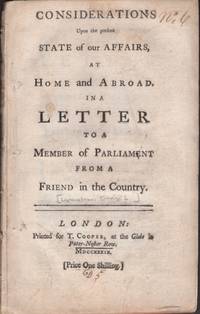
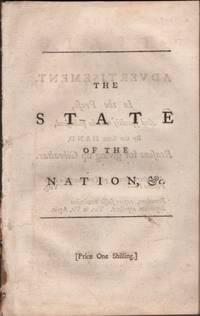
174832847London: Printed for M. Cooper 1748. Third Edition. Wraps. Good. Disbound wraps. 8" 5". Half title page 55 pages. Folding chart in back is the last content. No blank rear wrap. Half title page partially loose. Trimmed wraps. Contents cover much of England's War debt; America and West India trade treaty with Spain etc. <br /> <br /> Sabin 90620 First Second editions. Printed for M. Cooper unknown
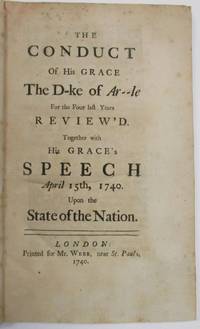
174038832London: Printed by Mr. Webb near St. Paul's 1740. 249-1633-34334-56 page 39 1 blank pp. Page 15 misnumbered '51' as issued. Bound in later dark plain wrappers. Very Good. <br /> <br /> ESTC records four variants all determined by the craziness of the pagination. In all printings the text is continuous. None of ESTC's records quite matches ours. The closest ESTC T222817 tracks ours up to the last printed page which ESTC notes as page '57' rather than our '39.'<br /> "Relates in part to Spanish interference with the American trade" Sabin and the Duke's apparent support of Spanish interests. The pamphlet describes Spanish incursions upon British interests in the New World and Spain's disruption of British vessels. England asserted "That the Subjects of the Crown of Great-Britain have an undoubted Right to navigate in the American Seas to and from any Part of His Majesty's Dominion; and for carrying on such Trade and Commerce as they are justly intitled to in America." <br /> Sabin 10227. Kress 4493. Printed by Mr. Webb, near St. Paul's unknown
1772EPL79Madrid: Por Joachin Ibarra 1772. Paperback. Near Fine. Single page 149-150. Spanish imprint which dealt with the Conspiracy of the Catiline 65-62 B.C. This particular page dealing with the War of Jugurtha. Printed in Italic type with printed notes in Roman. Wide and clean margins; a good solitary specimen of this important work in Latin literature. Size: 350 x 255mm. <br/><br/> Por Joachin Ibarra paperback
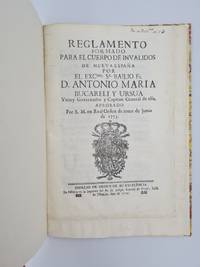
17742162<p><em><strong>Founding Royal ordinance for the Corps of Invalids of New Spain</strong></em></p><p>Antonio Maria Bucareli y Ursua 1717-1779 Viceroy of New Spain.</p><p><strong>Reglamento formado para el cuerpo de invalidos de Nueva España por el Excmo. Sr. Bailio Fr. D. Antonio Maria Bucareli y Ursua Virrey Governador y Capitan General de ella aprobado por S. M. en Real Orden de trece de Junio de 1773.</strong></p><p>Mexico City Joseph Antonio de Hogal 1774.</p><p>Folio. 2 19 1 blank pp. Collates: π A-D2 π.</p><p>With the woodcut Royal coat of arms on the title. Signature of Viceroy Bucareli in ink on the final page.</p><p>Modern stiff marbled paper covers leaves remargined in order to match the size of the volume. In linen made-to-measure case with title on front.</p><p>Very rare first and only edition of the founding document for the establishment of the Corps of Invalids in the Viceroyalty of New Spain. This Royal ordinance marks a crucial step in the military organisation of the Spanish Americas and greatly expanded the colonial military presence there.<br />The <em>Cuerpo de Invalidos</em> consisted of men not fit for field duty due to injury illness or advanced age. They were assigned to the defence and custody of the coasts and borders of the Viceroyalty of New Spain a massive area stretching from Panama to Alaska including California and Mexico. They also served as guardians of the most prolific national buildings. This military reform took place in the context of a major administrative restructuring of the Spanish Americas under King Carlos III known as the Bourbon Reforms. The Spanish Crown established a standing overseas military Including the <em>Cuerpo de Invalidos</em> with the aim of defending its colonial territories. Carlos III created the first Corps of Invalids in Spain in 1764 with the aim of providing a dignified old age to those disabled for active service. With the creation of this type of units the Crown benefited those people who were under its orders for years. Thus far from completely separating them from their functions and in addition to giving them monetary compensation they were kept working and being participants in the life of their community. They were not separated or discriminated against and they were considered capable and that they could continue to participate in society. Also having a Corps of Invalids in the colonies gave the oppressor a significantly larger presence on the streets because men who were not active soldiers were still able to wear a uniform.<br />The person to carry out the reforms and signee of the present document was Viceroy Antonio María de Bucareli y Ursúa marqués de Valleheroso y conde de Jerena who served from 1771 to 1779. The present ordinance provides the rules and regulations of the Corps in 37 points.</p><p><strong>Condition: </strong>inscription in ink in head margin of title-page. Minor repairs to leaf A2. Otherwise in very good condition.</p><p><strong>Reference: </strong>Beristáin Mexico no.516; Medina Mexico no. 8693; not in Palau; Sabin.</p> Joseph Antonio de Hogal
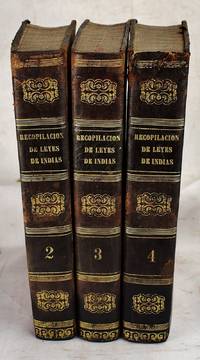
17561912260004En Madrid : Por Antonio Balbas 1756. 2nd. Hardcover. Very Good. Spanish Colonial Law 3 of 4 volumes. Includes vols. 2-4. Lacking volume 1. Bound in contemporary full Spanish calf. Gilt spines. Minor shelf wear to covers. Bindings sound. 3 298; 3 302; 2 364 leaves. Pages generally clean and unmarked. Text in double columns with printed marginalia. Spanish language. First published in 1681 De Leyes de Indias collected the laws of the Spanish American colonies including both Latin American and the Philippines. Each law indicates the year king and place of issue. An important reference for the origins and development of Latin American law. The laws recorded in this edition remained theoretically in force in Spanish America for over three centuries. Published in nine books this set includes the following: Third book. Of the Domain and Royal jurisdiction of the Indies.; Fourth Book. Of the Discoveries.; Fifth book. Of the Terms Division and Aggregation of Governments.; Sixth book. Of the Indians.; Seventh book. Of the Investigators and Commission judges.; Eighth book. Of the Accounts Accounting and their Ministers.; Ninth book. Of the Real Audiencia and House of Hiring that resides in Seville.; Indexes. <br> Refs: Palau 252516n; Medina BHA 3763; Sabin 68387. <br> This is an oversized or heavy book which requires additional postage for international delivery outside the US. En Madrid : Por Antonio Balbas hardcover
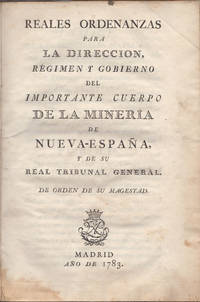
178344308Madrid: n.p. 1783. First edition. Full contemporary cat's paw vellum. Boards worn with some loss to the tail of the spine hinges split though firm dampstained along bottom edge some ink smudges especially to edges of frontispiece section titles in manuscript on each page otherwise contents quite sharp and overall about very good. 2 lvs xlvi 214 pp. Illus. with an engraving by Joaquin Fabregat of the Spanish arms and depicting mining implements. Folio. Signed in ink with Galvez' paraph under his printed name. First edition of this "rare and valuable compendium of the old mining laws and mineral customs printed only for the use of the parties concerned" Sabin and meant to govern the workings of silver mining in New Spain. Galvez was a special Minister of the Indies who was instructed to reform the mining laws of Mexico. In this work which could only be owned by Spanish-born miners he not only transcribed all the royal decrees concerning mining in New Spain but also provided information concerning mining operations training discovery of new mines and technology and governance. Signed in manuscript with his rubric attesting to the accuracy of the copy. Further editions were published in 1785/6 in Lima both folio and quarto and in Santiago in 1833. Sabin 56260. Palau 203088 & 251937. Medina BHA V: 5040. Maffei/Figueroa Bibl. Esp. Minerales. n.p. hardcover
1790403582Seville: Imprenta Mayor de la cuidad 1790. 4to 302 x 211 mm. 4pp. Unbound folded sheets. Tears to folds. Red cloth slipcase. FIRST EDITION OF THE SEVILLE PRINTING OF THE 1790 ROYAL ACT PROHIBITING THE RUNNING OF THE BULLS: “. considering the bad consequences that it have and will always come from the overindulgence by the King’s people when the bulls run … through the streets day and night; and with the receipt of the news by our King of the recent misfortunes from some of these amusements … desiring to cut these pernicious deaths wounds and other excesses … we instruct our Council to take the appropriate measures to contain such damage…â€<br /> <br /> The printed provision concludes with a note from Martin Perez referencing the original document located in the Senior Notary office and accompanied by a signature presumably of Perez. Only one copy of this notice has appeared at auction in at least the last fifty years according to the available databases and Worldcat/OCLC list only two copies. Imprenta Mayor de la cuidad unknown
177110215Zaragoza: Imprenta Real 1771. Vellum Binding. Very Good binding. Folio. 7 1 blank pp. In later cloth boards backed in vellum and with vellum corners; title in manuscript on the spine. Binder's stamp: "Brugalla 1949" on the verso of the front free endpaper. Early manuscript note and number at the top of the title page; minor spotting but generally quite clean. A very nice copy. <br /> <br /> Royal decree original promulgated in Madrid 10 September 1771 permitting free entry into Spain of foreign grains including wheat and maize. A woodcut of the royal arms on the title. Palau 239456ii. Imprenta Real unknown
17781501<p>Title and two leaves nicely bound in half vellum by Brugalla. Royal decree by Charles III King of Spain enabling the ports of Puerto de los Alfaques de Tortosa and Almeria for free commerce.; Quarto 30 x 21 cm; All shipments through USPS insured Priority Mail.</p> Imprenta de Pedro Marin hardcover
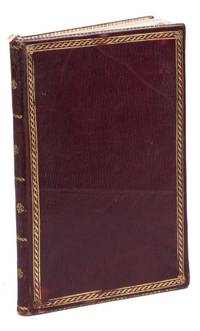
179218141Madrid 1792. 8vo. printed by the widow of Joaquín Ibarra Contemporary straight-grain red morocco gold-tooled spine gold-tooled ornamental border on the boards gilt edges. With a wood-engraved royal coat-of-arms on the title-page. 2 50 pp. Extremely rare first and only early edition of a decree of 15 January 1792 by King Charles IV of Spain. It establishes a college in Granada for educating American and Philippine youth of noble birth. The decree specifies a broad curriculum of political military ecclesiastical and legal subjects with the intent to educate the students for royal service. Besides these theoretical topics the students would also learn equitation horsemanship dancing fencing and other arts appropriate to their social status. The decree also describes admissions procedures guidelines for the curriculum and administration qualifications for the staff and rules of conduct extensively and precisely. Students for example are not allowed to use slaves or personal servants and twenty scholarship students are to be exempted from all fees one or two each from specified provinces in the Americas and the Philippines while other students have to pay fees on a sliding scale. The decree gives a glimpse of the regimen and habits but also the education in a royal school for noble young boys. A facsimile was published in 1968.In very good condition.l Palau 250290; WorldCat 1 copy; not in JCB; Sabin. hardcover
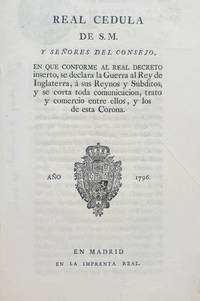
17962759En Madrid: : En la Imprenta Real 1796. First edition. Disbound from a larger volume. With the official stamp: "Carolus IV. D.G. Hispaniarum Rex. Para despachos de oficio quatro mrs. Sello quarto Año de mil setecientos noventa y seis" on p. 3 and 10. The first and last leaves partly inner pages loose. Few underlines in pencil here and there. Otherwise in fine condition. First edition. Disbound from a larger volume. 10 2 blank p. First edition of Carlos IV's declaration of war on England.<br /> The Spanish declaration of war on England the beginning of the Anglo-Spanish War of 1796-1808. In the royal decree Charles IV accuses England of violating the Nootka Convention of 1794 and of threatening to invade Spain's American possessions. : En la Imprenta Real unknown
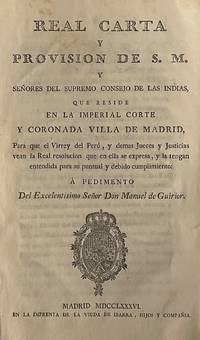
17862566Madrid: En la Imprenta de la Viuda de Ibarra Hijos y Compañia 1786. First edition. In later marbled paper. Binding damaged at tail of spine. Lower outer corner bumped. A dark stain to the lower outer corner of the first five quires. Otherwise clean. Overall in fine condition. First edition. In later marbled paper. 2 138 p. Scarce document related to the estate of Manuel de Guirior former Viceroy of Peru.<br /> <p><br /> José Antonio de Areche –1788 as the appointed visitador or royal inspector arrived in Peru in 1777. The difference between him and the Viceroy Manuel de Guirior 1708–1788 arose immediately concerning the extent of authorities. Their conflict culminated with the dismissal of Viceroy Guirior upon the charges brought by Areche. The quarrel went on after Guirior went back to Spain and eventually he was acquitted of the charges but only after his death. <p><br /> The present document Dated in San Ildefonso October 6 1785 is a summary of the case and it relates to Viceroy Guirior’s “residencia†taken by the Spanish colonial functionary Fernando Márquez de la Plata.<br /> <p><br /> Extremely scarce we could trace only 2 copies in institutional holding both in the Biblioteca Nacional de España. En la Imprenta de la Viuda de Ibarra, Hijos y Compañia unknown
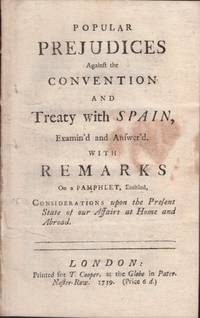
173932846London: Printed for T. Cooper 1739. Wraps. Good. Disbound stitched trimmed wraps. Approx. 7.5" x 4.75". 30 pages. Author not listed. Light toning to the front cover. <br /> <br /> The writer defends England's treaty with Spain. He replies to George Lyttleton who opposed the treaty due to Spain's capture of British ships in America. The writer states "There are many instances of robbery and barbarity on both sides.but none of these instances can justify a National War Printed for T. Cooper unknown
171150903Alagon Zaragoza Spain 1711. Hardcover. Folio. 12x9". 8 leaves the final leaf backed in paper. Manuscript bound in limp vellum. Protected with 2 paper leaves and 2 maroon silk sheets bound and encased within plain contemporary paper-backed vellum covers with cloth string ties. Contains 2 leaves with gorgeous full-page illustrations elaborately hand-colored in ink and gilt the first depicting the family arms of García the second with the royal arms of Don Felipe within decorative borders. Fine clear cursive hand in black ink within two sets of double-ruled borders 25 lines per page; 7 gold capitals superimposed on a landscape within square black borders mark the sub-sections of the text followed by initial lines in gilt letters. Text and illuminations fine and clean; vellum covers lightly soiled. Text block now loose within covers.<br /> <br /> Early eighteenth-century illuminated "carta de hidalguia" manuscript a patent of nobility for one Alonso García an inhabitant of Montejo de la Vega de la Serrezuela in the Spanish province of Segovia Castilla and León. The motto appearing on his arms reads: García De Arriba Nadie Diga May No One Speak from Above. The royal decree of King Felipe V is dated 5 May 1711; the document was notarized on 12 June 1711 in Alagón a municipality located in the Spanish province of Zaragoza. In addition to the notarial stamp of the king Yo el Rey at least four witnesses have signed the manuscript on the final page. The document concludes with the formula: "El Mgd. Majestad hace merced à Alonso García vecino y natural del lugar de Montejo de la Vega de que por los días de su Vida pueda gozar; y ser reputado en la dicha Villa y demas partes que residiere por hijodaldgo y obtener las preheminencias que por ello le tocaren." The Majesty grants Alonso García a resident and native of Montejo de la Vega that he may enjoy for the days of his life and be well-regarded as a noble in that town and other places in which he may reside and obtain the privileges to which he is entitled. References: Revista de historia y de genealogía española 1912-1931 p.102: Alonzo García is noted in a list of those ennobled in the State of Castilla Castile since the year 1710. hardcover
1762D172London: Printed for W. Nicoll 1762. Hardcover. Near Fine. Quarter calf and marbled paper gilt-stamped lettering in red leather spine label; pp. 52. A little light scuffing at spine tips previous owner's tasteful bookplate on front paste-down. <br/><br/> Printed for W. Nicoll hardcover
178442977Madrid: En la Imprenta Real 1784. First edition. Modern cloth with gilt titles. Lacking last paragraph and index provided in facsimile closely trimmed but quite clean. 122 of 125 pp. 24mo. The first volume of what would eventually become 53 volumes. En la Imprenta Real hardcover
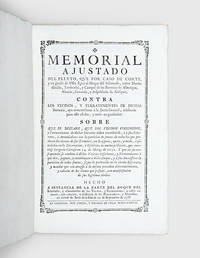
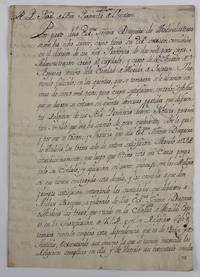
1778185836Valencia: Joseph and Thomas de Orga 1778. First edition of this memorial of a lawsuit concerning the collection of land taxes in Spain in a remarkable wrapper of six-colour block print paper. Folio 295 x 198 mm ff. 1 119. Title printed within decorative border woodcut initial to page 1. Contemporary six colour floral printed wrappers sprinkled edges. Wrappers with one or two very minor tears contents crisp and clean: a very good copy. unknown
171812727Madrid 1718. 3pp. on a folded folio sheet. Minor toning and creasing. Very good. An interesting pair of communications from Spain to colonial Mexico involving debts owed by local religious orders in the Yucatan and how to enforce collection of said debts. The transcripts of these letters were sent to the Spanish administrator at Yucatan by Father Joseph Sanz the Commissary General for New Spain. Here Sanz instructs the Provincial to identify which orders within the Yucatan owe money payable to the estate of the "Duquesa de Medina las torres" a title within Spanish peerage since 1625. In the second letter which begins on page two Father Sanz orders the local Commissary General to make sure that his orders to the Provincial are duly carried out. An instructive instance documenting the regular practice by Spanish authorities in extracting wealth from local Mexican subjects to send back to the gentry in Spain. unknown
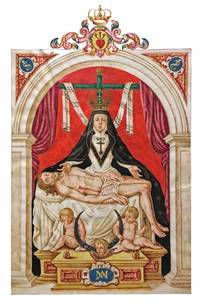
1726LL 878<p><em>"Ejecutoria de Hidalguía ganada por los Caballeros hijosdalgo de los Señores Don Nicolás Antonio de Arjona y Don Zoilo Alfonso de Arjona".</em></p><p>4to. 33 x 23 cm. Contemporary silk binding. Three manuscript pages vellum folio containing a beautifully rendered depiction of the spiritual state of Solitude with a figure of a recumbent Christ with two cherubim at his feet and angels with a Virgin Mary illuminated vellum folio with coat of arms of nobility of the Arjona Family with colored helmet two vellum pages with a genealogical tree cover five blank folios 211 folios.</p><p><strong>RICHLY ILLUMINATED SPANISH "CARTA DE HIDALGUIA</strong>. According to seventeenth century writer Bernabé Moreno de Vargas a patent of nobility hidalguía consists of a transcription of a favorable outcome of a lawsuit filed before the Chancellories of Ciudad Real Granada and Valladolid. on behalf of individuals families and often of entire lineages recognizing the plaintiff's or plaintiffs' noble status.</p><p>After January 20 1703 the competencies for determining noble status would fall exclusively on the Chancellories of Valladolid and Granada in order to protect the impoverished Royal treasury from tax evasion. </p><p>This patent of nobility or hidalguía concerns the families of Don Nicolás Antonio de Arjona and Don Zoilo Alfonso de Arjona in 1726.</p><p><em>Artfully decorated the depiction of the family's noble coat of arms is especially worthy of mention. The document examines the two genealogical trees and stands as a good example of the heraldic literature of the time</em></p>
17395533London: Robert Amey A Dodd 1739. No Binding. Good. 4 pp53 3 with the final blank present. Stab sewn in good condition with frayed edges outer leaves darkened. A parallel translation in English and French. King Philip V of Spain disputes his obligations under the Convention of Pardo. Good 1739 Robert Amey, A Dodd unknown
177133007-592Madrid September 12 1771. With 2 full-page coat of arms painted in beautiful colors and heightened in gold 2nd with Royal stamp below crown in upper part 4 calligraphic headers in red familiy names Gutierrez Huerta and Arze colored and partly placed above 4 smaller coat of arms in colors 8 large historical initials painted in colors and gold. 17-18 lines double ruled in red. Interleaved to protect the watercolors with 6 red silk guards. 36 pp. containing mostly signature on the pages. Folio 320 x 215 mm. Original morocco with gold decoration marbled endpapers. Written in a calligraphical hand in ink on vellum. Madrid September 12 1771. A fine example of a calligraphic manuscript of this Royal confirmation of arms and noblility of the noble lineage of the two noble families Gutierrez de Arze and Gutierrez de la Huerta and their descendants. The grant is based upon loyal services given by the ancestors of the Gutierrez to the Royal French king around 882 and up to King Charles III of Spain. In 1771 it became desirable to write down the purity of the houses after Don Juan Gutierrez married Dona Angela Huarte. The document has two paper seals and is signed at the end by collaborators of the King and counter-signed by Don Ramon Zazo y Ortega the official herald and genealogist for the Spanish crown. GRAPHIC ARTS:CALLIGRAPHY ; SPAIN ; GENEALOGY ; Madrid, hardcover
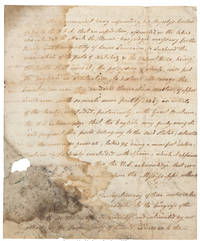
1797List2522New Orleans 1797. Three pages of a bifolium 8 x 9 ½ inches New Orleans; May 31 1797. Fair only with moisture damage and some text illegible. Fair. An interesting document from the period following the Treaty of San Lorenzo and before the eventual surrender of Natchez to the Americans in 1798 in which the governor of Louisiana and West Florida Francisco Luis Hector de Carondelet issues a statement regarding the delayed withdrawal of Spanish troops from the region. Carondelet is concerned with the British presence in the area and notes that it is a violation of “the treaty concluded with Spain†- or Pinckney’s Treaty which opened up navigation rights of the Mississippi to the United States. The letter describes the possibility of escalating hostilities between the United States Great Britain and Spain as a result of an impending American mission against the Illinois the motives of which Carondelet questions as he notes that “These hostile dispositions can naturally only concern these provinces because the U.S. are in peace with all the savages…†He raises the possibility of British invasion of Louisiana and potential danger to the city of New Orleans and states that the Spanish will maintain their presence at Natchez and Walnut Hills unless the American soldiers withdraw. This is a copy of Carondelet’s speech in the hand of Lieutenant Piercy Smith Pope and we find no other record of it. A full transcription follows:<br /> <br /> “The Government being informed by his Majesty’s Ambassador to the U.S. that an expedition assembled on the lakes was intended to attack the Illinois has judged necessary for the surety and tranquility of Lower Louisiana to suspend the evacuation of the posts of Natchez & the Walnut Hills being the posts that cover it; the possession of which will put the English in a situation to disturb and ravage the country in case they rendered themselves masters of upper Louisiana with so much more facility as by an article of the treaty concluded posteriously with Great Britain the U.S. acknowledge that the English may freely navigate and frequent the posts belonging to the said States; situated on the river in general lakes &c being a manifest contradiction to the treaty concluded with Spain which it appears. because by this the U.S. acknowledge that no other nation can navigate upon the Mississippi without the consent of Spain.<br /> <br /> . the legitimacy of these motives the .presented to the Congress of the U.S. with all the necessary veracity and intimated by our orders in the Commissary of Limits as well as to the Commandant of the Detachment of American troops now at Natchez. We are now informed that a detachment of the army of the U.S. cantoned on the Ohio are on their way by Holstein towards Natchez while the Militia of Cumberland are intimated to hold themselves ready to march at the first notice.<br /> <br /> These hostile dispositions can naturally only concern these provinces because the U.S. are in peace with all the savages the anterior menaces of the Commissary of Limits & the Commandant of the detachment of Americans now at Natchez; the immediate rupture & if the American Gazettes are to be believed already effected between France our intimate ally and the U.S. engage us to be on our guard to defend our property with that valor & energy which the inhabitants of these Provinces have manifested on all occasions with the advantage and superiority which a knowledge of our local situation will procure and that confidence which right and justice inspires. If the Congress of the U.S. had no hostile intention against these provinces they will either leave the post of Natchez or Walnut Hills the only bulwarks of Lower Louisiana that can stop the courses of the English or that they give us security against the article of the Treaty with Great Britain which exposes lower Louisiana to be pillaged and destroyed down to the Capitol. We will then deliver up the said posts and lay down our arms which they have forced us to take up by arming their Militia in time of peace and sending a considerable body of troops by round about ways to surprise us.<br /> <br /> New Orleans 31st May 1797 <br /> <br /> A copy of the Baron de Carondelet’s Proclamation. <br /> P. Popeâ€<br /> <br /> Overall a document of significance in United States / Spanish relations in the period following Pinckney’s Treaty worthy of further study for scholars of the diplomatic history of the period. unknown
1794000035bNew Spain Mexico. Fine with no dust jacket. 1794. Full-Leather. Handsome Folio Manuscript in early calf with gilt written by the Attorney of the Real Audiencia see Bibliografia Mexicana 220 and prepared for the Viceroy. Lengthy stipulations of taxes for the freed mestizos mulattoes and negroes as well as exemptions for Indians of the repartimientos even when married to Spanish women. These taxes were the root of the perceived injustice that explains why freed men formed the core of the Revolution when it came. EXTREMELY RARE AND IMPORTANT FIRST HAND TEXT OF MEXICAN HISTORY. see Archivo General de la Nation "Los Precursores Ideologicos della Guerra de Independencia 1929 pgs 137.139." LAID IN NOTE: Arce Y Echeagary J. Yinstruction para que los Administradores de Aduanas del Reyno de Nueva Espana hagan la legitima exaccion de los dros. de Alcabalas y Pulques en los casos que por lo regular se ofrecen en las propias Aduanas. Mexico 1794. ADDITIONAL BACKGROUND: In 1519 the Spaniards conquered Mexico. This led to the formation of a new state called New Spain and later into a new hybrid culture. Several military expeditions were led to extend 'New Spain'. The whole of Central America West Indies Philippines and parts of the current Texas and California were later conquered to become part of New Spain. The Spanish political control over Mexico lasted for three centuries. The entire region was formed into a viceroyalty in 1535. The colony was divided into provinces ruled by governors. These provinces were divided into departments and subdivided into districts. Magistrates controlled the districts and mayors led smaller villages. The parliament court handled all political matters and the Council of Indies controlled the other administrative matters. Off course the supreme authority over the Spanish empire belonged to the king. This system was pretty inefficient as it took several years for directives from the king to be implemented at the lower levels. During the initial administration grants called Encomiendas were given to colonists which controlled Indian labor and produce. This led to the misuse of power and atrocities against the Indians increased. The Indians revolted against the Spaniards in 1541 but were easily subdued. The Spanish emperor Charles V initiated the decline of the Encomienda system in 1542. This decline saw the emmergence of the Roman Catholic Church. The church was successful in carrying out mass conversions. The Spaniards protected the Indians that converted. Missions and monasteries dominated much of the land. The Spaniards thrived by the new found wealth in the colonies. They amassed huge wealth by controlling silver mining large ranches and estates that grew wheat sugarcane and indigo for export. Spanish merchants exported such goods as cotton silk and dye that were produced by the Indians. The prosperity of New Spain began to decline in the 17th century. Disease and natural disasters destroyed most of the Indian population. Most others migrated slowly to remote parts. Mines were abandoned and large areas of farmland were destroyed. The economy of New Spain collapsed. In 1810 a catholic priest named Miguel Hidalgo called upon Mexicans to rise up and fight the Spanish. Although father Hidalgo was killed another priest Jose Morelos continued to lead the fighting. New Spain finally won its independence from Spain in 1810 and came to be called Mexico. ; Spanish Language; 4to - over 9¾" - 12" tall; MEXICO MEXICAN TAXES NEW SPAIN MEXICAN REVOLUTION NAPOLEON BONAPARTE CHARLES V HIDALGO MORELOS HANDWRITTEN HISTORICAL HISTORY HAND WRITTEN HOLOGRAPH MANUSCRIPT MANUSCRIPTOS SPANISH ESPANOL VICEROY mestizos repartimientos antiquité contrat vélin document manuscrit papier Antike Brief Pergament Dokument Manuskript Papier oggetto d'antiquariato atto velina documento manoscritto carta antigüedad hecho vitela documento manuscrito papel. . hardcover
173936319London: Printed for T. Cooper. 1739. 63 1 blank pp. Bound in modern vellum. Early leaves dusted minor scattered foxing. Else Very Good. <br /> <br /> "In Spanish and English and relates principally to affairs in America" Sabin with particular emphasis on Florida. The book charges that the King of England authorized Captains of the ships 'Pompey Galley' and 'Fortune' to cruise the Florida coast and collect loot from ship-wrecks. With a force of 600 men the English overpowered Spaniards who were guarding their own collection of salvaged loot and "did rob about 400000 pesoes without any other pretense but that of their greediness." <br /> The Madrid printing in Spanish issued earlier in 1739.The document sets forth Spanish grievances dating from the early 1700s relating to conflicts in the New World-- from Newfoundland to Florida and the West Indies. The conflicts came to a head in the War of Jenkins' Ear commenced in October 1739. <br /> Sabin 17026. Servies 334. Bartlett John Carter Brown Library 618. ESTC N27944. Printed for T. Cooper... unknown
173932844London: Printed for T. Cooper 1739. Wraps. Very good. Disbound stitched trimmed wraps. 65 pages 2 ages 1 page blank. Light toning. Contents in good condition.<br /> <br /> The author discusses the friction between Spain and Britain due to the seizure of British ships near Spanish Coasts in America calling Spanish trials a "Mockery of Justice". The freedom of Navigation was guaranteed with the treaty of Spain and "is of absolute Necessity in the Course of our Voyage to and from our Plantations in America." The last two pages titled "Postscript" provides the latest Spanish violations "since I wrote my letter."<br /> <br /> Sabin 42889 "Denies the right of Spain to search American ships. Printed for T. Cooper unknown