125 résultats
19642080302106804243New Japan Publishing Company 1964. Soft Cover. Fine. Size: B6 Number of copies: 4 New Japan Publishing Company paperback
1966OS7119Enfield England: Computer Consultants Limited 1966 . Only edition. Limited. Very Good. Bound in faux leather scientific notebook. Gilt spine and boards. Very early if not the first study of the first Russian computers -- with specs. Numbered copy 1335. Due to size or weight this item may require additional postage for international or priority shipping. Computer Consultants Limited hardcover
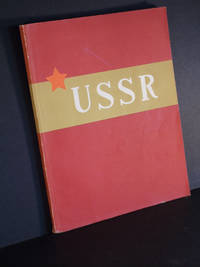
19584134n.l. Brussels: USSR Section Brussels Universal and International Exhibition 1958. Soft cover. Near Fine. 4to - over 9¾ - 12" tall. Near Fine. 10.5" tall by 8" wide. Glue-binding with blank spine. Extensive collection of B&W color photos and a few charts celebrating all aspects of the Soviet Union. Unpaginated about 120 pages. <br/> <br/> USSR Section, Brussels Universal and International Exhibition paperback
1939HALL509825Paperback. 1939. 1. BACH A. Planning Science. 2. BORIN K. Socialist farming. 3. GOLENKINA Vera. The Soviet Press. 4. GOLOSSOV I. Soviet Cities New and Renewed. 5. ILIN M. The Little Citizen of a Big Country. 6. KHAZAN D. Light Industries of the U.S.S.R. 7.KOROBOV I. How Soviet Workers Spend their Leisure. 8. KOVARDAK P. New People of the Soviet Countryside. 9. KRENKEL Camping at the Pole. 10. LOBANOV P. The State Farms of the U.S.S.R. 11. MOLYAKOV V. The Countryside Past and Present. 12. OBRAZTSOV V. The Railroads of the U.S.S.R. 13. PAPANIN I. The Soviet Wintering Station on the Drifting Ice. 14. PAPYAN M. Industrial Progress in the Soviet Republics of the Non-Russian Nationalilties. 15. PROPPER-GRASHCHENKOV N. Public Health Protection in the U.S.S.R. 16. SHABUROVA M. How Old Age is Provided For in the U.S.S.R. 17. STAROSTIN A. Sport in the U.S.S.R. 18. VYSHINSKY A. Crime Recedes in the U.S.S.R. 19. ZHEMCHUZHINA P.S. The Food Industry of the U.S.S.R. 28 to 44pp each 11cm x 14cm card covers. All published by Foreign Languages Publishing House Moscow 1939. With the exception of nos. 1 15 & 18 all have pictorial front covers. All contain black & white photograph illustrations except no 18. Nos. 4 12 & 14 have an 8-page English-Russian vocabulary loosely inserted. All very copies . paperback
1938HALL094931Hardback. 1938. Verbatim Report. 685pp Moscow 1938. VG . hardcover
1955234761955. Bratskgesstroy photo album depicting construction of the Bratsk Hydroelectric Power Plant on the Angara River between 1955 and 1964 documenting one of the Soviet Union's largest postwar industrial projects during Nikita Khrushchev's campaign to industrialize Siberia. Construction began in 1955 at the Padun narrows north of Irkutsk where the Angara's rapids and elevation drop made the river suitable for massive hydroelectric generation. The first turbine entered service in November 1961 as the Bratsk reservoir began flooding thousands of square kilometers of forest and river settlements to create what Soviet publications called the "Bratsk Sea." By the mid-1960s the station had become the largest hydroelectric plant in the world supplying electricity to aluminum smelters timber combines rail electrification and new industrial cities across eastern Siberia.<br /> <br /> Photo album of approximately 17 large format professional silver gelatin photographs Bratsk and the Angara River region 1955-1964. large format photographs with Russian printed captions identify stages of construction including "Padun narrows" "Blocking the right bank of the Angara March 1957" "Installation of wires on the Irkutsk-Bratsk 220 kV transmission line" "Completion of the main concrete trestle" "Winter 1960-61" and "June 1963." Winter construction scenes show cranes rising above frozen riverbanks trucks dumping fill into rushing water during diversion work and workers fastening electrical insulators high above snow-covered terrain. Later images depict the completed spillway releasing torrents of water beneath rows of gantry cranes along with an interior control room lined with gauges switches meters and telephone communications equipment. Several leaves contain handwritten French tourism slips describing the visitor's experience moving through the region and observing ice electrical infrastructure and the completed dam landscape.<br /> <br /> The Bratsk project formed part of the Soviet Union's postwar eastward industrial expansion which sought to shift energy production and heavy industry deep into Siberia during the Cold War. The first turbine entered service in November 1961 as the Bratsk reservoir began flooding thousands of square kilometers of forest and river settlements to create what Soviet publications called the "Bratsk Sea." By the mid-1960s the station had become the largest hydroelectric plant in the world supplying electricity to aluminum smelters timber combines rail electrification and new industrial cities across eastern Siberia. Soviet newsreels propaganda posters and foreign delegations treated Bratsk as proof that the USSR could transform remote Siberian territory into a modern industrial frontier through centralized planning hydroelectric engineering and mass labor mobilization. Light wear occasional silvering and minor surface abrasions to several photographs; album binding intact. Overall in very good condition. unknown
195742989Moscow: U. S. S. R. Foreign Ministry 1957. 1st edition. Very Good. octavo. orig. cloth 401 302pp. Volume I : Correspondence with Churchill & Atlee. Volume 2 : Correspondence with Franklin D. Roosevelt and Harry S. Truman U. S. S. R. Foreign Ministry hardcover
1973C1624<p>Oblong photograph 6 3/4" x 11 1/4" Signed by 14 of the 18 contestants Boris Spassky Michal Tal Anatoly Karpov Alexander Beliavsky Efim Geller Paul Keres Victor Korchnoi Nukhim N Rashkovsky Gennadi Kuzmin Vladimir Savon Evgeni Ellinovich Sveshnikov Mark Taimanov Vladimir Borisovich Tukmakov Orest Averkin and one non contestant Viktor Davidovich Kupreichik on the verso. The photograph shows the stage were the contest took place with lined up game tables and the participants during the competition. In the foreground a part of the auditorium with seated spectators.<br /><br />In the aftermath of Robert James Fischer's victory over Boris Spassky in the 1972 World Championship the Soviet Union had been humiliated and humbled by an American and the 35 year rule of the Soviet chess machine over the international chess world had finally been put to an end. The consequences of this result were felt in Soviet chess for months after. Mark Taimanov Tigran Petrosian and Spassky were all reprimanded for their failure to stop Fischer. Consequences continued into the 41st USSR Championship held in the Soviet capital of Moscow from October 2-26 1973. The tournament was organized to be the strongest in a decade. In addition to the four qualifying players who had each won a semi-final Orest Averkin Karen Grigorian Nukhim Rashkovsky and Evgeni Sveshnikov the very strongest grandmasters of the Soviet Union received forced invitations to participate. The list was a collection of former world champions multiple Soviet title winners and the very strongest of the Soviet school including: Spassky Petrosian Mikhail Tal Vasily Smyslov Anatoli Karpov Viktor Korchnoi Efim Geller Paul Keres Lev Polugaevsky Taimanov Leonid Stein Vladimir Tukmakov Vladimir Savon and Gennadi Kuzmin. Victor Davidovich Baturinsky the vice-president of the USSR chess federation and a Colonel of Justice explained clearly to all the participants that their attendance was not only obligatory but their very future as Soviet chess players and the favors imparted therein depended on their performance in the championship. Stein died before the championship took place and he was replaced by junior world champion Alexander Beliavsky. In addition to the composed line up it was made known that draws of thirty moves or less were 'discouraged' by the organizers. Although short draws did occur the schedule of play and the intense combat among the contestants was arduous. It was Spassky after failing in Reykjavik who emerged victorious by a full point. This edition did have the desired effect of revealing future world title candidates as Karpov and Korchnoi tied for second along with two other contestants and would face each other the following year for what ultimately was the de facto world championship.<br /><br /><strong>Condition:</strong><br /><br />Slightly tinted trimmed at the bottom irregularly else a very good copy of an interesting chess historical document.</p> USSR Chess Federation
1997250104039Paladin Pr 1997-01-01. paperback. Good. 8x0x11. Clean text. Shelving code LSA HF Paladin Pr paperback
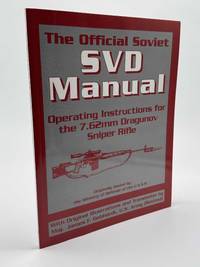
1999101705Paladin Press 1999. First Edition. Softcover. Collectable - Good Condition. VG- 1st ed 1999 Paladin Press paperback illustrated with many photos. Some spotting/flecking affecting rear cover as shown due to laminate breakdown. The SVD Dragunov is one of the most famous sniper rifles in history. Genuine technical operational manuals for it are scarce. James Gebhardt's English translations of official Soviet manuals are prized by military historians surplus firearm collectors and enthusiasts for their accurate terminology and high-quality breakdown diagrams. Quantity Available: 1. Shipped Weight: Under 2kg. Category: Military & Warfare; ISBN: 1581600321. ISBN/EAN: 9781581600322. 84cxrarebooks is the trading name of Cambridge-based bookseller Marino Guida with 25 years experience in the trade. We guarantee the condition of all our books. Further images or a short video presentation of any book can be arranged on request. We send tax-free and tariff-free to EU US/Canada and Australia/NZ with insurance included for peace of mind. Inventory No: 101705. 9781581600322 Paladin Press paperback
19702090202123004169Keiryukaku 1970. Soft Cover. Fine. The book is in fine condition. Keiryukaku paperback
1972G39302Leningrad: Nauka. Very Good/No Dust Jacket. 1972. First Edition. Hard Cover. 4to - over 9¾" - 12" tall Used In blue cloth with gilt titling 4to 231pp. Copy of program to the symposium laid in. light browning to pages from age. . Nauka hardcover
1974H5745Progress Publishers. Very Good in Good dust jacket. 1974. First Edition Thus; First Printing. Hardcover. Book has light toning to pages and covers corners lightly bumped tiny crease to a few top page corners; DJ has shelfwear mild toning some creasing couple moisture spots 2-1/2" tear and small tears couple small chips top edges starting to separate in couple places; DJ in protective Brodart cover; 662 pages . Progress Publishers hardcover
1978042357Moscow: USSR Academy of Science N. N. Mikloucho-Maclay Institute of Ethnography 1978. Soft cover. Very Good. 8vo - over 7¾ - 9¾" tall. Paperback. Pbo. Demy 8vo. 22 x 14 cm. All papers in English. 238 1 p. General problems of anthropology and ethnography of the South Asia. X International Congress of Anthropological and Ethnographical Sciences. Papers by Soviet researchers. Delhi-India December 10-21 1978. <br/> <br/> USSR Academy of Science N. N. Mikloucho-Maclay Institute of Ethnography paperback
1978042358Moscow: USSR Academy of Science N. N. Mikloucho-Maclay Institute of Ethnography 1978. Soft cover. Very Good. 8vo - over 7¾ - 9¾" tall. Paperback. Pbo. Demy 8vo. 22 x 14 cm. All papers in English. 2 volumes set: 162 2 p.; 111 1 p. General problems of ethnology. X International Congress of Anthropological and Ethnographical Sciences. Papers by Soviet researchers. Delhi-India December 10-21 1978. <br/> <br/> USSR Academy of Science N. N. Mikloucho-Maclay Institute of Ethnography paperback
1945215880Moskva: Izdatel'stvo akademii 1945. First Edition. Hardback. Very good copy in the original title-blocked cloth backed-boards. Spine bands and panel edges slightly dulled and dust-toned as with age with tanning to margins. Remains particularly well-preserved overall; tight bright clean and strong.; 8vo 8"" - 9"" tall; 250 pages; Physical desc.: 250 p. 27 cm. Subject: Istoricheskiye zapiski. Historical notes Language: Russian Moskva: Izdatel'stvo akademii hardcover
1968215864Leningrad: Izdatel'stovo Nauka Leningradskoye Otdeleniye Leningrad 1968. First Edition. Hardback. Very good copy in the original gilt-blocked cloth. Spine bands and panel edges slightly dulled and dust-toned as with age. Remains particularly well-preserved overall; tight bright clean and strong.; 8vo 8"" - 9"" tall; 498 pages; Physical desc.: 498 p. 23 cm. Subject: Russian Literatrue -- Index -- Authors. Notes: Istoriya Russkoy Literatury Veka Bibliograficheskiy Ukazatel. History of the century: Russian Literature. Bibliographic Index. Language: Russian Leningrad: Izdatel'stovo Nauka Leningradskoye Otdeleniye Leningrad hardcover
197414647Kazakhstan: No Publisher Given. Very Good in Good dust jacket. 1974. Hardcover. Hardcover with dustjacket. Book is in VG condition; there is light wear to boards and a previous owner's signature and phone number is penned to front endpaper. Jacket is in Good condition with several tears along edges the longest of which is 1 1/2". Text is in Russian Kazakh and English; includes sections on ancient art folk arts and handicrafts painting graphic art sculpture and monumental decorative art. With color plates throughout; a fascinating collection. Introduction by T. B. Telzhanov 'People's Artist of Kazakh SSR' and corresponding member of the USSR Academy of Art. Not price-clipped. In protective mylar. 4to. 180 pp. Plus index. Heavy--will require additional postage if shipped outside the U. S. . No Publisher Given hardcover
19722082402113503037Institute of International Relations 1972. Soft Cover. Fine. Volume: 1 Institute of International Relations paperback
1964891Z49Novosibirsk : Siberian Branch of the USSR Academy of Sciences 1964. Cloth. Very Good Indeed. 10.5" by 6.5". None . A very scarce work on the October Revolution written in Cyrillic. In the publisher's original cloth. Written in Russian Cyrillic. This work provides a historical account of the October Revolution discussing the causes. The October Revolution was a revolution in Russia led by Vladimir Lenin and his 'Bolshevik Party' and eventually led to the Russian Civil War. This work is part of series that aimed to study Siberia during the period of capitalism. Library copy with stamps. In the publisher's original cloth. Externally very smart with slight bumping and rubbing to the extremities a small closed tear to the cloth to the head of the front joint library annotations to the head and tail of the spine and the odd minor mark. Library stamp to the front pastedown with age toning to the endpapers. Internally generally firmly bound with evidence of strain to the front and rear. Pages generally bright and clean with a tidemark to pp. 193 and 177. Library stamp to the title page and verso. Very Good Indeed Siberian Branch of the USSR Academy of Sciences hardcover
1983042356Moscow: USSR Academy of Science N. N. Mikhulko-Maklay Institute of Ethnography 1983. Soft cover. Very Good. 8vo - over 7¾ - 9¾" tall. Paperback. Demy 8vo. 22 x 14 cm. All papers in English. 2 volumes set: 159 1 p.; 124 1 p. Studies in ethnography and anthropology. XI International Congress of Anthropological and Ethnographical Sciences. Papers presented by Soviet participants. Vancouver-Quebec August 1983. 2 volumes set. <br/> <br/> USSR Academy of Science N. N. Mikhulko-Maklay Institute of Ethnography paperback
19412110502150907650Keio shobo 1941. Soft Cover. Fine. Volume: 1 Keio shobo paperback
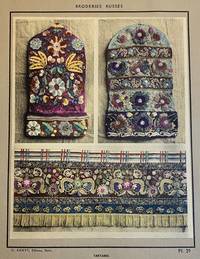
19254322Paris: Henri Ernst 1925. First Edition. An attractive portfolio of 40 loose plates displaying the items exhibited at the U.S.S.R. pavilion at the International Exhibition of Decorative Arts L'Exposition Internationale des Arts Décoratifs at Paris in 1925. Red cloth spine with black hard boards and red label and ties. The spine is somewhat bruised and cracked but still holding well. The boards are a little nicked to the edges but sound. Inside is the title leaf and a second sheet of two leaves with introductory text In French and a table des planches. This outlines where each item comes from and is repeated on each plate. These are in good but slightly darkened condition. The forty plates complete are attractive colour lithographically reproduced images laid onto stiff grey card stock. Titles etc. are printed onto the card. The images are in excellent condition. The card is a little darkened to the edges and a few have some small edgewear nicks and creases. Overall though in Very Good condition. A nice copy of an uncommon item. 390 by 300mm 15¼ by 11¾ inches . Première édition. Un portfolio attrayant de 40 planches détachées montrant les objets exposés au pavillon de l'URSS à l'Exposition Internationale des Arts Décoratifs à Paris en 1925. Dos en toile rouge cartons noirs étiquette et attaches rouges. Le dos est quelque peu meurtri et fissuré mais il tient encore bien. Les planches sont un peu entaillées sur les bords mais elles sont saines. A l'intérieur on trouve le feuillet de titre et un deuxième feuillet de deux feuilles avec un texte d'introduction en français et une table des planches. Cette dernière indique la provenance de chaque élément et est répétée sur chaque planche. Les planches sont en bon état mais légèrement assombries. Les quarante planches complètes sont des images attrayantes reproduites par lithographie en couleurs posées sur du papier cartonné gris rigide. Les titres etc. sont imprimés sur la carte. Les images sont en excellent état. La carte est un peu assombrie sur les bords et quelques-unes présentent de petites marques d'usure des entailles et des plis. Dans l'ensemble il s'agit d'un très bon état. Une belle copie d'un article peu commun. 390 x 300 mm Henri Ernst hardcover
1958055782Cairo: The USSR Embassy Press Office in the United Arab Republic UAR 1958. 1st Edition . Hardcover. Very Good. 8vo - over 7¾ - 9¾" tall. Contemporary full green cloth in Egyptian style contemporary white endpapers gilt lettering of title on front board and gilt decorations on spine. Original pictorial cover saved inside. Roy. 8vo. 24 x 17 cm. In Arabic. 88 p. 12 b/w ills. including drawings and reproduced photographic plates. Extremely rare unrecorded first issue of this Soviet propaganda organ published in Cairo the centre of the UAR by the USSR Propaganda Press Office with a striking cover design depicting the Sputniks in space celebrating the third anniversary of the Kosmicheskaya programma SSSR. The content begins with a comparison between the Soviet and American satellites. A full-paged photograph shows the Muscovites reading newspapers about the launch of the third Soviet satellite into space. In the periodical many details such as the construction processes and technical specifications of the satellites are explained as well as a striking history of the Soviet Space Program. Relations between Russia and Egypt have a long history dating back to before the 16th century. In the 1950s Gamal Abdel Nasser's independent and anti-imperialist policy earned him enthusiastic support from the Communist government of the USSR. In 1955 Egypt made a major arm deal with the Soviet Union and from then teams of Egyptian officers were trained in Eastern Bloc countries. Czechoslovak instructors also came in 1956 to train Egyptian personnel in the use of Soviet weapons. When France attacked Egypt during the Suez Crisis the USSR threatened to use destructive weapons i.e. nuclear weapons for the defence of Egypt. The degree of the Soviet approval of the Egyptian leader's policies culminated rather controversially in the award of the highest Soviet decoration the star of the Hero of the Soviet Union with the Order of Lenin to Nasser during Nikita Khrushchev's visit to the country in 1964. Kosmicheskaya programma SSSR i.e. The Soviet Space Program was the national space program of the Union of Soviet Socialist Republics USSR active from 1955 until the dissolution of the Soviet Union in 1991. After WWII the Soviet and US space programs both utilized German technology in their early efforts. Eventually the program was managed under Sergei Korolev who led the program based on unique ideas derived by Konstantin Tsiolkovsky sometimes known as the father of theoretical astronautics. Contrary to its American European and Chinese competitors who had their programs run under a single coordinating agency the Soviet space program was divided and split among several internally competing design bureaus led by Korolev Kerimov Keldysh Yangel Glushko Chelomey Makeyev Chertok and Reshetnev. The Soviet space program served as an important marker of Soviet claims to its global superpower status. Wikipedia. As of May 2024 not in OCLC and KVK. <br/> <br/> The USSR Embassy Press Office in the United Arab Republic (UAR) hardcover
194670752Leningrad: Paper-Journal & Book Pub. Good; Text in Russian. 1946. Hardback. 467 pages . Paper-Journal & Book Pub. hardcover