International Geological Congress (17th : 1937 : Ussr). M S Shvetzov (Ed ). V S Yablokov (Ed )Biblio.com

125 résultats
1937128294Moscow : USTPH 1937. First Edition. Hardback. Near fine in the original title-blocked cloth. Panel edges very slightly dust-toned as with age. Corners sharp with an overall tight bright and clean impression. ; 55 pages; Physical desc. : 55p 5 leaves of plates 6 folded leaves ; 20 cm. Subjects: Coalmining -- Soviet Union. Geological Conferences -- Soviet Union. Moscow : [USTPH] hardcover
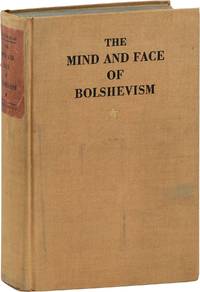
192984083New York: Alfred A. Knopf 1929. Large Paper Edition. Large Octavo. 26.5cm. Publisher's pale orange cloth titled in black and gilt to front board with red paper title label to spine. xvi; 308pp. Scuffing and bumping to extremities the cloth uniformly faded to a pale diluted pinkish orange with some scuffing and soiling darkening to the spine label and some very light marginal chipping; internally clean black topstain fore-edge untrimmed lavishly illustrated throughout in color and black and white. A strong and handsome copy about very good due to solidity and completeness but with cosmetic external wear. <br /> <br /> Significantly taller and more bulky than the trade edition likely a deluxe or large paper edition produced from British sheets the pagination differs considerably from the earlier trade edition with several additional color illustrations for example the "Red Angel of Revolution" color plate is here the recto of the photographic frontis and a rather unusual contemporary small format photograph of Leningrad tipped onto one of the plate pages. The paper title label suggests a slipcase although none is present. Unusual rather than scarce with a pretty solid showing in institutions if none in trade. Alfred A. Knopf unknown
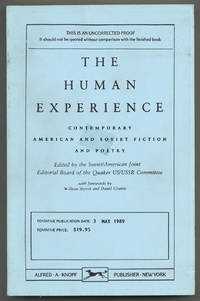
1989578465New York: Alfred A. Knopf 1989. Softcover. Near Fine. Uncorrected proof. Blue wrappers. Forewords by William Styron and Daniil Granin. A shadow from sticker removal on the front wrapper thus near fine. Alfred A. Knopf unknown
198514099Editorial Board USSR Academy of Sciences 1985. Paperback. Very Good. Editorial Board USSR Academy of Sciences 1985. Two volumes. Part of the "Problems of the Contemprary World" series. Clean unmarked copy. Binding tight. From the library of Prof. Roger Stuewer historian of physics UMN. Editorial Board, USSR Academy of Sciences paperback
193943900Moscow: V.V Kuibyshev Military Engineering Academy. 1939. Hardcover. Very Good. 4to; 37 ff & 13 ff. plates pages; Typescript versos only of quarto sheets -- carbon. Thirteen plates which appear to be photographs of the original text's illustrations mounted to plain paper sheets. In a contemporary binder citron buckram covers metal hinges retaining leaves at the gutter margins -- pale blue endpapers. Bookplate of the former Army Map Service Library / 6500 Brooks Lane / Washington DC. This is a translation into English of a Russian publication from 1939. Originally published by the Voyenno-Inzhanernoy Akadamii imeni V.V. Kubsheva Moskva 1939. This is an English translation by an unnamed writer or writers. Part of a vast program of wartime translations of technical publications from various sources. The introduction to the text pays considerable attention to the importance placed by V. I. Lenin on military cartography and map making in general. The main text is largely historical although similar texts covering much of this same ground rarely point out the observations of Marx and Engels on the discovery and mapping of America. The first title page is a transliteration of the Russian original. On this there are Army Map Service stamps in ink and blind each cancelled with a faint blue "X". Also the familiar "Surplus Duplicate" stamp of the Library of Congress Gift and Exchange Division appears in red ink. The Army Map Service bookplate is also cancelled with a faint "X" in blue pencil as is the small shelf label entirely handwritten in black ink -- mounted to the upper left hand margin of the front cover. Both shelf label and bookplate state that this was "Copy 2." The Army Map Service formed during the Second World War has undergone several changes of name and now is absorbed into the National Geospatial-Intelligence Agency NGA. If any of these entities or the Army Corps of Engineers has retained "Copy 1" of this publication they have not shared this information with OCLC or any other gathering of records which we were able to consult. A rare and interesting "book" -- not least because the Soviet Union may have already entered into the infamous Molotov–Ribbentrop Pact when this original Russian text was published in 1939. By the time the U.S. Army Map Service was formed this pact was rendered null and void by the Nazi invasion of the USSR in Operation Barbarossa. . V.V Kuibyshev Military Engineering Academy hardcover
19412110502150907650Keio shobo 1941. Soft Cover. Fine. Volume: 1 Keio shobo paperback
1983042356Moscow: USSR Academy of Science N. N. Mikhulko-Maklay Institute of Ethnography 1983. Soft cover. Very Good. 8vo - over 7¾ - 9¾" tall. Paperback. Demy 8vo. 22 x 14 cm. All papers in English. 2 volumes set: 159 1 p.; 124 1 p. Studies in ethnography and anthropology. XI International Congress of Anthropological and Ethnographical Sciences. Papers presented by Soviet participants. Vancouver-Quebec August 1983. 2 volumes set. <br/> <br/> USSR Academy of Science N. N. Mikhulko-Maklay Institute of Ethnography paperback
195421263Research program on the u.s.s.r. 1954. Trade paperback in fine condition. Soft cover. Fine. Research program on the u.s.s.r. Paperback
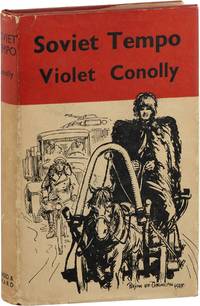
193785053New York: SHEED AND WARD 1937. First Edition. Octavo. 21cm. Publisher's red cloth titled in black to spine. Dustjacket. 189pp. Light bumping to extremities and spine ends a slight lean tight and strong; internally clean with the bookplate of L.J. Ward to the front pastedown; in a slightly soiled dustjacket with some shallow chipping and loss to the spine ends. A very good copy with a little dustyness. SHEED AND WARD unknown
19722083002115711995Nauka Progress Publishing House 1972. Soft Cover. Fine. Number of pages: 406p Size: 19cm Number of books: 1 Nauka Progress Publishing House paperback
1958055782Cairo: The USSR Embassy Press Office in the United Arab Republic UAR 1958. 1st Edition . Hardcover. Very Good. 8vo - over 7¾ - 9¾" tall. Contemporary full green cloth in Egyptian style contemporary white endpapers gilt lettering of title on front board and gilt decorations on spine. Original pictorial cover saved inside. Roy. 8vo. 24 x 17 cm. In Arabic. 88 p. 12 b/w ills. including drawings and reproduced photographic plates. Extremely rare unrecorded first issue of this Soviet propaganda organ published in Cairo the centre of the UAR by the USSR Propaganda Press Office with a striking cover design depicting the Sputniks in space celebrating the third anniversary of the Kosmicheskaya programma SSSR. The content begins with a comparison between the Soviet and American satellites. A full-paged photograph shows the Muscovites reading newspapers about the launch of the third Soviet satellite into space. In the periodical many details such as the construction processes and technical specifications of the satellites are explained as well as a striking history of the Soviet Space Program. Relations between Russia and Egypt have a long history dating back to before the 16th century. In the 1950s Gamal Abdel Nasser's independent and anti-imperialist policy earned him enthusiastic support from the Communist government of the USSR. In 1955 Egypt made a major arm deal with the Soviet Union and from then teams of Egyptian officers were trained in Eastern Bloc countries. Czechoslovak instructors also came in 1956 to train Egyptian personnel in the use of Soviet weapons. When France attacked Egypt during the Suez Crisis the USSR threatened to use destructive weapons i.e. nuclear weapons for the defence of Egypt. The degree of the Soviet approval of the Egyptian leader's policies culminated rather controversially in the award of the highest Soviet decoration the star of the Hero of the Soviet Union with the Order of Lenin to Nasser during Nikita Khrushchev's visit to the country in 1964. Kosmicheskaya programma SSSR i.e. The Soviet Space Program was the national space program of the Union of Soviet Socialist Republics USSR active from 1955 until the dissolution of the Soviet Union in 1991. After WWII the Soviet and US space programs both utilized German technology in their early efforts. Eventually the program was managed under Sergei Korolev who led the program based on unique ideas derived by Konstantin Tsiolkovsky sometimes known as the father of theoretical astronautics. Contrary to its American European and Chinese competitors who had their programs run under a single coordinating agency the Soviet space program was divided and split among several internally competing design bureaus led by Korolev Kerimov Keldysh Yangel Glushko Chelomey Makeyev Chertok and Reshetnev. The Soviet space program served as an important marker of Soviet claims to its global superpower status. Wikipedia. As of May 2024 not in OCLC and KVK. <br/> <br/> The USSR Embassy Press Office in the United Arab Republic (UAR) hardcover
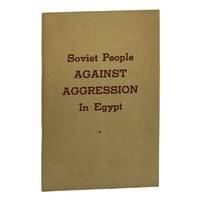
19565986Ottawa Ontario Canada: Press Office of the U.S.S.R Embassy in Canada 1956. First Edition First Printing. Stapled Wraps. pp. 62. 8vo. measuring 23 cm. Textured twice-stapled tan card covers bold maroon lettering to the centre. Faintest rubbing to the covers contents without blemish; near fine. Corresponds to OCLC #60804261. Limited American and continental holdings. Scarce in commerce. <br/><br/>"In this pamphlet we have brought together the main documents expressing the opinion of the Soviet people on the question of the armed aggression in Egypt - Statements of the Government of the USSR and of the Soviet leaders speeches by the head of the Soviet delegation to the United Nations and some other documents. In putting this materials at the disposal of Canadian readers the Press Office of the Soviet Embassy in Canada hopes that they will provide a better understanding of the Soviet point of view on the developments in the Near East." Press Office of the U.S.S.R Embassy [in Canada] paperback
1939048907Moscow: Musgiz 1939. First Edition . Hardcover. Fair/No Dust Jacket. A Fair copy in red hard covers worn along the spine folds. The lyrics accompanying the music are in Russian with English lyric translations on facing pages. Damping at the bottom edge/botttom corner margins of the text block but no paper adhesion. 160 pages tall-format no dust jacket. Not ex-library. <br/> <br/> Musgiz hardcover
20001324976PN. New. 2000. Soft Cover. Date is original print. This is a reprint edition . PN paperback
1936187710Moscow : Soyuzorgouchet 1936. First Edition. Hardback. Very good copy in the original gilt-blocked cloth. Slight suggestion only of dust-dulling to the spine bands and panel edges. Remains particularly well-preserved overall; tight bright clean and strong.; 8vo 8"" - 9"" tall; 538 pages; Description: xvi 538 p. tables ; 26 cm. Subjects: Russia -- Soviet Union -- Statistics. Moscow : Soyuzorgouchet hardcover
1966217767Moskva: Izdatel'stvo ""Nauka"" 1966. First Edition. Hardback. Very good copy in the original title-blocked cloth. Spine bands and panel edges slightly dulled and dust-toned as with age. Remains particularly well-preserved overall; tight bright clean and strong.; 8vo 8"" - 9"" tall; 231 pages; Physical desc.: 231 p. 21 cm. Subject: Dictionaries -- USSR. Moskva: Izdatel'stvo ""Nauka"" hardcover
1966216995Moskva : Izdatel'stvo ""Nauka"" 1966. First Edition. Hardback. Very good copy in the original title-blocked cloth. Spine bands and panel edges slightly dulled and dust-toned as with age. Remains particularly well-preserved overall; tight bright clean and strong.; 8vo 8"" - 9"" tall; 231 pages; Physical desc.: 231 p. 27 cm. Subject: Dictionaries -- USSR -- 1918 - 1962. Moskva : Izdatel'stvo ""Nauka"" hardcover
1955234761955. Bratskgesstroy photo album depicting construction of the Bratsk Hydroelectric Power Plant on the Angara River between 1955 and 1964 documenting one of the Soviet Union's largest postwar industrial projects during Nikita Khrushchev's campaign to industrialize Siberia. Construction began in 1955 at the Padun narrows north of Irkutsk where the Angara's rapids and elevation drop made the river suitable for massive hydroelectric generation. The first turbine entered service in November 1961 as the Bratsk reservoir began flooding thousands of square kilometers of forest and river settlements to create what Soviet publications called the "Bratsk Sea." By the mid-1960s the station had become the largest hydroelectric plant in the world supplying electricity to aluminum smelters timber combines rail electrification and new industrial cities across eastern Siberia.<br /> <br /> Photo album of approximately 17 large format professional silver gelatin photographs Bratsk and the Angara River region 1955-1964. large format photographs with Russian printed captions identify stages of construction including "Padun narrows" "Blocking the right bank of the Angara March 1957" "Installation of wires on the Irkutsk-Bratsk 220 kV transmission line" "Completion of the main concrete trestle" "Winter 1960-61" and "June 1963." Winter construction scenes show cranes rising above frozen riverbanks trucks dumping fill into rushing water during diversion work and workers fastening electrical insulators high above snow-covered terrain. Later images depict the completed spillway releasing torrents of water beneath rows of gantry cranes along with an interior control room lined with gauges switches meters and telephone communications equipment. Several leaves contain handwritten French tourism slips describing the visitor's experience moving through the region and observing ice electrical infrastructure and the completed dam landscape.<br /> <br /> The Bratsk project formed part of the Soviet Union's postwar eastward industrial expansion which sought to shift energy production and heavy industry deep into Siberia during the Cold War. The first turbine entered service in November 1961 as the Bratsk reservoir began flooding thousands of square kilometers of forest and river settlements to create what Soviet publications called the "Bratsk Sea." By the mid-1960s the station had become the largest hydroelectric plant in the world supplying electricity to aluminum smelters timber combines rail electrification and new industrial cities across eastern Siberia. Soviet newsreels propaganda posters and foreign delegations treated Bratsk as proof that the USSR could transform remote Siberian territory into a modern industrial frontier through centralized planning hydroelectric engineering and mass labor mobilization. Light wear occasional silvering and minor surface abrasions to several photographs; album binding intact. Overall in very good condition. unknown
19352091502135500567Army Accounting College Research Department 1935. Soft Cover. Fine. Number of pages: 350 pages 93 pages Size: 16 x 22 cm Army Accounting College Research Department paperback
1938HALL094931Hardback. 1938. Verbatim Report. 685pp Moscow 1938. VG . hardcover
1972R62395Moscow: Progress Publishers 1972 . 1st edition. Fine. tall octavo. dust jacket 364pp. b/w pls. This collection of papers trace the striking progress achived by science in the USSR as a whole and in the individual Union republics. Progress Publishers unknown
1937R68519Moscow: People's Commissariat of Justice of the U.S.S.R. 1937. 1st edition. Very Good. octavo. orig. boards vi 580pp. Heard before the Military Collegium of the Supreme Court of the U.S.S.R.Moscow January 23-30 1937. Verbatim Report People's Commissariat of Justice of the U.S.S.R. hardcover
1938R68520Moscow: People's Commissariat of Justice of the U.S.S.R. 1938. 1st edition. Very Good. octavo. orig. boards 799pp. Heard before the Military Collegium of the Supreme Court of the U.S.S.R.Moscow March 2-13 1938. Verbatim Report People's Commissariat of Justice of the U.S.S.R. hardcover
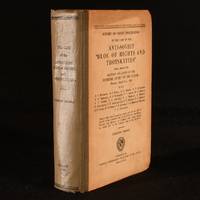
1938986G50Moscow: People's Commissariat of Justice of the U.S.S.R 1938. Cloth. Very Good. 9" by 6". Not Stated. A smart copy of the verbatim report of the Trial of the Twenty-One with a Russian title page. A smart copy of a verbatim report of what is known as the Trial of the Twenty-One.A trial which was the last of the three public Moscow trials charging prominent Bolsheviks with espionage and treason taking places towards the end of the Soviet Great Purge. The accused were tortured to extract confessions and publicly admitted their guilt during show trial.Most of the accused were convicted and sentenced to death with all charges considered fabricated except against the NKVD chief Genrikh Yagoda of poisoning Valerian Kuybyshev Vyacheslav Menzhinsky and Maxim Gorky despite these orders being given from Stalin himself. In quarter green cloth with a Russian title page. In quarter cloth. Externally very smart. Shelf wear to extremities. Odd mark to boards with fading to front board. Small stamp to rear paste down. Internally firmly bound. Pages are bright and clean. Very Good People's Commissariat of Justice of the U.S.S.R hardcover
193780372Moscow: The People's Commissariat of Justice of the U.S.S.R. 1937. Presumed First Edition First printing thus. Hardcover. Fair. 22 cm. 8 580 pages. Cover very worn and soiled. Hindges weak. Edges rubbed and corners bumped. Some moisture staining at bottom all pages separate and text complete. This second purge trial involved 17 lesser figures including Karl Radek Yuri Pyatakov and Grigory Sokolnikov. Alexander Beloborodov was also arrested and intended to be tried along with Radek but did not make the confession required of him and so he was not produced in court. Thirteen of the defendants were eventually executed by shooting. The rest received sentences in labor camps. Radek was spared as he implicated others including Nikolai Bukharin Alexei Rykov and Marshal Mikhail Tukhachevsky setting the stage for the Trial of Military and Trial of the Twenty One. Radek provided the pretext for the purge on a massive scale with his testimony that there was a "third organization separate from the cadres which had passed through Trotsky's school" as well as "semi-Trotskyites quarter-Trotskyites one-eighth-Trotskyites people who helped us not knowing of the terrorist organization but sympathizing with us people who from liberalism from a Fronde against the Party gave us this help." By the third organization he meant the last remaining former opposition group called Rightists led by Bukharin. At the time many Western observers who attended the trials said that they were fair and that the guilt of the accused had been established. They based this assessment on the confessions of the accused which were given in open court without any apparent evidence that they had been tortured or drugged. The Moscow Trials were a series of show trials held in the Soviet Union at the instigation of Joseph Stalin between 1936 and 1938 against Trotskyists and members of Right Opposition of the Communist Party of the Soviet Union. There were three Moscow Trials: the Case of the Trotskyite-Zinovievite Terrorist Center Zinoviev-Kamenev Trial aka "Trial of the Sixteen" 1936 the Case of the Anti-Soviet Trotskyist Center Pyatakov-Radek Trial 1937 and the Case of the Anti-Soviet "Bloc of Rights and Trotskyites" Bukharin-Rykov Trial aka "Trial of the Twenty-One" 1938. The defendants of these were Old Bolshevik party leaders and top officials of the Soviet secret police. Most defendants were charged under Article 58 of the RSFSR Penal Code with conspiring with the Western powers to assassinate Stalin and other Soviet leaders dismember the Soviet Union and restore capitalism. The Moscow Trials led to the execution of many of the defendants. They are generally seen as part of Stalin's Great Purge an attempt to rid the party of current or prior oppositionists especially but not exclusively Trotskyists and any leading Bolshevik cadre from the time of the Russian Revolution or earlier who might even potentially become a figurehead for the growing discontent in the Soviet populace resulting from Stalin's mismanagement of the economy. Stalin's hasty industrialization during the period of the First Five Year Plan and the brutality of the forced agricultural collectivization had led to an acute economic and political crisis in 1928-33 a part of the global problem known as the Great Depression and to enormous suffering on the part of the Soviet workers and peasants. Stalin was acutely conscious of this fact and took steps to prevent it taking the form of an opposition inside the Communist Party of the Soviet Union to his increasingly totalitarian rule. The People's Commissariat of Justice of the U.S.S.R. hardcover