Biblio.com
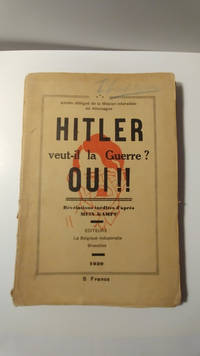
Hitler Veut-il la Guerre Oui!!
19394446159<p>18cm by 13cm 102pp in french scarce spine heavily worn front cover half-detached name on front cover name on flyleaf otherwise unmarked.</p> La Belgique Industrielle paperback
767 résultats
1928009310Vienna Austria: Schriftleitung Und Verlag 1928. 380pp/illus/fold-outs. German text. Has LOC surplus stamp inside front cover. Clean. 1st Edition. Boards. Very Good/No Jacket. 4to - over 9¾" - 12" tall. Schriftleitung Und Verlag hardcover
1967w180525271Da Capo Press 1967. vol1 c.211pp. vol2 c.86pp. vol3 c.21pp. Tall blue cloth heavy hardbacks no DJs light rubbing and wear along spine edges light brown foxing spots on outer page edges no names or markings in any volume unabridged republication of the edition published in 1889 text in German THE MUSICAL WORKS OF FREDERICK THE GREAT : Three Volume Set Volume one : sonatas for flute and keyboard Volume two : Concertos for flute strings and continuo with arrangements for flute and keyboard Volume three : Solo flute parts . Hard Covers. Very Good/No Jacket. Da Capo Press
192068892Berlin Germany: Albert Goldschmidt. Good; Cover Slightly Worn. 1920/21. Hardback. 123 pages . Albert Goldschmidt hardcover
19394446159<p>18cm by 13cm 102pp in french scarce spine heavily worn front cover half-detached name on front cover name on flyleaf otherwise unmarked.</p> La Belgique Industrielle paperback
1940ZB305538Berlin: n.d. ca. 1940. small octavo 63 pp library markings spine trimmed with no loss later side sewing into softcover good. - If you are reading this this item is actually physically in our stock and ready for shipment once ordered. We are not bookjackers. Buyer is responsible for any additional duties taxes or fees required by recipient's country. Berlin: paperback
1919203190Berlin: Zentralrat 1919. First edition. Cloth. Pages somewhat toned; few pencil notations and marginalia; short closed tear to title page; exlibris stamp from former East German library on verso of title; extremities of covers rubbed; library label removed from base of spine still very good. 4to 277pp; contemporary buckram. Original documentation from this dark moment in the history of modern Germany the weeks of counter-revolution in Berlin that followed the murders of Karl Liebknecht and Rosa Luxemburg in January 1919. The councils that had been established by the 1918 revolution in the wake of Germany's disastrous defeat in the First World War were being swept aside by their own leadership. The rather hapless head of state Friedrich Ebert had allied himself with the armed forces and ominously with the reactionary Freikorps militia bands commanded by Gustav Noske. It was a peculiar alliance that shortly solidified Ebert's power and set the stage for the creation of the Weimar Republic even while simultaneously sowing the seeds of violent extremism that would emerge fully fledged in the National Socialist movement some years later. Along with a variety of nuts-and-bolts issues of procedure recorded in these stenographic minutes are speeches and debates surrounding the bloody massacres of revolutionaries spearheaded by Noske. An important record of a fascinating if murky episode in modern German history. Zentralrat unknown
193574436Berlin: Geschäftsstelle Saarverein 1935. 6 issues of this Saarland the smallest state in Germany pro-Nazi periodical . Comprises Special Editions Sondersgaube Nos. 2 & 3 two issued form February of 1934 and 2 issues from March of 35. Continuous pagination but for one break. Each issue about 32 pp. Numerous half-tone photograph illustrations. Printed on wood-pulp paper. Very good condition.This periodical ended when Hitler came to power. As this state was close to France it likely did not feature the Third Reich until 1935 its last year of publication. Information about it is minimal. Neither of the Special Editions bear any illustrations. . But Saarland was important to both Hitler and Gen. Patton. Hitler's plans to strengthen Germany and undermine the Treaty of Versailles were given a boost in 1935. The German-speaking Saar region voted to reunite with Germany. Important for coal production Saar had previously been removed from German control as a term of Versailles to weaken Germany industrially. Patton led the Saar Offensive through this region in 1945. The Saarland as we know it today is not that old. The region became part of the German Reich on March 1 1935 and after the end of the Second World War fell into the French occupation zone. While it gained autonomy in 1947 the state remained under the influence of the French with the French franc still being the official currency it was officially reunited with Germany in 1959. Geschäftsstelle Saarverein unknown
193175038Berlin: Bruno Schultz Verlag 1931-1936. First editions. Quartos. Text in German. Three of the volumes with 160 full page illustrations after photographs by German artists; 1932 with 180 plates. Publisher's uniform light gray cloth with black spine lettering front covers with shorts bars in white and black and with the date below. A former owner has translated a very few of the captions. 1932 with a tidemark to the cover but it does not extend into the book itself. 1931 with a split in the cloth at the top. Some foxing almost entirely to text and margins. Very good. Bruno Schultz Verlag hardcover
1920z080061920. Hardcover. Very Good. Photo album filled with 2.5 by 3.5 inch photographs with descriptive labels from a trip to Austrian and Germany in the 1920s or 1930s. Hardcover oblong 8vo. 24pp. With four photographs to each page. Very good. Thirteen pictures mostly ones of the travelers have been removed. Wear to spine ends of album extremities of album pages. Photographs are all intact and in clean condition. The majority of the album is architectural and scenic landmarks such as the Munich War Memorial the Menin Gate and the Kessel Falls. Housed in protective mylar. hardcover
193034600Berlin: Reuichbahnzentrale 1930. 1 vols. Folio 39 x 24 inches. Linen backed. 1 vols. Folio 39 x 24 inches. Reuichbahnzentrale unknown
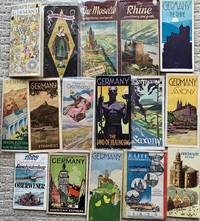
192211396Various Places: Various Publishers. Very Good. c. 1922-1958. Ephemera. Occasional light wear and soil; occasional handstamp of the Oakland Travel Bureau on covers or inside covers. ; Highlights include: Driving Your Own Car in Germany 32pp. c.1936; photographs folding map in rear; handstamp of Oakland Travel Bureau front cover. Dining and Wining in Germany c. 1940's; 48pp. ; color illustrations large color folding map in rear; Brochure: Germany Olympic Games Berlin 1936; Booklet: The Rehingold Express Quickest Route from the North Sea to the Alps black & white photos 2 b&w maps; Four booklets on motoring including: Motoring in Germany booklet with b&w photographs maps folding map in rear. Booklet: Berlin Unfer den Linden y el Hotel Bristol in Spanish. Berlin y sus alrededores 96pp b&w photographs throughout also in Spanish. Traveling in Beautiful Germany a booklet of valuable information from American Express; 148pp. b&w photos maps including folding map in rear this item with some light pencil underlining otherwise clean. Folding Brochure: Germany Land of the Healing Spas with many b&w photos list of diseases at the end. Most of the 25 Brochure/Map guides with folding maps in fine condition. ; 8vo 8" - 9" tall . Various Publishers unknown
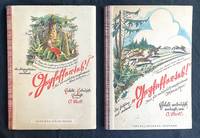
194143392Neudamm & Berlin: Munz & Co Försterbuben; and J. Neumann Frühling 1941. No Date 1940-1941 Both 1st edition. Original color illustrated boards 4to 70 68 pages. Filled with color illustrations over 20 of them stereotyped Antsemitic cartoon images. 25 cm. In German in Sütterlin script. The titles translate loosely as "The Spring and Other 'Spicy' Stories-- Only for People Sensitive to Nature" and "The Forest Boys and Other 'Spicy' Stories-- Only for People Sensitive to Nature." Text printed in red and black.<br> Both volumes were printed in Neudamm by Neumann but interestingly Försterbuben the first volume shows an overlay of the new publisher/distributer "Munz & Co. Verlag Berlin" on the front cover and title page. Complicated issues around distribution of Försterbuben may be reflected in its present scarcity OCLC locates only two copies worldwide. <br> OCLC suggests consecutive dates of 1940 and 1941 for both titles which makes sense given the use of Sütterlin script see below and the presence of the date 1938 or 1939 under the artist's printed signature in several of the drawings.<br> <br> Most scholars of Nazi-era Antisemitic imagery are familiar with the horribly Antisemitic children' s books Der Giftpilz The Poison Mushroom and Trau keinem Fuchs auf grüner Heid und keinem Jud auf seinem Eid! Don't Trust a Fox in a Green Pasture Or a Jew Upon His Oath! published by Julius Streicher's Stürmer Verlag. These Nazi propaganda books were intended for young people and were published in large printing runs in Nazi Germany.<br> Lesser known but at least as offensive are these illustrated Nazi-era book for adults by Otto Stoll. Printed and distributed by a far smaller publisher than the Stürmer Verlag they received smaller press run and appeared in only one edition. Indeed OCLC locates only 2 holdings worldwide for the first volume Die Försterbuben.<br> H. Heyne illustrated both works with colorful comic illustrations which are distributed throughout the text rendered in with what appear to be the highest quality printing techniques of the day. <br> Each book includes eight hunting or outdoors stories in verse two of them in Der Frühling the second volume extremely Antisemitic. Intended as humorous they contain typically ribald German hunting humor with immediately recognizable tropes from German culture. <br> <br> Interestingly these stories were published just in the final two years of official use of period Sütterlin cursive script which was popular during the early Nazi period and was used for example in Der Giftpilz and Trau keinem Fuchs. Indeed "In 1935 the Sütterlin style officially became the only German script taught in schools."<br> Then however "In 1941 the probable year of publication of the second work the Nazi Party banned all 'broken' fraktur 'blackletter' typefaces including Sütterlin and replaced them with Italian-style lettering such as the Antiqua typeface class. From the academic year 1941/42 onwards only the so-called Normalschrift 'normal script' which had hitherto been taught alongside Sütterlin under the name of 'Latin script' was allowed to be used and taught" Wikipedia.<br> Der Frühling. includes first the virulently Antisemitic illustrated tale of Max Isidor Veilchenblau the last name means the color violet in German implying strangeness and perhaps effeminacy a wealthy Jewish businessman who wanted to be a hunter. Max Isidor owns a big house on the edge of a forest where he lives with his wife Rosalinda. <br> <br> Under Heyne's colorful drawing of a synagogue with big flashy sports cars coming and going and stereotyped Jewish men greeting each other we are told that Veilchenblau has told his wife that he has hunting plans but he instead takes a beautiful blond Aryan girl out to dinner. A romantic encounter in a secluded cabin in the forest after dinner does not turn out as Max Isidor had planned and he has to flee stark naked into the woods where is found by his wife and a policeman. <br> According to the moral of the rhyming text Jews can never be hunters with a German hunter's soul a mythical German masculine ideal and no amount of money can make them hunters as their Jewish race just doesn't have "hunters' blood."<br> <br> Then the second illustrated antisemitic story tells of "War-Profiteer Meyer in Crisis" the tale of a Jew who grew wealthy during World War I another well-worn Nazi Antisemitic trope and then has difficulties on a hunting outing with his neighbor a count and the count's lovely blond escort.<br> Both these tales play on an imagined sexual threat of Jewish men to naive but pure Aryan maidens and also reinforce Jewish stereotypes of greed gluttony ugliness and cosmopolitanism.<br> The wider variety of stories in the books have titles such as: Spring; Hunter Latin; Quiet Retreat; and Hunter Hans and his Dog Kosimar. All are are accompanied by cartoon-like color illustrations of animals romantic encounters in the woods hunters in trouble with the tax authorities and of course hunters who are drinking experiencing hunting mishaps encountering misdeeds with chimneys and fireplaces getting in trouble while hunting farting etc. <br> Since these are otherwise low-brow humorous stories they illustrate how ethnic stereotyping and insinuations of racialized moral and physical inferiority-in this case Antisemitic-can be so easily integrated into the standard literature of a culture. The centering of the Jewish characters into two of these stories turns them into the kinds of standard racist jokes that teach and reinforce important racial ideas and hierarchies in the society. <br> At the rear is advertising for other humorous books published by Neumann Publishing company.<br> <br> OCLC listings match the author with an Otto Stoll who was a Swiss ethnographer and Mayanist who died in 1922 20 years before this book was first published which we find unlikely. <br> A copy of Der Frühling by itself sold at auction in 2018 for over $900 with the description noting "The very high production standard of this book belies its vile content." The US Holocaust Memorial Museum keeps their copy in their Rare Book Collection. The much rarer Die Försterbuben has never appeared at any major book auction. <br> SUBJECTS: German wit and humor. Jews -- Germany -- Caricatures and cartoons. Humour allemand. Juifs -- Allemagne -- Caricatures et dessins humoristiques. Anti-Jewish propaganda.<br> <br> Der Frühling. is OCLC: 843226193/72649783/250322204 with OCLC locating only 9 copies worldwide the majority in Germany none at NLI and only 3 in North America UFlorida USHMM UUtah none at any Ivy League institution. <br> Die Försterbuben. is OCLC 700497520 with OCLC locating only 2 copies anywhere worldwide Sachsische Landesbibliothek & LBI. It is extremely rare.<br> <br> Both volumes show only very slight wear an excellent set of this rare and important example of Nazi-era German mass-culture Antisemitism. B holo2-163-26A-XX. Neudamm & Berlin: Munz & Co [Försterbuben]; and J. Neumann [Frühling] unknown
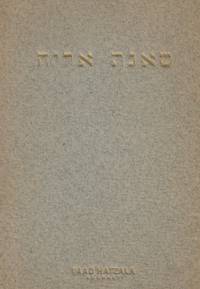
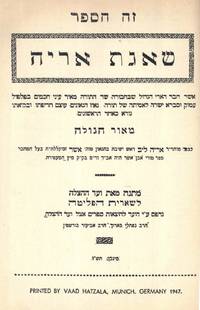
194734140Munich; Ha-Va'ad Le-Hotsa'ot Sefarim Etsel Va'ad Ha-Hatsalah 1947. Hardcover. 1st edition thus. Original Boards. 8vo. 90 Leaves. 25 cm. In Hebrew. The first book printed for Jewish survivors by the Va'ad Hatzalah in Germany after the War.<br> The preface notes: "The lack of books of the Nation of the Book in Germany encouraged us to print works necessary for yeshiva students.this is the first book that we successfully.published this valuable Sha'agas Aryeh."<br> Sha'agat Aryeh published for survivors and refugees in Europe; with prefatory printed dedication from Rabbi Nathan Baruch of Vaad Hatzala. <br> Following the end of the Second World War the Vaad's activities centered in Germany and France consisted of distributing funds and shipments of food and religious books to Displaced Persons camps in Germany and newly established yeshivot. It provided spiritual rehabilitation to remnants of Jewish communities destroyed during the Holocaust. <br> Aryeh Leib ben Asher Gunzberg’s 1695-1785 responsa titled Sha’agat Aryeh The Roar of the Lion; first published 1755 “brought him lasting recognition and has been republished at least 40 times since; it is still considered to be an essential text of rabbinic learning. Sha’agat Aryeh rejected the use of pilpul he had once indulged in and insisted on a direct approach of the Talmudic text with no special attention given to the contributions of the sixteenth–eighteenth-century authors†YIVO Encyclopedia. <br> Subjects: Responsa - 1600-1800. Responsa. 1600 – 1800. Vaad Hatzala. OCLC: 19160226. <br> Spine rebacked as often found. Edgewear paper toning but solid. Good condition. B HOLO2-117-54. Munich; Ha-Va'ad Le-Hotsa'ot Sefarim Etsel Va'ad Ha-Hatsalah hardcover
19872090502113709361Not Available 1987. Soft Cover. Fine. The book is in fine condition. Not Available paperback
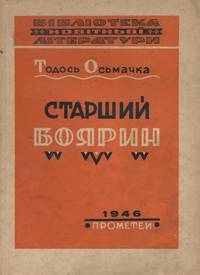
194633697Munich; Prometheus 1946. Paperback. Original Wrappers. 8vo. 166 pages. 21 cm. First Edition. In Ukrainian. <br> "Although his first poems were written in 1916 Osmachka began his literary career while he was a student at the Kyiv Institute of People's Education from 1920 to 1923. He belonged to the literary organizations Aspys and Lanka Later known as 'Maisternia Revoliutsiinoho Slovaâ' Workshop of the Revolutionary Word or MARS and published his first collection of poetry Krucha The Precipice in 1922; it was followed by two more collections Skytski vohni The Scythian Fires 1925 and Klekit Crane's Clacking 1929. <br> Like other members of MARS he was attacked and arrested for his 'unpolitical' literary works but managed to save himself from execution by feigning insanity. During the 1930s he faced constant persecution by the authorities and was unable to publish any works. <br> During the Second World War he fled to Western Ukraine then to displaced persons camps in Germany and finally to the United States. Osmachka's personal ordeal had lasting effects on him and until his death he suffered from a persecution complex. Nonetheless he resumed his literary career in 1943 in Lviv with the publication of his fourth collection of poetry Suchasnykam To My Contemporaries. In the displaced persons camps where he was a member of the MUR literary organization he published his epic poem written in octaves Poet Poet 1946 as well as his first prose work Starshyi Boiaryn The Best Man 1946 this work." Encyclopedia of Ukraine. Subjects: Ukraine; Fiction; Short Stories. OCLC: 8747925. <br> Light age toning and edgewear. Very good contion. Scarce and important BK5 UKR-1-29xx. [Munich?]; Prometheus paperback
194743292Munich; Ha-Va'ad Le-Hotsa'ot Sefarim Etsel Va'ad Ha-Hatsalah 1947. 1st edition thus. Later Boards. 8vo. 90 Leaves. 25 cm. In Hebrew. The first book printed for Jewish survivors by the Va'ad Hatzalah in Germany after the War.<br> The preface notes: "The lack of books of the Nation of the Book in Germany encouraged us to print works necessary for yeshiva students.this is the first book that we successfully.published this valuable Sha'agas Aryeh."<br> Sha'agat Aryeh published for survivors and refugees in Europe; with prefatory printed dedication from Rabbi Nathan Baruch of Vaad Hatzala. <br> Following the end of the Second World War the Vaad's activities centered in Germany and France consisted of distributing funds and shipments of food and religious books to Displaced Persons camps in Germany and newly established yeshivot. It provided spiritual rehabilitation to remnants of Jewish communities destroyed during the Holocaust. <br> Aryeh Leib ben Asher Gunzberg’s 1695-1785 responsa titled Sha’agat Aryeh The Roar of the Lion; first published 1755 “brought him lasting recognition and has been republished at least 40 times since; it is still considered to be an essential text of rabbinic learning. Sha’agat Aryeh rejected the use of pilpul he had once indulged in and insisted on a direct approach of the Talmudic text with no special attention given to the contributions of the sixteenth–eighteenth-century authors†YIVO Encyclopedia. <br> Subjects: Responsa - 1600-1800. Responsa. 1600 – 1800. Vaad Hatzala. OCLC: 19160226. The US Holocaust Museum keeps their copy in their Rare Book Collection. <br> Edgewear paper toning but solid. Good condition. B HOLO2-117-54A-A. Munich; Ha-Va'ad Le-Hotsa'ot Sefarim Etsel Va'ad Ha-Hatsalah unknown
193843457Berlin Philo Verlag 1938. Hardback. 1st edition. Original printed Publisher's linen 8vo 5 283 pages. With 20 colored maps of countries and regions around the world including one world map displaying distances from Berlin. In German. Title translates as "Philo-Atlas: Guide for Jewish Emigration." <br> The Philo Atlas is a remarkable record of its time. Issued barely two weeks prior to the outbreak of Kristallnacht 9/10 November 1938 it appears at first to be nothing but a tourist guide-book. Yet its contents reveal a far more urgent need: An alphabetical survey of countries world-wide with their respective rules for obtaining entry-visas. "These are no tourist formalities for now survival depends on them. Which countries still accept migrants How much money do they demand For which occupations is there a need Which diseases need one be prepared for Where to find local organizations who can assist immigrants" <br> The Jewish-owned Philo Verlag was forcibly closed a month following the publication of this guide by which time the Nazis decided they were no longer willing to permit Jews to leave Germany - even if they could find a country willing to take them in which after the Evian Conference of earlier that summer was even more unlikely. The Jews who remained in Germany were now trapped. <br> Two copies sold at auction in 2018 for $1125 and $1375 each with buyers' premiums. <br> Some wear to boards; backstrip worn internal hinges starting Good Condition overall. An important document of the time. B KH-8-74A. Berlin, Philo Verlag unknown
195762404Koln im Marz: Ford-Werke AG Herausgegebn von der Betriebsleitung des Presswerks 1957. 4to. 8.5 x 12 in. 99 leaves mimeographed. With 40 original silver gelatin photographs mounted and tipped-in sized from 4.5 x 6.5 up to 7 x 9.5 in. all within text and identifying captions several silver print graphs & charts. Green linen cloth covers rounded corners minor sunning to spine minor bumping to couple corners still a VG copy. Original in-house Ford-Germany photo-illustrated report documenting their construction and development of their massive pressed steel works in Cologne from 1954-1956 for the iconic Ford Taunus 15M automobile. As this preface carefully explains Ford-Germany had struggled with a variety of parts makers and small steel stamping shops following the rebuilding of their company after World War II including an ongoing cash shortage. The pressed steel parts produced by all of these smaller and larger companies and then transported to the Taunus 12M and 15M assembly factories faced increasing considerable transport costs and poor manufacturing quality and waste with the suppliers was also eating into the company profits. The Schuler presses installed in the factory were some of the largest in Europe and at the time the company had over a century experience in building sheet-metal steel pressing machines. The excellent photos depict the finished press plant factory floor steel stamping presses entire large bins of finished steel body parts including fenders trunks hoods floor pans Taunus tops wheel tubs and more. This plant under the direction of Robert Layton a native Berliner who had fled Hitler’s Nazi regime in 1938 to return to West Germany in 1950 increased Taunus 15M production from 67254 Fords in 1957 to 395498 by 1964. No copies in Worldcat or The Henry Ford; See: Ford in Deutschland Munchen Thiemig 1957; West Germany: Ford’s Autobahn to Success Time May 7 1965. Ford-Werke AG, Herausgegebn von der Betriebsleitung des Presswerks, hardcover
195845753Stuttgart: Drei Brunnen Verlag 1958. Thick 4to. 736 pp. Photo frontispiece 100s of photo illusts. maps diagrams. Blue cloth silver lettering minor shelfwear w/o endpapers still G copy. First edition of this famed illustrated monograph on German aviation history from before World War I until 1932. The author provides an expansive and excellent history of the formation of the German air force early German aviation pilots in the German Colonies the development of planes and pilots during World War I the evolution of air racing in Europe and much more. Drei Brunnen Verlag, hardcover
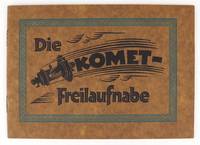
192046848Frankfurt Germany: Stempel-Werk 1920. Fine. Frankfurt Germany: Stempel-Werk ca. 1920. Oblong octavo; side-stapled pamphlet in pictorial card wrappers 14 cm; 20pp.; illus. throughout. Wrappers lightly nudged at corners and rusting at staples as expected. Clean interior. A Fine example of a scarce promotional pamphlet.<br /> <br /> Produced by the Frankfurt firm Stempel-Werk the pamphlet is filled mostly with photographs of men and women involved in the manufacturing process for the Komet freewheel bicycle hub as well as illustrations of the hub its component parts and the factory. Racing clubs often wrote to bicycle manufacturers for support and in the mid-1920s Komet 1925 Cologne secured Stempel-Werk as a sponsor taking their name from the hub. <br /> <br /> We locate no copies in OCLC as of January 2026. . Stempel-Werk unknown
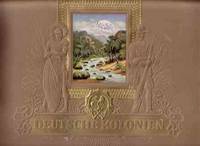
19363488Dresden: Cigaretten-Bilderdienst. 1936. Flexible covers. Very Good. Pages a bit browned; A very scarce account on German colonies around the world. Flexible covers with one tipped-in color plate of a tropical landscape in the foreground and a glacier in the background. This picture is surrounded by a blindstamped gilt frame and two blindstamped figures - one symbolizing a German colonist and the other person of an apparently African tribe. Blindstamped lettering on gilt background. Numerous tipped-in color plates from the source of seven previously published books. Beautiful background illustrations in b&w. Including a "Kolonial-Ehrentafel" at front depicting the 11 most important German colonists; Oblong 8vo; 72 pages . Cigaretten-Bilderdienst unknown
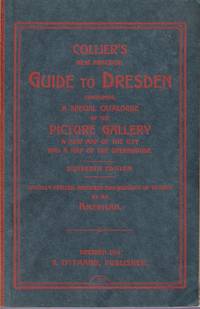
191421635Dresden: A. Tittmann. 1914. Sixteenth Edition. Stiff wraps. Very Good. Covers with light rubbing to extremities. Light bump to one corner.; "Entirely revised enlarged and brought up to date by an American". Beautiful rear fold-out map in color 1: 20000. Including rear ad section and street-guide.; 16mo 6" - 7" tall; x 88 10 map pages . A. Tittmann paperback
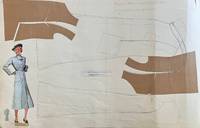
193059525Hannover: Schneidermister ca. 1930-1933. Oblong elephant folio. 23.5 x 14.5 in. 25 leaves unnumbered. Original women’s fashion patterns in pencil throughout many with tipped-in pattern cutouts mounted on the sheets as well as colour images of the finished design tipped-in and mounted manuscript pencil notes & directions in some colour pencil additions to a a few patterns. Stiff limp beige covers black cloth spine title mounted on front cover scutting edgewear repair to corners of front cover corner still a remarkable manuscript w/ tipped-in instructions for taking measurements and fashion by the Nazi Party on first leaf including one entitled “Ein Modewart macht Propaganda.†This German fashion pattern tailoring and pattern manuscript provides an exceptional original artifact of the period when the Nazi Party began to force educational and cultural changes upon German Society against the tailoring and fashion industry in Germany during the early 1930’s. By 1930 Berlin had emerged as an international fashion capital drawing Parisian fashion designers and most of the tailoring schools and fashion houses were operated by generations of Jewish family owners. Tailors and fashion designers were constantly reminded that they must create a wholly Aryan fashion and that they were to avoid French or other outside influences. Despite the pressure most women tailors and fashion designers in the tailoring or cutting schools continued to still draw their influences from Parisian and American couturiers by creating their own patterns and pattern books from which these internationally themed clothing designs could be made. This fashion pattern book by Bode focuses on women’s suits skirts capes coats and knickerbockers. However the Party never succeeded in creating a unique Fashion industry especially because of the drive to dress women in peasant costumes or uniforms even as the Nazi Party would confiscate the assets of over 2700 Jewish fashion houses retailers and manufacturers with 1000’s of tailors and seamstresses forced into labor and concentration camps to produce clothes for military and high society. See: Uwe Westphal Fashion Metropolis Berlin 1836-1939: The Story of the Rise and Destruction of the Jewish Fashion Industry 2019. Schneidermister, hardcover
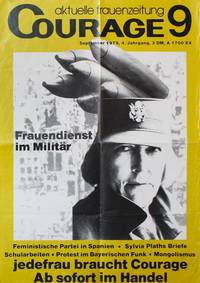
197932004Berlin 1979. First Edition. Original photo-montaged advertisement poster 83.5x58.75cm. printed offset in black and yellow on glossy white stock; previous mail folds general wrinkling most heavily along right-hand edge else About Very Good and sound. Advertising poster for the German feminist magazine Courage the image presumably reproducing the cover of the current issue. Contents feature articles on women in the military the feminist movement in Spain and the letters of Sylvia Plath. At bottom of image: "Jedefrau Braucht Courage / Ab sofort im Handel" Every woman needs courage from now on in work. Quite a large poster presumably issued to be displayed at the newsagent. unknown
200015972Berlin: Nicolai 2000. First Edition. Quarto 30cm. Cloth boards; dustjacket; 351pp; illus. Fine unworn copy in unworn jacket - near new. Text in German and English. Nicolai unknown