VeniceBiblio.com
14 résultats
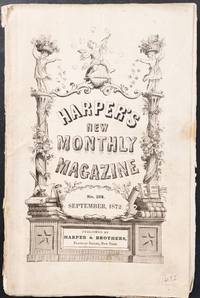
18721103New York: Harper & Brothers 1872. 8vo. pp. 481 - 501. Illustrated with wood engravings including a map of Venice four full-page architectural views and nine wood engravings in the text. Original printed wrappers chipped at spine but a sound an not unattractive copy.<br /> <br /> Anonymous twenty page description of Venice which captures for the American public the history and romance of La Serenissima including images of the most famous palazzi the Doge's Palace. This issue of the Magazine also includes a biography of Edgar Allan Poe an essay on the political character of modern Greeks and the concluding chapter of Anthony Trollope's The Golden Lion of Granpere to name a few of the articles. Harper & Brothers unknown
185023390Philip J. Cozans NY 1850. Hardback NODustJacket Copyright not shown but believed to be c1850 VG/GOOd NOJACKET AS-IS SMALL Green embossed cloth Lettered decorated Gold Gilt on Spine Interior nice tight Clean FOXING stAIns Light Wear approx 4 1/2 X 5 3/4 in Cover light Rub Wear Scuff 128 PgS Book is in good cONDItion or better. Some edgewear. Some fadINg over the years of coveR. Inside is good or bEtter. Some foxing here and tHEre. Pages are clean All in tact anD tIGHt. Includes Venice Mobile Alabama Tomb of Washington Havana Cuba Puebla MExico Mount Moriah Jerusalem Vienna Austria Yorktown Virginia Montreal Canada EtC. Hard Cover. Philip J. Cozans NY hardcover
1887367721Venezia : Il Istituto 1887. First Edition. Hardcover. Near fine copy in the original colour-printed boards. Spine bands and panel edges very slightly dulled. Scattered foxing within. Remains particularly well-preserved overall. Physical description; 1 volume : illustrations ; 33 cm. Subjects; Venice Italy; history. Italy; literature. Venice; description and travel. Venice; customs and culture. Venezia : Il Istituto hardcover
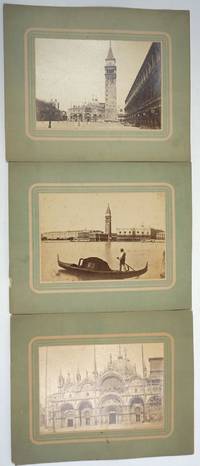
187027447Venice: Colombo Coen 1870. Photography. Otherwise very good condition. Colombo Coen was a prolific Jewish publisher based in Italy from the 1850s-70s. He was the author of a popular guide book "A Week in Venice: A Complete Guide-book to the City and Its Environs 1869. "Paved with water .the Grand Canal is the finest street in Venice and one of the finest in the world." Of the Piazza San Marco he says "one of the finest squares in the world; not the largest – for Trafalgar Square is larger – or the most regular – for it is crooked compared with the Place de la Concorde – but it defies London and Paris to produce its equal." He culminates with "One Venice one sun and one Piazza San Marco. This is the boast of the Venetians."<br /> <br /> The Images are of St. Mark's Basilica San Marco Square Rialto Bridge Grand Canal gondolas. <br /> <br /> Images approx. 7 x 5" laid down on decorative light green board 10 1/4 x 8 1/2". Albumen photos dusty slt fox spotting. Photo lithographic images dusty with title' Venezia' at top and in lower left corner "Stab. Colombo Coen Porc Vecch No 139. 140 Colombo Coen unknown
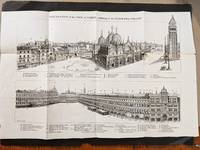
18191120London: J. and C. Adlard 1819. 8vo. 220 x 140 mm. 8 3/4 x 5 1/2 inches. 12 pp. Illustrated with a folding plate depicting the Piazza San Marco Venice. Original blank wrappers separated at the spine folded plate loose in binding. Stamp of the Minnesota Historical Society withdrawn. Tiny tears at the folds of the plate but sound. J. and C. Adlard unknown
1898VENICE013033Macmillan London. 1898. Extra Illustrated Edition of a book originally published in 1887. Octavo. pp xvi 410. Plates and illustrations in the text. Period binding of full polished tan calf with raised bands gilt decoration and rules marbled edges and endpapers.Spine slightly faded. Two corners slightly bumped. Very good indeed. Macmillan, London. hardcover
184336123Venice: F. Andreola 1843. hardcover. Fascicolo XVIII. 64pp. Folio full red morocco fine gilt floral borders back gilt green moire endpapers a.e.g. Venezia: F. Andreola 1843.<br/> <br/> F. Andreola unknown
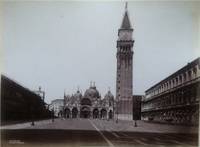
1885139341885. Original 19th Century photograph showing St. Mark's square Piazza San Marco in Venice. The photograph is very large measuring 10-1/2"x14" and mounted on heavy cardboard to an overall size of 14"x20". Shows a view of Saint Mark's Square the principal public square in Venice and a location used in countless artworks films and literature through the centuries. A remark attributed to Napoleon calls the Piazza San Marco the "drawing room of Europe." The square has been remarkably unchanged by time and appears very similar in paintings of 300 years ago to this photograph of over 100 years ago and as it is today. Catalogue numbered in the lower left hand corner within the photo "48. Venezia/ Piazzo S. Marco." Another image of the same size and condition is on the verso labeled within the photo "25. Venezia/Loggetta." Moderate staining and warping to cardboard but photograph itself is in fine condition. unknown
1892041917Chicago: A. C. Mcclurg 1892. 1st Edition 1st Printing. Hardcover. Good. Vii 450 Pp. Blue Cloth Gilt. First Edition With 1892 Date On Title Page. Cover Gilt Bright Spine Gilt With Some Wear. The Binding Is Worn Completely Frayed Across Both Ends Of The Spine Tips With Small Frays Front Hinge Tight; Rear Hinge Cracked With Thin Line Of Exposure Of Webbing. Inscribed "Ariana R W Curtis / Palazzo Barbaro / Venice/ From The Author" And With Latimer's Handwritten Summary Of Her Writings To 1892 Tipped On To The Rear Free Endpaper. The Palazzi Barbaro Are A Pair Of Adjoining Palaces Formerly One Of The Homes Of The Patrician Barbaro Family On The Grand Canal Of Venice. It Is One Of The Least Altered Of The Gothic Palaces Of Venice.The First Of The Two Palaces Is In The Venetian Gothic Style And Was Built In 1425 By Giovanni Bon One Of Venice's Master Stonemasons. While The Palazzo Remained The Barbaro Family'S Property They Did Not Always Live There. In 1499 It Served As The French Embassy To The Republic Of Venice. In 1524 Isabella D'Este Widow Of Francesco Ii Gonzaga Marquess Of Mantua And The Sister Of Alfonso I D'este Was Living At The Palazzo Barbaro. In 1797 The Palazzi Belonged To Senator Zuanne Barbaro. After The Barbaro Family Died Out In The Middle Of The 19Th Century The Palazzo Was Bought By A Series Of Speculators Who Auctioned Off Furniture And Paintings. In 1881 The Older Palazzo Was Rented By Daniel Sargent Curtis 1825-1908 A Relative Of The American Painter John Singer Sargent And His Wife Ariana Randolph Wormeley 1833-1922 Who Purchased It In 1885. The Curtises Begun A Thorough Restoration And Kept The Palace With Love And Dedication Bringing It Back To Social And Cultural Life And Making It The Meeting Place For Some Cosmopolitan Americans And Others With Visits From Sargent Ariana'S Sisters The Translator Katherine Prescott Wormeley And The Prolific Authoress And Translator Elizabeth Wormeley Latimer Their Son The Artist Ralph Wormeley Curtis Henry James Whistler Robert Browning And Claude Monet. Other Members Of The "Barbaro Circle" Included Bernard Berenson William Merritt Chase Isabella Stewart Gardner Edith Wharton And Charles Eliot Norton. Henry James Finished The Aspern Papers At A Desk That Is Still Housed In The Palace Today; James Considered The Barbaro Ballroom The Finest Example Of A Venetian Baroque Interior And Included A Description In His Novel The Wings Of The Dove And A Scene From The Recent Movie Was Filmed There. In 1898 John Singer Sargent Painted A Group Portrait Of The Curtis Family In The Salon Titled "An Interior In Venice". Isabella Stewart Gardner An Art Collector And The Foremost Patron Of The Arts In Her Time Had Her Portrait Painted At The Barbaro By Anders Zorn In 1894; She Fell In Love With It Renting It Several Times From 1890 When The Curtis' Were Traveling And When She Went Back To Boston She Built Her "Venetian Palazzo" An Interpretation Of The Renaissance Palaces Of Venice. <br/> <br/> A. C. Mcclurg hardcover
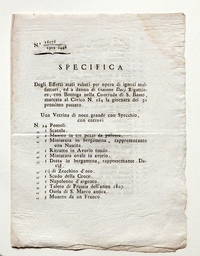
18183773<p><em>Shoplifting in Venice - Police Report</em></p><p>VENICE - THEFT. Specifica degli effetti stati rubati per opera di ignoti malfattori ed a danno di Gacome Daci regattiere con bottega nella contrada di S. Basso marcata al Civico N. 184. la giornata dei 30 prossimo passato. colophon: Venice 31 October 1818.£250</p><p>4to pp. 3 1 blank; lightly browned and discoloured in upper outer corner; uncut and unbound with mss filing note to last page.</p><p>Official order for a police investigation into the theft of a large mirrored walnut showcase from a bric-a-brac shop in Venice 1818. A full listing of the forty-five different objects stolen is given amongst them two miniature paintings on vellum one of the Nativity and the other of David; various coins identified and not; five pearl necklaces - two in pearl agate two of 'pearls' in yellow glass and a necklace of miniature black pearls with matching earrings; in mother-of-pearl a piece in the shape of an animal; four saints and an oval of St. George; two gilded crucifixes and much more all to the value of around 350 Italian Lire. A fascinating insight into Venetian life and trade.</p> n.p.
18814006041Antonio Roberti 1881. Hard cover. Fair/No jacket. Cloth 37 cm xxix 161 pages with frontispiece portrait black & white illustrations in the text 71 numbered diagrams and plans. Fair condition but for some foxing in pages ink inscription on front free endpaper and covers with slightly loose binding some fading and abraded areas at edges especially along spine and with corners bumped. Antonio Roberti unknown
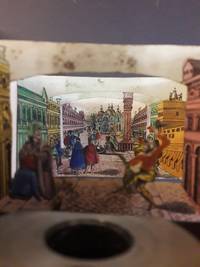
18353220261<p><em>Concertina-folding hand-coloured lithographic peepshow with three cut-out sections front-face measuring 98 × 137 mm; the peepshow extends by paper bellows to approximately 275 mm. Hand-coloured lithograph housed in a custom made cloth box.</em></p><p>Rare German peepshow of St. Mark's Square in Venice rather naive in appearance resembling the illustrations found in chapbooks of the time.</p><p>The front-face consists of the title a view of St Mark's Square viewed from an architectural arrangement at the west end of the square symbols of carnival - a tambourine masks and a jester's bauble - and a circular peephole. The staffage on the cut-outs and backboard consist of commedia del arte figures including a dancing man with a mandolin and two dwarfs. The campanile hopelessly represented and wrongly positioned features on the third cut-out and St Mark's on the backboard.</p> [Germany,
1830D7073Venice: Eugenio Testolini n.d. c. 1830. Hardcover. Very Good. Publisher's half brown cloth and printed boards; oblong folio 240 x 343 mm; contains lithographed title-page with inset view of a gondolier and 11 beautifully hand-colored lithographed plates many with the embossed stamp of the publisher in the lower margin. Boards soiled and scuffed; spine tips corners and edge of boards lightly bumped. Nice and bright on the inside! Aside from some faint marginal foxing plates are simply lovely. <br/><br/> Eugenio Testolini hardcover
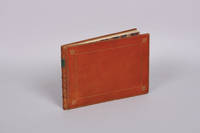
18254504048Probably Venice 1825. A few spots but generally in fine condition the watercolours well preserved and bright. Oblong small quarto album 185 x 275mm containing forty-six watercolours of various sizes and shapes ranging from delicate circular vignettes to larger scenes of urban and theatrical life elegantly bound in nineteenth-century ochre morocco with ornate gilt decoration. <p><p>A beautiful suite of watercolours including a superb series of scenes of a contemporary Venetian commedia dell'arte troupe by the Venetian painter and engraver Novelli. Featuring images from both the stage and street-performance including acrobatics and conjuring each of the 46 deftly drawn images of which 11 are signed is of considerable quality. </p> <p>Francesco Novelli 1764-1836 vividly and imaginatively illustrated Algarotti's Opere 1791-94 assisting his father Don Quixote 1819 and Gil Blas 1820. He is also known for illustrating works such as the Fasti Veneziani 1794 hinting at his abiding interest in the theatre and the performing arts. </p> <p>One of Novelli's most important teachers was the French artist Vivant Denon who visited Venice in the 1790s. Denon seems to have had a formative influence on Novelli's career not least because he introduced his pupil to the engravings of Rembrandt. This rare and exceptional collection provides a wonderful insight into Italian theatre in its golden age. The album includes an incomparable collection of Novelli's watercolours with the greatest number being piquant images of a Venetian troupe of the commedia dell'arte with especially fine depictions of Pierrot himself as well as other key figures such as Columbine and Harlequin. It includes a remarkable series of scenes from a stage play as well as studies of the individual performers. Indeed many of these images are so precisely rendered that it is likely that Novelli depicts a well-known troupe perhaps one with which he was personally connected.</p> <p>The remaining images cover all aspects of contemporary life including several military vignettes perhaps scenes from the diorama as well as charming rural scenes. Several show Novelli's work at its most sympathetic especially in his animated studies of street vendors and town squares. It is also likely that many of these scenes derive from a period when the troupe was on the road especially as some of the liveliest show street performers conjurors and Punch and Judy shows. These scenes reveal Novelli at the height of his powers especially his skill in capturing the energy and fascination of the crowds that gathered to watch the impromptu performances.</p> <p>Unpublished although the compilation of the album suggests that publication might originally have been Novelli's intention. This is a superb collection of images by one of the pre-eminent artists of his generation providing an insight into Novelli's involvement with the Venetian theatre as well as giving a unique opportunity to study the daily life of a travelling group of European artists and musicians at the turn of the nineteenth century.</p> <p>Make-up of the album:-</p> <p>• three portraits of peasants:</p> <p>• a fishmonger with his left sleeve hanging loose</p> <p>• a peasant women with a cob of corn</p> <p>• a profile of a woman in an elaborate scarf</p> <p>• a uniformed cuirassier rejects the entreaty of a woman</p> <p>• a lively scene at the market with a grenadier a Pierrot and a harlequin</p> <p>• a crowd gathers around a conjuror in the town square</p> <p>• children animatedly watch a Punch and Judy show</p> <p>• a street performer shows a dancing bear while an urchin shows a monkey</p> <p>• two small round scenes:</p> <p>• the first of a cavalry charge</p> <p>• the second a peaceful domestic scene around the hearth</p> <p>• an infantry charge perhaps a real scene or a diorama</p> <p>• three generations of women interior</p> <p>• a lively outdoors scene of the stables</p> <p>• two women work inside a darkened barn</p> <p>• four liveried horses with a cart full of hay</p> <p>• two small round scenes:</p> <p>• a scene in the yard of a hostelry</p> <p>• cooking in a well-provisioned kitchen</p> <p>• two small square scenes:</p> <p>• infants and burghers at a Punch and Judy show</p> <p>• small children crowd around an itinerant projectionist</p> <p>• two small square scenes:</p> <p>• dancing a lively jig</p> <p>• the children of the house at lessons</p> <p>• two small square scenes:</p> <p>• a muzzled bear is made to dance</p> <p>• masked members of a commedia dell'arte troupe enjoy a repast</p> <p>• two small square scenes:</p> <p>• a corpulent gent mounts his horse</p> <p>• a befrocked gentleman loses his hat in an impromptu swing</p> <p>• two small square scenes:</p> <p>• a mother with swaddled child and infant greets some friends</p> <p>• a game of cards</p> <p>• two small square scenes:</p> <p>• Pierrot chased by a 'dog'</p> <p>• Pierrot discovers Harlequin and Columbine with stylized cartouche but no caption</p> <p>• three medium square scenes:</p> <p>• the 'dog' seems to have caught Pierrot</p> <p>• Pierrot greets Columbine</p> <p>• Pierrot astride the 'dog'</p> <p>• two small square scenes:</p> <p>• a strongman lifts four children on a table by his teeth</p> <p>• Columbine's lover hides by pretending to be a sofa</p> <p>• two small square scenes:</p> <p>• Pierrot performs a balancing act</p> <p>• Pierrot discovers Harelquin and Columbine asleep</p> <p>• two small square scenes:</p> <p>• Pierrot accosted by a Satyr</p> <p>• Pierrot offers his hat to the 'dog'</p> <p>• two small square scenes:</p> <p>• an acrobat assumes a pose</p> <p>• a different acrobat stands on his hands</p> <p>• two small square scenes:</p> <p>• a female contortionist performs a trick with four glasses and a hoop</p> <p>• a female acrobat balances on the low-wire</p> <p>• two small square scenes:</p> <p>• one of the troupe strikes a pose</p> <p>• Pierrot discovers a skeleton in his closet</p> <p>• two small square scenes:</p> <p>• the skeleton torments Pierrot at table</p> <p>• Pierrot poses</p> </p> . unknown