195 résultats
1892613288New York: Harper & Brothers 1892. 1st. Hardcover. Very Good/None. 137 pages. Hardcover. Small format - book measures: 5.5" X 4". Illustrated with black & white photographs and drawings. Degree of darkening to cloth covers. Light wear. Clean unmarked text. Record # 613288 Harper & Brothers hardcover
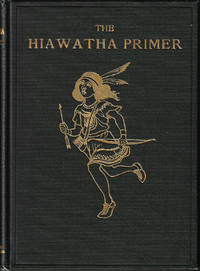
1898010292Boston: Houghton Mifflin 1898 1898. Green cloth ruled in blind pictorially stamped and titled in gilt minor rubbing to extremities erasure mark to endpaper pages slightly age-toned at edges. Easy-to-read stories poems and songs drawing from Native American mythology folklore and culture. Illustrated with 8 color plates by E Boyd smith other full- and partial-page artwork in b&w. Uncommon in such beautiful condition. Early Printing. Pictorial Cloth. Near Fine/No Jacket. Illus. by E Boyd Smith. 8vo. Houghton Mifflin hardcover
1898052665London: George Allen Ruskin House 1898. First Edition . Hardcover. Very Good Plus. 8vo. LONDON. FIRST EDITION : 1898. Hardback. 'Ruskin-green' cloth; gilt lettered spine with striking plant designs to spine and both boards. Top-edge gilt; others untrimmed as issued. Bright tight and clean. Minor wear only. Bookplate in the Arts and Crafts style; Florence Harris 1898. No owner name or internal markings. Slight browning to end-papers. VERY GOOD INDEED. viii 303 pages. Appendix I: Supplementary References Appendix II: Books of the Bible Quoted or referred to in this Volume. Useful reference tool; uncommon these days. 8vo. Will be well-packed for posting/shipping. Rosley Books for Antiquarian books CHS Cumberland Everyman GKC Inklings Keswick Literature MacDonald Rarities Theology and History. . SCARCE. <br/> <br/> George Allen, Ruskin House hardcover
18961000719.09Scribner's NY 1896. 1st American ed. Hardcover. Good. 4to. Hardcover green cloth no dj. Good condition for its age. Tiny nicks at upper spine two 1/4-inch & one 1/2-inch tear to lower spine cloth; 2-inch stain on cover. Moderate scuffing to rear board w/ board corners peeking through cloth; mild foxing to opening & closing few pgs. Contents clean binding & hinges tight. xxii 408 pp. 37 full-pg. mostly gravure plates 190 text illus. catalogue of works in rear. Scribner's, NY hardcover
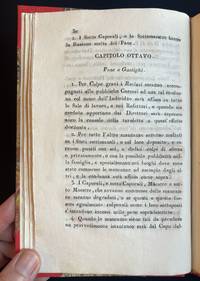
18184414Florence: presso Niccolò Carli 1818. 8vo 193 x 125 mm. 45 3 bl.; 37 1 bl. pp. Letterpress tables. The second part is an Appendix separately paginated with half-title and approbation at end dated 1818. A few small spots to title and last few pages. Modern half linen and marbled boards original rear wrapper bound in.<br /> <br /> Only Edition of the rules for the main Florentine workhouse for the destitute mainly children established by Napoleon in 1812 to honor the birth of his son the King of Rome on the site of two former monasteries in the Florentine suburb of Montedomini. The architect Giuseppe del Rosso combined the two monastic edifices creating one main building in a neoclassical style and a complex of six smaller buildings for workshops etc. <br /> <br /> The Pia Casa di Montedomini as it came to be known was not only a poorhouse but was a center for poor relief generally. The various categories of candidates for aid are set forth in the introduction: children or adults who were taken in by Montedomini or by other “pious establishments†in the city as permanent residents known as Reclusi; those who were given work during the day and who returned to their families at the end of the day; those who were given work to carry out at home; and those few who were granted financial help. The Reclusi were divided by age: children under 3 went to the Spedale degli Innocenti those aged 3 to 10 and 10 to 15 to two different orphanages and those who were disabled or too old to work to another hospice Spedale di Bonifazio. Thus families were broken up: this is acknowledged in the text. Blank sample forms are provided for the admission of each category.<br /> <br /> Most of the rules are devoted to the main Reclusi aged 15 and up. The first chapter outlines admissions procedures; chapters 2 and 3 describe their general living conditions and daily routines and the following chapters address details of work food clothing and bedding all paid for through the inhabitants’ labor. Not surprisingly given the Napoleonic inspiration the Reclusi were organized in quasi-military “brigades†divided by sex and type of work. The brigades were led by the most compliant and hard-working individuals male “Caporali†and female “Maestre†who wore differently colored uniforms from the others. Every moment of the day was strictly regimented and other than eating and sleeping there was no time for anything other than work except for two hours of recreation on the occasional special feast day when only selected individuals were allowed to leave the Casa in strictly controlled groups.<br /> <br /> The daily life of these children and young adults who were imprisoned “for their own good†is hard to fathom for a modern reader: they rose at 6 or 6:30 prayed worked until noon finally were allowed to eat and then went back to work until 11 or 11:30 pm. Most of the work seems to have involved sewing or needlework; some worked for tailors or other textile workers. Dinner was followed by prayers and bedtime silence was imposed at 1 am. Meals were spartan: the rations of each ingredient are prescribed down to the ounce. Lunch was 2 ounces of soup 10 ounces of bread and 6 ounces of meat or a comparable quantity of vegetables. Dinner was bread and vegetables. One suspects that many barely survived in these conditions. <br /> <br /> Other chapters and the Appendix are devoted to the administration of the Casa accounting and record-keeping work assignments and payment and relations with extra-institutional employers.<br /> <br /> I locate no copies in American libraries. R. Uccelli Contributo alla Bibliografia della ToscanaC 1922 2575. presso Niccolò Carli unknown
1899BOOKS25659London UK: Longmans Green & Co. Good plus condition/No Dustjacket. 1899. 3rd. Printing. Cloth. With 36 illustrations. . 8vo. 183 32 pp. Cover heavily rubbed spine browned; back hinge shaken ownership and label foxing . Longmans, Green & Co. hardcover
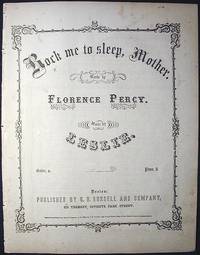
1863000912Boston Mass: G.D. Russell and Company 1863. Very Good. Lyrics by Florence Percy Elizabeth Chase Akers Allen although the authorship of the poem first published in the June 9 1860 issue of the Saturday Evening Post has been the subject of dispute; music by Ernest Leslie. 5 1 p.: music; 34 cm. Title page of this sheet music has decorative engraved border. Copyright 1860 by J.M. Russell. G.D. Russell and Company George D. Russell and Joseph M. Russell published from 1863 to 1877. In Very Good Condition: disbound; some soiling and foxing; otherwise solid. An early and very scarce setting of this sentimental poem to music. G.D. Russell and Company unknown
188914905NY: John Wiley & Sons. Very Good. 1889. First Edition. Hardcover. The covers are soiled and the front inner hinge is starting to crack. Just a bit of rubbing at the corners & spine ends. Otherwise nice & tight. The contents are "fine". Owner's stamp inside the covers an early assayer . ; Small 4to 9" - 11" tall; 200ads pages . John Wiley & Sons hardcover
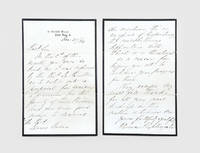
1864177463London: 21 December 1864. Your great kindness on behalf of this good man's family Nightingale writes to Davis 1820-1883 a clergyman and headmaster to rally support for the family of the recently deceased Lutheran minister Theodor Fliedner 1800-1864 Nightingale's old friend and tutor whom she viewed as a father figure. Fliedner founded and ran 30 deaconess houses where women could train in theology and nursing and his family required financial aid to continue his work. Nightingale met Theodor Fliedner in 1841 and in 1850 became a temporary resident at his flagship deaconess community the Kaiserswerther Diakonie. The women who resided there had committed to a holy life and taken vows. However they were not enclosed as they were trained to go out into the community to care for the sick. Further they could leave at any point if they wished. It was an ideal place for Nightingale for whom nursing was a religious vocation and the time she spent there was "key in the development of her mission" Macdonald p. 7. In 1851 she wrote her first publication issued anonymously titled The Institute of Kaiserswerth on the Rhine in which she recommended Fliedner's deaconess houses to English women. She commented on "the delicacy the cheerfulness the grace of Christian kindness the moral atmosphere" in the hospitals and "the kindness of the sisters in imparting their own knowledge" Nightingale p. 19. The Fliedners and Nightingale remained close long after her stay. In 1853 she became godmother to their child and upon Fliedner's death Nightingale felt that she had lost a father. Determined to support his family in their "continuance of the work" Nightingale wrote and printed an appeal and engaged a network of clergymen to promote the cause. To this end she writes to Reverend Davis that "you were so kind. as to enter into a proposal for sending a provision for the family" and asks that he circulate her pamphlets "amongst the likeliest members" of his community. Bifolium and single sheet 177 x 113 mm. Autograph letter written across 3 pages letterhead of 27 Norfolk Street Park Lane mourning borders. Previously folded occasional small splits at ends of folds: in very good condition. McDonald Lynn ed. Florence Nightingale's Spirital Journey: Biblical Annotations Sermons and Journal Notes 2001; Nightingale Florence The institution of Kaiserswerth on the Rhine for the practical training of deaconesses under the direction of the Rev. Pastor Fliedner 1851. unknown
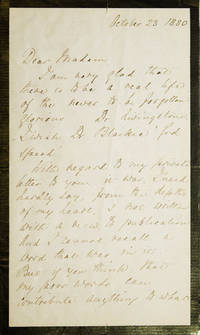
1880320579Derby 1880. 3pp. folded sheet mourning stationery. With the original mailing envelope. Usual fold. Old tape repair on conjugate leaf with resulting stain affecting a few words of text but not affecting signature. 3pp. folded sheet mourning stationery. With the original mailing envelope. "I am very glad that there is to be a real life of the never to be forgotten glorious Dr. Livingstone. I wish Dr. Blaikie God speed. With regard to my private letter to you it was I need hardly say from the depths of my heart & not written with a view to publication and I cannot recall a word that was in it. But if you think that my poor words can contribute anything to what must be the object of every English speaking nation & not only this but of every man woman & child all over the world viz. to make known one who has opened the way of peace & not terror to those who were 'lying in darkness & the shadow of death' on so large a portion of the globe. I feel that I cannot decline what otherwise is so repugnant to me . And pray believe me ever the faithful servant of yourself & the great memory of as true a hero saint as ever lived ."<br /> <br /> Written on the occasion of the preparation for imminent publication of William Garden Blaikie's biography of Livingstone published 1880 the letter gives permission for a letter of hers to be published in which she said of Livingstone: "We cannot console ourselves for our loss. He is irreplaceable" p. 458 and called him "the greatest man of his generation unknown
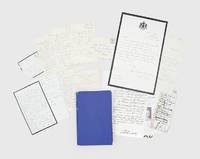
1892184236London: 1892-1938. I do not for a moment doubt that you will master or mistress the situation A group of encouraging letters to a younger nurse and mentee. De Laney trained at Nightingale's school for nurses and afterwards held senior positions in hospitals around the country. Nightingale's letters came at critical points of her career offering considered advice support and sympathy. They are accompanied by documents from de Laney's second occupation as housekeeper for the House of Lords. Amelia de Laney 1848-1940 attended the Nightingale Training School at St Thomas's Hospital between 1883 and 1886. Nightingale sent the first letter in 1891 when de Laney was considering leaving the Birmingham Workhouse Infirmary for a more senior role at the Royal Hospital for Consumption in Ventnor. Nightingale was cautiously supportive of the move. She wrote that de Laney "should have the promotion which you have well earned" but observed that the role came with a long list of duties: in addition to managing the care of patients and supervising her staff she would need to hire and train nurses look after the ten buildings and oversee the washing and cooking. Regardless Nightingale affirmed that "I do not for a moment doubt that you will master or mistress the situation if you are appointed". Nightingale provided Ventnor with an excellent reference for de Laney but the board rejected her for being insufficiently well-born. Instead de Laney moved in 1894 to a position as matron at the newly founded Epileptic Colony in Chalfont St Peter. Nightingale privately expressed her concerns to her friend Henry Bonham Carter commenting that the work was "entirely new. It is not hospital work at all. It seems to me an immense responsibility" McDonald pp. 230-31. Her concerns were proved valid. Nightingale's second letter dated April 1897 enquired after reports that de Laney had left her post. In her third letter dated May the same year Nightingale wrote to de Laney that "I grieve that you were obliged to resign & that you so much need rest" reassuring her that "you have done a good work & you will do much more good work for our cause". The fourth letter sent a month after extended Nightingale's ongoing sympathy for de Laney's "grief and distress". De Laney ultimately left nursing altogether. In 1902 she began working in the House of Lords holding the position until retirement in 1919. The correspondence here includes notices of appreciation sent on behalf of the Archduchess Maria Annunciata and Queen Alexandra. Other items include a letter from Nightingale seeking de Laney's address; an invitation card for an event at the Nightingale Training school; a document granting de Laney rooms in Westminster; a copy of Cecil Woodham-Smith's Florence Nightingale 1820-1910 1950; and a collection of clippings on Nightingale. Together 10 items: 5 autograph letters signed in black ink and pencil 1 across 2 single sheets with mourning borders 223 x 125 mm and four on bifolia 177 x 115 mm with 11 sides of writing; typed letter signed on single sheet notepaper; facsimile letter from the Home Office; invitation card; group of ephemera including newspaper cuttings and manuscript list; book octavo original blue cloth spine lettered in silver top edge blue. Modern bookplate of historian Arnold Daly Briscoe to front pastedown of volume extremities rubbed with occasional spots of wear; letters lightly creased from folding some lightly foxed one partially split along former folds. Overall a very well-preserved collection. Lynn McDonald ed. Florence Nightingale: Extending Nursing. Collected Works of Florence Nightingale vol. 13 2009. hardcover
1865187671London: Emily Faithfull Printer and publisher in ordinary to Her Majesty Victoria Press 1865. The work of destruction has at the same time begun First edition offprint issue of Nightingale's study of the treatment of indigenous Australians in British hospitals. Amid the European expansion and settler conflict of 19th-century Australia the Aboriginal population was declining rapidly. British hospitals continued to provide treatment to indigenous Australians whose survival in the colony was viewed as a matter of national concern. By 1865 Nightingale was working to implement her reforms on an institutional scale and had contributed several commissions examining public health in British colonies. Much of her data for the current paper was gathered by missionaries: a key recommendation was an official infrastructure for collecting mortality statistics. Nightingale concludes that poor sanitation and alcohol were among the primary causes for higher death rates but she also notes that European contact itself was damaging the Aboriginal population: "as soon as native habits and customs begin to undergo change under European influences the work of destruction has at the same time begun" p. 3. Nightingale's paper was originally published in Transactions of the National Association for the Promotion of Social Science the same year: Bishop and Goldie list the journal issue first but no formal priority has been established. Octavo pp. 8. Original printed wrappers. Front wrapper re-attached otherwise a very good copy indeed. Belt 15; Bishop & Goldie 95 ii. Lynn McDonald Florence Nightingale: An Introduction to Her Life and Family 2010. unknown
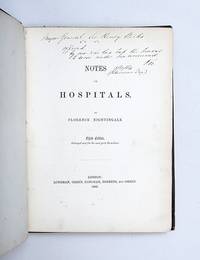
1863161784London: Longman Green Longman Roberts and Green 1863. Inscribed to her only supporter in the British military establishment Presentation copy inscribed by the author on the title page "Major General Sir Henry Storks &c &c offered by one who has had the honour to serve under his command. F.N. 5/11/64 Inkermann Day". During the Crimean War Henry Knight Storks 1811-1874 commanded the British military establishments in Turkey from the Bosphorus to Smyrna and was promoted major-general. He superintended the final British withdrawal from Turkey at the end of the war. Nightingale inscribed this copy on the tenth anniversary of the Battle of Inkerman a major British victory. Storks was a key ally in Nightingale's efforts to reform nursing in the Crimea reforms she often felt were obstructed by the British military authorities. She wrote on 6 March 1856 "I have therefore fought my own battles. I can truly say unsupported by any official out here with the exception of Genl. Storks" in Goldie p. 225. In May 1856 Nightingale was so exhausted by illness and overwork that she thought she was dying and wrote to Storks with her last requests: "As you are of all those in office whether at home or abroad the officer who has given the most steady and constant support to the work entrusted to me by her Majesty's Government I venture to appeal to you to continue that support after my death and to carry out as far as possible my last requests" Goldie. p. 265. Nightingale recovered and in 1857 secured Storks's appointment to the Royal Commission on the sanitary condition of the army. For many years after they continued to correspond on the welfare of soldiers. Nightingale's Notes on Hospitals was first published in 1858 and the second edition in 1859. This third edition was completely revised and substantially expanded and as Nightingale wrote in her preface "it is in reality a new book". The work addresses sanitation and hospital architecture arguing for the "pavilion" plan in which wards were separated into wings to improve ventilation and sunlight and to reduce infection by isolating contagious patients. The book "won Nightingale praise and inaugurated her career as an advisor to medical professionals all around the world especially those involved with hospital and infirmary construction" Orlando Women's Writing in the British Isles. Quarto. With 11 plates 2 maps of London and Paris 3 tables all folding. Original purple cloth spine lettered in gilt covers decorated in blind brown endpapers. Housed in custom red cloth solander box. Minor repairs to spine joints and inner hinges wear at extremities with loss at head of spine not affecting lettering contents clean plan of Paris with small chip to outer edge affecting border without loss to image. A good copy. Bishop & Goldie 101. Sue Goldie ed. Florence Nightingale: Letters from the Crimea 1997. hardcover
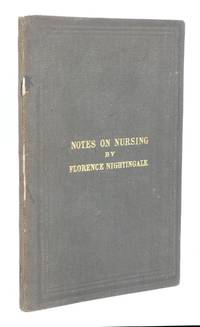
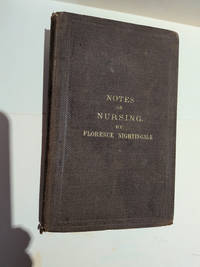
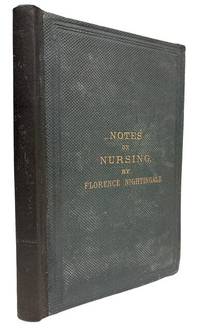
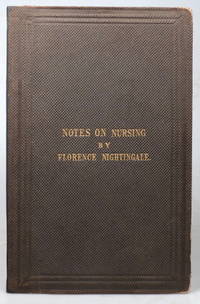
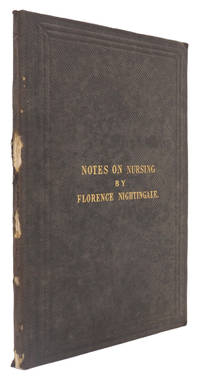
1860355490723774London 1860. First Edition. Hard Cover. London: Harrison 59 Pall Mall Bookseller to the Queen nd 1860. First UK Edition First Issue. 79 pages. Publisher's dark brown pebbled cloth-covered flexible paper boards with gilt stamped title lettering to front board and triple blind rules to perimeter. Yellow end-papers with the Publisher's printed advertisements on front pastedown dated 1860 for Burke's Peerage and on the rear end-papers for the Foreign Office list. This copy does NOT carry 'The right of translation is reserved' on title page under the publisher's imprint. The earliest examples of the first issue were printed with plain end-papers but almost immediately the publisher's put in advertisement end-papers as per this copy. Some time in February 1860 the book was reissued its many textual errors still uncorrected but with the 'The right of translation is reserved' inserted on the title page. NB: what differentiates this copy is that it does not have the the Right of Translation slug to the title page so it is definitely first issue. A VG copy that has benefitted from the spine having been professionally and sympathetically replaced and the inner hinges strengthened by a skilled bookbinder. There is a neat inscription from 1876 to the verso of the title page. Bishop & Goldie: A Bio-Bibliography of Florence Nightingale 1962. Florence Nightingale 1820-1910 was an English social reformer statistician and the founder of modern nursing. She laid the foundation of professional nursing with the establishment of her nursing school at St Thomas' Hospital in London. Photographs/scans available upon request. hardcover
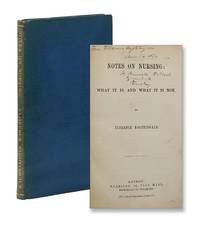
1860140947035London: Harrison 1860. First Edition Early Issue. Near Fine. First Edition early issue. Signed by the author on the title page and inscribed "From Florence Nightingale Mar 14 1860"; additional ownership signature in a different hand of "A. Russell Pollock Greenhill Paisley" inked beneath Nightingale's inscription. Bound in twentieth-century blue morocco with spine lettered in gilt with original brown limp cloth covers bound in at front and rear cup ring stain to upper cover. With "The Right of Translation is reserved." at foot of title page original yellow endpapers with printed advertisements dated 1860. Near Fine with light wear to binding fading to spine and lightly so to covers. Offsetting to modern cream endsheets from wide turn-ins former owner name in light pencil to front free endpaper. Inked date to original front pastedown contents tanned. <p>Alexander Russell Pollock 1821-1884 was the son of James Pollock and Isabella Russell of Greenhill Paisley Scotland. Alexander was a partner in the firm James Pollock and Co. a merchant and yarn agent based in Causeyside. He married Margaret Amelia Pollock the daughter of Matthew Pollock in Stillorgan Dublin on 27 April 1859 and they had 19 children in the space of 16 years. Alexander died on 23 October 1884 in Dieppe Seine-Maritime France at the age of 63 and was buried in his hometown. An obituary was published in the Paisley Gazette on November 1 1884. Alexander amassed a large library and collection of coins medals manuscripts and other antiques which were sold in a series of auction sales in 1889.<p>Signed copies of this landmark medical work are scarce. "Defining nursing as 'helping the patient to live' Nightingale 'introduced the modern standards of training and esprit de corps and early grasped the idea that diseases are not 'separate entities which must exist like cats and dogs' but altered conditions qualitative disturbances of normal physiological processes through which the patient is passing. While she did not know the bacterial theory of infectious diseases she realized that absolute cleanliness fresh air pure water light and efficient drainage are the surest means of preventing them" Garrison-Morton History of Medicine p. 773. Bishop & Goldie p. 16. Harrison unknown
1860DR6BRWN1302London: Harrison 1860. Original limp cloth covered covers gilt title to spine. 21.5cm x 14cm. 2 ads to front end-papers 79pp 2 ads to rear end-papers. 1st edition later issue 1860. Adverts on front end-papers for 1860 edition of Barker's peerage. Slight fraying to spine edges. Small water staining to lower edges of end-papers. A decent copy. dr6. Soft Cover. Good. Harrison Paperback
18604447264<p>20cm by 13cm 1402pp covers worn slight spine lean light pencil marks on flyleaf blank page beside title page missing rear flyleaf missing smudge on title page one page loosefrom binding no missing pages otherwise unmarked very good condition.</p> D. Appleton and Company hardcover
186019423New York: D. Appleton and Company. Very Good-. 1860. First American Edition. Hardcover. Full dark green pebbled cloth. Lettered in gilt to the front. Four pages of publisher's ads to the rear. Bumps and wear to the corners and spine ends. The boards are showing at the corners. Chips to the upper spine end. A 5/8" split to the lower front spine end. To pages 31-76 there are tears and creases to the fore edge margins. Foxing in varying degrees is found throughout. The upper 3/4" is clipped off the title page. No lettering is affected. Good-very good-. ; 8vo 8" - 9" tall; 140 pages . D. Appleton and Company hardcover
186096102New York: D. Appleton and Company 1860. 1st American edition. Hardcover. Good. 140p. plus 4p. publisher's advertisements. Original green cloth. 20 cm. Rebacked in black with new backstrip tight against spinespine glued down. Original front and back covers preserved with some loss of cloth at cover corners. New yellow front free endpaper added closely matching the color of the otherwise original yellow endpapers. Visible evidence of neat removal of bookplates or labels from front pastedown. "17802" inked on title-page. Scattered mostly light to moderate foxing. Covers slightly worn. Tape remnants inside front cover. New front free endpaper. Moderate foxing on some pages. Modest page rippling. First American edition of a cornerstone book on nursing. Among the other books listed in Appleton's advertisements is the recently published first American edition of Darwin's "On the Origin of Species. D. Appleton and Company hardcover
18608138London: Harrison 59 Pall Mall 1860. 1860 79. 1 p. Publisher's limp black cloth titled in gilt to the front cover. The spine expertly repaired and it has a small chip to the cloth at the top of both boards. The yellow endpapers are printed with advertisements including Burke's Peerage for 1860 and The Foreign Office List for 1860. 'About 1860' written at he foot of the title page by a more recent owner. The text is otherwise clean and crisp. Published at 5/- the book proved extremely popular and 15000 copies were printed by March 1860. This copy is in an early state with The right of Translation is reserved at the foot of the title page but with all the textual errors mentioned by Bishop and Goldie uncorrected. London: Harrison, 59, Pall Mall, hardcover
186077671London: Harrison and Sons 1860. First edition first printing. 79 pages with 'The right of translation is reserved' printed on title page. Undated but the date 1860 is listed on the advertisement pages on front endpapers. Advertisement pages also on rear endpapers. Front endpaper and title page detached from spine but extant. Front board nearly detached from spine only held to binding in two places. Very light spotting on some pages but mostly clean. Chipping to edges of boards with some loss to boards on head and foot of spine. Please inquire for photos of the book. First Edition First Printing. Hard. Good. 8vo. Harrison and Sons Hardcover
186041976London: Harrison 1860. First edition second issue. 8vo. 79 1 pp. Publisher's black pebbled cloth with gilt lettering to the upper board. Later signature to title page. Neatly rebacked with a near matching cloth else very good. Nightingale's second published work an immense success that sold 15000 copies in a couple of months. ".an incomparable treatise but. more than that; it is an alphabet of household hygiene. Dealing as it does with the basic principles of nursing it has never dated and the principles are as valid today as when first formulated." Bishop & Goldie pp. 15-18. First published the same year. The second issue includes the "Right of Translation" note to the title page absent from the first issue. The advertisements to the endpapers feature Burke's Peerage and Baronetage for 1860 on the front pastedown and the "Comparative Grammar of the Dravidian" appears as the last item on Harrison's list to the rear. This copy also accords with all of the issue points of the early issues recorded by the bibliographers apart from the final one the last chapter headline reads "Conclusion". This point however features less consistently than the others. London: Harrison unknown
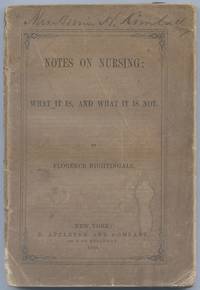
1860540671New York: D. Appleton and Company 1860. Softcover. Very Good. First American edition wrappered issue. Small octavo. 140 4pp. Owner signature of Mrs. Annie H. Kimball on front wrap some light spotting on the wrappers and first and last leaf lacks about the bottom third of the paper covered spine but a sound and attractive about very good copy in the fragile wrappers. The record of Nightingale's experiences as a manager of nurses in the Crimean War the book was heavily relied upon during the American Civil War. The first American edition is moderately uncommon the wrappered issue is excessively so. D. Appleton and Company unknown
18605434London: Harrison Bookseller to The Queen 1860. FIRST EDITION early issue 8vo pp. 79 1. Original dark brown limp pebbled cloth boards boards bordered with triple blind rules front board lettered direct in gilt. Spine rather nibbled front joint correspondingly weakened boards somewhat mottled. An early printing of Nightingale’s enormously influential nursing book first published in 1860 and reprinted frequently over the following decades. This copy has ‘the right of translation is reserved’ on the title-page ads to the endpapers dated 1860 and 5 of the 6 issue points identified by Bishop & Goldie as denoting an earlier printing. The sixth issue point the corrected heading on p.73 is noted as potentially later being found in both states in copies with all other corrections made. But in this copy that ‘later’ correction is accompanied by the other five in the earlier uncorrected state - perhaps disproving the assumed priority. Bishop & Goldie 4. Harrison, Bookseller to The Queen hardcover
186142364NY: D. Appleton & Company. Fair with no dust jacket. 1861. Hardcover. Original brown pebbled cloth gilt titles. Spine perished tape strips hold spine. Bottom edge of book 2" dampstained. Bookplate. First signature nearly detached. Pages lightly browned. ; 8vo 8" - 9" tall; 140 4 ads pages . D. Appleton & Company hardcover