Lundborg, FlorenceBiblio.com

195 résultats
18966353San Francisco: William Doxey 1896. 18 1/2 x 11 1/4 in. Magnificent and large graphic poster by Florence Lundborg 1871-1949 who was an American illustrator poster artist and painter known for her book illustrations and wartime paintings. She was a member with Gelett Burgess of the San Francisco group “Les Jeunes who published The Lark in the 1890’s and Lundborg designed some of the covers. This large-format three-color woodcut poster by Florence Lundborg 1871-1949 advertising the noted Turn-of-the- Century Bay area literary journal features Robin Hood blowing a hunting horn over a field of green. Right vertical margin trimmed close old folds thumbtack holes mounted on linen and matted. Very good. Very scarce. [William Doxey] unknown
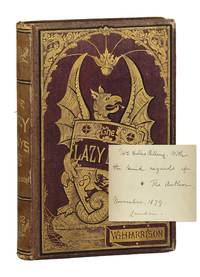
187730067London: William H. Harrison 1877. Very Good. London: William H. Harrison 1877. First Edition. Octavo 18.5cm.; publisher's purple pictorial cloth designed by Florence Claxton elaborately embossed in gilt and black all edges gilt black glazed endpapers; iv5-156pp. Cloth a bit scuffed and worn along extremities with brief exposure at corners and spine ends spine cloth faded brief split to rear joint rear hinge cracked but holding textblock slightly shaken in binding else a Very Good bright example. <br /> Inscribed on front flyleaf to the American medium "Mrs. Hollis Billing With the kind regards of The Author / November 1879. London."<br /> <br /> Scarce collection of humorous poems and vignettes by the British author and editor of The Spiritualist. Running in the London Spiritualist circles Harrison would presumably have made the acquaintance of the inscribee American medium Mary Hollis Billing and her husband who served on the 1877 Committee of the Theosophical Society in London. <br /> <br /> Contents only glancingly Spiritualist though true to form the imprint provides the publication date based on different calendars: A.D. 1877 Popular Chronology; A.M. 5877 Torquemada; A.M. 50800077 Huxley. Like many Spiritualists of the day Harrison was especially interested in photography and several pieces in this volume relate to the art and science of the form. Notably "The Lay of the Photographer" describes in nineteen stanzas the chemical transformations of pyroxylin iodine and silver to develop photographs. Needless to say the poem is not very good.<br /> <br /> Advertisements for the present work attribute the cover design to British illustrator cartoonist and fringe Pre-Raphaelite Florence Claxton 1838-1920. One contemporary reviewer aptly describes the book as "handsomely-bound and griffin-guarded" Liverpool Daily Courier. William H. Harrison unknown
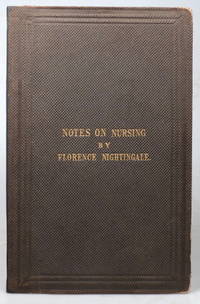
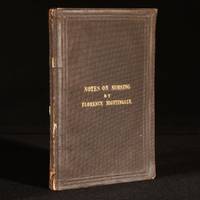
186041976London: Harrison 1860. First edition second issue. 8vo. 79 1 pp. Publisher's black pebbled cloth with gilt lettering to the upper board. Later signature to title page. Neatly rebacked with a near matching cloth else very good. Nightingale's second published work an immense success that sold 15000 copies in a couple of months. ".an incomparable treatise but. more than that; it is an alphabet of household hygiene. Dealing as it does with the basic principles of nursing it has never dated and the principles are as valid today as when first formulated." Bishop & Goldie pp. 15-18. First published the same year. The second issue includes the "Right of Translation" note to the title page absent from the first issue. The advertisements to the endpapers feature Burke's Peerage and Baronetage for 1860 on the front pastedown and the "Comparative Grammar of the Dravidian" appears as the last item on Harrison's list to the rear. This copy also accords with all of the issue points of the early issues recorded by the bibliographers apart from the final one the last chapter headline reads "Conclusion". This point however features less consistently than the others. London: Harrison unknown
18608138London: Harrison 59 Pall Mall 1860. 1860 79. 1 p. Publisher's limp black cloth titled in gilt to the front cover. The spine expertly repaired and it has a small chip to the cloth at the top of both boards. The yellow endpapers are printed with advertisements including Burke's Peerage for 1860 and The Foreign Office List for 1860. 'About 1860' written at he foot of the title page by a more recent owner. The text is otherwise clean and crisp. Published at 5/- the book proved extremely popular and 15000 copies were printed by March 1860. This copy is in an early state with The right of Translation is reserved at the foot of the title page but with all the textual errors mentioned by Bishop and Goldie uncorrected. London: Harrison, 59, Pall Mall, hardcover
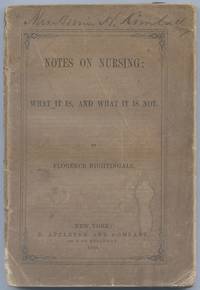
1860540671New York: D. Appleton and Company 1860. Softcover. Very Good. First American edition wrappered issue. Small octavo. 140 4pp. Owner signature of Mrs. Annie H. Kimball on front wrap some light spotting on the wrappers and first and last leaf lacks about the bottom third of the paper covered spine but a sound and attractive about very good copy in the fragile wrappers. The record of Nightingale's experiences as a manager of nurses in the Crimean War the book was heavily relied upon during the American Civil War. The first American edition is moderately uncommon the wrappered issue is excessively so. D. Appleton and Company unknown
1892C74216J. B. Millet Company. As New. 1892. Hardcover. FREE UPGRADE to Courier/Priority Shipping Upon Request - IN STOCK AND IMMEDIATELY AVAILABLE FOR SHIPMENT - AS NEW THE TEXT BLOCK IS PRISTINE CLEAN UNMARKED AND IN EXCELLENT CONDITION - - TWO 2 VOLUME SET-LIMITED EDITION NUMBERED COPY. Text in English. Includes 14 Phototypes from Original Drawings by Henri Fantin-Latour Fifteen Portraits of Richard Wagner & 113 Text-Cuts; Scenes from His Operas; Views of Theatres Autographs and Numerous Caricatures -- with a bonus offer-- - May be EITHER: out of print OOP and extremely rare in this pristine condition; signed by author or contributor; or a first or special edition; inquire for details . J. B. Millet Company hardcover
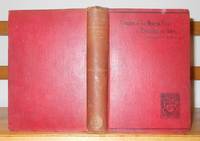
1892014946London: Swan Sonnenschein 1892. First authorized U.K. Edition. Book measures 18.5x13.5.cm. xix1298pp 2 4pp booklist. Bound in original publishers red cloth with blackgilt crest black and gilt lettering. Cloth lightly rubbed nicked dirt marked gilt lettering crest faded lean on spine. Generally binding in good condition. Internally light spotting to first few pages very occasional pencil marking. Pages in good clean condition. A good copy. F. first authorized U.K. Edition. Cloth. Near Very Good. 8vo. Swan Sonnenschein Hardcover
1860951P35London: Harrison 1860. First edition. Cloth. Good Only. 8.5" by 5.5"; 9" by 6". None. Florence Nightingale's pioneering work on nursing written after her time in Crimea the first edition second issue of this monumental publication. The first edition second issue with "The right of Translation is reserved" to the tail of the title page and adverts for the 1860 'Burke's Peerage' and 'The Foreign Office List' to the front paste down and the final advert to the rear paste down being for 'Comparative Grammar of the Dravidian'. Endpapers feature adverts and are pale yellow.In a custom cloth solander box in a very good indeed condition.Florence Nightingale's sought after significant volume on nursing giving a variety of hints and advice written after her times in Crimea.This is an incredibly important work the first of its kind ever written and is modern in its practice written both for study of professionals and for people who would be nursing at home. Nightingale used this work as a basis for the curriculum at the Nightingale School. 'Notes on Nursing' also sold very well to the general public.Chapters include 'Ventilation and Warming' 'Health of Houses' 'Noise' 'Taking Food' 'Bed and Bedding' 'Light' 'Cleanliness of Rooms and Walls' and more. In the original publisher's cloth binding in a custom cloth solander box. Externally a little worn front joint and hinge are tender and require careful handling. Loss to the backstrip. Rear joint and hinge are starting with a tear to the tail. A few light marks and rubbing. Internally firmly bound. Pages are very lightly age-toned and clean. Solander box is smart with a few light marks and a small tear to the spine in a very good indeed condition. Good Only Harrison hardcover
186077671London: Harrison and Sons 1860. First edition first printing. 79 pages with 'The right of translation is reserved' printed on title page. Undated but the date 1860 is listed on the advertisement pages on front endpapers. Advertisement pages also on rear endpapers. Front endpaper and title page detached from spine but extant. Front board nearly detached from spine only held to binding in two places. Very light spotting on some pages but mostly clean. Chipping to edges of boards with some loss to boards on head and foot of spine. Please inquire for photos of the book. First Edition First Printing. Hard. Good. 8vo. Harrison and Sons Hardcover
189274216J. B. Millet Company. As New. 1892. Hardcover. FREE UPGRADE to Courier/Priority Shipping Upon Request - IN STOCK AND IMMEDIATELY AVAILABLE FOR SHIPMENT - AS NEW THE TEXT BLOCK IS PRISTINE CLEAN UNMARKED AND IN EXCELLENT CONDITION - - TWO 2 VOLUME SET-LIMITED EDITION NUMBERED COPY. Text in English. Includes 14 Phototypes from Original Drawings by Henri Fantin-Latour Fifteen Portraits of Richard Wagner & 113 Text-Cuts; Scenes from His Operas; Views of Theatres Autographs and Numerous Caricatures J. B. Millet Company hardcover
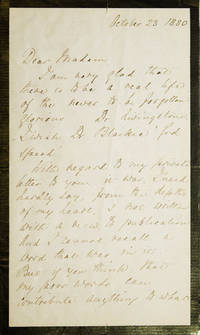
1880320579Derby 1880. 3pp. folded sheet mourning stationery. With the original mailing envelope. Usual fold. Old tape repair on conjugate leaf with resulting stain affecting a few words of text but not affecting signature. 3pp. folded sheet mourning stationery. With the original mailing envelope. "I am very glad that there is to be a real life of the never to be forgotten glorious Dr. Livingstone. I wish Dr. Blaikie God speed. With regard to my private letter to you it was I need hardly say from the depths of my heart & not written with a view to publication and I cannot recall a word that was in it. But if you think that my poor words can contribute anything to what must be the object of every English speaking nation & not only this but of every man woman & child all over the world viz. to make known one who has opened the way of peace & not terror to those who were 'lying in darkness & the shadow of death' on so large a portion of the globe. I feel that I cannot decline what otherwise is so repugnant to me . And pray believe me ever the faithful servant of yourself & the great memory of as true a hero saint as ever lived ."<br /> <br /> Written on the occasion of the preparation for imminent publication of William Garden Blaikie's biography of Livingstone published 1880 the letter gives permission for a letter of hers to be published in which she said of Livingstone: "We cannot console ourselves for our loss. He is irreplaceable" p. 458 and called him "the greatest man of his generation unknown
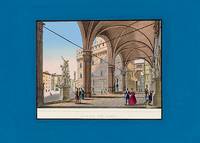
1820100050AG1820. Florence / Pisa c.1820. Original Aquatint hand-applied water-colouring over copper engraving. Plate Sizes vary: 31 cm x 22.1 cm. Sheet Sizes vary: 34.6 cm x 26.5 cm. Original Gouache-Aquatint hand-applied water-colouring over copper engraving. Florence/Pisa c.1820. Plate-Sizes vary: c. 31 cm x 22.1 cm. Sheet Sizes vary: c. 34.6 cm x 26.5 cm. Besides some smaller damages to the Ponte S. Trinita-artwork in very good actually stunning condition. Clean crisp and brightly coloured. All of these artworks are beautifully framed and the price includes worldwide free shipping per UPS - courier. The Longing for Italy the Italiensehnsucht of the german - speaking countries was forced by Johann Wolfgang von Goethe's Italian Travels and sent scores of young and old to Italy's shores countryside and cities. The Grand Tour was the 17th- and 18th-century custom of a traditional trip of Europe undertaken by upper-class young European men and women of sufficient means and rank typically accompanied by a chaperone such as a family member when they had come of age about 21 years old. The custom - which flourished from about 1660 until the advent of large-scale rail transport in the 1840s and was associated with a standard itinerary - served as an educational rite of passage. Though the Grand Tour was primarily associated with the British nobility and wealthy landed gentry similar trips were made by wealthy young men of other Protestant Northern European nations and from the second half of the 18th century by some South and North Americans. By the mid 18th century the Grand Tour had become a regular feature of aristocratic education in Central Europe as well although it was restricted to the higher nobility. The tradition declined as enthusiasm for neo-classical culture waned and with the advent of accessible rail and steamship travel. Wikipedia unknown
1860355490723774London 1860. First Edition. Hard Cover. London: Harrison 59 Pall Mall Bookseller to the Queen nd 1860. First UK Edition First Issue. 79 pages. Publisher's dark brown pebbled cloth-covered flexible paper boards with gilt stamped title lettering to front board and triple blind rules to perimeter. Yellow end-papers with the Publisher's printed advertisements on front pastedown dated 1860 for Burke's Peerage and on the rear end-papers for the Foreign Office list. This copy does NOT carry 'The right of translation is reserved' on title page under the publisher's imprint. The earliest examples of the first issue were printed with plain end-papers but almost immediately the publisher's put in advertisement end-papers as per this copy. Some time in February 1860 the book was reissued its many textual errors still uncorrected but with the 'The right of translation is reserved' inserted on the title page. NB: what differentiates this copy is that it does not have the the Right of Translation slug to the title page so it is definitely first issue. A VG copy that has benefitted from the spine having been professionally and sympathetically replaced and the inner hinges strengthened by a skilled bookbinder. There is a neat inscription from 1876 to the verso of the title page. Bishop & Goldie: A Bio-Bibliography of Florence Nightingale 1962. Florence Nightingale 1820-1910 was an English social reformer statistician and the founder of modern nursing. She laid the foundation of professional nursing with the establishment of her nursing school at St Thomas' Hospital in London. Photographs/scans available upon request. hardcover
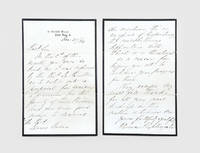
1864177463London: 21 December 1864. Your great kindness on behalf of this good man's family Nightingale writes to Davis 1820-1883 a clergyman and headmaster to rally support for the family of the recently deceased Lutheran minister Theodor Fliedner 1800-1864 Nightingale's old friend and tutor whom she viewed as a father figure. Fliedner founded and ran 30 deaconess houses where women could train in theology and nursing and his family required financial aid to continue his work. Nightingale met Theodor Fliedner in 1841 and in 1850 became a temporary resident at his flagship deaconess community the Kaiserswerther Diakonie. The women who resided there had committed to a holy life and taken vows. However they were not enclosed as they were trained to go out into the community to care for the sick. Further they could leave at any point if they wished. It was an ideal place for Nightingale for whom nursing was a religious vocation and the time she spent there was "key in the development of her mission" Macdonald p. 7. In 1851 she wrote her first publication issued anonymously titled The Institute of Kaiserswerth on the Rhine in which she recommended Fliedner's deaconess houses to English women. She commented on "the delicacy the cheerfulness the grace of Christian kindness the moral atmosphere" in the hospitals and "the kindness of the sisters in imparting their own knowledge" Nightingale p. 19. The Fliedners and Nightingale remained close long after her stay. In 1853 she became godmother to their child and upon Fliedner's death Nightingale felt that she had lost a father. Determined to support his family in their "continuance of the work" Nightingale wrote and printed an appeal and engaged a network of clergymen to promote the cause. To this end she writes to Reverend Davis that "you were so kind. as to enter into a proposal for sending a provision for the family" and asks that he circulate her pamphlets "amongst the likeliest members" of his community. Bifolium and single sheet 177 x 113 mm. Autograph letter written across 3 pages letterhead of 27 Norfolk Street Park Lane mourning borders. Previously folded occasional small splits at ends of folds: in very good condition. McDonald Lynn ed. Florence Nightingale's Spirital Journey: Biblical Annotations Sermons and Journal Notes 2001; Nightingale Florence The institution of Kaiserswerth on the Rhine for the practical training of deaconesses under the direction of the Rev. Pastor Fliedner 1851. unknown
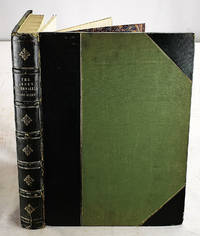
18902308170019London: Lyne & Sons for R.H. Porter 1890 1896. 1890. First Edition. Hardcover. Good. Orchidology: Great Flower Books Rare perhaps only 150 copies were printed. Complete in 9 parts bound in one volume. Folio 45 x 32 cm. Bound in contemporary green half morocco. Gilt spine. Crack at front cover joint. Includes 87 hand-colored lithographic plates a double-page map of Central and South America and 61 wood-engraved text illustrations. Nine original printed wrappers bound in at end. <br> "The person who makes the original drawings from nature should also lithograph the plates and indicate the colours to be used by the colourist for by this means the works passes through fewer hands and is more likely to turn out accurate. I have therefore pursued this method throughout the present work and have besides touched up the colouring of every plate sent out numbering nearly 9000" Introduction. Great Flower Books p 152; Nissen BBI 2185; Stafleu & Cowan TL2 18.284. London: Lyne & Sons for R.H. Porter, 1890, 1896. hardcover
1865187671London: Emily Faithfull Printer and publisher in ordinary to Her Majesty Victoria Press 1865. The work of destruction has at the same time begun First edition offprint issue of Nightingale's study of the treatment of indigenous Australians in British hospitals. Amid the European expansion and settler conflict of 19th-century Australia the Aboriginal population was declining rapidly. British hospitals continued to provide treatment to indigenous Australians whose survival in the colony was viewed as a matter of national concern. By 1865 Nightingale was working to implement her reforms on an institutional scale and had contributed several commissions examining public health in British colonies. Much of her data for the current paper was gathered by missionaries: a key recommendation was an official infrastructure for collecting mortality statistics. Nightingale concludes that poor sanitation and alcohol were among the primary causes for higher death rates but she also notes that European contact itself was damaging the Aboriginal population: "as soon as native habits and customs begin to undergo change under European influences the work of destruction has at the same time begun" p. 3. Nightingale's paper was originally published in Transactions of the National Association for the Promotion of Social Science the same year: Bishop and Goldie list the journal issue first but no formal priority has been established. Octavo pp. 8. Original printed wrappers. Front wrapper re-attached otherwise a very good copy indeed. Belt 15; Bishop & Goldie 95 ii. Lynn McDonald Florence Nightingale: An Introduction to Her Life and Family 2010. unknown
1858655051858. London: Printed by Harrison and Sons St. Martin's Lane W.C. 1858 8° IV 2 V-X 28 133 1 23 1 pp. 1 plate cloth; Stamp of "Secretary of state War office Library" on title- and flying leaf; minor spotting on title else fine. FIRST EDITION AND EXCEPTIONALLY RARE; FOR PRIVATE CIRCULATION ONLY "FEMALE NURSING IN MILITARY HOSPITALS 1858" Subsidiary Notes is developed and expanded from the 'tentative and experimental Memorandum' on Female Nurses in Military Hospitals 1857 and really constitutes a treatise on nursing at large. Her much better known Notes on Nursing published two years later was an abridged version of the detailed study which had gone into this earlier privately printed book. Contents Digest pp.v-x Thoughts submitted by order concerning- I. Hospital nurses pp.1-9. II. Nurses in civil hospitals pp.9-14. III. Nurses in Her Majesty's hospitals pp.15-19. Systems of female nursing in the war hospitals of the different nations engaged in the Crimean War pp.19-26. Note in regard to the Russian nurses employed in the war hospitals of the Crimea pp.26-28. Subsidiary notes as to the introduction of female nursing into military hospitals in peace and war pp.1-63. Addenda with regard to female nursing in a military hospital on the pavilion or Lariboisière plan pp.63-90. Addenda as to mixed nursing by nurses and orderlies in military hospitals on the double pavilion or Vincennes plan pp.91-117. Additional hints as to ventilation hospital floors and cautions in ward-building suggested by the Lariboisière Hospital pp.118-127. Note on contagion and infection pp.128-132. Note on observations by the Principal Medical Officer of the army in the East pp.132 133. Thoughts submitted as to an eventual nurses' Provident Fund pp.1-19. Note as to the number of women employed as nurses in Great Britain 2021 pp. Note as to teaching nursing 22 23 pp. "This work developed and expanded from the 'tentative and experimental Memorandum' on Female Nurses in Military Hospitals No. 1 is complementary to Notes on Matters affecting the Health Efficiency and Hospital Administration No. 50 of which it forms the second volume. Its title hardly describes its scope for it is in fact almost a treatise on nursing at large. Mrs. Gaskell in a letter of December 21 1858 wrote: 'It was so interesting I could not leave it. I finished it at one long morning sitting-hardly stirring between breakfast and dinner.' The purpose of the work was to prepare the way for the introduction of women as nurses in military hospitals and to lay down the basic principles of nursing. The subject is considered in great detail from the historical organizational and administrative points of view. Together with much that is outdated it contains a great deal of wisdom and is regarded as one of the most important of Florence Nightingale's writings. It is in this work that she lays down the Draconian code for the regulation of the nurse's life which forms such an extraordinary feature of her teaching. On the other hand it has to be realized that in 1858 the idea of a respectable woman entering a hospital as a nurse was very shocking and Miss Nightingale had to anticipate strong public opposition. 'There is nothing more dangerous than to undervalue the objections of opponents' she wrote. 'Let us give them their full weight and while firmly holding our course and trusting God to guide it draw useful cautions from the objections which we quietly and steadily confront.' Furthermore she firmly asserted in the very first paragraph that it would be desirable 'to consider all plans and rules for some time to come as in a great measure tentative and experimental.' Miss Nightingale although in many respects rigid in her ideas was nevertheless very much aware of the dangers of stagnation which she clearly perceived in later years in the blind adherence to rules of others less able and less original than herself." Sue Goldie A Bio-Bibliography of Florence Nightingale compiled by the late W.-J. Bishop completed by Sue Goldie 1962 Nr. 3 hardcover
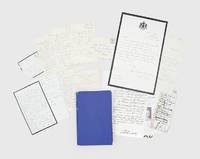
1892184236London: 1892-1938. I do not for a moment doubt that you will master or mistress the situation A group of encouraging letters to a younger nurse and mentee. De Laney trained at Nightingale's school for nurses and afterwards held senior positions in hospitals around the country. Nightingale's letters came at critical points of her career offering considered advice support and sympathy. They are accompanied by documents from de Laney's second occupation as housekeeper for the House of Lords. Amelia de Laney 1848-1940 attended the Nightingale Training School at St Thomas's Hospital between 1883 and 1886. Nightingale sent the first letter in 1891 when de Laney was considering leaving the Birmingham Workhouse Infirmary for a more senior role at the Royal Hospital for Consumption in Ventnor. Nightingale was cautiously supportive of the move. She wrote that de Laney "should have the promotion which you have well earned" but observed that the role came with a long list of duties: in addition to managing the care of patients and supervising her staff she would need to hire and train nurses look after the ten buildings and oversee the washing and cooking. Regardless Nightingale affirmed that "I do not for a moment doubt that you will master or mistress the situation if you are appointed". Nightingale provided Ventnor with an excellent reference for de Laney but the board rejected her for being insufficiently well-born. Instead de Laney moved in 1894 to a position as matron at the newly founded Epileptic Colony in Chalfont St Peter. Nightingale privately expressed her concerns to her friend Henry Bonham Carter commenting that the work was "entirely new. It is not hospital work at all. It seems to me an immense responsibility" McDonald pp. 230-31. Her concerns were proved valid. Nightingale's second letter dated April 1897 enquired after reports that de Laney had left her post. In her third letter dated May the same year Nightingale wrote to de Laney that "I grieve that you were obliged to resign & that you so much need rest" reassuring her that "you have done a good work & you will do much more good work for our cause". The fourth letter sent a month after extended Nightingale's ongoing sympathy for de Laney's "grief and distress". De Laney ultimately left nursing altogether. In 1902 she began working in the House of Lords holding the position until retirement in 1919. The correspondence here includes notices of appreciation sent on behalf of the Archduchess Maria Annunciata and Queen Alexandra. Other items include a letter from Nightingale seeking de Laney's address; an invitation card for an event at the Nightingale Training school; a document granting de Laney rooms in Westminster; a copy of Cecil Woodham-Smith's Florence Nightingale 1820-1910 1950; and a collection of clippings on Nightingale. Together 10 items: 5 autograph letters signed in black ink and pencil 1 across 2 single sheets with mourning borders 223 x 125 mm and four on bifolia 177 x 115 mm with 11 sides of writing; typed letter signed on single sheet notepaper; facsimile letter from the Home Office; invitation card; group of ephemera including newspaper cuttings and manuscript list; book octavo original blue cloth spine lettered in silver top edge blue. Modern bookplate of historian Arnold Daly Briscoe to front pastedown of volume extremities rubbed with occasional spots of wear; letters lightly creased from folding some lightly foxed one partially split along former folds. Overall a very well-preserved collection. Lynn McDonald ed. Florence Nightingale: Extending Nursing. Collected Works of Florence Nightingale vol. 13 2009. hardcover
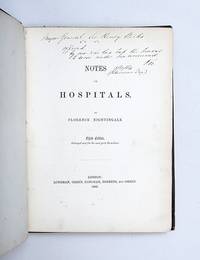
1863161784London: Longman Green Longman Roberts and Green 1863. Inscribed to her only supporter in the British military establishment Presentation copy inscribed by the author on the title page "Major General Sir Henry Storks &c &c offered by one who has had the honour to serve under his command. F.N. 5/11/64 Inkermann Day". During the Crimean War Henry Knight Storks 1811-1874 commanded the British military establishments in Turkey from the Bosphorus to Smyrna and was promoted major-general. He superintended the final British withdrawal from Turkey at the end of the war. Nightingale inscribed this copy on the tenth anniversary of the Battle of Inkerman a major British victory. Storks was a key ally in Nightingale's efforts to reform nursing in the Crimea reforms she often felt were obstructed by the British military authorities. She wrote on 6 March 1856 "I have therefore fought my own battles. I can truly say unsupported by any official out here with the exception of Genl. Storks" in Goldie p. 225. In May 1856 Nightingale was so exhausted by illness and overwork that she thought she was dying and wrote to Storks with her last requests: "As you are of all those in office whether at home or abroad the officer who has given the most steady and constant support to the work entrusted to me by her Majesty's Government I venture to appeal to you to continue that support after my death and to carry out as far as possible my last requests" Goldie. p. 265. Nightingale recovered and in 1857 secured Storks's appointment to the Royal Commission on the sanitary condition of the army. For many years after they continued to correspond on the welfare of soldiers. Nightingale's Notes on Hospitals was first published in 1858 and the second edition in 1859. This third edition was completely revised and substantially expanded and as Nightingale wrote in her preface "it is in reality a new book". The work addresses sanitation and hospital architecture arguing for the "pavilion" plan in which wards were separated into wings to improve ventilation and sunlight and to reduce infection by isolating contagious patients. The book "won Nightingale praise and inaugurated her career as an advisor to medical professionals all around the world especially those involved with hospital and infirmary construction" Orlando Women's Writing in the British Isles. Quarto. With 11 plates 2 maps of London and Paris 3 tables all folding. Original purple cloth spine lettered in gilt covers decorated in blind brown endpapers. Housed in custom red cloth solander box. Minor repairs to spine joints and inner hinges wear at extremities with loss at head of spine not affecting lettering contents clean plan of Paris with small chip to outer edge affecting border without loss to image. A good copy. Bishop & Goldie 101. Sue Goldie ed. Florence Nightingale: Letters from the Crimea 1997. hardcover
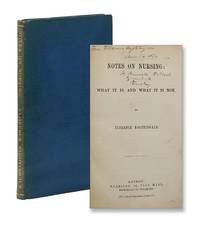
1860140947035London: Harrison 1860. First Edition Early Issue. Near Fine. First Edition early issue. Signed by the author on the title page and inscribed "From Florence Nightingale Mar 14 1860"; additional ownership signature in a different hand of "A. Russell Pollock Greenhill Paisley" inked beneath Nightingale's inscription. Bound in twentieth-century blue morocco with spine lettered in gilt with original brown limp cloth covers bound in at front and rear cup ring stain to upper cover. With "The Right of Translation is reserved." at foot of title page original yellow endpapers with printed advertisements dated 1860. Near Fine with light wear to binding fading to spine and lightly so to covers. Offsetting to modern cream endsheets from wide turn-ins former owner name in light pencil to front free endpaper. Inked date to original front pastedown contents tanned. <p>Alexander Russell Pollock 1821-1884 was the son of James Pollock and Isabella Russell of Greenhill Paisley Scotland. Alexander was a partner in the firm James Pollock and Co. a merchant and yarn agent based in Causeyside. He married Margaret Amelia Pollock the daughter of Matthew Pollock in Stillorgan Dublin on 27 April 1859 and they had 19 children in the space of 16 years. Alexander died on 23 October 1884 in Dieppe Seine-Maritime France at the age of 63 and was buried in his hometown. An obituary was published in the Paisley Gazette on November 1 1884. Alexander amassed a large library and collection of coins medals manuscripts and other antiques which were sold in a series of auction sales in 1889.<p>Signed copies of this landmark medical work are scarce. "Defining nursing as 'helping the patient to live' Nightingale 'introduced the modern standards of training and esprit de corps and early grasped the idea that diseases are not 'separate entities which must exist like cats and dogs' but altered conditions qualitative disturbances of normal physiological processes through which the patient is passing. While she did not know the bacterial theory of infectious diseases she realized that absolute cleanliness fresh air pure water light and efficient drainage are the surest means of preventing them" Garrison-Morton History of Medicine p. 773. Bishop & Goldie p. 16. Harrison unknown