Upton, Florence K and BerthaBiblio.com
195 résultats
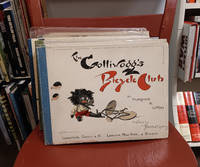
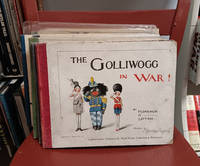
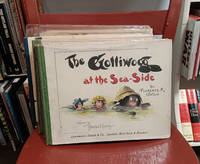
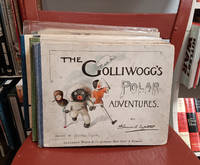
190023708<p>Longman's Green & Co 1900. Hardcover. Good. Illustrations by Florence K. Upton and verses by Bertha Upton; front hiinge is split wide open rear hinge is nearly completely split as well; front flyleaf is missing prior owner's name written in ink on the title page; small tears at bottoms of pp 23 26 through 24 and 47</p> Longman's, Green & Co hardcover
189623705<p>Longman's Green & Co 1896. Hardcover. Very Good. Illustrations by Florence K. Upton and verses by Bertha Upton; minor wear to fore corners of boards and touch of staining to bottom edge of front board</p> Longman's, Green & Co hardcover
189923707<p>Longman's Green & Co 1899. Hardcover. Very Good. Illustrations by Florence K. Upton and verses by Bertha Upton; wear to edges and fore corners on boards; small red smudge on rear and other minor soiling front and back</p> Longman's, Green & Co hardcover
189823706<p>Longman's Green & Co 1898. Hardcover. Near Fine. Illustrations by Florence K. Upton and verses by Bertha Upton; small tear and loss of small triangular piece of material from rear flyleaf otherwise this a is a bright clean complete copy</p> Longman's, Green & Co hardcover
1891MAIN035389INY: Werner. Good only EX LIB. 1891. 1st EX LIB. hardcover. 8vo . 218pp . EX LIB with labels and the usual. Marked 'withdrawn'. Previous owner's notes and quotes etc. Mostly 'how-to' with selections for the reader to try from Longfellow Rossetti Goethe etc. Yopu don't see many of there around! . Werner hardcover
1868382211London: Frederick Warne & Co 1868. Hardcover. Very Good. First one-volume edition published in three volumes in 1867. Small octavo. 437pp. Later green cloth boards with gilt title on the spine. A couple of small holes on the spine one signature supplied in facsimile very good or better. OCLC locates two copy of this edition. Frederick Warne & Co hardcover
188062322Frank Leslie's Publishing House New York 1880. First thus. Hardcover. Very Good minus. An uncommon edition. Quarto 11 1/8" tall 760 pages decorative endpapers 3/4 black leather over marbled boards. This is a very good clean sturdy copy internally but the cover is only good with rubbing at all edges the hinges are strong text paper is moderately yellowed with moderate foxing primarily to the early pages. Frank Leslie's Publishing House, New York hardcover
1880HALL252502Hardback. 1880. A Memoir. With a preface by Mountstuart E. Grant Duff. xxiv 322pp 43-page publisher's catalogue mounted photograph frontispiece Macmillan London 1880. Spine & edges of boards worn otherwise a very good copy with coloured Hungarian flag on front cover. . hardcover
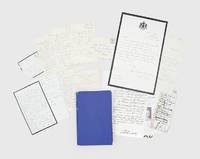
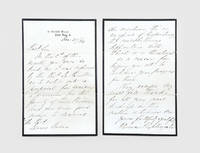
1892184236London: 1892-1938. I do not for a moment doubt that you will master or mistress the situation A group of encouraging letters to a younger nurse and mentee. De Laney trained at Nightingale's school for nurses and afterwards held senior positions in hospitals around the country. Nightingale's letters came at critical points of her career offering considered advice support and sympathy. They are accompanied by documents from de Laney's second occupation as housekeeper for the House of Lords. Amelia de Laney 1848-1940 attended the Nightingale Training School at St Thomas's Hospital between 1883 and 1886. Nightingale sent the first letter in 1891 when de Laney was considering leaving the Birmingham Workhouse Infirmary for a more senior role at the Royal Hospital for Consumption in Ventnor. Nightingale was cautiously supportive of the move. She wrote that de Laney "should have the promotion which you have well earned" but observed that the role came with a long list of duties: in addition to managing the care of patients and supervising her staff she would need to hire and train nurses look after the ten buildings and oversee the washing and cooking. Regardless Nightingale affirmed that "I do not for a moment doubt that you will master or mistress the situation if you are appointed". Nightingale provided Ventnor with an excellent reference for de Laney but the board rejected her for being insufficiently well-born. Instead de Laney moved in 1894 to a position as matron at the newly founded Epileptic Colony in Chalfont St Peter. Nightingale privately expressed her concerns to her friend Henry Bonham Carter commenting that the work was "entirely new. It is not hospital work at all. It seems to me an immense responsibility" McDonald pp. 230-31. Her concerns were proved valid. Nightingale's second letter dated April 1897 enquired after reports that de Laney had left her post. In her third letter dated May the same year Nightingale wrote to de Laney that "I grieve that you were obliged to resign & that you so much need rest" reassuring her that "you have done a good work & you will do much more good work for our cause". The fourth letter sent a month after extended Nightingale's ongoing sympathy for de Laney's "grief and distress". De Laney ultimately left nursing altogether. In 1902 she began working in the House of Lords holding the position until retirement in 1919. The correspondence here includes notices of appreciation sent on behalf of the Archduchess Maria Annunciata and Queen Alexandra. Other items include a letter from Nightingale seeking de Laney's address; an invitation card for an event at the Nightingale Training school; a document granting de Laney rooms in Westminster; a copy of Cecil Woodham-Smith's Florence Nightingale 1820-1910 1950; and a collection of clippings on Nightingale. Together 10 items: 5 autograph letters signed in black ink and pencil 1 across 2 single sheets with mourning borders 223 x 125 mm and four on bifolia 177 x 115 mm with 11 sides of writing; typed letter signed on single sheet notepaper; facsimile letter from the Home Office; invitation card; group of ephemera including newspaper cuttings and manuscript list; book octavo original blue cloth spine lettered in silver top edge blue. Modern bookplate of historian Arnold Daly Briscoe to front pastedown of volume extremities rubbed with occasional spots of wear; letters lightly creased from folding some lightly foxed one partially split along former folds. Overall a very well-preserved collection. Lynn McDonald ed. Florence Nightingale: Extending Nursing. Collected Works of Florence Nightingale vol. 13 2009. hardcover
1888304446Chicago: Belford Clarke & Company. 246 pages. Bound in three-quarter leather and marbled boards with matching endpapers. Some rubbing to the edges. Bookplate of Eugene Field on front paste-down. Original silhouette of the author on the front free endpaper. The book is inscribed and signed by Florence a famous comedian in his day on the title page: "To Eugene Field / with loving remembrances / Jan 1889 / W. J. Florence." . Very Good. Hardcover. 1st Edition. 1888. Belford, Clarke & Company hardcover
1900219926no publisher undated ca. 1900 1900. First Edition. Paperback. The letters are in a very good condition with some dulling and dust-toning as with age. One of the letters is slightly stained on the first page. Remains particularly well-preserved overall. ; 8vo 8"" - 9"" tall; 2 pages; Two typed letters SIGNED by Florence Fenwick Miller. Undated presumed late 19th / early 20th century. Florence Fenwick Miller was a British woman who became a prominent leader in the trans-century struggle for womens suffrage and the general emancipation of women through her roles as a medical pioneer lecturer journalist editor and activist in both England and the United States. Subjects: Letters and correspondence -- Suffragettes -- Signatures -- Signed letters. no publisher, undated, ca. 1900? paperback
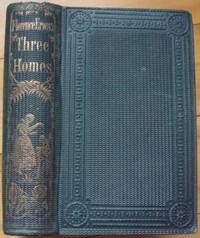
1862158301862. Boston: Crosby and Nichols 1862. Original blind-stamped dark green cloth illustrated on the spine in gilt.<br/> <br/> First Edition of this novel set in and written during the American Civil War. It is the best-known if not only novel by "Florence Erwin" -- about whom virtually nothing is known. In fact both the title page and the binding are intentionally ambiguous: since the central characters of the book are the journeying Florence Erwin and her husband is FLORENCE ERWIN'S THREE HOMES the title only or the author plus the title The headline atop each page is "The Three Homes." The story follows the lives of three women each from a different background who are affected by the war in different ways. The first woman Mary is a wealthy plantation owner from the South who is forced to flee her home when the Union Army invades. The second woman Alice is a Northern abolitionist who moves to the South to help slaves escape to freedom. The third woman Kate is a young girl who is sent to live with her aunt in the North after her father dies in battle. As the war progresses the lives of these three women become increasingly intertwined. Amz. It is interesting that since this book was "deposited" in 1861 and first published in 1862 the three women's tales involve a lot of imagined outcomes on the part of the author. Included are numerous illustrative plates. This is a remarkably close-to-fine copy of this uncommon wartime novel spine gilt a little oxidized front endpaper very slightly cracked but scarcely any wear. unknown
1892613288New York: Harper & Brothers 1892. 1st. Hardcover. Very Good/None. 137 pages. Hardcover. Small format - book measures: 5.5" X 4". Illustrated with black & white photographs and drawings. Degree of darkening to cloth covers. Light wear. Clean unmarked text. Record # 613288 Harper & Brothers hardcover
18865550New York: Scribner's 1886. 357pp Introduction by Francis J. Child. Thorough study of the epic poems of Russia collected from sources from Siberia to Azores and beyond with historical background. Incorporates myths and legends of heros. For the general reader as well as folklore student. Note: corners slightly bumped; otherwise tight edition. Former owner stamped title page. Cloth. Good see description/No Jacket. 8vo - over 7¾" - 9¾" tall. Scribner's Hardcover
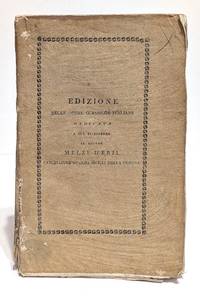
1806635620Dalla Società Tipografica de' Classici Italiani contrada di S. Margherita N. 1118 1806. Wraps. Very Good. Volume 2 only. 5.5 x 8.5 in. 282pp. including index and errata page; with 5 foldout engraved plates at the rear featuring 97 examples of the experiments discussed in the text. This copy is still in the original printers wraps with titles and border devices printed on the front and rear wrappers. Overall a Very Good complete copy with moderate wear to the wraps. // This text presents a synthesis of the experimental work carried out for over a ten-year period by Lorenzo Magalotti at the Accademia del Cimento. Dalla Società Tipografica de' Classici Italiani, contrada di S. Margherita, N. 1118 unknown
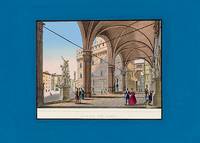
1820100050AG1820. Florence / Pisa c.1820. Original Aquatint hand-applied water-colouring over copper engraving. Plate Sizes vary: 31 cm x 22.1 cm. Sheet Sizes vary: 34.6 cm x 26.5 cm. Original Gouache-Aquatint hand-applied water-colouring over copper engraving. Florence/Pisa c.1820. Plate-Sizes vary: c. 31 cm x 22.1 cm. Sheet Sizes vary: c. 34.6 cm x 26.5 cm. Besides some smaller damages to the Ponte S. Trinita-artwork in very good actually stunning condition. Clean crisp and brightly coloured. All of these artworks are beautifully framed and the price includes worldwide free shipping per UPS - courier. The Longing for Italy the Italiensehnsucht of the german - speaking countries was forced by Johann Wolfgang von Goethe's Italian Travels and sent scores of young and old to Italy's shores countryside and cities. The Grand Tour was the 17th- and 18th-century custom of a traditional trip of Europe undertaken by upper-class young European men and women of sufficient means and rank typically accompanied by a chaperone such as a family member when they had come of age about 21 years old. The custom - which flourished from about 1660 until the advent of large-scale rail transport in the 1840s and was associated with a standard itinerary - served as an educational rite of passage. Though the Grand Tour was primarily associated with the British nobility and wealthy landed gentry similar trips were made by wealthy young men of other Protestant Northern European nations and from the second half of the 18th century by some South and North Americans. By the mid 18th century the Grand Tour had become a regular feature of aristocratic education in Central Europe as well although it was restricted to the higher nobility. The tradition declined as enthusiasm for neo-classical culture waned and with the advent of accessible rail and steamship travel. Wikipedia unknown
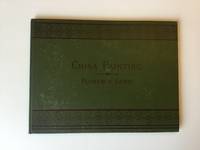
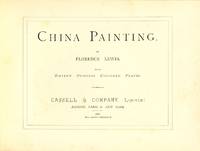
1884023095London: Cassell & Compaqny Limited 1884. Near Very Good condition. Lightly frayed at the spine ends. Corners are NOT bumped. Previous owners' names 3 of them on the front pastedown endpaper. Illustrated throughout in b/w and with 16 original full color plates beautiful chromolithographs mounted on blank pages opposite the text pages. A few tears to those blank pages tears are beneath the mounted plates have been neatly reinforced with archival quality materials. There are NO tears to any of the color plates b/w illustrations or text pages. NO underlining. NO highlighting. NO margin notes. NO foxing. A step-by-step treatise on Pottery Painting. Oblong. 9.75" wide by 7.25" tall. Bound in the original dark green cloth stamped with maroon lettering and ornamentation on the front cover. . Second Edition so stated. Hardcover. Near Very Good condition. 52pp. 16 plates. Great Packaging Fast Shipping. Cassell & Compaqny, Limited Hardcover
188313616London Paris & New York: Cassell & Co 1883. First and only edition oblong 8vo pp. 52 4 ads; 16 mounted chromolithographs showing various painted designs on assorted ceramic ware 4 wood-engraved illustrations in the text; a very good copy in original maroon cloth gilt lettering on upper cover. Cassell & Co unknown
1884DWIinLEW33London Paris & New York: Cassell & Company Limited 1884. 1884. oblong 8vo. pp. 52. with half-title. 16 tipped-in chromolithographed plates incl. frontis. several text illus. original cloth. Hasburg's Plate Divider loosely inserted. Second Edition. An illustrated guide to the art of painting on china with detailed instructions on materials and technique. Lewis recommends the use of the moist watercolours manufactured by Hancock and Son in Worcester and the dry colours manufactured by M.A.Lacroix in Paris and explains how to mix colours use different sized brushes to achieve different effects sketch with Indian ink trace patterns design borders &c. Hardcover. London, Paris & New York: Cassell & Company, Limited, 1884. Hardcover
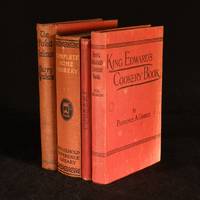
1891973Y8London: W. & R. Chambers; Edward Arnold; The Fleetway House 1891-1930. Cloth. Very Good. 7.5" by 5". Lewis Baumer. A smart selection of cookbooks together with Harry Graham's etiquette guide. A smart set comprising three cookery titles and one work on gentlemanly etiquette. In the publisher's original cloth bindings. Chamber's Cookery for Young Housewives Edited by Annie M. Griggs 1891. With eight pages of advertisements to the rear. King Edward's Cookery Book by Florence A. George 1904 - Undated dated from a copy held institutionally The Perfect Gentleman: A Guide to Social Aspirants Compiled from the Occasional Papers of Reginald Drake Biffin by Harry Graham 1913 - New Edition. With in-text illustrations by Lewis Baumer and sixteen pages of advertisements to the rear. Complete Home Cookery Household Reference Library 1930 - Undated dated from a copy held at the British Library. With nearly three hundred photographic illustrations. In the original cloth bindings. Externally smart. With damp stains and marks to the boards most notably to 'King Edward'. With moderate rubbing and bumping to the extremities. Internally firmly bound. Pages are generally bright with age toning to the endpapers of 'Chambers' and scattered spotting throughout. A few spots to the endpapers of 'Perfect Gentleman' and 'King Edward'. Ownership bookplate of ones Martin and Pamela Finch to the front free endpapers of 'Perfect Gentleman' and 'Complete Home Cookery'. Very Good W. & R. Chambers; Edward Arnold; The Fleetway House hardcover
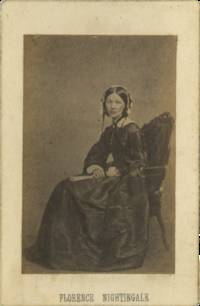
1870List36105N.p. 1870. Carte After the original photograph by William Edward Kilburn 1818–1891 taken circa 1854 with later CDV issue probably circa 1870s. Albumen print mounted on card; sitter identified in print beneath image. Standard carte-de-visite format approximately 2½ x 4 inches. Excellent contrast with light surface wear. Seated three-quarter portrait of Nightingale in dark silk dress with white collar hands folded over a paper posed beside an upholstered Victorian chair. The image derives from a sitting arranged in London with William Edward Kilburn one of Britain’s early professional photographers and a former daguerreotypist who gained fame by exhibiting at the Great Exhibition of 1851. By the early 1850s Kilburn had established a reputation for photographing members of the aristocracy and prominent public figures.<br /> <br /> The Nightingale sitting happened shortly before her departure for the Crimea in October 1854 at a moment when her name was just entering the public press. The portrait predates her full transformation into the national icon later known as the “Lady with the Lamp.†Unlike later more romanticized images Kilburn’s photograph presents a composed unsentimental likeness more consistent with standard portraiture practices than her later photographs. Following Nightingale’s wartime service at Scutari 1854–1856 and the subsequent surge of public acclaim Kilburn’s image became the primary photographic source from which engravings lithographs and later carte-de-visite reproductions were made.1<br /> <br /> 1 Denis Pellerin “Florence Nightingale: The Mystery Behind Her Iconic Photographs†The Classic November 15 2020 https://theclassicphotomag.com/florence-nightingale-the-mysteries-behind-her-iconic-photographs/ accessed February 27 2026. unknown
187714623New York: G.W. Carleton & Co 1877. Hardcover. g. Sm. 8vo. xiv286 2pp. Black decorated sienna cloth with gilt lettering and gilt decoration on spine. Head and tail of spine chipped. Corners bumped and rubbed. Some staining discoloration and scuffing to boards and spine. Rubbing to edges. Tissue-guarded frontispiece. Two small stamps "The Episcopal Home" on title-page. Three-small pieces of clear cello-tape and some staining to rear endpaper. Florence Leslie's account of her trip in 1877 from the East to the West Coast. Illustrated with full-page and in-text b/w drawings. Overall in good condition. G.W. Carleton & Co hardcover
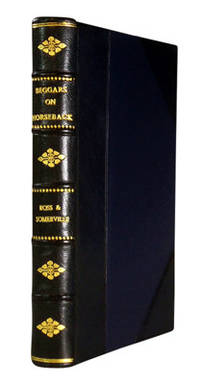
189539514<p>Edinburgh & London : William Blackwood & Sons 1895. First edition. "Amateur-gipsy tours . iron endurance the temper of Mark Tapley and the will to survive of Robinson Crusoe" Somerville. "A sense of humour is one of the essentials for any tour as necessary as a knapsack or a map and as both writers possess a keen perception of the ludicrous their account of their jouneyings on ponyback through the northern parts of the Principality is most amusing and entertaining" The Gentlewoman 17th August 1895. Crown 8vo 193 x 124mm. vi186 32pp advertisements dated June 1895 - the month of publication. Illustrations by Somerville. Bound in an elegant recent half blue morocco banded and gilt; original cloth upper cover and spine preserved at rear the primary binding with the publishers' name given in full at foot of spine; a few minor marks and spots but a very good copy of an uncommon title. Neat ownership inscription.</p> Edinburgh & London : William Blackwood & Sons, 1895. hardcover
1864177463London: 21 December 1864. Your great kindness on behalf of this good man's family Nightingale writes to Davis 1820-1883 a clergyman and headmaster to rally support for the family of the recently deceased Lutheran minister Theodor Fliedner 1800-1864 Nightingale's old friend and tutor whom she viewed as a father figure. Fliedner founded and ran 30 deaconess houses where women could train in theology and nursing and his family required financial aid to continue his work. Nightingale met Theodor Fliedner in 1841 and in 1850 became a temporary resident at his flagship deaconess community the Kaiserswerther Diakonie. The women who resided there had committed to a holy life and taken vows. However they were not enclosed as they were trained to go out into the community to care for the sick. Further they could leave at any point if they wished. It was an ideal place for Nightingale for whom nursing was a religious vocation and the time she spent there was "key in the development of her mission" Macdonald p. 7. In 1851 she wrote her first publication issued anonymously titled The Institute of Kaiserswerth on the Rhine in which she recommended Fliedner's deaconess houses to English women. She commented on "the delicacy the cheerfulness the grace of Christian kindness the moral atmosphere" in the hospitals and "the kindness of the sisters in imparting their own knowledge" Nightingale p. 19. The Fliedners and Nightingale remained close long after her stay. In 1853 she became godmother to their child and upon Fliedner's death Nightingale felt that she had lost a father. Determined to support his family in their "continuance of the work" Nightingale wrote and printed an appeal and engaged a network of clergymen to promote the cause. To this end she writes to Reverend Davis that "you were so kind. as to enter into a proposal for sending a provision for the family" and asks that he circulate her pamphlets "amongst the likeliest members" of his community. Bifolium and single sheet 177 x 113 mm. Autograph letter written across 3 pages letterhead of 27 Norfolk Street Park Lane mourning borders. Previously folded occasional small splits at ends of folds: in very good condition. McDonald Lynn ed. Florence Nightingale's Spirital Journey: Biblical Annotations Sermons and Journal Notes 2001; Nightingale Florence The institution of Kaiserswerth on the Rhine for the practical training of deaconesses under the direction of the Rev. Pastor Fliedner 1851. unknown
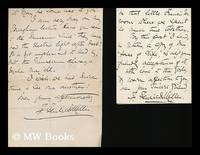
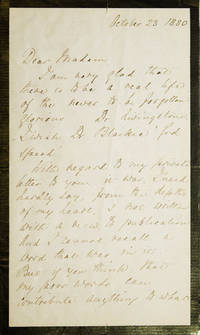
1880320579Derby 1880. 3pp. folded sheet mourning stationery. With the original mailing envelope. Usual fold. Old tape repair on conjugate leaf with resulting stain affecting a few words of text but not affecting signature. 3pp. folded sheet mourning stationery. With the original mailing envelope. "I am very glad that there is to be a real life of the never to be forgotten glorious Dr. Livingstone. I wish Dr. Blaikie God speed. With regard to my private letter to you it was I need hardly say from the depths of my heart & not written with a view to publication and I cannot recall a word that was in it. But if you think that my poor words can contribute anything to what must be the object of every English speaking nation & not only this but of every man woman & child all over the world viz. to make known one who has opened the way of peace & not terror to those who were 'lying in darkness & the shadow of death' on so large a portion of the globe. I feel that I cannot decline what otherwise is so repugnant to me . And pray believe me ever the faithful servant of yourself & the great memory of as true a hero saint as ever lived ."<br /> <br /> Written on the occasion of the preparation for imminent publication of William Garden Blaikie's biography of Livingstone published 1880 the letter gives permission for a letter of hers to be published in which she said of Livingstone: "We cannot console ourselves for our loss. He is irreplaceable" p. 458 and called him "the greatest man of his generation unknown