AA (Pieter van der).Livre Rare Book
89 résultats
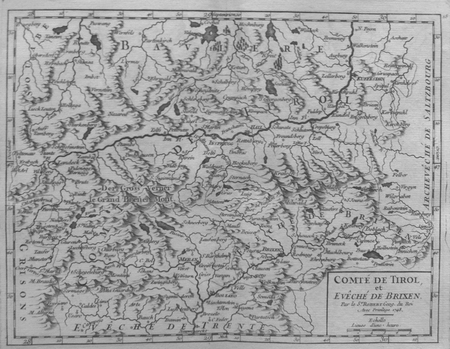
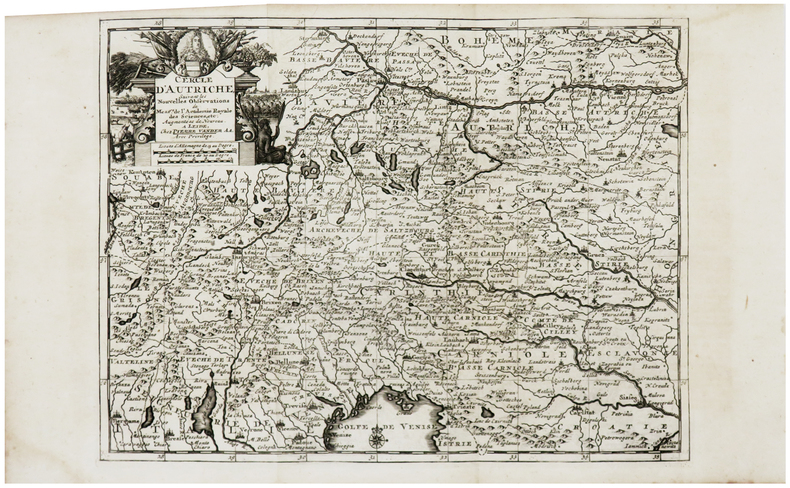
1729LBW-6229Leide, Pierre Vander Aa, [1729]. 224 x 297 mm.
1748LBW027ac1748 161 x 211 mm.
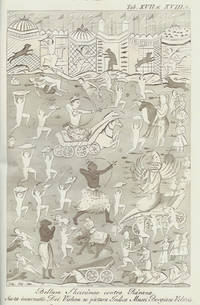
179177<p>4° mm 250x190; pp. XII 326. Al frontespizio vignetta incisa raffigurante Ganesha e <strong>32 tavole fuori testo</strong> di cui una a doppia pagina. Nel testo <strong>caratteri in sanscrito</strong>. Legatura coeva in piena pelle marezzata. Bell'esemplare.</p><p>First edition.</p><p>As the title well explains the Systema Brahmanicum by the Indologist Paulinus of St. Bartholomew - valuable compendium of Brahmanism - is closely based on the collection of <em>Indica reperta</em> from the famous Borgia Museum in Velletri <strong>profusely illustrated by the engravings. The volume therefore can be browsed as a kind of 'exegetical catalog' of the Hindu collection</strong>.<br /><br />The ancient Borgia Museum in Velletri formed between the 17th and 18th centuries by the Roman branch of the Borgia family was greatly enriched and enlarged in the second half of the 18th century by Cardinal Stefano Borgia 1731 – 1804 a man of vast culture who was a scholar of history and ethnology. The Museum famous throughout Europe for the variety and the rarity of the <em>reperta</em> as well as the singularity of the collections included artifacts from all parts of the world and was divided into nine sections one of which dedicated to Hindu manuscripts and relics.</p><p>Paulinus of St. Bartholomew Leithaberge in Lower Austria 1748 - Rome 1806 was an Austrian Carmelite missionary and Orientalist of Croatian origin. <strong>He is credited with being the author of the first Sanskrit grammar to be published in Europe and for being one of the first Orientalists to remark upon the close relationship between Indian and European languages</strong> followed by others such as William Jones and Gaston-Laurent Coeurdoux.<br /><br />Having entered into the seminary of the missions of his order at Rome he did Oriental studies at the College of St Pancratius. He was sent in 1774 as missionary to Malabar India. After spending fourteen years in India he was appointed vicar-general of his order and apostolic visitor. He was very well versed in languages: he spoke German Latin Greek Hebrew Hungarian Italian Portuguese English Malayalam Sanskrit and some other languages of India. He became known in Kerala as Paulinus Paathiri. He was one of the first to detect the similarity between Sanskrit and Indo-European languages though the very first was likely Fr Thomas Stephens SJ.</p><p>Recalled in 1789 to Rome to give an account of the state of the mission in Indostan he was charged with editing books – to correct the Catechisms and elementary books printed at Rome – for the use of missionaries.</p><p>In Rome he came into contact with Cardinal Stefano Borgia 1731 – 1804 Secretary of Propaganda Fide antiquarian scholar and patron who had set up in Velletri his native city the very well-endowed Museo Borgiano. Cardinal Borgia appointed him his private secretary and financed the publication of many volumes of indology including the first European grammar of the Sanskrit language <em>Sidharubam seu Grammatica Samscrdamica</em> published in Rome in 1790.</p> Apud Antonium Fulgonium
179715392ABWien, 1797. 26 S. + Wichtig: Für unsere Kunden in der EU erfolgt der Versand alle 14 Tage verzollt ab Deutschland / Postbank-Konto in Deutschland vorhanden +
179715392ABWien, 1797. 26 S.
17817564Paris: Nyon et La Porte 1781. First edn. 8vo pp 332ii Bound in little worn contemporary full calf worn at top of spine A good tight copy Engraved portrait and 4 other full page engraved plates. Born in Vienna in 1717 Marie-Therese Walpurge Amelie Christine D'Autriche was the daughter of Charles IV 16th Emperor de la Maison d'Autriche. Nyon et La Porte unknown books
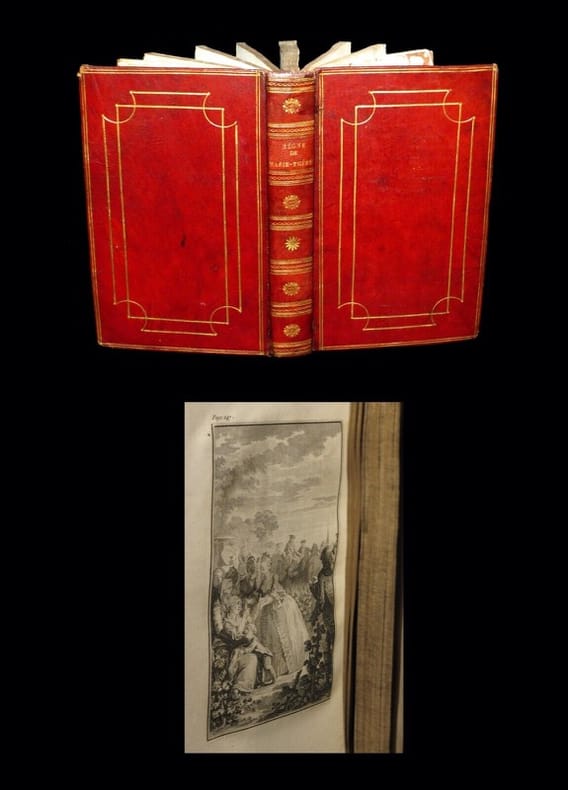
178121191A Paris, chez Nyon l'Aîné / La Porte, 1781. Un vol. au format in-8 (198 x 127 mm) de 1 f. bl., 1 frontispice gravé, 2 ff. n.fol., 332 pp., 2 ff. n.fol. et 1 f. bl. Reliure (sans doute très légèrement postérieure) de plein chagrin glacé vieux-rouge, double filet doré encadrant les plats lesquels s'ornent par ailleurs de deux filets intérieurs d'encadrement dorés, dont un se termine en chacun de ses angles par des arcs-de-cercle, dos lisse orné de doubles filets dorés, chaînettes dorées, semis de pointillés horizontaux dorés, larges fleurons dorés, titre doré, jeu de petits filets obliques dorés sur les coupes, toutes tranches dorées.
1775152301775 A Paris, chez Prault fils et chez l'auteur, 1775. In-8 reliure plein veau marbré , reliuredu temps, , dos lisse richement orné, piece de titre maroquin vert, titre doré,, encadrement filet doré sur les plats, , fleurons d'angles, tranches marbrées, , coffe superieure un peu émoussee, bon état de [4]-337-[3] pages, Illustré d'un frontispice gravé par Cathelin d'après Ducreux, de 2 portraits en médaillon par Gucher d'apèrs Moreau et de 4 hors-texte, d'après Moreau le jeune gravés par Duclos, de Launay, Prévost et Simonet. Edition originale de ce que Cohen tient pour l'"un des ouvrages les plus réussis de Moreau le jeune". [Cohen 413].
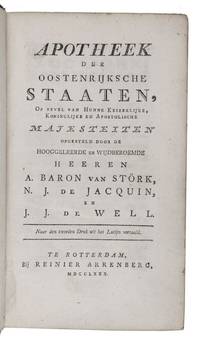
1780I17GIFR0YPPRRotterdam: Reinier Arrenberg 1780. Contemporary tanned sheepskin gold-tooled spine. Large 8vo 21 x 12.5 cm. First and only edition of the Dutch translation of the pharmacopoeia for the Habsburg Monarchy published as part of the medical reforms instigated by Gerard van Swieten 1700-1772 and based on the second edition of 1775.With the owner's inscription of J.J. Verlinden dated "1802" on the front and back flyleaves. Binding worn with an imprint circle at the front and the head of the spine damaged; a few spots throughout and ink stains in the lower margin of p. 226 but otherwise a good copy.l Blake p. 347; STCN 7 copies; Kletter "The civil pharmacopoeias of Austria" International society for the history of pharmacy - history of pharmacopoeias histpharm.org; Wellcome VI 356; WorldCat 10 copies. Reinier Arrenberg, unknown
178826048A Londres, s.é. [Lejay], 1788. Un fort vol. au format in-folio (433 x 277 mm) de 3 ff. n.fol., [10] cartes gravées sur double-page,, 93 planches gravées + tableaux et 1 f. bl. Ne subsiste plus de la reliure que le carton des plats.
172266483Leipzig, Gleditsch, 1722. Fol. Mit gest. Frontispiz, Drucktitel in Rot u. Schwarz, 2 gest. Kopfvignetten, 45 (3 gefalt.) Kupfertafeln u. 6 Textholzschnitten. 7 Bll., 309 (recte 308) S., Ldr. d. Zt. a. 5 Bünden m. goldgepr. Rückentitel u. gespränkeltem Farbschnitt.
172857901Wien, Maria Theresia Voigt bzw. Wolfgang Schwendimann, 1727-1728. Kl.-8°. Mit zus. 12 doppelblattgr. gest. Karten. 104 S., 20 Bll.; 124 S., 12 Bll., Späterer Ppbd.
1766Tir3381766 Planche seule - dimensions 38 x 29 cm - planche aquarellée - Quelques micro déchirures eu bord inférieur - Le pli du milieu existant déjà sera donc envoyée pliée en deux .
1766Tir3381766 Planche seule - dimensions 38 x 29 cm - planche aquarellée - Quelques micro déchirures eu bord inférieur - Le pli du milieu existant déjà sera donc envoyée pliée en deux .
1748KART0099Nürnberg, Homanns Erben 1748. altkol. Kupferstichplan nach Nikolaus Visscher (1649-1702), Gesamtmaß: 60,5x 50,6 cm, Ansicht: 56,5x46,5 cm, in 24 Teilstücke zerschnitten u. auf Leinwand aufgezog., kartenmäßig gefalt., zwei kl. Stockfl. im ersten Segment, an den Schnittstellen tlw. etw. Die Donau von Klein Schöhnbühel bis Petronell mit Grundriss von Wien (im Zentrum der Karte), Ortschaften in Vogelschau, Berge bewaldet u. dunkler hervorgehoben.
1790RELI0683Wien, Mößle 1790. 172 S., 4 nn. S. Register, HLdr. d. Zt. m. Rückenschildch., auf 4 Blindbünden, Rotschnitt, Leder leicht beschabt, Ecken etw. bestoß., an vorderer Seitenkante kl. Wurmfraßstelle, am vord. Spiegel eingeklebter Besitzername.
1704241802Vienna: Gedruckt bey Leopold Voight 1704. First edition. Parts 1 & 2 only. Additional engraved general title page and two large beautiful woodcut tailpieces. 8 788; 2 547 10 pp. 1 vols. Folio. Contemporary pigskin. Title page defective with loss including loss of imprint otherwise fine. First edition. Parts 1 & 2 only. Additional engraved general title page and two large beautiful woodcut tailpieces. 8 788; 2 547 10 pp. 1 vols. Folio. Although this massive compilation of laws alphabetically arranged with a final Index was updated throughout the century until Pars 6 of 1770 this first volume of 1704 is complete albeit with a defective title page in and of itself. Subsequent additions were added thus: Pars 3 1704-1720; Pars 4 1721-1740; Pars 5 1740-1758; Pars 6 1759-1770. Gedruckt bey Leopold Voight unknown
1704241802Vienna: Gedruckt bey Leopold Voight 1704. First edition. Parts 1 & 2 only. Additional engraved general title page and two large beautiful woodcut tailpieces. 8 788; 2 547 10 pp. 1 vols. Folio. Contemporary pigskin. Title page defective with loss including loss of imprint otherwise fine. First edition. Parts 1 & 2 only. Additional engraved general title page and two large beautiful woodcut tailpieces. 8 788; 2 547 10 pp. 1 vols. Folio. Although this massive compilation of laws alphabetically arranged with a final Index was updated throughout the century until Pars 6 of 1770 this first volume of 1704 is complete albeit with a defective title page in and of itself. Subsequent additions were added thus: Pars 3 1704-1720; Pars 4 1721-1740; Pars 5 1740-1758; Pars 6 1759-1770. Gedruckt bey Leopold Voight unknown books
1769elala199Vienna: Johann Thomas Edlen von Trattnern 1769. 1769. folio. pp. 8 p.l. 282 lvi. 27 engravings in the text & 3 folding engraved plates incl. in pagination. woodcut ornaments & initials. full contemporary dark brown morocco lettered in gilt on upper cover: Constitutio Criminalis Theresiana Spectans Ad Antiquam Civitatem Voitsbergensem 1773 Antonius Josephus Schilcher P.T. Judex Civitatis Voitsberga bit rubbed some browning & foxing marginal dampstain to last section containing engravings folding plates dampstained & repaired -1 with some loss of text. Inscribed on front blank: "Mathias SchuemackerSuperioris Austriae Jo. J. Syndrins Voitsberga 1773". First Edition of the famous criminal code of Maria Theresa which redefined torture as "a subsidiary means of eliciting truth". Torture could be applied to obtain confessions only in cases where condemnation would have involved capital or severe corporal punishment. A remarkable publication including graphic illustrations of instruments and methods of torture thumb-screws stocks racks burning candles leg vices winches the Viennese shoe with detailed and precise instructions on their use. According to the Encyclopaedia Britannica 11th Edn. this illustrated edition was suppressed by Prince Kaunitz chancellor of state and advisor to the Empress a few days after its appearance. Torture was formally abolished in the empire in 1776. Signed by Authors. 1st Edition. Vienna: Johann Thomas Edlen von Trattnern, 1769. hardcover
176957355Wien: Johann Thomas Edlen von Trattnern 1769. First Edition. Folio pp. xvi 282 lvi Illustrated with 27 engravings in the text & 3 folding engraved plates included in the pagination. Some foxed and toned lacks the front flyleaf. Bound in very rubbed contemporary calf still a very good tight copy. Woodcut and typographic ornaments and initials. Text in German black letter with glosses in Latin. Bound in contemporary calf spine gilt little rubbed and recently rebacked red edges. Woodblock printed end papers. Some toning to the text The binding is a little rubbed but still a very good crisp and clean copy. Maria Theresa was the eldest daughter of emperor Charles I and of Elizabeth Christina of Brunswick. At the death of her father in 1740 she became the sole heiress of his dominions of the house of Austria. Upon her accesion to the throne the neighboring countries tried to capture parts of the empire which led to the Wars of Austrian Succession which finally concuded with the treaty of Aix-la-Chapelle in 1748. This is the famous criminal code of Maria Theresa which used torture as a means of "eliciting truth." Her insticts were absolutist and she would allow nothing that limited state power even as she reformed the education system and worked to better the lives of her citizens. And she did not forbid torture. Torture was only to be used only is capital and very serious criminal cases. Included in this volume are very graphic illustrattions of instruments of torture thumb-screws stocks racks burning candles leg vices winches the Viennese shoe! with detailed and precise instruction of their use. According to the Britannica this edition was suppressed by Prince Kaunitz chancellor of the state and an advisor to the Empress. Torture was formally abolished in the empire in 1776. Maria Theresa Walburga Amalia Christina was the only female ruler of the Habsburg dominions and the last of the House of Habsburg. Maria Theresa and her husband Francis I Holy Roman Emperor had sixteen children including Queen Marie Antoinette of France. Maria Theresa was the absolute sovereign . She promulgated financial and educational reforms promoted commerce and the development of agriculture and reorganised Austria's ramshackle military all of which strengthened Austria's international standing. Johann Thomas Edlen von Trattnern unknown books
176952694Wien: Johann Thomas Edlen von Trattnern 1769. First Edition. Folio pp. xvi 282 lvi Illustrated with 27 engravings in the text & 3 folding engraved plates included in the pagination. One of the plates was misfolded and is consequently slightly frayed at the lower edge with an old paper repair at the foredge not affecting the print area. Woodcut and typographic ornaments and initials. Text in German black letter with glosses in Latin. Bound in contemporary calf spine gilt little rubbed and recently rebacked red edges. Woodblock printed end papers. Some toning to the text The binding is a little rubbed but still a very good crisp and clean copy. Laid in: MARIA THERESA; EMPRESS. Autograph Note Signed "Maria Theresia" on black rimmed mouring paper to paymaster Mayer in German concerning her son's pension requesting 500 ducats or sovereigns and in a postscript written at lower edge and vertically at upper edge adding that the letters would follow in the evening. 1 page 12mo mourning stationery; some staining affecting signature but still legible folds. Vienna circa 1776. Maria Theresa was the eldest daughter of emperor Charles I and of Elizabeth Christina of Brunswick. At the death of her father in 1740 she became the sole heiress of his dominions of the house of Austria. Upon her accesion to the throne the neighboring countries tried to capture parts of the empire which led to the Wars of Austrian Succession which finally concuded with the treaty of Aix-la-Chapelle in 1748. This is the famous criminal code of Maria Theresa which used torture as a means of "eliciting truth." Her insticts were absolutist and she would allow nothing that limited state power even as she reformed the education system and worked to better the lives of her citizens. And she did not forbid torture. Torture was only to be used in capital and very serious criminal cases. Included in this volume are very graphic illustrattions of instruments of torture thumb-screws stocks racks burning candles leg vices winches the Viennese shoe! with detailed and precise instruction of their use. According to the Britannica this edition was suppressed by Prince Kaunitz chancellor of the state and an advisor to the Empress. Torture was formally abolished in the empire in 1776. Maria Theresa Walburga Amalia Christina was the only female ruler of the Habsburg dominions and the last of the House of Habsburg. Maria Theresa and her husband Francis I Holy Roman Emperor had sixteen children including Queen Marie Antoinette of France. Maria Theresa was the absolute sovereign . She promulgated financial and educational reforms promoted commerce and the development of agriculture and reorganised Austria's ramshackle military all of which strengthened Austria's international standing. Johann Thomas Edlen von Trattnern unknown books
177211228[1772]. 65 x 53 mm. Kupferstich, rückseitig kleine Montagereste.
177011229[um 1770]. 53 x 41 mm. Kupferstich, rückseitig kleine Montagereste und etwas wellig.
178011177[um 1780]. 68 x 52 mm. Holzschnitt, rückseitig kleine Montagereste.
1737G121041Lipsiae [Leipzig], prostat in Officina Langenhemiana [Langenheim] 1737 [8] + 136pp. + engraved frontispiece, 21cm., text in Latin & in German (in Gothic script), hardcover (marbled boards, spine in brown leather with gilt title and decorations, corners somewhat rubbed), some browning and foxing throughout (text alwasy well readable), with tipped-in ex-libris of baron Surmont, good condition, G121041