93 résultats
1911001267Buenos Aires: Guillermo Kraft 1911. First . Hardcover. Good/No Jacket. 4to - over 9¾" - 12" thick. 2 vols vol. I Antecedentes text 447; vol. II Laminas. 63 folding plans of the construction of the new port of Puerto Nuevo in Buenos Aires; original maroon cloth rebacked with old spine labels chipped matching slipcase boards with mildew stains. Vol. I contains details of the project specifications and the tenders for the contract with costs by a number of leading international companies Vol.II contains maps and plans of the various projects as outlined in vol. I many in colour mounted on tabs generally in excellent condition a little browning of edges and minor edge tears. Begun in 1911 the process of building the new port was not completed until 1926. The companies who tendered include Phillip Holzmann y Cia Sir John Jackson C.H. Walker y Cia Topham Jones and Railton S.Pearson and Son Consortium Franco-Argentino Devoto Mihanovich Carena y Cia Societe des Grands Travaux de Marseille Constructores de los Puertos Rosario y Montevideo. 3 copies recorded in the University libraries of Illinois and Chicago and in the NY Public Library none of which include the volume of plates. <br/> <br/> Guillermo Kraft hardcover
1947ZB642528Buenos Aires: 1947. quarto 542 1 pp. a few articles have illustrations in text; paper wrappers age toned unrelated gift inscription still very good and mostly unopened. - If you are reading this this item is actually physically in our stock and ready for shipment once ordered. We are not bookjackers. Buyer is responsible for any additional duties taxes or fees required by recipient's country. Photos available upon request. Buenos Aires: unknown
195531162Buenos Aires: s.n. pero SecretarÃa de la Cámara de Diputados 1955.- XVI167 p.; 4º 229 x 165 cm; Papel ahuesado; Cinta marca-páginas con la bandera argentina; Finamente encuadernado en Plena Piel Chagrén de color granate plancha dorada en la tapa anterior con dorado recuadrandola contracantos dorados guardas en moiré de seda estuche editorial de tipo caja. Excelente estado como nuevo. HISTORIA POLÃTICA Y DERECHO POLÃTICO-INTERNACIONAL AMERICANOS DESDE LA INDEPENDENCIA Libro en español [s.n., pero Secretaría de la Cámara de Diputados] hardcover
1990x-9971509520World Scientific Pub Co Inc 1990. Hardcover. New. 410 pages. 9.21x6.22x1.10 inches. World Scientific Pub Co Inc hardcover
1924ZB705683Buenos Aires: Instituto de Investigaciones Historicas. 1924-1945. #22-24 26 29 31-35 37-52 54-104 all complete issues and volumes unbound and untrimmed as issued some paper covers lost most need to be rebound. - If you are reading this this item is actually physically in our stock and ready for shipment once ordered. We are not bookjackers. Buyer is responsible for any additional duties taxes or fees required by recipient's country. Photos available upon request. Buenos Aires: Instituto de Investigaciones Historicas. unknown
19942080202103000480Company Okinawa Okinawa People's Union Association 1994. Soft Cover. Fine. Number of books: 1 book (Company) Okinawa Okinawa People's Union Association paperback
1986162394New York: Farrar Straus & Giroux 1986. First Edition; First Printing. Hardcover. Very Good in a Near Fine dust jacket. Owner name on front pastedown.; 8.9 X 6.1 X 1.7 inches. Farrar Straus & Giroux hardcover
1912230274Buenos Aires 1912. Hardcover mit Lederrücken Leinen Großformat 4sprachig. Zustand: keine Beschädigungen mit einer Widmung im Vorsatz 1913. Exemplar einer Privatbibliothek mit Kennungen. Rücken Ecken Kanten bestoßen. Außen fleckig verblasst verstaubt. Buenos Aires, hardcover
194820190909001Argentina Ministerio de Hacienda de la Nacion 1948-01-01. Hardcover. Good. Argentina Ministerio de Hacienda de la Nación 1948. Hardcover Leather bound 220 pp. Text in Spanish. Personal copy of Ramon A. Cereijo Argentina's Minister of Finance 1946 - 1952 with his name stamped in gold on bottom corner of front cover. Bound in red leather with gild edges and intricate gold stamping on leather on front and back paste downs which are of red silk. In good condition withe nicking and tearing to the leather at the top of the spine and light to moderate overall scuffing rubbing and soiling to leather. Binding tight.Pages aged but otherwise unmarked with light age spotting to end papers and Contents include: CONVOCATORIA DE LA TERCERA CONFERENCIA; MINISTROS Y DELEGADOS ASISTENTES; INTEGRACIÓN DE LAS COMISIONES; ENTREVISTA CON EL SENOR PRESIDENTE DE LA NACIÓN; REUNION INAUGURAL; Discurso del señor Ministro de Hacienda de la Nació; Plan de labor de la Conferencia. SEGUNDA REUNION: Exposición de los señores Ministros y Delegados asistentes; Buenos Aires; Catamarca; Córdoba; Corrientes; Entre Ríos; Jujuy; La rioja; Mendoza; Municipalidad de la Ciudad de Buenos Aires; Salta; San Juan; San Luis; Santiago del Estero; Tucumán; Santa Fe II. Designación de Secretario; III. Designación de las Comisiones; IV. Labor de las próximas sesiones; V. Agradecimiento del doctor Bogliolo por su designación de Secretario de la Conferencia; VI. Concertación de entrevista al señor Presidente de la Nación y a su señora esposa. REUNION ESPECIAL: I. Palabras del señor Ministro de Hacienda de la Nacion; II. Exposición del señor Presidente del Consejo Económico Nacional; III. Cambio de ideas con los señores Minístros. TERCERA REUNION I. Consideración de los despachos de las Comisiones: l De Crédito Público y Asuntos Económicos 2 De Régimen Impositivo; 3 De Ordenamiento Administrativo y Previsión Social; II. Promesa de apoyo a las resoluciones de la Conferencia; III. Discursos de clausura de la Conferencia: a Del señor Ministro de Hacienda de la Nación b Del señor Ministro de Buenos Aires; IV. Felicitación al secretario de la Conferencia y al personal del Ministerio de Hacienda de la Nación. ACTA FINAL. APÉNDICE: I. Resoluciones recomendaciones y expresiones de deseos sobre reformas a la Constitución Nacional; Adhesión a los principios económico-sociales del Partido Peronista . Régimen Impositivo; 1 Necesidad de la reforma del régimen rentístico constitucional 2 Principios básicos de la futura Constitución en materia impositiva 3 Bases constitucionales para el régimen rentístico nacional y provineial 4 Compensacion a las provincias cuando se nacionalicen bienes o actividades que se encuentren en su jurisdicción 5 Derechos o tarifas portuarias de fomento 6 Derechos de peaje. Crédito Público y Asuntos Económicos: 1 Regímenes de la propiedad 2 Función social del capital 3Monopolio de los servicios públicos por el Estado; 4 Nacionalización del sistema bancario; 5 Nacionalización de depósitos bancarios; 6 Supresion de la libre navegacion de los rios interiores; 7 Regimen del agua 8 Limitacion para contraer emprestitos externos 9 Regulación y coordinacion de emisiones; 10 coordinacion y promoción del intercambio 11 Regimen de planificacion economica; 12 Fomento de la colonizacion; 13 Fomento del cooperativisimo 14 Realizaeión y coordniación do censos y estadîstieas. Ordenamiento Administrativo y Previsióii Social. l Iniciativa en materia de gastos públicos. 2 Presupuesto y cuenta de inversion 3 Regimen de ayuda a las provincias 4 Requesito basico para el ingreso a la Administracion Publica 5 Incompatibilidades con el desempeno de la funcion publica; 6 Derechos del Trabajador y de In Ancianidad; II. Resoluciones recomeiidacioiies y expresiones de deseos sobre diversos asuntos: Crédito Público y Asuntos Económicos 1 Colocación de títulos provinciales y municipales 2 Títulos provinciales y municipales para contratar obras públicas nacionales 3 Plan de emisiones provinciales y municipales para 1949 4 Medidas de carácter fiscal para combatir la inflación 5 Medidas correctoras de la inflación 6 Represión del agio. Ordenamiento Administrativo y Previsión Social: 1 Adaptación de las leyes provinciales de contabilidad a las disposiciones de la ley 12.961 2 Reunión de contadores provinciales 3 Nombramientos y promociones en la Administración 4 Destino de los superávit de presupuesto 5 Economía en los gastos públicos 6 Adopción del seguro de garantía proyectado por la Caja Nacional de Ahorro Postal. Argentina, Ministerio de Hacienda de la Nacio?n hardcover
1995__904110139XMartinus Nijhoff 1995. Hardcover. New. 1st edition. 404 pages. 9.60x6.50x1.20 inches. Martinus Nijhoff hardcover
191179458Buenos Aires: Imprenta y Casa Editora Juan A. Alsina 1911. Hardcover. Good. 11 vols. vp leather and boards moderate shelfwear. Griffin 6756. "An indispensable source for the history of Argentina's international relations including those with other Latin nations Imprenta y Casa Editora Juan A. Alsina hardcover
194041816Buenos Aires: n.p. 1940. First edition. Patterned maroon leather album two holes with string ties and tassels gilt titles and illustrations on front board. A very good copy with wear to spine ends and corners of boards writing on front pastedown and on a few leaves edgeworn first leaf. Unpaged 20 leaves. Illus. with 19 mounted silver-gelatin photographs with spider-web tissue guards 29 b/w photo-reproductions on 7 plates and two small portraits. Obl. 4to. 12 x 8.5 inches. Over forty original signatures and inscriptions some a paragraph long on the front pastedown and verso of first leaf plus one or two later on all presumably members of the regiment. Includes a short history of the Regiment. A group photo of 28 officers has a separate bound-in key identifying them by name and rank. Created on May 29 1810 and immediately sent as part of the relief expedition to the interior provinces Regimiento no. 3 de Infanteria "General Belgrano" is the most prestigious brigade in the Argentinean army. This 1940 album produced on the 140th anniversary of the regiment was a crucial time for the military in Argentina with the country officially neutral but much influenced by the German military. The Regiment was led by General Ambrosio Vago first photograph a supporter of the Allies who had refused to take part in the coup of 1930 though at this time was urging a new coup along with a number of Axis-leaning officers to oust President Ramón Castillo with the goal of holding non-fraudulent elections. But it would be Peron who would lead the coup in 1943 with Vago though ostensibly a Peronist not participating and exiled to Bahia Blanca. A rare photographic record of the Argentinean military before Peron's ascendancy. We could locate no copies of this nor any similar items in OCLC or other Latin American or European library databases. n.p. hardcover
196563434Buenos Aires Argentina: Asociacion Esquelas Lincoln American International School 1965. Thick folio. 12.5 x 13.75 in. 76 pp unpaginated. on thick paper stock. With 145 original silver gelatin photographs mounted enhanced with printed captions occasional annotations and numerous pieces of ephemera including ALS mimeographed material laid-in card as well as 2 silver print architectural elevations laid-in nearly all decorative tissue guards retained. Padded brown calf post-binder manuscript label on front cover ownership of Whinery on first leaf occasional scuffing minor tears to a couple of the leaves gutter margins creasing to some of the tissue guards minor chipping head & foot of spine still a VG exemplar. The souvenir/memory album opens with photos of Whinery and the early images of the Lincoln American International School in Buenos Aires the ground breaking at La Lucila the massive school addition designed by architects Alberto E. Dodds and Mario E. Cattaneo and completion November 30 1963.Two silver print photos laid-in depict the proposed new building elevation drawings from the architect and convey the full size and impact of the building when later completed. The vaulted new Mid-Century Modern auditorium with Argentine & U.S. Flag prominent on the stage also used as gymnasium with the compiler wondering how they ever survived without the new structure. Also depicted are school pageants greeting other international students the new school library along with a myriad of student events. Of additional interest are the photographs capturing the new science labs vocational training for aircraft and automobiles and finally the sports events of the “Condors.†Also featured are the school choirs bands architectural features such as the striking Mid-Century Modern atrium and finally the staff and support staff of the school. The final group of pages include photographs and tipped-in mounted letters addressed to Mr. Whinery declaring “We are very sorry that you are leaving†and “You have been a very good director†and song addressed to him from the students and staff. The closing pages include photos of the Director’s houses in Buenos Aires Commencement in 1960 several farewell parties and a laid-in card. Whinery 1918-2009 was a Kansas educator recruited after World War II for international schools for the American Embassy in Buenos Aires and he would remain the director of the Lincoln school from about 1952 through his retirement from there in 1964 and was still attending American International School reunions as late as 1995. Lincoln based in La Lucila Vicente Lopez is still considered the best English-language prep school in Buenos Aires and routinely sends graduates to the most elite universities and participates in the International Baccalaureate IB program. See: Jacob Meschke Lincoln: International Schooling in Argentina Asociacion Escuelas Lincoln Buenos Aires Times April 7 2018. Asociacion Esquelas Lincoln, American International School, unknown
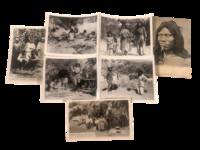
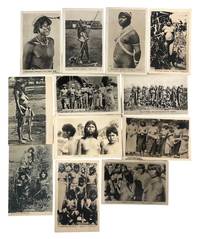
1910230061910. Indigenous Peoples of Argentina's Chaco and Northern Regions early 20th century. This photo archive consists of 10 black and white photographs comprising three real photo postcards and four original silver gelatin photographs documenting Indigenous peoples of Argentina in rural and semi-rural settings. The materials date to the early 20th century and originate primarily from northern Argentina with several images clearly associated with Indigenous communities of the Chaco. The postcards carry printed captions in Spanish identifying subjects by regional or ethnic designation. The post cards are from the 1910s-20s while the photographs are probably from 1930s-40s demonstrating the eras between Native expulsion at the turn of the century to colonial era labor workers. Historically these images must be understood within the violent context of Indigenous dispossession and assimilation policies in early twentieth-century Argentina. Following campaigns such as the Conquest of the Desert and subsequent northern military actions Indigenous peoples were subjected to land seizure population displacement forced labor on plantations and ranches and confinement within missions or state-controlled settlements. In regions like the Chaco Indigenous communities were frequently exploited for agricultural and industrial labor under coercive conditions while their cultures were documented by missionaries anthropologists and photographers who framed them as vanishing or pre-modern. The collection depicts Indigenous men women and children engaged in daily life and posed portraiture. Group scenes show families gathered outdoors domestic labor such as food preparation and carrying water and communal resting or work areas constructed from organic materials. Several photographs emphasize mobility and subsistence including figures carrying bundles tools or containers across arid terrain while others present seated family groups framed in front of shelters or temporary dwellings. Individual and small-group portraits highlight clothing that blends Indigenous traditions with elements of imposed or adopted settler attire revealing the uneven process of cultural disruption and adaptation underway at the time.<br /> <br /> Light handling and edgewear throughout photos remain crisp and clear. Overall very good condition. This archive provides an important primary visual source for understanding Indigenous life in Argentina during a critical era of colonial consolidation offering insight into everyday practices family structures and the visual strategies through which Indigenous peoples were represented and controlled. unknown
1910230041910. Real photo postcards depicting Indigenous peoples of Argentina in the early twentieth century document communities identified in captions as Indios del Chaco alongside additional references to southern regions including Tierra del Fuego. Produced during a period of intensified state expansion and consolidation these images record Indigenous individuals and groups at a time when Argentine policies of land seizure labor exploitation and missionization reshaped Indigenous life. The archive supports research into Indigenous history Latin American nation building and the visual culture of ethnographic photography.<br /> <br /> Archive consists of 12 black and white real photo postcards each with printed Spanish captions identifying subjects by region or group. The images present posed and semi candid compositions of Indigenous men women and children including group portraits of families and community gatherings as well as individual figures. Several photographs emphasize bodily presentation attire and adornment while others depict men holding tools or weapons in open landscapes. The majority of images are associated with the Chaco region an area targeted by military campaigns and settler expansion while one card references Tierra del Fuego extending the geographic range of the archive. The postcards appear to have been issued for circulation as documentary or commercial imagery.<br /> <br /> These photographs were produced in the aftermath of campaigns such as the Conquest of the Desert and subsequent northern military actions when Indigenous populations in Argentina were subjected to displacement forced labor and incorporation into state and missionary systems. Visual documentation of Indigenous communities during this period often coincided with efforts by anthropologists missionaries and state actors to classify and record populations whose autonomy was being curtailed. The images therefore function both as records of community life and as artifacts of a broader system of representation tied to colonial governance and modernization narratives. Mild fading and edge wear to some cards with others remaining sharp; overall very good condition. This archive provides primary visual documentation of Indigenous communities in Argentina during a period of significant political and social transformation. unknown
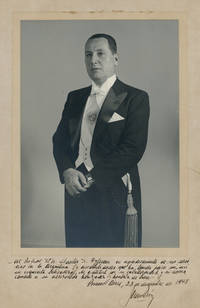
1948231092Buenos Aires 1948. Three quarter-length frontal pose in tuxedo with presidential sash and necktie. Gelatin silver print. 1 vols. Image 28.5 x 20 cm. 11-1/4 x 8 inches; approximately 16-1/2 x 12-1/2 inches overall. With embossed stamp "Sub secretaria de informacione" lower right. Tipped to larger sheet and mounted. Small tear in margin of mount image fine. Three quarter-length frontal pose in tuxedo with presidential sash and necktie. Gelatin silver print. 1 vols. Image 28.5 x 20 cm. 11-1/4 x 8 inches; approximately 16-1/2 x 12-1/2 inches overall. Inscribed on the mount by Perón in Spanish on December 23 1948 to the internationally renowned dentist Dr. Stanley D. Tylman "in gratitude for his services to Argentina and the friendliness he has shown me with his exquisite delicacy . "<br /> <br /> "Born in 1893 dentist Stanley D. Tylman not only taught more than 1000 students at the University of Illinois at Chicago College of Dentistry in his long career as a Professor of Dentistry 1920-1962 and head of the Department of Fixed Partial Prosthodontics but he influenced countless dentists internationally as well.<br /> <br /> "Tylman was particularly effective as a global educational force because he spoke four languages. His international lecture schedule took him to Asia Europe the Caribbean and South America--including Argentina where he performed dental work for President Juan Peron and First Lady Evita Peron. Dentists worldwide traveled to Chicago for personal consultations with Dr. Tylman . Tylman died in 1982." -- Wikipedia 8/3/06. unknown
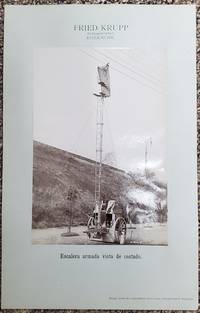
191174595Essen: Fried. Krupp Aktiengesellschaft 1911. A portfolio of forty-four original mounted silver gelatin prints of Krupp armaments designed specifically for the Argentinian Army. Published by the Krupp family in Essen in 1911. Each photograph measures 5.25 x 9 inches or a bit smaller. They are tipped onto thin gray sheets with printed captions in Spanish. Each image has a Krupp blind stamp in the lower left corner. Oblong octavo 8.5 x 13.25 inches. Housed in the original folding maroon cloth portfolio with gilt lettering on front and snap closures. Portfolio lightly rubbed but photographs and mounts crisp and clean. Near fine. Laid in are two extra photographs measuring 5 x 8.5 inches on stiff mounts measuring 7 x 9.75 inches each with printed text identifying the members of the Argentinean delegation and the Krupp employees at the Meppen Gun Testing Area December 1899. In the background of one image can be seen the massive cannon and the gun works.A striking array of military hardware is pictured including cannons and wagons for carrying ammunition spare parts and tools. Two photographs show a remarkable wagon with its observation deck extended to a height of twenty feet. In twelve photographs various tool boxes are opened to display the tight and orderly placement of saws hammers dies cordage brushes and other implements needed to keep these guns and wagons in top order. Fried. Krupp Aktiengesellschaft hardcover
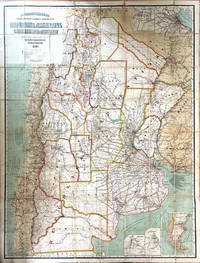
191963043Buenos Aires Argentina: Officina Cartografica de Pablo Ludwig 1919. Immense triple Atlas Folio dissected colour-lithographed map backed in linen sized 96 x 72 in. on sheet 100 x 76 in. in 64 panels which folds down into 13 x 10 in. offset toning from blue on versos of some panels age toning to fold creases minor edgewear slight occasional dustsoiling & very light foxing mounted w/in original plum-coloured cloth portfolio gilt lettering stamped on front cover wear & scuffing to spine remnants of attached label on back cover minor sunning to fore-edges & dustsoiling still a VG bright map preserved in G- original case. Second edition of this immense Pablo Ludwig commercial map of Argentina following World War I intended to aid in promoting and reviving the fast economic growth evident just before the outbreak of the Great War during the initial expansion of railroads urban trolley systems and infrastructure. Just prior to the War Argentina was one of the 10 largest economies in the World comparable with France & Germany and dwarfing Italy and Spain. Unfortunately following the WWI even though Argentina continued to expand and grow at a fairly fast clip during the Roaring 20’s the impact of the opening of the Panama Canal the decline of foreign investment in Argentina with most pouring into Europe for rebuilding or the United States the lack of industrialization severely hampered its future growth in the depths of the Great Depression. Inset maps provide close-ups of Tucuman Buenos Aires Chubut Santa Cruz and the cities of Mendoza and Rosario and the map claims the disputed Falkland Islands notes railroads proposed railroad lines trolley lines telegraph lines undersea cables wetlands salt flats and more. Ludwig fl. 1890-1962 was an active cartographer and mapmaker in Buenos Aires from the late 19th- through 20th-Century and first issued this map in 1910 at less than half the size of this one and Worldcat locates only 1 copy in the Library of Congress. Officina Cartografica de Pablo Ludwig, hardcover