Headquarters 11th Airborne Division, Camp Polk, Louisiana [United States Army - US Army] U SBiblio.com
106 résultats
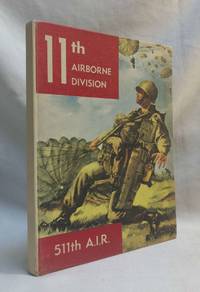
195333389411th Airborne 1953. First Edition. Hardcover. Good/No Dust Jacket Issued. 10x7x0. Undated and unpaginated. Likely published 1953. A yearbook for the 11th Airborne Division. Commanding General is Major General Ridgely Gaither he commanded the division from 1951-1953 the history in this book seems to go up to 1952 hence the estimated 1953 publication date. From a private home collection. Interior appears free of markings. Binding is tight sturdy and square. Cover has light shelfwear and some discoloration/spotting at edges. Ships same or next business day from Dinkytown in Minneapolis Minnesota. Due to the size/weight of this book extra charges may apply for international shipping. 11th Airborne hardcover
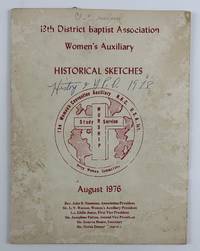
19764649Shreveport La 1976. Good. 34pp. Original pictorial cream wrappers stapled. Moderate staining and noticeable insect damage to wrappers some pen notations on covers. A few ink notations and underlinings in the text but mostly clean with center gathering detached. An unrecorded pamphlet containing numerous "historical sketches" of the various groups within the 13th District Baptist Association Women's Auxiliary in Shreveport Louisiana. The work contains a history of the Antioch Baptist Church Missionary Society which began in 1889 and sketches on the women of the Broadway Missionary Church Mission Band the Lakeside Baptist Church the Little Union Missionary Baptist Church Mission Society and Woman's Missionary Union and many many more groups from area churches. The text is illustrated throughout with dozens of photographs of notable officers members and other figures within the groups various churches and more. An excellent snapshot of Shreveport-area women's church groups with no copies in OCLC. unknown
198016496Department of Agriculture Livestock Brand Commission of Louisiana. Fair with no dust jacket. 1980. Hardcover. 1980 Official Brand Book for Louisiana. Hard cover published by Dept. of Agriculture Livestock Brand Commission in 1980. No dust jacket. Bottom of front cover has a burned area where spine and cover meet. Covers have some stains and scuffing. Pages in first and last parts of book have foxing. One bottom page corner is bent and creased. Book is in fair condition. Large 8vo 432 pages 1.6 lb.; Large 8vo 9" - 10" tall; 432 pages . Department of Agriculture Livestock Brand Commission of Louisiana hardcover
196859416New Oleans La: Louisiana State Museum. As New. 1968. Paperback. FREE UPGRADE to Courier/Priority Shipping Upon Request IN STOCK AND IMMEDIATELY AVAILABLE FOR SHIPMENT - AS NEW THE TEXT BLOCK IS PRISTINE CLEAN UNMARKED AND IN EXCELLENT CONDITION - - 132 pp. With 48 ills. On 44 pls. 25 x 21 cm. -- with a bonus offer-- . Louisiana State Museum paperback
19116877Crowley La: The Association; Printed by Signal Printing Co 1911. Small booklet 14.75 x 9 cm. 20 pages. Illustration. Printer from page 1. Date range of publication determined from internal and external evidence. Cover title: The World Food Rice: Eaten By All Peoples Adapted to All Climes. ~ Evident FIRST EDITION. An attractive collection of recipes from Cajun Country or Acadiana as it has been dubbed since the 1960s intended for distribution by mail upon request and designed to promote the consumption of rice. A memento too of a particular feat of capitalist engineering leading to the emergence of a state-of-the-art agricultural industry. Includes hints for boiling and seasoning and testimony regarding nutrition supplied by the United States Department of Agriculture. Among the twenty entries: Rice Gumbo Soup Red Beans and Rice Rice Jambalaya Daube with Rice Rice Waffles Rice Custard. ~ The so-called Rice Belt along the Gulf assumed its profile during the era when risiculture in the Carolinas and Georgia was declining above all in the decades following the Civil War. Most of the rice long cultivated on plantations of the South Atlantic had been for export to the United Kingdom and northern Europe – rice had never been a staple of the American diet – but competition there from developing Asian markets devastated the South Atlantic trade. Meanwhile a number of planters in the Gulf discerned cost advantages to shifting focus from sugar cane to rice. And in a fateful coincidence by the mid-1880s the entire region began to attract the attention of agronomists and entrepreneurs from the Midwest a significant number of them from or educated in Iowa looking to invest in the sparsely populated coastal prairie and especially in the southwestern third of Louisiana that is the twenty or so parishes inhabited chiefly by francophone Acadians. ~ But their project would need to include an expansion of the domestic market. Cooperative arrangements between corporate land speculators settlement recruiters and commercial promoters virtually invented a new industry out of whole cloth uniting the interests of farmers millers and the burgeoning railroads the overview on which this outline leans is that by Peter Coclanis “White Rice: The Midwestern Origins of the Modern Rice Industry in the United States†Rice: Global Networks and New Histories edited by Francesca Bray et al. New York: Cambridge University Press 2015 pages 291-317. A Few Rice Recipes is but one document then of a coordinated regime of marketing pamphlets newspaper notices farm-show exhibits and sightseeing tours designed to advertise the benefits of rice consumption beyond the immediate orbit of Cajun Country. Not only did initiatives of largely Midwestern origin succeed in transforming the economy of southwestern Louisiana but they also attracted government-funded support in the guise of experimental agriculture stations – evident here in quotations from reports by the Department of Agriculture. The Rice Association of America finally was one of the trade cooperatives organized in the 1890s by Seaman Knapp 1833-1911 a native of New York who had moved to Iowa in his youth to farm and to promote the interests of large-tract agriculture. Soon enough it would spawn the Rice Millers’ Association which remains one of the oldest United States agribusiness trade groups in continuous operation. ~ Among the Iowans Knapp lured to Louisiana was the president of the Association whose name heads the list of officers on page 1 of A Few Rice Recipes George Hathaway 1853-1935. He was elected in April 1910 but the span of months for the booklet’s appearance in print can be narrowed: a quotation from the September 1910 issue of the national newspaper Leslie’s Weekly occupies page 2; and the untimely death of Henry Kahn a vice-president listed on page 1 was reported in newspaper notices to have occurred on 16 March 1911. ~ In stapled wrappers with an illustration on the front panel depicting a girl nestled amongst rice culms and perched atop a globe showing the rice belt at its center. A bit of light rubbing to the wrappers; a small adhesion mark to the top of the rear panel otherwise very good. Unrecorded. OCLC locates no copies; not in Brown Cagle or Uhler. [The Association; Printed by] Signal Printing Co hardcover
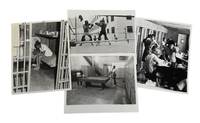
1973209341973. Archive of four press photographs produced between 1973 and 1976 documenting inmate life prison reform efforts and conditions within Orleans Parish Prison in New Orleans Louisiana a carceral institution whose origins extended back to the antebellum era and the policing of enslaved African Americans. The material documents systems of incarceration and institutional control through visual and textual evidence revealing recreational programs women's detention facilities inmate education initiatives and efforts to address violence within one of the nation's most criticized prison systems. Built in 1837 the prison historically functioned both as a municipal jail and as a site of punishment for enslaved people where imprisoned Black individuals could be subjected to whipping solitary confinement and deprivation. By the twentieth century the institution had become nationally associated with overcrowding violence and inmate abuse generating lawsuits and public scrutiny over prison conditions. These photographs provide primary-source evidence for the study of incarceration race prison reform and the lived experience of prisoners in the American South during the post-Civil Rights era.<br /> Archive consists of four black-and-white silver gelatin press photographs each approximately 8 x 10 inches many retaining original press captions or pasted articles on the verso or printed margins. One 1973 photograph depicts two Black inmates playing pool inside a sparse recreation area containing a single billiards table surrounded by concrete walls and rows of metal lockers illustrating the limited recreational infrastructure available to prisoners. A 1974 image captures two inmates identified as Perry Nelson and DeLyons boxing within an outdoor prison ring while correctional officers and inmates observe nearby; the accompanying article discusses prison efforts to channel inmate violence into organized athletic programming intended to improve morale and reduce assaults. A 1975 photograph shows a barefoot female inmate awaiting trial inside a dimly lit cell decorated with greeting cards small personal items and a cross placed on a shelf overhead while the accompanying article references public criticism and reforms intended to improve conditions for incarcerated women. Another photograph from the women's division dated circa 1976 documents female inmates and prison workers gathered in a classroom environment associated with "CONCEPT" a volunteer-led educational initiative established in 1973 offering counseling Black history courses creative writing sewing drawing music programs and lectures on topics including women's liberation and drug abuse.<br /> The archive reflects broader national debates surrounding incarceration and prison reform during the 1970s when increasing public attention focused on prison violence racial inequality within the criminal justice system and rehabilitation initiatives following the Attica uprising and other prison protests. Orleans Parish Prison became emblematic of deteriorating urban jail systems in the United States particularly regarding the treatment of poor and predominantly African American inmates. These photographs preserve both the punitive realities of the institution and the emergence of educational and rehabilitative efforts within the prison environment. Minor edge wear and occasional editor's markings. Very good condition overall. Historically significant visual record of incarceration race and reform efforts within one of the most notorious prison systems in the American South. unknown
1995275135PN. New. 1995. Soft Cover. Date is original print. This is a reprint edition . PN paperback
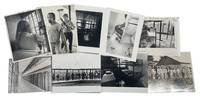
1930209001930. Prison & Incarceration Angola Prison Documentary Press Photograph Archive Depicting Inmate Living Conditions and Institutional Control at Louisiana State Penitentiary 1930-1976Former plantation Angola prison press photographs documenting Louisiana State Penitentiary the former Angola plantation turned state prison one of the most historically significant and controversial carceral institutions in the United States. Established on the grounds of a former slave plantation along the Mississippi River Angola developed into the largest maximum-security prison in the United States and became widely known during the twentieth century for forced agricultural labor racial segregation and persistent investigations into prison conditions. Photographs in this archive record inmate life security practices and the physical structure of the prison during the mid-twentieth century including images produced during the period when prison reform and incarceration policy became subjects of national debate.<br /> <br /> Archive of nine silver gelatin press photographs dating from 1930-1976 documenting the Angola prison complex and its inmates. Most photographs measure approximately 6 x 9 inches to 8 x 10 inches. Images include views of cell interiors with bunk beds and barred doors prisoners standing or moving through institutional corridors and groups of inmates assembled outdoors within the prison grounds. One photograph from 1973 shows a Black inmate seated on an upper bunk reading a book inside a crowded cell. Another 1973 image shows an unnamed Black prisoner wearing a bandana while looking outward through barred windows. A 1975 press photograph depicts a guard scanning Black inmate Kenny Johnston with a metal detector following a federal court order requiring the prison to adopt new security procedures. A 1976 image shows Black and white prisoners walking along a railway path within the prison yard dressed in everyday work clothing. The earliest photograph dated 1930 shows a group of white businessmen standing outside a wooden structure near a large stack of boxes reportedly constructed by prison labor. Several photographs retain original press captions or news articles attached verso including commentary on prison reform calling for a shift away from large centralized maximum-security institutions toward smaller community-based correctional facilities.<br /> <br /> Louisiana State Penitentiary at Angola emerged during the twentieth century as one of the most widely studied American prisons because of its origins as a former plantation and its long association with forced agricultural labor performed by incarcerated men. Convicts were historically housed in buildings originally constructed for enslaved people and compelled to work the surrounding fields. Public scrutiny intensified during the twentieth century as journalists courts and reform advocates documented violence racial inequality and inadequate living conditions inside the prison. By the 1970s the period represented most strongly in this archive the American criminal justice system faced growing calls for reform as federal courts intervened in prison administration and journalists published investigations into inmate treatment and overcrowding. Minor editorial markings and light edge wear consistent with press handling; overall condition very good. A cohesive documentary archive illustrating the lived environment of incarceration at one of the most historically consequential prisons in the United States. unknown
1987Q-0936819030University Art Museum University of Southwestern Louisiana 1987-01-01. Paperback. New. In shrink wrap. Looks like an interesting title! University Art Museum, University of Southwestern Louisiana paperback
192041169Washington D.C.: Published by the United States Coast and Geodetic Survey 1920. Large folding nautical chart printed on heavy paper stock. Colored. A rare original coastal survey of the Barataria Bay area and includes Grand Isle Grand Terre Island and the Mississippi River.<br/> <br/> Established by President Thomas Jefferson in 1807 as the Survey of the Coast the U.S. Coast and Geodetic Survey was the United States' first civilian scientific agency. This agency has followed its mission to survey the U.S. coastline create nautical charts of the coast and help increase maritime safety since its founding and has often played fascinating roles in significant chapters of U.S. history. It served in all theaters of the Civil War in the service of the Union Army and Navy pioneered acoustic exploration in the wake of the sinking of the Titanic and during WWI it worked to detect enemy submarines. In addition this agency worked to survey and produce detailed maps and renderings of the U.S. coast. These nautical survey maps commonly referred to as "T-sheets" provide fascinating insights into the history of the United States coastline which has and will continue to shift. These maps are the most important data source for understanding the physical and ecological characteristics of the U.S. shoreline. The present map of the Louisiana coastline is notable for the inclusion of Grand Isle the only inhabited barrier isle of Louisiana and of Barataria Bay which used to be frequented by pirates including Privateer Jean Lafitte. It is a highly detailed and accurate sea chart of the Barataria Bay and an important historical view of the developing Louisiana. Published by the United States Coast and Geodetic Survey unknown
192041180Washington D.C.: Published by the United States Coast and Geodetic Survey 1920. Large folding nautical chart printed on heavy paper stock. Uncolored. A rare original coastal survey of Barataria Bay area and includes Grand Isle and other barrier islands Fifi island Grande Terre Island Port Fourchon and Terrebone Bay.<br/> <br/> Established by President Thomas Jefferson in 1807 as the Survey of the Coast the U.S. Coast and Geodetic Survey was the United States' first civilian scientific agency. This agency has followed its mission to survey the U.S. coastline create nautical charts of the coast and help increase maritime safety since its founding and has often played fascinating roles in significant chapters of U.S. history. It served in all theaters of the Civil War in the service of the Union Army and Navy pioneered acoustic exploration in the wake of the sinking of the Titanic and during WWI it worked to detect enemy submarines. In addition this agency worked to survey and produce detailed maps and renderings of the U.S. coast. These nautical survey maps commonly referred to as "T-sheets" provide fascinating insights into the history of the United States coastline which has and will continue to shift. These maps are the most important data source for understanding the physical and ecological characteristics of the U.S. shoreline. The present map of the Louisiana coastline is notable for the inclusion of Grand Isle the only inhabited barrier isle of Louisiana and for the Barataria Bay which was frequented by many pirates including Privateer Jean Lafitte. It is worth noting how much of the geography has shifted in this delicate environment in the 100 years since this map was produced. It is a highly detailed and accurate sea chart of the Barataria Bay Area and an important historical view of the developing Louisiana. Published by the United States Coast and Geodetic Survey unknown
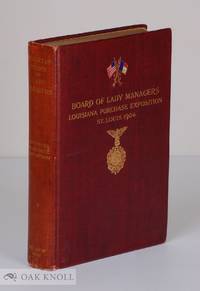
1905140752Cambridge: The Riverside Press / H.O. Mifflin and Company 1905. maroon linen-like hard covers with gild lettering on front cover and spine; Also gild emblem and 2 flags on front cover. Americana. 4to. maroon linen-like hard covers with gild lettering on front cover and spine; Also gild emblem and 2 flags on front cover. frontispiece 342 pages. First edition. Spine faded rubbed at spine ends else a near fine copy. A rare book. The expo took place in St. Louis MO.<BR> <br /> <BR> <br /> Index at rear and 33 full page illustrations and gravure photos throughout. Most photos are of Lady Managers. Content headings include: Letter of Transmittal of Report of Board of Lady Managers to the Louisiana Purchase Exposition Commission; Historical Data; Extract from Act of Congress of March 3 1901 creating the Board; Present Officers and members of the Board; Standing Comittees of the Board; Special Comittees of the Board; First Second Third Fourth Fifth and Sixth Meetings of Board of Lady Managers 1902-04; Final Report of Legislative Committee. Reports of Comittees-Legislataive; Women's work; Foreign Relations; Women's Congress; Awards;; Group Jurors; Department Jurors; Accountants Report; etc. The Riverside Press / H.O. Mifflin and Company unknown
19054930Cambridge MA: The Riverside Press / H. O. Houghton and Company. Very Good- with no dust jacket. 1905. First Edition. Hardcover. Spine faded corners bumped rubbed and lightly worn but overall a solid copy. ; 4to maroon cloth with gilt titling and decoration top edge pages gilt tissue guarded frontis 350pp uncut with some pages unopened . Illustrated with tissue guarded plates. . The Riverside Press / H. O. Houghton and Company hardcover
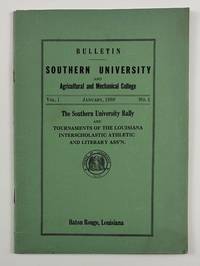
19384099Baton Rouge La: January 1938. Very good. 32pp. Original green printed wrappers stapled. Minor wear and dust-soiling. Pencil notations to a few pages otherwise internally clean. The rare first issue of the bulletin of Southern University in Baton Rouge. The issue was devoted to the Southern University Rally and printed rules and regulations for the tournaments of the Louisiana Interscholastic Athletic and Literary Association. These events included the state football championship basketball games music and literary contests the state dramatic festival and the state track meet. The work also includes the "Aims and Purposes of the Association" which are "adapted from the Texas Interscholastic League for Colored Schools" a history of interscholastic activities "among Negro Schools in Louisiana" and lists of the officers of the organization. The previous owner of the present copy of the bulletin had a keen interest in the section on the rules for music contests with numerous light pencil notes written in the outer margins of the first two pages of that section. January unknown
192041172Washington D.C.: Published by the United States Coast and Geodetic Survey 1920. Large folding nautical chart printed on heavy paper stock. Uncolored. A rare original coastal survey of Caillou Bay area and including Isle Dernieres.<br/> <br/> Established by President Thomas Jefferson in 1807 as the Survey of the Coast the U.S. Coast and Geodetic Survey was the United States' first civilian scientific agency. This agency has followed its mission to survey the U.S. coastline create nautical charts of the coast and help increase maritime safety since its founding and has often played fascinating roles in significant chapters of U.S. history. It served in all theaters of the Civil War in the service of the Union Army and Navy pioneered acoustic exploration in the wake of the sinking of the Titanic and during WWI it worked to detect enemy submarines. In addition this agency worked to survey and produce detailed maps and renderings of the U.S. coast. These nautical survey maps commonly referred to as "T-sheets" provide fascinating insights into the history of the United States coastline which has and will continue to shift. These maps are the most important data source for understanding the physical and ecological characteristics of the U.S. shoreline. The present map of the Louisiana coastline is notable for the inclusion of Isle Derniere which translates to "last island" the westernmost of a string of islands along the basin of the Mississippi. This 24 mile stretch of land was Louisiana's southernmost outpost of civilization: a resort island for the wealthy complete with hotels ballrooms carousels and summer homes until an unnamed hurricane in 1856 flattened the island killing hundreds and fragmenting Isle Dernier into five smaller islands: East Trinity Whiskey Raccoon and Wine. These new names are not noted on this map still notated as Isle Dernier. This map is a highly detailed and accurate sea chart of the Caillou Bay and an important historical view of the developing Louisiana. Published by the United States Coast and Geodetic Survey unknown
192041178Washington D.C.: Published by the United States Coast and Geodetic Survey 1920. Nautical chart printed on heavy paper stock. Uncolored. A rare original coastal survey of Calcasieu Pass in the Cameron area and includes Calcasieu Light.<br/> <br/> Established by President Thomas Jefferson in 1807 as the Survey of the Coast the U.S. Coast and Geodetic Survey was the United States' first civilian scientific agency. This agency has followed its mission to survey the U.S. coastline create nautical charts of the coast and help increase maritime safety since its founding and has often played fascinating roles in significant chapters of U.S. history. It served in all theaters of the Civil War in the service of the Union Army and Navy pioneered acoustic exploration in the wake of the sinking of the Titanic and during WWI it worked to detect enemy submarines. In addition this agency worked to survey and produce detailed maps and renderings of the U.S. coast. These nautical survey maps commonly referred to as "T-sheets" provide fascinating insights into the history of the United States coastline which has and will continue to shift. These maps are the most important data source for understanding the physical and ecological characteristics of the U.S. shoreline. The present map is notable for the inclusion of the Calcasieu Light the lighthouse in the pass which had been severely damaged in a hurricane in 1916. Thanks to a federal aid package this lighthouse was restored but in the year 1920 when this map was printed it was noted that the Calcasieu Light Station had rebuilt 1470 feet of walks boathouse and made numerous minor repairs to station. This map is a highly detailed and accurate sea chart of the Calcasieu Pass and an important historical view of the developing Louisiana. Published by the United States Coast and Geodetic Survey unknown
192041173Washington D.C.: Published by the United States Coast and Geodetic Survey 1920. Large folding nautical chart printed on heavy paper stock. Colored. A rare original coastal survey of the Texas-Louisiana border area from Sabine Pass to Calcasieu Lake and Pass and includes Mud Lake Holly Beach Johnson Bayou and Sabine National Wildlife Refuge.<br/> <br/> Established by President Thomas Jefferson in 1807 as the Survey of the Coast the U.S. Coast and Geodetic Survey was the United States' first civilian scientific agency. This agency has followed its mission to survey the U.S. coastline create nautical charts of the coast and help increase maritime safety since its founding and has often played fascinating roles in significant chapters of U.S. history. It served in all theaters of the Civil War in the service of the Union Army and Navy pioneered acoustic exploration in the wake of the sinking of the Titanic and during WWI it worked to detect enemy submarines. In addition this agency worked to survey and produce detailed maps and renderings of the U.S. coast. These nautical survey maps commonly referred to as "T-sheets" provide fascinating insights into the history of the United States coastline which has and will continue to shift. These maps are the most important data source for understanding the physical and ecological characteristics of the U.S. shoreline. The present map is a highly detailed and accurate sea chart of the Texas-Louisiana southern border and an important historical view of the developing Louisiana. Published by the United States Coast and Geodetic Survey unknown
192140729Washington D.C.: Published by the United States Coast and Geodetic Survey 1921. Large folding nautical chart printed on heavy paper stock. Colored. A rare original coastal survey of the Northern Gulf coast from Florida to Louisiana encompassing Panama City Rosemary Beach Seaside Grayton Destin Pensacola Gulf Shores Mobile Gulfport and the Mississippi Delta.<br/> <br/> Established by President Thomas Jefferson in 1807 as the Survey of the Coast the U.S. Coast and Geodetic Survey was the United States' first civilian scientific agency. This agency has followed its mission to survey the U.S. coastline create nautical charts of the coast and help increase maritime safety since its founding and has often played fascinating roles in significant chapters of U.S. history. It served in all theaters of the Civil War in the service of the Union Army and Navy pioneered acoustic exploration in the wake of the sinking of the Titanic and during WWI it worked to detect enemy submarines. In addition this agency worked to survey and produce detailed maps and renderings of the U.S. coast. These nautical survey maps commonly referred to as "T-sheets" provide fascinating insights into the history of the United States coastline which has and will continue to shift. These maps are the most important data source for understanding the physical and ecological characteristics of the U.S. shoreline. The present map is a highly detailed and accurate sea chart of the Gulf coasts of Florida Alabama Mississippi and Louisiana and an important historical view of the developing states. Published by the United States Coast and Geodetic Survey unknown
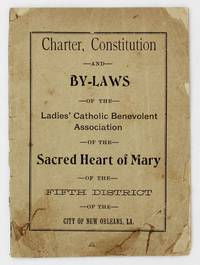
19014227New Orleans: A.M. Escudier Book and Job Printers 1901. About good. 19pp. Original printed front wrapper rear wrapper not present. Front wrapper a bit chipped and creased old adhesive repairs to closed tears bottom corner reinforced with tissue partially split along spine. Text block a bit toned foxed and creased. A seemingly unrecorded turn-of-the-20th century New Orleans imprint recording the founding and governing documents of the Ladies' Catholic Benevolent Association of the Sacred Heart of Mary of the Fifth District of New Orleans. The work contains the group's charter letters of support from various Louisiana officials the constitution and by-laws of the New Orleans chapter. The LCBA was organized in 1890 in Titusville Pennsylvania as a mutual aid society to provide insurance to women as most insurance companies of the time considered women uninsurable. The members of the association would pool their money together in order to cover various insurance needs as they arose from the membership. The group is actually still in operation today now known as the Loyal Christian Benefit Association. Though social action by Catholic women is more prevalent today it was uncommon in the 19th and early-20th century but the present group was strong-willed and often clashed with the hierarchy including some Bishops. No copies listed in OCLC. A.M. Escudier, Book and Job Printers unknown
1984Q-0939944251Marmac Pub. Co 1984. Hardcover. New. In shrink wrap. Looks like an interesting title! Marmac Pub. Co hardcover
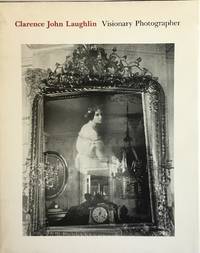
1990220904Kansas City: Hallmark Editions 1990. Brossura sovracoperta wrappers dust jacket. Molto buono Very Good. Collana <em>Hallmark Photographic Collection</em>. With 94 duotone plates and 30 color and b/w reference illustrations by Clarence John Laughlin. Texts by Keith F. Davis Nancy C. Barrett and John H. Lawrence. Notes on Laughlin's photographic groups captions and subject data and chronology. Testi di Keith F. Davis John H. Lawrence Nancy C. Barrett. 94 tavole e 30 illustrazioni in bianco e nero di Clarence John Laughlin. Biografia. 8vo. pp. 168. Molto buono Very Good. . <em>This book provides a much-needed reassessment of the artistic achievement of Clarence John Laughlin 1905-1985. While best known for his poetic documentation of Louisiana plantations Laughlin's creative vision was uniquely varied and inventive.</em> Hallmark Editions, unknown
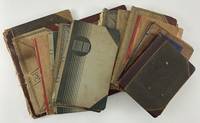
19564349Mostly Shreveport LA 1956. Good. Thirteen manuscript ledgers all quarto or folio in contemporary cloth paper or partially-leather bindings totaling approximately 650pp. of manuscript content. Condition ranges from fair to very good with a few detached covers occasional detached leaves varying levels of toning and tanning to text and other wear. Evidence of regular handling and use as expected. A highly-informative and unique manuscript record of the activities of several African-American religious and social organizations in the larger Shreveport area of Louisiana over the period of more than three decades beginning in the mid-1920s. These thirteen ledgers mainly record the minutes for organizational meetings detailing group activities and also include useful information such as member rolls monthly dues paid donations to other organizations and so forth for eleven different Black organizations in the Shreveport area some of whom are exclusively women's groups. The meeting notes record a legion of activities engaged in by the various groups often opening with the location date and time of the meetings followed by detailed reporting of activities such as organizational committee and financial reports scripture readings vocal performances the election of new members and numerous other events. The locations of the meetings sometimes include the homes of various named members. The ledgers present here are as follows in chronological order:<br /> <br /> 1 Diamond Square Lodge #170. Shreveport La. 1924-1926. 79pp. Folio. Spine perished covers detached. A highly-detailed ledger and minutes book with mostly full-page entries recording the activities of the group over a two-year period in the mid-1920s. <br /> <br /> 2 Mt. Lebanon Lodge #20. Shreveport La. 1925-1940. 132pp. Records an unusually high time frame of activities and membership information for this local Shreveport men's group with entries recorded over most of a fifteen year period with no entries for 1930-32. The ledger contains mostly meeting minutes but some of the latter section is comprised of membership dues lists. Interestingly many of the pages over the first half of the ledger are crossed out in pencil with a full-page "X" for reasons which are ultimately unclear. <br /> <br /> 3 Sunflower Choir Club #7. Shreveport and Foster La. 1931-1939. Two volumes: 15; 66pp. of manuscript entries. A co-ed organization with members referred to variously as "Brother" or "Sister." The first volume contains seven double-page manuscript tables recording the member rolls and monthly dues paid between 1931 and 1937. The second volume is a continuation of the group's records beginning with membership rolls for 1938 and 1939. This second volume also includes more than fifty pages of meeting minutes. Interestingly one page records "Disbursements" made in 1938 which included donations to two other choirs named Shiloh and Stonewall. <br /> <br /> 4 Usher Civic Association and others. Shreveport La. 1931-1939. 12pp. of manuscript. The earliest two entries record the minutes of the Usher Civic Association while some of the later entries pertain to the VFW Glee Club and other usher boards in the area. <br /> <br /> 5 Stars Chapel Church. Hosston La. Two volumes: 74; 116pp. 1939-1947. An unusually-dense and informative pair of ledgers detailing the meetings financials and other activities of this small church in the tiny town of Hosston Louisiana. Among the information here are lists of donations for church repairs and member rolls for the years 1939 to 1947. <br /> <br /> 6 Antioch Baptist Church Usher Board. Shreveport La. 1942-1944. 57pp. of manuscript text. Some portions of ledger excised. This ledger is accompanied by a delightful landscape watercolor drawing of the Antioch Baptist Church building measuring 11 x 16 inches and signed Paul L. Dutzel. This historic Black church building was constructed in 1903 and still stands precisely as it is rendered in this beautiful piece of artwork. <br /> <br /> 7 The Good Samaritan Club. Shreveport La. 1942-1943. 60pp. Some leaves detached and worn. Interestingly the early recorder of this minutes book was not a good speller often recording some version of the name of the group as "The Good Sirmaraten" or even "Good Surmearic" club. <br /> <br /> 8 Lilly Lodge #28. Shreveport La. 1951-1952. 50pp. of manuscript. A neatly-kept ledger of meeting notes and membership dues for a local Masonic group with most of the work comprised of the meeting notes with detailed membership rolls and corresponding dues amounts from the previous month listed on facing pages. Every meeting for the Lilly Lodge took place at the Union Masonic Hall in Shreveport. <br /> <br /> 9 "The Brotherhood." 1953. 9pp. Likely a partial ledger which begins on page 55 and only contains notes for a few meetings along with two double-page tables of membership rolls and dues which are only partially recorded. Still a good record of the names of this group identified only as "The Brotherhood" in the early-1950s. <br /> <br /> 10 The Elbert Net Social Club. Bossier City and Shreveport La. 1955-1956. 30pp. of manuscript. The second entry records the meeting minutes for the El Serepe Social Club while the remainder of the book relates to the Elbert Net Social Club likely renamed. In addition to a couple of entries recording meeting minutes most of the entries for this women's social organization pertain to itemized donations taken up for the birthdays of various members. For example for Gladis Hamilton's birthday in June 1955 ten different named women contributed a quarter each. <br /> <br /> 11 The El Serepe Ebanett Social Club. Bossier City La. 1955-1956. 30pp. of manuscript. Peculiar to this volume are several entries recording lists of donations collected for different purposes including meals multiple entries for a "Fish Supper" pictures corsages a "special fund" and more. Also contains some entries for meeting notes member rolls with dues information and birthday collections. <br /> <br /> African American religious social and mutual aid societies were and continue to be vital to the Black community. Traditionally these groups have provided a sense of community as well as support and assistance to one another through shared funds especially when facing systemic oppression and limited access to traditional social services including religious services access to colleagues in business government healthcare education and more. These groups were particularly important to the African-American community during the Jim Crow era when segregation largely kept Black people literally separated from the larger white society in America. Organizations such as those represented in the present collection were essential to the Black community in Louisiana before the legal end of segregation was announced through various court decisions in the mid-20th century and also helped the Black community organize during the Civil Rights Movement and beyond.<br /> <br /> Taken together the ledgers contain approximately 650 pages of manuscript entries providing a unique opportunity for not only deep study of the social activities of African Americans in the Shreveport area over the course of thirty years but also allowing for comparative analysis between the groups with particular regard to the financial information contained herein. An informative and important manuscript record of African American social life in Jim Crow Louisiana with broad research potential. unknown
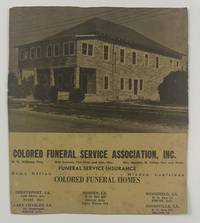
19504646Shreveport La 1950. Good. Broadside 8 x 7 inches on cardstock. Irregularly trimmed minor soiling and toning. A striking advertisement for the Colored Funeral Service Association Inc. which offered "Funeral Service Insurance" to relevant businesses in midcentury Shreveport. The advertisement pictures a nondescript building presumably the association's home office in Minden Louisiana. It also lists the three officers of the association along with the addresses of five "Colored Funeral Homes" located in Shreveport Lake Charles Minden Winnfield and Jonesville. unknown
192241168Washington D.C.: Published by the United States Coast and Geodetic Survey 1922. Large folding nautical chart printed on heavy paper stock. Colored. A rare original coastal survey of southwest wetlands from Calcasieu Pass to Constance Bayou and including Pecan Island and the Mermentau River.<br/> <br/> Established by President Thomas Jefferson in 1807 as the Survey of the Coast the U.S. Coast and Geodetic Survey was the United States' first civilian scientific agency. This agency has followed its mission to survey the U.S. coastline create nautical charts of the coast and help increase maritime safety since its founding and has often played fascinating roles in significant chapters of U.S. history. It served in all theaters of the Civil War in the service of the Union Army and Navy pioneered acoustic exploration in the wake of the sinking of the Titanic and during WWI it worked to detect enemy submarines. In addition this agency worked to survey and produce detailed maps and renderings of the U.S. coast. These nautical survey maps commonly referred to as "T-sheets" provide fascinating insights into the history of the United States coastline which has and will continue to shift. These maps are the most important data source for understanding the physical and ecological characteristics of the U.S. shoreline. The present map is a highly detailed and accurate sea chart of the wetlands from Constance Bayou to Calcasieu Pass and an important historical view of the developing Louisiana. Published by the United States Coast and Geodetic Survey unknown
19192278Crowley 1919. About very good. 31pp. 16mo. Original printed wrappers stapled. Moderate soiling to covers contemporary pencil ownership notation on front cover. Doodle inside front cover. Minor soiling internally. "The city that sets the pace in the race for prosperity in the rice belt takes nobody's dust and keeps her head turned always in the direction of success." A promotional work for the city of Crowley Louisiana located in the south-central portion of the state. The work is extensively illustrated with views of the city as well as scenes of rice fields and a map of the state showing Crowley's location and all of the railroads that connect it to the wider world. We locate four copies in OCLC -- University of Alabama Yale University of Louisiana at Lafayette and the Louisiana state library. unknown