221 résultats
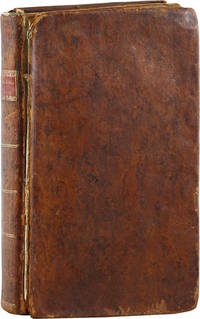
1775015498Amsterdam Amsterdam 17751775. Due opere in E.O. riunite in un volume 10x173 cm rilegato in tutta pelle coeva dorso liscio ornato e dorato con difetti restaurati. Paginazioni: 4-214 pagine per l'opera di Morellet presentata anonima; 228 pagine per l'opera di Linguet risposta anch'essa anonima. -Théorie du paradoxe: Réfutation ironique des différents paradoxe établis par Linguet dans sa Théorie des Loix civiles. Morellet y dénonce la corruption et réfute les fausses doctrines enseignées par Linguet sur les bases d'un bon gouvernement et sur les maximes de son administration. Beaucoup d'idées économiques pilosophiques et politiques. INED 331 La risposta di Linguet è altrettanto aspra e accusa Morellet di rovesciare il senso delle sue proposte. Rara riunione delle due Edizioni Originali. unknown
1799H36520Philadelphia: William Conover 1799. Hardcover. Good. Second American edition first published in the US at Norwich CT in 1796. 8vo 7.5 x 4.5 inches early or original half leather and marbled boards good or better with general rubbing to binding but tightly bound gilt lettering on spine faint but still readable old bookseller's label from J. G. Auner in Philadelphia first blank with 2 x 1" loss to upper outer corner early ownership signature of Johnston Moore on title page possibly the Carlisle PA landowner 1809-1901 who had a frought relationship with Dickinson College; contents a bit toned and foxed throughout. 320 pp. Utopian lost race novel first published in England in 1737 purportedly by an Italian but actually by an Englishman and Catholic priest. Describes finding the kingdom of Mezzorania somewhere in Northern Africa which has developed into a utopian society over 3000 years of isolation. Popular and widely reprinted in Europe but American editions are rare in commerce. William Conover hardcover
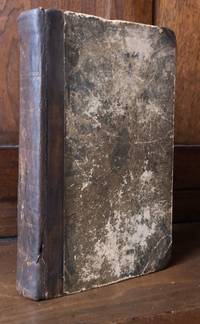
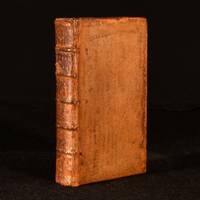
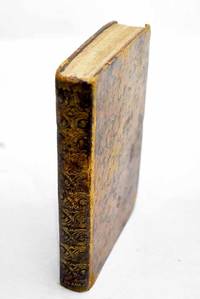
1775105185Amsterdam 1775. 170x100mm. 228Êpages bandeaux reliure plein veau de lՎpoque avec piÂce de titre et fleurons dorÂŽs au dos ˆ 5 nerfs. Triples encadrements dorÂŽs sur les deux plats. Tranche rouge. Garde marbrÂŽ. Cuir frottÂŽ par endroits autrement bel exemplaire intÂŽrieur propre. 341 unknown
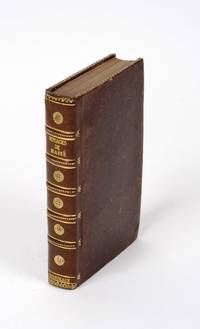
1777001781Amsterdam et Liege: Desoer 1777. Memoires de Gaudence de Lucques prisonnier de lInquisition. Augmentée de plusieurs cahiers qui avaient été perdus à la douane de Marseille. Premier tome . quatrième. Amsterdam et Liège Desoer 1777. --- Quattro tomi in due volumi in 8° piccolo di 146pp; 2-143pp; 4-144pp; 4-164pp. Mezza pelle verde ottocentesca. Quattro incisioni di Le Lorrain. --- «Décrit avec talent un pays inconnu situé au milieu de lAfrique. Cest le peuple des Mezoraniens. Réligion naturelle et tolerante gouvernement familiale communisme.» Ruyer: l'Utopie p. 191. Viene considerato nell'ambito delle utopie di produzione illuministica uno degli incunaboli del pensiero comunista. Desoer unknown
1760002415L'Utopie: chez Jaques l'Aveugle 1760. Due volumi in 12o di 272 e 232 pagine. Legature coeve in piena pelle; difetti alle cuffie. Una delle più famose utopie del XVIII secolo francese che presenta curiose somiglianze con il Robinson Crusoe. In viaggio nelle terre australi il protagonista scopre un regno dove domina labbondanza la tolleranza luguaglianza. Viene anche inventata una nuova lingua senza imperativo!. La prima edizione è del 1710. chez Jaques l'Aveugle unknown
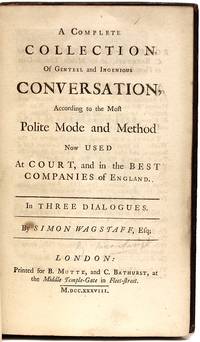
1738mon0000163622London: for B. Motte 1738. FIRST EDITION. 1 vol. 8" x 5-1/8" iilxxxvii215pp. includes the initial ad leaf complete internally clean and bright. Bound in contemporary full speckled calf covers double ruled in gilt expertly rebacked gilt lettered spine VERY GOOD. Housed in a 1/4 green morocco open ended slipcase raised bands gilt lettered spine spine sunned. London: for B. Motte hardcover
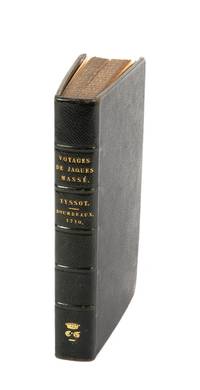
171023256Bordeaux: James l'Aveugle 1710. First edition. An important imaginary voyage to Australia: a 'landmark' in the development of the French voyage novel Atkinson in its original full calf decorated binding. <br /> <br /> A Robinsonade account which predates Defoe. It is complete with the ship wreck exploration conflict with local inhabitants stand off and final rescue by a passing ship. It is a reasonable representation of the Australian continent and its challenges along with a realistic estimation of the importance of mining and irrigation to Australia that "foreshadow what has actually come to pass in modern Australia." Friederich <br /> <br /> The title page is falsely dated 1710. In his deep analyses of Tyssot de Patot and his publications Aubrey Rosenberg has concluded that this 1710 printing with the armillary sphere device on the title page with the base pointing to the left is indeed the first edition and was published between 1714 and 1718. "Robinson Crusoe" first appeared in 1719.<br /> <br /> 12mo viii 508pp. Bound in the original full brown calf binding gilt spine in 6 compartments raised bands gilt device decoration on spine and outer dentelles. Bookplate of Sir John Dashwood King on the inside front pastedown. Rosenberg "A" Gove 217-219; Cioranescu 62587; Barbier IV 1103; Atkinson 'The Extraordinary Voyage in French Literature' p. 70; Rosenberg pp. 84-5. <br /> <br /> A handsome copy in its original binding. James l'Aveugle unknown
1799241012Philadelphia: Reprinted by William Conover No. 72 Walnut Street 1799. Second American edition. 320 pp. 1 vols. 8vo. 19th-century polished calf upper joint cracked but cords holding; title page backed next leaf with loss at top of page affecting only running heads leaves K6 pp. 119-120 and N1 pp. 145-146 defective with some loss of text stains scattered throughout some waterstaining to lower outer corner of text block. Second American edition. 320 pp. 1 vols. 8vo. Simon Berington 1680-1755 was a Catholic controversialist and the author of this frequently reprinted utopian voyage first ed. London 1737. This second American edition was preceded by the Norwich edition of 1796. Evans 35183. Evans 35183 <br/><br/> Reprinted by William Conover, No. 72, Walnut Street unknown
173856251Dublin: reprinted by and for George Faulkner 1738. 8vo pp. xiv 310; contemporary calf boards; 19th-century rebacking; leather scuffed around board edges; head of title page clipped and mended; otherwise very good. A fictional story about an Italian man who discovers a mythical paradise called Mezzoramia in the African desert. The author Simon Berington 1680-1755 was a Catholic priest. The title page states that the text was copied from a manuscript in St. Mark's Library in Venice but this is a fictional account; the text was initially written in English and first published in London in 1737 and received a number of reprints. reprinted by, and for George Faulkner unknown
1737BERINGTO006410T. Cooper London. 1737. First edition. Octavo. pp xvi 335. Period binding of full calf with raised bands gilt rules later leather title-label on spine. A utopian novel which was for many years attributed to Bishop Berkeley. The narrative relates a sojourn in the remote African community of Mezorania whose social system supposedly bears ancestral traces of that of the Ancient Egyptians. It is therefore sometimes described as an early Lost Race novel.Inscribed on the title-page: ''Mary Hornyold sic hers - given her by the Author.'' On the front pastedown is the armorial engraved bookplate of Thomas Hornyhold of Blackmore Park.Some creasing to free endpapers an first blank. Hinges cracking but tight. Occasional foxing. Some staining to margins not affecting text. Covers a bit rubbed. Very good. Scarce. T. Cooper, London. hardcover
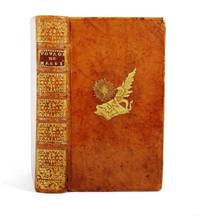
1753019732Amsterdam: N.P. Four Parts in Two Volumes Complete. Full leather with gilt designs in the spine compartments. xvi lx 132 pp.; 204 pp. 204 pp.; 232 pp. Half titles title pages and frontispiece plates present for all four parts. Edgewear to the covers otherwise nice. Separations along the spines loss of spine decorations in two compartments of Vol. 1 and one compartment of Vol. 2 serious chipping at head and foot of spine internals very nice. An initial version of this utopia was written in England by Simon Berington. A French translation appeared in 1738. This version written by Jean-Baptiste Dupuy-Demportes is so expanded and altered that it is considered part of the French utopian tradition. Gaudentio is brought before the Inquisition and describes the utopia in Mezzorania in Africa. . Good. Full Leather. First Edition Thus. 1753. N.P. hardcover
178614872Maestricht: L'Impremerie De P L Lekens. Very Good- with no dust jacket. 1786. Paperback. Tone modern wraps binding light wear. Solid paperback. ; French language critique of the historical work of Ernst and Heylen on events in Brabant in 1383 the year of the death of Duke Wenceslas of Luxembourg and the accession of his wife Joanna Duchess of Brabant. ; 0 pages . L'Impremerie De P L Lekens paperback
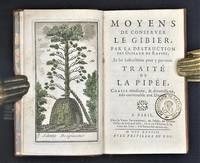
17386<p><strong>First Edition - The copy of king Louis Philippe I</strong></p><p><strong>Exceedingly rare hunting treatise on Bird trapping </strong><em><strong>pipée </strong></em><strong> AS A METHOD TO protect and preserve bush animals from birds of prey</strong></p><p>Simon Jean-Baptiste. <em>Moyens de conserver le Gibier par la destruction des oiseaux de rapine ; Et les Instructions pour y parvenir. </em><em>Traité de la pipée Chasse amusante & divertissante très-convenable aux Dames. </em>Paris Veuve Prudhomme 1738.</p><p>12° 163 x 10 cm contemporary full leather binding gilt decoration and title at compartments pp. 4 – first blank <em>recto</em> of second page engraved frontispiece xxvii 3 84 4 engraved handcoloured frontispiece original silk bookmark perfectly preserved red edges.</p><p>Hand coloured full page engraving at frontispiece representing a birds trap with the Latin <em>motto</em> "<em>Silentio Decipiuntur</em> Deceived in Silence"</p><p>Only three complete copies of this first edition recorded in worldwide libraries WorldCat</p><p>Extremely rare treatise on Birds Trapping <em>pipée</em> which as the author specifies in the preface can be considered the first and most complete popular and infomrative work on this hunting technique.</p><p>This method of hunting now prohibited and already discussed in Simon's time is based on the preparation of traps usually poles leaning against trees or branches sprinkled with a sticky substance towards which a team of beaters lures the birds with decoys.</p><p>Simon tries to valorise this hunting method not considering it only as it was mainly considered at the time a fun pastime perfectly suitable for ladies but as a very useful hunting method to control the number of birds of prey and therefore preserve bush animals otherwise destined to be their victims.</p><p>Book Structure:</p><p>· Hand coloured engraved frontispiece</p><p>· Title page</p><p>· Preface</p><p>· Table of Contents</p><p>· Chapter I – On the hunting methods of the "<em>pipée" </em>in general</p><p>· Chapter II – On the preparation of the "Glue" for the traps</p><p>· Chapter III – How to optimize the glue</p><p>· Chapter IV – On Glue in general</p><p>· Chapter V – About the best locations to prepare the traps</p><p>· Chapter VI – How to choose the tree and how to prepare it</p><p>· Chapter VII – Where to hide the hunt beaters</p><p>· Chapter VIII – IX How to set up the traps</p><p>· Chapter X – About the best time of the day to start the hunting</p><p>· Chapter XI – About the decoys in hunting</p><p>· Chapter XII – The best season for "<em>pipée"</em></p><p>· Chapter XIII – The best weather to practice Hunting</p><p>· Chapter XIV – Which are the birds usually captured with "<em>pipée"</em></p><p>· Chapter XV – How to build a perfect Hunting Team.</p><p>· Printing Authorization</p><p>· King's privilege</p><p>Simon Jean-Baptiste early XVIII century - 1762 was a French Lawyer member of the Parliament and Royal censor from 1742 to 1762. He was author of works on bees birds hunting and cosmography.</p><p>Census: exceedingly rare edition. Only three copies of this first edition are recorded in Worldcat plus one imperfect:</p><p>· 2 in USA Yale imperfect Berkeley</p><p>· 1 in Sweden Kungliga biblioteket</p><p>· 1 in France BnF.</p><p>Conditions: Perfect copy of an exceedingly rare hunting treatise with an important noble provenance and with hand colored illustration.</p><p>Provenance: I. From the prestigious <em>Bibliothèque royale de Louis-Philippe au château d'Eu </em>with his ownership stamp at title page. Louis Philippe 6 October 1773 – 26 August 1850 was King of the French from 1830 to 1848 the last King and penultimate monarch of France and <em>Château d'Eu</em> served as his summer residence. II: handwritten shelf location notes at front and back fly leaves.</p> Veuve Prudhomme
175622766Paris: publisher not identified 1756. First edition 12mo pp. 4 124; lacking the errata leaf; head- and tail-pieces throughout; contemporary mottled calf the spine gilt in six compartments red morocco label in 1 and all edges red; light wear to extremities small worm trail on back cover affecting leather only and a small 1-inch diameter illegible stamp in red on title page; overall a very attractive clean copy. An important treatise on crop rotation. La Salle de l'Etang d. 1765 provides one of the earliest systematic plans for rotating food crops with "artificial" pastures allowing tilled lands to rebuild nutrient reserves. In addition the author advocates raising livestock for manure to fertilize dry and sterile lands. In order to facilitate his plan he calls for the establishment of a national bureau of agriculture that would be responsible for record-keeping distributing produce throughout the country in times of famine and regional crises regulating foreign trade in agricultural products and maintaining fair prices. A second edition of La Salle de l'Etang's treatise appeared in 1758 and a third expanded version of 330 pages in 1762 both with a Brussels imprint. Six copies in US libraries: Harvard Yale Delaware UC-Davis and 2 others. [publisher not identified] unknown
1767303534London. Poor. 1767. First Edition. Hardcover. Ex-library copies with spine labels and book plates. There is an ink stamp on each title page. Covers are cracked missing surface pieces and have some darkened portions. Covers have edge and corner wear. Inner and outer hinges are partially cracked. Lower spine corners and adjacent edges have dampstaining larger and darker in volume two. Thin strips of dampstaining to upper page edges. First several leaves of volume one are missing upper outer corners half-title and title have been repaired. Endpapers of volume one formerly adhered together with some paper loss. ; Two volumes. French text. Full leather covers. . hardcover
1793S940Rotterdam 1793. 4to. Johannes Jacobus Meyneken Gold-tooled half calf sprinkled sides. With 10 engraved hand-coloured plates including 1 folding. 6 parts in 1 volume. 8 32'2 5-38; 2 5-36 1 blank; 2 5-32; 2 5-30; 2 5-28 2 pp. Second edition of the Dutch translation of Pallas' Specilegia Zoologica 1767-1770. Divided into six parts it includes descriptions of several species of antelopes bats Polychaeta "zeerupsen" an opossum and the tufted puffin Fratercula cirrhata "gekuifde papegaaiduiker".It was translated into Dutch by Pieter Boddaert 1733-1795 and first published in Utrecht in 1767-1770 as Dierkundig Mengelwerk. The present edition is a reissue with a new title page and slightly different title. Boddaert was a lecturer on natural history at the University of Utrecht. Peter Simon Pallas 1741-1811 was a very famous German Zoologist botanist and above all traveller. He studied at Halle Göttingen and Leiden where he submitted his doctoral thesis in 1760. In 1761 he went to England to study the natural history collections and to make geological observations. In 1763 he settled in The Hague where in 1766 he published his acclaimed Elenchus zoophytorum which was highly praised by Georges Cuvier. Binding somewhat rubbed front hinge cracked head of spine damaged. Otherwise in very good condition.l Landwehr Coloured Plates 154; Nissen ZBI 3072; STCN 298956829 4 copies; Wood p. 511; WorldCat 1062395629 1442556102. unknown
1793WB18433Rotterdam: Johannes Jakobus Meyneken 1793. Hardcover. Very Good. 4to 265 x 207 mm. 10 engraved plates with hand-coloring; engraved headpieces. Minor losses to lower margin of a few leaves some minor mostly marginal dampstaining. Contemporary calf-backed boards gilt uncut and unopened some wear. A rare later edition. The first edition of Boddaert's annotated translation of parts of Pallas' Spicilega Zoologica was published in 6 parts in 1767-1770; a second edition was published by Esveldt & Holtrop in 1779. The present edition is a reissue of the 1767-70 edition adding a new title-page and 6 section titles. According to Wood the present edition is "one of the many editions of the author's Dierkundig Mengelwerk" see Wood p.511. Plates depict several species of antelopes bats an opossum and the tufted puffin. Landwehr Color Plates 154; see Nissen ZBI 3072. <br /> <br/><br/> Johannes Jakobus Meyneken hardcover
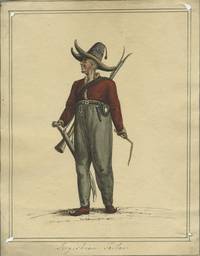
1770272311770. Paintings. Otherwise very good condition. Seven expertly painted watercolors of Eastern Russian folk people in traditional dress. These are most likely painted for or copied from one of Pallas' books "Reise durch verschiedene Provinzen des Russischen Reichs" 1771-76 later published in English "Journey Through Southern Provinces of the Russian Empire". They all bear penciled numbers in the lower right possibly correlating with plates in a Pallas work. <br /> <br /> Three paintings have manuscript captions in ink: 'Kosak Woman of Tsherkash' 'Tirgishian Tartar' 'A Kalmak of the lower class.' All are numbered in pencil in lower right corner: 1 3 18 56 65 67 68 . The image "Kosak Woman" caption is followed by an ink name "Pallas". The other 4 watercolors have no captions and subjects include a Woman with a cape Man with floor length fur lined coat and hat Man with long beard golden helmet and fur lined coat; and a Woman carrying a basket on her back and under her arm.<br /> <br /> Four paintings are 8 x 10" other 3 are 7 x 9" painted on thick paper with two ink border lines some thin and some thick. The image of the Tirgishian Tartar has four small holes in the corners. All have been removed from an album. <br /> <br /> Peter Simon Pallas 1741 - 1811 German naturalist who advanced a theory of mountain formation and by the age of 15 had outlined new classifications of certain animal groups.<br /> <br /> In 1761 he went to England to study natural-history collections and to make geological observations. He was appointed professor of natural history at the Imperial Academy of Sciences St. Petersburg in 1768. About the same time he joined a scientific expedition to Russia and Siberia. For the next six years he traveled across the length and breadth of the vast empire. He found a wide distribution of mammoth and rhinoceros fossils including some with their hairy hides preserved in the Siberian ice. He returned to St. Petersburg in 1774 with a great amount of data and many fossil specimens but he had ruined his health. He published his major findings from the expedition in three volumes Reise durch verschiedene Provinzen des russischen Reichs 1771-76 later published in English "Journey Through Various Provinces of the Russian Empire". His chief geological contribution based largely on his study of the Ural and Altai mountain ranges of Siberia was the recognition of a temporal sequence of rocks from the center to the flanks of a range. unknown
1710983K3Bordeaux: Jaques L'Aveugle 1710 c1742. Leather. Very Good. 7" by 4". Not Stated. A very scarce early imprint of this controversial work of enlightenment fiction being an early example of Utopian fiction and a precursor to Robinson Crusoe in the 'voyage imaginaire' tradition. Rosenberg edition D with vignette of nude woman to title page and frontispiece portrait of Jacques Masse. Despite title page stating the date at 1710 Rosenberg believes the work to have been published no later than 1742 with the first edition published sometime between 1714 and 1717.Previous scholarship from Professor Storer argued this variant D was in fact the first edition but this was later proven to be incorrect with Rosenberg edition A with the celestial globe now widely considered to be the first. Duodecimo. Signatures run a2 2 A-X12 Y2. 1 incorrectly signed as 2 with 2 unsigned as called for. Collated complete. In contemporary calf. An early example of the Utopian novel Voyages et Avantures de Jacques Masse tells the story of a man who upon being shipwrecked discovers paradise. The protagonist learns the local language in order to preach Christianity but the locals dismiss the teachings with particular distain towards what they considered to be an unjust God. The work was extremely controversial upon publication and was quickly banned notably due to its critique of Catholicism. In contemporary calf. Externally smart with slight loss to spine label. Slight rubbing to joints and extremities. Slight cracking to upper joint but boards remain firm. Offsetting to endpapers. Internally firmly bound. Pages generally bright and clean with the odd spot and marginal age toning. Very Good Jaques L'Aveugle hardcover
172745318London: J. Walthoe and 18 others 1727. Second Simon edition folio pp. 12 540; engraved vignettes throughout woodcut printer's device initials and head- and tail-pieces; text printed in double column; contemporary blind-tooled panelled calf recently rebacked in calf top edge of rear cover also re-bound in calf spine in 7 compartments stamped in red and gilt; boards scuffed and scratched with some shallow loss of leather along edges both covers ring-stained; off-setting to preliminaries else a very good copy. ESTC T144011. J. Walthoe [and 18 others] unknown
17103201143Bordeaux: chez Jacques l'Aveugle 1710. Extremities slightly rubbed rebacked corners reinforced a very good copy. Duodecimo with woodcut device on title; original sprinkled calf binding. <p><p>First edition Rosenberg edition 'A' of this important imaginary voyage to Australia: a "landmark" in the development of the French voyage novel Atkinson. Friederich comments that the importance of mining and irrigation to the Australians makes it the only work "to foreshadow what has actually come to pass in modern Australia".</p> <p>This is an attractive copy of this precursor to Defoe set on the Australian continent among people obsessed with mining and the problems of irrigation: "the detailed account of the adventurer's camp in the Austral continent the building of a raft and the descriptions of plants and trees may be compared favourably to similar passages in Robinson Crusoe." Atkinson.</p> <p>The author Tyssot de Patot was a remarkable figure an English-born Huguenot and self-taught philosopher with a background in mathematics who at the impressive age of 72 suddenly scandalized his Dutch community and was run out of town as a dangerous heretic. He wrote two wonderfully inventive imaginary voyages both well ahead of their time: one was an account of a journey deep underground into a hollow earth while the present work tells the story of a veteran sailor called Jacques Massé who shipwrecks in the far southern reaches of the Indian Ocean not far from what is now Kerguelen Island. Delighted with the new world he discovers Massé denounces his European heritage only to be betrayed and have to flee to the coast where he is besieged for 12 years before being finally rescued by a Portuguese ship. </p> <p>The work was a modest bestseller of the era and the question of editions has been thoroughly investigated by Aubrey Rosenberg no small task given that all four major editions are dated 1710 on the title-page. Rosenberg argues that this edition 'A' in his list with an armillary sphere device on the title with its base pointing to the left was probably published between 1714 and 1717 and is the true first edition of the work. As Rosenberg points out this series of editions dispels the notion that interest in Tyssot quickly died out: in fact the staggered publications argue a sustained interest in the work throughout the eighteenth century.</p> <p>Tyssot de Patot's writings were a continual source of scandal: Voltaire thought that he had "carried the torch of discord into their homeland". Certainly the antagonistically anti-religious stance of this novel created much ill-feeling. Atkinson comments that because "open criticism of the Bible is so frequent" he will have to content himself with listing just a few of the more extreme examples. Nonetheless Atkinson's positive summary gives a good sense of the importance of the work: "a close following of accounts of real travellers such as Dellon Tavernier Mocquet and Lahontan. There is nothing fantastic unbelievable or overdrawn in the descriptions of the Austral continent.". </p> <p>---</p> <p>The story has Massé shipwrecking on the Southern continent at "44 South latitude almost at the point where Kerguelen Island will be found to be on modern maps" Atkinson. Whilst most of the survivors of the wreck are content to maintain a large presence on the coast Massé and his friend Moret travel inland where they settle in an enormous and well-organised utopia "a plentiful fruitful country a land of blessing and peace . where human blood is sacred and safe from the rage and tyranny of great men". They become so enamoured of their Australian hosts that they abjure their faith and their European heritage and it is only when Moret is betrayed by his liaison with a treacherous queen that they reluctantly flee escaping rather fortuitously by a subterranean river which deposits them close by the original settlement. They remain besieged in the camp for another twelve years before they are finally picked up by a Portuguese ship.</p> </p> . Provenance: James Hustler "of Acklam in Cleveland in the North Riding of the Country of York Esq." engraved armorial bookplate dated 1730; Bernard Gore Brett Melbourne book collector. chez Jacques l'Aveugle unknown
17343006519Cologne: Jaques Kainkus 1734. Slight wear to top and tail of spine otherwise fine. Duodecimo frontispiece title-page printed in black and red; contemporary sprinkled calf spine gilt in compartments. <p><p>A handsome copy of the third edition Rosenberg edition 'C' with frontispiece portrait of Massé and title-page vignette of Mercury. Friederich comments that the importance of mining and irrigation to the Australians makes it the only work 'to foreshadow what has actually come to pass in modern Australia'.</p> <p>Tyssot de Patot was a well-known Huguenot free-thinker whose writings were a continual source of scandal: Voltaire thought that he had 'carried the torch of discord into their homeland'. Certainly the antagonistically anti-religious stance of this novel created much ill-feeling. Atkinson comments that because 'open criticism of the Bible is so frequent' he will have to content himself with listing just a few of the more extreme examples.</p> <p>Massé shipwrecks on the Southern continent at '44 South latitude almost at the point where Kerguelen Island will be found to be on modern maps' Atkinson. Whilst most of the survivors of the wreck are content to maintain a large presence on the coast Massé and his friend Moret travel inland where they settle in an enormous and well-organised utopia 'a plentiful fruitful country a land of blessing and peace . where human blood is sacred and safe from the rage and tyranny of great men'. They become so enamoured of their Australian hosts that they abjure their faith and their European heritage and it is only when Moret is betrayed by his liaison with a treacherous queen that they reluctantly flee escaping rather fortuitously by a subterranean river which deposits them close by the original settlement. They remain besieged in the camp for another twelve years before they are finally picked up by a Portuguese ship.</p> <p>Rosenberg argues for a date of around 1734 for this edition to coincide with the renewed interest in Tyssot's work at the time he cites 1733 English and 1737 German editions. His theory is that this renewal of interest 'arose because it was confused with Mandeville's Fable of the Bees which by 1730 had achieved considerable notoriety'.</p> </p> . Provenance: Frédéric Lachèvre 1855-1943 writer and bibliographer with his romantic bookplate and armorial gilt stamp on front board. Oddly enough the National Library of Australia has Lachèvre's copy of a later edition of this work Special Colelctions SR 913. Jaques Kainkus unknown
17173211648Bordeaux" actually Rouen 1717. A fine copy. Duodecimo woodcut device on title; 19th-century grained morocco gilt gauffred edges. <p><p>First edition Rosenberg edition 'A' of this important imaginary voyage to Australia: a "landmark" in the development of the French voyage novel Atkinson. Friederich comments that the importance of mining and irrigation to the Australians makes it the only work "to foreshadow what has actually come to pass in modern Australia".</p> <p>This is an attractive copy of this precursor to Defoe set on the Australian continent among people obsessed with mining and the problems of irrigation: "the detailed account of the adventurer's camp in the Austral continent the building of a raft and the descriptions of plants and trees may be compared favourably to similar passages in Robinson Crusoe." Atkinson.</p> <p>The author Tyssot de Patot was a remarkable figure an English-born Huguenot and self-taught philosopher with a background in mathematics who at the impressive age of 72 suddenly scandalized his Dutch community and was run out of town as a dangerous heretic. He wrote two wonderfully inventive imaginary voyages both well ahead of their time: one was an account of a journey deep underground into a hollow earth while the present work tells the story of a veteran sailor called Jacques Massé who shipwrecks in the far southern reaches of the Indian Ocean not far from what is now Kerguelen Island. Delighted with the new world he discovers Massé denounces his European heritage only to be betrayed and have to flee to the coast where he is besieged for 12 years before being finally rescued by a Portuguese ship. </p> <p>The work was a modest bestseller of the era and the question of editions has been thoroughly investigated by Aubrey Rosenberg no small task given that all four major editions are dated 1710 on the title-page. Rosenberg argues that this edition 'A' in his list with an armillary sphere device on the title with its base pointing to the left was probably published between 1714 and 1717 and is the true first edition of the work. As Rosenberg points out this series of editions dispels the notion that interest in Tyssot quickly died out: in fact the staggered publications argue a sustained interest in the work throughout the eighteenth century.</p> <p>Tyssot de Patot's writings were a continual source of scandal: Voltaire thought that he had "carried the torch of discord into their homeland". Certainly the antagonistically anti-religious stance of this novel created much ill-feeling. Atkinson comments that because "open criticism of the Bible is so frequent" he will have to content himself with listing just a few of the more extreme examples. Nonetheless Atkinson's positive summary gives a good sense of the importance of the work: "a close following of accounts of real travellers such as Dellon Tavernier Mocquet and Lahontan. There is nothing fantastic unbelievable or overdrawn in the descriptions of the Austral continent.". </p> <p>---</p> <p>The story has Massé shipwrecking on the Southern continent at "44 South latitude almost at the point where Kerguelen Island will be found to be on modern maps" Atkinson. Whilst most of the survivors of the wreck are content to maintain a large presence on the coast Massé and his friend Moret travel inland where they settle in an enormous and well-organised utopia "a plentiful fruitful country a land of blessing and peace . where human blood is sacred and safe from the rage and tyranny of great men". They become so enamoured of their Australian hosts that they abjure their faith and their European heritage and it is only when Moret is betrayed by his liaison with a treacherous queen that they reluctantly flee escaping rather fortuitously by a subterranean river which deposits them close by the original settlement. They remain besieged in the camp for another twelve years before they are finally picked up by a Portuguese ship.</p> </p> . Provenance: This copy from the British Museum with the stamp on verso of title and the 1831 duplicate release stamp; also the crowned cipher "C.G." on spine. unknown
179955420Philadelphia: Re-Printed by William Conover 1799. Second American Edition. 12mo 18.5cm. Contemporary tree calf; 320pp. Small perforation at leaf E6 costing a few characters but no loss of sense. Leaf L4 is bound out of order before L3 with marginal loss but no loss of text. Else a complete sound and Good copy in a contemporary binding worn with front joint cracked through held by threads. Ownership signature of a Henry Rogers dated 1801 to front pastedown. <br /> <br /> A popular 18th-century utopia described in the Encyclopedia of Science Fiction on-line as "one of the first Lost World novels in the literature" and "probably the first to suggest that the lost race in question may be Ancient Egyptians." Often attributed to Bishop Berkeley but in fact the work of another Catholic divine Simon Berington; in any case not a translation of any Italian work and "Gaudentio di Lucca" a synonym. Gaudentio which describes an imaginary African kingdom of Mezzorania where "Nature is the source of all that is good for mankind" originally appeared in London in 1737 and proved immediately popular going through a succession of French and German translations prior to the death of the author in 1755. The first American edition appeared in Norwich Connecticut in 1796; ours is the second American edition printed in Philadelphia three years later. Both editions are institutionally plentiful but rather uncommon in commerce. SARGENT p.11 the 1st ed. LEWIS p.18. NEGLEY 93. LCP AFRO-AMERICANA 1125 citing only this edition. EVANS 35183. Re-Printed by William Conover unknown
17693705932Madrid.: Viuda de Manuel Fernández. 1769. Hardcover. Good. 14 cm. 355 p. Encuadernación en tapa dura artesanal. Idioma latin. Lib. Ulloa Bartolomé. editor. fl. 1751-1779. Va añadido al fin un libro del Arte Poetica . Viuda de Manuel Fernández. hardcover