322 résultats
198146619Washington DC: Civil Aeronautics Board 1981. good. Approx. 400 wraps covers somewhat worn and soiled minor crease at spine. Civil Aeronautics Board paperback
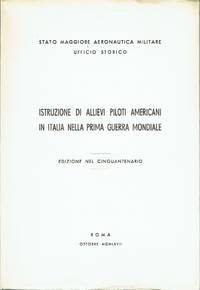
1967017611Rome 1967. paperback. Very Good. Minor edge wear and soiling to cream covers. No markings. Dual language English / Italian. Always securely packed. Professional booksellers since 1994. Satisfaction guaranteed. <br/><br/> paperback
1986900818<p>New York: Praeger Publishers 1986. First printing. Hardcover. Very Good . Cloth. 435 pages including a Bibliography and an Index tables and figures. Light wear at a few corner tips. <br /><br /></p> Praeger Publishers hardcover
197065899Washington D.C.: National Aeronautics and Space Administration 1970. Hardcover. Near Fine. 35.5 x 27 cm. Folio. Red cloth. 125 pages. National Aeronautics and Space Administration hardcover
199346710Washington DC: NASA 1993. good. 376 wraps bibliography stamp on front cover covers somewhat worn and soiled. NASA paperback
196280604Washington DC: National Aeronautics and Space Administration c1962. Presumed First Edition First printing. Wraps. Good. Format is approximately 10.25 inches by 8.25 inches. 16 pages plus covers. Illustrated some in color. This is a college focused recruitment booklet. The date is assumed as there was an article in Aviation Week and Space Technology of June 2 1962 that used the phrase NASA.spearhead to space. This booklet is an invitation for college graduates with inquiring scientific minds.creative minds.to seek to join NASA's scientific and engineering staff. NASA offered rapid professional advancement early recognition rapid salary advancement support for graduate study and a choice of which NASA facilities to consider joining. The National Aeronautics and Space Administration NASA is an independent agency of the U.S. Federal Government responsible for the civilian space program as well as aeronautics and space research. NASA was established in 1958 succeeding the National Advisory Committee for Aeronautics NACA. The new agency was to have a distinctly civilian orientation encouraging peaceful applications in space science. Since its establishment most US space exploration efforts have been led by NASA including the Apollo Moon landing missions the Skylab space station and later the Space Shuttle. NASA is supporting the International Space Station and is overseeing the development of the Orion spacecraft the Space Launch System and Commercial Crew vehicles. The agency is also responsible for the Launch Services Program which provides oversight of launch operations and countdown management for uncrewed NASA launches. National Aeronautics and Space Administration paperback
196949368Washington DC: GPO 1969. fair to good. 238 wraps illus. tables appendices covers and edges foxed some foxing to a few pages mailing label on rear cover. Front cover creased. GPO paperback
195980611Washington DC: National Aeronautics and Space Administration 1959. Contemporary print. Photograph. Good. Sheet is approximately 8 inches by 10.5 inches. Black and white photographic image is approximately 9 inches by 6.5 inches. This is printed on photographic paper stock. The image is of a rocket in front of a gantry taken at night. There is a group of people gathered at the base of the rocket. This may be a photograph of the Mercury Redstone or the Mercury Atlas rocket. Mercury-Atlas was a subprogram of Project Mercury that included most of the flights and tests using the Atlas LV-3B launch vehicle. The Atlas was also used for one Mercury flight under the Big Joe subprogram. The photo is contemporary with Project Mercury. Project Mercury was the first human spaceflight program of the United States running from 1958 through 1963. An early highlight of the Space Race its goal was to put a man into Earth orbit and return him safely ideally before the Soviet Union. Taken over from the US Air Force by the newly created civilian space agency NASA it conducted twenty uncrewed developmental flights some using animals and six successful flights by astronauts. The program took its name from Roman mythology. The astronauts were collectively known as the "Mercury Seven" and each spacecraft was given a name ending with a "7" by its pilot. The Mercury-Redstone launch vehicle was the first crewed launch vehicle in the United States space program. The Mercury-Redstone provided NASA with an opportunity understand performance aspects of the Mercury spacecraft the effect of a weightless environment on astronauts and launch and recovery operations at Kennedy Space Center. Development of the Redstone missile began directly after the transfer of the Fort Bliss rocket team to Huntsville Alabama in 1950. The fuselage of the Redstone was developed in-house at the Army's Guided Missile Development Division with Chrysler serving as prime contractor. Peenemunde veteran William A. Mrazek was placed in charge of developing the structure that consisted of pressurized aluminum propellant tanks. The tail unit consisted of a riveted aluminum structure with four stabilizing fins and air rudders with carbon jet vanes extending into the exhaust stream. The initial flight test of the Redstone occurred on August 20 1953 at Cape Canaveral. Between August 1953 and November 1958 37 Redstone missiles were fired altogether with only 13 experiencing any sort of malfunction. On October 7 1958 NASA formally organized Project Mercury to place a manned space capsule in orbital flight around the Earth investigate man's reaction to this new environment and recover the capsule and the pilot safely. The Army agreed to provide ten Redstone and three Jupiter vehicles for NASA's manned space program. Funding for the eight Redstone boosters was provided to the Army Ordnance Missile Command at the Arsenal in January 1959. "Man-rating" for human spaceflight what was previously a ballistic missile was not an easy project. Requirements for the project included launching a two-ton payload to an apogee of 100 nautical miles. The vehicle also had to meet important criteria of safety during launch adequate human factors consideration and necessary performance margins. A key development decision involved using the Jupiter C variation of the Redstone for the project. The Jupiter C design included a propellant tank six feet longer than the Redstone a lighter overall structure and improved performance capable of 78000 pounds of thrust. The elongated tanks of the Jupiter C provided the vehicle with an engine burn time of 143.5 seconds a twenty seconds increase over the Redstone. On July 1 1960 a core group from the Army Ballistic Missile Agency ABMA transferred from the Army to NASA formally creating the Marshall Space Flight Center. With this transfer came overall responsibility for the Mercury-Redstone launch vehicles. By October of that year a status report on Marshall's involvement in Mercury noted that the first two Mercury-Redstones had been assembled by the Marshall Center with many of the components fabricated at Marshall. The Chrysler Corporation had assembled an additional six launch vehicles. The first four of the eight Mercury-Redstone vehicles had been static fired and the first Mercury-Redstone was on the launch pad at Cape Canaveral after a capsule-booster compatibility checkout in Huntsville. National Aeronautics and Space Administration unknown
196080610Washington DC: National Aeronautics and Space Administration 1960. Contemporary print. Photograph. Good. Sheet is approximately 8 inches by 10.5 inches. Black and white photographic image is approximately 9 inches by 6.5 inches. This is printed on photographic paper stock. The image is of a rocket between a gantry and another structure/tower. This may be a photograph of the Mercury Redstone or the Mercury Atlas rocket. Mercury-Atlas was a subprogram of Project Mercury that included most of the flights and tests using the Atlas LV-3B launch vehicle. The Atlas was also used for one Mercury flight under the Big Joe subprogram. The photo is contemporary with Project Mercury. Project Mercury was the first human spaceflight program of the United States running from 1958 through 1963. An early highlight of the Space Race its goal was to put a man into Earth orbit and return him safely ideally before the Soviet Union. Taken over from the US Air Force by the newly created civilian space agency NASA it conducted twenty uncrewed developmental flights some using animals and six successful flights by astronauts. The program took its name from Roman mythology. The astronauts were collectively known as the "Mercury Seven" and each spacecraft was given a name ending with a "7" by its pilot. The Mercury-Redstone launch vehicle was the first crewed launch vehicle in the United States space program. The Mercury-Redstone provided NASA with an opportunity understand performance aspects of the Mercury spacecraft the effect of a weightless environment on astronauts and launch and recovery operations at Kennedy Space Center. Development of the Redstone missile began directly after the transfer of the Fort Bliss rocket team to Huntsville Alabama in 1950. The fuselage of the Redstone was developed in-house at the Army's Guided Missile Development Division with Chrysler serving as prime contractor. Peenemunde veteran William A. Mrazek was placed in charge of developing the structure that consisted of pressurized aluminum propellant tanks. The tail unit consisted of a riveted aluminum structure with four stabilizing fins and air rudders with carbon jet vanes extending into the exhaust stream. The initial flight test of the Redstone occurred on August 20 1953 at Cape Canaveral. Between August 1953 and November 1958 37 Redstone missiles were fired altogether with only 13 experiencing any sort of malfunction. On October 7 1958 NASA formally organized Project Mercury to place a manned space capsule in orbital flight around the Earth investigate man's reaction to this new environment and recover the capsule and the pilot safely. The Army agreed to provide ten Redstone and three Jupiter vehicles for NASA's manned space program. Funding for the eight Redstone boosters was provided to the Army Ordnance Missile Command at the Arsenal in January 1959. "Man-rating" for human spaceflight what was previously a ballistic missile was not an easy project. Requirements for the project included launching a two-ton payload to an apogee of 100 nautical miles. The vehicle also had to meet important criteria of safety during launch adequate human factors consideration and necessary performance margins. A key development decision involved using the Jupiter C variation of the Redstone for the project. The Jupiter C design included a propellant tank six feet longer than the Redstone a lighter overall structure and improved performance capable of 78000 pounds of thrust. The elongated tanks of the Jupiter C provided the vehicle with an engine burn time of 143.5 seconds a twenty seconds increase over the Redstone. On July 1 1960 a core group from the Army Ballistic Missile Agency ABMA transferred from the Army to NASA formally creating the Marshall Space Flight Center. With this transfer came overall responsibility for the Mercury-Redstone launch vehicles. By October of that year a status report on Marshall's involvement in Mercury noted that the first two Mercury-Redstones had been assembled by the Marshall Center with many of the components fabricated at Marshall. The Chrysler Corporation had assembled an additional six launch vehicles. The first four of the eight Mercury-Redstone vehicles had been static fired and the first Mercury-Redstone was on the launch pad at Cape Canaveral after a capsule-booster compatibility checkout in Huntsville. National Aeronautics and Space Administration unknown
195980608Washington DC: National Aeronautics and Space Administration 1959. Contemporary print. Photograph. Good. Sheet is approximately 8 inches by 10.5 inches. Black and white photographic image is approximately 9 inches by 6.5 inches. This is printed on photographic paper stock. The image is of a rocket next to a gantry taken at night. There are many people visible at ground level. This may be a photgraph of the Mercury Redstone rocket. It is contemporary with Project Mercury. Project Mercury was the first human spaceflight program of the United States running from 1958 through 1963. An early highlight of the Space Race its goal was to put a man into Earth orbit and return him safely ideally before the Soviet Union. Taken over from the US Air Force by the newly created civilian space agency NASA it conducted twenty uncrewed developmental flights some using animals and six successful flights by astronauts. The program took its name from Roman mythology. The astronauts were collectively known as the "Mercury Seven" and each spacecraft was given a name ending with a "7" by its pilot. The Mercury-Redstone launch vehicle was the first crewed launch vehicle in the United States space program. The Mercury-Redstone provided NASA with an opportunity understand performance aspects of the Mercury spacecraft the effect of a weightless environment on astronauts and launch and recovery operations at Kennedy Space Center. Development of the Redstone missile began directly after the transfer of the Fort Bliss rocket team to Huntsville Alabama in 1950. The fuselage of the Redstone was developed in-house at the Army's Guided Missile Development Division with Chrysler serving as prime contractor. Peenemunde veteran William A. Mrazek was placed in charge of developing the structure that consisted of pressurized aluminum propellant tanks. The tail unit consisted of a riveted aluminum structure with four stabilizing fins and air rudders with carbon jet vanes extending into the exhaust stream. The initial flight test of the Redstone occurred on August 20 1953 at Cape Canaveral. Between August 1953 and November 1958 37 Redstone missiles were fired altogether with only 13 experiencing any sort of malfunction. On October 7 1958 NASA formally organized Project Mercury to place a manned space capsule in orbital flight around the Earth investigate man's reaction to this new environment and recover the capsule and the pilot safely. The Army agreed to provide ten Redstone and three Jupiter vehicles for NASA's manned space program. Funding for the eight Redstone boosters was provided to the Army Ordnance Missile Command at the Arsenal in January 1959. "Man-rating" for human spaceflight what was previously a ballistic missile was not an easy project. Requirements for the project included launching a two-ton payload to an apogee of 100 nautical miles. The vehicle also had to meet important criteria of safety during launch adequate human factors consideration and necessary performance margins. A key development decision involved using the Jupiter C variation of the Redstone for the project. The Jupiter C design included a propellant tank six feet longer than the Redstone a lighter overall structure and improved performance capable of 78000 pounds of thrust. The elongated tanks of the Jupiter C provided the vehicle with an engine burn time of 143.5 seconds a twenty seconds increase over the Redstone. On July 1 1960 a core group from the Army Ballistic Missile Agency ABMA transferred from the Army to NASA formally creating the Marshall Space Flight Center. With this transfer came overall responsibility for the Mercury-Redstone launch vehicles. By October of that year a status report on Marshall's involvement in Mercury noted that the first two Mercury-Redstones had been assembled by the Marshall Center with many of the components fabricated at Marshall. The Chrysler Corporation had assembled an additional six launch vehicles. The first four of the eight Mercury-Redstone vehicles had been static fired and the first Mercury-Redstone was on the launch pad at Cape Canaveral after a capsule-booster compatibility checkout in Huntsville. National Aeronautics and Space Administration unknown
195980609Washington DC: National Aeronautics and Space Administration 1959. Contemporary print. Photograph. Good. Sheet is approximately 8 inches by 10.5 inches. Black and white photographic image is approximately 9 inches by 6.5 inches. This is printed on photographic paper stock. The image is of a rocket lifting off next to a gantry taken at night. This may be a photograph of the Mercury Redstone rocket. It is contemporary with Project Mercury. Project Mercury was the first human spaceflight program of the United States running from 1958 through 1963. An early highlight of the Space Race its goal was to put a man into Earth orbit and return him safely ideally before the Soviet Union. Taken over from the US Air Force by the newly created civilian space agency NASA it conducted twenty uncrewed developmental flights some using animals and six successful flights by astronauts. The program took its name from Roman mythology. The astronauts were collectively known as the "Mercury Seven" and each spacecraft was given a name ending with a "7" by its pilot. The Mercury-Redstone launch vehicle was the first crewed launch vehicle in the United States space program. The Mercury-Redstone provided NASA with an opportunity understand performance aspects of the Mercury spacecraft the effect of a weightless environment on astronauts and launch and recovery operations at Kennedy Space Center. Development of the Redstone missile began directly after the transfer of the Fort Bliss rocket team to Huntsville Alabama in 1950. The fuselage of the Redstone was developed in-house at the Army's Guided Missile Development Division with Chrysler serving as prime contractor. Peenemunde veteran William A. Mrazek was placed in charge of developing the structure that consisted of pressurized aluminum propellant tanks. The tail unit consisted of a riveted aluminum structure with four stabilizing fins and air rudders with carbon jet vanes extending into the exhaust stream. The initial flight test of the Redstone occurred on August 20 1953 at Cape Canaveral. Between August 1953 and November 1958 37 Redstone missiles were fired altogether with only 13 experiencing any sort of malfunction. On October 7 1958 NASA formally organized Project Mercury to place a manned space capsule in orbital flight around the Earth investigate man's reaction to this new environment and recover the capsule and the pilot safely. The Army agreed to provide ten Redstone and three Jupiter vehicles for NASA's manned space program. Funding for the eight Redstone boosters was provided to the Army Ordnance Missile Command at the Arsenal in January 1959. "Man-rating" for human spaceflight what was previously a ballistic missile was not an easy project. Requirements for the project included launching a two-ton payload to an apogee of 100 nautical miles. The vehicle also had to meet important criteria of safety during launch adequate human factors consideration and necessary performance margins. A key development decision involved using the Jupiter C variation of the Redstone for the project. The Jupiter C design included a propellant tank six feet longer than the Redstone a lighter overall structure and improved performance capable of 78000 pounds of thrust. The elongated tanks of the Jupiter C provided the vehicle with an engine burn time of 143.5 seconds a twenty seconds increase over the Redstone. On July 1 1960 a core group from the Army Ballistic Missile Agency ABMA transferred from the Army to NASA formally creating the Marshall Space Flight Center. With this transfer came overall responsibility for the Mercury-Redstone launch vehicles. By October of that year a status report on Marshall's involvement in Mercury noted that the first two Mercury-Redstones had been assembled by the Marshall Center with many of the components fabricated at Marshall. The Chrysler Corporation had assembled an additional six launch vehicles. The first four of the eight Mercury-Redstone vehicles had been static fired and the first Mercury-Redstone was on the launch pad at Cape Canaveral after a capsule-booster compatibility checkout in Huntsville. National Aeronautics and Space Administration unknown
196080612Washington DC: National Aeronautics and Space Administration 1960. Contemporary print. Photograph. Good. Sheet is approximately 8 inches by 10.5 inches. Black and white photographic image is approximately 9 inches by 6.5 inches. This is printed on photographic paper stock. The image is of a rocket taking off at night. This may be a photograph of a sounding rocket. Rocket has two visible fins near that base of the rocket. The photo is contemporary with Project Mercury. Project Mercury was the first human spaceflight program of the United States running from 1958 through 1963. An early highlight of the Space Race its goal was to put a man into Earth orbit and return him safely ideally before the Soviet Union. Taken over from the US Air Force by the newly created civilian space agency NASA it conducted twenty uncrewed developmental flights some using animals and six successful flights by astronauts. The program took its name from Roman mythology. The astronauts were collectively known as the "Mercury Seven" and each spacecraft was given a name ending with a "7" by its pilot. The Mercury-Redstone launch vehicle was the first crewed launch vehicle in the United States space program. The Mercury-Redstone provided NASA with an opportunity understand performance aspects of the Mercury spacecraft the effect of a weightless environment on astronauts and launch and recovery operations at Kennedy Space Center. Development of the Redstone missile began directly after the transfer of the Fort Bliss rocket team to Huntsville Alabama in 1950. The fuselage of the Redstone was developed in-house at the Army's Guided Missile Development Division with Chrysler serving as prime contractor. Peenemunde veteran William A. Mrazek was placed in charge of developing the structure that consisted of pressurized aluminum propellant tanks. The tail unit consisted of a riveted aluminum structure with four stabilizing fins and air rudders with carbon jet vanes extending into the exhaust stream. The initial flight test of the Redstone occurred on August 20 1953 at Cape Canaveral. Between August 1953 and November 1958 37 Redstone missiles were fired altogether with only 13 experiencing any sort of malfunction. On October 7 1958 NASA formally organized Project Mercury to place a manned space capsule in orbital flight around the Earth investigate man's reaction to this new environment and recover the capsule and the pilot safely. The Army agreed to provide ten Redstone and three Jupiter vehicles for NASA's manned space program. Funding for the eight Redstone boosters was provided to the Army Ordnance Missile Command at the Arsenal in January 1959. "Man-rating" for human spaceflight what was previously a ballistic missile was not an easy project. Requirements for the project included launching a two-ton payload to an apogee of 100 nautical miles. The vehicle also had to meet important criteria of safety during launch adequate human factors consideration and necessary performance margins. A key development decision involved using the Jupiter C variation of the Redstone for the project. The Jupiter C design included a propellant tank six feet longer than the Redstone a lighter overall structure and improved performance capable of 78000 pounds of thrust. The elongated tanks of the Jupiter C provided the vehicle with an engine burn time of 143.5 seconds a twenty seconds increase over the Redstone. On July 1 1960 a core group from the Army Ballistic Missile Agency ABMA transferred from the Army to NASA formally creating the Marshall Space Flight Center. With this transfer came overall responsibility for the Mercury-Redstone launch vehicles. By October of that year a status report on Marshall's involvement in Mercury noted that the first two Mercury-Redstones had been assembled by the Marshall Center with many of the components fabricated at Marshall. The Chrysler Corporation had assembled an additional six launch vehicles. The first four of the eight Mercury-Redstone vehicles had been static fired and the first Mercury-Redstone was on the launch pad at Cape Canaveral after a capsule-booster compatibility checkout in Huntsville. National Aeronautics and Space Administration unknown
199877307Cleveland OH: National Aeronautics and Space Administration NASA Lewis Research Center Space Communications Program 1998. Presumed First Edition First printing of this Premier Issue. Wraps. Very good. 15 1 pages. Illustrations. Mailing information and ink notation on back cover. Minor wear and soiling noted. This is the premier issue of a quarterly publication of the Space Communications Program at the NASA Lewis Research Center. As such it has become an extremely rare item in the space and the collectibles markets. A substantial amount of this issue's content is related to ACTS the Advance Communications Technology Satellite. NASA is developing architecture technologies communication system technologies and subsystem and component technologies to enable NASA's future missions in science and human exploration. We develop space communication architectures via commercial ventures and international forums and we are a major supporter of extending the Internet into space. Technologies are being developed to support intelligent autonomous communications architectures that enable anytime anywhere operations and provide end-to-end information delivery from space directly to users. Through coordinated studies with other NASA centers government agencies industry and academia our scientists and engineers are designing feasible communication network architectures that enable the storage transmission and dynamic routing of large amounts of data at high rates among space assets and between space and ground assets. National Aeronautics and Space Administration, NASA Lewis Research Center, Space Communications Program paperback
198974608Lyndon B. Johnson Space Center Houston TX: National Aeronautics and Space Administration 1989. Presumed First Edition First printing. Wraps. Good. vii 1 44 pages plus covers. Illustrations most in color. Cover has some wear and soiling with edge tear at back. Format is approximately 8.5 inches by 11 inches. The Spacelab Life Sciences 1 SLS-1 mission originated with a call to the scientific community for experiments in 1978. Accepted experiments involved humans primates rodents amphibians and plants. The original payload configuration was reduced to include human passive rodent and basic biology experiments and engineering evaluations. Human experiments will address effects of micro-gravity on various physiological parameters during and postflight. Investigations with nonhuman subjects will study microgravity effects on the cardiopulmonary cardiovascular and musculoskeletal systems on the regulation of blood volume and erythropoiesis and on calcium metabolism and gravity receptors. SLS-1 was to serve as a stepping stone in establishing capabilities for flying nonhuman subjects and performing in-flight manipulations on these subjects without jeopardizing the crew environment. Fundamental technology incorporated in the animal holding facilities and laboratory work bench will be used in subsequent missions and in the future Space Station. Space Life Science-1 SLS-1 launched aboard Space Shuttle Orbiter Columbia STS-40 on June 5 1991 was the first Spacelab mission dedicated solely to life sciences research. The laboratory for the research took place in a module shown here carried in the cargo bay of the Columbia. The purpose of the mission was to study the mechanisms magnitudes and time courses of certain physiological changes that occur during space flight to investigate the consequences of the body's adaptation to microgravity and readjustment to Earth's gravity and to bring the benefits back home to Earth. The mission was designed to explore the responses of the heart lungs blood vessels kidneys and hormone-secreting glands to examine the causes of space motion sickness and study changes in the muscles bones and cells. Many studies started during SLS-1 provided data that served as the foundation for investigations on the International Space Station. National Aeronautics and Space Administration paperback
199567850Washington DC: National Aeronautics and Space Administration 1995. Presumed first edition/first printing. Wraps. Good. No dust jacket. Cover has some wear and soiling. Tabs folced. Includes illustrations. Approximately 200 pages. Contains the two-day agenda and presentations from the first day Sessions 1 and 2. Occasional footnotes. This appears to be the first volume of a two volume proceedings of a NASA sponsored conference held in Washington DC. National Aeronautics and Space Administration paperback
196263828United States National Aeronautics and Space Administration 1962. Wraps. Good. No dust jacket. Cover has some wear and soiling. Includes illustrations. Unpaginated 40 pages plus covers United States, National Aeronautics and Space Administration paperback
194486761Washington DC: United States Navy Bureau of Aeronautics Special Devices Division 1944. Presumed First Edition First printing. Collectible Cards boxed in Card deck package. Good. Set of 54 cards with black and white photographs on one side and silhouette images of British warships and aircraft on the other side. Each card marked RESTRICTED and date August 1944. Believed to be a complete set of 54 cards comparable to a playing card deck with 52 standard cards and two additional cards/jokers. Box has some wear and soiling. The Bureau of Aeronautics BuAer was the U.S. Navy's material-support organization for naval aviation from 1921 to 1959. The bureau had "cognizance" i.e. responsibility for the design procurement and support of naval aircraft and related systems. Aerial weapons however were under the cognizance of the Navy's Bureau of Ordnance BuOrd. World War II brought immense changes as well. BuAer was forced to expand rapidly in order to comply with the nation's defense needs. By the war's end the bureau had developed an administrative structure that oversaw thousands of personnel and the procurement and maintenance of tens of thousands of aircraft. In 1943 the Navy established the position of Deputy Chief of Naval Operations for Air or DCNOAir a move which relieved some of BuAer's responsibility for Fleet operations. RADM McCain now promoted to vice admiral was the first to fill the position. It is likely that this set was produced to be used in the European Theater possibly in connection with the invasion of the German homeland. United States Navy Bureau of Aeronautics Special Devices Division unknown
194486756Washington DC: United States Navy Bureau of Aeronautics Special Devices Division 1944. Presumed First Edition First printing. Collectible Cards boxed in Card deck package. Good. Set of 54 cards with black and white photographs on one side and silhouette images of Japanese Aircraft on the other side. Each card marked RESTRICTED and date August 1944. Believed to be a complete set comparable to a playing card deck with 52 standard cards and two jokers. Box has some wear and soiling. The Bureau of Aeronautics BuAer was the U.S. Navy's material-support organization for naval aviation from 1921 to 1959. The bureau had "cognizance" i.e. responsibility for the design procurement and support of naval aircraft and related systems. Aerial weapons however were under the cognizance of the Navy's Bureau of Ordnance BuOrd. World War II brought immense changes as well. BuAer was forced to expand rapidly in order to comply with the nation's defense needs. By the war's end the bureau had developed an administrative structure that oversaw thousands of personnel and the procurement and maintenance of tens of thousands of aircraft. In 1943 the Navy established the position of Deputy Chief of Naval Operations for Air or DCNOAir a move which relieved some of BuAer's responsibility for Fleet operations. RADM McCain now promoted to vice admiral was the first to fill the position. It is likely that this set was produced to be used in the Pacific Theater possibly in connection with the planned invasion of the Japanese Home Islands that was made unnecessary by the Atomic Bombings of Hiroshima and Nagasaki and the subsequent Unconditional Surrender of Japan. United States Navy Bureau of Aeronautics Special Devices Division unknown
194486757Washington DC: United States Navy Bureau of Aeronautics Special Devices Division 1944. Presumed First Edition First printing. Collectible Cards boxed in Card deck package. Good. Set of 54 cards with black and white photographs on one side and silhouette images of Japanese shipping and naval aircraft on the other side. Each card marked RESTRICTED and date August 1944. Believed to be a complete set comparable to a playing card deck with 52 standard cards and two jokers. Box has some wear and soiling. The Bureau of Aeronautics BuAer was the U.S. Navy's material-support organization for naval aviation from 1921 to 1959. The bureau had "cognizance" i.e. responsibility for the design procurement and support of naval aircraft and related systems. Aerial weapons however were under the cognizance of the Navy's Bureau of Ordnance BuOrd. World War II brought immense changes as well. BuAer was forced to expand rapidly in order to comply with the nation's defense needs. By the war's end the bureau had developed an administrative structure that oversaw thousands of personnel and the procurement and maintenance of tens of thousands of aircraft. In 1943 the Navy established the position of Deputy Chief of Naval Operations for Air or DCNOAir a move which relieved some of BuAer's responsibility for Fleet operations. RADM McCain now promoted to vice admiral was the first to fill the position. It is likely that this set was produced to be used in the Pacific Theater possibly in connection with the planned invasion of the Japanese Home Islands that was made unnecessary by the Atomic Bombings of Hiroshima and Nagasaki and the subsequent Unconditional Surrender of Japan. United States Navy Bureau of Aeronautics Special Devices Division unknown
198457891Washington DC: United States National Aeronautics and Space Administration 1984. Wraps. Very good. No dust jacket as issued. Cover has minor wear and soiling. 190 pages. Index. NASA TM-87394. Limited Distribution Notice date for general release was May 1987. This publication represents the NSAS research and technology program for FY 1985. It is a compilation of the summary portion of the Research and Technology Objectives and Plans RTOPs. It was believed that this publication would help the technology transfer process. United States, National Aeronautics and Space Administration paperback
194486758Washington DC: United States Navy Bureau of Aeronautics Special Devices Division 1944. Presumed First Edition First printing. Collectible Cards boxed in Card deck package. Good. Set of 54 cards with black and white photographs on one side and silhouette images of United States Navy Aircraft on the other side. Each card marked RESTRICTED and date August 1944. Believed to be a complete set comparable to a playing card deck with 52 standard cards and two additional cards/jokers. Box has some wear and soiling. The Bureau of Aeronautics BuAer was the U.S. Navy's material-support organization for naval aviation from 1921 to 1959. The bureau had "cognizance" i.e. responsibility for the design procurement and support of naval aircraft and related systems. Aerial weapons however were under the cognizance of the Navy's Bureau of Ordnance BuOrd. World War II brought immense changes as well. BuAer was forced to expand rapidly in order to comply with the nation's defense needs. By the war's end the bureau had developed an administrative structure that oversaw thousands of personnel and the procurement and maintenance of tens of thousands of aircraft. In 1943 the Navy established the position of Deputy Chief of Naval Operations for Air or DCNOAir a move which relieved some of BuAer's responsibility for Fleet operations. RADM McCain now promoted to vice admiral was the first to fill the position. It is likely that this set was produced to be used in the Pacific Theater possibly in connection with the planned invasion of the Japanese Home Islands that was made unnecessary by the Atomic Bombings of Hiroshima and Nagasaki and the subsequent Unconditional Surrender of Japan. United States Navy Bureau of Aeronautics Special Devices Division unknown
199249624Washington DC: GPO 1992. Presumed First Edition First printing. Wraps. very good. 2 v 1 59 1 pages. Wraps. Illustrations. Diagrams. Maps. The National Technology Initiative NTI was launched by presidential initiative in early 1992. Fourteen regional conferences were held across the nation during that year. NTI's main goal was to promote U.S. technological competitiveness by increasing the effectiveness of industry/government partnerships. Each conference addressed specific regionally significant areas of technology and included exhibits staffed by federal agencies universities and laboratories. These conferences gave federal agencies a high-visibility way to reach and tell industry what federal technology transfer was all about and how industry could participate. They also addressed financing research licensing agreements and cooperative agreements between government and industry. GPO paperback
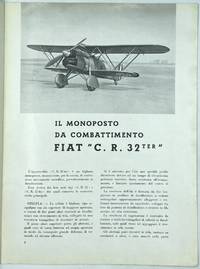
193714100Torino: Tipografia Vincenzo Bona 1937 circa. Lievi aloni sulla brossura buono stato. Fascicolo spillato in brossura cm 30 x 22 pp 8 illustrate in nero. Opuscolo di presentazione della versione «TER» equipaggiata con mitragliatrici Breda-SAFAT da 12.7 mm del biplano progettato da Celestino Rosatelli ed entrato in servizio nel 1935. Tipografia Vincenzo Bona unknown
196238405Washington DC: GPO 1962. good. 10.25" x 7.5" 10 wraps profusely illus. some soiling to rear cover top corner rear cover bent. Illustrations of Glenn's flight aboard Friendship 7 and a condensation of his remarks at the press conference three days after the flight. GPO paperback
196238406Washington DC: GPO 1962. good. 10.25" x 7.5" 6 wraps profusely illus. small creases in margins slight wear to covers. Illustrations of Carpenter's flight aboard Aurora 7 and a condensation of his remarks at the press conference two days after the flight. GPO paperback