75 résultats
200784040Washington DC: National Aeronautics and Space Administration 2007. Final Report--Presumed first edition first printing. Wraps. Very good. Format is approximately 8.5 inches by 11 inches. 272 pages. Illustrated front and back cover. Illustrations mostly in color. Definition of Terms. References. Appendices. Minor cover wear noted. NASA letter of appreciation to a senior National Nuclear Security Administration technical expert for support to this report. In the 2005 Budget Authorization Act the U.S. Congress directed the NASA Administrator to provide an analysis of alternatives to detect track catalogue and characterize potentially hazardous near-Earth objects NEO. Congress required that the Administrator submit a program by December 28 2006 to survey 90% of the potentially hazardous objects measuring at least 140 meters in diameter by the end of 2020. In addition the legislation required the Administrator to submit an analysis of alternatives that NASA could employ to divert an object on a likely collision course with Earth. A study team led by the Office of Program Analysis and Evaluation PA&E derived requirements and figures of merit from the Act and used these factors to evaluate the alternatives. The team developed a range of options from public and private sources and then analyzed their capabilities levels of performance life-cycle costs schedules and development and operations risks. This document presents the detailed results of these analyses. A summary report was submitted to Congress in December of 2006. During related Congressional testimony on this report it was stated that The report's basic conclusion is that ``NASA recommends that the program continue as currently planned and we will also take advantage of opportunities using potential dual-use telescopes and spacecraft--and partner with other agencies as feasible--to attempt to achieve the legislated goal within 15 years. However due to current budget constraints NASA cannot initiate a new program at this time.'' In addition the report contained a number of additional findings <br /> including: ``The goal of the Survey Program should be modified to detect track catalogue and characterize by the end of 2020 90 percent of all Potentially Hazardous Objects PHOs greater than 140m whose orbits pass within 0.05 AU of the Earth's orbit as opposed to surveying for all NEOs; The Agency could achieve the specified goal of surveying for 90 percent of the potentially hazardous NEOs by the end of 2020 by partnering with other government agencies on potential future optical ground-based observatories and building a dedicated NEO survey asset assuming the partners' potential ground assets come online by 2010 and 2014 and a dedicated asset by 2015; Together the two observatories potentially to be developed by other government agencies could complete 83 percent of the survey by 2020 if observing time at these observatories is shared with NASA's NEO Survey Program; New space-based infrared systems combined with ground-based assets could reduce the overall time to reach the 90 percent goal by at least three years. Space systems have additional benefits as well as costs and risks compared to ground-based alternatives; Radar systems cannot contribute to the search for potentially hazardous objects but may be used to rapidly refine tracking and to determine object sizes for a few NEOs of potentially high interest. Existing radar systems are currently oversubscribed by other missions. Determining a NEO's mass and orbit is required to determine whether it represents a potential threat and to provide required information for most alternatives to mitigate such a threat. Beyond these parameters characterization requirements and capabilities are tied directly to the mitigation strategy selected.''. National Aeronautics and Space Administration paperback
2013DADAX1600868975AIAA American Institute of Aeronautics & Astronautics 2013-07-18. hardcover. New. 6.30x1.20x9.40. Buy with confidence. Excellent Customer Service & Return policy. AIAA (American Institute of Aeronautics & Astronautics) hardcover
2013SONG1600868975AIAA American Institute of Aeronautics & Astronautics 2013-07-18. hardcover. Used: Good. 6.30x1.20x9.40. Buy with confidence. Excellent Customer Service & Return policy. AIAA (American Institute of Aeronautics & Astronautics) hardcover
2012DADAX0080966322Butterworth-Heinemann 2012-03-26. 6. paperback. New. 7.75x1.50x9.25. Buy with confidence. Excellent Customer Service & Return policy. Butterworth-Heinemann paperback
2006__0309101883National Academies Press 2006. Paperback. New. illustrated edition. 112 pages. 8.80x6.00x0.30 inches. National Academies Press paperback
20062-0309101883National Academies Press 2006. Paperback. New. illustrated edition. 112 pages. 8.80x6.00x0.30 inches. National Academies Press paperback
2005SONG1860584241Wiley-Blackwell 2005-06-24. 5. paperback. Used: Good. 6.00x1.02x9.00. Buy with confidence. Excellent Customer Service & Return policy. Wiley-Blackwell paperback
2016__1537117440CreateSpace Independent Publishing Platform 2016. Paperback. New. 354 pages. 11.00x8.50x0.84 inches. CreateSpace Independent Publishing Platform paperback
200888971Washington DC: National Aeronautics and Space Administration c2008. Presumed First Edition First printing this. Single sticker sheet printed on both sides peal line is about at the diameter line. Very good. The format is a circle with a 4 inch diameter. Sticker seam at the back is at the mid-point. Rare surviving copy. One side is a version of the ARES logo originally designed by Star Trek artist Michael Okuda with 10 stars and a rocket ascending but no image of Earth in the background. The other side has the following text: NASA's Ares I-X Flight Test Vehicle NASA's first flight test of the full rocket for the agency's next-generation spacecraft and launch vehicle systems is launching in 2009. The flight test called Ares I-X will bring NASA one step closer to its exploration goals--to return to the moon for more ambitious exploration of the lunar surface ad to travel to Mars and destinations beyond." Then two links to on-line resources. Ares I-X was the first-stage prototype and design concept demonstrator of Ares I a launch system for human spaceflight developed by the National Aeronautics and Space Administration NASA. Ares I-X was successfully launched on October 28 2009. The Ares I-X vehicle used in the test flight was similar in shape mass and size to the planned configuration of later Ares I vehicles but had largely dissimilar internal hardware consisting of only one powered stage. By flying the vehicle through first-stage separation the test flight also verified the performance and dynamics of the Ares I solid rocket booster in a "single stick" arrangement which is different from the solid rocket booster's then-current “double-booster†configuration alongside the external tank on the space shuttle. Ares I was the crew launch vehicle that was being developed by NASA as part of the Constellation program. The name "Ares" refers to the Greek deity Ares who is identified with the Roman god Mars. Ares I was originally known as the "Crew Launch Vehicle" CLV. NASA planned to use Ares I to launch Orion the spacecraft intended for NASA human spaceflight missions after the Space Shuttle was retired in 2011. Ares I was to complement the larger uncrewed Ares V which was the cargo launch vehicle for Constellation. NASA selected the Ares designs for their anticipated overall safety reliability and cost-effectiveness. However the Constellation program including Ares I was canceled by U.S. president Barack Obama in October 2010 with the passage of his 2010 NASA authorization bill. In September 2011 NASA detailed the Space Launch System as its new vehicle for human exploration beyond Earth's orbit. Unlike the Space Shuttle where both crew and cargo were launched simultaneously on the same rocket the plans for Project Constellation outlined having two separate launch vehicles the Ares I and the Ares V for crew and cargo respectively. Having two separate launch vehicles allows for more specialized designs for the crew and heavy cargo launch rockets. The Ares I rocket was specifically being designed to launch the Orion Multi-Purpose Crew Vehicle. Orion was intended as a crew capsule similar in design to the Apollo program capsule to transport astronauts to the International Space Station the Moon and eventually Mars. Ares I might have also delivered some limited resources to orbit including supplies for the International Space Station or subsequent delivery to the planned lunar base. NASA selected Alliant Techsystems the builder of the Space Shuttle Solid Rocket Boosters as the prime contractor for the Ares I first stage. NASA announced that Rocketdyne would be the main subcontractor for the J-2X rocket engine on July 16 2007. NASA selected Boeing to provide and install the avionics for the Ares I rocket on December 12 2007. On August 28 2007 NASA awarded the Ares I Upper Stage manufacturing contract to Boeing. The upper stage of Ares I was to have been built at Michoud Aerospace Factory which was used for the Space Shuttle's External Tank and the Saturn V's S-IC first stage. The Ares V formerly known as the Cargo Launch Vehicle or CaLV was the planned cargo launch component of the canceled NASA Constellation program which was to have replaced the Space Shuttle after its retirement in 2011. Ares V was also planned to carry supplies for a human presence on Mars. The Ares V was to launch the Earth Departure Stage and Altair lunar lander for NASA's return to the Moon which was planned for 2019. It would also have served as the principal launcher for missions beyond the Earth-Moon system including the program's ultimate goal a crewed mission to Mars. The uncrewed Ares V would complement the smaller and human-rated Ares I rocket for the launching of the 4–6 person Orion spacecraft. Both rockets deemed safer than the then-current Space Shuttle would have employed technologies developed for the Apollo program the Shuttle program and the Delta IV EELV program. National Aeronautics and Space Administration unknown
20161-1938168283XanEdu Publishing Inc 2016. Hardcover. New. 1187 pages. 11.00x9.00x2.00 inches. XanEdu Publishing Inc hardcover
2012033364U.S. National Aeronautics and Space Administration 2012. Hardcover. Fine/Fine. Octavo Oblong. Book and jacket in fine condition. <br/> <br/> U.S. National Aeronautics and Space Administration hardcover
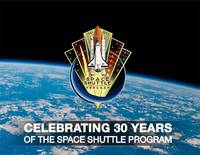
201183828Washington DC: National Aeronautics and Space Administration c2011. One of a number of multiple originals. Coin/Medal. Fine. An approximately 2 inch diameter clear plastic case with a 7.75 inch NASA silver medallion inside. The attached image show both the front and back of the single medallion and clear plastic stand. The front side has a colorful center image of the Space Shuttle Orbiter and Launch Vehicle The outer portion has the text "Celebrating the Legacy of the Space Shuttle Program. The reverse side has an outer ring of text that states: Excellence Achieved By Those Who Believed NASA Commemorative. There is a striking image of the Launch Vehicle with Orbiter attached lifting off with the plume billowing at the bottom. The text on the right states: This medallion contains metal flown on the historic Space Shuttle Mission Complete. Both shuttle medals Mission Complete and Legacy celebrate the winged spacecraft and the program's 30 years of innovation and service. These official medallions were minted with metal from the same ingots used for the framed editions that were flown on a shuttle mission. Each medallion features a full color embedded insert of the official Space Shuttle Program Commemorative insignia. Official NASA Mission Complete Medallion in silver contains flown metal material! This official Mission Complete Medallion is 1.75" and commemorates the historic completion of the Space Shuttle Program. In addition this limited edition medallion commemorates the exceptional accomplishments and missions of the first winged-spacecrafts. This medallion is one of a series of two and is also worthy of the program it represents. These medallions will be plated in silver and protected within circular presentation cases with high-density black foam spacers. The Space Shuttle Program was from 1981 to 2011. National Aeronautics and Space Administration unknown
2003Q-0160679044U.S. Independent Agencies and Commission 2003-10-10. Paperback. New. New. In shrink wrap. Looks like an interesting title! U.S. Independent Agencies and Commission paperback
200352301Washington DC: GPO 2003. Wraps. good ex-library condition. 261 pages CDROM wraps volume 1 only of the 6-volume set color illustrations figures endnotes appendices usual library markings covers somewhat soiled. Includes CDROM with over 100 MB of video plus over 700 pages of NASA documents including the STS-107 press kit and NASA's implementation plan for return to flight and beyond. Investigates loss of the Space Shuttle Columbia STS-107 and its seven-member crew on February 1 2003. Four parts entitled: The Accident; Why the Accident Occurred; A Look Ahead; and Appendices A B C. Concludes with recommendations. Appendices D E F G and H comprise the remaining 5 volumes not present and provide information on technical documentation and transcripts of Accident Board public hearings. This volume comprises the major assessment conclusions and recommendations. GPO paperback
200985174Winnetka: PDQ Press 2009. 1st ed. thus. As New. lge. octavo. pictorial wrappers xxxiii 337pp. b/w plates text ills. maps appendix NASA/SP-2008-565 PDQ Press unknown
200580249Washington DC: National Aeronautics and Space Administration Exploration Systems Mission Directorate 2005. Draft Rev. 1. Disbound held together with a binder clip. Very good. vi 121 pages single-sided. Tables. Figures some with color. The Exploration Systems Mission Directorate known as ESMD at NASA Headquarters in Washington oversees the Constellation human research exploration technology development and lunar precursor robotic programs as well as the Commercial Orbital Transportation Services Project. The Constellation Program oversees work performed at a variety of NASA centers prime contractors and subcontractors located around the country. This work includes the Orion crew exploration vehicle the Ares I launch vehicle ground operations mission operations and extravehicular activity systems. The Constellation Program abbreviated CxP is a canceled crewed spaceflight program developed by NASA the space agency of the United States from 2005 to 2009. The major goals of the program were "completion of the International Space Station" and a "return to the Moon no later than 2020" with a crewed flight to the planet Mars as the ultimate goal. The program's logo reflected the three stages of the program: the Earth ISS the Moon and finally Mars—while the Mars goal also found expression in the name given to the program's booster rockets: Ares the Greek equivalent of the Roman god Mars. The technological aims of the program included the regaining of significant astronaut experience beyond low Earth orbit and the development of technologies necessary to enable sustained human presence on other planetary bodies. Constellation began in response to the goals laid out in the Vision for Space Exploration under NASA Administrator Sean O'Keefe and President George W. Bush. O'Keefe's successor Michael D. Griffin ordered a complete review termed the Exploration Systems Architecture Study which reshaped how NASA would pursue the goals laid out in the Vision for Space Exploration and its findings were formalized by the NASA Authorization Act of 2005. The Act directed NASA to "develop a sustained human presence on the Moon including a robust precursor program to promote exploration science commerce and US preeminence in space and as a stepping stone to future exploration of Mars and other destinations." Work began on this revised Constellation Program to send astronauts first to the International Space Station then to the Moon and then to Mars and beyond. <br /> <br /> This Systems Engineering Management Plan is a rare surviving technical document from this canceled program. It addressed the System Engineering and Integration SE&I Approach the SE&I Roles and Responsibilities Pre-Phase A Systems Engineering and Integration Phase A Phase B Phase C Phase D and Phase E. These phases addressed safety and mission assurance systems management Systems Analysis Simulation-Based Acquisition Research and Technology Development Requirements Definition Test and Verification Operations Sustaining Engineering Functional Analysis Manufacturing and Assembly Launch Site Operations and Logistics Capability Development. National Aeronautics and Space Administration, Exploration Systems Mission Directorate unknown
2010Q-0160831199Government Printing Office 2010-02-12. Hardcover. New. New. In shrink wrap. Looks like an interesting title! Government Printing Office hardcover
201186082Houston TX: National Aeronautics and Space Administration Johnson Space Center 2011. Presumed First Edition First printing of multiple originals. Single sheet printed on both sides. Very good. The format is approximately 8.5 inches by 11 inches. This is a single sheet with printing/imagery on both sides in a plastic sleeve. On the front side is a large color photograph of the four astronauts/Shuttle Crew members. On the other side are primarily four columns of text one column for each of the crew members with a small one-column spread with a picture of the four crew members at the top left corner and a larger two-column spread with an illustration of the STS-135 Mission Patch and a text description. The four crew members were Commander Christopher J. Ferguson Captain United States Navy ret. Pilot Douglas G. Hurley Colonel U.S. Marine Corps Mission Specialist Sandra H. Magnus Ph.D. and Mission Specialist Rex J. Wallheim Colonel U.S. Air Force ret. The STS-135 patch represent the Space Shuttle embarking on its mission to resupply the International Space Station. The Shuttle is centered over elements of the NASA emblem depicting how the Space Shuttle has been at the heart of NASA for the previous 30 years. The Patch also pays tribute to the entire NASA and contractor team that made possible all the incredible accomplishments of the Space Shuttle. Omega the last letter in the Greek alphabet signifies that this mission is the last flight of the Space Shuttle Program. STS-135 ISS assembly flight ULF7 was the 135th and final mission of the American Space Shuttle program. It used the orbiter Atlantis and hardware originally processed for the STS-335 contingency mission which was not flown. STS-135 launched on July 8 2011 and landed on July 21 2011 following a one-day mission extension. The four-person crew was the smallest of any shuttle mission since STS-6 in April 1983. The mission's primary cargo was the Multi-Purpose Logistics Module MPLM Raffaello and a Lightweight Multi-Purpose Carrier LMC which were delivered to the International Space Station ISS. The flight of Raffaello marked the only time that Atlantis carried an MPLM. Although the mission was authorized it initially had no appropriation in the NASA budget raising questions about whether the mission would fly. On January 20 2011 program managers changed STS-335 to STS-135 on the flight manifest. This allowed for training and other mission specific preparations. On February 13 2011 program managers told their workforce that STS-135 would fly regardless of the funding situation via a continuing resolution. Until this point there had been no official references to the STS-135 mission in NASA documentation for the general public. During an address at the Marshall Space Flight Center on November 16 2010 NASA administrator Charles Bolden said that the agency needed to fly STS-135 to the station in 2011 due to possible delays in the development of commercial rockets and spacecraft designed to transport cargo to the ISS. "We are hoping to fly a third shuttle mission in addition to STS-133 and STS-134 in June 2011 what everybody calls the launch-on-need mission. and that's really needed to buy down the risk for the development time for commercial cargo" Bolden said. The mission was included in NASA's 2011 authorization which was signed into law on October 11 2010 but funding remained dependent on a subsequent appropriations bill. United Space Alliance signed a contract extension for the mission along with STS-134; the contract contained six one-month options with NASA in order to support continuing operations. The federal budget approved in April 2011 called for US$5.5 billion for NASA's space operations division including the shuttle and space station programs. According to NASA the budget running through September 30 2011 ended all concerns about funding the STS-135 mission. The reduced crew size also allowed the mission to maximize the payload carried to the ISS.20 It was the only time that a Shuttle crew of four flew to the ISS. The last shuttle mission to fly with just four crew members occurred 28 years earlier. The Multi-Purpose Logistics Module MPLM Raffaello made up the majority of the payload. This was Raffaello's fourth trip to the International Space Station since 2001 and the 12th use of an MPLM. Unlike previous MPLM missions that delivered large compartments and devices to outfit the space station laboratories STS-135 delivered only bags and supply containers. The MPLM was filled with 16 resupply racks which is the maximum that it could handle. Eight Resupply Stowage Platforms RSPs two Integrated Stowage Platforms ISPs six Resupply Stowage Racks RSRs and one Zero-G Stowage Rack ZSR which sits above another rack during transport. On flight day 4 Raffaello was lifted out of Atlantis's payload bay using the station's Canadarm2. It was berthed to nadir port of the Harmony node. After completing the cargo transfers to the ISS Raffaello was loaded with almost 5700 pounds of unneeded equipment and station waste to be brought back to Earth. On flight day 11 the MPLM was detached from Harmony and was secured in the cargo bay of the shuttle. National Aeronautics and Space Administration, Johnson Space Center unknown
200486160Houston TX: National Aeronautics and Space Administration Johnson Space Center 2004. Presumed First Edition First printing one of multiple originals. Single sheet printed on both sides. Very good. The format is approximately 8.5 inches by 11 inches. This is a single sheet with printing/imagery on both sides in a plastic sleeve. On the front side is a large color photograph of the seven astronauts/Shuttle Crew members. On the other side are primarily four columns of text with text for each of the crew members with a small two-column spread with a outline with names of the seven crew members at the top center and a half-column spread at the bottom of the fourth column with an illustration of the STS-114 Mission Patch and a text description. The STS-114 patch signifies the return of the Space Shuttle to flight and honors the memory of the STS-107 Columbia crew. The Shuttle rising above Earth's horizon includes the Columbia constellation of seven stars echoing the STS-107 patch and commemorating the seven members of that mission. The crew of STS-114 carry the memory of their mission back into Earth orbit. The dominant design element of the STS-114 patch is the planet Earth which represents the unity and dedication of the many people whose efforts allow the Shuttle to safely return to flight. Against the background of the Earth at night the blue orbit represents the International Space Station ISS with the EVA crewmembers named on the orbit. The red sun on the orbit signifies the contributions of the Japanese Space Agency to the mission and to the ISS program. The multi-colored Shuttle plume represents the broad spectrum of challenges for this mission including Shuttle inspection and repair experiments and International Space Station re-supply and repair. STS-114 was the first "Return to Flight" Space Shuttle mission following the Space Shuttle Columbia disaster. The crew members were Commander Eileen M. Collins Colonel USAF Pilot James M. Kelly Lieutenant Colonel USAF Mission Specialist Soichi Noguchi JAXA Astronaut Mission Specialist Stephen K. Robinson Ph.D. Mission Specialist Andrew S. W. Thomas Ph.D. Mission Specialist Wendy B Lawrence Captain USN and Mission Specialist Charles J. Camarda Ph.D. Discovery launched at 10:39 EDT 14:39 UTC July 26 2005. The launch 907 days approx. 29 months after the loss of Columbia was approved despite unresolved fuel sensor anomalies in the external tank that had prevented the shuttle from launching on July 13 its originally scheduled date. The mission ended on August 9 2005 when Discovery landed at Edwards Air Force Base in California.2 Poor weather over the Kennedy Space Center in Florida hampered the shuttle from using its primary landing site. Analysis of the launch footage showed debris separating from the external tank during ascent; this was of particular concern because it was the issue that had set off the Columbia disaster. As a result NASA decided on July 27 to postpone future shuttle flights pending additional modifications to the flight hardware. Shuttle flights resumed a year later with STS-121 on July 4 2006. STS-114 marked the return to flight of the Space Shuttle after the Columbia disaster and was the second Shuttle flight with a female commander Eileen Collins who also commanded the STS-93 mission. The STS-114 mission was initially to be flown aboard the orbiter Atlantis but NASA replaced it with Discovery after improperly installed gear was found in Atlantis' Rudder Speed Brake system. During OMM for Discovery an actuator on the RSB system was found to be installed incorrectly. This created a fleet wide suspect condition. The Rudder Speed Brake system was removed and refurbished on all three remaining orbiter vehicles and since Discovery's RSB was corrected first it became the new Return to Flight vehicle superseding Atlantis. Seventeen years prior Discovery had flown NASA's previous Return to Flight mission STS-26. The STS-114 mission delivered supplies to the International Space Station. However the major focus of the mission was testing and evaluating new Space Shuttle flight safety techniques which included new inspection and repair techniques. The crewmembers used the new Orbiter Boom Sensor System OBSS - a set of instruments on a 50 feet extension attached to the Canadarm. The OBSS instrument package consists of visual imaging equipment and a Laser Dynamic Range Imager LDRI to detect problems with the shuttle's Thermal Protection System TPS. The crew scanned the leading edges of the wings the nose cap and the crew compartment for damage as well as other potential problem areas engineers wished to inspect based on video taken during lift-off. STS-114 was classified as Logistics Flight 1. The flight carried the Raffaello Multi-Purpose Logistics Module built by the Italian Space Agency as well as the External Stowage Platform-2 which was mounted to the port side of the Quest Airlock. They deployed MISSE 5 to the station's exterior and replaced one of the ISS's Control Moment Gyroscopes CMG. The CMG was carried up on the LMC Lightweight Multi-Purpose Experiment Support Structure Carrier at the rear of the payload bay together with the TPS Repair Box. National Aeronautics and Space Administration, Johnson Space Center unknown
2006G0309101581I4N00National Academies Press 2006. Paperback. Very Good. May have limited writing in cover pages. Pages are unmarked. ~ ThriftBooks: Read More Spend Less.Dust jacket quality is not guaranteed. National Academies Press paperback
201091089Washington DC: The National Academies Press 2010. Presumed First Edition First printing. Wraps. Very good. xvii 1 134 pages. Footnotes. Illustrations Tables Figures Photographs some with color. References. Bibliography. Appendixes. Glossary and Selected Acronyms. The United States spends approximately $4 million each year searching for near-Earth objects NEOs. The objective is to detect those that may collide with Earth. The majority of this funding supports the operation of several observatories that scan the sky searching for NEOs. This however is insufficient in detecting the majority of NEOs that may present a tangible threat to humanity. A significantly smaller amount of funding supports ways to protect the Earth from such a potential collision or “mitigation.†In 2005 a Congressional mandate called for NASA to detect 90 percent of NEOs with diameters of 140 meters or greater by 2020. Defending Planet Earth: Near-Earth Object Surveys and Hazard Mitigation Strategies identifies the need for detection of objects as small as 30 to 50 meters as these can be highly destructive. The book explores four main types of mitigation including civil defense “slow push†or “pull†methods kinetic impactors and nuclear explosions. It also asserts that responding effectively to hazards posed by NEOs requires national and international cooperation. Defending Planet Earth: Near-Earth Object Surveys and Hazard Mitigation Strategies is a useful guide for scientists astronomers policy makers and engineers. The Table of Contents: Front Matter; Summary; 1 Introduction; 2 Risk Analysis; 3 Survey and Detection of Near-Earth Objects; 4 Characterization; 5 Mitigation; 6 Research; 7 National and International Coordination and Collaboration; 8 Optimal Approaches; Appendixes: Appendix A: Independent Cost Assessment; Appendix B: Letter of Request; Appendix C: Committee Panel and Staff Biographical Information; Appendix D: Minority Opinion - Mark Boslough Mitigation Panel Member; Appendix E: Glossary and Selected Acronyms. <br /> Planetary defense is the organized global effort to detect track and mitigate potential asteroid or comet impacts on Earth. Coordinated by agencies like NASA's Planetary Defense Coordination Office PDCO it involves surveying for Near-Earth Objects NEOs to prevent catastrophic natural disasters. Strategies include detection characterization and deflection techniques like kinetic impactors. Key Components of Planetary Defense: Detection & Tracking: Astronomers use telescopes to find and monitor NEOs forecasting their paths to identify risks; and Characterization: Scientists analyze the size shape composition and spin rate of hazardous objects. Mitigation/Deflection: Kinetic Impactors: Crashing a spacecraft into an asteroid to alter its path e.g. NASA's DART mission; Nuclear Explosions: An option for large threats or short warning times; "Slow Push/Pull" Methods: Utilizing gravity tractors or laser ablation to gently change an object's orbit. Organizations and Partnerships: NASA & PDCO: Leads US efforts and coordinates with international partners including the International Asteroid Warning Network IAWN and Space Mission Planning Advisory Group SMPAG. Johns Hopkins Applied Physics Laboratory APL: Involved in developing mission technologies: The Planetary Society: Supports research and advocacy for planetary defense. Key Takeaways: Asteroid impacts are rare but potentially devastating. It is considered the only natural disaster humanity could potentially avoid. The goal is to detect threats early to allow for smaller manageable deflections. The National Academies Press paperback
200886169Washington DC: National Aeronautics and Space Administration c2008. Presumed First Edition First printing thus. Single sheet sticker of mission logo patch printed on both sides. Very good. Format is a circle with a diameter of approximately 3.75 inches. Front is a colorful image of a spacecraft with a launch trajectory to a star and a large XX at the base. The top of the image has a red gray and blue arc. The text on the back reads: Expedition 20 Patch Description The Expedition 20 patch symbolized a new era in space exploration with the first six-person crew living and working onboard the International Space Station ISS and represents the significance of the ISS to the exploration goals of NASA and its international partners. The six gold start signify the men and women of the crew. The astronaut symbol extends from the base of the patch to the stat as the top to represent the international team both on the ground and on orbit that are working together to further our knowledge of living and working in space. The space station in the foreground represents where we are now and the important role it is playing toward meeting our exploration goals. The knowledge and expertise developed from these advancements will enable us to once again leave low-Earth orbit for the new challenges of establishing a permanent presence on the Moon and then on to Mars. The blue gray and red arcs represent our exploration goals as symbols of the Earth Moon and Mars. Logos of NASA ad Space Flight Awareness are present as is information on an on-line resource. Expedition 20 was the 20th long-duration flight to the International Space Station. The expedition marked the first time a six-member crew inhabited the station. Because each Soyuz-TMA spacecraft could hold only three people two separate launches were necessary: Soyuz TMA-14 launched on 26 March 2009 and Soyuz TMA-15 followed on 27 May 2009. Soyuz TMA-15 launched from Baikonur Cosmodrome at 10:34 UTC on 27 May 2009. The vehicle docked with the station on 29 May 2009 officially changing the Soyuz TMA-14 crew from Expedition 19 to Expedition 20. Gennady Padalka was the first commander of a six-member station crew and the first commander of two consecutive expeditions Expedition 19 and 20. Nicole Stott was the final expedition astronaut to be launched on the shuttle. <br /> During the expedition Koichi Wakata performed a special experiment wherein he did not change his underpants for one month in order to test a specially-designed underwear without washing or changing; he reportedly did not develop body odor due to the effects of the special garment. The station would not be permanently occupied by six crew members all year. For example when the Expedition 20 crew Roman Romanenko Frank De Winne and Bob Thirsk returned to Earth in November 2009 for a period of about two weeks only two crew members Jeff Williams and Max Surayev were aboard. This increased to five in early December when Oleg Kotov Timothy Creamer and Soichi Noguchi arrived on Soyuz TMA-17. It decreased to three when Williams and Surayev departed in March 2010 and finally returned to six in April 2010 with the arrival of Soyuz TMA-18 carrying Aleksandr Skvortsov Mikhail Korniyenko and Tracy Caldwell Dyson. National Aeronautics and Space Administration unknown
200651784Place_Pub: Washington DC: GPO 2006. very good. 138 wraps figures tables appendices Joint Hearing with the House Committee on Government Reform Subcommittee on Government Management Finance and Accountability. Serial No. 109-29 Serial No. 109-107. GPO paperback
2002__1563475170American Institute of Aeronautics & Astronautics 2002. Hardcover. New. illustrated edition. 586 pages. 8.75x6.25x1.25 inches. American Institute of Aeronautics & Astronautics hardcover
2026282368Blondel la rougery 2026. Etat Passable couverture ternie et défraîchie coins émoussés intérieur uniformément jauni et globalement propre. in8. 2026. Broché. Blondel la rougery unknown