17 résultats
1670038283Circa 1670-1674: Giovanni. Battista Hacque/ Hacque Johann Baptist 1670. 1st Edition 1st Printing. No Binding. Very Good. Original Engraving Unsigned Engraved By Meyssens For A Collection Of Portraits. Part Of A Large Collection Of Original Antique Engravings Formed By A Southern California Artist In The Early To Middle Twentieth Century. Each Plate Has Small Glue Marks On Reverse Where They Were Tipped In To An Album. Pope Alexander Vii 13 February 1599 - 22 May 1667 Born Fabio Chigi Was Pope From 7 April 1655 To His Death In 1667. As A Bishop Chigi Was Named Nuncio In Cologne 1639-1651 On 11 June 1639. There He Supported Urban Viii's Condemnation Of The Heretical Book Augustinus By Cornelius Jansen Bishop Of Ypres In The Papal Bull In Eminenti Of 1642. Though Expected To Take Part In The Negotiations Which Led In 1648 To The Peace Of Westphalia Bishop Chigi And Other Catholic Delegates Declined To Deliberate With Persons Whom The Catholic Church Considered Heretics. Negotiations Therefore Took Place In Two Cities Osnabrück And Münster In Westphalia With Intermediaries Travelling Back And Forth Between The Protestant And The Catholic Delegates. Chigi Of Course Protested On Behalf Of The Papacy Against The Treaty Of Westphalia Once The Instruments Were Finally Completed. Pope Innocent Himself Stated That The Peace "Is Null Void Invalid Unjust Damnable Reprobate Inane Empty Of Meaning And Effect For All Time." The Peace Ended The Thirty Years' War 1618-1648 And Established The Balance Of European Power That Lasted Until The Wars Of The French Revolution 1789. <br/> <br/> Giovanni. Battista Hacque/ Hacque, Johann Baptist unknown
1670038281Circa 1670-1674: Giovanni. Battista Hacque/ Hacque Johann Baptist 1670. 1st Edition 1st Printing. No Binding. Very Good. Original Engraving Unsigned Engraved By Meyssens For A Collection Of Portraits. Part Of A Large Collection Of Original Antique Engravings Formed By A Southern California Artist In The Early To Middle Twentieth Century. Each Plate Has Small Glue Marks On Reverse Where They Were Tipped In To An Album. Pope Clement X Latin: Clemens X; 1590 - 1676 Born Emilio Bonaventura Altieri Was Pope From 29 April 1670 To His Death In 1676. Emilio Boneventura Altieri Was Born In Rome In 1590 The Son Of Lorenzo Altieri And Victoria Delfin A Noble Venetian Lady Sister Of Flaminio Delfin Commander General Of The Papal Armies And Of Gentile Delfin Bishop Of Camerino. His Brother Was Giambattista Altieri. The Altieri Family Belonged To The Ancient Roman Nobility And Had Enjoyed The Highest Consideration At Rome For Several Centuries; They Had Occasionally Contracted Alliances With The Colonnas And The Orsinis. During Earlier Pontificates The Altieri Held Many Important Offices And Had Been Entrusted With Several Delicate Missions. All But One Of The Male Scions Of The Altieri Family Had Chosen The Ecclesiastical Career. On His Accession To The Papacy Clement X In Order To Save The Altieri Name From Extinction Adopted The Paoluzzi Family And Proposed That One Of The Paluzzi Should Marry Laura Caterina Altieri The Sole Heiress Of The Family. In Exchange For Adopting The Altieri Surname He Would Make One Of The Paoluzzi A Cardinal. Following The Wedding Which He Officiated He Appointed His Relative By Marriage Cardinal Paoluzzi-Altieri The Uncle Of Laura's New Husband To The Office Of Cardinal Nephew To Take On The Duties Which He Was Prevented From Doing By Age. The Main Activity Was To Invest The Church's Money And With Advancing Years Gradually Entrusted To Him The Management Of Affairs To Such An Extent That The Romans Said He Had Reserved To Himself Only The Episcopal Functions Of Benedicere Et Sanctificare Resigning In Favour Of The Cardinal The Administrative Duties Of Regere Et Gubernare. In 1671 The Pope Published An Edict By Which He Declared That A Noble Might Be A Merchant Without Loss Of His Nobility Provided Always That He Did Not Sell By Retail. Queen Christina Of Sweden Who Had Become A Catholic And Moved To Rome In December 1655 Made Clement X Prohibit The Custom Of Chasing Jews Through The Streets During The Carnival. In 1686 She Issued A Declaration That Roman Jews Stood Under Her Protection Signed La Regina - The Queen. <br/> <br/> Giovanni. Battista Hacque/ Hacque, Johann Baptist unknown
1670038278Circa 1670-1674: Giovanni. Battista Hacque/ Hacque Johann Baptist 1670. 1st Edition 1st Printing. No Binding. Very Good. Original Engraving Unsigned Engraved By Meyssens For A Collection Of Portraits. Part Of A Large Collection Of Original Antique Engravings Formed By A Southern California Artist In The Early To Middle Twentieth Century. Each Plate Has Small Glue Marks On Reverse Where They Were Tipped In To An Album. Annibale Gonzaga 1602 - Vienna 2 August 1668 Was Commander Of The City Of Vienna Imperial Field Marshal And President Of The Hofkriegsrat. He Was The Son Of Ferrante De Gazzuolo And Isabella Gonzaga And Thus A Member Of The Italian Ducal Family Gonzaga. He Joined The Imperial Army. In 1634 He Was Already Colonel Of A Regiment. He Rose Quickly Through The Ranks Partly By His Competences Partly By His Family Name Eleonora Gonzaga Was The Empress Of The Holy Roman Empire Wife Of Emperor Ferdinand Ii. Gonzaga Was One Of The Commanders At The Battle Of Nördlingen 1634. In 1640 He Became Commander Of The City Of Vienna. Two Bastions He Built Were Named After Him. In 1642 He Commanded With Count Bruay The Right Wing Of The Imperial Army In The Disastrous Battle Of Breitenfeld. A Year Later He Commanded An Imperial Army In Hungary. Gonzaga Also Commanded Troops That The Emperor Had Sent To Hungary In 1658. In 1660 He Became General Of Artillery Field Marshal And Privy Council. He Was A Member Of A Delegation That Negotiated The Treaty Of Oliva In Berlin With Frederick William Elector Of Brandenburg. Since 1666 He Was President Of The Imperial War Council Hofkriegsrat And High Steward Of The Widowed Empress Eleanora To Whom He Was Related. <br/> <br/> Giovanni. Battista Hacque/ Hacque, Johann Baptist unknown
1670038291Circa 1670-1674: Giovanni. Battista Hacque/ Hacque Johann Baptist 1670. 1st Edition 1st Printing. No Binding. Very Good. Original Engraving Engraved By Meyssens For A Collection Of Portraits. Part Of A Large Collection Of Original Antique Engravings Formed By A Southern California Artist In The Early To Middle Twentieth Century. Each Plate Has Small Glue Marks On Reverse Where They Were Tipped In To An Album. Count Ernst Adalbert Von Harrach 4 November 1598 - 25 October 1667 Was An Austrian Catholic Cardinal Who Was Appointed Archbishop Of Prague And Prince-Bishop Of Trento. His Name In Czech Is Arnost Vojtech Hrabe Z Harrachu. Adalbert Von Harrach Was Born 1598 In Vienna Austria The Son Of Count Karl Von Harrach And Maria Elisabeth Von Schrattenbach. He Was Educated By Nikolaus Walther And Was Later Thanks To His Family's Connection To Italian Aristocratic Families Including The Borghese And Barberini Admitted To The Collegio Teutonico In 1616. In 1621 He Was Ordained A Priest At Age 22 And Became Privy Chamberlain To Pope Gregory Xv. In 1622 At Only 24 Years Of Age Adalbert Von Harrach Was Elected Archbishop Of Prague With Dispensation For Not Having Yet Reached The Canonical Age. He Was Consecrated And Ordained In 1623 In The Sistine Chapel By Cardinal Marcantonio Gozzadini. In 1626 He Was Elevated To Cardinal By Pope Urban Viii And In 1632 He Was Appointed Cardinal-Priest Of Santa Maria Degli Angeli E Dei Martiri Where He Served For 12 Years. He Was Appointed Cardinal-Priest Of Santa Prassede In 1644 And Participated In The Papal Conclave Of 1644 Which Elected Pope Innocent X. Adalbert Von Harrach Participated In The Papal Conclave Of 1655 Which Elected Pope Alexander Vii And In 1663 He Was Elected Bishop Of Trento With Permission To Retain Both Bishoprics The Other Being Prague Which He Had Retained. Upon Being Elevated To Cardinal In 1626 He Was Made Primate Of The Kingdom Of Bohemia And Crowned Eleonora Gonzaga Wife Of Emperor Ferdinand Ii Of Austria The Following Year In 1627. He Became Privy Counsellor To Emperor Ferdinand Iii In 1637 And Crowned The Emperor's First Wife Empress Marie-Anne. He Was Named Grand Master Of The Order Of The Cross With The Red Star In Bohemia Silesia And Poland And Chancellor Of The University Of Prague. Adalbert Von Harrach Was Arrested At His Palace When The Swedish Took Over A Section Of Prague In The Precursor Conflict To The Battle Of Prague And Lost A Significant Part Of His Wealth. He Was Eventually Released After Intercession By Cardinal Jules Mazarin Before Queen Christina Of Sweden With 15000 Écus And A Letter Written By Him Promising Not To Take Revenge For Adalbert Von Harrach's Losses. The Face And Reverse Of A Medal Struck For Adalbert Von Harrach In 1629 He Visited Rome Rarely; So Much So That When He Did In 1643 Pope Urban Viii Is Said To Have Considered It A Bad Omen As The Cardinal Would Only Otherwise Have Visited Had The Pope Died Requiring A Papal Conclave. As It Turned Out The Pope Wasn't Far From Being Correct And Died The Following Year. He Became A Representative Of The New Pope And The Church To A Number Of Royal Courts. On Behalf Of The Pope He Also Crowned Ferdinand Iv King Of The Romans 1646; Leopold And Eleonora Gonzaga Junior Third Wife Of Ferdinand Ii As King And Queen Of Bohemia 1655; And Leopold I Holy Roman Emperor 1656. He Also Blessed The Marriage Of King Philip Iv Of Spain With Mariana Of Austria Daughter Of Emperor Ferdinand Iii 1648 And Accompanied The New Queen In The Name Of The Emperor To The Frontier With Italy. Although He Opposed The Merger Of The Charles-Ferdinand University He Participated In The Ceremonial Formalities Bringing The Two Academies Together In 1654. Adalbert Von Harrach Participated In The Papal Conclave Of 1667 Which Elected Pope Clement Ix And Upon The Election Of The New Pope He Was Appointed Cardinal-Priest Of San Lorenzo In Lucina. <br/> <br/> Giovanni. Battista Hacque/ Hacque, Johann Baptist unknown
1670038285Circa 1670-1674: Giovanni. Battista Hacque/ Hacque Johann Baptist 1670. 1st Edition 1st Printing. No Binding. Very Good. Original Engraving Unsigned Engraved By Meyssens For A Collection Of Portraits. Part Of A Large Collection Of Original Antique Engravings Formed By A Southern California Artist In The Early To Middle Twentieth Century. Each Plate Has Small Glue Marks On Reverse Where They Were Tipped In To An Album. In 1514 The Habsburg Emperor Maximilian I Stuck In The War Of The League Of Cambrai Against Venice And Highly Indebted Sold Hollenburg To Lord Siegmund Of Dietrichstein Elevating Him To The Rank Of A Freiherr Baron. The House Of Dietrichstein Had The Castle Rebuilt In A Renaissance Style Finished In 1588. The Dietrichsteins Held The Castle Until The Extinction Of The Branch In 1861 It Was Acquired By The Wittgenstein Family In 1913. <br/> <br/> Giovanni. Battista Hacque/ Hacque, Johann Baptist unknown
1670038290Circa 1670-1674: Giovanni. Battista Hacque/ Hacque Johann Baptist 1670. 1st Edition 1st Printing. No Binding. Very Good. Original Engraving Unsigned Engraved By Meyssens For A Collection Of Portraits. Part Of A Large Collection Of Original Antique Engravings Formed By A Southern California Artist In The Early To Middle Twentieth Century. Each Plate Has Small Glue Marks On Reverse Where They Were Tipped In To An Album. Carlo Carafa Della Spina 1611 - 1680 Was An Italian Cardinal . He Was The Son Of Girolamo Carafa Marquis Of Castelvetere Nephew Of Pope Paolo V. He Was Also The Brother Of Cardinal Fortunato Ilario Carafa Della Spina. He Graduated In Rome In Utroque Iure . He Was Appointed Bishop Of Aversa In 1644 The Year In Which He Also Received Episcopal Consecration. He Was Apostolic Nuncio In Catholic Switzerland In 1653 At The Republic Of Venice In 1654 And In Austria From 1658 To 1664. Pope Alexander Vii Elevated Him To The Rank Of Cardinal In The Consistory Of 14 January 1664 Assigning Him The Title Of Cardinal Presbyter Of Santa Susanna In 1665 . In 1675 He Opted For The Title Of Santa Maria In Via . He Was A Chamberlain Of The College Of Cardinals 1676-1678. An Earlier Carlo Carafa 1571-1561 Was Born At Naples Into One Of The City's Most Ancient And Distinguished Families A Younger Son Of Giovanni Alfonso Carafa Count Of Montorio And His Countess Caterina Cantelma. One Brother Was Giovanni Carafa Duke Of Palianoanother Antonio Carafa 1520-1588 Was Made Marchese Di Montebello. Without Making A Name For Himself He Had A Long And Dubious Career As A Mercenary Soldier In Italy And Germany. He Entered The Household Of Cardinal Pompeo Colonna At An Early Age As A Page And Was Enrolled In The Order Of St John Of Jerusalem Later That Of Pierluigi Farnese Duke Of Castro Later Duke Of Parma The Son Of Paul Iii. He Then Fought Under The Alfonso D'avalos Marchese Del Vasto In Lombardy And Piedmont And Under Ottavio Farnese Duke Of Parma In Flanders And Germany Fighting Protestants In The Name Of The Emperor. Here An Incident Occurred That Reinforced Perceptions Among Contemporaries For Greed Arrogance And A Violent Nature: His Possession Of A Captive Gentleman Worth A Considerable Ransom Was Challenged By A Spaniard Whose Right Was Upheld By His Compatriot The Duke Of Alba; And In The Aftermath Carlo Pursuing His Adversary To Provoke A Duel Was Incarcerated At Trento Until He Agreed Not To Pursue The Vendetta. He Was Subsequently Exiled From Naples In 1545 For Murder And Banditry And Having Withdrawn To Benevento Was Embroiled In Another AssassinationAnd Was Then Alleged To Have Perpetrated The Massacre Of Spanish Soldiers As They Recuperated In A Hospital In Corsica. Two Weeks After Giovanni Pietro Carafa Was Elected Pope As Paul Iv He Raised Carlo To The Cardinalate On 7 June 1555. His Tenure As Cardinal Nephew Was Not A Great Success And He And Paul Iv Effectively Brought The Papacy To A Humiliating Defeat Against The Spanish That Nearly Resulted In Another Sack Of Rome. Carlo's Government Proved Unpopular And He Developed A Reputation For Avarice Cruelty And Licentiousness As Well As For Homosexual Sodomy Paul Had Chastised Cardinal Ghisleri For Not Sharing His Suspicions On This Latter Point. In January 1559 Paul Finally Accepted The Accuracy Of The Accusations Made And Exiled Both His Nephews From Rome And Replaced Carlo As Cardinal Nephew With Carlo's Own Nephew Alfonso Carafa Cardinal Archbishop Of Naples. In June 1560 Paul's Successor Pope Pius Iv Arrested The Leading Members Of The Family - Carlo His Brother Duke Govanni And Their Nephew The Cardinal Archbishop Of Naples Seizing Their Papers And Levying A Range Of Charges Relating To Abuses Of Power. Carlo Was Charged With Murder Sodomy And The Promotion Of Protestantism. After A Nine-Month Trial He Was Condemned Along With His Brother And Was Executed By Strangulation At Castel Sant' Angelo On The Night Of 6 March 1561. His Execution Was Considered At The Time To Have Been Motivated Primarily By Politics. <br/> <br/> Giovanni. Battista Hacque/ Hacque, Johann Baptist unknown
1670038289Circa 1670-1674: Giovanni. Battista Hacque/ Hacque Johann Baptist 1670. 1st Edition 1st Printing. No Binding. Very Good. Original Engraving Unsigned Engraved By Meyssens For A Collection Of Portraits. Part Of A Large Collection Of Original Antique Engravings Formed By A Southern California Artist In The Early To Middle Twentieth Century. Each Plate Has Small Glue Marks On Reverse Where They Were Tipped In To An Album. Silvestro Valiero Or Valier Venice 28 March 1630 - Venice 7 July 1700 Was The 109Th Doge Of Venice Reigning From His Election On 25 February 1694 Until His Death Six Years Later. The Morean War Between The Republic Of Venice And The Ottoman Empire Which Had Been Ongoing Since 1684 Came To An End During Valiero's Reign As Doge In January 1699. He Was The Son Of Bertuccio Valiero Who Had Served As Doge From 1656 To 1658. Venice's War With The Ottoman Empire - The Morean War - Was Only One Part Of The Ottoman Empire's Struggle Against The Holy League Of 1684. On 11 September 1697 Ottoman Forces Were Defeated By Troops Of The Holy Roman Empire And The Kingdom Of Hungary At The Battle Of Zenta. This Decisive Battle Led To The Ottoman Empire's Determination To End The Great Turkish War And Peace Negotiations Began At Sremski Karlovci. These Negotiations Eventually Produced The Treaty Of Karlowitz Signed On 26 January 1699 And Ending The Great Turkish War Including The Morean War. Under The Treaty Venice Received The Morea Aegina Lefkada And Zakynthos Zante. Most Venetians Felt They Gained Far Too Little Territory To Compensate For The Huge Loss Of Life And Expense Of The Wars With The Ottoman Empire. The Republic Was Exhausted By The Long War And Facing Economic Distress But Little Changed For Valiero And He Continued Hosting Banquets Receptions And Parties At Which He Entertained Persons Of Rank. <br/> <br/> Giovanni. Battista Hacque/ Hacque, Johann Baptist unknown
1670038275Circa 1670-1674: Giovanni. Battista Hacque/ Hacque Johann Baptist 1670. 1st Edition 1st Printing. No Binding. Very Good. Original Engraving Unsigned Engraved By Franck For A Collection Of Portraits. Part Of A Large Collection Of Original Antique Engravings Formed By A Southern California Artist In The Early To Middle Twentieth Century. Each Plate Has Small Glue Marks On Reverse Where They Were Tipped In To An Album. Francesco Morosini 26 February 1619 - 16 January 1694 Was The Doge Of Venice From 1688 To 1694 At The Height Of The Great Turkish War. He Was A Member Of A Famous Noble Venetian Family The Morosini Family Which Produced Several Doges And Generals. In 1685 At The Outbreak Of The Morean War Morosini Took Command Of A Fleet Against The Ottomans. Over The Next Several Years He Captured The Morea With The Help Of Otto Wilhelm Königsmarck As Well As Lefkada And Parts Of Western Greece. He Also Briefly Captured Athens But Was Unable To Hold It And Attempted A Failed Siege Of The Former Venetian Fortress Of Negroponte. His Fame Reached Such Heights That He Was Given The Victory Title Peloponnesiacus And Was The First Venetian Citizen To Have A Bronze Bust Placed During His Own Lifetime In The Great Hall. During The Siege Of Athens In 1687 The Parthenon Was Used As A Powder Magazine By The Ottomans When On September 26 1687 Morosini's Cannon Scored A Direct Hit On The Edifice. An Attaché Of The Swedish Field Commander General Otto Wilhelm Königsmarck Wrote Later: "How It Dismayed His Excellency To Destroy The Beautiful Temple Which Had Existed Three Thousand Years!". By Contrast Morosini Who Was The Commander In Chief Of The Operation Described It In His Report To The Venetian Government As A "Fortunate Shot". When He Conquered The Acropolis In Early 1688 Morosini Tried To Loot Athena's And Poseidon's Horses And Chariots From The West Pediment Of The Parthenon But The Sculptures Fell On The Ground And Smashed. This Was The First Documented Attempt To Remove Sculptures From The Pediments. Morosini Also Looted From The Port Of Piraeus The Famous Piraeus Lion Which Is On Display At The Venetian Arsenal. In The Summer Of 1688 Morosini Now Having Been Proclaimed Doge Of Venice Attacked Negropont But Was Unable To Capture It And Was Forced To Return To Venice When Plague Broke Out Among His Troops. He Embarked On A Final Campaign In 1693 But Was Again Unsuccessful In Taking Negropont And Returned To Venice After Sacking Some Minor Coastal Towns. After His Death In 1694 A Large Marble Arch Was Placed In His Honor At The Doge's Palace. <br/> <br/> Giovanni. Battista Hacque/ Hacque, Johann Baptist unknown
1675025095London: Richard Davis 1675. Eighth Edition Revised . Hardcover. Fine. 20 Cm Tall. Eighth Edition Revised 1675. 12 349 9 Nicely Rebound In Antique Style Full Calf Tooled In Antique Style To Resemble Paneled Leather Four Bands Gilt Lettering And Date On Spine New Endpapers Plus Two Original Free Endpapers In Front And Another At Rear. Contents Clean Light Foxing Without Spotting Pages Nearly Square 19.2 Cm Binding 20 Cm Tall. No Names Or Marks Or Bookplates. <br/> <br/> Richard Davis hardcover
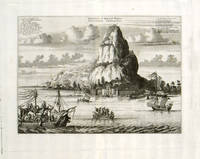
1680208423Amsterdam.: Jacob Meurs. Circa1680. Copperplate engraving on laid paper with generous margins 24 x 34 cms image; 38 x 49 cms sheet original central fold the sheet has been been previously folded presumably for framing at four sides to reduce the margin with short tears at the left fold not affecting the image the sheet a little age-toned and edges ragged but the image a fine dark impression in very good condition. An early edition of the plate which appeared in Arnoldus Montanus' "Gedenkwaerdige gesantschappen der Oost-Indische Maetschappy in't Vereenigde Nederland aen de kaisaren van Japan." published by Jacob Meurs in 1669. Montanus based his work on journals from the Dutch East India Company Embassy of 1649. Features of the river view are numbered and described in Dutch at top left corner and English at top right corner. . Jacob Meurs unknown
1700015795Circa 1700 1700. First Edition . No Binding. Good. 27 Cm x 42.5 Cm. Hand Colored Engraving. A Very Large Engraved View Of A Military Parade Ground And Surrounding Buildings In Constantinople With About 100 Figures Mostly Soldiers. 17" X 10 5/8". Trimmed To Edges. Many Figures In Foreground Walking Or On Horseback With Dogs Horses Etc. 1/2" Square Area With Some Rubbing Away Of Engraving Repairs Along At Top 1" Similar Horizontal Lines Representing Sky Have Been Attached From Another Engraving A Little Soiling To White Sky. Colored In Red Blue Pink Green Yellow. <br/> <br/> unknown
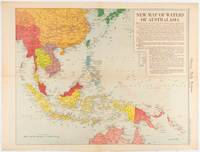
1619180757Chicago.: Chicago Daily Tribune. December 161942. Printed colour map on a single newspaper leaf 41.6 x 52.8 cm; 45 x 60 cm sheet inset legends marginal browning and at the folds but remarkably bright in very good condition. Map of Southeast Asia published in the Chicago Daily Tribune "The World's Greatest Newspaper" delineating the Pacific theatre of war with a detailed text legend. "This is a new war map of the far east showing an important part of southeastern Asia and Australasian waters from a station in which according to Prime Minister Curtin of Australia a United States fleet will operate." Interestingly New Guinea is marked as British rather than as an Australian administrative region which it became following the Treaty of Versailles. <br> <br>"… the historic Chicago Tribune was an innovator in color inks and printing but also a pioneer in bringing colorful art in the form of illustrations photographs cartoons and advertisements to the average person in an everyday medium." see The Janet A. Ginsburg Chicago Tribune Collection Michigan State University Libraries. . Chicago Daily Tribune. unknown
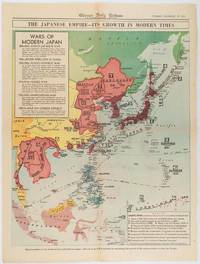
1619180755Chicago.: Chicago Daily Tribune. December 161941. Printed colour map on a single newspaper leaf 50 x 41.5 cm; 60 x 45 cm sheet two inset legends marginal browning and at the folds but remarkably bright in very good condition. Map of the Japanese Empire published in the Chicago Daily Tribune "The World's Greatest Newspaper" on December 16th 1941 9 days after the bombing of Pearl Harbour. The two legends list the "Wars of Modern Japan" from 1894 with territorial gains marked noting that "Each seizure of mainland areas has given Japan new field of raw materials." <br> <br>"… the historic Chicago Tribune was an innovator in color inks and printing but also a pioneer in bringing colorful art in the form of illustrations photographs cartoons and advertisements to the average person in an everyday medium." see The Janet A. Ginsburg Chicago Tribune Collection Michigan State University Libraries. . Chicago Daily Tribune. unknown
16920184951692 - 1779. First Edition. Wraps. Wrappers with some soiling and slight loss. Contents Fine bright and fresh. A string-tied manuscript 7-3/4" x 10-1/2" of Japanese Flower Arrangements Kadou author unknown from the middle of the Edo era 1692-1779 consisting of 32 leaves with no text and a total of 63 lovely hand-colored drawings one per page of flower arrangements. <br/><br/> paperback
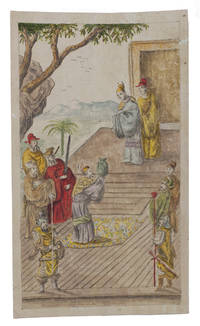
1670E9PF9I9C81WOChina 1670. A series of 8 Chinese drawings ca. 24 x 14.5 cm: 5 coloured 1 also highlighted in gold showing scenes from a Chinese novel many military or diplomatic plus a Chinese watercolour drawing and a Japanese woodblock print. A series of 8 pen and ink drawings 5 coloured 1 also highlighted in gold drawn from Chinese books possibly the 14th-century Sanguo yanyi or Romance of the Three Kingdoms. All mounted on European paper 6 on 3 different patterns of decorated paper. The paper of the drawings ranges from 23.5 x 14 cm to 24 x 15 cm. They show the following outdoor and indoor scenes:1 2 warriors on horseback one of whom has just beheaded the other and carries his head away the beheaded warrior has not yet fallen from his horse while his superior watches on horseback with 2 attendants.2 a man standing with a spear in the prow of a boat while 2 men and a woman sit at a tea table in the boat which flies a flag and pennant.3 5 people on 2 boats one flying a flag and pennant.4 4 soldiers bringing a woman to a dignitary at his house.5 a delegation visiting a dignitary.6 2 men playing go with 4 attendants and a guard.7 a dignitary at a writing table with attendants and visitors.8 a seated dignitary with 6 standing figures 1 with a document at a table.In the backing paper of number 7 one can make out an Amsterdam coat of arms watermark. It is difficult to see clearly but seems to follow the general style of Laurentius 71-95 1662-1675. The 3 patterns of decorated backing paper show: a flower pattern printed in gold on green; 2 patterns with more abstract decorations in a diamond pattern printed in gold on white.With this series we include a watercolour drawing and a woodblock print:9 watercolour drawing of irises along a stream with hills in the background 17 x 22.5 cm.10 rectangular woodblock print of a Samurai at a tea ceremony 14 x 10 cm possibly derived from a Japanese book.Some edges of the drawings a little frayed but otherwise in very good condition. unknown
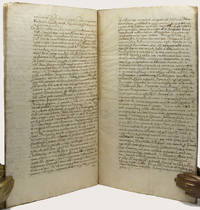
162134518Lisbon and Hangzhou China: Manuscripts ca.1623 and 1621. Very Rare A Similar Manuscript Exists in Brussels. We know of no others. The Latin text of both letters is written in a neat uniform cursive hand in brown. Folio leaves 33 x 20.5 cm The transcripts bound in 18th Century stiff blue wrappers the blank paste-downs and endpapers are late 18th century most likely the third quarter between 1745/1753 and 1776 since they contain a clear "lion/vryheit/pro patria" watermark with a crowned GR countermark which resembles Heawood 3148 3149 and 3154. The paper used for the manuscript contains a faint double-headed eagle watermark and it has been reinforced in the gutters. A very pleasing survival very well preserved edges slightly mellowed the wrappers show some signs of wear. VERY RARE MANUSCRIPT TRANSCRIPTS. Chrysostomus Johann Gall 1586-1643 was a German Jesuit and scholar. He left Ingolstadt Germany to teach astronomy mathematics and navigation in Lisbon fro 1620to 1627 before leaving to work in the Jesuit missions in India. The Colégio de Santo Antŕo benefitted from the arrival of many foreign mathematicians and other scholars as Lisbon serves as a gateway for all missionaries departing for Asia. The original letter by Gall was written in Lisbon September 1623 and concerns a newspaper style description of various events including details of the perseution of Christians in Japan particularly the execution of large numbers of the Christian community in Nagasaki in 1622.<br> The second letter in the present work is especially interesting as the original was written by Johannes Terentius also known as Johannes Schreck an Deng Yuhan Hanpo 1576-1630. Terentius was a prominent Jesuit scholar specialized in natural science and mathematics. Before joining the Jesuits as a novice1611 he already enjoyed a grea reputation in Germany as a scholar. In 1621 Terentius left for China to join the Jesuit mission. The original letter by Terentius was written in Hangzhou China on 30 August 1621 to the rector of teh Jesuit College in Munich Jakob Keller 1568-1631. He discusses his journey to China which he started in 1618 his intentions to participate in the planned calendar reform in China and his impressions of the city of Hangzhou which he reached in 1621 Terentius wrote several works on european medicine mathematics and technology in Chinese and together with Johann Adam Schall von Bell and G. Roho introduced European tigonometry and European astronomical instruments to China. In 1629 he began to reform the calendar which J.A. Schall von Bell ocmpleted after Terentius' early death a year later.<br><br>Backer & Sommervogel VII col. 1929-F<br> Manuscripts unknown
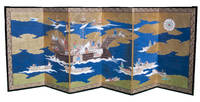
1700ABC_49540Japan 1700. 104 x 272 cm each illustrated panel: ca. 90.5 x 44.5 cm. Ink watercolours gold paint and gold leaf on paper. The image is surrounded by a frame of silk brocade a narrow frame in burgundy and gold and a wider frame in yellow gold and black with a clear floral pattern; together the frame is 5 cm wide the whole is mounted on six roiro black lacquered wood panels with gilt metal fittings on the outer corners of the outer panels. The panels are backed with decorative paper. A remarkable example of a Nanban byobu literal translation: Southern Barbarian screen a type of Japanese folding screen byobu depicting the arrival of Europeans especially the Portuguese in Japan during the late 16th- and early 17th centuries. It shows the vast expanse of the Portuguese seaborne empire. From their possessions along the coast of the Indian subcontinent and their lease of Macau individual Portuguese reached Japan in 1542 and were followed by traders and missionaries the most famous being Francis Xavier. Nanban art provides a unique glimpse into a period of significant cultural exchange and the Japanese perspective on the arrival of the Portuguese in their islands. While inspired by the arrival of and trade with the Portuguese in Japan before the enforcement of the isolationist foreign policy commonly known as Sakoku by the Japanese Tokugawa shogunate from 1633/1639 onwards it remained a popular subject to depict on these folding screens and in other artworks during the Edo period and beyond. The image on the present folding screen shows a large four-masted ship probably approaching the port of Nagasaki. Crew members both Portuguese and people from Portuguese possessions in the Indian subcontinent are seen furling the sails and performing remarkable acrobatic feats in the ship's rigging. The artist emphasises the balloon-like bagginess of their bombacha trousers typically associated with the Portuguese and other Europeans but focuses also on distinctive details such as heavy gold necklaces facial hair hats capes frilly white handkerchiefs and ruffled collars. The foreigners are depicted as being exotic but not scary or very "other" they are depicted as being different while still simply being human. The decoration and colours of the flags flown at the top of each mast are reminiscent of Christian symbols the Cross of Christ and Portugal's colours green and red. Cargo and passengers are offloaded into small boats that pull alongside the ship the top right corner shows a 12-point wind rose including a depiction of the globe. The whole scene is enschrouded in gold clouds.After the Sengoku period a period of practically consecutive and almost continuous civil wars and social upheavals in the 15th- and 16th centuries Japan entered a more peaceful and prosperous period. Folding screens such as the present example were used to divide larger homes and generally show of the growing wealth and prosperity of the warrior and merchant classes. The screens are finely executed in detail and using vibrant colours and copious amounts of gold paint and/or gold leaf. Thematically the painting here continues a tradition of now-lost screens of Chinese trade ships that were in vogue during the 15th- and 16th centuries at the peak of the Sino-Japanese tribute missions that brought entourages numbering in the thousands from the Ming court. The precise subject of these paintings had since shifted from Chinese trade ships to Chinese- or more general Southeast Asian-style ships carrying European including men from the European possessions in Africa and Asia crews. The scene illustrates the dynamic convergence of Eastern and Western cultures through trade around 1600. Portuguese traders first arrived in Japan in 1543 and by 1570 they had established the Bay of Nagasaki as a strategic hub for their commercial operations which were largely unregulated. They generated significant profits by exchanging Chinese silk for Japanese silver although some European goods were also part of the trade. The Portuguese carracks massive three-decked vessels weighing up to 1600 tons captivated local observers with their impressive scale unfamiliar crews and exotic cargo.Alongside these traders Jesuit missionaries sought to spread Christianity finding particular success in Kyushu where many local daimyo converted. However a Christian-led rebellion in 1638 alarmed the Tokugawa authorities raising fears of European colonial interference. As a result the Portuguese were expelled in 1639. When a Portuguese delegation attempted to restore diplomatic relations the following year all sixty members were executed. In 1640 the shogunate instituted a policy of national seclusion restricting foreign contact to limited trade with Chinese merchants a small number of Dutch traders and occasional Korean envoys. By 1650 Christianity was outlawed and any missionary work was punishable by death. The present screen is a slightly later example and the focus of the scene lies mostly on trade and the ship's crew itself and not directly on any Christian identity of the foreigners arriving on Japanese shores.This screen belongs to approximately ninety surviving Nanban screens ranking second only to capital city scenes in popularity among Japanese patrons. The earliest examples date to the 1590s and their continued production throughout the Edo period demonstrates the lasting impact of the Portuguese encounter on Japanese culture.Some minor flaking of the gold paint/gold leaf barely any soiling the decorative paper back of the work shows some traces of wear and use. The image remains clear and the colours vibrant. Overall in very good condition. This exceptional screen offers collectors an important historical document that captures both Portuguese maritime exploration and the Jesuit mission to Japan-a unique period of cultural exchange between East and West. unknown