[UTAGAWA, YOSHITORA]. 歌川芳虎.Biblio.com
188 résultats
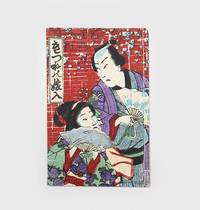
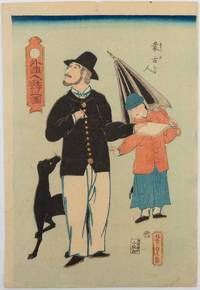
1862220053Japan.: 山田屋庄次郎. Yamada Shōjirō. Bunkyu 1 1862. Colour woodblock print 37.2 x 25.3 cms the sheet a little age-toned a spot of browning at the foot and a pinhole in the upper margin but the image unaffected very good condition. This colour woodblock print by Utagawa Yoshitora is an excellent example of Yokohama-e Yokohama Prints which were very popular in Japan after the country was opened in the mid-19th century. Yokohama was one of the trading ports with the outside world and many foreigners were residing in the area. The Yokohama-e was very similar to the Nagasaki-e Nagasaki Prints and depicted people and cultures which were foreign to the Japanese. Utagawa Yoshitora was active between the end of Edo Period to the mid-Meiji Period and produced numerous Nishiki-e prints including Yokohama-e in his career. He was regarded as one of the top Nishiki-e artists around that time. <br> <br>In this print a Western man is strolling outside with his dog and a Mongolian boy who carries an umbrella for him. The man is observing something in the distance and about to jot down something in his notebook with a pen which he holds in his right hand. Behind him his young attendant plays with the dog unobserved by his pre-occupied master. . 山田屋庄次郎. [Yamada Shōjirō]. unknown
18812091202133201037Shinshichi Okajima and others 1881. Soft Cover. Fine. Number of books: 50 books in total Shinshichi Okajima and others paperback
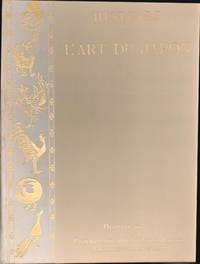
19009033029Paris: Maurice De Brunoff 1900. 1st. Hardcover. Fine. Bound in quarter vellum with tan cloth boards spine and cover stamped in illustrated gilt. Top edge gilt textured cloth endpapers. A dazzling massive and stately book. Full of illustrations. Sixty-eight beautiful full-page photogravures in black and white and color with printed-text tissue guards. Ninety-nine additional illustrations drawings engravings and photos in black and white interspersed with the text. In French. 12 x 15 1/2 inches. 277 pages plus preface. <br/><br/> Maurice De Brunoff hardcover
182314852AB1823. London Ackermann 1823. 14 : 9 cm. XIII 286 pages 20 hand-coloured engravings. Full calf in contemporary style richly blind-tooled with the name Japan on booth boards spine with title and date gilt in marbled paper slip-case. First and only edition. A very early resource on all aspects of Japan and the Japanese. Here in an wonderful copy complete very clean and in an outstinding binding. The beautiful hand-colopured engravings show all different aspects of Japan. A comprehensive early guide to the Japanese Islands Buddhism missionaries architecture language woman festivals Yezo Hokkaido Ainu arts science suicide infanticide earthquakes moral character cleanliness fondness of strong liquuors from of goverment etc. etc. hardcover
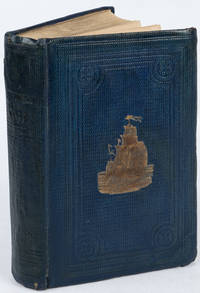
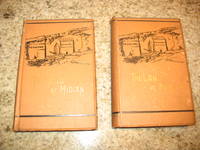
1861173654London.: Richard Bentley. 1861. First edition hand-coloured lithographed frontispiece and black and white text illustrations i-xxxii 350pp with a final advertisment leaf of Bentley's Standard Novels 19.4 x 13cm original blind-stamped blue cloth boards gilt-lettered spine dulled and gilt vignette of a ship with pennants a flutter to the top board slight spotting mainly limited to the endpapers and age toning to the edges of the text old varnish to the boards obscuring gilt lettering to spine and dulling the gilt to the ship vignette corners tender but a good clean example of a title scarce on the market. Written in the year Japan opened its doors to foreign trade but published three years later by the first British Consul to Nagasaki Christopher Pemberton Hodgson he also served as French Consul. As well as giving a key survey of a landmark period including the structure of society religion and Japanese attitudes to the West Hodgson importantly includes a catalogue of Japanese plants with an index prepared by the eminent botanist Sir William Hooker the work's dedicatee and his own on natural history. Pemberton noted his keen interest in botany and geology in an earlier work written after a turbulent five years on the Darling Downs in Australia. The present work also includes a lengthy chapter by Pemberton's wife taken from letters to her mother noting her experiences and impressions. . Richard Bentley. hardcover
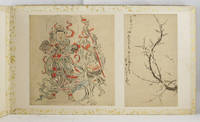
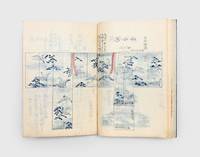
188033455Japan: No publisher ca. 1880. An Album of copies of Literati Paintings. Illustrated with 56 Literati Paintings mounted on 25 double-sided accordion-fold boards some with woodblock colour some finished in colour by hand the illustrations mounted with gilt-speckled borders. Oblong folio the album 28 3/4 x 17 1/2 cm. the paintings 22 x 13 1/2 cm. the upper cover of the album with original padded silk brocade and paper label. The album includes 7 'Poetry Competition paintings and poems from the '100 Famous Poems' an 8th century Heian period compilation. A very pleasing example well preserved with minor rubbing to the extremities the mountings and illustrations all in fine condition. A FINE EXAMPLE. THE JAPANESE ART OF BUNJIN-GA WAS INTRODUCED IN THE 17TH CENTURY FROM CHINA'S SOUTHERN SCHOOL OF PAINTING. This occurred during the Ming dynasty through the 'Painting Manual of the Mustard Seed Garden' although that in itself was based on Song and Yuan dynasty landscape painting; and the poetry of the Japanese literati painting was in the style of Classical Chinese poetry termed Kanbun in Japan.<br> Literati painting in Japan is generally referred to as Bunjinga literati painting; Ch. Wen ren hua or Nanga Southern School painting; Ch. nan zong hua both terms borrowed from China. Wen ren hua refers to the status of artists who belonged to the scholar-gentleman class. Nan zong hua was coined by the Chinese painter and theorist Dong Qichang b. 1555–d. 1636 who used it to describe art by literati ostensibly amateurs whose paintings were indebted to their mastery of calligraphy expressed their inner feelings and sought to capture the spiritual essence of their subjects. Japanese Literati Painting and Calligraphy<br>P. J. Graham F. L. Chance.<br> No publisher hardcover
1885159113Tokyo: Tsutsumi Kichibee 1885. A classic Japanese fairy tale A charming Meiji-era edition of this famous children's tale following two young foxes from their first meeting through to their marriage ceremony. This type of literature experienced a resurgence in popularity during the 1880s as Western notions of childhood entered Japan growing a market for age-appropriate stories with an instructional element. This is part of Tsutsumi Kichibee's ten-volume fairy tale series. Other stories include The Tongue-Cut Sparrow The Quarrel of the Monkey and the Crab and The Old Man who made the Flowers Blossom. Duodecimo. Colour woodblock illustrations throughout; text in Japanese. Original colour printed wrappers renewed white thread fukuro-toji stitching mica decorations on front wrapper. A little rubbed some ink marks internally: a very good copy. unknown
189056329Yamada Village Japan: n.p. ca. 1890. 4to. 7.5 x 11 in. 354 pp index maps & sections separately paginated. entirely in original manuscript with over 250 plat and section maps many double-page some folding many w/ additions tipped-in or laid-in as supplemental overlays and many w/ additional manuscript annotations most hand-coloured throughout. Original beige limp boards punch-sewn at gutter margin title in manuscript on front cover some scuffing wear occasional internal worming mildly affecting some maps still a VG- exemplar. An extraordinary Meiji-era manuscript real estate plat map atlas for the Yamada Village and environs of the Keta District in present-day northern Hyogo Prefecture. Traditionally ruled over by descendants of the Miwabe-no-Atai clan this real estate atlas volume encompasses hundreds of plat maps tied to outline maps with the plats all numbered and many colour-coded with colour coding to the opening index. The creator of this map atlas appears to have been commissioned by local land agents following the economic expansion after the opening of the Hyogo Harbor in 1867 for foreign trade while quickly became one of the largest trading ports in Japan. The Tajima province is perhaps best known as the birthplace of Kobe Beef or Tajima Wagyu traditionally compact working cattle with a calm nature but which quickly came into high demand as Kobe Beef in the late 1880s as the large foreign trading and tourist community desired beef and the Tajima cattle were especially desired. This also contributed to a rising demand for land in which to raise the Tajima Wagyu cattle and land prices. At the same time the nearby coast also began slowly developing a small tourist trade and coastal resorts. The map sections include No. 5 -- Kitakami no machi; No. 11 -- Sampo no matsu; No. 12 - Shita takimiya; No. 13 - Okawahara; No. 14 - Takimiya; No. 30 - Kita shitaya as well as No. 36 - Kawahara. In April 1896 the Keta District was dissolved and merged into the Kinosaki District along with the Mikumi District and became the Hyogo Prefecture anchored by the city of Kobe. The additional supplemental pieces tipped-in others laid-in and the many add-ons to the folding map with many bearing annotations indicate that this was a meticulously maintained working document for Meiji land agents. We have been unable to locate any similar manuscript or printed real estate atlases for this era and geographical location. See: Mochizuki Kotaro Japan To-Day: A Souvenir of the Anglo-Japanese Exhibition Held in London 1910 Special Number of the “Japan Financial and Economic Monthly;†Mike Buchanan Hyogo Prefecture Tajima Wagyu History Australian Wagyu Forum 2018; Masanobu Suzuki Development and Dispersal Process of Ancient Japanese Clans 2003. [n.p.], hardcover
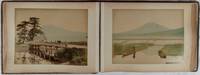
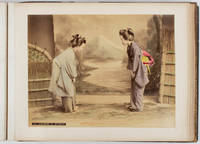
1890164158Japan. 1890s. 46 albumen photographs some handcoloured 34 captioned with studio stock references approx. 20 x 25.5 cms on 23 gilt-edged leaves in an attractive pictorial lacquer album 27 x 26 cms spine renewed and hinges professionally secured some fading and spotting to the images and toning to the margins of the card leaves lacquer a little chipped the images in good condition.<P> Large album containing prints of professionally-taken images of Japan from the 1890s. The Images show the landscapes of Nagasaki Kobe HakoneYokohama Nikko and Lake Chuzenji street scenes in Tokyo Nagoya Castle views of Mt. Fuji from various angles images of Japanese junks and of women preparing dinner. <br>A number of these are well-known images by famous photographers of the day including "Fuji from Kashiwabara" by Enami Tamotsu who opened his photographic business in 1892 "Front of Fall Hakone" by Kajima Seibei 1866-1924 and "Mississipy Bay" a bay near Yokohama by Kusakabe Kimbei 1841-1932. There are also some black-and-white photos of travellers in unidentified landscapes. <br> <br>From the collection of the late Arthur Hacker MBE.<P> <b>When referring to this item please quote stockid 164158</b> . unknown
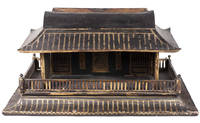
1868E5EF121ITPKJJapan 1868. Ca. 30 x 61 x 39.5 cm. Large model of a Japanese teahouse made from wooden panels painted in black and gold. Large handmade model of a Japanese teahouse probably dating to the late 1890s. It has been beautifully painted in black and gold. The teahouse is open on the front to show the interior walls which have been decorated with painted folding screens and a decorative wall hanging of a landscape flanked by two banners with text. The outside of the walls has been painted with decorations of a bamboo plant closely resembling lacquerwork. The model further features typical Japanese architectural elements such as a sloped overhanging roof a raised floor and an engawa veranda.The edges are scuffed with some cracks in the paints and a few losses a few cracks in the wood at the bottom a small loss of wood at the very top part of the plinth inside is detached or missing the gold paint is fading the back wall is somewhat loose but the structural integrity of the model is still fully intact. unknown
1879031199London: C. Kegan Paul & Co. 1879. 1st Edition 1st Printing. Hardcover. Very Good. Color And B/W Illustrations. Xxviii 338 Pp. ; Vii 311 Large Folding Map 32 Pp Catalog Dated 9/78 First Issue Point. Peach Cloth Gilt Lettering Illustrations And Rules Embossed In Black Slate Black Endpapers. Armorial Bookplates Of Bibliotheca Lindesiana With Small Labels Beneath Annotated In Pencil "Earl Of Crawford / 59/E"; Binders Ticket "Bound By Burn & Co." On Rear Pastedown Of Vol. I. First 96 Pp Of Vol I Neatly Opened With A Very Few Lightly Penciled In Marginal Words/Notes/Questions Rest Of Vol I And All Of Volume Ii Unopened And Fresh. Endpapers Immaculate And Unfaded Hinges Tight One Signature Beginning P 97 Of Volume I Is Detached But Present Old Gutta Percha Binding Glue I Think But Easily Reinserted In Any Case. Bindings With Light Wear All Gilt Still Brilliant Spine Cloth A Little Darkened A Little Wear And Edge Fraying At Tops And Bottoms Of Spines- Mostly At Tops- Without Loss Of Height. <br/> <br/> C. Kegan Paul & Co. hardcover
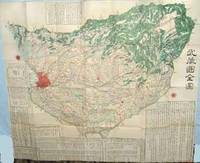
1856826971856. MAP - JAPAN Gyokuransai SADAHIDE & Kikuchi Shuzo. MUSASHI NO KUNI ZENZU. Edo Kikuya Kosaburo & 12 others. Ansei 3 1856 112 X 127 cm. An interesting colored woodcut map of the Musashi plain. Folds into its original titled covers 28 x 18.6 cm. Nice colors impression and colors. Sadahide was not only a talented printmaker but was also responsible for several important maps of the time. Beans 1856.13 in Supplement B page 41. See the UBC website at http://angel.library.ubc.ca/cdm4/item_viewer.phpCISOROOT=/tokugawa&CI SOPTR=312&REC=3 for more info on this map. From The Keyes collection. unknown
1893163107No place of publication.: 天眞堂. Tenshindō. Meiji 26 1893. A beautifully illustrated colour manuscript Meiji period "house geomancy" 家相 plan folded scale 1:50. On heavy good quality Japanese paper. Pop-up walls gate and some buildings turnable geomantic compass. Some creasing light soiling or browning but generally very good. 179 x 95cm. House divination originated in ancient China and became popular in Japan from the 19th century on. The idea of the house divination remains popular in Japan to this day. <br> <br>This beautiful sheet gives a detailed floor plan of a traditional Japanese house designed for a person of high status. This house was possibly on the grounds of Tenshindō in Yamanashi near Tokyoas Tenshindō is mentioned in the text. The 24 red lines which represent 24 hexagrams diverge from the central movable paper geomantic compass indicating 24 directions. The geomantic compass its range taking in the entire plan enables the planner to be certain that rooms and objects will be placed in such a way as to benefit the residents. By the same token the compass serves to make sure that planning does not work to the detriment of the residents. . [天眞堂]. [Tenshindō] unknown
1890178093Circa1890. 24 large 23 x 29cm hand coloured silver nitrate and albumen photographs in an attractive pictorial lacquer album leather spine in compartments - rubbed at the spine gilt dentelles and inner gilt dentelles all edges gilt. Images show some colour breakdown with the colour red highlighted on some album is a little rubbed or scratched in places and some chips with loss to the edges. Faint foxing to a couple of images somewhat heavier on the first image the album measures 27.5 x 36.5cm. Large gift inscription dated '92 1892Yokohama. Endpapers marked and slightly soiled still a handsome and very interesting album containing a number of unusual photographs. Beautiful lacquered album containing a collection of 24 professionally produced hand coloured photographs of Japan in the 1870s -1880s. The identity of the photographers behind these hand-coloured prints of is uncertain but a number of the photos appear to have been taken by photographers associated with the Yokohama studio of English/Italian photographer Felice Beato 1832-1909 which operated in Yokohama from the mid-1860s to the mid-1880s. . hardcover
1880613<p>Manuscript 12pp. of gouache paintings on fine cloth pages calligraphic labels in Japanese next to each specimen tipped into a modern binding with a gilt appliqué border 150 x 230mm c.1880</p><p>This album contains illustrations of moths butterflies dragonflies a spider a stag beetle a lady bird a wasp lizards frogs and toads cicadas grasshoppers hornets a cockroach a centipede and the full life cycle of a silkworm executed by a skilled artist in gouache.</p><p>This was produced during the Meiji period an important time for Japanese art. In 1868 the restoration of imperial rule in Japan brough the Edo shogunate to an end and marked the start of the Meiji era which would last until the death of Emperor Meiji in 1912. During this brief period Japan transformed itself from an isolated feudal nation to a world power. The historic skills of Japan's traditional arts played a vital part in the struggle to compete in international markets.</p><p>The masterpieces of Meiji art in a unique style blending the best of traditional design with prevailing international taste are unrivalled in the quality of their craftsmanship and were avidly sought by Western collectors. The blending of styles can be seen in this album of illustrations which were most likely produced for export. The addition of the european-style gilt border exemplifies this.</p> hardcover
18842091202133212089Hobunkan 1884. Soft Cover. Fine. Number of books: 70 books in total Hobunkan paperback
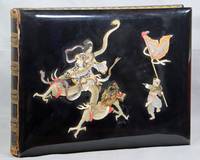
1890000012919n.p.: n.p. 1890. Hardcover. Good. Oblong 8vo. 27.5 cm x 38 cm. 50 hand-colored albumen photographs on double-sided stiff cardstock leaves. All tissue guards present. Black lacquered boards with beautiful raised decorations carved and painted on bone on the front board: a woman wearing a kimono riding a dragon and a child waving a flag the rear board with decorations stamped in orange and gold; the spine in five compartments gilt decorations and rules on the spine; all edges gilt. Binding is sewn cloth. White endpapers and pastedowns. Most photographs with a caption in the corner. Photographs measure 19 cm x 25.5 cm. The photographs depict landscapes of Nagasaki a statue of Buddha temples street life in Japan Kioto Tokyo women playing instruments clothing and porcelain shops and so much more. A stunning album of daily life in Japan at the end of the nineteenth century. The front board nearly detached from the spine but holding to the binding on the front gutter cloth. A few photographs may have had their red color touched up but it is difficult to tell. n.p. hardcover
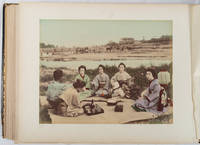
1890215089Japan. Circa 1890s. 50 hand-tinted albumen prints 30 captioned with studio stock references mounted on thick gilt-edged card leaves19.5 x 25 cms in an album 27.5 x 35 cms; elaborately lacquered boards scuffed and chipped inlaid with mother of pearl with loss over quarter calf renewed bevelled edges gilt dentelles endpapers gilt-flecked some fading and spotting to the images and toning to the margins of the card leaves but a very good handsomely bound collection.<P> Beautiful studio album containing a collection of 50 hand coloured photos of Japan with a splendid lacquered and decorated cover. The photos were commercially produced images which were sold to foreign visitors who had the studio place photographs in an album of their choice. This album is unusually interesting because unlike many where photographs were more randomly placed the images have been selected and arranged geographically beginning in Tokyo and moving southwards: Nikko Yokohama Miyanoshita & Hakone Lake Mount Fuji Kyoto Osaka Kobe and Nagasaki. <br> <br>There are fine images and portraits of geisha including an uncaptioned image of geisha seated possibly by the Kamo River in Kyoto entertaining a male guest. A lute is placed on the rice mat together with a tray of beer. One of the geisha is looking straight to camera a striking composition. Another uncaptioned in the Kyoto group is likely to be in Arashiyama shows a sandalled figure on a mountain path overlooking the leisure boating below. <br>There are also images of pagoda fishing rice planting street vendors and markets. <br> <br>More than half the photographs appear to be from the studio of the Yokohama based photographer Tamamura Kozaburo c.1856-192 who at his height was described as "the best photographer in Yokohama". As Terry Bennett has attested Tamamura's business strategy of selling souvenir albums of views and costumes to foreigners became a "winning formula". see Terry Bennett "Early Japanese Images" Tuttle 1996 and "Photography in Japan 1853-1912" Tuttle 2006<P> <b>When referring to this item please quote stockid 215089</b> . hardcover
1824027252London: Richard Priestley 1824. 2nd Edition 1st Printing. Hardcover. Very Good. Maps and Plates. Xv 409; Iii 341; Iii 392 Pp With Half Titles In Volumes 2 And 3. A Complete Set In Original Brown Cloth Spines Over Gray Boards With Original Paper Spine Labels 4.7 Cm Tall Volume Numbers In Arabic Numerals Also Known With Taller Spine Labels With Roman Numerals Priority Unknown. Taylor's Corrected Second Edition Adding His Notes Which Were Omitted From The First Printing. Worn With Some Fraying At Corners Volume 1 With Cracked Front Joint Along Which Is A 2 1/2" X 1/4" Loss Of Spine Cloth Not Affecting The Labels. Bookplates Of Francis Davies Of Pershore With Rampant Lion And Motto "Lucem Spero" No Other Names Or Marks. Per Wikipedia General Sir Francis John Davies Kcb Kcmg Kcvo 1864 - 1948 Was A Senior British Army Officer Who Commanded The 8Th Division During The First World War. Davies Was Born In London The Son Of Lieutenant General Henry Fanshawe Davies And His Wife Ellen Christine Alexandra Hankey. His Grandfather Was General Francis John Davies Brother And Heir Of Thomas Henry Hastings Davies Mp For Worcester And His Great-Grandfather Was Admiral Of The Fleet Sir Thomas Byam Martin. The Family Seat Was Elmley Castle Pershore Worcestershire. His Younger Brother Was Major General Henry Rodolph Davies. He Was Educated At Eton College. In October 1899 He Served As A Daag Responsible For Intelligence At Army Headquarters In South Africa And As Acting Commissioner Of Police For Johannesburg In 1900. In 1902 He Was Temporarily Employed In The Intelligence Department Until He Became Deputy Assistant Quartermaster General Daqmg At The War Office On 7 September 1902. Two Years Later He Was Appointed Assistant Director Of Military Operations In 1904 He Was Made General Officer Commanding Goc Of The 1St Guards Brigade. He Then Took Over As Brigadier General General Staff Bggs Of Aldershot Command. He Was Promoted To Major General In May 1913 And In October Of That Year Became Director Of Staff Duties At The War Office. In October 1914 Davies Was Appointed As Goc Of The 8Th Division. The Division Along With Its Goc Was Soon Sent To The Western Front. Towards The End Of July Davies Was Posted Away From The Fighting In France And Belgium To Take Over The Command Of Viii Corps Then Heavily Engaged In The Gallipoli Campaign. Davies Promoted To The Temporary Rank Of Lieutenant-General30 Took Over As Its Goc On 8 August . He Brought With Valuable Combat Experience And It Is Said " Over The Five Months Of His Tenure His Ideas And Energy Were The Catalyst For A Myriad Of Tactical And Systematic Improvements Which Greatly Improved The Fighting Efficiency Of His Force Allowing His Troops To Achieve Tactical Superiority Over The Enemy Facing Them". In The Aftermath Of The Evacuation Of British And Allied Forces From Gallipoli In January 1916 Davies Was Moved On To Being Goc Of Ix Corps. Davies Was In Command Only Until June When He Returned To The United Kingdom To Serve As Military Secretary At The War Office. He Held This Post Until After The End Of The War.His Rank Of Lieutenant General Became Substantive In January 1917. Later That Year Davies Was Appointed General Officer Commanding-In-Chief Goc-In-C Of Scottish Command In June 1919. After Being Promoted To The Rank Of Full General In July 1921And After Serving As Lieutenant Of The Tower Of London Which He Had Been Appointed To In June 192335 He Retired From The Army In April 1926. He Had Been Appointed An Aide-De-Camp General To King George V In April 1922. <br/> <br/> Richard Priestley hardcover
1855030323London / Madrid / New York: Germer Bailliere 1855. 1st Edition . Hardcover. Very Good. 574 Pp 1 Pp Errata At End. Blue Morocco Gilt Over Blue Marbled Paper Covered Boards Marbled Endpapers Somewhat Similar Color Speckles On Edges Of Page Block. Binding Clean And Complete Original With Small Repairs To Corners No Chipping Hinges Tight No Names Or Marks Or Bookplates. Contents Fine Slight Even Aging To Pages No Wear To Pages. <br/> <br/> Germer Bailliere hardcover
1897186729Tokyo: 1897. The dress of the classical Japanese nobility An attractive manuscript copy of this rare treatise on Heian-period ceremonial attire. Only one other copy is known held by the National Archives of Japan. The copyist Ishimoto Shuen was an artist-historian whose research focused on ancient clothing. She was named as one of the most accomplished artists in Tokyo by a 1916 broadside. Shozoku shokushikimoku otherwise known as Shozoku imon or in the case of the other known copy Kinpi shozoku imon introduces over 40 examples of different types of clothing worn throughout Japanese history and manuscript captions explain their features. The clothing ranges from kanmuri headwear to ceremonial leather belts sekitai swords fans and ritual omigoromo robes. Different examples of each are given depending on the season and the rank of the person who was permitted to wear certain colours and designs. According to the colophon the text was first found in the collection of Ise Sadatake 1718-1784 a samurai and notable historian of court etiquette. A copy was made in 1772 then another in 1856 and finally this example in 1897. Ishimoto Shuen was the protégé of the famous academic and Shinto scholar Kosugi Sugimura. The pair produced a number of books and hanging scrolls depicting Heian-period and earlier court dress especially in the late 1890s. Ishimoto's ownership signatures and seal are on the first and final pages. The illustrations in this copy are in a slightly different layout to the other surviving example although the colours are more vivid. Quarto 264 x 190 mm with 26 leaves of mica-infused paper. Manuscript text and watercolour illustrations throughout. Original blue paper wrappers renewed white thread fukuro-toji binding. A little rubbed and creased wrappers with scattered patches of discolouration contents bright with very minor wormholing: a very good example. hardcover
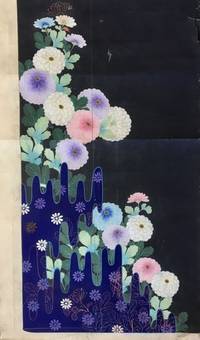
181956897Kyoto Japan: Marubeni Shoten Design Dept. Keimeikai Textile & Dyeing Studio Tanioka Shoten Design Dept. ca. 1918-1945. Folio. 61 original hand-painted inked and pencil designs with a few on a lightly toned but quality semi-translucent paper the majority on thick paper stock and still others with two pieces carefully pasted together with contiguous designs sized from 9 x 15 in. up to 19.25 x 38.5 in. with 13 of the pieces larger the larger size a number of them sized 18 x 32 in. and many in the 14.25 x 15.5 in. size colour painted; the majority feature the design studio chop or crest at lower corners throughout many w/ annotations in margins several w/ change orders neatly annotated or even the title of the design and still many others w/ Roman numeric inventory codes in margins as well two still retaining original small silk samples many with creasing or minor tears & edgewear or creasing to fore-edges a few w/ small & large closed tears while others show some creasing and thumbing from continued use still an exceptional group of manuscripts. This superb archive of 61 original hand-painted kimono designs furnishes an exceptional visual array of Taisho- and early Showa-era Japanese motifs and styles. A number of the designs evoke traditional Japanese Ukiyo-e woodblock prints with deep vivid colours and well rendered illustrations. Many of these designs incorporate floral patterns including Kiku Chrysanthemum Botan Mon Peony Pattern Manju Kiku Marigolds Japanese Irises Morning Glory Cockscomb Ivy Dahlias and many other botanical motifs. In addition there are many illustrating ornately embroidered designs austere bamboo mushrooms and intriguing landscapes some with a small portion fully painted in with brilliant colouring while the outline of the kimono fills out the drawing. Two of the designs still features their original small attached silk kimono sample more reminiscent of Western Design houses which often attached their chosen fabric samples to their clothing designs. A few of the designs are executed on translucent thin paper for the kimono draper to transfer the design to white silk or other fabrics via some type of carbon paper process. Another of the designs has been executed on a stunning silver metallic paper with palm or bamboo leaf fronds executed in vivid blues & browns. Some feature a nearly surrealist quality while several others include illustrations of doves or chickens. Two of the designs incorporate Art Deco representations of Chinese Junks and Japanese sailing vessels typical of the 1930’s prior to World War II. In the Taisho Era a new era opened for textile designers working with Kyoto drapers and department stores with many having trained at new art colleges and then working in the design studios of Marubeni Keimeikai Textile & Dyeing Studio and others. The Tachiki Artist design studio designs on thin translucent paper include one with designer stamp of character embedded within a skull. Some appear to have two different date stamps for the Marubeni Shoten Design and some are unsigned or stamped. The Taisho- and Showa-era kimonos featured brighter colours more groundbreaking designs as Japan’s designers embraced traditional dress and transformed it into a new garment equally appealing to the “Moga†or brazen “Modern Girl.†The designer notes include instructions to “leave a little more space between the fans;†“Drop the little fan crest;†“too much white bush clover†on the pine cones and even that Matsuo Taishichi had ordered a design for “clothes for paying a visit for a young person.†The Marubeni Shoten originated with Chubei Itho who began in 1858 as a salesman for linen cloth and by 1872 had opened his drapery store Benchu in Senba Osaka. By 1918 Chubei Itoh had expanded the business into Osaka and deciced to merge with Itochu Shoten Ltd. becoming Marubeni Shoten with their own drapers shops and many contracts with department stores. Later by the mid-1950s Marubeni merged with the company that operated the Takashimaya Dept. Store Chain all the while preserving their design studio and artists. See: Yuko Fukatsu-Fukuoka The Evolution of Yuzen-dyeing Techniques and Designs After the Meiji Restoration 2004; Arisa Shinko Tomikawa Hand Painted Kyo Yuzen Atelier “Arisa†A Brief Introduction 2020; Annie Van Asche Japanese Kimono Fashion of the Early Twentieth Century Textile Society of America Symposium Proceedings 2000; Our History Our Roots Marubeni Corporation 2020. Marubeni Shoten Design Dept., Keimeikai Textile & Dyeing Studio, Tanioka Shoten Design Dept., hardcover
19002111902160201143Shinshu Ueda Town Japan Linguistics Joint Stock Company 1900. Soft Cover. Fine. Number of books: 1 Shinshu Ueda Town Japan Linguistics Joint Stock Company paperback
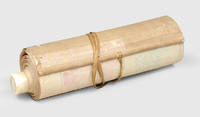
1870127747Japan: c.1870. The feudal lordships of Meiji Japan Highly attractive and distinctly uncommon early Meiji-period scroll showing the flags of 29 daimy s feudal lordships and giving details of annual revenue recorded in kokus of rice approximately 280 litres originally defined as enough to feed one person for one year provinces capitals of their respective territories or han and the cadet branch of each clan illustrated with flags for each both the -uma-jirushi "great standard" and ko-uma-jirushi "lesser standard". The scroll opens with the Hinomaru "circle of the sun" and imperial chrysanthemum mon or crest above the standards of the Tokugawa shogunate three hollyhock leaves within a circle. The sixteen-petalled Imperial Chrysanthemum Crest was first recognized as the exclusive emblem of the imperial household in 1868; the Hinomaru was adopted officially in 1854: "Japan had no national flag until 1854 when upon a petition by the lord of Satsuma han Shimazu Nariakira the bakufu military government determined that Japanese ships should fly a white flag bearing the Rising Sun emblem in order to identify themselves as Japanese. In 1870 the Meiji government following the late Tokugawa precedent decreed that Japanese ships ought to use the Rising Sun flag as the national flag" Takashi Fujitani Splendid Monarchy: Power and Pageantry in Modern Japan 1998 p. 49. The British Museum notes that the flags are presented here "on western-style horizontal flags mounted on flag poles" and not in the Japanese manner. This is a fascinating record dating to the advent of the Meiji Restoration 1868 which curtailed the power of the daimy s: "On paper the abolition of the old domains and with them the daimy as well and the creation of the new administrative units called prefectures seemed to be in 1868 the most politically dangerous of the Meiji reforms. Great care and planning went into this reform announced in 1871 lest the daimy s fight it" Louis G. Perez The History of Japan 1998 p.98. Among British and Irish institutional libraries Library Hub cites only the copy at the Society of Antiquaries of London WorldCat adds Harvard both this and the SoA copy bound in book form; we have traced a copy at the British Museum catalogued as "Flags of the different Daimyos of Japan" which survives as a scroll; only one entry on auction records 2013 apparently the present copy. A superb survival from the period of the opening of Japan perhaps intended for the tourist market when foreign trade was being established in effect acting as a guide to the leading families of Japan. Scroll 180 x 400 mm. 88 hand-coloured woodblock flags on paper text in English and Japanese. Original polished bone jikugi central cylindrical rod pale brown silk tie. Exterior a little darkened otherwise in remarkably good condition. unknown
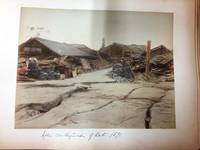
1892019216@1892. Hardcover. Cardboard pages in album have a slight wave; prints have light toning along edges and light silvering a few prints with light soiling and foxing affecting content; all prints have good exposure. Heavy fraying and wear to covers spine dry with moderate chipping and a tear along one edge. Covers Fair but overall the photographs themselves are Very Good. Oblong Folio 13-1/2" x 10-1/2" in worn decorative cloth over heavy wooden boards and leather spine with tissue guards for the photos. A personalized travel album from 19th century Japan with 50 hand-colored 10" x 7-5/8" albumen photographs laid down onto heavy cardboard pages with titles in the negative and occasionally in manuscript below the image all in English. This was the album of Frank Leslie Coombs 1853-1934 who was a United States Minister ambassador to Japan from June 1892 to August 1893. Most images found within this album depict peaceful scenes of landscapes temples tea houses and roads. Five images however illustrate the aftermath of the Mino-Owari earthquake also known as the Great Earthquake of 1891. With a magnitude of 8.0 this quake left significant damage some of it recorded here. Images include views of twisted bridges crumpled buildings and the town of Osaka burned to the ground. <br/><br/> hardcover