188 résultats
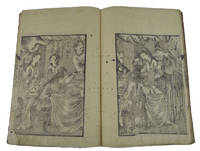
1855154076Edo. 1855. Volume 5 only. 4 double page black and white woodblocks from copper engravings 18 folded leaves some worming throughout original wrappers considerably worn and wormed with a little loss. A reading copy only of the 5th and last volume of 米利幹新誌 巻之5 New Account of America. 1853 the year the first volume of this set was published was the year Commodore Matthew Perry's American fleet came to Uraga Bay. The four illustrations show: the UK fleet attacking the US port the US volunteers fighting to regain the territories taken by the Western forces a scene of the city of Boston and a family having lunch together. <br> <br>This set deals with the geography and history of North and South America. The author was well-known for his ready reception of western ideas. His work "Gogaku shinsho" is one the first books of Japanese grammar based on Western grammatical rules and conceptions . unknown
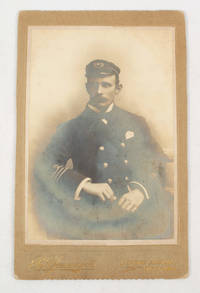
1890175466Itchome Aioicho Yokohama. circa1890. Cabinet card silver albumen photograph 14 x 9.5 cm backed onto card and an elaborate olive toned pebbled thick card mount 18.1 x 11.5 cm blind stamped the signature of the studio in gilt upper and lower edge with scalloped edges pencilled note in rather amateur characters on reverse some silver mirroring but in very good condition. Fine portrait of an unknown officer from a famed studio but remarkably about whom little is known see: Terry Bennet "Japanese Photography in Japan 1850 - 1912". <br> <br>From the estate of the late collector and scholar Arthur Hacker. . unknown
18852111902160200127Tokyo Genba Branch 1885. Soft Cover. Fine. Size: 23cmx15.2cm Number of books: 16 Tokyo Genba Branch paperback
18892111902160200766Shoshichi Kato 1889. Soft Cover. Fine. Volume: 1 Shoshichi Kato paperback
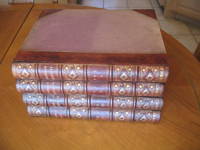
1880023430London circa 1880: J. S. Virtue and Co 1880. First Edition . Hardcover. Very Good . 13" Tall. Engravings on Steel and Wood. Vol 1: X;Vi; 240; Vol 2: Vi 240; Vol 3 Vi 240; Vol 4 Vi 236. Half Morocco Spine And Tips Over Purple Pebbled Cloth; Spines With 5 Bands Six Compartments Gilt Title And Volume Number Ornate Gilt Decorations In Other Four Compartments; Original Yellow Endpapers; All Edges Of Page Block Gilt. The Books Are 13" Tall 10 1/2" Deep And The Four Volumes Are 6 3/4" Wide On The Shelf. Undated But Circa 1880. Front Hinge To Vol Ii Cracked Binding Solid. Original Leather Recently Professionally Conditioned And Refreshed Professional Repairs To A Few Splits At Top/Bottom Of Spine Edges; Gilt Bright; No Names No Marks No Bookplates. Also With An Additional 41 Loose Plates Of Same Size As Those In The BooksPossibly From Another Copy Of This Set Or Perhaps Never Bound. Shipping Weight About 30 Pounds Insurance Required Shipping Requires Additional Charges Depending On Destination. Palestine Refers To The Area Immediately North Of Egypt Along The Mediterranean Coast Inhabited By Countless Peoples And Conquered More Or Less Mercilessly Countless Times By Various Empires From England To Central Asia. The Volumes May Or May Not Include References To This Unrivaled Mix Of Ethnicities Most Of Whom Were Then Living At Pece With Each Other. <br/> <br/> J. S. Virtue and Co hardcover
1879068TR1Walden and Stowe; Phillips & Hunt Cincinnati; New York: 1879. 1879 548p. Frontis. Illustrated with numerous full page engravings. Title page ruled in red and printed in red and black. Paper beginning to brown at edges. Some soiling. A few leaves torn without loss. Inner hinges cracked. 8vo. Original full green cloth binding decorated and lettered in gold and black. Binding very worn. Hardbound. The author Isaac W. Wiley was a pastor medical and educational missionary and influential bishop of the former Methodist Episcopal Church. Wiley College founded in 1873 by the Freemen's Aid Society to educate newly freed slaves was named for him. He served as a missionary for some years in China and returned to organize missionary activity in the Far East. This account of his travels makes interesting reading. He visited and describes many places customs sights religions. In China: Shanghai; Peking; Kiukiang; Foochow; Hong Kong; Canton - in Japan: Yokohama; Nagasaki; Tokio Tokyo; among other places. Scarce. PRICE JUST REDUCED! TRAVEL/3 Language: eng. Full Cloth. Hardcover. Good. Walden and Stowe; Phillips & Hunt, Cincinnati; New York: (1879). hardcover
1848036367London: Longman Brown Green And Longmans 1848. 1st Edition . Hardcover. Very Good. Li 431 Pp. 8 1/2" X 5 1/2". Quarter Morocco With Morocco Tips Red And Black Morocco Spine Labels Gilt Five Bands Marbled Endpapers And Matching Marbling To Page Edges. Immaculate Square Text Block With Original Polish And No Wear. Light Rubbing Tiny Frays At Top Of Front Spine Edge And At Lower Front Tip Heraldic Bookplate. <br/> <br/> Longman, Brown, Green, And Longmans hardcover
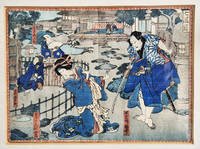
1900221531Tokyo. circa1900s. Framed coloured woodblock print 16.5 x 22.8 cms image; 26 x 32.6 cms framed central fold Japanese text in good condition. Woodblock print of a samurai warrior looming over a fearful geisha. . unknown
18942090202122801678Tohodo Bookstore 1894. Soft Cover. Fine. The book is in fine condition. Tohodo Bookstore paperback
1900033646New York: Harper & Brothers 1898 1900. Reprint . Hardcover. Very Good. Illustrations Throughout. Xlviii 752 Pp. Blue Cloth Gilt. Light Wear. 1900 Date On Title Page. Vol Ii Of The Biographical Edition Of The Works In 13 Volumes. Ownership Signature "Fanny Weston Bixby / November 1903 / Los Angeles". Fanny Weston Bixby Spencer 1879 - 1930 Was The Youngest Of Nine Surviving Children Of Jotham Bixby; He Had Arrived In California In 1852 From Maine Where He And Several Cousins Had Formed Flint Bixby & Company Which Acquired Major Landholdings Including The 27000-Acre Rancho Los Cerritos In What Is Now Long Beach. Fanny Grew Up Wealthy And Although She Was An Active Philanthropist When She Died In 1930 Her $2.5 Million Estate Was The Largest Ever Probated In Orange County Up To That Point. Fanny Grew Up On Rancho Los Cerritos Of Which Jotham Was The Manager. Later Fanny's Grandfather The Prominent Abolitionist And Unitarian Minister George Whitefield Hathaway Came To Live With The Family. Fanny Bixby Wrote About His Abolitionist Activities Including Turning His House Into A Station On The Underground Railroad In Her Pamphlet Entitled How I Became A Socialist. Fanny Bixby Was Educated At The Marlborough School In Los Angeles And The Pomona Preparatory School. She Attended Wellesley College For Three Years But Left Without A Degree. At Wellesley She Studied Sociology With Emily Greene Balch Who Would Go On To Win The 1946 Nobel Peace Prize. While Still At Wellesley College She Worked For A Time At The Denison Settlement House In Boston Founded By Balch And The Nurse's Settlement House In San Francisco. On Leaving College She Moved Back To Long Beach Where She Donated Money To Various Civic Causes Including Long Beach's First Hospital Seaside Hospital And The Walt Whitman School Private And Her Settlement House Both In The Boyle Heights District On The East-Side Of Los Angeles. She And Her Husband Often Invited Ghetto Youth Of Working Mothers To Stay On Their Farm In Orange County To Divert Them From Gangs And Delinquency. In 1907 She Founded What Is Now Long Beach Memorial Medical Center. She Also Helped Found The Town Of Costa Mesa California. When Long Beach Formed Its Police Force In 1908 Captain Tom Williams Brought Fanny Bixby Onto The Force Because Of Her Extensive Philanthropic Work In The City. She Was Sworn In As A Special Police Matron On January 1 1908 Making Her One Of The First Women Police Officers In The Country. Fanny Bixby Worked With The Long Beach Police Force For Four Years. An Admirer Of Leo Tolstoy Fanny Bixby Was A Socialist And A Pacifist. She Published Some Poetry In The California Socialist Party's Newspaper The Oakland World And She Attended At Least One Antiwar Meeting In Pasadena Before The Espionage Act Of 1917 Made It Risky To Speak Out Against The War. Her 1920 Play The Jazz Of Patriotism Was About A Woman Who Is Ostracized For Refusing To Salute The Flag. It Premiered At The Egan Theater Later The Musart Theater In Downtown Los Angeles. Fanny Bixby Met Her Future Husband W. Carl Spencer At A Socialist Party Meeting In 1917. They Moved To Costa Mesa Then Named Harper In 1919 Where They Raised Five Adopted Children And Supported Many Others. The Couple Donated Land To The City For A Park And A Library. A Couple Of Years Before She Died She Wrote To Her Cousin Sarah Bixby Smith: "I Have Three Lines Of Work Bringing Up My Foster Children Helping My Neighbors Mostly Japanese Farmers And Banging My Head Against The Stone Wall Of Militarism And Conservatism That Hems Me In." Her Papers Are Housed At The Rancho Los Cerritos Museum. <br/> <br/> Harper & Brothers (1898) hardcover
189218180New York: Charles Scribner's Sons. 1892. Hardcover. Very Good. Boards with light rubbing to extremities; Illustrated Library of Travel; 12mo 7" - 7½" tall; 293 pages . Charles Scribner's Sons hardcover
1875025258London: Chapman and Hall 1875. Seventh Edition . Hardcover. Near Fine. 7 7/8" Tall. Title V-X 594 Pp. Seventh Edition Bound Without The Photographs First Published With This Edition With The Preface To The Sixth Edition 1870 And No Mention Of Photographs. A Very Attractive And Well Preserved Issue. Red Morocco Spine And Tips 5 Raised Bands With Gilt Decorations Gilt Bands And Decorations At Top And Bottom Of Spine Matching Marbled Boards Endpapers And Page Edges. Contents Near Fine. Morocco And Boards In Excellent Condition Gilt Brilliant A Little Rubbing At Small Areas At Spine Edges Rubbing Ar Edges Of Boards With A Little Loss Of Paper At Some Places On Edges A 3/16" Loss Of Paper At Center Of Front Board At Foredge With A Corresponding 1/2" Loss Along The Edge Itself. Hinges Very Strong An Attractive Copy For Shelf And For Reading. <br/> <br/> Chapman and Hall hardcover
1881032313St. Louis: Denton J Snider 1881. 1st Edition 1st Printing. Hardcover. Very Good. 348 Pp. Olive Green Cloth Beveled Edges GiltYellow Endpapers "Privately Printed" And 1881 Date On Title Page. Inscribed To The Same Person Twice Same Date"With Friendly Regards" On Both Front And Rear Endpapers. Wear At Corners With A Few Small Losses Of Surface Of Cloth At Top And Bottom Of Spine And At Tips. Front And Rear Hinges Each Split About1 1/2" At Endpapers. Small Stamp Of The World Human Culture Foundation Mckay College Los Angeles Near Bottom Of Title Page No Other Marks Or Damage. Writer Educator And Literary Critic Denton Jacques Snider 1841-1925 Was One Of The Original Members Of The St. Louis Philosophical Society An Association Of Hegelians Founded In 1866 By William Torrey Harris And Henry C. Brockmeyer Whom Snider Met While Teaching In The St. Louis Schools. With His Knowledge Of Greek Latin French German And Italian Snider Brought A Love Of Literature A Fine Critical Sensibility And A Breadth Of Outlook To The St. Louis Group. He Spent Some Time Teaching Classics In Susan Blow's Kindergarten Training School. An Acrimonious Parting Of The Ways Resulted From Blow's Disapproval Of His Independence And Enthusiasm For Pagan Cultures. From 1884-97 Snider Wrote And Lectured Touring Extensively Mainly In The Midwest Including Speeches To The Grand Rapids Kindergarten Training School. According To The Dictionary Of American Biography Snider Would Move "Impetuously About The Stage Checking His Flow Of Eloquence Only To Chide Severely The Late-Comers." To Avoid The Commercialization Of His Work He Published His Writings Himself At His Own Expense Under The Imprint Of His Sigma Publishing Company. He Made Little If Any Money From The More Than Forty Volumes He Published And Often Gave Away Copies To People Attending His Lectures Who Wanted To Read Them. Snider's Earlier Works Many Of Them In Verse Deal With Greece And Rome A Walk In Hellas Homer In Chios Prorsus Retrorsus Agamemnon's Daughter. Between 1877 And 1897 He Produced Nine Volumes Of Commentary On "The Four Literary Bibles Of The Occident"-Shakespeare's Plays Goethe's Faust Homer's Works And Dante's Divine Comedy. Later He Embarked On An Ambitious Series Of Volumes Intended To Comprise A Grand Philosophic Or "Psychologic" System Which Included Works On History Science Psychology And Political Philosophy. Snider Also Wrote Poetry And Two Autobiographical Works A Writer Of Books In His Genesis 1910 And The St. Louis Movement In Philosophy Literature Education Psychology With Chapters Of Autobiography 1920. <br/> <br/> (Denton J Snider) hardcover
1832025799New York: J & J Harper 1832. First American Edition . Original Printed Cloth. Good. Maps Engravings. 2 pp ads 319 4 pp catalogue at end; 321 pp. Two volumes complete first American edition with 1832 date on covers and title pages. Vol I has waterstains at upper right corner of all pages 271 to end; spine frayed at edges completely frayed through for 3/4 of front spine edge; light fraying at tips and top and bottom of spine. Vol II is lightly worn 1/2" split at top of front spine edge points of fraying at corners/tips ownership information of "Frank Smith Cincinnati" on front cover and "Frank Smith / Cincinnati O/ Monteith / Mt. Lookout / Station C" on front pastedown. <br/> <br/> J & J Harper hardcover
18502091202133206211Not Available 1850. Soft Cover. Fine. Volume: 1 Not Available paperback
18812091202133205015Kitaro Yamanaka and others 1881. Soft Cover. Fine. Number of books: 2 books in total Kitaro Yamanaka and others paperback
18762092902140400842Not Available 1876. Soft Cover. Fine. Number of pages: 100P Not Available paperback
1900026127London: John C Nimmo 1900. First Edition . Hardcover. Very Good. Xi 273 Pp 4 Pp Publisher's Catalogue At End. Red Cloth Gilt Top Edge Gilt. First Printing. Lightly Used Slight Dust/Soiling All Gilt Still Bright A Few Points Of Fraying At Some Corners. Clean Maroon Endpapers Neatly Cracked Bindings Quite Sound. No Names Or Marks Or Bookplates Except A Bookseller's Stamp On Verso Of First Free Endpaper. <br/> <br/> John C Nimmo hardcover
18852080502106907222Not Available 1885. Soft Cover. Fine. The book is in fine condition. Not Available paperback
18882110502150413629Min'yu-sha 1888. Soft Cover. Fine. Volume: 1 Min'yu-sha paperback
1829020842Glasgow: Blackie Fullarton & Co 1829. Early Edition . Half Calf. Very Good. Maps and Engravings. 624 831 Pages. Two Volumes Complete. Brown Calf Spines And Tips Marbled Boards Matching Marbled Edges Of Page Blocks. 6 Compartments 2 Black Morocco Labels Gilt On Each Spine. Bindings With Some Rubbing At Edges Spine Labels Of Vol I Chipped Along Left Edge But Missing Only One Letter. Hinges Tight Endpapers Immaculate No Names Ot Marks A Little Foxing. Contents Near Fine Apparently Unread. <br/> <br/> Blackie, Fullarton & Co unknown
18812091202133201037Shinshichi Okajima and others 1881. Soft Cover. Fine. Number of books: 50 books in total Shinshichi Okajima and others paperback
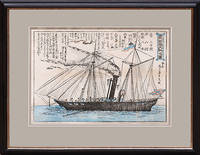
1854103501Nagasaki: c.1854. Wonderful locally-produced image of the Vostok a steamship that took part in Vice-Admiral Euphimy Vasil'evich Putiatin's mission to negotiate trade arrangements with the Tokugawa shogunate which were to result in the signing of the Treaty of Shimoda the first treaty between the Russian and Japanese Empires. Putiatin sailed from Russia in the frigate Pallas and stopped at Portsmouth for refitting before facing the rigours of rounding the Cape of Good Hope and while there he also purchased an "iron-hulled screw steamer the Fearless and renamed it Vostok" Grainger The First Pacific War p.51. The Vostok was captained by Voin Andreevich Rimsky-Korsakov a graduate of the St Petersburg School of Mathematics and Navigational Sciences and elder brother of the famous composer. Various delays meant that Putiatin's squadron arrived shortly after Admiral Perry's similar expedition but the Russian's more measured approach contrasted distinctly with that of the Americans and were to eventually ensure a highly successful outcome. It was recorded that during the squadron's second visit to Nagasaki "just before he left Nakamura Tameya the secretary to the plenipotentiaries a member of the new special committee to introduce steam ships to Japan came to the schooner Vostok with Putiatin and a Japanese artist to have a look at its engine. The artist made a quick sketch. It was the first steam ship to visit Nagasaki harbour and only the third to visit Japan" McOmie The Russians in Nagasaki 1853-54 p.54. The present print was probably based upon the drawings and notes made on that occasion. The captioning includes reference to the squadron's first arrival in August 1853 departure in November their return in January 1854 and departure the following month with no mention of mission's subsequent return in April. The rest of the text is largely given over to technical data; length 30 ken or a shade under 60 metres and width 8 ken 16 metres; two masts; funnel circumference 6 shaku about 2 metres; and a note identifying where the "power comes from to create the steam to turn the propeller which is under the ship". Russia is interestingly described in a manner assuming little knowledge of the world outside Japan: "The country of Russia is to the east of Japan. To west is Tartary and to the south is the Yezo continuing on to the country of Japan. The number of ri approx. 4 km of the land of the large country is east to the west 1000 ri. From the south to north it is more than 1500 ri. Their customs literally customs/manners/looks are similar to those of the Americans But are also unlike them". A fascinating and uncommon commemoration of this world-historically important first contact. Woodblock print with applied colour 354 x 475 mm. Window-mounted in ebonized wood frame with gilt sight-line. Lightly browned and a few minor creases judicious restoration to a few short splits and scrapes but overall very good indeed. unknown
1824027252London: Richard Priestley 1824. 2nd Edition 1st Printing. Hardcover. Very Good. Maps and Plates. Xv 409; Iii 341; Iii 392 Pp With Half Titles In Volumes 2 And 3. A Complete Set In Original Brown Cloth Spines Over Gray Boards With Original Paper Spine Labels 4.7 Cm Tall Volume Numbers In Arabic Numerals Also Known With Taller Spine Labels With Roman Numerals Priority Unknown. Taylor's Corrected Second Edition Adding His Notes Which Were Omitted From The First Printing. Worn With Some Fraying At Corners Volume 1 With Cracked Front Joint Along Which Is A 2 1/2" X 1/4" Loss Of Spine Cloth Not Affecting The Labels. Bookplates Of Francis Davies Of Pershore With Rampant Lion And Motto "Lucem Spero" No Other Names Or Marks. Per Wikipedia General Sir Francis John Davies Kcb Kcmg Kcvo 1864 - 1948 Was A Senior British Army Officer Who Commanded The 8Th Division During The First World War. Davies Was Born In London The Son Of Lieutenant General Henry Fanshawe Davies And His Wife Ellen Christine Alexandra Hankey. His Grandfather Was General Francis John Davies Brother And Heir Of Thomas Henry Hastings Davies Mp For Worcester And His Great-Grandfather Was Admiral Of The Fleet Sir Thomas Byam Martin. The Family Seat Was Elmley Castle Pershore Worcestershire. His Younger Brother Was Major General Henry Rodolph Davies. He Was Educated At Eton College. In October 1899 He Served As A Daag Responsible For Intelligence At Army Headquarters In South Africa And As Acting Commissioner Of Police For Johannesburg In 1900. In 1902 He Was Temporarily Employed In The Intelligence Department Until He Became Deputy Assistant Quartermaster General Daqmg At The War Office On 7 September 1902. Two Years Later He Was Appointed Assistant Director Of Military Operations In 1904 He Was Made General Officer Commanding Goc Of The 1St Guards Brigade. He Then Took Over As Brigadier General General Staff Bggs Of Aldershot Command. He Was Promoted To Major General In May 1913 And In October Of That Year Became Director Of Staff Duties At The War Office. In October 1914 Davies Was Appointed As Goc Of The 8Th Division. The Division Along With Its Goc Was Soon Sent To The Western Front. Towards The End Of July Davies Was Posted Away From The Fighting In France And Belgium To Take Over The Command Of Viii Corps Then Heavily Engaged In The Gallipoli Campaign. Davies Promoted To The Temporary Rank Of Lieutenant-General30 Took Over As Its Goc On 8 August . He Brought With Valuable Combat Experience And It Is Said " Over The Five Months Of His Tenure His Ideas And Energy Were The Catalyst For A Myriad Of Tactical And Systematic Improvements Which Greatly Improved The Fighting Efficiency Of His Force Allowing His Troops To Achieve Tactical Superiority Over The Enemy Facing Them". In The Aftermath Of The Evacuation Of British And Allied Forces From Gallipoli In January 1916 Davies Was Moved On To Being Goc Of Ix Corps. Davies Was In Command Only Until June When He Returned To The United Kingdom To Serve As Military Secretary At The War Office. He Held This Post Until After The End Of The War.His Rank Of Lieutenant General Became Substantive In January 1917. Later That Year Davies Was Appointed General Officer Commanding-In-Chief Goc-In-C Of Scottish Command In June 1919. After Being Promoted To The Rank Of Full General In July 1921And After Serving As Lieutenant Of The Tower Of London Which He Had Been Appointed To In June 192335 He Retired From The Army In April 1926. He Had Been Appointed An Aide-De-Camp General To King George V In April 1922. <br/> <br/> Richard Priestley hardcover
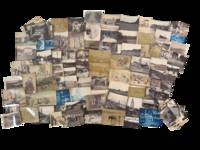
1900233951900. Turn-of-the-century Japan photo archive documenting foreign commercial travel oil and mining activity rural labor and domestic life during the late Meiji era when Japan was rapidly building railways mines refineries modern ports and industrial companies after the 1868 Meiji Restoration. The material appears connected to a Western man and his family moving through Japan in connection with oil extraction or related industrial work with repeated views of derricks refinery sites pipe trenches miners labor crews interpreters servants hotels villages and named regional destinations. Images show various scenes throughout northern Japan such as Hokkaido settlements Sapporo gatherings Naoetsu refinery work Nara and coastal travel household service and encounters between foreign visitors and Japanese workers at a time when foreign technical knowledge and Japanese state-backed industrial growth were reshaping the country.<br /> <br /> Photo archive of more than 150 photographs including approximately 6 cyanotypes and numerous silver gelatin and albumen photographs sizes range between 2" x 3.5" to 4" x 6" Japan circa late 1890s to early 1900s. Nearly every image bears a handwritten caption en verso identifying places people professions work scenes and social relationships. Captions include "Launching conveying pipe to and from steamship Corea Yokohama" "Refinery location Naoetsu Japan" "Celebrating the fall of Mukden Sapporo Mar. 21st 1905" "Crowd at Naoetsu Hotel" "Working on foundation for refinery Naoetsu" "Digging a great ditch for drain pipe from refinery to ocean" "Drillers and visitors" "Japanese servants at home in the bamboo grove" "Old American Naval Hospital" and "Mines & Smelters Sumitake Hotel Omori Japan." Workers dig trenches handle pipe gather beside derricks and refinery structures pose at mine entrances stand near kilns and industrial yards and move through villages and hotel courtyards. Other scenes record women in kimono children household staff rickshaw pullers street processions with rising-sun banners thatched structures coastal views mission or hospital buildings and Western family members partaking in local culture seated in gardens or standing among Japanese attendants and guides.<br /> <br /> The archive records Japan's industrial modernization from the perspective of foreign business presence rather than official state publicity. Oil had been produced in Japan since the nineteenth century especially in regions such as Niigata while Hokkaido mining railway building and settlement became central to Meiji development; this group places those broader changes inside fieldwork travel and household arrangements. The handwritten captions add another layer of specification by naming locations and functions that would otherwise be difficult to identify especially the refinery and drilling views. Condition varies across the group with curling fading toning creasing edge wear occasional surface loss and some with missing corners; images generally clean and clear captions remain present and visible on many versos. Overall in very good condition. By the turn of the century oil fields in Niigata and Akita were part of Japan's push to build an industrial economy but domestic crude was limited and often difficult to refine. The archive also reflects the unequal social and technical relationships that accompanied Meiji industrial expansion with foreign commercial specialists Japanese labor crews domestic servants and frontier extraction zones appearing together within the same industrial landscape. unknown