Iran Persian Qajar PaintingBiblio.com

20 résultats
1885143011885. Iran Art Qajar School Lovers in Embrace gouache painting on paper nineteenth century represents the courtly aesthetic erotic refinement and dynastic visual language that defined Persian painting under Qajar rule. The composition situates a princely male figure and his adorned companion in intimate embrace reinforcing themes of aristocratic leisure romanticized sovereignty and elite identity in Qajar Iran. The work supports research in Persian court painting gender representation in Islamic art Qajar costume and regalia and nineteenth century Iranian material culture.<br /> <br /> Persian Qajar gouache on paper with gold illuminated border. Depicts a young prince wearing blue and gold coat and karakul headgear embracing female companion adorned with tiara and pearls. Floral and animal illuminated margins including deer and monkeys. Image size 18.5 x 11 inches.<br /> <br /> The prince's distinctive headgear confirms Qajar rather than Zand period attribution aligning the work with the heightened stylization and opulent textile rendering characteristic of nineteenth century Tehran ateliers. Comparable compositions appear in Qajar painting traditions associated with artists such as Mohammad Sadiq whose courtly embrace scenes similarly emphasize costume detail glassware and staged intimacy as markers of refinement. The illuminated border populated by floral and animal motifs situates the lovers within a cosmological and decorative framework typical of Qajar manuscript aesthetics adapted to single-sheet painting. Minor browning to margins and discreet restoration to verso margins not affecting image. Very good. A refined example of Qajar visual culture centered on dynastic elegance and performative intimacy. unknown
1801145691801. Rare Chromolithograph depicting the front cover of Ganjinh I La'Ali Shahwar Khakan I Namdar Al Sultan Padishah Fath 'Ali Kajar"- " The Treasury of Royal Pearls of Iran Being a Collection of the Poems and Verses of Fath 'Ali Shah of Persia" written by H.M. Secretary Mohammed Mehdi 1801. Lithograph was published by William Griggs in the Journal of Indian Arts. London: 1894. Size: 10.5" x 14.5." Very rich illuminated lithograph. In very good condition. unknown
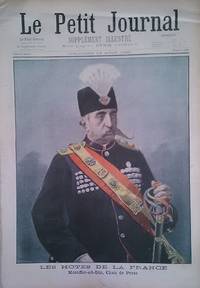
1896144101896. A collection of 3 French Illustrated Magazines on Qajar Kings of Persia Iran dated 1896 1900 and 1909. The first two magazines are from the French "Petit Journal" published in 1896 and 1900. They include two colored magazine covers of Mozaffer-ed-Din Shah with accompanied articles. 12" by 17.5" Magazines are eight pages. The third magazine was published in the French " Le Monde Illustre" in 1909 and boasts photos of Shah Ahmed Mirza along with the article "Chah of Persia Ahmed Mirza The Revolution of Persia." 11.4" by 15." Magazine is sixteen pages. Both magazines in very good condition. unknown
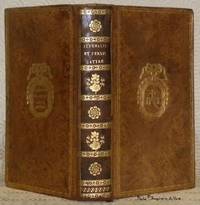
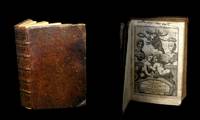
180582657Parisiis Paris : H. Barbou 1805. 170x100mm. VIII - texte en latin reliure plein veau-marbrÂŽ de lՎpoque. Dos richement ornÂŽ: auteur titre fleurons ornementations et filets dorÂŽs au dos. Double filets dÕencadrement dorÂŽs sur les deux plats. Monograme dorÂŽ des jÂŽsuites sur le plat supÂŽrieur leitmotiv dorÂŽ du Valais sur le plat infÂŽrieur. TrÂs belle reliure dՎpoque. IntÂŽrieur trÂspropre avec papier ˆ la forme. TrÂs bel exemplaire. 306 H. Barbou unknown
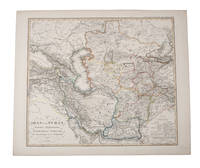
184355747Gotha Justus Perthes 1843. Engraved map 355 x 44 cm. Handcoloured in outline. <br/><br/><em>From Stieler's Hand-Atlas No. 43b. </em> unknown
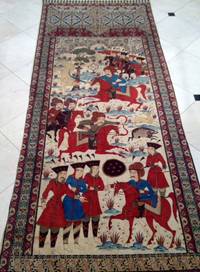
1890146641890. Hand painted Persian textile depicting Shah Abbas I nineteenth century a monumental example of Qajar period revivalist visual culture that reinterprets Safavid imperial iconography to articulate Persian kingship martial virtue and historical memory. Centered on one of the most mythologized rulers in Iranian history the composition presents a continuous figural narrative in which Shah Abbas I appears mounted on horseback in a royal hunt sword drawn as he confronts a lion while turbaned cavalry attendants bearing spears observe. A secondary vignette shows the Shah pursuing a wild boar reinforcing long standing Persian associations between sovereignty mastery over nature and military prowess. Rendered in a frontal highly legible style with flattened perspective and rhythmic repetition the imagery translates the visual language of Persian manuscript illustration into large scale textile form reflecting nineteenth century Qajar engagement with earlier Safavid models of centralized authority and dynastic legitimacy.<br /> <br /> Hand painted Persian figural textile. Qajar period nineteenth century. Approximately 117.5 x 51 inches 9.8 x 4.25 feet.<br /> <br /> The upper register introduces a martial tableau of Persian warriors confronting Indian soldiers mounted on elephants imagery that evokes enduring visual memory of imperial expansion and recalls narratives associated with Nader Shah's eighteenth century campaigns against the Mughal Empire. In the Qajar period particularly in the later nineteenth century Safavid rulers such as Shah Abbas were repeatedly invoked across painting lacquer and textile production as symbols of national continuity and restored sovereignty. This textile operates within that historicist framework layering Safavid royal imagery with later martial memory to construct a composite vision of Persian power across centuries. Minor edge tears including one approximately 1 inch and three approximately 3 inches within the border and along the edge not affecting the central figural imagery; colors remain bold and composition visually strong. Overall condition: very good. unknown
1817142321817. A Paris chez Guillaume de Luyne 1658 1653 sur la page de titre gravÂŽe. Un fort vol. au format gd in-12 183 x 120 mm de 8 ff. n.fol. 2 x 272 pp. 185 pp. de Remarques et 11 ff. n.fol. Reliure de l'ÂŽpoque de plein veau marbrÂŽ brun plats jansÂŽnistes dos ˆ nerfs ornÂŽ de filets gras ˆ froid doubles caissons d'encadrement dorÂŽs larges fleurons dorÂŽs semis de pointillÂŽs et de points dorÂŽs titre dorÂŽ palette dorÂŽe en tÂte et queue dentelle dorÂŽe sur les coupes toutes tranches mouchetÂŽes. L'exemplaire s'ouvre sur une dÂŽlicate page de titre ˆ dÂŽcor allÂŽgorique gravÂŽe. Seconde ÂŽdition de l'estimÂŽe traduction de Michel de Marolles. Texte en latin en regard. On peut dire avec certitude que Perse ignora la vie et les hommes. Mais il savait cependant entendre ses ma”tres et ses amis tels que Cornutus ou SÂŽnÂque. Il avait vingt ans quand NÂŽron fut empereur et n'ignora que peu de choses des turpitudes de la Cour. Aussi son oeuvre contient-elle une part de rÂŽelle satire mais par ÂŽcho et sans l'accent que l'expÂŽrience donne ˆ l'indignation. Toutes sortes d'allusions d'ironies de demi-mots font entrevoir seulement entrevoir et presque deviner une cour impÂŽriale qui est celle de Tacite : bassesses et indignitÂŽs orgies et sacrilÂges crimes d'Agrippine et de NÂŽron. Au delˆ de la Cour la ville : manie du bel esprit profusion des prÂŽtentions littÂŽraires superstitions et dÂŽvotions intÂŽressÂŽes cupiditÂŽ cruautÂŽ ˆ l'ÂŽgard des esclaves. Mais il est ÂŽvident que la satire morale domine cette oeuvre. Un beau sto•cisme inspire son auteur un sto•cisme reÂu par enseignement mais que le poÂte vivifie par sa noblesse d'‰me. Les Satires sont pour ainsi dire des sermons sto•ciens. Perse y cÂŽlÂbre vertu et simplicitÂŽ antiques chaste culte de la philosophie nÂŽcessitÂŽ pour chacun de s'examiner en conscience et de conna”tre ses faiblesses au lieu de juger autrui et de se fier aux compliments conquÂte de la vÂŽritable libertÂŽ sur les passions sur la cupiditÂŽ et le gožt du plaisir sur l'ambition et la voluptÂŽ. Chacune de ces satires a de l'ardeur et se prÂŽcipitent en dialogues vifs voires mÂme dramatiques. En somme elles ont la force du sentiment singuliÂrement ÂŽlevÂŽ qui ne cesse de les animer. DÂŽtestant Rome ou plut™t ce qu'elle est devenue JuvÂŽnal fait de ses contemporains une peinture acerbe et sans pitiÂŽ. faisant sans cesse fi du politiquement correct Le tableau parodie d'une Ãuvre perdue qu'il propose de la cour de Domitien le ÇNÂŽron chauveÈ s'il est riche de notations grotesques rend trÂs bien l'atmosphÂre cauchemardesque d'une ÂŽpoque qui exsudait la terreur. On ne saurait parler sans anachronisme de libertÂŽ d'expression quand il s'agit de la Rome impÂŽriale et JuvÂŽnal se garde bien de s'en prendre aux empereurs rÂŽgnants. Ce qui n'empÂcha pas ses contemporains de lire dans ses propos des allusions ˆ l'actualitÂŽ de son temps. La langue de JuvÂŽnal permet de se faire une idÂŽe de la variÂŽtÂŽ des parlers latins selon les classes sociales et les rÂŽgions. Elle est ˆ la fois vigoureuse voire crue et savante. JuvÂŽnal aime jouer du contraste entre les mÃurs des anciens Romains frugaux et barbus et celles de ses contemporains perdus de luxe et effÂŽminÂŽs. Avec Horace JuvÂŽnal constituere un modÂle au xviiesiÂcle pour les Satires de Nicolas Boileau 1666. Emmanuel Kant retiendra quant ˆ lui de ses satires leur dimension morale et citera JuvÂŽnal ˆ plusieurs reprises dans sa Critique de la raison pratique. Angles ÂŽmoussÂŽs. Coiffes ÂŽlimÂŽes ou arasÂŽes. LÂŽgers frottements ÂŽpars affectant par ailleurs la reliure. AurÂŽole claire dans le corps d'ouvrage. Du reste belle condition intÂŽrieure. b42961 unknown
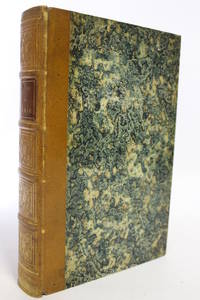
181735475à Paris: De l'imprimerie d'Auguste Delalain 1817. Fine. De l'imprimerie d'Auguste Delalain à Paris 1817 10 x 16.50 cm relié New edition of Persius's Satires translated commented and annotated by Nicolas Selis. Contemporary full cardboard binding. Green paper spine with corners decorated with roulettes. Black paper boards. Red morocco title-label. According to Brunet: ""One of the best translations of Persius"" Brunet IV 522. Nicolas-Joseph Sélis 1737-1802 man of letters and professor at the college Louis-le-Grand replaced abbé Delille to whom he was connected in the chair of Latin poetry at the Collège de France in 1796. Each satire is presented then annotated. A long preface introduces the work as well as a letter from Le Monnier himself translator of the satires who compares his work with that of Selis. De l'imprimerie d'Auguste Delalain hardcover
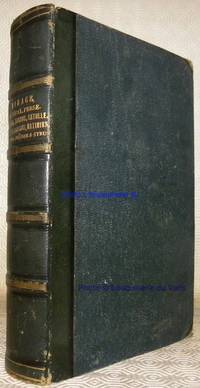
184276117Bruxelles : Wouters Raspoet et Ce. 1842. 220x145mm. 374Êpages reliure demi-basane. Plats papier marbr. Auteur titre filet et ornementations dors au dos. Cachet de possesseur sur les deux pages de garde suprieure. Bel exemplaire. 1178 Wouters, Raspoet et Ce. unknown
184394977Paris : J.-J. Dubochet et Compagnie 1843. 270x175mm. XII - texte en deux colonnes reliure demi-chagrin. Auteurs et filets dors au dos nerfs. Plats percaline. Coins uss autrement bon tat. 1424 J.-J. Dubochet et Compagnie unknown
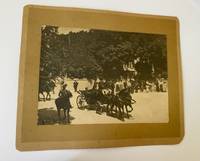
1900152801900. Mozaffar ad-Din Shah Qajar Rare original period Albumen photo measuring 9" x 11.5 " depicting Mozafar Al Din Shah in uniform seating in a carriage with another person next to him the Cariage is pulled by horse through a European city with a royal mounted escort in military uniform. Mozaffar ad-Din Shah Qajar traveled to Europe twice: once in 1900 and again in 1902. The 1900 trip lasted for several months and included visits to Russia Austria Switzerland Germany Belgium and France. The 1902 trip is also documented with a visit to Fontainebleau mentioned in his diary and to England visiting Portsmouth on August 18 1902. A beautiful large size image of the 19th century Quajar Shah of Iran in his Royal cariage and escort. Mozaffar ad-Din Shah Qajar ruled Iran which most people outside Iran then called "Persia" from 1896 until his death in 1907. The last year of Mozaffar al-Din's life coincided with the start of Iran's 1905-1907 Constitutional Revolution. unknown
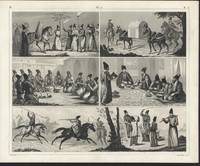
1851144081851. Beautiful original engraving with five scenes of Persian Iran cultural and historical importance. Page is 11.75" by 9.5." Image size is 10" by 8." Engraving by Henry Winkles. Published in 1851 in New York and Germany. An intricate image depicting unique and dramatic aspects of Persian life in the 18th and 19th century presented in five panels on one lage page. The first image depicts a veiled bride riding a horse to meet her betrothed. The second image depicts a Persian woman traveling in a caravan supported by two horses. The third image shows a group of musicians playing wind and percussive intruments in a courtyard. The fourth image is of six men feasting on a decorative carpet. The fifth image depicts a war scene; one horseman aims his rifle at an awother warrier with a raised spear. The other half of the fith image shows a man who is beeing punished for his deeds with blows to his feet. Beautifully engraved with a rich contrast between light and dark. In very good condition. Scarce. unknown
1864145861864. Two original antique steel costume engravings of a Persian Iran Royal Officer and Noble woman printed in 1864. Overall size: 9" x 12.5." The plate illustrations are brightly colored and intricately detailed characterization of the traditional costumes of a Persian Royal Officer and Noble woman. In the engraving of the Royal Officer titled "Khatchadour D'hohannes: Officier du Prince Royal de Perse" his attire entails a vibrant green coat with gold trimmings which covers a gold-colored ensemble with a purple sash that stores his dagger. In the engraving of the Persian Woman titled "Dame Persane" she is depicted in traditional costume as imagined by Europeans in the 1800's. The woman is shown leaning against a banister wearing an embroidered white satin gown with a pink silk and fur trimmed coat and a feathered headdress. General age related toning. Overall both prints are in very good condition. unknown
182255236Paris: Dalibon 1822. Fine. Dalibon Paris 1822 15.50 x 24 cm relié New edition revised and augmented with notes and observations by N.L. Achaintre. Half Russian caramel morocco binding spine with four raised bands set with black wavy fillets and decorated with triple gilt compartments adorned with gilt decorative motifs friezes and gilt date at foot marbled paper boards marbled endpapers and pastedowns contemporary binding signed by Thouvenin at foot of spine. Scattered foxing mainly in margins of leaves. Handsome copy established in a fine contemporary binding signed by Thouvenin. Dalibon hardcover
182240450Paris: Dalibon 1822. Fine. Dalibon Paris 1822 14 x 21.50 cm relié New edition of the French translation revised and expanded with notes by N.L. Achaintre. Half-shagreen binding in navy blue spine with four raised bands showing traces of rubbing decorated with gilt fillets headcaps worn marbled paper boards marbled endpapers and pastedowns three tears to leading edges contemporary binding. Gift inscription in ink on half-title page foxing. Dalibon hardcover
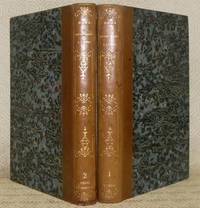
183284894Paris : C. L. F. Panckoucke 1832. 215x135mm. LXXI - ÂŽdition bilingue: franÂais-latin reliure demi-parchemin ˆ coins. Plats papier marbrÂŽ. PiÂces de titre et dÕauteur dorÂŽs au dos. Nom du possesseur sur le haut de la page de garde supÂŽrieure et rousseurs ÂŽparses sur le page de titre et les pages de la Table des MatiÂres autrement bel exemplaire reste du livre propre. 527 C. L. F. Panckoucke unknown
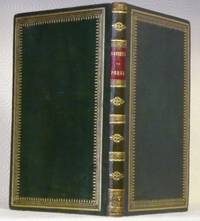
185761116Paris : Typographie Morris 1857. 215x130mm. maroquin vert piÂce de titre en maroquin rouge fleurons dorÂŽs plats avec encadrements filets et guirlandes dorÂŽs tranches dorÂŽes. 337 Typographie Morris unknown
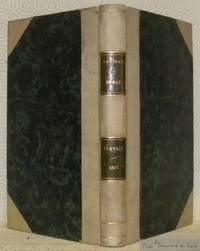
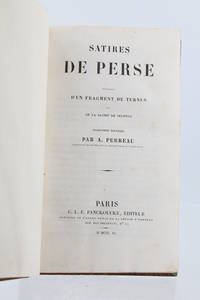
184081201Paris: C. L. F. Panckoucke 1840. Fine. C. L. F. Panckoucke Paris 1840 12.50 x 21.50 cm relié New edition of the French translation established by A. Perreau. Half tan sheep binding spine with five raised bands set with gilt dots decorated with double gilt compartments embellished with gilt floral motifs one joint cracked at foot with lack gilt fillet on marbled paper boards marbled endpapers and pastedowns armorial bookplate pasted to verso of front board binding signed by Bernon. Handsome copy despite some light foxing. C. L. F. Panckoucke hardcover
1900145631900. Collection of 2 Vintage Optical Lantern images of Iran circa 1900. 3-1/4"x 4." The first photo captures a daily scene in a caravan square of an Iranian village. A crowd of villagers is immersed in the daily business and social routine. Sacks of grain are stacked beside a mud village wall and people stop to speak to each other. In the background a wind tower typical of Yazd region and Southern Iran rises over the village. In the second image a caravan of camels rests wearing saddles and bridles having completed the day's journey. The camels rest in the courtyard of an Iranian village with a group of villagers gathered in the background. Scarce and in very good condition. unknown
1804053780Boston: Munroe & Francis and B. & J. Homans 1804. First Edition . Hardcover. Fair/No Dust Jacket. A Fair copy in three-quarter brown leather over marbled paper-covered boards. Covers quite worn especially at the spine folds now protected with a mylar dust jacket. Contains November and December 1803 issues and eleven monthly issues for 1804 lacking May. Thus 13 total issues. <br/> <br/> Munroe & Francis (and) B. & J. Homans hardcover