57 résultats
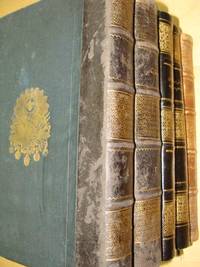
1869055007Istanbul: Ceride-i Havadis Matbaasi. AH 1286-1287 = AD 1869-1870 1869. 1st Edition . Leather. Very Good. 8vo - over 7¾ - 9¾" tall. Original handsome 1/3 leather bdgs. with attractive decorations at spines. A chipped on the second and a period label on the first volume's spines. Spines are not homogeneous in their artistic style. Roy. 8vo. 24 x 17 cm. In Ottoman script Old Turkish with Arabic letters. 2 volumes set: 412 p.; 398 p. Extremely rare first printed Turkish edition of this first-hand account with a compilation of period sources of 150 dynasties from 1000 AH to c. 1655 self-translated from Arabic by the author of his Arabic work titled "Fadhlakat al-Tawarîh" i.e. The report of history with an addendum for the Ottoman readers by adding what he had seen since 1653. In the book the events starting from 1592 are told in accordance with the classical Islamic historiography tradition and short biographies of the viziers scholars sheikhs poets and famous people who died in that year are given at the end of each year. Hadji Khalifa influenced the Arab and Turkish historiographers who succeeded him in terms of methodology. Hadji Khalifa was the celebrated Ottoman-Turkish polymath and leading literary author of the 17th-century Ottoman Empire. Franz Babinger hailed him "the greatest encyclopaedist among the Ottomans." OCLC lists only three sets: 1030930786 1030930787 One is complete in Orient-Institut in Istanbul; 634635343 634635657 Two are complete in Berlin and München.; Özege 5707. <br/> <br/> Ceride-i Havadis Matbaasi., [AH 1286-1287] = [AD 1869-1870] hardcover
1879008227London : Crown Buildings 188 Fleet Street.: Sampson Low Marston Searle & Rivington 1879. 1st Edition . Hardcover. Very Good. 8vo - over 7¾ - 9¾" tall. In dark blue half morocco over cream paper boards c1988 a few small marks. Spine raised bands gilt tooling & title. Internally lacking title - supplied in facsimile 3 iv-xxxii 1 2-360 pp 3 maps large folding & coloured marbled endpapers & text block edges some faint edge browning. A clever binding by the previous owner. A rare item with only 2 copies at auction since 1895! none online! 217136 mm. <br/> <br/> Sampson Low, Marston, Searle, & Rivington, hardcover
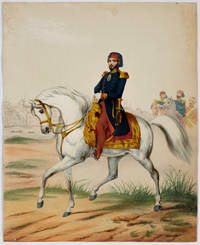
1840177838circa 1840-1850s. Pair of hand-coloured lithographs highlighted with gum arabic 32.2 x 25.1 cm trimmed spotting to the upper corners affecting the sky only paper adhesions on the verso but the images in very good bright condition. Two finely coloured lithographs one of a Turkish Sultan in military costume with the skyline of Constantinople in the background and another of lower rank perhaps issued in the period of the Crimean War. Trimmed and possibly from an album or scrapbook. . unknown
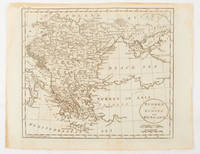
1816175252Philadelphia.: Carey Mathew and Warner Benjamin. 1816. Engraved map 19 x 22.3 cm original folds some offsetting to the map marginal browning and staining small archival repairs to the outer margin but in good condition. Fine map Plate 19 prepared for Carey and Benjamin's "General Atlas.". . (Carey, Mathew and Warner, Benjamin). unknown
1899000432<p>Basra – Ottoman Imperial Authority<br />Basra Vilayet Department 1317 AH / 1899 AD</p><p>First edition of the third official provincial report salname / administrative report issued by the Vilayet of Basra during a critical period of political and strategic tension in southern Iraq and the Arabian Gulf under the reign of Sultan Abdülhamid II.<br />Printed in Basra this volume represents one of the earliest locally produced Ottoman governmental publications from the province. The work consists of 172 pages of Ottoman Turkish text and was issued in original printer's wrappers bearing the Ottoman coat of arms and the tughra of Sultan Abdülhamid II on the cover.</p><p>The report provides a comprehensive and official survey of administrative military and political conditions throughout the vilayet and its dependent sanjaks and kazas including:</p><p><br />Basra<br />Amara<br />Muntafiq Nasiriyya<br />Zubayr<br />Ahsa al-AḥsÄʾ<br />Najd<br />Kuwait<br />Qatar</p><p>Of particular historical importance are the named references to key regional political figures including Shaykh MubÄrak al-á¹¢abÄḥ Kaymakam of Kuwait and members of the Ä€l ThÄnÄ« family of Qatar providing valuable contemporary documentation of Ottoman administrative recognition and authority in the Gulf.</p><p><br />Format: 8vo 7¾–9¾ in.<br />Pagination: 172 pp.<br />Language: Ottoman Turkish<br />Edition: First edition<br />Condition: As new. Original wrappers very lightly stained; three small neat wormholes. Otherwise as issued and in excellent condition.</p><p><br />A rare and highly significant primary source for late Ottoman governance in Basra and the Arabian Gulf documenting imperial authority regional administration and local power structures on the eve of the twentieth century.</p> The Ottoman authority, Basra dept.
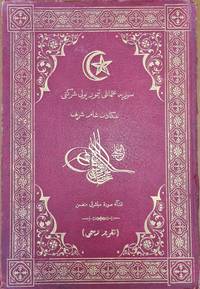
1892000167Very rare report in English Arabic and Ottoman Turkish. Binding tooled in gold with Ottoman Tughra of the Sultan Abdul Hamid II . Marbled inner paper and edges sprinkled in gold. Privately prepared for the high level officials in the Ottoman state. Gilbert and Rivington Limited hardcover
1890055735Cairo: Matbaa-i Muhammed Efendi Mustafa. AH 1307 1890. 1st Edition . Hardcover. Very Good. 4to - over 9¾ - 12" tall. Contemporary black cloth title-lettered gilt on spine. 4to. 28 x 20 cm. In Ottoman script and Arabic. 72 p. 45 tables on 79 p. Covers are preserved inside foxing on the front cover and chippings on extremities. Otherwise a good/fair copy. Extremely rare first and only edition printed in Cairo suggesting a uniform Hegira calendar for all Muslim nations including an early guide to converting between the Hegira and Gregorian calendars written by the Ottoman scientist and military leader Ahmed Muhtar Pasha. Ahmed Muhtar was born on 1 November 1839 to a Turkish family in Bursa in the Ottoman Empire and was educated at the Ottoman Military College in Istanbul. His father was merchant Halil Efendi. He eventually became a professor and then governor of the school. In 1856 he served as an adjutant during the Crimean War. In 1862 he was a staff officer in the disastrous Montenegrin campaign. Between 1870 and 1871 he quelled rebellions in Yemen. He gained the titles of Pasha and Marshal and in 1873 was made commander of the Second Army Corps holding the position until 1876. During the 1875 uprisings in Bosnia and Herzegovina he assumed control of the Turkish forces there. On the outbreak of the Russo-Turkish War 1877-1878 he was sent to take charge of operations in Erzurum. Although the Russians ultimately defeated the Ottomans in the war Muhtar's victories against them on the eastern front won him the title Gazi "The Victorious". In 1879 Ahmed Muhtar Pasha was appointed the commander of the Ottoman Empire's frontier with Greece before being sent in 1885 to serve as the Ottoman High Commissioner in Egypt. The rare bilingual first edition of work on chronology. It advocates a uniform solar Hijri year from all Muslim nations. The well-known diplomat and scholar Ahmed Muhtar Pasha first High Commissioner of the Porte in Egypt. Özege 8163.; TBTK 1886.; Sarkis 399 & 1950.; Not in GAL.; GOW 378.; Tahir III 300. OCLC 464314041 283797987 745305373 956980987. <br/> <br/> Matbaa-i Muhammed Efendi Mustafa., [AH 1307] hardcover
1871055210Istanbul: Mekteb-i Bahriye Matbaasi i.e. The Naval School Printing House. AH 1288 1871. 1st Edition . Hardcover. Very Good. 8vo - over 7¾ - 9¾" tall. Original cloth bdg. with marbled boards. Cr. 8vo. 20 x 135 cm. In Ottoman script Old Turkish with Arabic letters. 176 1 p. Lithographed edition. Extremely rare first and only edition of this guide to the distances and meridian calculations of some cities from Batumi located on the shores of Black Sea Europe until Great Britain Asia and Africa shores prepared for Turkish naval officers mariners and vessels describing the shores of the countries located on these routes. ABOUT THE AUTHOR: Ibrahim Edhem Pasha was an Ottoman statesman who held the office of Grand Vizier at the beginning of Abdul Hamid II's reign between 5 February 1877 and 11 January 1878. He resigned from that post after the Ottoman chances of winning the Russo-Turkish War 1877-1878 had decreased. He furthermore served in numerous administrative positions in the Ottoman Empire including minister of foreign affairs in 1856 then ambassador to Berlin in 1876 and to Vienna from 1879 to 1882. He also served as a military engineer and as Minister of Interior from 1883 to 1885. In 1876-1877 he represented the Ottoman Government at the Constantinople Conference. He was born in Chios of Greek ancestry in a Christian Greek Orthodox village on the island of Chios. Strangely his connection to Chios is not well-documented: his son Osman Hamdi Bey claimed that he was a member of the Scaramanga family but Edhem Pasha himself tried to efface his Greek connections. As a young boy in 1822 he was orphaned and captured by Ottoman soldiers during the massacre of the Greek population of Chios. He was sold into slavery brought to Constantinople and adopted by the later grand vizier Hüsrev Pasha. Lacking his own children and family Hüsrev Pasha raised about ten children who had been orphaned or bought as slaves many of whom ascended to important positions. The child now named Ibrahim Edhem quickly distinguished himself with his intelligence and after having attended schools in the Ottoman Empire he was dispatched along with a number of his peers and under the supervision of his father then grand vizier and of the sultan Mahmud II himself to Paris to pursue his studies under state scholarship. There he returned with a Bachelor of Arts and was one of the top pupils at the École des Mines. He was a classmate and a friend of Louis Pasteur. He thus became Turkey's first mining engineer in the modern sense and he started his career in this field. Edhem Pasha was the father of Osman Hamdi Bey a well-known archaeologist and painter as well as the founder of the Istanbul Archaeology Museum and the Mimar Sinan Fine Arts University. Another son Halil Edhem Eldem took up the archaeology museum after Osman Hamdi Bey's death and has been a deputy for ten years under the newly founded Turkish Republic. Yet another son Ismail Galib Bey is considered the founder of numismatics as a scientific discipline in Turkey. Later generations of the family also produced illustrious names. The architect Sedat Hakki Eldem a cousin is one of the pillars of the search for modern architectural styles adopted by the Republic of Turkey called the Republican style in the Turkish context in its early years and which marks many important buildings dating from the period of the 1920s and the 1930s. A great-grandson Burak Eldem is a writer while another Edhem Eldem is a renowned historian. More names include Erol Eldem Tiana Eldem Levent Eldem and Ercan Eldem an architect. Source: Wikipedia. Özege 4522.; Only one copy in OCLC: 162837008 Bayerische Staatsbibliothek. <br/> <br/> Mekteb-i Bahriye Matbaasi [i.e. The Naval School Printing House]., [AH 1288] hardcover
1875055260Constantinople Istanbul: Neologos Litografyasi - Votîra ve Sürekasi Matbaasi. AH 1292 1875. 1st Edition . Leather. Very Good. 8vo - over 7¾ - 9¾" tall. Contemporary 1/4 leather bdg. with marbled boards. Small 4to. 27 x 19 cm. 23 p. 11 p. in Ottoman script Old Turkish with Arabic letters; 12 p. in French with rare 4 folded maps. A very good copy. First and only edition of this extremely rare bilingual book in French and Ottoman Turkish including the first records on the formation and characteristics of storms to explain how storms and hurricanes occurred which route they followed and how they were conveyed to the regions that need to be warned by telegraph for the vessels sailing in the seas by French expert Coumbary who was founded the Rasathâne-i Âmîre i.e. Ottoman Imperial Observatory. Both the original French and Turkish translations of the work were published together in one volume. The work also included four maps which were drawn for this work only. The first map shows the movement of a storm that occurred on March 8 1865 the second one shows the occurrence between the Tropic Cancer and Capricorn whirlwinds storms in the Atlas and Indian oceans the movements in the Bay of Bengal the storms in different directions in the China Sea the Gulfstream Grönland and Azores. The second observatory in the Ottoman era was established for meteorology. Before this center was established beginning from the Reformation 1839 many meteorological observatories were built by foreigners in various cities such as Istanbul Smyrna Trebizond Tekirdag and Merzifon both as private and public establishments. The very first known temperature readings are the meteorological observations made by the Priest Dalmas at the St. Benôit monastery between 1839-1847. Later William Lane an Englishman who came to Istanbul during the Crimean War made observations at the British Cemetery at Haydarpasa. W. Noe director of the Mekteb-i Fünûn-u Sahane made observations at the house in Kalyoncukulluk where he lived until the Beyoglu Fire in 1848; and finally it is known that French engineer Ritter who was invited by the government for waterworks in Kuruçesme 1856-1860 also conducted meteorological observations. Observations on precipitation and humidity conducted between 1875-1892 by an amateur observer on the Thomson Farm in Erenköy are invaluable on the subject of Istanbul's climate. These observations have been published in Budapest in 1928. Excellent observations on heat pressure and humidity made in the summer residence of the Russian ambassador on Büyükada have also been published in Annales St. Petersburg. In 1858 the French government established the first observatory communicating data over the telegraph and in 1863 by compiling meteorological data in France the French National Meteorological Network started operations. In 1868 upon the recommendation of the French government the Rasathane-i Âmire was founded to convey meteorological forecasts to certain centers by telegraph. Instruments were purchased from leading European factories and operations started on top of a hill 74 meters high on Pera. The first director was Mr. Aristide Coumbray who came to Istanbul to renovate the telegraph network. Instruments commissioned from France were set up at Mr. Coumbary's home which stood at the garden of the Swedish Embassy. The observatory was later moved after its offices were prepared. Coumbary represented Turkey in the first international meteorology congress convened in Wien five years later in 1873. Rasathane-i Âmire worked by the same system as the National Meteorology Center in France. In the observation books of 1868 August-November names of affiliated stations are given to us Soulina Köstence Constantia Varna Burgaz Valona Elbasan Durazzo and Beirut. Later stations in Izmir Diyarbakir Baghdad and Fao were also added. The observatory founded by Aristide Coumbary in 1868 in Istanbul operated until the end of the First World War. Özege 5735.; TBTK 7688 10862.; Not in OCLC. <br/> <br/> Neologos Litografyasi - Votîra ve Sürekasi Matbaasi., [AH 1292] hardcover
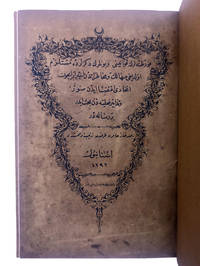
1895055453Istanbul: Ikdam Matbaasi. AH 1313 1895. 1st Edition . Leather. Very Good. 8vo - over 7¾ - 9¾" tall. Original handsome brown quarter leather binding with Ottoman lettered gilt to spine. Five raised bands to spine separated from each other with lined gilt. Slight stains on the title page. Else a fine copy. Roy. 8vo. 23 x 16 cm. In Ottoman script Old Turkish with Arabic letters. 99 p. Hegira: 1313 = Gregorian: 1895. Extremely rare first printed edition of this one of the earliest travel accounts of an Ottoman admiral's early expeditions to the Indian Ocean Arabian Sea Red Sea and Persian Gulf to counter Portuguese piracy and attacks on Muslim pilgrim ships which describes the lands he has seen during his voyage from India to Constantinople by Sidi Seydi Ali Reis 1498-1563 sent by Sultan Suleiman the Magnificent covering the years 1553-1556. During these naval wars after two marine battles against the Portuguese fleet and a great storm named The Elephant Typhoon Tufan-i Fil by the locals Reis' remaining six galleys drifted to India. The fleet was unserviceable resulting in his return home overland with 50 men. Reis then arrived at the royal court of the Mughal Emperor Humayun in Delhi where he met the future Mughal emperor Akbar who was twelve years old at the time. He returned to the Ottoman Land over Muslim states in South Asia; Afghanistan Central Asia and Iran. But he delayed his return because of the war between the Ottoman and the Safavid Empires in Iran. Finally following the treaty of Amasya in 1555 he was able to return home and present his book of this narrative journey to the Sultan in 1557. This work offers an extensive insight into the Muslim situation in 16th century South and Central Asia and the Middle East Islamic navigation and Turkish - Portuguese relations as well as Persian Afghan and Indian geography naval routes flora and fauna. Seydi Ali Reis formerly also written Sidi Ali Reis and Sidi Ali Ben Hossein was an Ottoman admiral and navigator. Known also as Katib-i Rumi Galatali or Sidi Ali Çelebi he commanded the left wing of the Ottoman fleet at the naval Battle of Preveza in 1538. He was later promoted to the rank of fleet admiral of the Ottoman fleet in the Indian Ocean and as such encountered the Portuguese forces based in the Indian city of Goa on several occasions in 1554. Seydi was able to unite several Muslim countries on the coast of the Arabian Sea such as the Makran Kingdom Gujarat Sultanate and Adal Sultanate against the Portuguese. He is famous today for his books of travel such as the Mir'ât ül Memâlik i.e. The Mirror of Countries and his books of navigation and astronomy such as the Mir'ât-i Kâinât Mirror of the Universe and the Kitâb ül Muhit: El Muhit fî Ilmi'l Eflâk ve'l Buhûr i.e. Book of the Regional Seas and the Science of Astronomy and Navigation which contain information on navigation techniques methods of determining direction calculating time using the compass information on stars sun and moon calendars wind and sea currents as well as portolan information regarding the ports harbours coastal settlements and islands in the various regions of the Ottoman Empire. His books are translated into numerous languages including English French Italian German Greek Arabic Persian Urdu Russian and Bengali and are considered among the finest literary works dating from the Ottoman period. "When Sultan Suleiman had taken up his winter residence in Aleppo I the author of these pages was appointed to the Admiralship of the Egyptian fleet and received instructions to fetch back to Egypt the ships 15 galleys which some time ago had been sent to Basrah on the Persian Gulf. But 'Man proposes God disposes.' I was unable to carry out my mission and as I realized the impossibility of returning by water I resolved to go back to Turkey by the overland route accompanied by a few tried and faithful Egyptian soldiers. I traveled through Gujarat Hind Sind Balkh Zabulistan Bedakhshan Khotlan Turan and Iran <br/> <br/> Ikdam Matbaasi., [AH 1313] hardcover
1885372025Istanbul: Hariciye Nezareti Sicill-i Ahval Muduriyeti Matbaa-i Ebuzzia 1885. With 12 plates; an Ottoman imperial coat of arms gilt within the text. 4 630 1 pp. 1 vols. 8vo. Later black cloth binding. Very good. With 12 plates; an Ottoman imperial coat of arms gilt within the text. 4 630 1 pp. 1 vols. 8vo. The almanac opens with a tughra of Sultan Abdulhamid II and includes an Islamic calendar with sunrise and sunset times. There are extracts from Ottoman government documents such as a 1258 A.H. C.E. 1842 relation regarding the appointment of Mehmed Emin Rauf Pasha as Grand Vizier to Sultan Abdulmecid I p. 22. Includes a brief history of the Ottoman Ministry of Foreign Affairs and its predecessors the Reis Efendis along with lists of Ottoman sultans grand viziers ministers and ambassadors. The work also covers the latest developments in Ottoman international relations influential foreign states their rulers and their ambassadors to the Ottoman Empire.<br /> <br /> Printed by Ebuzzia Typography owned by Ebuzzia Tevfik Bey 1848-1913 an influential Turkish journalist writer and supporter of the Young Turks movement. Salname-i Nezaret-i Hariciye is an invaluable source on Ottoman history and foreign policy. Özege 6934 Hariciye Nezareti Sicill-i Ahval Muduriyeti, Matbaa-i Ebuzzia unknown
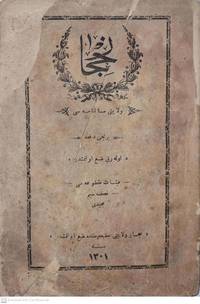
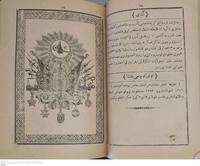
1885000210<p>182 pages. Ottoman Turkish text. The first official yearbook printed by a lithographic press in Mecca. An early work printed in the Hejaz. Rare.</p> Lithograph press hardcover
1891000206310 p. Ottoman Turkish text. Ownership by Mesud Qasim zaynal Ali Riza in jeddah the son of the Ottoman delegate of Jeddah. Hejaz printing house hardcover
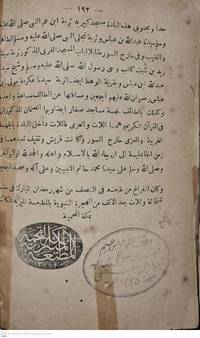
1885000205192 p. Arabic text a rare print. Stamp of the general Ibrahim Rif'at Pasha in 1335 an endorsement copy. With several notes during the copy. Modern binding. Hejaz printing house hardcover
1891053328Istanbul: Artin Asaduryan Sirket-i Mürettibiye Matbaasi. AH 1308 1891. 1st Edition . Soft cover. Very Good. 8vo - over 7¾ - 9¾" tall. Paperback. Foolscap 8vo. 18 x 125 cm. In Ottoman script. 1 b/w Selim's portrait engraving 67 p. Selim I nicknamed Yavuz "the Stern" or "the Steadfast" but often rendered in English as "the Grim" October 10 1465/1466/1470 - September 22 1520 was the Sultan of the Ottoman Empire from 1512 to 1520. His reign is notable for the enormous expansion of the Empire particularly his conquest between 1516-1517 of the entire Mamluk Sultanate of Egypt which included all of Sham Hejaz Tihamah and Egypt itself. With the heart of the Arab World now under their control the Ottomans became the dominant power in the region and in the Islamic world. Upon conquering Egypt Selim took the title of Caliph of Islam being the first Ottoman sultan to do so. He was also granted the title of "Khâdim ül Haramain ish Sharifain" Servant of the Holy Cities of Mecca and Medina by the Sharif of Mecca in 1517. Selim was also a distinguished poet who wrote both Turkish and Persian verse under the pseudonym =mahlas Selimi; collections of his Persian poetry are extant today. In one of his poems he wrote as 'A carpet is large enough to accommodate two Sufis but the world is not large enough for two kings'. Sultan Selim who spoke Arabic and Persian very fluently wrote Persian poems cursively under the nickname Selimî. Those poems are extant today at the Imperial Archives at The Topkapi Palace Museum. He had Turkish poems as well and his Persian Divân T.N. poetry book was printed in 1306 in Istanbul and was published in 1904 by Paul Horn in Berlin by the order of Wilhelm II the German Emperor. During his eight years of ruling he didn't have any time to rest he slept four hours a day and spent the rest of the day writing and reading. Sultan Selim has many powerful poems with deep meaning and artistic style. Translation from Persian by Seyh Vasfi. Mikaeloglu Antranik Efendi 1850- was a Turco-Armenian painter who worked for the Ottoman court notably regarded for his sultan portraits during the reigns of Sultan Abdülhamid II 1876-1909 Sultan Mehmed Resad 1908-1918 and Sultan Vahdeddin 1918-1922. During the administration of the last two sultans in particular he received a number of orders from the palace and while Abdülhamid II was on the throne in the 1890s he sketched gravures for Servet-i Fûnun Wealth of Sciences journal. A vast body of these gravures depicts leading names of the age -Egypt's Khedive Tevfik Pasha Abbas Pasha Sultan Abdülaziz etc. and portraits illustrating the photographs of preceding sultans as well as architectural drawings such as Süleymaniye Mosque and Ayasofya-Santa Sophia. Another record testifying to the fact that Antranik Efendi received commissions during the reign of Sultan Mehmed Resad and worked for the royal family is a 1916-dated document in Dolmabahçe Palace Museum Archive. Hegira: 1308 = Gregorian: 1891. Özege 1679. First and only edition. Extremely rare. <br/> <br/> A[rtin] Asaduryan Sirket-i Mürettibiye Matbaasi., [AH 1308] paperback
1897052752Istanbul: 1897 AH 1313 1897. No Binding. Very Good. Original berat given by Ottoman Ministry of War to Osman Nuri. 405x235 cm. In Ottoman script. Tapes on paper. Contemporary repair. Sealed. Dated 1325 1899 confirmation and script on verso. Well-calligraphed. <br/> <br/> 1897 [AH 1313] unknown
1900000208<p>19 p. Ottoman Turkish text. Official report of the hajj and health quarantine law in 1889-1900. Consists of 20 articles. The Anglo-ottoman Hajj policy conflict. Rare.</p> Osmaniye press paperback
1883000521<p>Istanbul: Matbaa-i Bahriye the Navy press 1883 Book. Very Good. Hardcover. 1st Edition. 8vo - over 7¾ - 9¾" tall. THE MOST COMPREHENSIVE ENCYCLOPAEDIA IN THE OTTOMAN TURKISH ABOUT THE ARABIAN PENINSULA AND THE TOW HOLY SANCTUARIES IN HEDJAZ BY THE WELL-KNOWN AUTHOR WHO WAS EMPLOYED IN THE OTTOMAN ARMY IN HEJAZ IN C. 1865 AND THEN BECAME AN ADMIRAL IN THE OTTOMAN NAVY. EYUP SABRI PASHA WAS BORN IN TASALYA THESSALIA IN THE 19th C. AND DIED IN ISTANBUL IN 1890. HE IS BETTER KNOWN WITH HIS DESCRIPTIVE BOOKS ABOUT MECCA MEDINA THE ARABIAN PENINSULA AND THE WAHHABY ACTIVITIES BESIDE HIS RELIGIOUS BOOKS. HE WAS AWARE OF THE OFFICIAL ISSUES OF THE HEJAZ BECAUSE OF HIS BEING ACQUAINTED ON THE OFFICIAL CORREPONDENCE BETWEEN THE VILAYET OF HEJAZ AND THE CENTRAL AUTHORITY IN ISTANBUL Five parts in five volumes. Part 1 Mir'at Mecca in tow volumes. Vol. 1 44 Index pages 1 to 640 with lithographic plates of which tow are in colours on double pages and one gilted. Vol. 2 p. 45 to 58 index pages 641 to 1175 with lithographic plates of which one is in green and silver one unusual to be existing big folding plate in colours gilt and sprinkled in gold of the curtain of the gate of Ka'baa. One folding plan of the holy mosque in Mecca. The tow volumes of Mecca are in contemporary fine bindings with the arm of the Ottoman state and richly gilted spines. Part 2 Mir'at al Medina in tow volumes printed in 1886. Vol. 1 pages 1 to 698 with some diagrams and lithographic plates including one folding in green and silver. Vol. 2 8 index pages 699 to 1343 with a plan of the holy mosque in Medina. The tow volumes of Medina are in contemporary or possibly later fine Ottoman bindings with richly gilted spines. Part 3 Mir'at Jazirat al 'Arab View of the Arabian Peninsula one vol. printed in 1888. index 416 p. with 2 lithographic plates. Contemporary fine Ottoman binding with richly gilted spine. FINE SET WITH EXTRA PLATE WHICH IS VERY DIFFICULT TO EXIST. For other copies of this book see inventory no. 000276 000519 and 000520.</p> Matbaa-i Bahriye (the Navy press) hardcover
1883000519<p>Istanbul: Matbaa-i Bahriye the Navy press 1883 Book. Very Good. Hardcover. 1st Edition. 8vo - over 7¾ - 9¾" tall. THE MOST COMPREHENSIVE ENCYCLOPAEDIA IN THE OTTOMAN TURKISH ABOUT THE ARABIAN PENINSULA AND THE TOW HOLY SANCTUARIES IN HEDJAZ BY THE WELL-KNOWN AUTHOR WHO WAS EMPLOYED IN THE OTTOMAN ARMY IN HEJAZ IN C. 1865 AND THEN BECAME AN ADMIRAL IN THE OTTOMAN NAVY. EYUP SABRI PASHA WAS BORN IN TASALYA THESSALIA IN THE 19th C. AND DIED IN ISTANBUL IN 1890. HE IS BETTER KNOWN WITH HIS DESCRIPTIVE BOOKS ABOUT MECCA MEDINA THE ARABIAN PENINSULA AND THE WAHHABY ACTIVITIES BESIDE HIS RELIGIOUS BOOKS. HE WAS AWARE OF THE OFFICIAL ISSUES OF THE HEJAZ BECAUSE OF HIS BEING ACQUAINTED ON THE OFFICIAL CORREPONDENCE BETWEEN THE VILAYET OF HEJAZ AND THE CENTRAL AUTHORITY IN ISTANBUL. PART 1 MIR'AT MECCA TOW SECTIONS IN ONE VOLUME. 22 INDEX 1175 P WITH SEVERAL LITHOGRAPHIC PLATES OF WHICH TOW ARE IN COLOURS. CONTEMPORARY FULL LEATHER OTTOMAN BINDING WITH FLAP. PART 2 MIR'AT AL MEDINA TOW SECTIONS IN TOW VOLUMES. PRINTED IN 1886. VOL.1 8 INDEX PAGES 1 TO 642 WITH 3 LITHOGRAPHIC PLATES OF WHICH ONE IS FOLDING AND IN COLOURS. VOL.2 PAGES 643 TO 1343 WITH ONE FOLDING PLAN OF THE HOLY MOSQUE IN MEDINA AND ONE DIAGRAM. PART 3 MIR'AT JAZIRAT AL 'ARAB VIEW OF THE ARABIAN PENINSULA INDEX 416 P WITH 2 LITHOGRAPHIC PLATES. PRINTED IN 1888. THE THREE VOLUMES OF MIR'AT AL MEDINA AND MIR'AT JAZIRAT AL 'ARAB ARE IN SIMILAR GILTED OTTOMAN BINDINGS. Tall 8vo. THE FIRST AND ONLY EDITION. For other set of this book see no. 000276 in our inventory.</p> Matbaa-i Bahriye (the Navy press) hardcover
1890050526N.p. 1890-1900 1890. Soft cover. Very Good. 8vo - over 7¾ - 9¾" tall. Original color map. Folded. Very good. Large oblong 8vo. 21 x 26 cm. In Ottoman script. MAP of OTTOMAN PROVINCE of EASTERN ROUMELI Rumeli-yi Sarkî Vilâyeti Bulgaristan Eyâleti Edirne Vilâyeti Trakya Selânik Vilâyeti. East Roumeli Salonica Adrianople provinces; Old Zagra Sandjak Bulgarian State. Scale: 1/1.500.000. Ottoman Provinces in the Balkan Peninsula. <br/> <br/> N.p. [1890-1900] paperback
1890050532N.p. 1890-1900 1890. Soft cover. Very Good. 8vo - over 7¾ - 9¾" tall. Original color map. Folded. Very good. Large oblong 8vo. 26 x 26 cm. In Ottoman script. MAP of OTTOMAN PROVINCE of SIVAS Sivas Vilâyeti Trabzon Vilâyeti Tokat Sancagi. Sivas and Trabzon Provinces Tokat Sandjak. Scale: 1/1.500.000. <br/> <br/> N.p. [1890-1900] paperback
1890050527N.p. 1890-1900 1890. Soft cover. Very Good. 4to - over 9¾ - 12" tall. Original color map. Folded. Very good. Large oblong 4to. 19 x 37 cm. In Ottoman script. MAP of OTTOMAN PROVINCE of ERZURUM Erzurum Vilâyeti. Province of Erzurum of east Anatolia and its around. Many sandjaks and provinces with their detailed place names. Scale: 1/1.500.000. <br/> <br/> N.p. [1890-1900] paperback
1900050863Istanbul: Harita Umum Müdürlügü 1890-1910 1900. Soft cover. Very Good. Atlas Folio - over 23 - 25" tall. Original color map on cloth. Oblong: 67x75 cm. In Ottoman script. Folded originally. A very detailed map. Scale: 1:210.000. Shows Shkodra Lake its shores Bog Mountains Karadag Montenegro Iakoh Has etc. MAP of OTTOMAN PROVINCE of BALKANS-ALBANIA 52 Ipek Peja. 53 Yakoh. 59 Akola. 60 Iskodra Shkodra. <br/> <br/> [Harita Umum Müdürlügü] [1890-1910] paperback
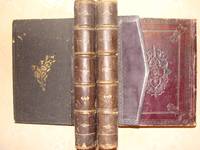
1801000449<p>.Istanbul Üsküdar: Imperial Press DÄr al-ṬibÄÊ¿a al-ʿĀmira 1801.<br />Folio over 12–15 in.<br />KitÄb Laḥjat al-LughÄt<br />Tri-lingual Dictionary Turkish–Arabic–Persian<br />First edition. An early Ottoman printed dictionary produced at the Imperial Press of Muhendishane established by imperial decree following the closure of the İbrahim Müteferrika press. Printed under the supervision of Ê¿Abd al-RaḥmÄn al-Mudarris head administrator of the Üsküdar printing house.<br />Contemporary French binding in yellowish-brown morocco richly gilt in Ottoman Turkish decorative style with original folding envelope flap. Gilt panels and tooling spine and flap partially worn.<br />Collation:<br />2 pp. imperial decree and justification for the establishment of the press signed by Ê¿Abd al-RaḥmÄn al-Mudarris<br />7 pp. index<br />851 pp. text<br />Upper left corners of the imperial decree index and first six pages with early professional restoration slightly affecting the first letters of the opening lines on some pages. Light water staining throughout as commonly encountered in early Ottoman imprints. The upper half of the colophon leaf is neatly adhered to the rear cover. Otherwise complete with the text internally clean crisp and fully legible.<br />Binding shows wear: minor losses to spine and flap covers lightly rubbed. Overall good condition with notable bibliographical integrity.<br />Provenance / Reference:<br />An identical copy recorded in the Atabey Sale Sotheby's 28 May 2002 Lot 844.</p><p>Rare and important: among the earliest products of the post-Müteferrika Ottoman state press representing a major milestone in Ottoman lexicography and multilingual scholarship.</p><p>Muḥammad EsÊ¿ad Efendi was a prominent Ottoman jurist Ê¿Älim religious authority and statesman who served as Åžeyhülislâm the highest religious office in the Ottoman Empire during the mid-18th century.<br />Educated in the classical Ottoman madrasa system he rose through the ranks of the Ê¿ilmiyye learned hierarchy serving in various judicial and scholarly posts before attaining the office of Åžeyhülislâm where he exercised authority over Islamic law Sharīʿa legal opinions fatwÄs and religious appointments throughout the Empire.<br />EsÊ¿ad Efendi was known for his legal scholarship administrative prudence and engagement with intellectual life at a time when the Ottoman state was navigating institutional consolidation and reform. He authored and supervised works in Islamic jurisprudence theology and language and his name appears on several important Ottoman scholarly and administrative publications of the period.<br />He died in 1166 AH / 1753 AD leaving a legacy as one of the notable religious jurists of the 18th-century Ottoman Empire.</p> the Imperial press, Muhendishane hardcover
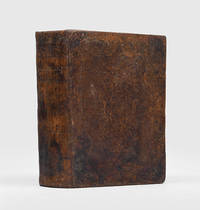
1827180737Paris: Darü't T baatü'l Mülkiyyeü'l Mamure 1827. The Old and New Testament in Ottoman Turkish First Ottoman Turkish edition of the Old and New Testaments together funded by the British and Foreign Bible Society and based on the translation made by Ali Ufki Bey d. 1675 an influential agent for European diplomats in 17th-century Turkey. We have only traced four institutional copies. Unusually the Ottoman text is fully vocalized. Ali Ufki Bey christened Wojchiech Bobowski was known in Europe as Albertus Bobovius. After his enslavement by the Tartars in the Ukraine he was forcibly converted to Islam and brought to Istanbul where he worked in the Ottoman palace for over two decades. The editor the famous Turcologist Jean-Daniel Kieffer d. 1833 had published a standalone Turkish edition of the New Testament in 1819 always with the British and Foreign Bible Society. Kieffer's starting point was Ali Ufki Bey's Ottoman Turkish text revised according to critical comments on the first edition of his New Testament. Kieffer also compared the Ottoman text "with the original texts as well as with the standard English French and German versions. W. Seaman's Nogai New Testament of 1666 T. Erpenius' Arabic version H. Martyn's Persian version H. Brunton's Nogai New Testament of 1813 and with the London Polyglot. On crucial questions he had the advice of Baron Silvestre de Sacy" Darlow & Moule. The present edition was printed in 5000 copies on the presses of the Louvre hence the "Royal Printing House" imprint. The same binding - arguably a publisher's binding - is found on another copy of this edition. 2 vols in one large quarto 257 x 222 mm pp. ii 984; ii 3 i 318. Titles within double typographical ruling. Contemporary Ottoman Turkish brown sheep blind stamped to a panel design arabesque cornerpieces on inner corners large arabesque centrepieces flat spine triple blind ruled gilt lettered title. 20th-century inked and pencilled Ottoman Turkish annotations on pastedowns and first title. Spine and extremities refurbished boards a bit rubbed contents slightly toned but overall clean a little light marginal water staining along outer edge of initial gatherings: a very good copy. Darlow & Moule 9456. hardcover