72 résultats
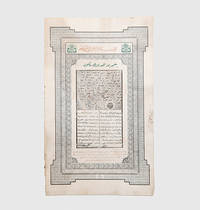
1916000483<p>Istanbul: TanÄ«n 1916.<br />Book. As new. Hardcover. 8vo over 7¾–9¾ in.<br />An official report issued by the Ottoman Fourth Army under Jamal Pasha concerning the proceedings of the Supreme Court Martial Tribunal convened at ʿĀliyah Aley Lebanon established to prosecute alleged Arab separatists and Pan-Arabist movements in Syria and Egypt during the First World War.<br />The report claims that the names of prominent Arab nationalists were discovered by the Ottoman authorities among documents seized from the French Embassy in Beirut reportedly placed under the safekeeping of the American Embassy following the outbreak of war. These documents formed the evidentiary basis for the tribunal's investigations.<br />125 pages of Arabic text accompanied by over 50 facsimile plates issued as a supplement reproducing original documents and correspondence between the accused Arab nationalists and other related parties examined by the tribunal.<br />Preserved in a modern hardcover binding.<br />A significant and controversial contemporary Ottoman publication providing rare primary documentation on wartime military justice Arab nationalist movements and Ottoman intelligence practices during the final years of the empire.</p><p>An important Arabic political and legal work presenting the Arabic version of La Vérité sur la Question Syrienne addressing the investigations and proceedings of the Ottoman Martial Law Tribunal DÄ«wÄn al-Ḥarb al-Ê¿UrfÄ« convened in ʿĀliyah Aley during the First World War.<br />The work constitutes a contemporary defense and documentary clarification of political accusations brought against Syrian and Lebanese figures shedding light on:<br />Ottoman wartime judicial procedures<br />political repression and accusations of separatism<br />and the broader Syrian Question in the late Ottoman period.<br />As the original Arabic edition this publication is a key primary source for the study of Ottoman military justice Arab political movements and Syro-Lebanese intellectual history during the final years of Ottoman rule.<br />A scarce and historically significant work particularly sought after in collections relating to the Arab provinces of the Ottoman Empire World War I Middle Eastern politics and constitutional and legal history.</p> Tanine hardcover
1902056055Constantinople: Daire-yi Umûr-i Sihhiyye = Administration Sanitaire de l'Empire Óttoman Matbaa-i Osmaniye Imprimerie Osmanié & Imprimerie F. Loeffler Lithographie de S. M. I. le Sultan. 1902-1907 1902. 1st Edition . Soft cover. Very Good. 4to - over 9¾ - 12" tall. Original greenish and yellowish wrappers and hardcover 1317/1901-1902 vol. Folio. 335 x 235 cm. In Ottoman script and French. 4 volumes: 144 p.; 4 150 p.; 12 p. 6 folded statistical tables. The third volume lacks its back cover and has a detached front cover with some staining present; the fourth volume shows wear and tear along the edges. First and only editions of these four exceedingly rare volumes form an invaluable collection presenting the earliest statistical tables that shed light on the diseases most commonly and least frequently encountered in early twentieth-century Ottoman Istanbul the causes of death resulting from illness and other factors average life expectancy and the overall health conditions of the city's population. The registers constitute an exceptional data source as the information is systematically disaggregated by religious affiliation Muslim and non-Muslim age and gender and further classified by neighbourhood and season. The statistical data contained in these registers documenting the causes of death in Istanbul and its surrounding districts is based on information compiled from ten divisions of the Department of Health Affairs as well as from major medical institutions including the Sixth Department Hospital Darü'l-Aceze Haseki Nisa Hospital Gümüssuyu Hospital Gureba-yi Müslimîn Hospital Toptasi Bîmârhâne the French Hospital the Jérémie Hospital established by the French Lazarists the Yedikule Armenian Hospital the Russian Hospital and the Italian British and German hospitals. According to these statistics tuberculosis organic heart failure and pneumonia were among the leading causes of death in Istanbul. Infant and child mortality also occupies a prominent place in the records largely attributable to poverty lack of education and inadequate hygienic conditions. Rare surviving copies from the statistical registers known to have been published between 1899 and 1907 specifically those for the years 1902 two issues 1903 and 1907. All these statistical bulletins are extremely rare; according to WorldCat only three copies are recorded worldwide in institutional holdings. <br/> <br/> Daire-yi Umûr-i Sihhiyye = Administration Sanitaire de l'Empire Óttoman, Matbaa-i Osmaniye, Imprimerie Osmanié & Imprimer paperback
1918053722Berlin: TLS - Letterhead 'Ambassade Imperiale Ottomane' 1918. Soft cover. Very Good. 8vo - over 7¾ - 9¾" tall. Original TLS by Ibrahim Hakki Pasha in French sent to the Minister of Switzerland etc. etc. in French sent to the Minister of Switzerland etc. etc. 26x19 cm. In French. 1 p. 16 lines. Foxing on paper minimal stains. A good paper. Text: "Monsieur le Ministre Naim Bey directeur d'une societe coommerciale a Constantinople et son epouse Mevhibe Hanem ainsi que le medecin Ibrahim Bey directeur et medecin en chef de l'hôpital militaire Chehid Mouhtar desirant se rendre en Suisse pour une dizaine de jours en vue de regler certaines affaires particulieres qui les concernent. Je prie Votre Excellence de vouloir bien donner a qui de droit les ordres necessaires pour que leur passeport soit vise. Veuillez agreer Monsieur le Ministre l'assurance de ma haute cconsideration. Son Excellence Monsieur Mercier Minisre de Suisse etc. etc. etc.". Dated 'Berlin le 13 Juillet 1918'. i.e. Naim Bey director of a trading company in Constantinople and his wife Mevhibe Hanem as well as the doctor Ibrahim Bey director and chief doctor of the military hospital Chehid Mouhtar wishing to go to Switzerland for ten days in order to settle certain specific cases which concern them. I beg Your Excellency to be good enough to give to whom it may concern the necessary orders for their passport to be stamped. Please accept Mr. Minister the assurance of my high consideration. His Excellency Monsieur Mercier Minister of Switzerland etc. etc. etc. ". Dated 'Berlin July 13 1918'. Ibrahim Hakki Pasha 1862-1918 was an Ottoman statesman who served as Grand Vizier of the Ottoman Empire between 1910-1911. He served as Ottoman ambassador to Germany and to the Kingdom of Italy. Hakki Pasha also spent considerable amounts of time in London between February 1913 and the outbreak of World War I working on negotiations concerning the Berlin-Baghdad Railway and a settlement for the Second Balkan War. During that visit Hakki Pasha met with King George VI. He was awarded the Order of Karadorde's Star. <br/> <br/> TLS - Letterhead 'Ambassade Imperiale Ottomane' paperback
1981053241Istanbul: TC Istanbul Üniversitesi Edebiyat Fakültesi Bizans Sanati Tarihi Kürsüsü Letterhead 1981. No Binding. Fine. Original typescript letter signed by Semavi Eyice. Some autograph corrections as well by Eyice. 31x225 cm. In Turkish. Twenty lines. 7.5.1981 dated. He mentions Fatih Mosque in Silivri which transformed from an old Byzantine church. The letter includes very interesting information Silivri and Selimbria with its ancient name. For instance in the 1960s the district governor of Silivri sold the land of this church/mosque for five Turkish Lira per square meter. In addition to this he says that Silivri is a Turkish district were always destroyed its own historical artifacts. In the continuation of the letter he indicates that he adds to this sending an off-print including his article related to the Byzantine monuments in Thrace and containing mentioned church in Silivri. <br/> <br/> TC Istanbul Üniversitesi Edebiyat Fakültesi Bizans Sanati Tarihi Kürsüsü Letterhead unknown
1934053697Ankara: Letterhead 'TC Dahiliye Vekâleti Matbuat Umum Müdürlügü' i.e. Turkish Ministry of Internal Affairs Directorate of the Press 1934. No Binding. Very Good. Original typescript letter in French signed 'Dr. Vedat Nedim' mentioned to Monsieur Nasit Hakki Ulug 1902-1977's voyage to Hungary who was depute of Kütahya and redactor of Hakimiyet-i Milliye journal. Dated 9 Juillet 1934. 275x18 cm. In Turkish. 1 p. 'TC Hükümeti' watermarked paper. Text: "Excellence Monsieur Nasit Hakki depute de Kütahya et redacteur du Journal officiel Hakimiyeti Milliye entre-prendra prochainement un voyage d'etude en Europe Centrale Il visitera egalement Voltre beau pays. Serait-il possible de lui accorder l'assistance bienveillante de Voss autorites gouvernementales lors de son sejour en Hongrie Nous apprecierons beaucoup si Vous voulez bien intervenir favorablement aupres de Voss bureaux competents pour lui obtenir le permis de Vos chemins de fer comme nous le faisons a l'egard de Vos Journalistes qui visitent la Turquie. Veuillez agreer Excellence l'assurance de ma tres haute consideration. Le Directeur Generale de le Presse.". Vedat Nedim Tör was born in the city of Istanbul in 1897. He was the son of Ahmet Nedim Servet Tör. He attended Galatasaray High School and completed his higher education at the University of Berlin. Having taken his Ph.D. in economics he returned to Turkey. He served as the director at the Ankara State Radio and Directorate General of Press and Information. His writings were published in the newspapers Cumhuriyet and Vatan. Vedat Nedim among the founders of Istanbul and Ankara State Radios also served as a culture and art consultant for Yapii Kredi Bank and Akbank. Among the stage plays he scripted were Issizler 1924 Kör 1935 Degisen Adam 1941 Hep ve Hiç 1951 and Halici Kiz 1975. Many of his theatre scripts were staged by several theater companies. Further his play Halici Kiz was adapted to the silver screen by Muhsin Ertugrul in 1953. Vedat Nedim Tör passed away on April 8 1985 in Istanbul. <br/> <br/> Letterhead 'TC Dahiliye Vekâleti Matbuat Umum Müdürlügü' [i.e. Turkish Ministry of Internal Affairs Directorate of the Pres unknown
1954052810Istanbul: Resimli Hayat Aylik Dergi Letterhead 1954. No Binding. Very Good. Original typescript letter signed by Vedat Nedim Tör to an unnamed recipient including an invitation that the new place of the new publishing house of Hayat Dogan Kardes Printing House located in Municipality Klodfarer Street and a meeting on Turkish theater on March 11 1954. Dated I.III.1954. 21x17 cm. In Turkish. 1 p. "Hayat" i.e. Life magazine letterhead. Vedat Nedim Tör was born in the city of Istanbul in 1897. He was the son of Ahmet Nedim Servet Tör. He attended Galatasaray High School and completed his higher education at the University of Berlin. Having taken his Ph.D. in economics he returned to Turkey. He served as the director at the Ankara State Radio and Directorate General of Press and Information. His writings were published in the newspapers Cumhuriyet and Vatan. Vedat Nedim among the founders of Istanbul and Ankara State Radios also served as a culture and art consultant for Yapii Kredi Bank and Akbank. Among the stage plays he scripted were Issizler 1924 Kör 1935 Degisen Adam 1941 Hep ve Hiç 1951 and Halici Kiz 1975. Many of his theatre scripts were staged by several theater companies. Further his play Halici Kiz was adapted to the silver screen by Muhsin Ertugrul in 1953. Vedat Nedim Tör passed away on April 8 1985 in Istanbul. <br/> <br/> Resimli Hayat Aylik Dergi Letterhead unknown
1976051585Bruxelles: Agence Info-Türk Section de Recherche-Tradution-Documentation 1976. 1st Edition . Soft cover. Fine. 8vo - over 7¾ - 9¾" tall. Paperback. Foolscap 8vo. 17 x 12 cm. In French. 44 p. Turquie et le Monde d'Aujourd'hui. "La principale force democratique en Turquie comme ailleurs. C'estla classe ouvrere qui fait entendre sa voix par son propre parti politique. Apres le Coup d'Etat Militaire du 12 Mars 1971 une dure repression s'abattit sur la classe ouvriere et son parti politique legal fut inderdit mais le masse ouvriere sortit de cette periode de repression plus ferme et plus decidee. Sur cette base solide se fonde et se developpe le parti politique de la classe ouvriere.". Behice Boran was a Turkish Marxist politician author and sociologist. As a dissenting political voice from the left Boran was repeatedly imprisoned for her work and died in exile after the Turkish military coup of 1980. Boran was born in Bursa to Volga Tatar parents whose families had settled in the Ottoman Empire during the 1890s. She graduated from American College for Girls in Istanbul Turkey and studied sociology at the University of Michigan in the United States. She received her PhD on sociology in 1939 from Michigan and was involved in Marxism. She was nominated to Ankara University Faculty of Language and History-Geography AÜ DTCF as an associate professor. She also joined the clandestine Communist Party of Turkey TKP and began publishing left-wing periodicals Yurt ve Dünya English: Motherland and World and Adimlar English: Steps which led to her sacking from the university. In 1950 she led the formation of the Turkish Peacelovers Association which protested against Turkey's participation the Korean War which led to her arrest and a sentence of 15 months in prison. Between 1965-69 Boran served as a deputy from the Workers Party of Turkey TIP in the Turkish parliament. In 1970 she assumed the leadership of the party. She was arrested after the military coup of 1971 and sentenced to 15 years of imprisonment. After she was released following an amnesty she re-established the TIP in 1975. After the military coup of 1980 Boran went into exile in Europe living as a political refugee in Sofia Brussels and Düsseldorf. In 1987 she announced that TIP and TKP had decided to merge. She died soon after this press conference from heart disease in Brussels Belgium. She was 77 years old. Her body was brought to Istanbul and her funeral turned into a mass demonstration the first public show of force of Turkey's left-wing movement after the coup. Wikipedia. <br/> <br/> Agence Info-Türk Section de Recherche-Tradution-Documentation paperback
1928053485Istanbul: Servet-i Fünûn - Ahmed Ihsan Matbaasi i.e. Printing House" Letterhad 1928. No Binding. Very Good. 8vo - over 7¾ - 9¾" tall. Original manuscript autograph letter/document signed by Muhtar Halid sent to the presidency of the Republican Party of Turkey in Ankara. 205x135 cm. In Ottoman script. Dated September 23 1928. Six lines. Two punching holes out of text on the paper. The document says that 26.000 alphabets 57.000 brochures and pamphlets and 100.000 are printed and will be sent to the 'Cumhuriyet Halk Firkasi' i.e. Republican Party CHF - CHP in Ankara city. This rare autograph documents how widespread and comprehensive work was done to switch from Arabic letters to Latin letters during the Letter Revolution in 1928. "Muhtar Halid Kitabhanesi i.e. Printing House of Muhtar Halid was located on Bâb-i Alî i.e. The Sublime Port main street number 17; a place where is located old Izmir Terzihanesi i.e. Old Smyrna Taylor Shop. Muhtar Halid was the Late period Ottoman / Turkish typographer the elder brother of the famous Turkish typographer and translator of Ahmed Ihsan Tokgöz 1868-1942 and the owner of 'Muhtar Halid Kitabhanesi'. He worked together with his brother's printing and publishing house especially when he was publishing 'Servet-i Fün'un' periodicals. Servet-i Fünûn i.e. The Wealth of Knowledge was a long-running and an avant-garde literary and sometimes political periodical and journal or magazine. It's published to support the Ittihat ve Terakki Cemiyeti i.e. The Union and Progress Society later Party initially by Ahmed Ihsan Tokgöz. Source: Tanzimat'tan Cumhuriyet'e Tarihi Kentsel Çevrede Mekânlar Üzerinden Bir Semt Okumasi: Cagaloglu Semti Örnegi by Melek Yalvaç Ph.D. Thesis. <br/> <br/> Servet-i Fünûn - Ahmed Ihsan Matbaasi [i.e. Printing House]" Letterhad unknown
1912054651Istanbul: Matbaa-i Ijtihad. AH 1328 1912. 1st Edition . Soft cover. Very Good. 8vo - over 7¾ - 9¾" tall. Paperback. 8vo. 18 x 12 cm. In Ottoman script Old Turkish with Arabic letters. 80 p. Probably taken from a volume. Minor wear on spine. Light fading on pages. Otherwise a very good copy. This interesting very rare and also pseudo-historical first book penned specifically on the Yezîdî people by an Ottoman statesman initially prepared as a report and then published in 1912 before WWI in Ottoman Cairo. One of only three written Eastern sources about this interesting community that has been subject to extremely controversial approaches throughout history. The first is the travel corpus of Evliya Çelebi the second is 'Abede-i Iblis' and the third is "Al-Yazidiyya Kadîmen wa Hadisen" which was published in Arabic in Beirut in 1934. Yezîdîs a member of a Kurdish religious minority found primarily in northern Iraq southeastern Turkey northern Syria the Caucasus region and parts of Iran. The Yezîdî religion includes elements of ancient Iranian religions as well as elements of Judaism Nestorian Christianity and Islam. Although scattered and probably numbering merely between 200000 and 1000000 the Yezîdîs have a well-organized society with a chief sheikh as the supreme religious head and an emir or prince as the secular head. The origins of the Yezîdî faith can be traced to areas of the Kurdish mountains of northern Iraq where pockets of devotion to the fallen Umayyad dynasty persisted long after the death of the last Umayyad caliph the half-Kurdish Marwan II in 750. Some descendants of the dynasty settled in the area further encouraging the development of mystical traditions in which the Umayyad lineage was prominently figured. In the early 12th century Sheikh 'Adî ibn Musâfir a Sufi and a descendant of the Umayyads settled in Lâlish north of Mosul and began a Sufi order known as the Adwiyyah. Although his own teachings were strictly orthodox the beliefs of his followers soon blended with local traditions. A distinct Yezîdî community living in the environs of Mosul appears in historical sources as early as the middle of the 12th century. This book includes descriptions of the Yezîdîs albeit all the prejudices within it on their geography origins mythology religions cosmogony etc. The book has a long chapter on Yezîdîs' chief divine Malak âûs or Tavus "Peacock Angel". Malak Taus has often been identified by outsiders with the Judeo-Christian figure of Satan causing the Yezîdîs to be inaccurately described as "Devil worshippers" as seen in this pseudo-historical book as well. Özege 24.; OCLC 83228795. <br/> <br/> Matbaa-i Ijtihad., [AH 1328] paperback
1917000214<p><strong>We believe this to be the first complete collection of its kind</strong> including several items that we have not encountered in public libraries or archival sources. In any case it represents the most comprehensive collection of issues that we have traced over a period of twenty-five years of Ottoman state publications many of which are difficult to assemble. The collection essentially consists of official reports most of which were prepared by the two ambassadors <strong>Fakhr al-Din Rûm Bey Oğlu</strong> and <strong>Muhammad Nâbi</strong>. These reports are highly restricted official documents.</p>Description of the Collection<p>The reports were prepared in <strong>Ottoman Turkish</strong> except for four items written in modern Turkish after the alphabet reform; these were prepared by <strong>İsmail Hakkı Tevfik</strong> and <strong>Abdulgani Seni Bey</strong>.</p>1. <em>Najd Issue</em> Najd Question<p>Ottoman Turkish report published by the Ministry of Foreign Affairs Istanbul 1918. 15 pages octavo.<br />Prepared by Ambassador Fakhr al-Din Rûm Bey Oğlu and the Ottoman Ambassador in Rome Muhammad Nâbi dated 11 March 1917.</p><p>The report discusses the political borders of Ottoman Najd; the treaty signed between Süleyman Şefik Pasha and Abdulaziz ibn Saud; the Ottoman–British treaty concerning Najd including Qatar; and the Ottoman treaty with Ibn Saud converting Najd from a <em>mutasarrifate</em> into a province <em>vilayet</em> appointing Ibn Saud as governor and commander-in-chief including military organization.</p><p>Topics include:<br />Midhat Pasha's report; Wahhabis; the conflict between Saud and Abdullah ibn Faisal; the sheikhs of Muscat Mukalla Oman Hadhramaut and Bahrain and their relations with Britain; Saudi movements along eastern Najd; Ottoman naval response under Midhat Pasha; the administrative difficulty of Najd; support of Mubarak al-Sabah for the Ottomans; coercion of Abdullah al-Faisal to sign the al-Ahsa treaty; Ibn Rashid's advances; tribal dynamics; British support of Al-Sabah; British protection; Ibn Saud and the Muntafiq sheikh; Ottoman–Wahhabi agreements 10 April 1905; British protests regarding Ibn Saud's border violations and interference in Qatar and Oman; the 12-article Ottoman–Ibn Saud treaty of 12 July 1913 including the separation of Qatar from Najd; maritime boundaries; recognition of Jasim Al Thani; compensation to the Sheikh of Bahrain.</p>2. <em>Muscat Issue</em><p>Ottoman Turkish report Ministry of Foreign Affairs Istanbul 1918. 6 pages.<br />Prepared by Fakhr al-Din Rûm Bey Oğlu and Muhammad Nâbi dated 27 November 1916.</p><p>Covers Muscat modern Oman the Imamate foreign involvement Ottoman views rejecting Muscat's independence from the Arabian Peninsula; relations between Najd Muscat and British India; strategic location; occupation history; Al-Sa'id relations with Wahhabis; British and French recognition of Omani independence in 1862; Ottoman perspective on Oman's connection to Arabia.</p>3. <em>Qatar Coasts Issue</em><p>Prepared 8 January 1917. Printed at the Imperial Press. 7 pages plus 9 pages of French appendices.</p><p>Topics include British expansion from Bahrain to Qatar; Ottoman claims; British intervention since 1891; correspondence with the Ottoman state; Bahrain–Qatar disputes over Zubarah and al-'Udayd; appointment of Abd al-Rahman Al Thani; British encroachments; Qatar within the Kuwait treaty framework; confirmation of Jassim Al Thani's authority in 1913.</p>4. <em>Kuwait Issue</em><p>Fakhr al-Din Rûm Bey Oğlu & Muhammad Nâbi. Imperial Press Istanbul 1334 AH. 34 pages.</p><p>Geography population sect history of Al-Sabah; Ottoman administration of Baghdad and Basra; British policy; secret treaties 1899–1904; borders; railways; maritime flags; taxation refusal; British attempts to place Kuwait under protection; Ottoman responses; oil islands Bubiyan Khor Abdullah; Sheikh's declaration of being an officer in the British army. Dated 31 August 1918.</p>5. <em>Basra Gulf Issue</em> Bahrain Qatar Pirate Coast/Emirates<p>İsmail Hakkı Tevfik. Ankara 1931. 32 pages.<br />Political tribal and documentary history in Turkish English and French.</p>6. <em>Irrigation in Arabia</em><p>Fakhr al-Din Rûm Bey Oğlu & Muhammad Nâbi. 14 pages.<br />Ottoman irrigation projects; British interference since 1910; German involvement.</p>7. <em>Asir Revolt of 1911</em><p>Report by Consul General İsmail Hakkı. 31 pages.<br />Ottoman military actions; Idrisi revolt; tribal loyalties; Wahhabi involvement; detailed military maps.</p>8. <em>Aqaba Issue</em><p>By Rashdi Infantry Brigade Commander. Istanbul 1326 AH. 154 pages.<br />Ottoman–British relations; Egypt's role; Hijaz railway; Aqaba dispute.</p>9. <em>War in Arabia between Ibn Saud and the Imam of Yemen</em><p>By Abdülgani Sünni Bey. Ankara 1934. 20 pages.<br />Unique copy. Covers causes tribal alignments Asir Aden Najran foreign involvement.</p>10. <em>Guide to the Gulf of Aden</em><p>Ottoman Turkish. Istanbul 1310 AH. 276 pages.<br />Includes maps; authored by naval officer Süleyman Nutqi.</p>11. <em>Tripoli Benghazi and the Twelve Islands Issue</em><p>Report dated 27 November 1916. 24 pages French treaty texts.<br />Ottoman North Africa American conflicts Italian ambitions Lausanne Treaty.</p>12. <em>Sheikh Sa'id Island Issue</em><p>Istanbul 1916. 4 pages.<br />Strategic Bab al-Mandab island dispute with France.</p>13. <em>Palestine Issue – Zionist Claims</em><p>Istanbul 3 March 1918. 43 pages.<br />Origins of Zionism; European diplomacy; Jerusalem administration.</p>14. <em>Notes on the Iraq War</em><p>Military Press 1333 AH. 88 pages.<br />Translated from English for official use only. Rare.</p>15. <em>Bahrain Issue</em><p>Report dated 8 January 1917. 12 pages French texts.<br />History British protection treaties 1820–1898 inclusion in 1913 Gulf treaty.</p>16. <em>Muhammarah Issue</em><p>Report dated 1 March 1917. 8 pages.<br />Borders oil Sheikh Khaz'al Anglo-Iranian-Ottoman relations.</p>17. <em>Oil Concessions in Arabia</em><p>Report dated 26 March 1917. 9 pages English treaty.<br />Mosul Baghdad Basra Shell Najd Kuwait.</p>18. <em>Baghdad Issue</em><p>Report dated 31 August 1917. 53 pages French texts.<br />Baghdad Railway; British–Ottoman rivalry; Gulf politics.</p>19. <em>Farasan Islands Issue</em><p>Report dated 28 November 1916. 8 pages.<br />German coal depot request; British occupation; oil and gas.</p>20. <em>Hadhramaut Issue</em><p>Report dated 11 March 1917. 6 pages.<br />Tribal governance; British relations via Aden.</p>21. <em>Aden and the Nine Districts</em><p>Report dated 27 November 1916. 39 pages French annexes.<br />Portuguese Ottoman British rule; Yemen administration; sovereignty claims.</p>22. <em>Memorandum on British Claims Regarding the Baghdad Line and Basra Gulf</em><p>Istanbul 21 January 1911. 35 pages appendices.<br />Detailed diplomatic negotiations since 1903.</p>23. <em>Guide to the Red Sea</em><p>Istanbul 1307 AH. 459 pages.<br />Comprehensive nautical and railway guide with ports and routes.</p>24. <em>South Arabia Issue</em> Hadhramaut Socotra etc.<p>İsmail Hakkı Tevfik. Bulgaria 1935. 132 pages with photographs and maps.</p>25. <em>The Egyptian Issue</em><p>Prepared March 1918. 186 pages.<br />Ottoman legal and political analysis of Egypt from Muhammad Ali to British occupation.</p>26. <em>Shatt al-Arab Issue</em><p>Istanbul 1917. 30 pages.<br />1913 treaty with Britain; navigation borders Iran Muhammarah.</p><p><strong>Note</strong><br />İsmail Hakkı Tevfik was a senior Ottoman and Republican diplomat and son-in-law of Sultan Mehmed VI. Fakhr al-Din Rûm Bey Oğlu and Muhammad Nâbi were leading Ottoman statesmen. Other contributors include Süleyman Nutqi naval officer and Abdulgani Seni Bey later a key Republican thinker.</p><ul><li><strong> 26 items</strong></li></ul> Ottoman Ministry of Foreign Affairs paperback
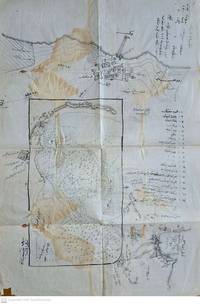
1920051625Istanbul: Yeni Sahne Müdüriyet-i Umumiyesi. ca. 1920 1920. Soft cover. Very Good. 8vo - over 7¾ - 9¾" tall. Original manuscript autograph letter signed ALS sent to Darülbedayi actor Behzad Bey Haki Butak. 21514 cm. In Ottoman script. 1 p. Five lines. The Darülbedayi was an Ottoman imperial theatre established in Istanbul in 1914. Its history was closely linked to that of its director the actor Muhsin Ertugrul. On 31 March 1920 the second regulation prepared by the Municipality has thirty-three articles and with this regulation Dârülbedayi became a theater that only gave representations. Upon the disagreement between the artists and the board a significant number of the artists separated and established a private theater The New Stage. The work of this group did not last long and when the founder Ismail Faik Bey went bankrupt the group fell apart. Source: Tiyatromüzesi i.e. Turkish Theater Museum. Text: "Darülbedayi sanatkârlarindan Behzad Beyefendiye; Bugünkü gazetelerde asker merâsiminizi icrâ ettiginizi okudum. Darilbedayi'nin ve memleketin sanatkârlarina karsi daimâ br hüsn-ü hürmetle mütehassis olur.Yeni Sahne saadetinizi temennî eder. Signature: Müdür Ismail Faik.". Written on a special paper with letterhead 'Yeni Sahne' i.e. The New Stage. <br/> <br/> Yeni Sahne Müdüriyet-i Umumiyesi., [ca. 1920] paperback
1969832Pemberton Press TX 1969. Fine in gray buckram with brown print with light foxing to top edge of text block. First edition first printing hardcover SIGNED INSCRIBED TO by Mrs George Arnakis Pemberton Press, TX hardcover
1922052114Istanbul: Manuscript - Autograph letter / Letterhead 'Sura-yi Devlet'. H.: 1338 1922. Soft cover. Very Good. 4to - over 9¾ - 12" tall. Original manuscript autograph document signed by Mehmed Tevfik Biren. 335x20 cm. Folded. 1 p. In Ottoman script. Dated 25 Saban 1338 AH. Letterhead of 'Sûrâ-yi Devlet' addressed to 'Bâb-i Âlî Teshilât Sandigi Komisyonu'. Biren served as a high-ranking statesman such as the Minister and the Governor in the last period of the Ottoman Empire. Also he was last chief of the council of the state i.e. Shûrâ al-Devlet. Mehmet Tevfik Bey was born in 1867 in Istanbul. His father was a high-ranking statesman in the Ministry of Education. After graduating from Mekteb-i Mulkiye in 1885 at the age of 18 he started his first duty as the clerk of Abdulhamid II at Yildiz Palace. From 1897 to 1901 he served as the Governor of Jerusalem. After that he was appointed as the Governor of Thessaloniki. He was the governor of Yemen between 1904-1905. He became the Minister of Finance in the last years of the Ottoman Empire. He participated in the negotiations of the Treaty of Sevres signed in 1920. He was last appointed on 19 August 1921 as the 'Sûrâ re'isi'. He continued this duty until the abolition of the Sultanate on 4 November 1922. Thus he was the last 'al-Shura' of the Ottoman Empire. After the proclamation of the Republic he left the state. Wikipedia. <br/> <br/> Manuscript - Autograph letter / Letterhead 'Sura-yi Devlet'., [H.: 1338] paperback
1928052325Istanbul: N.d. ca. 1928-1930 1928. Soft cover. Very Good. Original TLS signed 'Ihsan Schükrü-Aksel' sent to 'Herrn Prof. Dr. Hecht' Budapest to Psychiatrische Klinik Budapest VIII Balassa Utca 6.". 28x21 cm. In German. 1 p. 'Bank Extra Strong' watermarked paper and 'Sinir ve Beyin Hekimi Dr. Ihsan Sükrü Aksel - Bakirköy ve Haydarpasa Nümune Hastaneleri Mütehassisi' letterhead. Text: "Sehr geeheter Herr Kollege! Ich erlaube mir Ihren eine Patientin von mir Frl. Nihat zu empfehlen die zurzeit in Budapest ist und möchte ich Sie bitten Ihre gütige Anempfehlungen nicht fehlen zulassen. Für Ihre Bemühungen danke ich Ihnen im voraus und zeichne und sehr ergebener.". Aksel was a Turkish / Ottoman specialist phsycian-psychiatrist. He was born in Istanbul in 1889. He graduated from Istanbul Darülfünun Medical Faculty in 1919 and started working as an assistant at "Emraz-i Akliye and Asabiye Hospital". He went to Germany for education in 1922. In Munich and Hamburg he worked with Prof. Kraeplin Prof. Spielmayer Prof. Weygand and Prof. Jakob. He returned to Turkey in 1925 I was appointed as the chief of Emraz- i Akliye ve Asabiye Hospital i.e. Mental and Nervous Diseases Hospital and established the neuropathology laboratory. He became 'ordinarius' in 1951. In 1953 he became the dean of Istanbul University Faculty of Medicine; he prioritized the establishment of a psychiatry clinic in Çapa and established the Institute of Child Psychiatry in 1958. <br/> <br/> N.d., [ca. 1928-1930] paperback
1980KOS01400007Waseda University press 1980. Soft Cover. Fine. KOS01400007 Waseda University press paperback
1903055899Edirne Adrianople: Manuscript Edirne Adrianople fî 11 Rebiü'levvel sene AH 1321 = 7 June 1903 1903. No Binding. Very Good. Folio - over 12 - 15" tall. Highly uncommon and exceedingly rare law manuscript documenting the slavery continued during the last period of the Ottoman Empire at the beginning of the 20th century recording the dispute between the defendant and the plaintiff in Edirne on June 7 1903. The document recorded and certified by the Ottoman judge of the time contains the records of a lawsuit between the plaintiff Ahmed Efendi Ibn Salih and the defendant Süleyman Aga Ibn Fülan in the Fülan neighbourhood of the city of Edirne. The document includes the petition and ruling regarding the case in which the plaintiff demands that Süleyman Aga pay 500 kurus for a mule purchased by his "Abd-i Mecrûh" a slave without the right to engage in trade. The judge of Edirne at the time ruled in favor of the defendant Süleyman Aga on the grounds that a slave classified as "Abd-i Mecrûh" was not legally permitted to engage in trade and therefore the owner could not be held responsible for the transaction. The ruling stated: "taleb ser'an iltifâta sayan olmayin ser'i muarizdan menine ilâm" i.e. The request is not legally admissible and the claim is dismissed according to Sharia law. By the early 20th century slavery in the Ottoman Empire was in significant decline due to legal reforms and international pressure. The empire had a long history of slavery particularly involving African and Circassian slaves but efforts to abolish it gained momentum in the 19th century. Empire formally abolished the slave trade in the mid-19th century under British pressure issuing decrees in 1847 banning the trade of Circassian women and 1857 outlawing the African slave trade. However enforcement was inconsistent. The final legal abolition of slavery came in 1909 under the Young Turk government with 1909 Decree formally ending the practice. Despite legal bans domestic slavery especially of women in harems and household service persisted informally into the early 20th century particularly in remote areas. With the collapse of the Ottoman Empire after World War I and the founding of the Republic of Turkey in 1923 slavery was completely eradicated under the new legal system. In the Ottoman Empire hüccet ujjat was a legally binding document issued by a kadi Islamic judge to certify and record various legal matters such as contracts property transactions debts inheritance claims and disputes. Serving as official proof of a legal act or decision hüccets were widely used as evidence in court to confirm rights and obligations. These documents followed a formal structure detailing the parties involved the legal matter at hand the judge's ruling and in some cases witness testimonies. They played a crucial role in the Ottoman legal system by ensuring the documentation and enforcement of civil and commercial laws making them essential records of legal and social history. <br/> <br/> Manuscript, Edirne [Adrianople], fî 11 Rebiü'levvel sene [AH] [1]321 = [7 June 1903] unknown
2000Q-9757438677Milet Publishing Limited 2000-01-01. Paperback. New. In shrink wrap. Looks like an interesting title! Milet Publishing Limited paperback
2000051483Ankara: Vakiflar Genel Müdürlügü 2000. Limited Edition . Hardcover. New. 4to - over 9¾ - 12" tall. Original burgundy cloth binding with gilt decoration in the Ottoman style to front and back. In publisher's burgundy slipcase with gilt decorations. Small 4to. 29 x 18 cm. In Ottoman script with its booklet in the pocket of book including transcription and introductory text. 40 p. reprint of the Ottoman text color ills.; 40 p. text in Turkish. Reprint of manuscript dated 1682. 3000 copies were printed. Facsimile in beautiful Ottoman calligraphy 40 pages including 102 miniatures in circle medallions. The 'Silsile-name' Genealogical Tree is a manuscript dating back to 1682 with miniature paintings of Ottoman Sultans The Prophet Muhammad face not shown the Four Caliphs and on the facing page Hasan and Hüseyin and the Imams in it and other leaders. The original manuscript was made by the Musavir portrait painter Hüseyin in Istanbul during the reign of Suleiman the Magnificent in the 16th century. <br/> <br/> Vakiflar Genel Müdürlügü hardcover
193863875New York NY: Fleming H. Revell Co. 1938. 12mo. 202 pp. Photo frontisp. photo plates map printed letter facsimile. Dark green publisher’s cloth yellow lettering on spine minor shelfwear w/ d.j. photo cover art of captured artillery minor scuffing couple very minor closed tears slight tear upper right corner still VG/VG- copy. First edition of this very uncommon World War account of an Armenian-American who was forced into the Ottoman Empire’s Army participated in the 10-month Gallipoli campaign at Aru Burnu against the Anzacs and as a medical orderly burying the 3000 Turkish dead during a nine-hour truce. Following the withdrawal of the British from the Dardanelles his 16th Division was transferred to Syria fights General Allenby at the capture of Jerusalem and was taken prisoner and interned in Egypt. Subsequently he served with the British as an interpreter for British Intelligence and then returned as a POW at Belbeis until July 12 1920 when discharged eventually immigrating to the U.S. attending and earning degrees before opening businesses in Georgia. Very scarce in original dustjacket. Fleming H. Revell Co., hardcover
1941050291Istanbul: Foto Turan Çarsikapi 1941. Soft cover. Very Good. 8vo - over 7¾ - 9¾" tall. Original b/w portrait photograph of Cemal Karabekir. 24x22 cm. With card-board. Autograph signed and inscribed by Karabekir as 'Sekizinci Kolordu Askerî Mintika Kumandani' in May 30 1941. Inscribed as '. aziz ve muhterem arkadasim kardesim Enver Nâci Bey' takdîm kilinmisdir; Sekizinci Kolordu Askerî Mintika Kumandani Cemal Karabekir."'. Karabekir also was author of his memoirs 'Maçka Silahhanesi hatiralari' Memoirs from Maçka Arsenal. During the Turkish War of Independence he was manager of Arsenal or; Armory / Armoury in Maçka Besiktas and he supplied and sent armament to Anatolia especially in the course of Occupation period of Istanbul. <br/> <br/> Foto Turan, Çarsikapi paperback
1914050889Paris: Press photo by Dupuy & Cie. 1914. Soft cover. Very Good. Original b/w press photograph of Mehmed Salih Hüsnü Pasha who was Turkish / Ottoman lieutenant and son-in-law of Damad Mehmed Serif Pasha. He lived in Egypt and he's known with his contacts with the Kurdish committee in Alexandria and also personally closing to Arif Pasha. 155 x 115 cm. Text in French on verso. Stamps of photographer and 'Miroir' Newspaper Archives. <br/> <br/> Press photo by Dupuy & Cie. paperback
1928172580Istanbul: Evkaf matbaas 1928 CE / 1344. A lithographed reproduction of the famous letter from the Prophet Muhammad to al-Muqawqis commonly identified as the Patriarch of Alexandria at the time of the Arab conquest of Egypt. Discovered in 1850 in a Coptic monastery in the Egyptian village of Akhmim the letter calls on al-Muqawqis and his followers to accept Islam. After its discovery it was taken to the imperial capital at Istanbul and its publication was sponsored by the Ottoman government's department of Endowments. The reproduction is accompanied here by Arabic and Ottoman transcriptions and by an Ottoman description of the circumstances in which the document was discovered. According to scholars the letter itself "has been recognised almost from the beginning as a fake on both historical as well as palaeographical grounds" Oehrnberg. Single leaf folio 340 x 205 mm. Extremities a bit chipped or creased minor soiling or foxing in places one small hole affecting printed area in lower left corner. A very good example. K. Oehrnberg "al-Mukawkis" Encyclopaedia of Islam New Edition Online Brill. unknown
1906052696Trabzon: Trabzon Nüfus Dairesi. AH: 1322 1906. No Binding. Very Good. Original autograph 'Mürûr tezkîresi' given to Kayikçi kethüdasi Hidayetzâde Osman' for his travel to Rize by the Ottoman Census Directorate of Trebizond. 4327 cm. In Ottoman script. With special Ottoman period-stamp '2 Kurus'. Two seals on paper dated 'fî sene 5 Haziran 1322' and '1324'. i.e. AH 1906 and 1908. Folded. Some stains on paper and minimal holes. Otherwise a good copy. There were several restrictions upon the travelling inside the state during the Ottoman Period. Both local residents and foreigners had to get some official documents called as "yol hükmü hereafter the route pass" in 16th century and "Mürur Tezkiresi hereafter the trip permission" in the 19th century to travel inside the state. The administrators of the settlements in which the visitors would pass were assigned with authorities in the route passes. In this regard administrators were ordered to help the ambassadors of the foreign states traders religious people to protect them and not to disturb them with such reasons as collecting taxes as well as to assist them in getting food and drinks. In the trip permissions the information on the name of the father nationality address and travelling route of the travellers were included. During the period in which the photos didn't exist or weren't prevalent some information on the age height and physical descriptions beard moustache eye color etc. were included in the document. The owners of the trip permissions would show the documents to the local administrators or officers upon their arrival and the authorities would stamp signed and dated the back of the documents while they were leaving the settlement. In those regions where epidemics were occuring the back of the travellers' documents were written that they didn't have any diseases while leaving the state. The "mürur" trip permission was redesigned along with the modern state organization structured by II. Mahmud period. Passport regulations inside the country were institutionalized thanks to "Mürur Nizamnameleri" in this period in which there weren't official passport regulations in practice. The Rum Riots in 1820s and the abolition of Janissary corps of the Ottoman Empire in 1826 affected the mürur practices and its supervision. Following the Rum Riots there were some claims that several spies existed among the Rums in Istanbul so the Rums who lived in the settlements of Istanbul were made to pay bail after their numbers were determined. It was especially declared that those without the trip permission couldn't enter Istanbul and even couldn't go to Anatolia. In addition to the Rum Riotsan emergency state was declared due to the start of Janissary corps' riot and a great number of Janissary were killed or exiled. On the other hand it was thought that those exiled out of the state might try to come back as they were accustomed to earning their life in Istanbul and so "Mürur Nizami" practices were put into effect. Those using ferries or sailing ships on the other hand needed to submit their passports to the captains in order to get a permission form pusula in return for it. After the captains delivered the passports to the officers those who came to Istanbul would get their passports back in 24 hours while those outside Istanbul would submit the permission form and take their passports. If they intended to stay they had to predicate where and how long they will stay. When the visitors couldn't submit their passports or give a reasonable excuse they would be deported from the Ottoman territories. In the event of determining a fake passport or travel document those would be deported following the contacting with the diplomatic representatives of the other countries. Those who showed their passports wished to stay in the Ottoman Territories needed to get a residence permit from the diplomatic representatives . Source: UNEARTHING THE PAST: PASSPORT REGULATIONS IN THE OTTOMAN EMPIRE Burak Eryilmaz <br/> <br/> Trabzon Nüfus Dairesi., [AH: 1322] unknown
1928052311Istanbul: Askerî Tibbiye Mektebi Matbaasi Askerî Tibb-i Baytari Mecmuasi Külliyatindan No: 8 1928. 1st Edition . Soft cover. Very Good. 8vo - over 7¾ - 9¾" tall. Paperback. Roy. 8vo. 24 x 17 cm. In Ottoman script. 57 p. b/w plates. Toksikolojiden gayr-i uzvî mevat ile tesemmüm. First Edition. Not in Özege. One of the early toxicology studies in the Ottoman / Turkish medical literature. <br/> <br/> Askerî Tibbiye Mektebi Matbaasi (Askerî Tibb-i Baytari Mecmuasi Külliyatindan, No: 8) paperback
1912053689Istanbul: Matbaa-yi Bahriyye. AH 1328 1912. 1st Edition . Soft cover. Very Good. 8vo - over 7¾ - 9¾" tall. Paperback in original wrappers. Demy 8vo. 21 x 14 cm. In Ottoman script Turkish with Arabic letters. 16 p. Rear cover is missing. This pamphlet mostly prepared in the form of questions and answers describes the technical infrastructure required for the use of liquid oil fuel in warships. It was prepared for officers studying at the navy schools of the Imperial Ottoman in the early 20th century. On the cover it's indicated to be translated by the Ottoman Naval Forces Commission of Engines but no information on which source to be used to translate it. It's printed after the Second Constitutional Regime in 1908 and Tripoli War in 1911 probably during the Balkan Wars 1912-1913. Following the Young Turk Revolution in 1908 the Committee of Union and Progress which effectively took control of the country sought to develop a strong Ottoman naval force. The poor condition of the fleet became evident during the Ottoman Naval Parade of 1910 and the Ottoman Navy Foundation was established in order to purchase new ships through public donations. Those who made donations received different types of medals according to the size of their contributions. In 1910 the Ottoman Navy purchased two pre-dreadnought battleships from Germany: SMS Weissenburg and her sister ship SMS Kurfürst Friedrich Wilhelm. These ships were renamed Turgut Reis and Barbaros Hayreddin respectively. The Italo-Turkish War of 1911-1912 and the Balkan Wars of 1912-1913 proved disastrous for the Ottoman Empire. In the former the Italians occupied Ottoman Tripolitania present-day Libya and the Dodecanese Islands in the Aegean Sea and the Regia Marina defeated Ottoman light naval forces in the battles of Preveza Beirut and Kunfuda Bay. In the latter a smaller Greek fleet successfully engaged with Ottoman battleships in the naval skirmishes of Elli and Lemnos. The better condition of the Greek fleet in the Aegean Sea during the Balkan Wars led to the liberation of all Ottoman-held Aegean islands other than those in the Italian-occupied Dodecanese. It also prevented Ottoman reinforcements and supplies to the land battles on the Balkan peninsula where the Balkan League emerged victoriously. The only Ottoman naval successes during the Balkan Wars were the raiding actions of the light cruiser Hamidiye under the command of Rauf Orbay. For this reason the Naval Ministry on the one hand tried to train a large number of sailor officers by printing technical booklets like this in order to close the gap. Faded on the cover chipped on extremities and spine. Otherwise a good and rare copy. Not in Özege.; Only one copy in OCLC: 949520567 Bogaziçi Uni. Library. <br/> <br/> Matbaa-yi Bahriyye., [AH 1328] paperback