British Mandatory Palestine ArchiveBiblio.com

69 résultats
1920218041920. Early views of life under British colonial rule in Mandatory Palestine. 1920s photo archive consisting of 12 silver gelatin photographs measuring around 3.5" x 2.5" each. Circa 1920s. An evocative and unusually varied visual archive from 1920s Mandatory Palestine this collection captures everyday life and social hierarchies during the British occupation of the Levant. Taken during a critical era following the fall of the Ottoman Empire and before the full thrust of Zionist settlement these images offer rare glimpses of Palestinian Arab communities-including women clerics children merchants and street workers-across both rural and urban landscapes. Several photos appear to depict scenes in and around Jerusalem including a striking street portrait of an elder man in traditional Arab dress with a keffiyeh and striped abaya standing beside a fez-capped official or guard in front of a stone façade possibly in the Old City. Another image shows a procession of clergy and camel handlers near what appears to be a medieval gate or fortress wall-indicative of pilgrimage traffic or religious observance with camels loaded for transport. A powerful composition captures three women in dark veils and flowing garments speaking beneath a tree with rural hills and a village in the distance.<br /> Street life and labor are emphasized in one image where a young boy and several veiled women draw water at a stone cistern; one woman balances a large vessel on her head her face and body almost entirely obscured. A separate print shows a group of women-some in Western dress and hats others in religious garb-posing together at the edge of a sea or lake possibly near Tiberias or the Sea of Galilee. . Another photograph depicts a group of men in keffiyehs and Western suits gathered in what may be a town square-possibly Amman or Ramleh-with modern construction visible in the background illustrating the mixing of colonial infrastructure and traditional society. Photographs of Mandatory Palestine from this transitional decade-between Ottoman defeat and the Arab Revolt -are increasingly rare especially those depicting ordinary Palestinians rather than military or Zionist institutions. Very good condition overall. unknown
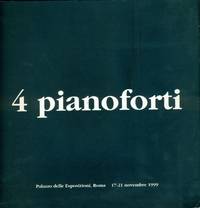
1999205042Roma: Palazzo delle Esposizioni 1999. Brossura wrappers. Molto buono Very Good. Catalogo dell'esibizione "4 pianoforti" eseguita a Roma Palazzo delle Esposizioni 17-21 novembre 1999 da <strong>Charlemagne Palestine</strong> <strong>Michael Harrison</strong> <strong>Philip Glass</strong> <strong>Terry Riley</strong> in prima mondiale/europea. Il festival era a cura di Fabio Sargentini Associazione Attico Associazione Silenzio. Testi di Renato Nicolini e Fabio Sargentini. Biografie dei performers note sulle composizioni interviste. In appendice "Breve storia della musica minimalista" di Paolo Coteni e Giovanni Antognozzi. Fotografie in bianco e nero. Edizione in italiano e inglese. 8vo. pp. 58. Molto buono Very Good. . <em>Il Palazzo delle Esposizioni guidato da <strong>Renato Nicolini</strong> ospitava il festival ideato da <strong>Fabio Sargentini</strong> con <strong>Charlemagne Palestine</strong> <strong>Michael Harrison</strong> <strong>Philip Glass</strong> <strong>Terry Riley</strong>. Un pianista per ogni serata e la quinta eccezionalmente tutti e quattro insieme nei quattro bracci del Palazzo in una sorta di jam session del<strong> pianoforte minimalista</strong> unica nel suo genere. "Non tutti sanno che Roma è"; stata negli anni Sessanta il quartier generale in Europa dei <strong>musicisti americani minimalisti</strong> che oggi vanno per la maggiore. Si esibivano nella mia <strong>galleria-garage</strong> <strong>L'Attico</strong> accanto ai migliori artisti della danza contemporanea dando luogo alle prime manifestazioni di performances che si conoscano in assoluto. Grandi tempi! . Lo spazio della galleria divenne l'alveo il letto pronto a ricevere l'ondata concettuale e minimalista che si annunciava . I giovani musicisti rispondevano ai nomi di La Monte Young Terry Riley Phil Glass Steve Reich Charlemagne Palestine. Tutto ciò accadeva nel 1968-1969 e durò per circa 10 anni è . Memori dei loro trascorsi romani trent'anni esatti fa per l'appunto nel 1969 gli stessi nomi con ben altra notorietà tornano ora in una sede prestigiosa istituzionale come è" giusto che sia" dal testo di Sragentini.</em> Palazzo delle Esposizioni, unknown
1950003798New York: American Christian Palestine Committee 1950. Very good. A pamphlet and a gathering of mimeographed sheets 1940s - 1950s; pamphlet - 8 x 5 1/4; pp. 6; illustrated with photographs; stapled mimeographed sheets - 14 x 8 1/2; pp. 8 text to recto only; minor wear and creasing and light age-toning - in very good condition. The American Palestine Committee was founded in 1932 as a political lobby group with the aim of influencing American policy towards establishing a Jewish national homeland in Palestine. It would later merge with the Christian Council on Palestine to become the American Christian Palestine Committee in 1946. By that time its members numbered over 15 000 many of them prominent American figures. In the 1950s after the successful creation of Israel in 1948 the organization felt its work was done and it ceased to exist. The pamphlet presented its history and goals while the mimeographed document contained a list of films from the organization's lending library which depicted various phases of Israel's birth and growth. American Christian Palestine Committee unknown
193047228Tel Aviv: Tel Aviv Publishing House 1930. First edition. Softcover. poor to vg. Quartos. Vol.1: 100pp. Vol.2: 68pp. Vol.3: 92pp. Vol.4: 109pp. Vol.5: 96pp. Vol.6: 120pp. Vol.7: 175pp. 2. Photo-illustrated tanned wrappers with dark blue or black lettering on the covers. Pages uncut and unopened. The full and conclusive text of the historically important Shaw Report aka the Shaw Comission Report of the Commission on the Palestine Disturbances of August 1929 consisting of the commission's findings regarding the events and causes of the infamous 1929 Palestine Riots. The text of these volumes was taken from transcripts appearing in the reports of three major newspapers in Palestine - Davar Haaretz and The Palestine Bulletin now the Jerusalem Post in addition to other submitted documents. The commission which investigated and held hearings from October - December 1929 was chaired by Sir Walter Shaw the highly regarded British jurist and included three other members British politicians Henry Snell 1865-1944 Sir Rhys Hopkin Morris 1888-1956 and Henry Bucknall Betterton 1872-1949. The final page of the last volume credits the text to these four men. The front cover of the first volume shows Betterton and Shaw in suits. It scarce to find the complete set of these publications.<br /> <br /> Text in Hebrew.<br /> <br /> Most wrappers with with some minor to light chipping rubbing and/or creasing to extremities as well as foxing to the edges. Most of the images on the covers are unaffected. Vol.1 with cover detached but present. Foxing to edges of book blocks. Interior with some sporadic minor to light water stains to pages. Most pages clean and bright. Book blocks tight overall. These copies seem to have never been read as they for the most part contain unopened pages. Wrappers in poor to very good interiors in good to very good condition overall. Hebrew title: דין וחשבון ×ž×œ× : מעבודת ועדת החקירה ×”×¤×¨×œ×ž× ×˜×¨×™×ª ×‘×™×¨×•×©×œ×™× ×”×—×œ ×ž×™×•× 24 ב×וקטובר 1929<br /> Alternate: ועדת החקירה. Tel Aviv Publishing House unknown
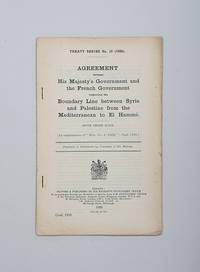
1923181603London: His Majesty's Stationery Office 1923 but 1924. Lines in the sand First trade edition one of 250 copies of the text of the Paulet-Newcombe Agreement including three maps delineating the newly agreed Palestine-Syrian border. The agreement was signed in March 1923 a few months before the Britain's Palestine mandate came into force. Whitehall was represented in the Anglo-French negotiations by Lieutenant-Colonel Stewart Francis Newcombe 1878-1956 a close wartime associate of Lawrence of Arabia who is cited frequently in Seven Pillars of Wisdom. Newcombe was commissioned into the Royal Engineers in 1898 and transferred into the Egyptian Army in 1901. Shortly before the outbreak of war he travelled to southern Palestine in the company of Lawrence and Leonard Woolley to complete a secret survey for the British government - "this initial encounter with Lawrence set up a lifelong friendship between the professional soldier and the young scholar-archaeologist. Newcombe's extraordinary exploits and courage coupled with an inexhaustible supply of energy made him a legend in the desert causing the Arabs to complain that 'Newcombe is like fire he burns friend and enemy'" ODNB. In 1935 he was one of the six pallbearers at Lawrence's funeral. According to the printer's slug the agreement was first published in July 1923 in the Parliamentary Papers series. Octavo pp. 16. With 3 folding colour maps. Text in English and French. Original printed self-wrappers. Wrappers and maps repaired with archival tape rear cover chipped: very good. Khalidi & Khadduri 1648. unknown
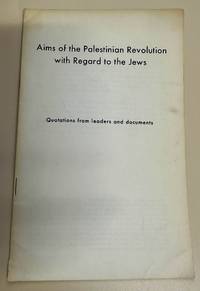
19707379New York: Palestine Liberation Organization New York Office 1970. Staple bound pamphlet 14 pages. Very good. Minor soiling and age toning to cover. Previous owner initials marked out in pen to verso of front cover. Pages crisp and clean in very nice shape. Palestine Liberation Organization, New York Office unknown
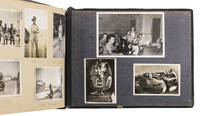
1940ABC_484251940. Contemporary embossed brown calf with flowers on the front and back board and an aluminium view of David's Tower and Jerusalem's old city wall embedded in the front board. Oblong album 30 x 20 cm. With 128 gelatin silver prints most ca. 6.5 x 9.5 cm. Beautiful album with 128 photographs of Egypt and Palestine present day Israel and the West Bank during the British Mandate. It was likely compiled by a British soldier who was stationed in the Middle East during the 1940s. Some of the photographs are numbered in the negative and may have been made by important photographers active in the area at the time like G. Eric Matson and his wife Edith the founders of the Matson Photo Service. The images show Cairo and various locations in Palestine including Jerusalem Bethlehem Nazareth Tiberias Sea of Galilee Nathanya Tel Aviv the Jordan river Haifa Beirut and the Dead Sea. Other than important locations like churches and gates the photographs also show many locals including for example street barbers in Cairo shepherds and farmers in Palestine and beautifully dressed women in Haifa. In the back of the work a few dried leaves from local plants have been mounted namely orange lemon fig eucalyptus grapevine and mulberry. The eucalyptus leaf still retains some of its scent.The edges and vorners of the boards are somewhat scuffed with some loss of material at the head and foot of the spine and around the edges of the embedded aluminium plate. The photographs mounted on the inside of the front board are slightly stained the fig leaf mounted on one of the final pages is damaged and the cyprus leaf is missing. Otherwise in good condition. unknown
195125321<p><b>AMERCAN CHRISTIAN PALESTINE COMMITEE.</b>Scrapbook compiled by Harrison Fry Religion Editor of the Philadelphia <i>Evening Bulletin</i> one of the twenty-two tour participants. April 1951. Items glued or stapled to several pages with additional papers laid in. In green leatherette boards rules and decorations in yellow. 120 pp. 9½ x 11¾ x 1 in. </p><br /><p>The <b>American Christian Palestine Committee</b> ACPC was created in 1946 by merger of the American Palestine Committee 1931-1946 and the Christian Council on Palestine 1942-1946. Its purpose was to educate American Christian leaders about the post-Holocaust need for a Jewish state to publicize the new states' accomplishments to fight anti-Semitism and to support the country's existence. Over 20000 Christian leaders mostly Protestants were members. The ACPC sponsored seminars published educational materials created a speaker's bureau and conducted study tours taking religious leaders and journalists to Israel and adjoining Arab lands.</p><p>This scrapbook documents a trip from March 31 - April 28 1951. Its goals include making a "comprehensive study of Arab-Israel problems" including finding "suggested solutions for the resettlement of these tragic victims of the Arab-Israel War of 1948." The tour visited Israel Jordan and Lebanon and was the first ACPC group to visit to Palestinian refugee camps.</p><p>The group met Israeli Prime Minister David Ben-Gurion; Hashemite Kingdom of Jordan Foreign Minister Achmed Tooqan; Rabbi Jaacov Herzog son of the Chief Rabbi of Jerusalem; and American Ambassador to Israel Monnet Davis as well as other government and university officials and mayors. Early items in the scrapbook are typed copies of their itinerary including stops in Beyrouth Beirut Jerusalem Tel Aviv Haifa and Nazareth; a list of participants with their affiliations; and memoranda. It also includes airline tickets postcards hotel reservations including the King David Hotel and ephemera. Of particular interest is a printed pamphlet with basic information about the Knesset that includes Fry's notes of the group's meeting with Ben-Gurion 1886-1973. After about two weeks in the Middle East Fry also briefly visited Rome Paris and London. He used his notes for an article in the Philadelphia <i>Evening Bulletin</i>.</p><p>The scrapbook collects printed ephemera that illustrate Israel presented itself including a large color "tourist guide map" of Tel-Aviv 13½ x 9½ in. a 24- x 17-inch folding color "motor map" of Israel laid in with their route highlighted in red and with tourist information on each city on the verso; and a small program for a production of "Carmen" by the Hebrew National Opera. Other items include a Vocabulary for Visitors to Israel; and the post-return typed or handwritten letters Fry received including messages of friendship from other tour attendees.</p><p>Black-and-white photographs include an 8 x 10-inch photo of the group of travelers boarding their PanAm plane; a 5 x 7-inch photo of them at the Mosque of Omar; a photograph of settlers at the "future site of 'Kfar Truman'"; and photographs of the group at other sites that they visited such as the Garden of Gethsemane.</p><p><b>Excerpts:</b></p><p>Harrison W. Fry "People of Israel and Neighboring Nations Hope for Peace Despite Border Quarrels" <i>Evening Bulletin </i> Philadelphia April 22 1951</p><p>"<i>In Jerusalem—which means City of Peace—there is much talk of peace. In the Arab countries of Lebanon and Jordan there is more talk of co-operation than of hate. It may be a hopeful index. But no one agrees as to where it will start…</i> <i>if you look carefully there is the desire for peace down at the grass roots among Arabs living as displaced persons in caves and tents and among Israelis living under an austere program.</i>"</p><p>Harrison W. Fry "Ben-Gurion Wants U.S. Help to Bring Peace in Near East" <i>Evening Bulletin</i> Philadelphia April 25 1951</p><p>"<i>Prime Minister David Ben-Gurion of Israel would welcome the good offices of the United States in establishing peace in the Near East. Israel and the Arab states are now operating under an uneasy armistice with frequent border incidents</i>… <i>The shaggy white-haired leader of the modern miracle that is the State of Israel interrupted conferences in connection with the meeting of the Knesset Israel's Parliament now in session to greet the members of the American Christian Palestine Committee study group of which the writer is a member. With all the frankness of a long-time friend he talked of Israel's plans and problems and answered questions with a refreshing frankness free of diplomatic double talk.</i>"</p><p>Harrison W. Fry "Architects of New Israel Are Building Up from Soil" <i>Evening Bulletin</i> Philadelphia April 27 1951</p><p>"<i>In the valley of the Armageddon the old Biblical plains of Esdraelon the scene of many ancient victories and disasters of the Jews the modern Jews won their first victory of the land in the early twenties when the drained the malarial swamps. Today the valley is a Garden of Eden of fragrant orange citrus and olive groves and garden crops—a delight to the eyes after days of traveling in the eroded dust-storm swept Arab lands to the east of Israel… In the Hula Lake section north of the Sea of Galilee and Capernaum where Christ performed his miracles the Jews are today performing modern miracles by reclaiming further swamp areas.</i>"</p><p>Harrison W. Fry "Debris of Intolerance Bears Fruit of Freedom in Israel" <i>Evening Bulletin</i> Philadelphia May 2 1951</p><p>"<i>In a cave on Mt. Zion ancient citadel of Jerusalem are the ashes of thousands of Jewish martyrs to Nazi intolerance—a symbol of 6000000 who so perished. About them are the sacred scrolls desecrated by the Nazis. One of these had been made into a house coat by a Nazi who apparently did not read Hebrew because it bears on its back the warning that the Lord will wreak vengeance upon those who persecute his people… Atop a tower on this hill which borders no-man's land in the uneasy truce with the Arab kingdom of Jordan an Israeli soldier keeps vigil above these shrines that appeal for peace and tolerance. The Jews have put the terrible evidence of intolerance underground and are building a new tomorrow. They want to talk of peace in the Near East the whole refugee problem including the Arabs.</i>"</p><p>Carl Herman Voss to Members of ACPC Study Tour May 11 1951</p><p>"<i>I want to express appreciation for the cooperative spirit all of you manifested on the Tour. You were really a wonderful crew! Thanks too to all of you once again for the lovely Menorah and plate for Hanukkah with which you surprised me during our last evening together in Israel</i>."</p><p>"Assignment Well Covered" <i>Jewish Exponent</i> May 11 1951</p><p>"<i>Harrison W. Fry seasoned newspaperman and religious editor of the</i> Evening Bulletin<i> did a splendid job in reporting and interpreting the events in Israel as he observed them during his two weeks' tour of the country at the invitation of the American Christian Palestine Committee. His articles that have appeared in the</i> Evening Bulletin <i>during these past few weeks have given the readers of the</i> Bulletin <i>a clear insight into some of the problems concerning the country and the manner in which the Government and the people of Israel are grappling with these problems.</i>"</p><p>Carl Hermann Voss to Harrison Fry July 6 1951</p><p>"<i>I did have a chance to hear from my friends that you have given some excellent reports since you returned from the Middle East and that you were as stimulated and thrilled by the trip as was I… I was a bit disappointed not to have your assent to our reiterated invitation to be listed among the speakers for the Club Program Service the speakers' bureau of the American Christian Palestine Committee but I presume that compelling reasons determined your decision. Won't you still reconsider We would look upon your addition to the list of speakers for Club Program Service as a real boon for the ACPC.</i>"</p><p>Memo of Harrison W. Fry to Walter Lister n.d.</p><p>"<i>Judge Levinthal called me late yesterday to say that he and some of his friends were thinking of nominating me as a member of a small party of Christian clergymen from all parts of the United States who are being sent expenses paid to visit Palestine and get first had information of conditions there. Would I accept if the full committee approved. Had I been to Palestine.</i>"</p><p>"<i>I told him the prospect thrilled me as I had never been to Palestine. I told him that Fry disassociated form The Bulletin did not mean anything and much as I would like to go on my own I felt I should not unless the matter was cleared through The Bulletin.</i>"</p><p><b>Harrison W. Fry</b> 1892-1973 was born in Pottstown Pennsylvania and married Laura V. Umstead 1894-1967 in 1918. He entered journalism before World War I with the <i>Public Ledger</i> and then served as religion and education editor for the Philadelphia <i>Evening Bulletin</i>for forty-two years. Fry interviewed every president from Theodore Roosevelt to Harry S. Truman. He served as a charter member and later president of the Education Writers Association in 1948-1949 and was a founding member of the Religion Newswriters Association in 1949.</p><p><b>Carl Hermann Voss</b> 1911-1995 was a Congregational minister who served in Brooklyn; Pittsburgh; Raleigh North Carolina; and Saratoga Springs New York. During World War II he founded and led the Christian Council on Palestine before becoming one of the founding members of the American Christian Palestine Committee.</p><p><b>Louis E. Levinthal</b> 1892-1976 received three degrees from the University of Pennsylvania and was a judge of the Court of Common Pleas for Philadelphia County from 1937 to 1959. He was president of the Zionist Organization of America from 1941 to 1943 and special adviser for Jewish affairs to the postwar European Command in 1947-1948. He served as chairman of the board of governors of Hebrew University in Jerusalem from 1962 to 1968.</p><p>Starting in 1951 the group's activities were opposed by the pro-Arab American Friends of the Middle East later proven to be funded in part by the CIA. The ACPC wound down in the early 1960s when the Israeli embassy and consulates took over the task.</p> hardcover
1922N2417CJerusalem: Greek Convent Press 1922. 1st Edition . Original Wrappers. Good. 4to. 66 pp. Spine repaired with professional linen some smalll losses on reinforced margins of front and back covers inside very good and fresh. <br/> <br/> Greek Convent Press, unknown
1952193208Cairo: Matba'a Fa'wad 1952. First edition of this report on the activities of the Arab Higher Commission for Palestine. Formerly the organization representing Palestinian interests during the British Mandate it continued to operate after the Nakba from Cairo and Beirut until the creation of the Palestine Liberation Organization in 1964. Its activities in the early 1950s focused on the consequences of the Nakba the forced emigration of Arab Palestinians and the arrival of the Israeli settlers with chapters also devoted to Gaza. Several illustrations show images of Jerusalem at that time. The final tables provide financial details on expenditures for humanitarian and military aid and for publications. Quarto 240 x 170 mm. With 3 folding tables 23 half-tone photographic illustrations 1 folding. Text in Arabic. Original printed wrappers wire-stitched as issued. Ink stamp of the Arab Higher Commission for Palestine on title page and following leaf. Extremities a bit rubbed a couple of chips on wrapper edges minor loss at foot of spine a few lower outer corners creased contents toned: a very good copy. unknown
1936N4684Berlin: Palästina-Amt Berlin der Jewish Agency for Palestine 1936. Original Wrappers. Very Good. 8vo. 57pp Head of spine with minimal repair 3 mm OTHERWISE A VERY GOOD CLEAN AND FRESH COPY. VERY RARE ! <br/> <br/> Palästina-Amt Berlin der Jewish Agency for Palestine unknown
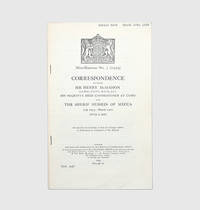
1939184044London: His Majesty's Stationery Office 1939. I am empowered in the name of the Government of Great Britain to give the following assurances First edition representing the first official publication of the deeply contentious McMahon-Hussein correspondence which cast a shadow over the future of Palestine for decades. The British Government released the full letters during the St James's Palace Conference in response to mounting pressure over the precise wording of McMahon's commitments. Shortly after the release a committee was formed to examine the precise implications of the letters. It concluded that "His Majesty's Government were not free to dispose of Palestine without regard for the wishes and interests of the inhabitants of Palestine". British representatives on the committee maintained that Palestine was excluded from McMahon's commitments but agreed that "the language in which its exclusion was expressed was not so specific and unmistakable as it was thought to be at the time" p. 10. Octavo pp. 18. With colour folding map. Original printed self-wrappers wire-stitched as issued. 15 March 1939 ownership mark of Harold Meek 1922-2016 architectural historian typed at head of title page. Light toning and creasing: near-fine. unknown
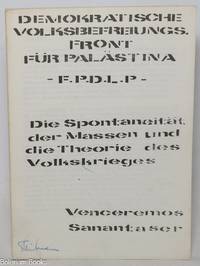
1969340606Heidelberg: SDS-Heidelberg 1969. 57p. 8x6 inches; spine is glued with bookbinding mull as if separated from wrappers yet we find no evidence of missing covers ownership signature and small pen mark on front cover otherwise in very good condition. Text in German. Pamphlet by the group led by Nayef Hawatmeh later known as the DFLP published originally in Arabic under the title Hawl al-'Affwiyya wa al-Nazariyya Bayn al-Munazzamat al-Fida'iyya al-Falastiniyya "On Spontaneity and Theory Among the Palestinian Guerrilla Organizations" Beirut 1969. Two introductory essays: one signed by M.S. intervening in German leftist debates over the nature of Zionism and colonialism in Palestine and another by Gerard Chaliand on line struggle within the PFLP. Also includes statements by the DFLP before and after their split/founding. This translation was issued by the Socialist German Students' Union along with an editorial group named "Venceremos Sanantaser" سننتصر / venceremos in Arabic. SDS-Heidelberg unknown
1939N4584<p>London: Massada Press 1939 Second impression. Original Wrappers. Very Good. 8vo . 20pp . T<strong>HE JEWISH RESPONSE of the JEWISH AGENCY FOR PALESTINE to the British Government's publication of the " McMahon Letters "</strong> published earlier the same month March 16th 1939. <strong>The McMahon Letters include the correspondence between Sir Henry McMahon His Majesty's High Commissioner in Egypt and Hussein Sharif of Mecca between 1915 and 1916 and represent a series of letters that were exchanged during World War I in which the British government agreed to recognize Arab independence after the war in exchange for Hussein's launching the Arab Revolt against the Ottoman Empire.</strong> These alleged promises to the Arab side given before the later BALFOUR DECLARATION OF 1917 were therefore considered by the supporters of the JEWISH CAUSE as being without legal validity. <strong>THIS VERY RARE PUBLICATION includes among its documents a STATEMENT BY MCMAHON that the area in which Arab independence was promised DID NOT INCLUDE PALESTINE.</strong> - With a folding coloured map of the ARAB TERRITORIES AND PALESTINE. Lower part of the booklet with 2cm wide strip of water stain NOT AFFECTING THE MAP outside cover with some markings on spine and remains of label removed. OTHERWISE A VERY GOOD COPY. VERY RARE AND IMPORTANT PUBLICATION. <br /><br /></p> Massada Press
1939186857London: Issued by the Jewish Agency for Palestine 1939. Second impression of the Jewish Agency's response to the publication of the McMahon Letters correspondence purportedly showing Britain agreeing to Arab independence including over Palestine prior to the Balfour Declaration. The agency interpreted the letters as confirmation that Palestine was always treated separately and not included in territory to be granted to the Arabs. The McMahon Letters were published by the British Government early in 1939 in an attempt to clarify Britain's historical position. This response cites substantiating documents including government statements and T. E. Lawrence's 18 November 1922 draft preface for Seven Pillars of Wisdom. The colour map emphasizes that Palestine amounts to only one per cent of territory under Arab rule. The second impression was published the same year as the first. Octavo pp. 20. With colour folding map of "Arab Territories and Palestine" text on verso. Original printed wrappers wire-stitched as issued front cover lettered in black. A hint of soiling to wrappers and light stain at foot of contents. A very good copy. unknown
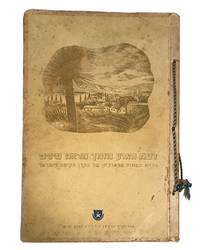
1940228911940. An early Zionist cigarette card photo album during the British Mandate period documenting Jewish paramilitary forces settlement defense athletics and infrastructure development in Mandatory Palestine likely produced in the 1930s-1940s as an educational and propaganda tool. The images illustrate the development of defense forces collective agricultural settlements and youth training movements that formed the institutional foundation of Jewish state building in the region.<br /> <br /> British Mandatory Palestine c. 1940s. 200 black-and-white silver gelatin photographic cigarette cards mounted in original printed album with Hebrew captions and descriptions. Folio. Original illustrated stiff wraps featuring a soldier in a sun helmet scanning the horizon rifle slung over his shoulder. A rare Zionist cigarette card photo album documenting the military security and athletic institutions of the Yishuv the Jewish community in pre-state Palestine during the British Mandate period. The album serves as both propaganda and educational material designed to instill national pride and discipline among the Jewish population particularly youth involved in the Haganah the Palmach and other proto-military defense organizations. The imagery and text emphasize the dual ethos of physical preparedness and self-defense alongside agricultural labor and nation-building. The album consists of photographic cigarette cards depicting key aspects of Zionist security forces settlement defense and sporting achievements in Mandate Palestine. The first sections focus on military training featuring members of the Jewish Settlement Police Notrim Jewish auxiliary police under the British and early paramilitary forces. Uniformed men in sun helmets keffiyehs or British-style caps are shown patrolling rural roads manning watchtowers practicing marksmanship and training in hand-to-hand combat. The inclusion of women in certain images suggests their role in auxiliary units foreshadowing the integration of women in the Israeli military. Several images capture women in agricultural labor construction and fishing industries highlighting their integral role in building and sustaining early Jewish settlements particularly within the kibbutz movement. Additionally photographs of women in aviation training including piloting gliders showcase early efforts to integrate them into technical and military fields.<br /> <br /> A later section transitions into the "Wall and Tower" Homa U'Migdal settlements-strategically built fortified agricultural outposts constructed overnight to establish a Jewish presence in contested areas. Photographs show men and women erecting wooden watchtowers carrying supplies and working cooperatively to secure land under hostile conditions. These images capture the pioneering spirit of the Yishuv where defense and agriculture were inseparable components of state-building. The final third of the album focuses on athletics reflecting the Zionist ideal of the "New Jew"-physically strong self-sufficient and ready to defend the homeland. Included are images of Jewish sports leagues fencing boxing wrestling weightlifting and track and field with a notable photograph of a female athlete wearing a "Ramah" Maccabi shirt symbolizing Jewish participation in international sports and the Maccabiah Games. The album also features aviation imagery including early Jewish pilots training in gliders an essential precursor to the formation of the Israeli Air Force.<br /> <br /> Covers show mild wear with minor foxing and wear to spine. Interior pages exhibit mild creasing to margins pages and photographs clean. Some cigarette cards are slightly lifting at the edges but all appear present. Overall very good condition. A visually rich artifact of Zionist history this cigarette card album offers rare photographic documentation of Jewish military organization settlement defense and athletic prowess during a crucial period leading to Israeli statehood. Complete or near-complete examples of such albums are scarce and highly sought after. unknown
197392791973. kart. unknown
1930188559Jerusalem: Matba'at D r al-ayt m al-S r yah 1930. The Hope Simpson Report First Arabic edition of Sir John Hope Simpson's groundbreaking report with only two other copies traced at the American University of Beirut and the National Library of Israel. It was published in the same year as the English edition. After a successful career as a diplomat and politician Simpson 1868-1961 was sent to the British Mandate of Palestine subsequent to the 1929 riots to chair a British commission addressing Jewish land settlement and Zionist policies. The report discusses Palestine's natural conformation and climate the impact of Jewish land ownership on the economy and the resulting widespread unemployment among the Arab population which was a cause of unrest. It also addresses demographic changes and public health services including anti-malaria prophylaxis as well as irrigation projects the types of land and its ownership present in Palestine and legislation concerning Bedouin land rights. A pivotal observation is the economic imbalance between the Jewish settlers and the Arab population. The report concludes that "there is at the present time and with the present methods of Arab cultivation no margin of land available for agricultural settlement" and that "it is impossible to give. a reliable estimate of the number of families who could be accommodated in Palestine if the whole country were adequately developed". Quarto. Original blue wrappers wire-stitched as issued. Corners a little bumped spine creased front cover sunned with couple of ink drops and marks towards outer margin contents toned but clean: a very good copy. unknown
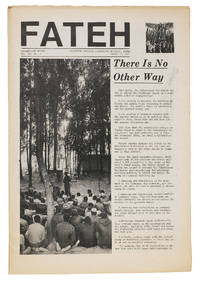
1971ABC_47952Beirut: Palestine National Liberation Movement 1971. 42 x 29 cm. Folded. Numerous black-and-white photographic illustrations. Rare and remarkable periodical published by the Palestine National Liberation Movement or Fatah. This was a revolutionary group and later a political party founded in 1957 by Yasser Arafat 1929-2004 Khalil al-Wazir 1935-1988 and 3 or 4 others. The movement published numerous periodicals and pamphlets between 1968-1972 but Fateh is the most important one. Originally published in Arabic it was also issued in English from 1969 bi-weekly in French from 1970 monthly and in Italian from 1971 bi-weekly. We have not been able to find any other English issues of this periodical for sale anywhere else.The name of the group Fatah is an acronym in reverse for "Harakat al-Tahrir al-Watani al-Filastini" the Arabic translation of "Palestine National Liberation Movement". The intention of the founders was to create an organisation that was independent of governments and political parties with the goal to liberate Palestine through low-intensity guerilla warfare. It was part of several armed fights with Israeli and Jordan forces during the 1960s and 70s. Fatah modelled itself after the revolutionary groups of Algeria Vietnam and Cuba. On page 9 of the present issue of Fateh a large photo has been printed of a group of protesters holding signs with the images of the leaders of these revolutions which is a clear message to the reader.The present issue of Fateh contains numerous articles with news from or about Palestine and the movement. It was printed a few months after Black September the bloody clash between Fatah and the Jordanian army in 1970 during which thousands of Palestines were either killed or expelled from Jordan. The first few pages of the periodical are dedicated to this event and other clashes between the two groups that resulted from it. Other articles discuss a 10-hour battle near Tel Aviv the relationship between America and Israel and injustices against Palestinians. Of particular interest are the three powerful full-page illustrations. They were designed in 1970 and issued separately as posters. The first image of a rifle with an olive branch was designed by Natheer Naba'a who is only known for his posters for Fateh. The second image called "stolen smile" shows a photo of a group of determined children and was designed by Jassem el Zubeidy who is only known for this design. The last image is an illustration of a Palestinian woman with a moving text about Palestine designed by Palestinian artist Kamal Boullata 1942-2019.The periodical is somewhat browned and inkstained and the edges are slightly frayed. Otherwise in good condition.l The English language Fateh periodical is present in ca. 30 libraries worldwide not all possess all volumes issued 1969-1971 see WorldCat 1568957 145144012 72895793 1036673977 924471377 898713265; cf. Interactive encyclopedia of the Palestine question entry: the Palestinian national liberation movement; Periodicals in review: periodicals and pamphlets published by the Palestinian commando organisations. In: Journal of Palestine studies vol. 1 1 1971 pp. 136-151. Palestine National Liberation Movement, unknown
198526103Ankara: Palestine Liberation Organization 1985. Softcover. g. Oblong 12mo. Unpaginated. Original pictorial wrappers. Title-page in red and black lettering. Fascinating work being a pictorial Palestinian political history profusely illustrated with numerous color maps and b/w and color photographic reproductions. Very minor and slight soiling on covers. Text in Turkish. Wrappers in overall good to very good interior in very good condition. Palestine Liberation Organization unknown
1910PALESTIN024601Macmillan London. 1910. Fifth edition revised throughout. Issued in the Macmillan Guides series. Small octavo. pp xxxii 164 8 adverts. 13 colour maps six of them folding 6 plans. Fine in the scarce dustwrapper which is very good darkened at the spine nicked and chipped. Macmillan, London. unknown
1939N4645Jerusalem: Government Printer 1939. First Edition . Half Cloth. Very Good. 8vo. Some 12000pp for the 14 volumes. HEBREW LANGUAGE. Each colume with owner's stamp on the firtst page MODAI ADVOCATES -TEL AVIV Some spotting on edges and front end papers. A few pages loose. General minimal wear. UNIFORM HALF CLOTH BINDING. A VERY GOOD COPY OF THIS RARE OFFFICIAL PUBLICATION FO THE PALESTINE MANDATE. <br/> <br/> Government Printer hardcover
1947N3607Tel Aviv: The Anglo-Palestine Bank Limited 1947. Original Wrappers. Very Good. 8vo. III248 pp. Light foxing on wrappers otherwise a very good and clean copy. <br/> <br/> The Anglo-Palestine Bank Limited unknown
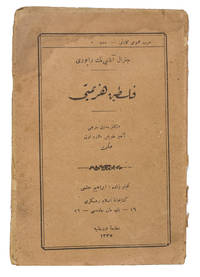
1919ABC_47443Istanbul: Matbaa-yi Orhaniye 1919. Original publisher's orange printed paper wrappers. 8vo ca. 18.5 x 12.5 cm. With the Turkish text printed using Arabic script. First and only edition of a report about the Sinai and Palestine campaign 1915-1918 in Ottoman Turkish translation. This second half of this campaign was led by General Edmund Henry Hynman Allenby 1st Viscount Allenby 1861-1936. He commanded the Egyptian Expeditionary Force EEF then part of the British army against the Ottoman Empire in the conquest of Palestine in 1917-1918. The EEF succeeded in capturing Beersheba Jaffa and Jerusalem in late 1917 as well as the Jordan valley and Northern Palestine in 1918. The present work is a translation of Allenby's reports which cover the period between December 1917 when the British entered Jerusalem and September 1918 when General Allenby started a new campaign resulting in the capture of Damascus and Aleppo. The report begins with operations to make Jaffa and Jerusalem safe against Turkish counterattacks and continues with Allenby's succesful attacks on Jericho the Jordan Valley and As-Salt. The EEF won numerous other battles in the region before the Armistice of Mudros ended the campaign in October 1918. Allenby then became the High Commisioner in Egypt and Sudan from 1919-1925.With an inscription on the title page and on the back wrapper. With a water stain on the head margin throughout including the wrappers the spine is somewhat torn but the wrappers are still connected. Somewhat browned throughout the edges of the leaves are frayed the leaves are folded and loose in the wrappers as issued. Otherwise in good condition.l WorldCat 777059280 3 copies; Özege 5787; cf. The campaign in Palestine: General Allenby's official report of the fighting north of Jerusalem up to September 18 1818. In: Current history 1916-1940 vol. 9 1 part 2 1919 pp. 167-172. Matbaa-yi Orhaniye, unknown
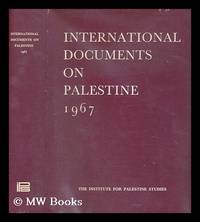
1970254951Beirut : Institute for Palestine Studies 1970. First Edition. Hardcover. Very good cloth copy in a near-fine very slightly edge-nicked and dust-dulled dust-wrapper. Remains particularly and surprisingly well-preserved overall; tight bright clean and strong. Physical description; xxxvii 748 p. ; 24 cm. Subjects; United Nations — Palestine. Jewish-Arab relations. Beirut : Institute for Palestine Studies hardcover