8 résultats
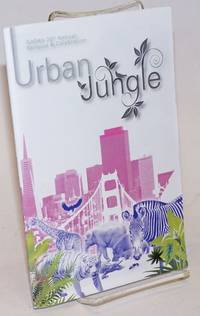
2007232817San Francisco: GAPA 2007. 28p includes covers 5.5x8.5 inches photos ads event schedule cards laid-in very good event program in stapled white pictorial wraps. Nineteenth annual awards ceremony. GAPA unknown books
2008232824San Francisco: GAPA 2008. 32p includes covers 5.5x8.5 inches photos ads event schedule cards laid-in very good event program in stapled white pictorial wraps. Twentieth annual awards ceremony. GAPA unknown books
20181662Tokyo: Tuttle 2018. Hardcover. Black boards color photo illustrated. Fine. Ueda Idzuhiko. 144 pages. 7.5 x 10 inches. For the first time in English this book presents over a hundred independently scored reviews from a leading Japanese whisky expert Yuji Kawasaki to shed new light on Japan's most famous single malts as well as its grain whiskies and blends. Japan expert Brian Ashcraft and photographer Idzuhiko Ueda crisscrossed Japan visiting all the major whisky makers to talk with past and present distillers blenders and coopers. Featuring exclusive interviews with the people involved in the early beginnings of the Japanese whisky industry seventy years ago. A foreword by leading American whisky writer Lew Bryson places the recent success of Japanese whisky into a global context. <br/><br/> Tuttle hardcover books
200626058Washington DC: U. S. Government Printing Office 2006. First Edition. Spiral Bound. Fine. Manzanar National Historic Site was designated on March 3 1992 to mark the location of Owens Valley Reception Center which opened on June 1 1942 with the internment of 9666 Japanese Americans. The site was one of many in the United States created by President Franklin D. Roosevelt's Executive Order 9066 which resulted in the internment of 120000 Japanese Americans over the course of World War II. The site was transferred to the the National Park Service in 1997 by the City of Los Angeles this report details opportunities for further development and interpretation of the site by the Naitonal Park Service. 6 291 36 pp. 4to. Clean crisp copy with black wire spiral binding and clear plastic covers. U. S. Government Printing Office unknown books
20049305San Francisco: Pacific Editions 2004. One of 90 copies all signed by the artist Charles Hobson each with pastel monotype by Hobson that has been reproduced as a digital pigment print with hand coloring. It is the penultimate image in the book. Page size: 5-1/2 X 4-3/4"; made from postcards translucent envelopes various papers and features the photographs of Robert Doisneau. There are 3 envelopes - each with a photograph and a fictional story about the person in the photographs. Bound: red linen spine with black paper over boards with surround of black corrugated board housed in Mylar envelope with string tie. There is a "lipstick" imprint in red on the black paper on the front cover and a photographic image of a woman's lips on the corrugated surround. The 3 Mylar envelopes housing the photographs and "story" are in orange pink and red. Other photographic images are mounted on various colored papers on the verso pages before the Mylar. Hobson may be the ultimate romantic - assembling these "kissable" images and creating fictions for them as a Valentine for his wife. The world of book arts benefits from his gesture. Pacific Editions unknown books
20069924San Francisco CA: Pacific Editions 2006. One of 38 copies all on BFK Rives and Strathmore papers incorporating hand-colored cotton and jute twine each signed and numbered by the two poets and artist / designer Charles Hobson who assembled the edition with the assistance of Alice Shaw. Page size: 7-1/2 x 8 inches; 48pp. Bound: two signatures sewn in an accordion structure fabric and paper over boards red printed label on spine; housed in fabric-covered slipcase with red jute twine ties. The design of the book incorporates twine which actually weaves through the text. Inspired by the poem and evoking the experience explored in the text the string / thread acts like a drawn line and can be moved around by the reader to change the "drawing" and the experience. The reverse folds of the book contain images of beets to accentuate characteristics of the poem. The string-like roots and the fullness and ripeness of the vegetable shapes recall and emphasize the individual words from the poem that the artist has chosen to reprint with the images: voice awaken heart distance breath birth. <br/>The poets Paula Sager and Lizbeth Hamlin are practioners and teachers of Authentic Movement a practice that is concerned with the exploration of relationship. In its simplest form there is a mover and a witness. The mover with eyes closed waits for an impulse to move. The witness follows or tracks his or her own experience while being present and attentive to the mover. Their poem is rhythmic and flowing an exploration of insight discovery and personal revelation which is aimed at showing how we as human beings long to relate.<br/>Charles Hobson created the images and reproduced them in hand-colored high resolution digital prints. The text was set by Mr. Hobson in Cantoria MT Light following the authors' original spacing and printed offset. Each page is a visual delight with the text weaving swooping and dipping around the red cotton and jute twine sometimes under the threads with the ensuing shadows but always carrying forward the theme of connectedness. The reader is propelled forward following the motion of the words with the implicit motion of the "thread" of the book. Once again Charles Hobson has taken text and conceived of and created a structure that embodies that text. The reader / viewer is the richer for it. We are presented with a concept and it is explored in the text and then again in the book's structure. And the beets / beats . ! They are the organic imagery that not only move the eye forward but hold the eye with pleasure for at least a beat or two. One could dance to this book and I suspect that was the intent of authors and artist. Pacific Editions unknown books
20059671San Francisco CA: Pacific Editions 2005. First Edition thus one of 48 copies all on BFK Rives paper signed by the author Barry Lopez and the artist / designer / publisher Charles Hobson in pencil and numbered by Hobson. Page size: 11 inches x 12 inches. Bound: with original USGS maps for the concertina binding which when opened creates its own vista of mountains and valleys representing the maps that figure so prominently in the Lopez story covers made of paper over boards paper reproducing a 1911 map of Bogotá from the collection of the Library of Congress publisher's slipcase of wood-grained paper over boards with brass-toned metal label holder attached to spine of box holding white paper label with title and author in black all suggesting a map cabinet which plays a pivotal role in Lopez's story further housed in tan corrugated paper board slipcase slipcase and board covers made by John DeMerrit with the assistance of Kris Langan new. <br/> The book opens with images of hands emulating gestures of a map maker at work reproduced as digital pigment prints on transparent film. The book also contains landscape images and an image of pencils from the writing desk of Barry Lopez printed as digital pigment prints from monotypes with pastel all created by Charles Hobson. The text has been printed letterpress by Les Ferriss in Garamond Narrow type. The book and images were created by Charles Hobson who assembled the book with the assistance of Alice Shaw.<br/> Barry Lopez's THE MAPPIST was originally published in 2000 in LIGHT ACTION IN THE CARIBBEAN. It is a multi-layered story perfectly embodied by Charles Hobson's book. Themes of hidden identities searched out and deciphered hidden intentions coded in seemingly disparate actions and the tantalizing possibilities of bringing order to a chaotic history are beautifully served by the combination of maps that are the subject of the story and literally hold the story together. The story itself is certainly one of the wittiest "legends" ever devised for its surrounding map. The reader is challenged with images thrown up by the author and artist: bits of map interspersing text bits of map as foredge and gutter outside edge on any turn of the page a phrase full of possibilities "he was a patriot" and suggestions in the form of queries: was Lewis Mumford a populist When "The Mappist" gives the narrator a copy of his very rare book THE CITY OF GERANIUMS the reader is doubly seduced with this act of generosity or is it instinct to preserve one's values for the words are preceded and followed by a page of transparent film with the image of a map being passed from one hand to another. Turning the film page the reader is confronted with the act being completed and the hand off accomplished. The narrator finishes his tale with a ride down a very dark gravel road using the sound of the tires on the crushed stone as his "map." We are left wondering where will we find our maps - and will we be able to read them - or remember what we've read. Pacific Editions' THE MAPPIST will certainly help in this ongoing quest. Pacific Editions unknown books
20069787San Francisco: Pacific Editions 2006. One of 12 copies only all on Rives BFK paper each signed and numbered by Charles Hobson and Kay Bradner who collaborated on the design of the linoleum block print. Page size: 18 inches x 9 inches when closed and folded into 8 leaves and when opened fully 7-1/2 feet. There is a title page and page of text and a colophon page as well as the 8-page folded print. Bound: blue cloth spine coastal map over boards on covers with white label printed in black on front cover housed in translucent plastic slipcase fastening with cleat and sailing line on foredge fine. The central image of this book is a three foot square relief print that was created as part of a program at the San Francisco Center for the Book. It was original printed in 2005 by a steamroller at Carolina and 16th Streets San Francisco. Kay Bradner cut the linoleum block and printed it; Charles Hobson designed the book and assembled it with the assistance of Alice Shaw. The print at first glance seems to show a pleasant Sunday afternoon of sailing on the San Francisco Bay. However the position of the sailboats has been established to illustrate some of the most basic right of way rules. The rules themselves are actually embedded in the image in small window openings cut into the print. As usual with books from Pacific Editions all is meticulously crafted disparate elements aesthetically incorporated into a beautiful book. Both artists have a passion for the water and the vessels that move on it. Charles Hobson's extensive output has as a base the juxtaposition of word and image. He is a faculty member at the San Francisco Art Institute and at one time raced a Cal 20 sailboat on the San Francisco Bay where he had first hand experience with the application of the right of way rules. As with other books from Pacific Editions this too must be experienced. Turning the pages opening the "rules" windows and reveling in the deep blue of the print brings a land-locked person as close to the water as is possible. Pacific Editions unknown books