54 résultats
191362167New York: The Century Co. 1913. 8vo. 314 pp. plus 2 pp. publ. ads. Photo frntsp. numerous photo plates facsimile TLS on front pastedown. Pictorial green publisher’s cloth silhouette map illust. of Panama and the Canal front cover black lettering front cover & spine minor dustsoiling shelfwear still VG copy. First edition of this author’s memoir of his time working as a policeman on the Panama Canal Zone in 1912 while they conducted a census of the nationalities and citizens all residing during construction. He comments frequently on the “Jim Crow†laws preventing the mixing of White personnel with Indigenous peoples or West Indies-African workers and the continued struggle to negotiate quarters as well as make accurate count. The Century Co., hardcover
1988788973PN. New. 1988. Soft Cover. Date is original print. This is a reprint edition. . PN paperback
194160340Panama City Panama & New York NY: The Panama National Tourist Commission 1941. Four pieces. 1st - 4to. 8 x 9 in. 80 pp. Photo illustrations maps text illustrations throughout. Colour-illustrated softcovers center fold crease as issued minor tidemark at center in lower part of brochure mostly in last half still G- copy; 2nd - 8vo. 4 x 9 in. 8 pp unpaginated. in leporello accordion-style format printed in green & black photo illustrations map minor creasing VG; 3rd - 12mo. 3.5 x 6.25 in. 20 pp unpaginated. printed in green & black which unfolds to 12 x 17.25 in. broadside on verso photo illustrated NF; 4th - 12mo. 3.5 x 6.5 in. 20 pp unpaginated. printed in red & black illustrated which unfolds to 17.5 x 12.8 in. broadside on verso self-printed softcovers NF. First editions of this scarce series of well-illustrated travel brochures to Panama and the Panama Canal Zone on the eve of World War II. The photos depict Panama folk dances churches and shopping districts as well as indigenous Panamanian peoples jewelry pottery woven textiles and more available for sale. The Panama National Tourist Commission, paperback
191558381San Francisco: C.T. Co. Artgravure 1915. Oblong 4to. 10.25 x 8.25 in. 48 pp unpaginated. Colour-tinted photogravures throughout including panoramic centerfold birds-eye view by the Cardinell-Vincent Co. Embossed brown softcovers embossed raised gilt lettering yapp edges mounted colour photo front cover w/ original mailing envelope tears rubbing chipping F/G- copy. First edition of this nicely printing souvenir photographic record of the Exposition. The interior is excellent in this piece giving views of many of the pavilions fountains and courts. C.T. Co., Artgravure, paperback
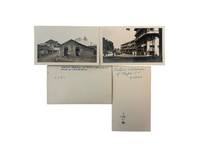
1942221221942. Latin America Panama Life in both urban Panama and the rural town of Chepo during the 1940s photo archive with most prints dated to 1942. Archive of 17 items 16 silver gelatin photographs measure 3.5" x 2.5" with one panoramic photo mounted on cardstock measuring 2.25" x 11". This archive offers a visually rich record of everyday life across class racial and geographic boundaries. Multiple photographs feature captions in ink on the verso providing locations and dates. The archive is split between two geographic zones: the modest rural community of Chepo and a more metropolitan center-likely Panama City-showing large buildings post offices police headquarters cantinas and well-trafficked intersections. In one striking rural image captioned "Dorein sic Indian Mother and Child" a white American tourist likely one of the photo owners stands beside an Indigenous woman and her child on a stilted wooden platform. The Darien likely of either the Emberá Wounaan or Kuna tribes woman wears only a sarong while a toddler stands nude at her feet highlighting the tension between Western spectatorship and traditional village life. In another photo local children gather in front of a wooden building marked "Cantina La Favorita de Chepo" while boys play barefoot on an unpaved road. Women in housedresses stand along porches and Indigenous women in linen skirts and little else are seen emerging from thatched or wooded homes. An image marked "Cantina at Chepo - 3-29-42" shows two white men and a white woman smiling at a table in a roofed structure made of rough wooden beams likely serving as a makeshift bar during their travels. The photos from urban Panama offer a sharp contrast. A modern cantilevered government building identified as the "Police Headquarters" is captioned en verso "Building now has many bullet holes on the sides" possibly a reference to political unrest or postwar violence. Another image shows a broad intersection labeled "6th & 8th St" filled with pedestrians in Western clothing including men in white suits and hats women in modern dresses and a cyclist passing beneath a neocolonial archway connecting civic buildings. Other rural images feature homes elevated on stilts a forested footpath with American visitors walking alongside locals and a panoramic view mounted to board showing a wide aerial view of one of the region's larger towns. Minor wear to edges. Overall very good condition. A rare and intimate archive documenting contrasting experiences of daily life in Panama across rural Indigenous communities and modernizing urban zones in the early 1940s with strong documentary value in the areas of colonial tourism race and hemispheric wartime movement. unknown
1994271689PN. New. 1994. Soft Cover. Date is original print. This is a reprint edition . PN paperback
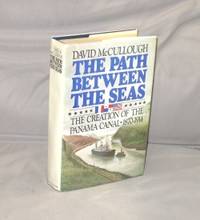
197729315New Haven:: Simon & Schuster 1977. First Printing of the First US Edition. A Fine copy in a Near Fine unclipped dust jacket. The Path Between the Seas tells the story of the men and women who fought against all odds to fulfill the 400-year-old dream of constructing an aquatic passageway between the Atlantic and Pacific oceans. It is a story of astonishing engineering feats tremendous medical accomplishments political power plays heroic successes and tragic failures. Applying his remarkable gift for writing lucid lively exposition McCullough weaves the many strands of the momentous event into a comprehensive and captivating tale. Simon & Schuster, unknown
1991D3S0035205Panama Canal Commission 1991-01-01. Pamphlet. Good. 1982 EDITION! 6 of 11 pages of pencil underlining. First page has minor sticker residue. Cover shows wear with bumped/curling corners. Binding is tight. Panama Canal Commission unknown
196646055N.p.: Gnaoua Press 1966. Near Fine. N.p.: Gnaoua Press 1966. First Edition. Octavo 21cm; publisher's pictorial staplebound card wrappers; 620pp.; halftone photographic frontispiece and illus. throughout. A hint of toning to wrapper margins else Fine. Gnaoua Press unknown
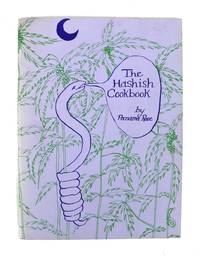
1967332687Morocco: Gnaoua Press 1967. First edition. 20 pp. viii. 8vo. Staple bound illustrated wrappers some sunning to spine and stain from price sticker else near fine. First edition. 20 pp. viii. 8vo. Panama Rose was the pen name of Rosalind Schwartz whose partner at the time was poet underground filmmaker publisher and photographer Ira Cohen. From around 1961-1965 they lived together in Tangier Morocco where they spent time with other ex-pats Paul Bowles William S. Burroughs and Brion Gysin and worked on music and publications. Schwartz wrote The Hashish Cookbook at the suggestion of Brion Gysin who years earlier had given Alice B. Toklas the hashish fudge recipe that appears in The Alice B. Toklas Cook Book. Often The Hashish Cookbook is wrongly attributed as being written by Cohen himself though he did publish it when he returned to New York in 1966. 10000 copies were printed and sold within six weeks. Cohen later sold the rights to a British publisher for a percentage of sales and subsequent reprints were made and some bootlegs are known to exist. Gnaoua Press unknown
1966PARIS 44GNAOUA 1966. Book. Very Good. Soft cover. 1st Edition. A VERY GOOD FIRST EDITION 1966 Panama Rose was the pen name of Rosalind Schwartz whose partner at the time was poet underground filmmaker publisher and photographer Ira Cohen. From around 1961-1965 they lived together in Tangier Morocco where they spent time with other ex-pats Paul Bowles William S. Burroughs and Brion Gysin and worked on music and publications. Schwartz wrote The Hashish Cookbook at the suggestion of Brion Gysin who years earlier had given Alice B. Toklas the hashish fudge recipe that appears in The Alice B. Toklas Cook Book. Often The Hashish Cookbook is wrongly attributed as being written by Cohen himself though he did publish it when he returned to New York in 1966. GNAOUA Paperback
1980F1600-PanamaMorrow New York 1980 New York: William Morrow & Company 1980. First edition. First printing with full number line including the 1. Hardcover. Quarter brown cloth over beige paper-covered boards with silver spine lettering and blue endpapers. Fine in a fine dust jacket. Publisher's original price intact on front flap $9.95. Comes with archival-quality mylar dust jacket protector. A tight clean copy. Octavo 203 pages. A psychological novel adapted from an unproduced screenplay by the authors it explores the boundaries between intimacy and deception. Norman Panama 1914-2003 was an American screenwriter film director and producer best known for his long collaboration with Melvin Frank on classic comedies such as "White Christmas" and "Mr. Blandings Builds His Dream House." Albert E. Lewin 1916-1992 was a New Yorkborn writer for radio television stage and film whose papers are held at UCLA. "The Glass Bed" was their only published novel. 1st Edition. Hardcover. Fine/Fine. Morrow, New York hardcover
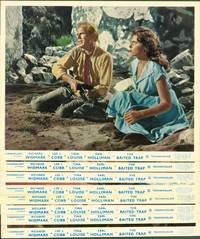
1959298562Paramount Pictures 1959. Photograph. 8 movie stills in color full set. Movie stars Richard Widmark Lee J. Cobb Tina Louise and Earl Holliman Near fine copies.<br> Paramount Pictures unknown
1956150115Los Angeles: Paramount Pictures 1956. Vintage promotional reference photograph of Al Capp from the 1956 film. "Culver Pictures Inc." and "131242" stamps and two later date "Culver Pictures Inc." labels on verso.<br /> <br /> Based on the 1954 Broadway play "King of Hearts" by Jean Kerr.<br /> <br /> Al Capp famed cartoonist for his long-running satirical comic strip "Li'l Abner" portrays himself in a cameo role as well as providing promotional art for the film.<br /> <br /> Divorced comic strip cartoonist Francis X. Dignan Bob Hope is hired as a ghost-writer for the pompous fiance George Sanders of his ex-wife Eva Marie Saint. <br /> <br /> Set in Port Huron Michigan and New York City. <br /> <br /> 8 x 10.25 inches. Very Good with creasing primarily to margin. Paramount Pictures unknown
1956159115N.p.: N.p. 1956. Two vintage double weight reference photographs from the 1956 film showing actress Eva Marie Saint and several extras relaxing on the set between takes. <br /> <br /> Based on the 1954 Broadway play "King of Hearts" by Jean Kerr and Eleanor Brooke. A divorced comic strip cartoonist is hired as a ghostwriter for the pompous fiancé of his ex-wife. <br /> <br /> Set in Port Huron Michigan and New York City. <br /> <br /> 10 x 8 inches. Near Fine. N.p. unknown
192531179PRIMERA EDICION.- Madrid: Ed. Marineda Libr. de Alejandro Pueyo 1925.- 206 p. 1 h.; 8º 19 cm.; Intonso con todas sus barbas; Rústica Ed. pintada a todo color por "Quesada Hoyo".- Importante autor panameño que nos narra en este libro su viaje desde Cuba rumbo a El Havre. Es libro ameno plagado de interesantes reflexiones algunas de ellas referentes a la MASONERIA con la que simpatiza sin ningún disimulo. Incluye el libro un verso traducido del francés que según el autor es una ORACION DEL MASON. RARO. LITERATURA ESTUDIOS LITERARIOS FILOSOFÃA Y PENSAMIENTO IBEROAMERICANO EN GENERAL Libro en español Ed. Marineda paperback
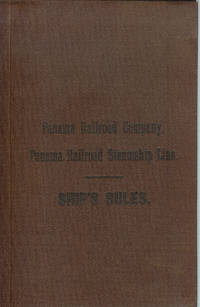
190324029no place: Panama Railroad Company Panama Railroad Steamship Line 1903. Original edition. Hardcover. Near fine. 30 pp. 4.5 x 6.75 inches original brown cloth. <br/><br/>Explicit rules of conduct and protocols for employees of the Panama Railroad Company. Scarce. Panama Railroad Company, Panama Railroad Steamship Line hardcover
1990231067PN. New. 1990. Soft Cover. Date is original print. This is a reprint edition . PN paperback
191326706Tegicigalpa: Tipografia Nacional 1913. Wraps. Good. 26 pages. Printed yellow wrappers. 7 3/4 x 11 inches. Browned paper uncut and unopened. Dampstaining near spine in several places throughout. A scarce publication. Wraps. Rough english translation: "Regulation of the Honduras Section at the Panama-Pacific International Exposition San Francisco California 1915: approved by supreme agreement of May 28 1913 . followed by the Regulations and Rules for Reporting and Guidance of Those Who Claim to Participate in she dictated by the President of The Expresada Exposicon And Corrected And Approved By The Same Tipografia Nacional unknown
1993265010PN. New. 1993. Soft Cover. Date is original print. This is a reprint edition . PN paperback
19602090202120412948Not Available 1960. Soft Cover. Fine. Number of books: 1 Not Available paperback
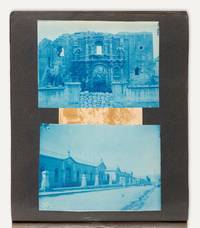
1918List2982Peru and Panama 1918. Approximately 364 photos; album and unmounted photos silver prints cyanotypes and printing-out-paper prints. Photos measure 3 x 4 to 8 x 10 inches with about half measuring 3 x 5 ½ inches. Some with photographer’s hand-stamp or credit in pencil; others with manuscript notations verso or recto; some captions to album pages. Offered in partnership with Daniel / Oliver.<br /> <br /> Rich and extensive photographic archive of Walton T. Burres of Stockton California showing his time in Peru c. 1904 as an amateur explorer and doctor for the Inca Mining and Rubber Company and his later work in Panama c. 1918 with the Rockefeller Foundation’s International Health Division.The collection consists of a large number of loose photos acquired by the gallery in 2021 and a recently discovered photo album showing some of the same subjects and containing a few duplicate images some printed in different sizes or formats as well as hundreds of previously unseen prints. Together this material makes up the largest extant archive of Burres’s photographic work. Though his work was published at the time both in Peruvian and American publications much of it was lost when he dropped it in a river that he was attempting to ford.<br /> <br /> Burres was educated at California’s Cooper Medical College the first school of medicine on the West Coast and was a prominent member of the Stockton community before sojourning to Peru around 1900 to help the Inca Mining and Rubber Company address the deadly diseases endemic to the region such as malaria and yellow fever. To encourage economic infrastructure in remote areas the Peruvian government began granting land concessions to any company that would build roads bridges or river ports. As a result the Inca Mining Company an American outfit based in Tirapata purchased the rights to mine gold along the upper Inambari River in 1896 and soon became the richest gold producer in Peru.<br /> <br /> A large portion of Burres’s Peruvian images document his 1903–1904 excursion from Arequipa 150 miles into “rubber country.†The journeys were well-recounted in U.S. papers and a number of the anecdotes described in print are seen in the present images.<br /> <br /> There are many dynamic views of Burres and his party trekking through the dense jungle and summiting the high mountains as well as shots of flora fauna and native Peruvians. Burres’s travel companions for this trip included the famed adventurer Harriet Chalmers Adams later dubbed “America’s greatest woman explorer†by the New York Times. Adams and her husband Frank both fellow Stocktonians joined up with Burres during their own multi-year expedition through South America. There are a number of portraits of a woman who bears a striking resemblance to Adams though it is possibly another person.<br /> <br /> Other Peruvian material includes numerous views of Cusco Arequipa and the surrounding environs including a beautiful interior of a chapel a Martin Chambi-esque detail shot of a stone wall and portraits of local townspeople some identified as Quechua people. There are a number of lush large-format cyanotypes rich printing-out-paper views and many handsome small-format panoramas. These were printed on Inca Mining Company surplus stationary which speaks to the makeshift nature of photo-development under the circumstances. One particularly striking image shows the top of Misti volcano barely visible above the clouds. This image was reproduced in Burres's account of his travels published in 1909 in Outing magazine.<br /> <br /> The photographs from Burres’s time in Panama document his more serious work as a virologist and health administrator in the area. One interesting photo shows a pair of recently-shot iguanas with a caption noting that “blood of these reptiles was found infected with Haemogregarina.†Another image is that of a new style of privy built from concrete and wire-mesh designed to better keep out rain water. There are also keenly-shot views of main streets and local culture in Los Santos Chiriquà and elsewhere including a number of humanistic group portraits taken at a girl’s school. unknown
192328406Mount Hope CZ: Panama Canal Press 1923. First edition. Stapled paper wrappers. A very good copy some sunning to the wrappers small tear along the fore edge of back wrapper and a few leaves. 12 pp. 8vo. A note states: "This information is provided for a handy reference and style guide for machine operators proof readers and reviewers employed at the Panama Canal Press." Includes ship names dimensions tonage etc. Scarce. OCLC shows no copies. Panama Canal Press unknown
193851354Panama Canal: Hotel Tivoli & Hotel Washington 1938. 4to. 12 pp unpaginated. Printed in green & red throughout numerous green-tinted photos large double-page centerfold map of the Panama Canal showing the locations of the Hotels on the Caribbean and Pacific sides a couple smaller maps. Self-printed illustrated softcovers slight soiling very minor center creasing from fold still VG copy. First edition early printing of this scarce work extolling the virtues of vacationing at the famed Hotels Tivoli & Washington by the Panama Canal in the 1930s. The Hotel Washington was constructed and opened in 1913 and operated by the Panama Railroad Company by order of the Secretary of War to be operated for the Government. Built of concrete and cement blocks it was constructed in a modified Spanish Mission style that made it very comfortable and had a very large pool. The Tivoli Hotel was opened in November 1906 and served as the centerpiece of Canal Zone society until it closed in 1971 and President Roosevelt is considered the first person to have “officially†stayed at the Tivoli. Hotel Tivoli & Hotel Washington, paperback
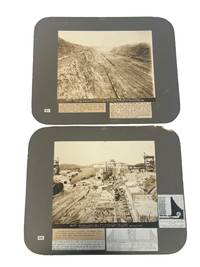
1912201831912. Panama Canal Early Photography Two large albumen photographs of the construction of the Panama Canal 1912. Photographs are pasted down to grey cardstock with captions and articles describing the imagery below. Photos measure 11" x 14". The building of the Panama Canal was not met with ease as the former French owned project was abandoned due to lack of investment and a high worker mortality rate and the grappling of territory between Panama Columbia and the United States. In 1903 Panama gained it's independence and as the United States recognized this Roosevelt used buying power to his advantage to funnel millions of dollars towards Panama and the funding of this project. These two photographs are early large scale displays of the massive amounts of land and infrastructure that went into this long awaited project. One photograph shows the Culebra Cut in June 1912. The article pasted to the front states that "To remove the 105000000 cubicyards of earth from the backbone of the Americas required about 6000000 pounds of high-grade dynamite each year to break up the material.in which time some 19000000 pounds were exploded in Culebra Cut only eight men were killed." The second photograph dated January 1912 shows the Miraflores Upper Locks with a diagram of what the final construction would look like. The photograph shows a partially built sill multiple tracks for hauling material heavy duty cranes and other industrial equipment. Thousands of local men were hired for this dangerous and underpaying job over the course of a decade. These Caribbean workers endured poor working conditions low wages and unbearable temperatures for a government that was not theirs over 5000 becoming casualties. By it's opening ceremony in 1914 The Panama Canal was the most expensive project in US history estimated at $350000000. These early photographs show only a portion of what went into this costly construction. Minor wear to edges of board upper right corner of one is chipped. Images are crisp and clear overall very good condition. unknown