130 résultats
19832082702114605979Zaikei shoho-sha 1983. Soft Cover. Fine. Number of books: 1 Zaikei shoho-sha paperback
1947008976Carlisle UK: Border Regimental Association 1947. A run of this magazine of the Border Regiment Volume 1 numbers 1-6 covering September 1947 to March 1950. Over the 6 magazines there are 308 pages in total in overall bright clean condition just some neat comments in ink on a few pages see images light foxing to rear of front and back marbled endpapers all other pages clean. Many B/w photographs and illustrationsplus very informative text Magazinres are bound into a hardcover binding with the front cover of Volume 1 number 1 but others do not have the covers. Outer boards have a few light marks and light wear to bottom of spine gold lettering on spine a little dulled. A pleasing example of these magazines SEE IMAGES. DETAILED IMAGES AVAILABLE ON REQUEST . First Editions. Boards. Good Plus/No Jacket. 11 ¼ x 8¾ Inches. Hardcover. Border Regimental Association Hardcover
199358640Swan Publishing Australia 1993. 1993. Hardcover. 8vo. leatherette hardcover all edges gilt. 272pp. colour & b/w illus. New unread. Signed by author limited edition #4351 of 10123 copies. . Swan Publishing, Australia, 1993. hardcover
1990x-0521388082Cambridge Univ Pr 1990. Paperback. New. rep sub edition. 144 pages. 9.25x6.25x0.50 inches. Cambridge Univ Pr paperback
19672082702114607454Fixed 6000 Yen Hara Shobo 1967. Soft Cover. Fine. Number of books: 1 Fixed 6,000 Yen Hara Shobo paperback
1996ZB1227218Di7 S.L. 1996. 109 pp. paperback fine. - If you are reading this this item is actually physically in our stock and ready for shipment once ordered. We are not bookjackers. Buyer is responsible for any additional duties taxes or fees required by recipient's country. Photos available upon request. Di7, S.L. paperback
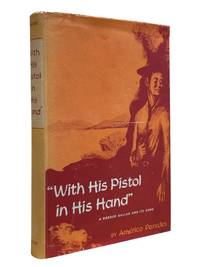
19589869Austin: The University of Texas Press 1958. First edition. Hardcover in illustrated jacket uncredited 282pp. Inscribed by Paredes to the former owner on the half title. Texas Folklore Society bookplate to front pastedown old tape residue to rear boards where jacket protector had been attached. Colorful jacket toned but with minimal edge wear. A nicely preserved very good copy. <br /> <br /> Scarce inscribed copy of this book on the Mexican border bandit Gregorio Cortez Lira. <br /> <br /> Six-Guns 1675. The University of Texas Press hardcover
191435285n.p.: n.p. 1914. Photograph. Good. Photograph. Approx. 10" x 8". Photograph is in good condition with light amount of spotting to the image. No other information known about the image other than what is written at the bottom of the picture "Mexican Border 1914 Raymond Thompson." View shows three men up front on horses. One soldier on a white horse is carrying the American Flag. The view also shows other soldiers and tents in the background. From wikipedia: <br /> <br /> The Mexican Border War13 or the Border Campaign14 refers to the military engagements which took place in the Mexico–United States border region of North America during the Mexican Revolution. The war's time period encompassed World War I during which Germany attempted to have Mexico attack the United States and engaged in hostilities against American forces there itself. The Border War was the fifth and latest major conflict fought on American soil where its predecessors were the American Revolutionary War War of 1812 Mexican–American War 1846–1848 and the American Civil War. The end of the Mexican Revolution on 1 December 1920 marked the close of the American Frontier. The Bandit War15 in Texas was part of the Border War. From the beginning of the Mexican Revolution in 1910 the United States Army was stationed in force along the border and on several occasions fought with Mexican rebels or federals. The height of the conflict came in 1916 when revolutionary Pancho Villa attacked the American border town of Columbus New Mexico. In response the United States Army under the direction of General John J. Pershing launched an expedition into northern Mexico to find and capture Villa. Although Villa was not captured the US Army found and engaged the Villista rebels killing Villa's two top lieutenants. The revolutionary himself escaped and the American army returned to the United States in January 1917. Conflict at the border continued however and the United States launched several additional though smaller operations into Mexican territory until after the American victory in the Battle of Ambos Nogales in August 1918 leading to the establishment of a permanent border wall.16 Conflict was not only subject to Villistas and Americans; Maderistas Carrancistas Constitutionalistas and Germans also engaged in battle with American forces during this period. n.p. unknown
19432082702114602376Shiromizu-sha 1943. Soft Cover. Fine. Number of books: 1 Shiromizu-sha paperback
19752082702114601782Errata Motonogi Shoten 1975. Soft Cover. Fine. Number of books: 1 Errata Motonogi Shoten paperback
191084196San Antonio: Dahrooge & Co n.d. ca. 1910. A small tan card folding chemise containing a concertina style pull out of 20 monochrome images titled to the front panel with space for an address for postal use with an advertisment for the Dahrooge Co. to the rear panel. A little wear and toning to the edges of the chemise otherwise a very good clean example. <br /> <br /> A souvenir collection of images depicting US soldiers performing drills queuing at chow hall dragging artillery etc. interspersed with images of local Mexican people a horrifying jury-rigged armored vehicle Mexican artillery preparing to engage and a variety of scenery shots. Dahrooge & Co unknown
19612082702114611550Onion Shobo 1961. Soft Cover. Fine. Number of books: 1 Onion Shobo paperback
19901447Marcel Dekker New York 1990 An exceptional as new copy of the FIRST EDITION/FIRST PRINTING inscribed and SIGNED by John R. Border on the front free endpaper. Inscribed to orthopedic surgeon Dr. Stanley D. Gertzbein. Red cloth-covered boards 10 1/4 x 7 1/8 inches 861 pp. index figures and tables. Multifolded chart in rear pocket: "AO Classification of Fractures". ISBN 0824781724 K077. Signed by Authors. 1st Edition. Hardcover. As New/No Jacket. Marcel Dekker, New York hardcover
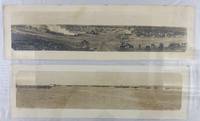
19163738N.p. probably Portland 1916. Near fine. 36pp. plus two multi-panel folding panoramic photographic plates. Original tan wrappers printed in brown accompanied by original printed mailing envelope reading "A Souvenir of The Third Oregon Infantry on the Mexican Border." Very light wear. A scarce work featuring the officers staff and soldiers of the Third Oregon Infantry while stationed on the Mexican border near San Diego during the conflict with Mexico just before World War I. The work includes field and staff lists rosters organized by company and a list of "men who have enlisted at Clackamas since the Regiment left" in the summer of 1916. The work is profusely illustrated with photographs of each company within the text usually on the recto facing the roster lists. Each inside cover includes a folding panoramic photographic plate - the first titled "First Battalion at San Diego Exposition July 9 1916" and the second featuring the "Third Battalion on the Border - Mexico in the Background." Both panoramic images were produced from photographs by O.A. Tunnell. unknown
19162445Brownsville 1916. Very good. Panoramic photograph approximately 7.5 x 39.5 inches. Mounted on card manuscript identifications along foot. Light wear minor soiling. A large formal portrait of Troop C of the 1st Virginia Cavalry in camp at Fort Brown Brownsville Texas. National guard units were called up in 1916 to guard the border while General Pershing made his incursions into Mexico against revolutionary and regular military units involved in the Mexican revolution and civil war of the 1910s. The image depicts the entire troop mounted in a single file with the commissioned officers at far left sixty-six men in all. Although the photographer does not identify himself each man in the unit is named in clear manuscript along the foot of the photograph making the present image a valuable record of the Virginia Cavalry's service in Texas during the Border War. unknown
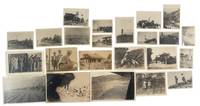
1910218961910. Large photograph archive circa 1910s-1930s documenting U.S. and Mexican military presence along the Rio Grande border and in Sinaloa during a period of revolution intervention and military modernization. The photographs depict soldiers fortifications and daily military activity across multiple locations providing primary-source visual evidence for the study of U.S.-Mexico border tensions the Mexican Revolution and interwar military development. One photograph identified en verso as taken at the "United States Immigration Station on the Rio Grande River - Border Service - 1916" situates the archive within the period of the Mexican Revolution and the U.S. Punitive Expedition while other images extend into the 1920s and 1930s reflecting continued military presence and surveillance.<br /> <br /> Archive comprises 22 vernacular silver gelatin photographs ranging from approximately 3.25 x 5.5 inches to 4.5 x 6.5 inches several with manuscript annotations en versos and studio stamps including "Laboratorio Vega Mazatlán Sin." and "La Foto Madero 42." Images include U.S. soldiers positioned atop sandbag fortifications with rifles standing at border outposts and posing beside military vehicles including an early Dodge touring car. Mexican Army scenes depict officers and enlisted men in varied uniforms including kepis and high-collared tunics assembled in formations occupying trenches and constructing earthen defenses. A photograph inscribed "12º Rgto. Mazatlán Sin. Marzo 1929" identifies the 12th Infantry Regiment during a coastal inspection. Additional images show cavalry units riding in formation across fields soldiers resting near agave plants and encampments along beaches with troops engaged in labor or recreation. One aerial photograph taken from a biplane captures a valley settlement while another image shows a rural structure marked "U.S. 19" on its roof suggesting identification or surveillance use. Across the archive soldiers appear in both formal and informal groupings sometimes posed in relaxed settings with visible gestures of camaraderie.<br /> <br /> These photographs document a period of sustained militarization along the U.S.-Mexico border and within northern Mexico following the upheaval of the Mexican Revolution and subsequent stabilization efforts. The presence of both U.S. Border Service personnel and Mexican Army units illustrates parallel and overlapping military activities including patrol construction and occupation of strategic terrain. The imagery of trenches transport and aerial observation reflects evolving military practices in the early twentieth century while the combination of formal and informal scenes provides insight into daily life within these environments. Surface wear to several prints; overall very good condition. A concentrated visual record of binational military activity and borderland conditions during a formative period of regional conflict and modernization. unknown
19912082702114611734Sada Sanman En Shinjin Oraisha Heisei 3-5 1991. Soft Cover. Fine. The book is in fine condition. Sada Sanman En Shinjin Oraisha Heisei 3-5 paperback
19163127El Paso Tx: J.W. Medley & I. Shulman 1916. Good plus. About 9.5 x 51.25 inches. Backed on board. Some tanning to board. Minor spotting along edges minor staining and some surface lift along top left edge left edge and left bottom edge from being previously framed. One of a group of panoramic photographs depicting Camp Stewart at El Paso during the Mexican Revolution 1910-1919 known here as the Mexican Border War or Pershing's Punitive Expedition. The camp was set up in 1916 and the goal of the conflict was to stop Pancho Villa's military actions on the United States side of the border. American and Mexican forces pursued Villa for months and managed to quash the rebellion but Pancho Villa himself was never captured. This photograph provides a good view of the tents and small building erected in this dry Texas landscape. The photographers J. Urban Medley and Isaac Shulman of El Paso Texas were prolific chroniclers of the American Southwest and Mexican borderlands with a studio at 1709 Montana. A striking panoramic image of a large camp near El Paso during the Texas Border War. J.W. Medley & I. Shulman unknown
19163373McAllen: Photo. by Murff & Robinson 1916. Very good. Two panoramic photographs measuring 8 x 28 and 8 x 26.5 inches. Rolled. A couple of short closed tears and small perforations otherwise minor wear and soiling. Two detailed panoramic photographs that depict the First Cavalry Regiment of the New York National Guard one unit of the 15000 guardsmen from the state that were sent to garrison the Rio Grande in South Texas during the Border War with Mexican revolutionaries and Pershing's Punitive Expedition against Pancho Villa. The New Yorkers were stationed at inadequate parched camps in Mission McAllen and Pharr. The slightly larger of the two images here shows the camp of the First Cavalry at McAllen with field tents and temporary camp buildings on the left and the regiment's allotment of horses tethered together at right. The second images shows the unit on parade being reviewed by General Frederick Funston the commander of the border garrisons. The photos are each captioned in the negative and dated August 28 1916 and October 1 1916 respectively. Scarce images of New York's encampment in Texas during the Border War. Photo. by Murff & Robinson unknown
19522082702114611533Yamaguchi Prefecture Agricultural Group History Compilation Committee 1952. Soft Cover. Fine. Number of books: 1 Yamaguchi Prefecture Agricultural Group History Compilation Committee paperback
19362082702114600105Kobakuzan Manpuku-ji Temple Edition 1936. Soft Cover. Fine. Number of books: 1 Kobakuzan Manpuku-ji Temple Edition paperback
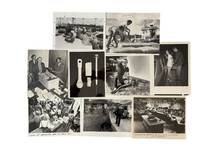
1970216021970. African American Latino History Criminal Justice Photography Unidentified press photographers War on Drugs photographs 1974 to 1992 document law enforcement operations arrests and media coverage of drug enforcement in Texas during the expansion of federal and local anti narcotics campaigns. Produced for newspaper circulation by the Houston Chronicle and the Associated Press the images provide direct evidence of policing practices surveillance and public presentation of drug enforcement activities across multiple decades. The archive supports research into racial disparities in policing the growth of coordinated federal and local enforcement systems and the role of press photography in shaping public understanding of crime and punishment during the late twentieth century.<br /> <br /> Texas primarily Houston and El Paso 1974 to 1992. Archive of 9 original silver gelatin press photographs with printed and typed captions on versos. Images include a 1974 photograph of Drug Enforcement Administration agents seizing a large marijuana cache from a tugboat; a 1975 Associated Press image displaying cocaine and heroin paraphernalia accompanied by a caption describing drug use in social settings; a 1979 photograph of the El Paso Intelligence Center identified as the control center of federal drug enforcement operations; and multiple photographs from the 1980s and early 1990s depicting arrests raids and evidence seizures. One image labeled "Operation Crackdown" shows a group of detainees with hands restrained behind their backs gathered at a temporary booking site surrounded by officers and paperwork processing tables. Another photograph captures an undercover officer restraining a young Black man outside an apartment complex during an arrest. A photograph dated April 27 1992 shows officers recovering firearms and suspected narcotics from a vehicle in a dealership parking lot accompanied by an assignment sheet describing a police chase and subsequent arrest. Additional images include a 1990 multi agency raid involving federal and local authorities using a trained detection dog identified as "Magnum" with annotations indicating restrictions on identifying agents.<br /> <br /> The archive situates drug enforcement within the broader expansion of the War on Drugs a policy framework that intensified policing surveillance and incarceration beginning in the 1970s and continuing through the end of the twentieth century. These photographs document the coordination between agencies such as the Drug Enforcement Administration U.S. Customs and the Federal Bureau of Investigation as well as the increasing visibility of enforcement through media distribution. The repeated depiction of arrests and controlled displays of seized materials underscores the public facing dimension of these operations while the imagery of detainees and targeted enforcement reflects documented disparities in how drug laws were applied across racial and socioeconomic groups. Light handling wear with minor surface marks typical of press photographs; captions remain legible. Overall very good condition. A concentrated visual record of law enforcement practice media representation and the social impact of drug policy in late twentieth century Texas. unknown
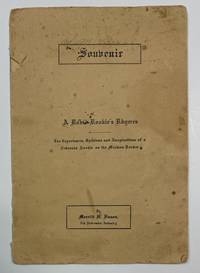
19164822N.p. possibly Brownsville Tx 1916. Very good. 111pp. Original tan printed wrappers stapled. Wrappers soiled partially split along spine penciled ownership signature on front cover. Light creasing occasional minor foxing to text. An unrecorded collection of poetry by First Sergeant Merritt H. Fuson of the 5th Nebraska Infantry capturing military life during the U.S.-Mexico Border War in 1916-1917. Sergeant Fuson's poems begin with "A Rookie's Prayer" and generally describe the incessant drilling and preparations for battle in southern Texas. One of the poems was given to Fuson before he left home and one other poem is credited to a "Minnesota artilleryman name unknown" but the remainder of the poems appear to be authored by Fuson himself. Fuson's poem "War Is Hell" particularly encapsulates the difficulties of military camp life during his service but does not capture the horrors of war which Fuson apparently never experienced. Fuson does express his desire to return home to Nebraska in at least two poems and his homesickness comes through in others in passages such as "Sing a song of Texas Drill and sweat and dig One Nebraska soldier Dirty as a pig." The 5th Nebraska Infantry had a short and uneventful stay in Llano Grande outside Mercedes in the McAllen-Brownsville region of south Texas. They arrived in July 1916 and drilled and camped until returning to Nebraska in February 1917. An interesting collection of wartime poetry by a young Nebraska man serving in the Texas-Mexico borderlands. No copies in OCLC auction records or any other sources we consulted. unknown
191612895Des Moines IA: Hebard-Showers Company September 1916. Panoramic photograph 8 x 37.5 inches with numerous captions in the negative. Rolled tightly. A few soft creases minor wear at bottom right corner. Very good. An unusually informative panorama of Brownsville and Matamoros taken from the American side of the Rio Grande during the heat of the Mexican Revolution. The photograph was produced by the form of Hebard-Showers here spelled Hedard-Showers likely scratched backwards in the negative of Des Moines Iowa. The image captures the scene along the Red River from a portion of Fort Brown in the east west to Brownsville's Union Station with the International Bridge visible downriver. Directly across the river from Brownsville is labeled "Santa Cruz Mexico" with Matamoros a bit further south. Other landmarks identified on the Brownsville side include the aforementioned Union Station and the International Bridge as well as Fort Brown a river landing the customs house and various locations for American state guard units. Near the landing is the Brownsville Transfer Company's building.<br /> <br /> More pertinent to the Mexican Revolution are some of the captions identifying locations on the Mexican side. These include "Casa Mata Fort or place of execution" "Blanco's Battlefield June 3rd 1913" and "Villa's Battlefield March 27 - Apr. 13 1915. 100 Killed." Also identified on the Mexican side are a Mexican bull ring the "Bone yard" and a river landing. Interestingly a small rowboat containing a few people can be seen approaching the Mexican side on the Rio Grande.<br /> <br /> Naturally Hebard-Showers Company mainly documented Des Moines and its surrounding areas but they shot a handful of Brownsville border views over several years at least between the present example and about 1921. SMU holds an example of the later panorama; comparisons between the present example and SMU's does reveal some changes in the area over the course of those five years and the present example includes many more detailed captions in the negative. Hebard-Showers Company, September unknown
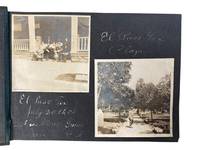
1905231541905. Texas HistoryBorderlands U.S.-Mexico borderlands photograph album 1905-1906 centered on El Paso and Juárez with additional views in New Mexico Arizona California Oregon and Alaska. The album documents an early twentieth-century traveler's movement through the southern border of the U.S. when El Paso and Ciudad Juárez were being promoted through rail travel tourism and cross-border entertainment and when American visitors regularly treated Mexican religious sites plazas bullrings and street life as part of a border excursion circuit. Its strongest historical value lies in the concentration of images tied to the Texas-Mexico border including Juárez bullfight and cockfight scenes street and church views and domestic group portraits in El Paso alongside a labeled photograph of a Santo Domingo Pueblo corn dance likely Kewa Pueblo north of Albuquerque showing non-Native travelers recording Indigenous life in the Southwest.<br /> <br /> Photograph album containing 81 original photographs most measuring approximately 2 x 3 to 4 x 5 inches mounted on thick black paper leaves in a cloth-bound album. Contemporary manuscript captions identify numerous locations and subjects including "El Paso Tex" "Juarez Mex" "Bull Fight" "Cock Fight" "Near Albuquerque 1906" "1906 New Mexico" "New Mexico 1905" "Juarez Mex Church over 350 years old" and "Corn Dance. Santo Domingo." Visible subjects include family and social group portraits posed on porches and in front of residences; women in white dresses and men in coats hats and ties; a tree-lined park path in El Paso; religious architecture and church interiors in Juárez; a fountain identified as Robinson Park in Albuquerque; river and landscape views labeled Rio Grande; a saguaro cactus study; a donkey; a seated elderly woman in a doorway; and multiple arena photographs showing matadors horses attendants spectators and ring action in Juárez. Several photographs bear later ink inscriptions including one later image of five men captioned "Alaska" en recto and with names on verso including "Mayor Goldstein" a prominent Jewish businessman and six time Juneau Mayor Isadore Goldstein.<br /> <br /> The album records border travel encompassing scenes of domestic life in El Paso tourism in Juárez and excursions into New Mexico and the wider West. The Juárez images are especially strong preserving direct vernacular views of public spectacle in the bullring and cockfight pit as well as church architecture and urban settings seen from the perspective of a visiting American observer. Photographs mounted throughout; some images faded or silvered with scattered surface wear corner wear occasional discoloration and a few later annotations or tape remnants visible. Overall very good condition. unknown