IndiaBiblio.com
384 résultats
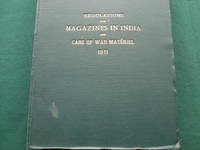
1912012281Calcutta: Superintendent Government Printing India 1912. Book measures 24.5x16.cm. vi 246pp lxxixpp index interleaved with blank pages occasional illustratuion. Bound in green cloth with gilt lettering. Cloth rubbed a short tear and abrasion mark on spine library label on top board. Binding in good clean firm condition. Internally occasional library stamp cancellation stamp. Pages in good clean condition. A good clean copy. . Cloth. Near Very Good. 8vo. Superintendent Government Printing, India Hardcover
19298386Calcutta: Survey of India 1929. Detailed plan of Calcutta 73.5 x 64.5 cms black and white laid on linen as issued folding into printed stiff paper wraps. Old ownership signature J. Mackinnon November 1939. Map Survey of India paperback
191556328Bangalore: Office of the Director Southern Circle Survey of India P.B. No. 44 1915. 4to. 7.25 x 9.75 in. which holds a 32-panel linen backed colour-printed map which folds out into double atlas folio sized map sized 36.5 x 53 in. Mounted within Navy-blue linen portfolio printed label w/ manuscript annotations on front cover indicating the sheet number minor shelfwear slight rubbing still NF copy. First edition thus of this map of Bangalore prepared under the auspices of the Survey of India Office of the Director in the opening years of World War I. This remarkable topographical map featuring a scale of 1†to 1 mile is based on the surveys first launched by William Lambton in the 19th Century known as the Great Trigonometrical Survey of India led successively by Lambton George Everest Andrew Waugh and James Walker. These fulfilled the premise that geodetic survey was the only option for accurate maps of large areas and much of this work in the survey of India was based upon the base lines in Bangalore originally measured by Warren and the base lines of Kumta by De Penning. These original linen-backed survey maps of India from the early 20th Century have become quite scarce. No copies located in Worldcat; See; Rama Deb Roy The Great Trigonometrical Survey of India in a Historical Perspective Pre-Census Population Studies Unit Indian Journal of History of Science 1986 Vol. 21 1 pp. 22-32. Office of the Director, Southern Circle, Survey of India, P.B. No. 44, unknown
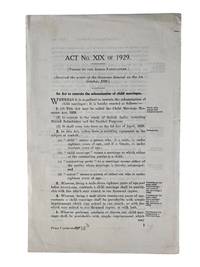
1929219671929. Women's Rights Original printing of the Sarda Act prohibiting child marriage in India 1929. Act No. XIX of 1929. An Act to Restrain the Solemnisation of Child Marriages. Calcutta: Government of India Central Publication Branch 1929. First edition. Scarce. A landmark legal intervention in the regulation of child marriage in British India this pamphlet prints the full text of the Child Marriage Restraint Act of 1929-commonly known as the Sarda Act-passed by the Indian Legislature and receiving the assent of the Governor General on October 1 1929. The Act criminalized the solemnization of marriages involving boys under 18 and girls under 14 later amended to 18 and 15 respectively and imposed penalties on adult men who contracted child marriages as well as on parents priests or other facilitators. Its provisions extended across all of British India including British Baluchistan and the Santhal Parganas and came into force on April 1 1930.<br /> <br /> The law was introduced at the urging of Indian social reformers particularly Har Bilas Sarda whose campaign aligned with women's rights advocates challenging patriarchal customs under colonial rule. The legislation explicitly defined a "minor" as anyone under 18 and imposed fines and jail terms for men over 21 who married girls below the legal threshold as well as for those who conducted or arranged such ceremonies. A radical attempt to legislate personal status and protect young girls from forced early marriage the Act is recognized as a foundational moment in Indian feminist legal history and a precedent for later reforms. This official government printing priced at "1 anna or 1½d" reflects the colonial administration's effort to disseminate the law widely across the provinces. Minor edge creasing. Overall very good condition. An artifact of pivotal reform in the legal history of South Asia and women's rights foundational for understanding the colonial and postcolonial trajectories of gender and childhood legislation. unknown
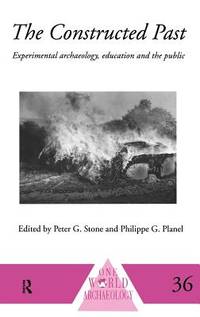
1999x-0415117682Routledge 1999. Hardcover. New. 1st edition. 303 pages. 9.75x6.75x0.75 inches. Routledge hardcover
1913017791London: Horace Cox 1913. Book. Very Good. Hardcover. 1st Edition. First Edition First Printing. Pp. vii.282. Adverts. In original green boards tiger in black to front board titling in gilt to front board and spine. All plates 8 and sketch maps complete. The original owner has added some notes and photos throughout none of which affects text or plates. Rubbing to boards light dulling to pages. Scarce. Horace Cox Hardcover
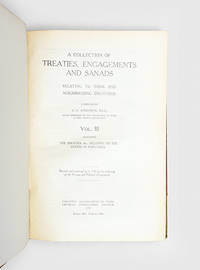
1932188518Calcutta: Government of India Central Publication Branch 1932. Fifth iteration of this important collection of treaties and deeds sanads granted to the rulers of Rajputana now Rajasthan. These cover the states of Jaipur Jodhpur and Bikaner including details on various projects such as the construction of the Jodhpur-Bikaner railway. Only 660 copies were printed and 6 are held in UK institutions. Aitchison 1832-1896 went out to India as a civil servant in September 1856 narrowly escaping a massacre at Hissar in 1857 before being stationed at Amritsar. In 1865 he took up administrative work in the Punjab where he was "extremely industrious and thorough in his work. He exercised a marked influence on successive governors-general who trusted him for advice" ODNB. He commenced a compilation entitled A Collection of Treaties Engagements and Sanads Relating to India and Neighbouring Countries in 1862 and eleven volumes were issued by 1892. In 1882 he became governor-general of the Punjab where he advocated for the Indianization of the civil service. Copies of this volume in the UK are held by the British Library Oxford Cambridge King's College London National Library of Scotland and SOAS. Large octavo 256 x 180 mm. Tables in text. Contemporary khaki half cloth spine lettered in gilt low bands ruled in gilt brown cloth boards. Purple ink deaccession stamp on front pastedown. Light scuffs and tidemarks spine a little toned title page sometime stabilized in gutter with cloth tape rear inner hinge starting but sturdy: a very good copy. hardcover
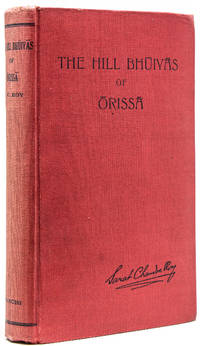
193555093Ranchi: Man in India" Office 1935. First Edition. With plates folding map. Pp. 4 iii-iv 320 1 xxxviii. 1 vols. 8vo. Original red cloth. Minor rubbing at extremities else about fine. Inscribed by the author on the flyleaf "To Prof Dr. Sir Arthur Keith . with the reverential regards of Sarat Ch. Roy 6-4-35. First Edition. With plates folding map. Pp. 4 iii-iv 320 1 xxxviii. 1 vols. 8vo. Abundantly illustrated work on the Hill Bhuiyas of the Orissa region of south central India. Uncommon. WIth an excellent presentation to British anatomist and physical anthropologist Sir Arthur Keith. Man in India" Office unknown
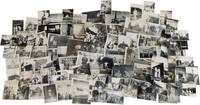
190775557N.p.: N.p. 1907-1912. This officer was on the rise apparently as he was constantly moved from camp to camp. The album contains 214 original silver gelatin photographs. When he started the officer was based in India and up until photograph 154 all of the pictures are of sights in India Ceylon Mauritius and Rangoon. Thankfully very few of these are family portraits as the officer seemed to delight in the local people and terrain. He is next situated in Pretoria at King's Hill Harrismith. He seemed to have a relaxing time there mainly lounging around the army camp and a very nice one at that Robert's Heights. It was founded around 1905 by the British Army and called Robert's Heights after Field Marshal Lord Roberts. There are numerous captains and generals named in the album but we could not discern the photographer's name but we do know he was a avid golfer. While in Ceylon he took photographs of many of the greens at that course. He did this again in South Africa. There are also numerous photographs of the whole brigade in formation and on exercises. Included but not bound in are eight large photographs 11 1/2 x 9 1/4 inches mainly of military formations. Also included are five medium sized 8 1/2 x 6 1/2 inches photographs and these are of a more domestic nature. Most of the photographs in the album are 4 3/4 x 3 3/4 inches and the vast majority of them are captioned. All housed in the original album of half red roan over red cloth. A few photographs loose from their stubs but hanging in there front joint split but the album still holding together. Really an essay could be written about this album but the cataloger ran out of time. N.p. hardcover
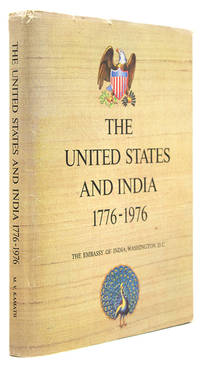
1976306083Washington D.C.: Embassy of India 1976. First edition. 222 pp. 4to. Original blue silk-covered boards dust jacket. Front hinge over-opened some minor edgewear to jacket. First edition. 222 pp. 4to. INSCRIBED by the author to then Secretary of State Cyrus Vance 1917-2002. Vance occupied the post 1977-1980 succeeding Henry Kissinger. He accompanied President Carter on his historic visit to India in January 1978 a few months before this inscription which culminated in the Delhi Declaration in which the two nations made a strong commitment to global diplomacy and human rights. The visit was crucial in restoring good relations with India following Nixon's tilt toward Pakistan in 1971. Kamath was Washington correspondent for the Times of India from 1969 to 1978. Embassy of India unknown
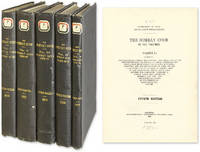
1924511351924. Calcutta: Superintendent Government Printing 1924. Calcutta: Superintendent Government Printing 1924. 1924 Edition of the Bombay Code Government of India Legislative Department. The Bombay Code: In Five Volumes. Calcutta: Superintendent Government Printing India 1924. 5 volumes. Original cloth gilt titles to spines moderate shelfwear and soiling. Text blocks cracked in a few places internally clean. Ex-library. Location labels to spines small stamps to versos of title pages. A solid set. $500. Fourth edition. Volume I: The unrepealed Bombay Regulations The Local Acts of the Governor General in Council in Force in Bombay The Regulations Made Under the Statute 33 Victoria Chapter 3 And the Government of India Act 1915 5 and 6 Geo. 5 C. 61 In force in Bombay Lists of the Enactments Which Have Been Notified for Scheduled Districts in Bombay Under the Scheduled Districts Act 1874: And Chronological Tables of Enactments Reproduced; Volume II: The Unrepealed Acts of the Governor of Bombay in Council in Force in Bombay from 1862 to 1887 Inclusive: And a Chronological Table of Enactments Reproduced with an Index; Volume III: The Unrepealed Acts of the Governor of Bombay in Council in Force in Bombay From 1888 to 1897 Inclusive; A Chronological Table of Enactments Reproduced with an Appendix and Index; Volume IV. Containing the Unrepealed Acts of the Governor of Bombay in Council in Force in Bombay from 1898 to 1908 Inclusive And a Chronological Table of Enactments Reproduced with Index; Volume V: Containing the Unrepealed Acts of the Governor of Bombay in Council and of the Bombay Legislative Council in Force in Bombay from 1909 to 1922 Inclusive Chronological Tables of Enactments reproduced with Index. OCLC locates 9 copies. BMC 3:850. unknown
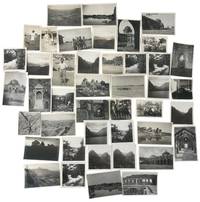
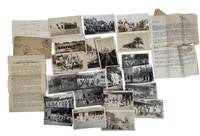
1940232161940. British India photo archive following an unidentified man likely a serviceman in Mhow and Mandu during World War II 1942-1943 preserving a localized record of colonial wartime life through mess scenes sport staff bungalows named companions imposed colonial social frameworks and visits to the major Islamic monuments of Mandu. The captions place the central figure in the company of "Carroll Sahib" Ken Davis and other men in uniform-style dress while repeated references to the "mess" weapon training staff and cantonment-like grounds situate the photographs within a British colonial wartime environment in central India. The group shows one participant moving between military or officer-adjacent daily life and the monumental landscape of Mandu at a moment when India remained a crucial base of Allied wartime activity.<br /> <br /> Photo archive of 43 silver gelatin photographs ranging from 2 x 3.5 to 2.5 x 2.5 inches Mhow and Mandu India 1942-1943. Most photographs bear substantial contemporary handwritten inscriptions on the versos often dated. Identifiable scenes include two men with tennis rackets outside a bungalow captioned as taken after tennis; a portrait inscribed "Me the Carroll Sahib & Ken Davis outside the Mess 25/12/42"; a group of eight men captioned "two scotsmen our four weapon training instructors the Carroll Sahib me outside the W/T staff bungalow 25/12/42"; men wearing garlands outside the mess; a sports or gymkhana ground with riders or runners in formation; tented grounds beside a large building; and a portrait of a man identified as "Machdo our bearer." The architectural and landscape views are closely tied to Mandu with captions naming the Jami Masjid Jahaz Mahal Rupmati's Pavilion Baz Bahadur's Palace mosque interiors courtyards pools lake views ravines and elevated plateaus. Several photographs show men posed on open parade or sports grounds in light uniform-style dress including group portraits outside the mess and the W/T staff bungalow with tennis rackets bicycles garlands and temporary tent lines indicating a social world organized around exercise communal dining and station routine. Other images turn to Mandu's built landscape in much greater detail with framed views of domed pavilions arcaded courtyards carved entrances long interior corridors water tanks and palace ruins seen from terraces lakesides and elevated lookouts. The landscape scenes broaden that record further including steep ravines river and waterfall views and plateau panoramas that place the serviceman's movements within the wider terrain of central India.<br /> <br /> During World War II Mhow remained an important cantonment in British India and these photographs place one serviceman within the daily social world of that station where tennis communal dining staff housing local attendants and holiday gatherings existed alongside travel to nearby historic sites. The Mandu views record the same hand moving through one of central India's best-known Sultanate monument complexes with captions naming the Jami Masjid Jahaz Mahal Rupmati's Pavilion Baz Bahadur's Palace and associated interiors courtyards pools and landscape features. Light general wear occasional silvering and minor handling marks; inscriptions strong and legible on most versos. The dense captioning and photographic record show British colonial India during World War II through the the personal lens colonial rank and language staff organization sport and leisure during wartime Indian attendants and movement through one of central India's historic architectural landscapes. unknown
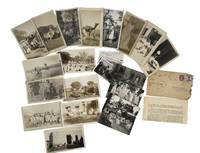
1941208861941. Archive of photographs and documents from the A.P. Mission City School in Ambala Punjab 1941-1942 documents girls' education within a missionary institution during the late colonial period and the Second World War. The material records classroom instruction extracurricular activity and community interaction alongside written accounts by an American missionary teacher Anita Gregson whose correspondence and annual report situate the school within wartime conditions and broader educational initiatives. The archive provides primary evidence of how girls' education was structured and experienced in northern India under British rule including literacy training vocational activity and the integration of local and missionary communities.<br /> <br /> Twenty two black and white and sepia photographs measuring approximately 2 x 3 to 3 x 5 inches many with handwritten or typed captions on verso likely by Anita Gregson; accompanied by one typed letter dated June 14 1942 and one annual report for the 1941-1942 school year. Photographs depict students in classroom settings including a "training class girl teaching a second grade nature study class" as well as scenes of recreation such as a badminton club for teachers and missionaries. Additional images show students engaged in craft work including one captioned "Achcheri. with her patch quilt" alongside views of village life in Punjab with oxen carts textile work and local architecture. Three photographs document refugees traveling toward Pakistan in the years following the Lahore Resolution. Gregson's letter references wartime uncertainty noting concerns about possible bombing in India while the annual report details financial strain fundraising efforts and adult literacy instruction for women.<br /> <br /> Created during a period of political tension and transition in British India when wartime mobilization coincided with growing nationalist movements and debates over independence the archive situates education within both imperial and local frameworks. The documentation of women's literacy and schooling aligns with broader efforts that contributed to gradual increases in female education prior to independence and the Partition of India. As a combined photographic and documentary record the material supports research into gender education colonial institutions and everyday life in wartime South Asia. Minor wear consistent with handling; manuscript and printed materials remain legible; overall very good condition. unknown
1941209861941. Gregson Anita. A.P. Mission City School archive 1941-1942 documenting girls' education missionary activity and community life in Ambala Punjab during World War II. This material records daily instruction social interaction and local conditions within a mission-run school for girls alongside written correspondence and institutional reporting that situate the school within wartime pressures and colonial India's educational landscape. The archive provides direct evidence of classroom practices gendered education and the integration of local families into school environments as well as the impact of global conflict on regional communities.<br /> <br /> Archive comprises 21 original black and white and sepia photographs one typed letter and one annual report. Photographs measuring approximately 2" x 3" to 3" x 5" frequently bear handwritten or typed captions on the verso likely by Anita Gregson identifying subjects and activities. Images show groups of schoolgirls engaged in classroom exercises and outdoor instruction including one scene of students constructing a ground map of India to illustrate agricultural production. Another photograph depicts a semicircle of young children seated outdoors during a lesson with their teacher identified as Miss Atmaran and a veiled mother observing her burkha partially drawn back. Additional images document craft instruction including girls weaving coconut palm leaves into fans and producing woven ties on frames. Musical activity is also present with students playing instruments. Beyond the school photographs depict village life in Punjab including oxen operating a water-drawing mechanism children gathered around a missionary playing a ukulele and a merchant carrying goods suspended from a yoke. The accompanying letter dated June 14 1942 from Gregson to a correspondent in New York references World War II noting international observances and local enlistment: "The young men in our Indian community are continuing to sign up for the army navy and air force." The annual report for the 1941-1942 school year details wartime financial strain fundraising efforts and instructional programs including an adult literacy course for women teaching reading writing and arithmetic.<br /> <br /> Created while India functioned as part of the British Empire during World War II these materials document the intersection of missionary education wartime mobilization and local social life. The inclusion of adult literacy instruction for women reflects ongoing efforts to expand female education under colonial conditions while the letter and report connect the school directly to global conflict and its local consequences. Light wear and minor fading to photographs; handling wear present. Letter on thin paper with tears and fragility consistent with wartime materials poor to fair condition; remaining materials overall very good condition. This archive provides a concentrated visual and textual record of girls' education and community experience in wartime Punjab. unknown
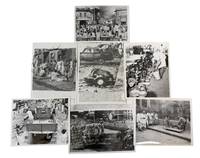
1943234951943. Indian famine crisis press archive depicting hunger relief work and public unrest from Bengal famine conditions through later food riots in independent India. The Bengal Famine of 1943 killed an estimated three million people and food scarcity remained politically volatile in India for decades afterward. Street demonstrations over grain rationing and hunger drew police deployments in multiple cities turning food access into a public order crisis as well as a humanitarian emergency.<br /> <br /> Photo archive of 7 silver gelatin press photographs mostly measuring 8" x 10" India 1943-1964. Crowds gather outside food distribution points children sit with metal bowls during feeding mounted police face demonstrators and uniformed officers move through dense street scenes. Press captions identify Calcutta famine conditions food rioters dispersed by police in Kerala fighting and fire in Lucknow and relief activity for famine victims. Typed captions identify "food rioters" being dispersed outside the Travancore state government house in Trivandrum Kerala where police and mounted officers filled the street after looting over food. Another caption describes Lucknow fighting in which "rioters set fire to about a six-block square" with crowds massed near burning buildings and shopfront signs. Calcutta scenes show famine victims clustered around relief vessels and feeding bowls with one caption stating that people had been "reduced to skin and bone" after food shortages. A street-side feeding scene shows children and adults crouched in rows with metal dishes receiving food from a man holding a large bucket.Verso stamps include Acme Newspictures NEA reference markings New York Bureau labels editor crop marks typed captions and publication dates.<br /> <br /> The group connects famine mortality postwar scarcity and street protest in India across a period when food distribution became a central test of colonial and postcolonial government authority. Press handling wear caption remnants crop marks corner creasing and scattered surface marks; overall in very good condition. A strong press group linking famine relief imagery with the public unrest that followed hunger into India's mid-century political life. unknown
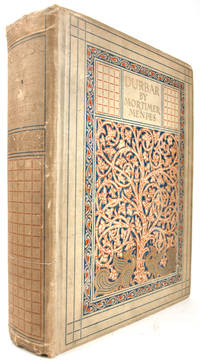
190343874London: Adam and Charles Black 1903. First edition Copy Number 173 of 1000 signed by Mortimer Menpes. 100 Plates. The illustrations have been engraved and printed at the Menpes Press under Mr. Menpes's direction. 210 pp. 1 vols. 4to. Cream cloth some wear at bottom front joint inner hinges started. First edition Copy Number 173 of 1000 signed by Mortimer Menpes. 100 Plates. The illustrations have been engraved and printed at the Menpes Press under Mr. Menpes's direction. 210 pp. 1 vols. 4to. The first Durbar was held in 1877 to proclaim Queen Victoria as Empress of India. This is the second Durbar to proclaim Edward VII as king in 1902 but was not attended by the King either. It was not until the 1911 Durbar when George V and Queen Mary went to India was the Emperor and his Empress proclaimed in person to the people of India. Our authors stayed in Camp Number One called "The Millionaires' Camp." in Delhi. <br /> <br /> With an ALS from Menpes tipped in at the back. Inman #18 Adam and Charles Black unknown
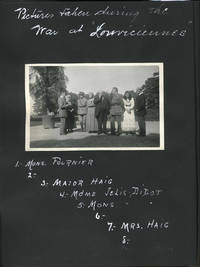
1915231261915. Very good condition. A photograph album memorializing two trips made by an English woman Mrs. K. Haig throughout Europe then to India to visit her son Major W. de W. Haig a British officer and his wife. It concludes with "Pictures taken during the War at 'Louviciennes'" including an image of the Chateau des Voisins now the BNP Paribas campus. <br /> <br /> The first half of the album begins in 1909 with the departure of the ship "Yale" based in Bath with an American flag to the European continent. Another ship listed is possibly the "Bleucher". Places visited include Berlin Potsdam Sans Souci Dresden the Royal Gardens at Nieder-Siedlitz Munich Lucerne Pilatus Berne Murren Zermatt Geneva Lyons Avignon Arles Nimes Montpelier Tours Chenenceaux Chateau de Lude Aise le Rideau Villandry Fontainebleau St. Cloud Chantilly & Versailles. <br /> <br /> The second half of the album is entitled " 'India' From Pictures By Major W. de W. Haig". These include Kashmir Naini Tal Muktesar Srinagar Dehra Dun and the Khyber Pass. Major Haig took some lovely and at times atmospheric images of the people of India including a papier mache worker women grinding corn men sewing with a sewing machine on the curbside; candy shop in the bazaar Mrs. K. Haig "travelling in a 'Dandy' on men's heads" on the way to Muktesar wood gatherers a pair of men using a long bowed saw Indians in small boats at the shore of a lake surrounded by mountains. There are also extensive images of their bungalow at Lucknow and "Beaucaire" the home of Major and Mrs. Haig 31 Rajpur Rd Dehra Dun. looking very grand residences!. The sign at the Khyber Pass taken with their automobile states "It is absolutely forbidden to cross this border into Afghan Territory."<br /> <br /> The last 4 pages are photographs taken at Louviciennes outside of Paris the first a group of 8 with 5 identified as Mons. Fournier Major Haig and his wife Mdme & Mons. Gelis-Didot. Gelis-Didot may be Pierre Gelis-Didot author of "Hotels et Maisons de Paris/ Facadea et Details" published in 1893. He was celebrated for his architectural drawings. There is a picture of the "Chateau des Voisins" now the BNP Paribas campus. and then a series of images of tea at the Fornier's where the visitors pose with a massive bomb shell presumably to emphasize the fire power of the French. They appear content with little recognition of the pain and suffering soon to be rained down on them all. <br /> <br /> Albumen and silver gelatin prints 112 images of Europe generally 3 3/4" square and 4 1/2 x 3 1/2". 54 images of India varying from 4 5/8 x 3 1/2" to 6 x 8 5/8" with most 4 1/2 x 6". 14 images of Louviciennes 11 quite small 2 x 2 1/2" the 1/4 x 3 1/2". Captioned below and sometimes within the margin of images. Album 8 1/4 x 10 1/4" black original cloth gilt "Photographs" on the front board spine slightly faded. 50 leaves photographs on both sides of the pages. unknown
1945819981945. Varying sizes and formats the majority being 8cm x 5.5cm with some larger format images being no larger than 12cm x 8.5cm. The majority in Very Good condition or better with a couple of images having some abrasions to verso some marginal creasing and in one instance a triangle of loss to the border. A compact and informative group of images the majority with detailed verso captions from an American serviceman a long way from home.<br /> <br /> One of the most strategically important but now somewhat marginalized initiatives of the later stages of WW2 was the vitally important China-Burma-India resupply route. A phenomenal effort was made to ensure seamless movement of troops and materials in defiance of the ebb and flow of Japanese occupations and blockades throughout the theater of war between 1943 and 1945. <br /> <br /> Originally allied forces held control of what came to be called "Stilwell Road" running from Ledo through to Kunming in China via Burma this ground route proved subject to a number of issues not least of which was Japanese aggression so an initiative was developed to allow the air transport of vital resources between the rapidly constructed Dinjan airfield in Assam where our G.I. is stationed and the distribution points in China and Burma. <br /> <br /> This important piece of military and indeed civilian co-ordination was carried out by a number of units; initially the India Air Task Force the majority of which became the U.S. Tenth Air Force with additional allied units ranging from British RAF to the legendary China National Aviation Corporation CNAC. <br /> <br /> This collection includes an image of Captain Enos Claire Kirkpatrick of the CNAC captioned "One swell fellow" which is notable mainly for his participation in the gradual evolution of the CNAC into the Civil Air Transport and subsequently into the CIA backed Air America for whom Kirkpatrick flew support missions to Dien Bien Phu and a number of other conflict torn South East Asian destinations before his retirement in 1966. Very much a 'cowboy' operation during WW2 with a number of the CNAC pilots being ex- Flying Tigers it later became a more streamlined and well supplied arm of U.S. military intelligence. CNAC was also distinctive for being made up of U.S. and Chinese pilots and crew flying together performing 38000 missions between 1942-1945. <br /> <br /> A number of other units operated out of Assam during this period including the 443rd Troop Carrier Group the 44th Service group represented in this collection the 3rd Combat Cargo Group and the 1080th QM Quartermaster Company. Which unit our GI belonged to or was seconded to is unclear the situation at Dinjan seems to have been fairly fluid and informal with the risky and rather impetuous nature of running missions "Over The Hump" as the Himalaya crossing was referred to lending itself to some fairly esoteric variations on traditional military roles and conventions. <br /> <br /> An unofficial grouping of images with many of the photos seeming to have been sent to a sweetheart back home with brief explanations of the content. There are numerous depictions of things that would naturally fascinate a U.S. serviceman positioned in Northern India: the Nimtollah burning ghats temples the Calcutta racetrack street scenes in Assam and Calcutta snake charmers beggars small reminders of home like the Red Cross "Donut Bebe" who ran a truck offering donuts and coffee every other day on base the building of a company bar and rec room the eccentric 1st Lieutenant various Fakirs C-47 transport planes flying low over the river and the day-to-day of base life. <br /> Also present in the captions are some observations on Indian culture ranging from the complimentary to the mystified; our PFC clearly and unsurprisingly had no grasp of India's caste system and few reference points for the complex social structures through which he wandered looking for excitement and distraction. An additional point on this largely forgotten wartime effort is that it inadvertently assured U.S. domination of the post-war international airline industry with a large number of the decommissioned transports subsequently being sold off and refitted for civilian air use. unknown
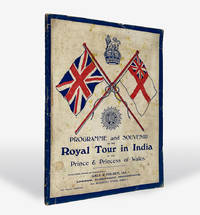
190621207831906. Gale & Polden Ltd. London Offices and Warehouse Aldershot Stores Bombay. 1906. Royal 8vo. Colour-printed card wrappers; pp. xiv 31 four colour illustrations after paintings on 2 leaves of plates highly illustrated after photographs in the text; spotting to wrappers inside of lower wrapper with small abrasure internally very good.This extremely rare publication by the military printers and publisher Gale and Polden in Aldershot opens with the detailed schedule of the Royal visit from their landing in Chennai on the 24th of January until their departure from Hyderabad on the 10th of February and a visit to Ellora Caves on Friday the 16th. This publication covers only a small part of the Royal tour which in total lasted from November 1905 to March 1906 and we assume this sovenir was published for the members of tf the Army and Navy who where engaged in safeguarding and as entourage. The bulk of this souvenir describes life work and pastimes in Army and Navy.We were not able to trace any copy institutionally or commercially nor is this publication referred to in any text known to the internet. unknown
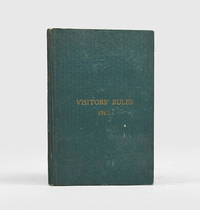
1913185139Lahore: Printed at the "Civil and Military Gazette" Press 1913. The 1913 edition of this handbook with guidance on camping fishing shooting and other matters. Readers are also warned against felling trees for firewood and against gifting or selling guns to any subject of the maharaja not licensed to carry firearms. The Kashmir visitor rules were first issued in 1806. Institutional searches show small holdings of a range of editions but no copies of this 1913 publication. Small octavo. Original green hexagonally grain cloth front cover lettered in gilt. Spine sunned light wear a few pages dog-eared: near-fine. hardcover
1915AQ27136Ranikhet: Abdulla Khan photographer 1915. 24 black and white photographs mounted on twelve leaves. Sewn as issued in original publisher's printed red wrappers. Rubbed and creased a trifle bowed. An unrecorded publication comprised of 24 evocative photographs primarily group shots of members of the 1/4th Battalion Duke of Cornwall's Light Infantry whilst stationed at Bareilly Uttar Pradesh during the first year of the Great War. 1/4th Battalion formed in Truro made up part of the Devon and Cornwall Brigade in Wessex Division. They sailed for India late 1914 and landed in Bombay on 10th November 1914 and remained there until 1916 where they moved to Aden 1916-1917 and then finished out the war in Egypt 1917-1918. . Oblong 8vo. [Abdulla Khan, photographer] unknown
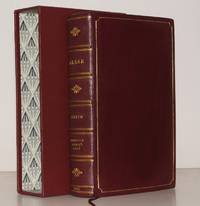
191720036Clarendon Press Oxford 1917. 8vo. First Edition with coloured frontispiece 14 plates 5 full-page maps in the text and 3 folding maps on japon title lightly dust-soiled; handsomely bound in full burgundy crushed morocco sides with gilt frame border back with raised bands second and fourth compartments lettered and ruled in gilt all other compartments tooled in gilt gilt top hand-made endpapers ribbon marker custom-made-slip-case an elegant copy ideal as a gift or for presentation. THIS COPY WAS FORMERLY IN THE LIBRARY OF SIR REGINALD SPENCE AND BEARS HIS FINE ENGRAVED ARMORIAL BOOKPLATE ON FRONT PASTE- DOWN. IT WAS SUBSEQUENTLY PRESENTED BY SPENCE TO THE LIBRARY OF CHRIST'S HOSPITAL SCHOOL HORSHAM AND BEARS THAT INSTITUTION'S PRESENTATION BOOKPLATE ON FRONT FREE ENDPAPER. Sir Reginald Spence prominent merchant philanthropist and educationalist spent much of his career in India. He was a prominent wine merchant Master of the Worshipful Company of Distillers 1949-1950 and an eminent freemason District Grand Master of Bombay and Northern India; the Lodge Reginald Spence was founded in his memory. A fervent educationalist he co-founded Barnes School in Devlavi one of the finest institutions of its type in Western India where a school house now bears his name. A NOTABLE ASSOCIATION COPY OF A WORK SELDOM FOUND IN THE ORIGINAL EDITION. Clarendon Press, Oxford, hardcover
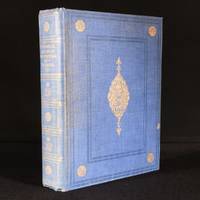
1914951F7London: The Government of India by John Murray 1914 . First edition. Cloth. Very Good. 11.5" by 9.5". Not Stated. The very scarce first edition of this richly illustrated account of George V's 1911 visit to entia to take part in the Imperial Durbar in Delhi. A very scarce first edition.Illustrated with a colour frontispiece eight colour plates two photogravures forty-four collotypes and numerous monochrome plates alongside four plans one of which is folding.Collated complete.With the bookplate of Christopher J. E. Jarchow to the front pastedown.The Delhi Durbar or Imperial Durbar was a mass assembly organized by the British at Coronation Park Delhi India to mark the succession of an Emperor or Empress of India. Also known as the Imperial Durbar it was held three times in 1877 1903 and 1911 at the height of the British Empire. The 1911 Durbar was the only one that a sovereign George V attended. It took pace in December 1911 to honour King George V and Queen Mary's coronation in Britain a few months prior and to proclaim their titles of Emperor and Empress of India. All Indian princely state kings and governors were called to pay respect.This work in great detail depicts this display of imperial power during the British Raj and includes detailed itineraries speeches and illustrations of this defining event of Colonial India. In the publisher's original cloth binding. Bumping to back strip head and tail. Light spotting to perimeters of front board with a touch of fading to centre of rear board. Light spotting to text block fore edge. Bookplate to front pastedown. Internally firmly bound. Pages clean and bright. Very Good The Government of India by John Murray hardcover
1907011405Calcutta: Superintendent of Government Printing India 1907. Book measures 33.5x21.cm. iiivi 40pp. Bound in original publishers printed boards. Boards rubbed sellotaped spine library labels and withdrawal stamp. Binding in good condition. Internally occasional library stamp or mark. Pages in good clean condition. A good clean copy. . Hard Cover. Good Plus. Quarto. Superintendent of Government Printing India Hardcover
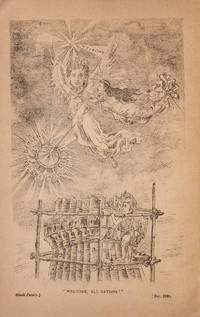
19038569<p>First edition of this rather extraordinary survey of Curzon's many appearances in caricature in Hindi Punch and other Indian comic papers where he often appears in Indian dress and frequently as various Hindu deities notably Ganesh. 'This unpretentious little book is offered as a humble souvenir of the Delhi Durbar: in its pages our popular Viceroy as representative in the great Coronation Durbar of the greatest monarch of modern times is the central figure. In a land of her-worship it is not to be marvelled that the energy versatility and strong personality of Lord Curzon added to his many loveable traits should lend themselves easily to the genius of the Indian artist for caricaturing' author's Preface.</p><p>Despite this warm introduction Curzon was subject to both approval and dissent through these images. The satire of British comic publications like Punch was enthusiastically appropriated by Indian artists - and India itself was frequently represented through the figure of Mr Punch - though their caricatures were also influenced by Indian artists such as Raja Ravi Varma. It is a fascinating fusion.</p><p>4to 248 × 158 mm pp. 2 2 48 4 adverts for Hindi Punch etc plus lithograph forntispiece numerous caricatures to text. Original lithographic boards. Slightly rubbed and soiled hinge cracked and backstrip rather crudely but effectively repaired with tape.</p> [Tatva-Vivechaka Press and lithographed at Ajinkya Art P. Works for] Babajee Sakharam & Co,