(India) [Pennant, Thomas]Biblio.com
27 résultats
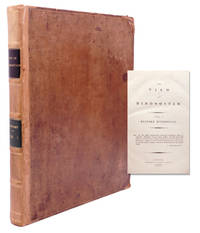
1798319520London: Henry Hughes 1798. First edition. Folding map frontispieces plates. xv 263 9 index; x 374 12 pp. 2 vols. 4to 11 x 9 inches. Contemporary full tan calf rebacked retaining original boards lower corner of Vol. I repaired. 19th-century ownership inscriptions to first blanks 1-inch tear to map near mount some thumb soiling and scattered spotting. First edition. Folding map frontispieces plates. xv 263 9 index; x 374 12 pp. 2 vols. 4to 11 x 9 inches. "This tireless naturalist and antiquary reached out to the ends of the world to gather in knowledge" Cox. <br /> These are volumes one and two on India and Ceylon of an intended 14-volume series entitled "Outlines of the Globe." Welshman Pennant died in 1798 the year of publication and only two more volumes China and Japan were published after his death by his son. ESTC T145966; Cox I p. 307 Henry Hughes unknown
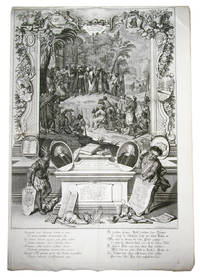
1730ABC_47423Augsburg 1730. 86 x 59 cm. Copperplate engraving. A grand engraving commemorating the achievements of the August Protestant Church in India features various scenes and elements. In the background there are mountains palm trees houses and people including a Chinese person. The foreground shows deciduous and palm trees with a lit grotto holding an idol inscribed with "Brama". In front of the grotto an evangelical missionary preaches to a large congregation of natives while holding a book of music in his left hand and pointing to Brama with his right hand. The missionary wears a turban a priest's cloak and has flappers. The audience under the hill is depicted in interesting groups with some closer to us appearing larger and clearer. At the bottom of the engraving there is an art altar with several books including the "Biblia Malabarica" "Catechism Malabaricus" and the hymnal "Liber Cantion. Malabar." The engraving was made by the German engraver painter draughtsman and art publisher Johann Elias Ridinger 1698-1767. He trained in Ulm and Augsburg under Christoph Resch and Johann Falch and learned engraving from Georg Philipp Rugendas. Ridinger later spent three years in Regensburg where he developed his style through coursing and visits to the riding school. His ornamental works show Rococo stylistic tendencies and he founded his own publishing house in Augsburg. His precise and tasteful drawings were highly regarded and transferred to decoration porcelain and ceramics.With two minor tears one partly repaired the other one not affecting the engraving. Overall in very good condition.l Thienemann Leben und Wirken des unvergleichlichen Thiermalers und Kupferstechers Johann Elias Ridinger 913; Thienemann "Nachträge Zusätze und Berichtigungen C. L. zu : Leben und Wirken des unvergleichlichen Thiermalers und Kupfer stechers Johann Elias Ridinger etc." in Archiv für die zeichnenden Künste 5 1859 pp. 148-149. unknown