109 résultats
1836231491836. Diario Constitucional de Santiago de Cuba No. 57 November 1836 just months after the restoration of Spain's liberal Constitution of 1812. This newspaper records the transmission of Spanish constitutional government into eastern Cuba in late 1836 through decrees ministerial correspondence and public political dispute printed for circulation in Santiago de Cuba. Issued weeks after the political upheavals that restored constitutional rule in Spain this number shows how the language of the regency government the suppression and reorganization of state bodies and local declarations of loyalty to Isabel II reached colonial readers through the newspaper press. In a Cuban setting where metropolitan policy was filtered through governors ministries and municipal elites an issue such as this preserves the working connection between imperial administration and provincial print.<br /> <br /> Diario Constitucional de Santiago de Cuba. No. 57. Santiago de Cuba 27 November 1836. 4 pages. Folio newspaper issue. The masthead reads "DIARIO CONSTITUCIONAL / DE SANTIAGO DE CUBA" with the date line "DOMINGO 27 DE NOVIEMBRE DE 1836." Page 1 opens with "MINISTERIO DE LA GOBERNACION DEL REINO" followed by a circular and a substantial "EXPOSICION A LA REINA GOBERNADORA" leading into a "REAL DECRETO" concerning the suppression of the Consejo Real de España e Indias. Interior pages continue the decree and carry translatedly legible sections including "MISCELANEA" notices on "Las islas turcas libres" and "Noticias sobre Tejas" and a long exchange under "REMITIDOS" dated "Cuba 25 de Noviembre de 1836" addressing militia service volunteers of Isabel II and the political insult attributed to an earlier subscriber. The issue survives as a complete four page folio with dense double column text throughout and no wrappers as issued.<br /> <br /> Printed in Santiago the issue shows constitutional and monarchist language being adapted for a colonial audience that was expected to follow ministry decrees military loyalty and debates over public honor in the same sheet. Folded as issued with minor edge chipping small losses at corners and margins some toning and closed tears and pinholes; complete and legible. Overall good condition. The juxtaposition of metropolitan government text Caribbean and Atlantic news and the local controversy printed in "Remitidos" gives the number a documentary range broader than a routine official gazette placing state policy beside the contested language of provincial political life. unknown
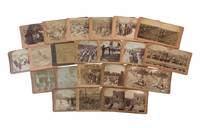
1898231301898. Spanish-American War stereoview archive circa 1898-1899 documenting how the war was pictured through mass-produced photographic views that followed U.S. mobilization battlefield action occupation and military life across both Cuba and the Philippines. These stereoviews preserves the visual system by which the war was circulated to American audiences showcasing camp organization troop movement burial hospital care naval power and overseas deployment. Particularly notable is the archive's coverage of the Rough Riders the Santiago campaign in Cuba and U.S. presence in Manila and Malate showing how stereoview photography helped normalize the war's expansion from anti-Spanish conflict into a broader American imperial presence.<br /> <br /> Archive of 21 stereoviews Various publishers. Spanish-American War stereoview archive. Cuba the Philippines and the United States circa 1898-1899. each measuring 3" x 7". The views are drawn from multiple phases and theaters of the war including camp and drill scenes in the United States embarkation and troop arrivals at Tampa battlefield and occupation imagery from Cuba and extensive and some grisly scenes from Manila and surrounding areas in the Philippines. Captions and images show soldiers in formation cavalry drill military reviews naval artillery hospital interiors encampments burial grounds and troops in active position. Cuban views include Morro Castle after bombardment dead and wounded on the battlefield of Santiago U.S. soldiers preparing to invade Cuba and troops dining near Cabañas Fortress. Philippine views include a departure for Manila American pickets routing a Filipino reconnoitering party the 18th Infantry engaged by Filipino outposts volunteers awaiting orders under the tropical sun Army Hospital Manila and "Our Boys in Camp at Malate P.I." One stereoview identifies Roosevelt's Rough Riders in the mobilization phase linking the archive to one of the war's most publicly mythologized units.<br /> <br /> As a group the stereoviews demonstrate the process by which the Spanish-American War was framed not simply as a short military victory over Spain but as a sustained structure of U.S. troop deployment and occupation extending from Cuba into the Philippines. The Manila and Malate scenes are especially important in this regard since they place American soldiers within the opening phase of the Philippine conflict where U.S. military presence quickly moved beyond liberation rhetoric into imperial control. The archive's mixture of battlefield casualties camp routine naval spectacle and celebratory review scenes shows how stereoscopic publishing converted war into a domestic viewing experience while reinforcing the legitimacy of American expansion abroad. Wear to mounts some toning; overall very good condition. A strong cross-theater visual archive of the Spanish-American War and the emergence of U.S. imperial power in Cuba and the Philippines. unknown
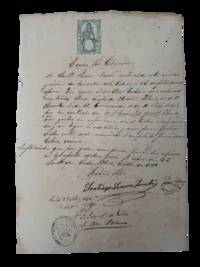
1870231221870. Slavery Cuba Spanish colonial slave sale manuscript recording the transfer of four enslaved individuals in Cuba in 1870. Produced within the official bureaucratic framework of Spanish colonial governance the document reflects the legal normalization of slavery in Cuba even as abolitionist pressures mounted across the Atlantic world. The document records the sale of four enslaved people described as "criollos" and African-born individuals situating the transaction within a labor system that combined locally born and imported enslaved populations. Created at a time when Spain had formally restricted the transatlantic slave trade but continued to permit slavery itself the manuscript demonstrates the persistence of legalized human commodification and the integration of enslaved labor into the island's economic structure sixteen years prior to abolition in 1886.<br /> <br /> Official Cuban slave contract documenting the sale of four enslaved individuals to Don Pedro Catasús by Don Enfemia Ochoa for the sum of 1100 pesos on November 29 1870. Single manuscript leaf written in Spanish cursive in black ink measuring 8.25" x 12". A green "50 cs de escudo" revenue stamp is affixed at the top center with a blind embossed Spanish crest at the upper left and a circular black ink government seal impressed at the lower left. Large vertical docketing appears on the verso. A stylized watermark is visible within the paper. The text organizes the enslaved individuals within a standardized transactional structure while the signatures of Enfemia Ochoa Pedro Catasús and A. Díaz de Rada authenticate the exchange and identify participants within the slaveholding economy.<br /> <br /> By 1870 Cuba remained a central node in the late Atlantic slave system with plantation agriculture especially sugar dependent on enslaved labor despite mounting abolitionist pressure. Although Spain had curtailed official slave imports earlier in the century illegal trafficking persisted into the 1860s and other coerced labor systems including the importation of Chinese indentured workers overlapped with slavery into the 1870s. The presence of both Creole and African individuals in this document reflects the layered composition of the enslaved population during this period. Light toning scattered foxing and edge wear visible. A closed wormhole extends from the upper right margin approximately five inches into the sheet resulting in partial loss of text. Evidence of prior tape reinforcement visible on the verso along with offsetting from previously adjacent material. Overall in very good condition. This document provides named transactional evidence of late-period slavery in Cuba offering concrete material for examining race labor and legal practice within Spanish colonial society. unknown
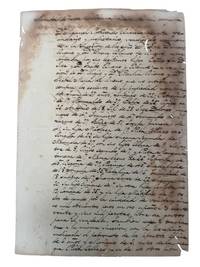
1875231241875. Slavery Cuba Spanish colonial slave sale manuscript recording the transfer of thirty-eight enslaved individuals in Cuba in 1875 materializing the sheer scale and organization of enslaved labor within the island's plantation economy during the final decade before abolition. The document enumerates a large group of enslaved people including multiple family units with young children demonstrating how slavery functioned as both an economic system and a hereditary condition sustained through the sale and reproduction of enslaved populations. Created eleven years prior to the abolition of slavery in Cuba in 1886 the manuscript documents the continued legality and normalization of large-scale slave transactions despite decades of international pressure and earlier prohibitions on the transatlantic trade offering concrete evidence of how internal markets sustained the institution in its final phase.<br /> <br /> Official Cuban slave contract documenting the sale of thirty-eight enslaved individuals for the sum of 126000 pesetas formalized before a public notary or legal authority. Single manuscript leaf written in Spanish cursive in black ink on both recto and verso densely filled with names ages and relational identifiers. Measures 8.5" x 12.25". The text lists individuals sequentially including men women and children with repeated references to kinship structures such as mothers with multiple children indicating the sale of family groupings rather than isolated individuals. The script reflects extended passages detailing ownership exclusions and conditions of transfer. A partial watermark of the official coat of arms of Cuba is visible. <br /> By 1875 Cuba remained one of the last major slave societies in the Atlantic world with sugar production driving demand for large controlled labor forces. Even after Spain curtailed the official slave trade earlier in the century illegal importation persisted into the 1860s and alternative systems of coerced labor including Chinese indenture supplemented plantation workforces. The scale of this transaction demonstrates the consolidation and redistribution of enslaved labor within domestic markets while the inclusion of children underscores the long-term economic logic of slavery as a self-reproducing system. Moderate toning and foxing concentrated along the edges with numerous small closed wormholes a few affecting portions of the text. Light edge wear present. Overall in good condition. This document provides unusually extensive nominal data on a large enslaved population encompassing the roles of kinship valuation and labor organization in late Spanish colonial Cuba. unknown
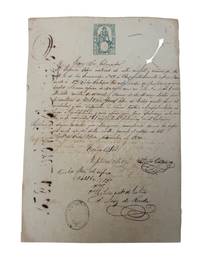
1870231191870. Slavery Cuba Spanish colonial manuscript documenting the late persistence of slavery in Cuba recording the sale of five enslaved Creole individuals including women and children 1870. Produced within the official bureaucratic framework of Spanish colonial governance the document reflects the legal normalization of slavery in Cuba even as abolitionist pressures mounted across the Atlantic world. The presence of multiple children within the transaction underscores the hereditary nature of enslavement and the commodification of family units offering direct material evidence of how slavery functioned socially and economically in its final decades on the island. Although Spain had formally ended the transatlantic slave trade earlier in the century illegal trafficking and internal slave markets persisted and slavery itself would not be abolished in Cuba until 1886 placing this document within a crucial transitional period marked by reform debates gradual emancipation laws and continued exploitation.<br /> <br /> Official Cuban slave contract recording the sale of five enslaved individuals identified as "criollos" including one adult woman and four children from Santiago Simón Fambi to Don Pedro Catasús for the sum of 1200 pesos on November 21 1870. Single page manuscript leaf measuring 8.25" x 12". The manuscript is written in Spanish cursive hand in black ink. The upper left bears a blind embossed crest of Spain while a circular black ink government seal is impressed at the lower left partially overlapping the text. The text enumerates the enslaved individuals with ages and names embedding human lives within the formulaic language of sale and valuation while the bold signatures of both seller Santiago Simón Fambi and buyer Pedro Catasús anchor the transaction in identifiable actors within the colonial economy.<br /> <br /> By 1870 slavery in Spanish Cuba remained central to the island's plantation economy particularly in sugar production which had expanded rapidly in the mid-19th century with industrialized mills and global demand. Enslaved people were primarily forced into agricultural labor under highly regimented and brutal conditions though others were used in urban domestic service skilled trades or as hired laborers generating income for their owners. This document exhibits light toning edge wear and scattered foxing throughout. A closed wormhole extends approximately two inches from the upper right margin inward not affecting legibility of the text. Minor losses and small tears along the edges. Overall in very good condition. Given that this document records a woman and four children the family was likely intended for a combination of field labor and domestic or auxiliary work with the children gradually incorporated into plantation labor as they aged reflecting the system's reliance on both immediate exploitation and the reproduction of enslaved labor over time. unknown
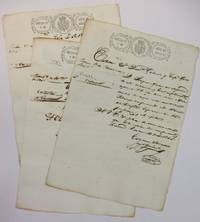
184537320Havana 1845. Each document 8-1/2" x 12-1/2" entirely in ink manuscript with decorative official printed ornamentation at head of each and signature "O'Donnell" in the left margins. Some toning and a few holes not affecting text. Good. <br/><br/> Leopoldo O'Donnell y Jorris 1st Duke of Tetuán 1809-1867 was a Spaniard of Irish ancestry from Tenerife. He went to Cuba as Captain General in 1843 and later served three separate stints as prime minister of Spain. He approved each of these requests for travel. The named Cuban Slaves are of "Lucumi" ancestry originally from the Yoruba tribes of Benin and Nigeria. The documents all dated in October 1845 refer to the slaves Joaquin Garcia de Angarica and Florentino Armenteroy Regidor.<br/> These requests were made to transfer the slave from one hacienda to another for work purposes the terms of work engagement frequently stated here. unknown books
1850230131Um 1850. In der Platte bezeichnet. 27 x 39,8 cm (Darstellung) 39 x 49 cm (Papier).
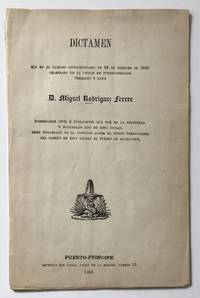
18611229Puerto-Principe: Imprenta del Fanal 1861. Good. 17pp. Leaves loose. Light wear one ink correction to text. A rare Cuban work printed outside of Havana outlining the necessity of a railroad between Puerto-Principe modern Camaguey and Santa Cruz. The many benefits of the plan are detailed herein with numerous charts. Miguel Rodriguez Ferrer 1815-1889 was a Spanish author and administrator but is best known for his work on the nature and culture of Cuba particularly his "Naturaleza y Civilizacion de la Grandiosa Isla de Cuba." He served in a number of civil administrator positions including mayor of San Antonio de los Baños and advisor to Puerto Principe. We locate a single copy at the National Library of Spain. Imprenta del Fanal unknown books
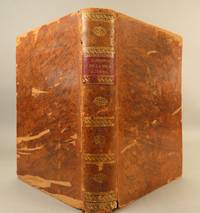
18308598<p>Two volumes in one with continuous pagination. No further volumes were published. Spanish text. Full mottled calf with red morroco label to spine and gilt particulars. Marbled endpapers. Loss to foot of spine see image and to corners. No previous owners' names or other defacements. Very scarce.</p><p>6 x 8.25 in</p> Imprenta de las Viudas de Arazoza y Soler hardcover
18207589AHavana, Kuba, 1820. 21 x 29 cm. 3 Seiten.
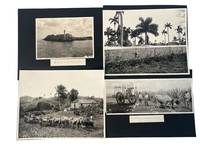
1900202981900. Photographers unknown. Cuban rural photographs early 20th century. This group documents agricultural labor family life and rural landscapes in Cuba prior to the Cuban Revolution recording work practices and domestic environments tied to farming economies that shaped the island's social structure. The images show ox-driven cultivation tobacco production and multi-generational presence within agricultural settings providing visual evidence of how rural Cuban communities organized labor and daily life before the political and economic transformations of the mid-twentieth century. Inclusion of a Havana harbor view further situates these rural scenes within a broader geographic context connecting countryside production with national infrastructure.<br /> <br /> Four original black-and-white silver gelatin photographs mounted on black mats with manuscript captions measuring approximately 4.75 x 6.75 inches to 7.5 x 10 inches. Images include oxen tilling soil in tropical farmland with workers riding wooden-wheeled wagons while family members stand near a thatched dwelling surrounded by palm trees. One photograph shows six children standing atop an ox cart drawn by two animals with hemp fields extending into the background and adult workers and dogs in the foreground. Another image depicts a laborer standing before a large tobacco crop covered with protective cloth with palm trees and huts visible behind. A landscape view of Castillo del Morro overlooks the entrance to Havana Harbor connecting agricultural life with a major coastal landmark.<br /> <br /> These photographs align with the structure of rural Cuban economies in the early twentieth century when agriculture particularly tobacco and related crops relied on manual labor and animal power within plantation and smallholder systems. Visual documentation of fieldwork transport methods and domestic settings provides primary evidence for the study of labor organization family roles and environmental conditions in pre-revolutionary Cuba. The combination of agricultural scenes and a Havana harbor landmark situates local labor within wider economic and geographic networks. Minor surface wear; mounts and photographs remain intact with clear imagery and legible captions. Overall very good condition. unknown
18560006868New York: D. Appleton 1856. First edition. Hardcover. fine. 12mo xii 412 pages original light brown embossed cloth. <br/><br/>These observations are related in a series of 61 letters. These were originally composed in Spanish then translated into English by Joseito. "I have thereby been enabled to impart entirely new data and reliable information instead of merely copying from books already known. . I applied myself to natives who besides an intimate knowledge of affairs in general possessed a sound judgment and an investigating disposition. It has beeen indeed a very happy incident to have found them. . That part of my work which treats on judicial matters and the secrets of the management of the tribunals will especially attract the attention of my readers. - Introductory Letter." Sabin 17816; Treiles BIBLIO. CUBANA vo. 4 p.17. D. Appleton hardcover
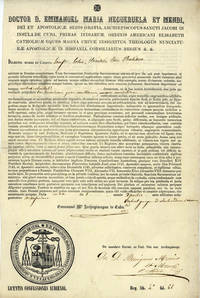
186042951Santiago de Cuba 1860. A very good copy with small tape repair on verso at fold. 2 pp. 1 sheet. 7 3/4" x 11 3/4" A license to hear confessions issued by Emmanuel Maria Negueruela et Mendi 1811-1861 Archbishop of Santiago de Cuba exactly one month after he arrived in Santiago de Cuba. A partially printed document completed in manuscript and signed 8th April 1860 and recorded. On the verso is a list of cases that are to be reserved for the Archbishop. Published one month before his first and only recorded work his first pastoral letter Carta pastoral que el Excmo. e Ilmo. Señor D. D. Manuel Ma Negueruela y Mendi. OCLC locates only copies of this letter and we could locate no other items by him. unknown books
189954590Bielefeldund Leipzig Velhagen & Klasing 1899. 116 Seiten, Mit 96 Abb. Nach photographischen Aufnahmen und Kartenskizzen, sowie einer farbigen Karte. Okart., Eigentümersignatur auf Vorsatzblatt Softcover/Paperback, Rückenpartie ausgeblichen, sonst Exemplar in gutem Erhaltungszustand
18997726Bielefeldund Leipzig Velhagen & Klasing 1899. 116 Seiten, Mit 96 Abb. Nach photographischen Aufnahmen und Kartenskizzen, sowie einer farbigen Karte. Okart., Eigentümersignatur auf Vorsatzblatt gebundene Ausgabe, Leineneinband, Kopfgoldschnitt, leichte Gebrauchsspuren am Einband, sonst guter Zustand
1889V39836Stuttgart (J.G.Cotta'sche Buchhandlung ) 1889 (= Erste Auflage). 8°, 12 Bände in 9 Büchern in rotem Leinen der Zeit mit goldgeprägtem Rücken, marmoriertem Schnitt und Exlibris (Hardcover), 1 Portrait 1
189934190New York, Verlag von Chas. Wildermann, 1899. 8°, 210 S.; Bezahlung per PayPal möglich, we accept PayPal, Einb. ger. beschabt u. ger. bestoßen u. angeschmutzt, Rückenbindung defekt, altersbed. Bräunungen, Gebr.sp., broschiert
189587496Havana: Castro Fernandez 1895. First. hardcover. near fine. Folding table. 414pp. 1/2 modern lavender buckram marbled boards original wrappers bound in. Habana: Castro Fernandez 1895. First Edition. Near Fine.<br/><br/> Laws regulating the telephone and telegraph industries.<br/><br/> Castro, Fernandez unknown books
189587496Havana: Castro Fernandez 1895. First. hardcover. near fine. Folding table. 414pp. 1/2 modern lavender buckram marbled boards original wrappers bound in. Habana: Castro Fernandez 1895. First Edition. Near Fine.<br/> <br/> Laws regulating the telephone and telegraph industries.<br/> <br/> Castro, Fernandez unknown
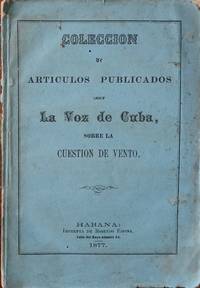
18773543<p>Coleccion de articulos publicados por la voz de cuba sobre la cuestion de vento primera edicion habanaimprenta de rosendo espina 1877 caratulas originaleslibro originalestado regularla voz de cuba fue un periodico cubano del siglo XIX en este libro se publican articulos del ingeniero cubano francisco de albearcon respecto a la construccion del acueducto de vento en la habanaAsí a solicitud del capitán general de la Isla el coronel de ingenieros >Francisco de Albear y Fernández de Lara presentó en 1855 una "Memoria acerca del Proyecto de conducción a La Habana de las aguas de los manantiales de Vento" que proyectaba un sistema de acueducto de mampostería cerrado que conduciría por gravedad las aguas de dichos manantiales hasta su destino final a una distancia de once kilómetros. En la Memoria Albear realizó un estudio de los antecedentes y las posibilidades de aprovechamiento de los acueductos anteriores efectuó un cálculo de la dotación de agua para la ciudad valoró las dificultades para lograr la obra de captación en Vento y propuso el trazado del canal hasta el depósito.</p><p>Atendiendo a la extraordinaria complejidad de la obra y a las dificultades de su ejecución en el convulso período de la >Guerra de los diez años Albear elaboró y presentó en 1876 dos nuevos documentos: la "Memoria del Proyecto de depósito de recepción y de distribución de las obras del Canal de Vento" y la "Memoria del Proyecto de la distribución del agua de Vento en La Habana". En la primera valoraba los aspectos relativos a la ubicación altura capacidad y dimensiones del depósito así como otros aspectos tecnológicos; mientras que en la segunda se argumentaban las condiciones requeridas para un buen sistema de distribución dividido en dos partes interior y exterior así como las particularidades y aportes de cada una de ellas.</p>La inauguración del Acueducto de Albear denominado finalmente así tras la muerte de su artífice el 22 de octubre de 1887 no ocurriría hasta seis años más tarde el 23 de enero de 1893 en medio de condiciones políticas y económicas sumamente adversas plagadas de dificultades no sólo topográficas y tecnológicas sino incluso higiénicas en momentos en que las llamadas "fiebres de Vento" diezmaban a sus constructores. La etapa final de las obras a cargo de la firma Runkle Smith and Co. de Nueva York y encabezada por el ingeniero Sherman Gould por la parte norteamericana fue dirigida de acuerdo con los proyectos originales por un discípulo y continuador de Albear el coronel de ingenieros >Joaquín Ruiz. No obstante su artífice llegó a tener en vida la satisfacción de ver su proyecto premiado con Medalla de Oro en la Exposición Universal de >París de 1878 donde se la consideró como una obra maestra de la ingeniería del siglo XIX. Imprenta de rosendo espina paperback
188315500BBParis, Plon, Nourrit et Cie., 1883. 3 Bl., 349 Seiten, 2 Bl. Halblederband der Zeit mit Rückentitelvergoldung., 15500bb Kapitale, Kanten und Rücken berieben und stellenweise beschabt.
18996930ABielefeld, Velhagen und Klasing, 1899. 4°. 116 S. Mit 96 Abb. und 1 farbigen Karte. Gepr. OLn.bd. mit DeckelVg. im OSchuber. Land und Leute. Monographien zur Erdkunde Band 2.
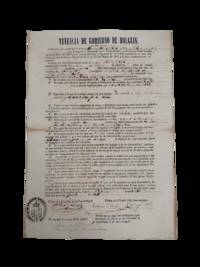
1868231331868. Cuba Chinese Labor Cuban indentured servant contract documenting the state administration of Chinese indenture in eastern Cuba in January 1868 with direct evidence of how colonial authorities private employers and local officials formalized the re-contracting of Chinese laborers under the legal framework established after the 1860 royal decree regulating Asian colonos on the island. Printed references within the form cite the Reglamento aprobado por Real decreto de 6 de Junio de 1860 and the Circular del Gobierno Superior Civil de 27 de Marzo de 1861 placing the document squarely within the coercive labor regime that Spanish Cuba built after the suppression of the transatlantic slave trade. The named employer Antonio Gonzalez the identification of the worker as a 37 year old Chinese male "Yuet" and the required signatures and government seal make the sheet a concise administrative record of the contract system through which Cuban planters and officials bound Chinese workers to plantation and rural labor in the final decade before the Ten Years' War.<br /> Tenencia de Gobierno de Holguín. January 1868. One page printed and manuscript contract form approximately 8" x 11". Printed in Spanish with extensive manuscript completion in brown ink. The form opens "Contrata que celebran el colono." and records a renewed labor agreement between a Chinese colono identified in the contract and Don Antonio Gonzalez with manuscript entries identifying the laborer as 37 years of age and supplying the individualized terms of service. The printed clauses set out the structure of the contract in eleven numbered articles including the term of service compulsory labor under the employer's orders days and hours of work subjection to discipline under the Reglamento monthly salary of 14 escudos food and clothing provisions medical attendance and hospital care treatment during illness and the requirement at the end of the contract either to renew service or enter the depósito de cimarrones. The sheet is signed by the patron the colono and the Teniente Gobernador and bears the circular official stamp of the Tenencia de Gobierno at lower left with additional show-through and seal impression visible on the verso.<br /> By 1868 Chinese indenture in Cuba had become one of the island's central labor systems supplying workers to a plantation economy still structured by slavery while giving colonial officials a paper mechanism for disciplining reallocating and surveilling labor. Forms such as this show the overlap between private contracting and state enforcement: the worker's obligations are written into a government template disputes are reserved to local authority and illness wages food clothing and renewal are all treated as administrative matters within a coercive labor order. Very good condition with horizontal fold light toning minor scattered staining and foxing and strong printed text manuscript entries seal and signatures. A compact Holguín government document showing the bureaucratic machinery of Chinese indenture in late colonial Cuba. unknown
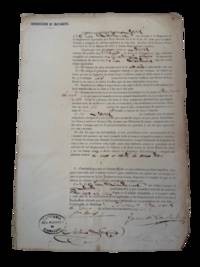
1867231471867. Cuba Chinese Labor Cuban indentured servant contract documenting the state administration of Chinese indenture in western Cuba February 1867 records the municipal enforcement of Cuban contract labor rules for Asian migrants under the post 1860 regulatory system that governed wages discipline illness food and flight. Issued on a printed form headed "Jurisdiccion de Matanzas" the document cites the Real Decreto of 6 July 1860 and the circular of 27 March 1861 governing the "introduccion y régimen de colonos asiáticos" then applies that framework to a specific recontracting arrangement between the laborer David and a patron named Juan. Dated 17 February 1867 it shows the continued operation of this municipal contract system after the additional order of 28 March 1866 which is also cited in clause 6 governing illness and compensation.<br /> David and Juan. 17 February 1867. Single sheet. 1 page. Approximately 8" x 11". Printed and manuscript Spanish contract on a form headed "Jurisdiccion de Matanzas." The parties are entered as the colono "David" and "Juan ." with David identified as a native of a town in Asia of "oficio campo" and described as having completed a prior commitment before agreeing to contract anew. Clause 1 fixes the term at "dos años." Clause 2 authorizes the patron to direct him to whatever labor he may assign in ingenios fincas or talleres with work entered with how many hours a day. Clause 4 sets compensation together with daily maintenance including meat and vegetable rations medical assistance and medicines during illness and annual clothing allotments including trousers shirt and blanket. Clause 8 repeats the employer's obligation to pay David punctually by completed months and to fulfill all conditions set out in the contract which bears multiple signatures and an oval district stamp at lower left.<br /> Contracts of this kind show the process by which Chinese workers in Cuba were transferred from one term of service into another through standardized paperwork that joined wages to labor discipline rationing medical provision and restricted mobility. The references to the 1860 decree the 1861 circular and the 1866 order place the sheet within the evolving legal structure that governed Chinese indenture in Matanzas one of the island's major plantation districts. Toning original folds edge wear scattered creasing and light ink offsetting; text clear and overall very good condition. A strong surviving municipal record of recontracting Chinese labor in the sugar zone of nineteenth century Matanzas. unknown
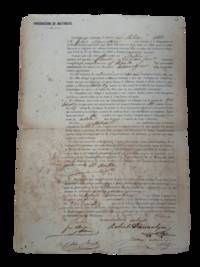
1870231451870. Cuba Chinese Labor Cuban indentured servant contract documenting the state administration of Chinese indenture in western Cuba July 1870 records the municipal enforcement of Cuban contract labor rules for Asian migrants under the post 1860 regulatory system that governed wages discipline illness food and flight. The form cites the Real Decreto of 6 July 1860 and the circular of 27 March 1861 governing the "introduccion y régimen de colonos asiáticos" placing the document within the mature legal framework used to renew and regulate Chinese labor contracts in colonial Cuba. Dated 5 July 1870 it records the continued operation of that system in Matanzas a decade after the initial decree when recontracting rationing medical provision and labor discipline had become standardized through municipal enforcement.<br /> Melchor and Roberto . 5 July 1870. Single sheet. 1 page. Approximately 8" x 11". Printed and manuscript Spanish contract on a form headed "Jurisdiccion de Matanzas." The parties are entered as the colono "Melchor" and "Roberto ." with Melchor identified as a native of a town in China and described as having completed an earlier commitment before agreeing to contract anew with Roberto for "un año." Clause 2 authorizes the patron to assign him to whatever labor his "citado patrono" requires whether in ingenios other fincas or talleres and the wage clause sets compensation at "20 escudos." The maintenance provisions specify daily rations including "12 onzas de carne" and "2 libras de plátanos boniatos ú otras sustancias alimenticias" together with medical attendance medicines during illness and two annual changes of clothing including trousers shirt and blanket. The text concludes with the employer's obligation to pay the twenty-escudo salary by completed months signatures of the parties and witnesses and an official Matanzas stamp.<br /> Contracts of this kind show the process by which Chinese labor in Cuba was renewed after a prior term and folded back into a system that combined wages with coercive control over movement occupation food clothing and bodily maintenance. The references to multiple governing orders the official jurisdictional heading and the stamped validation place the document inside the administrative chain that translated colonial labor law into enforceable local practice. Toning and scattered foxing throughout minor tears to original folds edge wear some minor wormholes and ink offsetting from the manuscript entries; text remains legible and document is in overall very good condition. A strong surviving municipal record of recontracting rationing and wage enforcement within the Chinese indenture system in Matanzas. unknown