[Spanish American War] [Cuba]Biblio.com
52 résultats
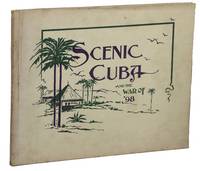
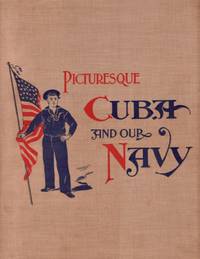
189832565Chicago: Published by Belford Middlebrook and Co. and Printed by Rand McNally and Co. Printers 1898. First Edition. Hardcover. Fair. Folio. Unpaginated. Illustrated. Light tan cloth hardcover with title and red blue and tan patriotic illustrated front cover. Restored. Front and rear hinges repaired with tissue. Tan cloth binding is soiled along the edges with a few spots on the rear cover. Published by Belford, Middlebrook and Co. and Printed by Rand, McNally and Co. Printers hardcover
1898ZB410896Washington: GPO 1898. 8 pp issued as 55th Congress 2d Session SD 129; light extraction roughness at margin now disbound in self wrappers. - If you are reading this this item is actually physically in our stock and ready for shipment once ordered. We are not bookjackers. Buyer is responsible for any additional duties taxes or fees required by recipient's country. Washington: GPO, unknown
189800009833Chicago: Belford Middlebrook & Co 1898. First edition. Hardcover. Very Good. 4to. Unpaginated. White cloth with decorations in purple and green on the front board. Illustrated with numerous black and white photographs and maps. With introduction and descriptive text. Photographs showcase the beautiful sights of Cuba along with military points of interest and several U.S. Navy ships. A Very Good book with a touch of rubbing to the corners and a bit of soiling to the cloth. Belford, Middlebrook & Co hardcover
188893403Madrid: Manuel Hernandez 1888. First Edition. pamphlet. 27 pages. 8vo original printed wrappers. Madrid: Manuel Hernandez 1888.<br/> <br/> Manuel Hernandez unknown
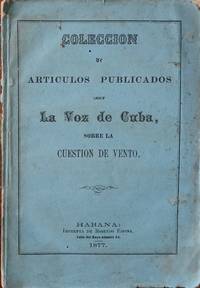
18773543<p>Coleccion de articulos publicados por la voz de cuba sobre la cuestion de vento primera edicion habanaimprenta de rosendo espina 1877 caratulas originaleslibro originalestado regularla voz de cuba fue un periodico cubano del siglo XIX en este libro se publican articulos del ingeniero cubano francisco de albearcon respecto a la construccion del acueducto de vento en la habanaAsí a solicitud del capitán general de la Isla el coronel de ingenieros >Francisco de Albear y Fernández de Lara presentó en 1855 una "Memoria acerca del Proyecto de conducción a La Habana de las aguas de los manantiales de Vento" que proyectaba un sistema de acueducto de mampostería cerrado que conduciría por gravedad las aguas de dichos manantiales hasta su destino final a una distancia de once kilómetros. En la Memoria Albear realizó un estudio de los antecedentes y las posibilidades de aprovechamiento de los acueductos anteriores efectuó un cálculo de la dotación de agua para la ciudad valoró las dificultades para lograr la obra de captación en Vento y propuso el trazado del canal hasta el depósito.</p><p>Atendiendo a la extraordinaria complejidad de la obra y a las dificultades de su ejecución en el convulso período de la >Guerra de los diez años Albear elaboró y presentó en 1876 dos nuevos documentos: la "Memoria del Proyecto de depósito de recepción y de distribución de las obras del Canal de Vento" y la "Memoria del Proyecto de la distribución del agua de Vento en La Habana". En la primera valoraba los aspectos relativos a la ubicación altura capacidad y dimensiones del depósito así como otros aspectos tecnológicos; mientras que en la segunda se argumentaban las condiciones requeridas para un buen sistema de distribución dividido en dos partes interior y exterior así como las particularidades y aportes de cada una de ellas.</p>La inauguración del Acueducto de Albear denominado finalmente así tras la muerte de su artífice el 22 de octubre de 1887 no ocurriría hasta seis años más tarde el 23 de enero de 1893 en medio de condiciones políticas y económicas sumamente adversas plagadas de dificultades no sólo topográficas y tecnológicas sino incluso higiénicas en momentos en que las llamadas "fiebres de Vento" diezmaban a sus constructores. La etapa final de las obras a cargo de la firma Runkle Smith and Co. de Nueva York y encabezada por el ingeniero Sherman Gould por la parte norteamericana fue dirigida de acuerdo con los proyectos originales por un discípulo y continuador de Albear el coronel de ingenieros >Joaquín Ruiz. No obstante su artífice llegó a tener en vida la satisfacción de ver su proyecto premiado con Medalla de Oro en la Exposición Universal de >París de 1878 donde se la consideró como una obra maestra de la ingeniería del siglo XIX. Imprenta de rosendo espina paperback
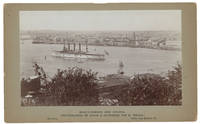
1890LIST110Havana: R. Testar 1890. Albumen photograph on cardstock mount image measuring 7 1/4 x 4 1/2 inches on 8 3/4 x 5 1/2 inch mount. A view of an American warship in Havana harbor likely taken prior to the outbreak of hostilities between the United States and Spain in early 1898. The photographers Leach and Patterson of Calle San Rafael published several views of Cuba at this time mostly of bucolic scenes around Havana and its environs. The American cruiser is similar in design to the U.S.S. Maine with slight differences - two smokestacks instead of three. An excellent example with minor wear to mount and fine image. R. Testar unknown
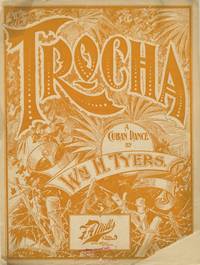
1890List3666New York: Jos. W. Stern & Co 1890. Folio sheet music illustrated pictorial cover printed in orange. 5 pp. including cover. Approximately 13 ½ x 10 ½ inches. Covers detached loss to front cover contents complete fair to good. A decorative late nineteenth-century dance publication for “Trocha†described on the cover as “A Cuban Dance†composed by the African American composer and bandleader W. H. Tyers. The elaborate pictorial cover incorporates stylized tropical foliage and island scenery rendered in a bold single-color design typical for the period’s fascination with exoticized musical forms. <br /> <br /> William H. Tyers 1870–1924 was an African American composer arranger and bandleader active in New York during the ragtime era. Born in Petersburg Virginia to Henry Tyers and Jane “Jennie†Jones both formerly enslaved he spent part of his youth in Richmond before his family relocated to New York City where he began studying piano. His early teachers recognized an aptitude for composition as well as performance and by the mid-1880s he was writing dance pieces including polkas and waltzes. Around the age of twenty Tyers secured employment as a music librarian and arranger with a touring concert company a position that brought him to Europe where he studied orchestration and arranging with Professor Gaspari in Hamburg.<br /> <br /> Returning to New York Tyers became active in the city’s rapidly expanding popular music trade working as an arranger and composer for publishers including F. A. Mills and Jos. W. Stern & Co. In 1896 he published “Sambo†a syncopated march sometimes considered to be one of the first instrumental rags.1 “Trocha†also released in the 1980s brought Tyers prominence for his ability to write Latin-style rhythms. It was re-issued in 1913 as a tango and its success led Tyers to work as an arranger with Joseph W. Stern in 1897.<br /> <br /> Tyers’ compositions blended contemporary American dance music with Caribbean and Latin themes a style reflected in pieces such as Trocha and later in his well-known ragtime composition Panama 1911 which remained a staple of early jazz and dance orchestras. OCLC finds two copies with different entries at the Cleveland Public Library and the British Museum Reference Collections. <br /> <br /> 1 “William Tyers Music Arranger†African American Registry https://aaregistry.org/story/william-tyers-born/ accessed March 10 2026. Jos. W. Stern & Co unknown
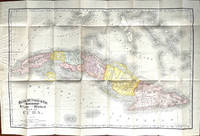
189262697Chicago IL: Rand McNally & Co. 1892. One pocket map. 12mo. sized 3.75 x 6 in. which folds out into 21.5 x 15 in. colour-lithograph map printed index on verso. Brown embossed publisher’s cloth gilt lettering on front cover slight shelfwear very slight rubbing light toning & edgewear to map still a VG bright copy. First edition thus of this “Business†pocket map of Cuba issued by the Rand McNally Co. the same year that Jose Marti established the Cuban Revolutionary Party to organize independence of Cuba and Puerto Rico from Spain. The printed index on verso references islands lakes mountains provinces rivers and towns in Cuba. Although several different versions of this particular map were produced by Rand McNally along with the San Francisco Chronicle and versions including an inset map of Havana Harbor none located in Worldcat are the same maps as this pocket map. Rand McNally & Co., hardcover
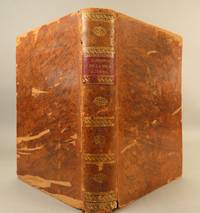
18308598<p>Two volumes in one with continuous pagination. No further volumes were published. Spanish text. Full mottled calf with red morroco label to spine and gilt particulars. Marbled endpapers. Loss to foot of spine see image and to corners. No previous owners' names or other defacements. Very scarce.</p><p>6 x 8.25 in</p> Imprenta de las Viudas de Arazoza y Soler hardcover
189587496Havana: Castro Fernandez 1895. First. hardcover. near fine. Folding table. 414pp. 1/2 modern lavender buckram marbled boards original wrappers bound in. Habana: Castro Fernandez 1895. First Edition. Near Fine.<br/> <br/> Laws regulating the telephone and telegraph industries.<br/> <br/> Castro, Fernandez unknown
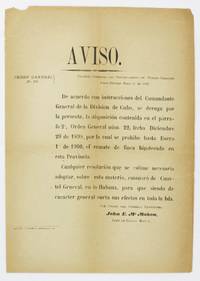
18995378Puerto-Principe Cuba: Imp. el Progreso-Soledad January 11 1899. Good. Broadside 11.75 x 8.25 inches. Old folds minor chip at top left corner uniformly tanned and somewhat tender. An unrecorded general order issued in Spanish by the American "Jefe de Estado Mayor" Chief of Staff John E. McMahon during the military occupation of Cuba in the Spanish-American War. The order stipulates that a paragraph in a previous order prohibiting the auction of mortgaged property in the province of Puerto-Principe until January 1 1900 is hereby repealed and any further instructions on this matter will come from the Army's General Headquarters in Havana. McMahon issued several general orders during the American Army's occupation of Cuba and all appear to be rare. An interesting artifact from America's expansionist period with no other copies in OCLC auction history or the trade. Imp. el Progreso-Soledad, January 11 unknown
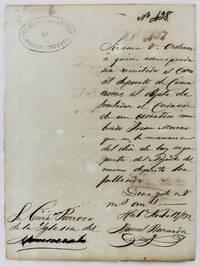
18723066Havana 1872. Very good. Manuscript form approximately 8.5 x 6.25 inches. Minor wear at edges; a few small worm holes. Contemporary ink stamp. Light tanning and offsetting. This 1872 manuscript form from a Havana jail the Celaduria de la Punta notes the death there of an "Asiatico" a Chinese indentured servant with the given name of Juan Macao and orders the transfer of the body to the mortuary for cremation. Indentured servants found themselves jailed for several reasons including suspicion of theft and other crimes recapture following runaway or mere suspicion of abandoning a contract. unknown
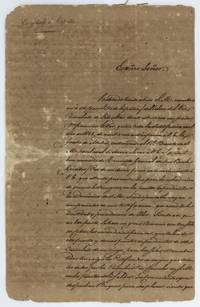
18792090Cuba 1879. About very good. 3pp. on a small bifolium. Contemporary ink stamps; accomplished in a fairly legible hand. Minor wear. A few small wormholes. Light tanning and dust soiling. Brief but very interesting manuscript report on the case of a missing Chinese indentured servant in the district of Alagranes near Matanzas. On February 18 1879 the owner of the plantation Juanita reports the missing person stating that there was a fire in his sugar cane field and it is thought that the laborer might have been burned. It seems that the present document serves to register the case with regional authorities in Matanzas and is a good record of the bureaucracy controlling indentured servitude in Cuba at this time. unknown
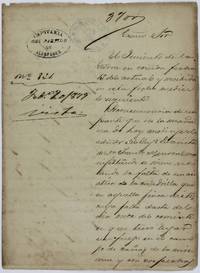
1860234291860. Spanish colonial administration in Havana used port health regulation as a mechanism of commercial and maritime control with the Captaincy General directing military customs and sanitary officials through centralized orders. This December 6 1860 manuscript concerns the "Junta local de Sanidad" "víveres averiados" and Dr. Rafael Cortés placing damaged provisions public health authority and port enforcement within the same bureaucratic chain. The phrase "usando de las facultades que me competen" invokes the vested powers of the colonial government confirming that the matter was handled through Spanish imperial authority rather than local civic discretion.<br /> <br /> Gobierno y Capitanía General de la Isla de Cuba. Secretaría de Gobierno sección de Gobierno. Manuscript order. Havana Cuba: December 6 1860. Single folded manuscript document with printed colonial seal and heading docketed "Habana y Dic. 6 de 1860" and addressed to maritime or port authorities. The text instructs compliance with a petition or order involving the local Board of Health damaged provisions or foodstuffs and Dr. Rafael Cortés with official endorsements and large administrative signatures below. The verso bears docketing and filing marks consistent with bureaucratic circulation.<br /> <br /> The document belongs directly to Spanish colonial governance in Cuba where the Governor and Captain General exercised civil military and administrative power over the island until the end of Spanish rule in 1898. Its contents connect colonial rule to the management of ports food safety and public health all crucial areas in Havana's nineteenth-century Atlantic economy. Folded as issued with toning scattered foxing edge wear and original folds; seal heading date and principal manuscript text remain legible. Overall good condition. unknown
1836231491836. Diario Constitucional de Santiago de Cuba No. 57 November 1836 just months after the restoration of Spain's liberal Constitution of 1812. This newspaper records the transmission of Spanish constitutional government into eastern Cuba in late 1836 through decrees ministerial correspondence and public political dispute printed for circulation in Santiago de Cuba. Issued weeks after the political upheavals that restored constitutional rule in Spain this number shows how the language of the regency government the suppression and reorganization of state bodies and local declarations of loyalty to Isabel II reached colonial readers through the newspaper press. In a Cuban setting where metropolitan policy was filtered through governors ministries and municipal elites an issue such as this preserves the working connection between imperial administration and provincial print.<br /> <br /> Diario Constitucional de Santiago de Cuba. No. 57. Santiago de Cuba 27 November 1836. 4 pages. Folio newspaper issue. The masthead reads "DIARIO CONSTITUCIONAL / DE SANTIAGO DE CUBA" with the date line "DOMINGO 27 DE NOVIEMBRE DE 1836." Page 1 opens with "MINISTERIO DE LA GOBERNACION DEL REINO" followed by a circular and a substantial "EXPOSICION A LA REINA GOBERNADORA" leading into a "REAL DECRETO" concerning the suppression of the Consejo Real de España e Indias. Interior pages continue the decree and carry translatedly legible sections including "MISCELANEA" notices on "Las islas turcas libres" and "Noticias sobre Tejas" and a long exchange under "REMITIDOS" dated "Cuba 25 de Noviembre de 1836" addressing militia service volunteers of Isabel II and the political insult attributed to an earlier subscriber. The issue survives as a complete four page folio with dense double column text throughout and no wrappers as issued.<br /> <br /> Printed in Santiago the issue shows constitutional and monarchist language being adapted for a colonial audience that was expected to follow ministry decrees military loyalty and debates over public honor in the same sheet. Folded as issued with minor edge chipping small losses at corners and margins some toning and closed tears and pinholes; complete and legible. Overall good condition. The juxtaposition of metropolitan government text Caribbean and Atlantic news and the local controversy printed in "Remitidos" gives the number a documentary range broader than a routine official gazette placing state policy beside the contested language of provincial political life. unknown
18282401Gibraltar 1828. Good. 3pp. on a bifolium. Previously folded with separations. Tanned somewhat brittle. An interesting example of official communications concerning trade between colonial Cuba and the Spanish mainland. In this manuscript letter date March 14 1828 the new Spanish Vice Consul in Gibraltar writes to the Governor General of Cuba concerning several topics. These include the regulation of shipping to Cuba and by implication the rest of the Caribbean through Gibraltar particularly of French ships leaving Mediterranean ports. Also discussed is keeping track of individuals particularly merchants going to Cuba by means of identification papers and other documents. The consul also reminds the colonial government of the importance of documenting duties and tariffs paid for shipping cargo and goods. unknown
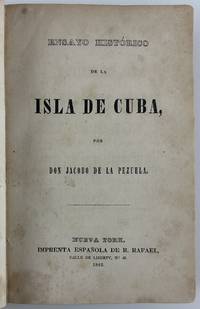
184213073Nueva York: Imprenta Espanola de R. Rafael 1842. viii631pp. Contemporary quarter calf over marbled-paper boards spine gilt gilt leather label. Substantial scuffing and wear to spine and extremities spine ends frayed rubbing to boards. Hinges somewhat tender but holding strong varying degrees of toning and foxing throughout. Good condition. A scarce historical work on Cuba by a Cuban-born Spain-and-France-educated soldier and historian. Jacobo de la Pezuela 1812-1884 was born in Havana went to school in Valladolid and Montpellier then returned to Cuba in his thirties to serve at various army posts and also record the history of his native country. He published several works and later became a member of Spain's esteemed Real Academia de la Historia. In the present work which translates to Historical Essay on the Island of Cuba Pezuela begins at the beginning with Columbus's arrival on the island and continues to almost the present moment concluding with an appraisal of the governorship of Miguel Tacon. In the last chapter Pezuela also includes a section on "Negros emancipados" "Emancipated Blacks". A dense history of Cuba by a Cuban-born historian published in Spanish in New York in 1842.<br /> <br /> Sabin 61329. Imprenta Espanola de R. Rafael unknown
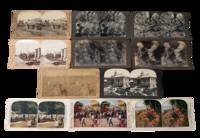
1890231711890. Stereoview archive of the post-emancipation Caribbean showing how the islands were marketed to western viewers through plantation labor export agriculture civic spectacle and catastrophe. As a group these photos function not only as an ethnographic travel archive but as evidence of the visual economy that followed slavery. The British West Indies moved through emancipation in 1834 to 1838 the French Caribbean in 1848 Puerto Rico in 1873 and Cuba in 1886 yet plantation production remained central to regional life well into the early twentieth century. These stereoviews preserve a colonial way of seeing in which Black and Afro-Caribbean labor rural discipline and extractive agriculture remained the background condition of "tropical" beauty and commercial modernity. Cuba's sugar economy in particular expanded through the nineteenth century and slavery was not abolished there until 1886 while Weyler's later reconcentration policy during the Cuban War of Independence violently reorganized rural life. Martinique after 1848 likewise shifted into new labor regimes including imported workers from India and China.<br /> <br /> Archive of 11 stereoview cards late 1890s to early 1900s depicting Cuba Jamaica Martinique Puerto Rico and the Dominican Republic. Most black and white with a few colorized. Each measure 3.5" x 7". All with captions on the margins. "Reconcentrado Farming Scene Province of Havana Cuba" links agricultural production to the brutal displacements of Spain's reconcentration campaign; "Cutting sugar cane Montego Bay Jamaica W.I." records cane labor in a colony where emancipation had not ended plantation dependency; and "Harvesting Coconuts Porto Rico" likewise frames Caribbean land through export work rather than local life. Other views extend that economic framing through cacao and coffee scenes while the paired Havana cards shift into urban leisure and public display including "Beautiful Central Park Havana Cuba" and "Holiday in Havana Cuba" the latter with both Cuban and American flags visible a telling image of the new imperial order after 1898. The disaster views from Martinique and the Lesser Antilles show how stereoview publishers also turned Caribbean destruction into consumable spectacle. the Morne Rouge card is accompanied on the reverse by the grim printed text "Dead bodies which were to be seen in Morne Rouge." while the wider context is the 1902 eruptions of Mount Pelée in Martinique and La Soufrière on Saint Vincent two catastrophes that killed roughly 30000 and 1600 people respectively and devastated local communities and agriculture.<br /> <br /> Some corner wear light toning scattered surface and edge wear. Overall very good condition. This collection gives direct visual representation of Caribbean history Atlantic slavery and emancipation plantation labor and U.S. imperial expansion in the circum-Caribbean preserving the transition from slavery to post-abolition labor. unknown
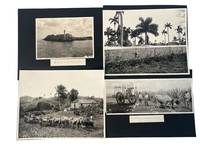
1900202981900. Photographers unknown. Cuban rural photographs early 20th century. This group documents agricultural labor family life and rural landscapes in Cuba prior to the Cuban Revolution recording work practices and domestic environments tied to farming economies that shaped the island's social structure. The images show ox-driven cultivation tobacco production and multi-generational presence within agricultural settings providing visual evidence of how rural Cuban communities organized labor and daily life before the political and economic transformations of the mid-twentieth century. Inclusion of a Havana harbor view further situates these rural scenes within a broader geographic context connecting countryside production with national infrastructure.<br /> <br /> Four original black-and-white silver gelatin photographs mounted on black mats with manuscript captions measuring approximately 4.75 x 6.75 inches to 7.5 x 10 inches. Images include oxen tilling soil in tropical farmland with workers riding wooden-wheeled wagons while family members stand near a thatched dwelling surrounded by palm trees. One photograph shows six children standing atop an ox cart drawn by two animals with hemp fields extending into the background and adult workers and dogs in the foreground. Another image depicts a laborer standing before a large tobacco crop covered with protective cloth with palm trees and huts visible behind. A landscape view of Castillo del Morro overlooks the entrance to Havana Harbor connecting agricultural life with a major coastal landmark.<br /> <br /> These photographs align with the structure of rural Cuban economies in the early twentieth century when agriculture particularly tobacco and related crops relied on manual labor and animal power within plantation and smallholder systems. Visual documentation of fieldwork transport methods and domestic settings provides primary evidence for the study of labor organization family roles and environmental conditions in pre-revolutionary Cuba. The combination of agricultural scenes and a Havana harbor landmark situates local labor within wider economic and geographic networks. Minor surface wear; mounts and photographs remain intact with clear imagery and legible captions. Overall very good condition. unknown
185487325Havana: Imprenta de la Real Audiencia Pretorial por S.M. 1854. First Edition. hardcover. very good. 3 folding tables. 2 volumes bound in one. 8vo 1/2 contemporary black morocco tear in a table with no loss of text. Habana: Imprenta de la Real Audiencia Pretorial por S.M. 1847 1854. Very good.<br/> <br/> Imprenta de la Real Audiencia Pretorial por S.M. unknown
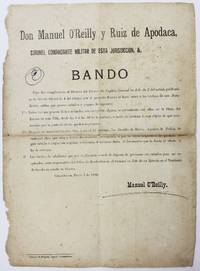
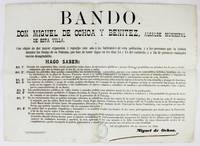
18963188Guanabacoa: Imprenta el Progreso 1896. About very good. Broadside approximately 17 x 12.5 inches. Previously folded. Some biopredation at left edge not affecting text. Otherwise faint foxing light tanning and dust soiling. Two contemporary manuscript rubrics. Unrecorded broadside that orders the presentation of privately-owned horses and pack animals in the town square of Guanabacoa for requisition by the Spanish army in January 1896 at the outset of the Cuban uprising that would eventually lead to the end of Spanish colonial rule. This bando states first that "Todos los que posean dichos animales sin excepción alguna se presentarán con ellos en la Plaza del Recreo de esta Villa desde las 8 á las 10 de la mañana á partir de mañana 8 con objeto de que reconocidos por la junta al efecto queden requisados." Following these initial voluntary presentations inspections would be made of homes and farms and those found not to have handed over usable animals would be guilty disobeying army orders during a time of war. At this point Spain had 100000 troops on the island and another two years of fighting the insurrection incited by José Marti would pass before the intervention of the United States. Not in OCLC. Imprenta el Progreso unknown
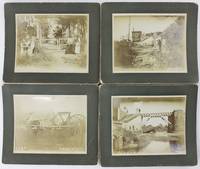
18984079Puerto Principe 1898. Good plus. Thirteen photographs each approximately 4 x 5 inches on original card mounts. A few images rather faded. Light edge wear to mounts. Some photo credits in negatives; each with manuscript caption on mount verso. An interesting group of thirteen photographs taken by an amateur military photographer while deployed to Cuba during the Spanish-American War. The photos are centered around Puerto Principe now Camaguey in Central Cuba an unusual location for photos of this genre and focus on natives local architecture and natural views. Crude credits in the negatives of several images attribute the photographs to "Woodward" or "W.D.W" of the "15th U.S.I.B" i.e. 15th U.S. Infantry Battalion . Each image is also captioned in manuscript on the rear of its mount as follows:<br /> <br /> 1 Rail Road Bridge Near Puerto Principe Cuba<br /> 2 Same Bridge Different View<br /> 3 Natives in Cuba<br /> 4 Military Headquarters<br /> 5 Soldier Camp in Cuba<br /> 6 Cuban Prison<br /> 7 Cemetery in Puerto Principe Cuba<br /> 8 Water Wagon in Cuba<br /> 9 Plaza in Puerto Principe Cuba<br /> 10 Residence in Cuba<br /> 11 Cuban Carriage<br /> 12 Summer Resort in Cuba<br /> 13 Military Headquarters Inside. unknown
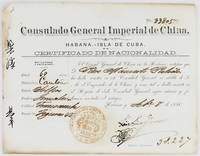
18802592Havana: September 8 1880. Very good. Partially-printed broadside 6.5 x 8.25 inches completed in manuscript in Spanish and Chinese. Small marginal wormhole mild edge wear light toning. Ink stamp of the Consulado General at bottom-center. A scarce certificate issued in 1880 by the Chinese Consulate in Havana authenticating the registration and details of a Chinese laborer in Cuba. The printed form is completed in manuscript with the name of the recipient his age place of origin occupation and place of residence. The present examples were completed for a sixty-year-old laborer from Canton being called Pedro Pulido who was going to work and/or live at 48 Calle Figueroa in Havana. The printed text states that "El Cónsul General de China en la Habana certifica que blank ha hecho constar en este Consulado General ser súbdito de S.M. el Emperador de la China y como tal se halla inscrito en el Registro de dicho Consulado General segun número y filiacion anotados al márgen." The certificate is dated September 8 1880 and is stamped with the seal of the consulate in red and with the rubberstamped signature of the Consul General Lin Liang Yuan. The form are also bears two ink signatures in Chinese in the left margin a rare occurrence. An excellent document of the bureaucracy surrounding imported Chinese labor to Cuba in the last quarter of the 19th century. September 8 unknown
18883032Guanabacoa 1888. About very good. Broadside approximately 12 x 17 inches. Previously folded. Contemporary manuscript rubric and small ink stamp. small patch of ink burn causing separation along rubric line. A few tiny wormholes slightly affecting text. Light tanning minor foxing. An otherwise unrecorded 19th-century Cuban broadside decree announcing the rules for celebrations in Guanabacoa during "las fiestas de su Patrona" taking place on August 14 & 15 1888. The patron saint of Guanabacoa then a small town just outside Havana and now an outlying district of the city is Our Lady of the Assumption and August 15 is the Feast of the Assumption. This broadside prints eight articles the first of which allow games and "diversiones públicas" but prohibit games of chance and gambling of any kind and authorize the erection of food and drink stalls in public places that do not impede public traffic. Permission must be obtained from the municipal magistrates for balls and parties in private houses; shooting guns rockets and fireworks is still strictly forbidden but the lighting of torches is allowed during the saint's procession. Other rules regulate vehicular traffic cafés and restaurants horse races ball games and theatrical performances. A very interesting document of municipal regulation for popular religious events in Cuba during the late-19th century. unknown
1894106465<p>1894. Pamphlet format 70 pp. Illustrations; map. 14.3x11.8 cm 5½x4½" pictorial wrappers. Some light staining and wear to wrappers spine a little worn very good overall. Rare tourists' guide book produced under the auspices of the Grand Hotel Macotte with much on Havana transportation options sights to see including bull fights prices a Spanish vocabulary etc. with numerous advertisements for Cuban and some Florida businesses and other hotels. One advertisement features cigar maker La Corona. They even include an illustration of Christopher Columbus. OCLC/WorldCat lists only one copy at the California State Library Sutro Branch.</p> J. Carbonell and P. Montero, Proprietors.