(Cuba) Hughes, Charles EvansBiblio.com
105 résultats
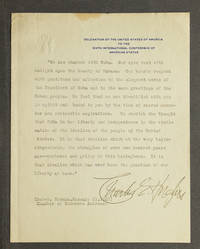
1928249718Havana 1928. 1 page. 8vo. Minor soiling else fine. 1 page. 8vo. Reading in part: "We are charmed with Cuba. Our Eyes rest with delight upon the beauty of Cuba.We cherish the thought that Cuba in her liberty and indepedndence is the vindication of the idealism of the people of the United States." <br/><br/> unknown
195872030Havana: Santos Foto ca. 1958. Original Cuban Revolution era photograph showing a seated group of five people. 9 1/2 x 7 3/4 inches. In the center is a soldier very much trying to look like Che Guevara with a full beard and mustache in army cloths and hat and holding a rifle. Seated on either side of him are two couples all in street clothes and each of the men is holding a rifle. The guns appear to be Thompson M1 A1s which would place this photograph at the beginning of the Revolution before Soviet weapons were commonplace. The photographer Santos Foto Habana is identified in the plate and stamped on the rear. Ironically this picture is laid into a Empire Room Waldorf Astoria printed folder. It should be noted that Che Guevara once worked as a dishwasher at the Waldorf so this pairing is probably intentional. Santos Foto hardcover
19186299Havana 1918. Hardcover. Good. Second half of the year 1918 6 issues of the important Cuban monthly magazine Social which was published from 1916-1938. Cover art by editor and famed Cuban caricaturist Conrado Massaguer. A rare and early section of the publication. A fascinating glimpse into Cuba at this time. Filled with great period art and advertisements black and white photographs and articles. Some scattered foxing 1st cover of 6 much worse than the others staining and wear varies from issue to issue. Bound together in period cloth with floral pattern worn. <br/><br/> hardcover
191386818Havana: Rambla 1913. hardcover. very good. Illustrated. 134 pages. Slim 4to modern cloth original front wrapper bound-in. Habana: Rambla Rouza 1913. Very Good.<br/> <br/> Rambla unknown
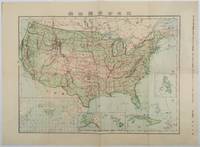
1911179415Tokyo.: 楠山正雄. Kusuyama Masao. Meiji 44 1911. Colour folding map 40 x 55cm inset maps showing the Philippines Alaska and Hawaii very good copy. This map was a supplement of October 1911 issue of a monthly magazine Shin Nippon 新日本 which was published between 1911 and 1918. The main map covers the contiguous United States with inset maps of the world showing the American territories of Alaska Hawaii and the Philippines. Curiously Cuba has been marked as an American territory having been directly occupied from 1906 to 1909 though at the time still beholden to the 1903 Cuban-American Treaty of Relations. . 楠山正雄. [Kusuyama Masao]. unknown
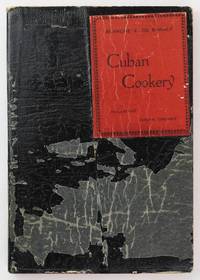
19316190Havana 1931. Very good. 150pp. Stiff black cloth covers printed paper label on front board. Front cover vertically creased light wear to boards; remnants of glassine stuck to covers. Contemporary inscription on front flyleaf. Internally clean. In a custom clamshell box. First edition of the first Cuban cook book published in English. Blanche Zacharie de Baralt 1865-1950 was born in New York; she married Luis Alejandro Baralt y Peoli in 1886 and the couple moved to his native Cuba in 1900. She earned a PhD in philosophy from the University of Havana in 1902 and went on to translate the poetry of Tagore and to write a book on Jose Marti. She also published this volume which was clearly geared toward the tourist market with the introduction emphasizing the idea of taking home the tastes of one's holiday abroad. Each chapter heading has an illustration and these were drawn by Federico Edelmann and Conrad W. Massaguer the one above the section for beans appears to show a cowboy riding along in a cloud of gas. Notably this work contains several important Cuban cocktails including the first appearance of the mojito referred to here as a Rum Cocktail or Cuban Mojo. Rare in the true first edition. unknown
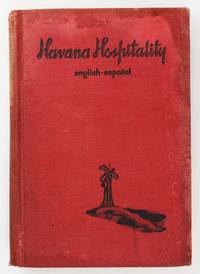
19506261Havana 1950. Good. 389pp. plus 33pp. of ads. Original red publisher's cloth stamped in black. Dampstained at edges and spine extremities worn; rear cover soiled. Contemporary inscription on front pastedown. Foxed some scattered soiling. An interesting bilingual Cuban cook book with recipes in English and Spanish on facing pages. The introduction explains that this is not a volume of recipes for the beginner bride or a how to guide but rather "the compilation of favorite recipes hitherto unpublished yet well-known and highly regarded in important Cuban-American circles and other parts of the world where men and women of taste and discernment throughout the years have succeeded in regaling the palates of intimate friends and distinguished gusts." Each recipe lists its contributor -- some of whom are noted as "Mrs." and some of whom are denoted as "Sra." Recipes range from Hot Grapefruit Cocktail to Sweet and Pungent Shrimp to Italian Spaghetti California Style and more. The St. Rita Guild is a Catholic parish organization designed to foster community. Fewer than ten copies in OCLC. A wonderful slice of domestic and social life in Cuba just before the Communist revolution. unknown
197147663Miami: Ediciones Universal 1971. First Edition. Octavo 20.5cm.; publisher's pictorial card wrappers; 263pp. Light shelf wear tiny dampstain to bottom fore-edge corner of textblock else Near Fine. Account of present-day Cuba by the exiled Cuban journalist who nearly twenty-five years earlier was nominated Vice President by the Socialist Revolutionary Movement with twenty-two-year-old Enrique Ovares as President. According to the author biography on the rear cover: "Ni un sólo minuto de sa vida no está dedicado a Cuba. Nadie lo aventaja en la lucha constante contra el régimen castrista y contra los malandrines que ofenden la dignidad nacional. Ediciones Universal unknown
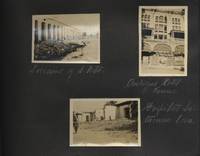
193250120Santiago de Cuba 1932. A unique album of 19 leaves of heavy black stock 7 x 5 1/2 inches with 67 mounted b&w silver photographs of varying sizes 1 3/4 x 2 1/2 inches - 3 1/2 x 5 7/8 inches all captioned in white ink. The album is titled and decorated in gilt on the upper cover "PHOTOGRAPHS: SOUVENIR OF SANTIAGO CUBA and tied with a cloth lace. Very good. An earthquake of 6.7 magnitude struck the city of Santiago de Cuba at dawn on 3 February 1932. Over half the buildings were destroyed or damaged and reports of the deaths range to 1500. These photographs show the destruction to the commercial and residential buildings and the Cathedral and the tents set up as temporary shelters. A few of the photographs were made by local commercial photographers just after the quake and the remainder within days. All captions in Spanish. unknown
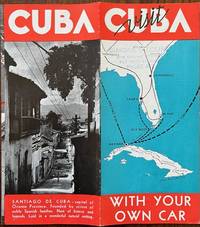
194059321Havana Cuba: Cuban Tourist Commission ca. 1940. 8vo. 12 pp unpaginated. folds out leporello accordion-style format printed in red blue & black photo illustrations & map on recto large map of Cuba’s Central Highway on verso slight shelfwear NF. First edition of this scarce travel brochure touting the advantages of U.S. tourists to bring their own cars and travel over the Carretera Central which ran the entire length of the Island from Pinar del Rio to Santiago de Cuba over 700 miles. The highway construction launched in may 1927 and when finished proved very popular as a means to see the island. Tourists could bring their own cars from Tampa Miami or Key West on a ferryboat and travel through Cuba. No copies in Worldcat. Cuban Tourist Commission, unknown
200054535Havana: Editorial Echevarria ca. 2000. Oblong 4to. 32 pp unpaginated. w/ 271 colour numbered Revolutionary trading cards all tipped-in including 3 for Revolutionist flags on verso front cover. Colour-illustrated coated softcovers cover art showing heroic Fidel Castro leading the revolutionaries rubbing creasing rippling to textblock still VG- copy. Facsimile souvenir of this famed piece of Cuban Revolutionary propaganda distributed free to the Cuban people originally by Felices Frutas the local canned fruit industry trying to stay afloat and appease Castro as all the countries industries and businesses were nationalized after the Revolution. Featuring the cartoon art of Capdevila this piece traces the return of the Castros from exile in Mexico as they fought capitalist exploitation the fall of Batista the bloody running battles and more all celebrating the success. Editorial Echevarria, paperback
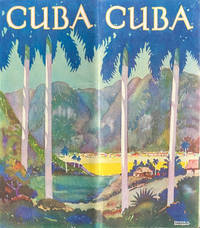
193261114Havana Cuba: Cuban Tourist Commission Printed by “Ucar Garcia & Co.†ca. 1932. 4to. 36 pp unpaginated. Printed & illustrated throughout in green black & white photo illustrations throughout graphic text illustrations in green & white. Self-printed colour-illustrated softcovers wraparound cover art by Conrado W. Massaguer minor bumping head of spine shelfwear still VG copy. First edition of this informative travel brochure touting the joys of visiting Cuba touting the historic cathedral square the lush countryside the offerings of sugar coffee and tobacco as well as the beaches hunting sport fishing night life and The Rumba. Massaguer 1889-1965 was an influential Cuban artist whose modernist look dominated magazines catalogues and ads across Latin America and also was a founding member of the Grupo Minorista. Cuban Tourist Commission, Printed by “Ucar Garcia & Co.,†paperback
193162232Havana Cuba: Walton & Spencer Co. P. Fernandez & Co. Printers Pl. y Margall 17 1931. 4to. 32 pp unpaginated. Printed & illustrated throughout in green black & white photo illustrations throughout decorative green borders 1 double page folding map at center. Colour-illustrated softcovers cover art front & back by Edward Sandback of Cuban beach old Havana and fruits of Cuba on verso of front cover Art Deco frontisp. in colour by Herminio Portell Vila 1901-1992 Cuban cartoonist & illustrator on verso of back cover center crease fold as issued slight shelfwear NF copy. First edition of this beautifully printed brochure exclaiming over the fun and leisure activities of visiting Cuba featuring photos of historic Havana golf courses polo gambling automobile trips the influences of Africa and Spain and of particular interest the many different residence hotels and leisure places for rent for tourists. Sandback was a Florida artist well-remembered for his travel brochure illustrations such as “Florida: Empire of the Sun†as well as paintings. Walton & Spencer Co., P. Fernandez & Co., Printers, Pl. y Margall 17, paperback
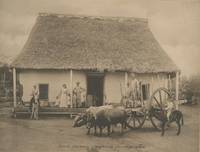
1913List3218Brooklyn New York: The Albertype Co 1913. Photo album of twenty-five 12 ½ x 10 inch pages containing fifty 8 x 6 inch photographs with cardstock cover. Cover and pages worn with marginal damage; pages mostly detached from string binding; photos with captions on negative; Near Fine with Fine contrast. Overall excellent to Near Fine. After the Spanish American War the Isle of Pines now Isla de Juventud in Cuba was contested territory because the 1901 Platt Amendment had specifically left ownership of the island up to a future treaty; the 1904 Hay-Quesada Treaty recognizing Cuban sovereignty over the island failed to be ratified by the US until 1925. American citizens controlled ninety-five per cent or more of the island’s land and were strongly in favor of American annexation. <br /> <br /> Offered here is a 1913 photo album exhibiting the island’s lush scenery productive farmland and luxurious American residences and resorts. The American property owners are identified by name and include American Residents and Property Owners’ Association President T.J. Keenan who in 1902 described the island under default administration by the Cuban government as “on the verge of anarchy . American interests are absolutely unprotectedâ€1; H.A. Christy Vice President of the Cincinnati Richmond & Muncie Railroad; coal and coke businessman John F. Atcheson and other elites. There are also shots of a number of hotels; grapefruit banana and pineapple farms belonging to the settlers; and recreation by both automobile and boat.<br /> <br /> Two photographs are not of American ventures: one of the home of José Sarda which housed José Martà before his exile to Spain labeled merely “Nueva Gerona Sarda Homsteadâ€; and one of a house labeled “San Juan Native Homestead†showing a family standing on the porch of their thatched-roof home with an oxcart before them.<br /> <br /> We find four copies of this photo book on OCLC. Of interest to historians of US imperialism in Cuba following the military withdrawal. <br /> <br /> 1 “The Isle of Pines President Orders Investigation of Affairs There†The Press-Herald November 15 1902 2. The Albertype Co unknown
1906List3021La Habana Province Republic of Cuba 1906. Twenty-two photographs measuring 7 ¼ x 9 ½ inches mounted on heavy cardstock measuring 10 x 12 inches. Photos numbered and dated on negative. In album embossed with “Havana Central Railroad Co./ Progress Photographs/ GUANAJAYâ€. Photos with fine contrast and some wear; mounts with minor damage slightly warped with some detached from binding. Overall excellent. Havana Central Railroad Company was an American company formed in April 1905. It opened two electric tram lines—Havana to Guanajay in 1906 and Havana to Güines in 1907—before it was bought by the English company United Railways following the Panic of 1907. Offered here is a photo album showing the construction of the Guanajay line. The photographs show laborers assisted by horse-drawn carts digging culverts laying tracks and erecting bridges and buildings.<br /> <br /> This project came on the heels of the successful efforts of the Cuba Company another railroad company to make the emerging Cuban Republic amenable to American business.They did so first by using ‘revocable permits’ which could ostensibly be revoked by the new government when it was formed to circumvent the Foraker Amendment prohibiting concessions to American companies by the US’s military government; and second by using their close relationships to several members of the Cuban Constitutional Convention to include a law allowing irrevocable permits.1 These along with the Platt Amendment and Governor Leonard Wood’s General Railway Law led to what would amount to domination by US interests in Cuba particularly but not exclusively in the railroad industry.2<br /> <br /> Of interest to scholars of the early Republic of Cuba especially the history of US businesses in the country.<br /> <br /> 1 Juan C. Santamarina “The Cuba Company and the Expansion of American Business in Cuba 1898–1915†The Business History Review 74 no. 1 Spring 2000: 41–83.<br /> 2 Louis A. Pérez Jr. “Insurrection Intervention and the Transformation of Land Tenure Systems in Cuba 1895–1902†Hispanic American Historical Review 65 no. 2 1985: 229–254. unknown
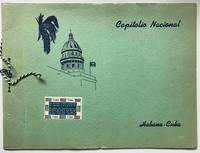
1930537Havana: Imp. “Ninon 1930. 24pp. Oblong quarto. Original green pictorial wrappers string-tied. Cuban Revolution stamp affixed to front cover. Pictorial souvenir of the Capitol Building in Havana which was inaugurated May 20 1929. Each image has bilingual descriptive text in English and Spanish on the verso. Images include the exterior of the building as well as specific locations within such as the Office of the President of the Senate the Reception Hall the Statue of the Republic and the Marti Library.<br /> <br /> A sticker on the front cover has a border of small Cuban flags around the text “Our Revolution is NOT Communist. Our Revolution is Humanist. The Cubans only want the right to an education the right to work the right to eat without fear the right to PEACE JUSTICE FREEDOM.†Presumably affixed to this earlier souvenir after the start of the Cuban Revolution in 1953. An interesting addition to this piece of promotional literature. OCLC locates six copies. Imp. “Ninon unknown
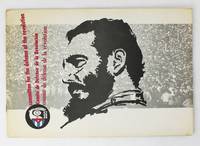
19656257Habana 1965. Very good. 16pp. Oblong pamphlet in original pictorial wrappers stapled. Light wear and toning at wrapper edges with a few faint creases. Internally clean. A visually rich pro-Casto and pro-Communist pamphlet that highlights the history and core activities of Cuba's Committee for the Defense of the Revolution CDR neighborhood-based civil defense organizations created by Castro in 1960 to defend the revolution and maintain social and political control at the local level. This often included activities like surveillance distribution of propaganda and vigilante justice. The pamphlet is illustrated with photos throughout and also contains a two-page spread with maps of the island and charts data and statistics about the Cuban people. It contains a year-by-year account of the Committee's achievements and activities and ends with a section concerning its relations with other countries and their visits to Cuba. The rear wrapper states that editions were published in English French and Spanish as evidenced by the trilingual title on the front cover but we find no evidence of any edition in OCLC. Scarce and with much interesting and propagandized information about Castro's local enforcers during the early years of the Communist regime. unknown
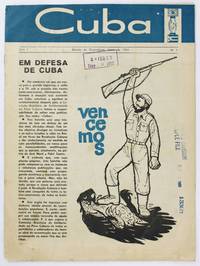
19615832Guanabara 1961. About very good. 111pp. Small folio. Original pictorial self-wrappers stapled. Contemporary and slightly later ink stamps to front wrap. Light edge wear. Some tanning and dust soiling. First issue of this evidently unrecorded periodical published by the "Comissão Brasileira de Solidariedade ao Pavo Cubano" in May 1961. The publication contains numerous positive stories on the progress of the Cuban Revolution and support of the cause from the Brazilian people. Illustrated throughout with photographs and drawings including the beginning of a serial comic on the history of the revolution at the rear. The front wrap depicts Fidel Castro with his foot on the chest of a supine eagle and a rifle raised triumphantly over his head. Interesting support for the Communist cause in Cuba from South America. Not in OCLC. unknown
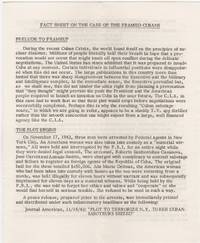
1963206861New York: Defense Committee for Garcia and Sueiro 1963. Folded for mailing otherwise fine. Bifolium approx. 7 x 8-1/5 in. making a four-page offset printed document; with 8-1/2 x 14 in. mimeo letter and original mailing envelope. Documentation from the effort to defend two Cuban-Americans arrested as suspected saboteurs with plans to blow up Manhattan businesses and New Jersey oil refineries. The FBI generated prominent headlines with the arrests at the height of cold-war tensions between the Bay of Pigs and the assassination of President Kennedy. Defense Committee for Garcia and Sueiro unknown
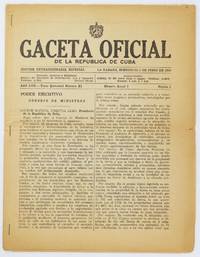
19595470Habana: June 3 1959. Good plus. 11pp. Small folio. Previously folded; stapled along gutter margin. Some edge and corner wear; closed tear to initial leaf from fore-edge along old fold. Toned cheap newsprint. A special edition of the Gaceta Oficial of Communist Cuba devoted to the printing of the First Agrarian Reform Law passed and signed on May 17 1959. The law effected the first major land redistribution under Fidel Castro and the Communist Party. Under its authority all properties were over 420 hectares were confiscated and redistributed to the people and native businesses. Prior to the law over 80% of Cuban land was owned by foreign mostly American companies. The preamble and sixty-seven articles lay out the motivations for the law the parameters for confiscation by the Department of Agriculture the mechanisms for seizure and redistribution and the creation of a new government organization to facilitate the land transfers the Instituto Nacional de Reforma Agraria. Signed in print by Fidel as Prime Minister Manuel Urrutia Lleo as President and a slew of other officials. June 3 unknown
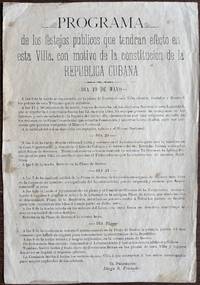
19013191Havana 1901. About very good. Broadside 12.5 x 9 inches. Light wear and soiling. Backed with tissue. Broadside outlining the celebrations planned for the adoption of the Cuban Constitution of 1901 following the eviction of both Spain and the United States from the country. Four days of celebrations were planned for May 19 20 21 and 22. Events including the singing of the National Anthem orchestral concerts fireworks dancing and other diversions. We find no record of this broadside in OCLC. An ephemeral piece commemorating Cuban independence. unknown
1931D1703La Habana 1931. Hardcover. Very Good. Five issues all but the last with their original wraps bound in one volume leather-backed marbled paper over boards -- a bit scuffed and bumped along the edges. Includes: Ano I. No. 1; Febrero 15 1931 / Ano I. No. 2; Febrero 22 1931 / Ano I. No. 3; Marzo 1 1931 / Ano I. No. 4; Marzo 8 1931 / Ano I. No. 5; Marzo 15 1931. The last issue No. 5. does not have the original front cover otherwise all original illustrated wraps are present. All a bit browned as expected and brittle with the occasional small marginal tear but perfectly good reading copies complete and nicely preserving the text illustrations sheet music and ads. Santa Clara bookseller's ticket on front paste-down. A wonderful and uncommon look at Cuba. <br/><br/> hardcover
19036457V.p. 1903. 36 postcards all completed in manuscript generally very good or better with some wear and rounded corners. <br /> <br /> A fascinating assemblage of cards written by Pre-Castro intellectuals to a Maria de Serra though a few are written to other women. It is difficult to pin down de Serra though we do know she was highly educated and very well-known and connected. It makes sense to us that she is perhaps the Maria de Serra mentioned by William Wells Brown in his important work The Rising Son or the Antecedents and advancement of the Colored Race 1874. On pg 260 Brown writes:<br /> <br /> "The free blacks in Cuba form an important element in her population and these people are found in all the professions and trades. .one of the best young ladies' academies at present existing at Havana is personally conducted by an accomplished negro woman Maria de Serra to whom many a lady of high rank owes her social and intellectual accomplishments."<br /> <br /> Further research may be fruitful in retrieving more information on this Maria de Serra.<br /> <br /> It goes without saying that the sentiments and signatures are the most appealing part of this collection. Many of the cards appear to contain original verse and all are quite legible and well preserved. Equally as lovely are the cards themselves many being of exceptional beauty as they were all chosen by artists and intellectuals. All in all a remarkable set worthy of further research. The correspondents are as follows:<br /> <br /> <br /> Diego Vicente Tejera; one of the most famous turn-of-the-century Cuban poets but also known as a short story writer orator and political activists.<br /> <p><br /> Nestor Cargonell; famous poet and writer. His son went on to become a Hollywood star.</p> <br /> <p>Conde Kostia pseudonym of Aniceto Valdivia; writer journalist poet critic lecturer dramatist founder of newspapers and Cuban diplomat.</p> <br /> <p>Rafael Maria Merchain; very influential poet and philosopher</p> <br /> <p>Enrique Fontanills; very prominent Cuban journalist.</p> <br /> <p>Florimel: great Cuban journalist writer and poet who died early in life.</p> <br /> <p>Manuel Raul Blanco Belmonte; Cuban poet.</p> <br /> <p>Ramon Meza; One of the most important Cuban writers of his time. Many of his books are considered classics and remain in print.</p> <br /> <p>Aurelio Cancio; Cuban journalist who founded "La Discusion" newspaper.</p> <br /> <p>Manuel Serafin Pichardo; one of the most popular Cuban poet of the 1900s.</p> <br /> <p>Frederico Mendes Cobos; a Cuban politician who became a a senator in 1902.</p> <br /> <p>Juan Maria Alberti: influential Cuban politician.</p> <br /> <p>Manuel Marquez Sterling; fine writer and politician.</p> <br /> <p>Jose Manuel Govin; journalist and director of the popular newspaper "El Munto"</p> <br /> <p>Cesar Cancio; Very popular Cuban poet born in St Spiritus.</p> <br /> <p>Pablo Bonachea; great Cuban journalist and director of "La Discussion" newspaper for one year.</p> <br /> <p>Jose Ernesto Trian; Cuban writer with political connections. Was ambassador to Venezuela.</p> <br /> <p>Manuel Tierso; Romantic Cuban poet</p> <br /> <p>Alvaro de la Iglesia. revered Cuban writer who penned the great "Cuban Traditions"</p> <br /> <p>Frederico Ledesma Balsunde: journalist and editor at "El Lucero."</p> <br /> <p>Fabio Fiallo; a leading Dominican writer poet and politician. He died in Cuba.</p> <br /> <p>Dulce Maria Borrero de Lujan; the most important Cuban woman writer and poet of her time.</p> <br /> <p>Frederico Hermida; author of any Cuban novels in the 1900s.</p> <br /> <p>Mariana Comas; Cuban essayist</p> <br /> <p>Joaquin Lopez Sena; renown Cuban poet and a politician from the 1900s to the 1920s.</p> <br /> <p>Eliseo Giberga; a very powerful and influential Cuban politician of the early 1900s.</p> <br /> <p>Manuek Coronado; an important Cuban journalist.</p> <br /> <p>Antonio San Miguel; Cuban writer and journalist.</p> <br /> <p>Pablo Santi Rois; Poet and respected journalist.</p> <br /> <p>Armando Celorio; One of the finest Cuban poets.</p> <br /> <p>Jose Maria Carbonell; famous Cuban poet and writer.</p> <br /> <p>Marcos Trazivark; famous Cuban writer and Musician.</p> <br /> <p>Esteban Joven; Cuban writer poet and essayist.</p> <br /> <p>Narciso de Puso; famous poet well entrenched in Cuban high society.</p> <br /> <p>Eduardo Mencis Capote; Cuban journalist popular among the elite.</p> <br /> <p>Lorenzo Frau Marsal; respected Cuban journalist</p> <br /> . unknown
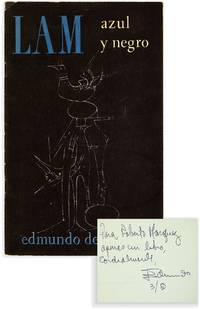
196387864Havana: Cuadernos de la Casa de Las Americas 1963. First Edition. First Impression one of 4000 copies. Slim octavo 24.25cm; original pictorial card wrappers stapled; Inscribed by the author on the half-title page to Puerto Rican editor translator and literary critic Roberto Márquez: "Para Roberto Marquez / apenas un libro cordialmente / Eduardo / 3/80." Light wear to extremities some oxidation to staples toning to rear wrapper with a faint crease to upper left corner; Very Good. The Cuban author's extended essay on the life and work of Afro-Cuban painter Wilfredo Lam 1902-1982. Uncommon inscribed. 87864. Cuadernos de la Casa de Las Americas unknown
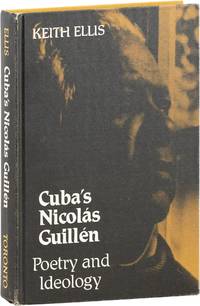
198385035Toronto: University of Toronto Press 1983. First Edition. First Impression. Octavo 23.5cm; pictorial cloth-covered boards; x34-251252-254pp. This copy is from the library of to Puerto Rican editor translator and literary critic Roberto Marquez with his ink markings and notations throughout the text and inscribed to him by the author on the title page: "To Robert / as a token of my highest esteem and my admiration for your work / Keith." Base of spine gently nudged light wear to extremities with a few dog-eared pages; Very Good and sound without dustjacket as issued. <br /> <br /> Scholarly work on the writings of Nicolás Guillén 1902-1989 with a particularly generous inscription to Marquez who has written extensively on Guillén and has translated several of the poet's works faithfully from Spanish into English. A nice association linking two Guillén scholars. Uncommon inscribed. University of Toronto Press unknown