52 résultats
18560006868New York: D. Appleton 1856. First edition. Hardcover. fine. 12mo xii 412 pages original light brown embossed cloth. <br/><br/>These observations are related in a series of 61 letters. These were originally composed in Spanish then translated into English by Joseito. "I have thereby been enabled to impart entirely new data and reliable information instead of merely copying from books already known. . I applied myself to natives who besides an intimate knowledge of affairs in general possessed a sound judgment and an investigating disposition. It has beeen indeed a very happy incident to have found them. . That part of my work which treats on judicial matters and the secrets of the management of the tribunals will especially attract the attention of my readers. - Introductory Letter." Sabin 17816; Treiles BIBLIO. CUBANA vo. 4 p.17. D. Appleton hardcover
188893403Madrid: Manuel Hernandez 1888. First Edition. pamphlet. 27 pages. 8vo original printed wrappers. Madrid: Manuel Hernandez 1888.<br/> <br/> Manuel Hernandez unknown
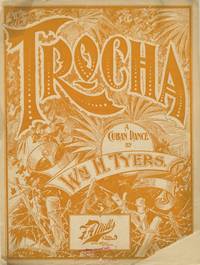
1890List3666New York: Jos. W. Stern & Co 1890. Folio sheet music illustrated pictorial cover printed in orange. 5 pp. including cover. Approximately 13 ½ x 10 ½ inches. Covers detached loss to front cover contents complete fair to good. A decorative late nineteenth-century dance publication for “Trocha†described on the cover as “A Cuban Dance†composed by the African American composer and bandleader W. H. Tyers. The elaborate pictorial cover incorporates stylized tropical foliage and island scenery rendered in a bold single-color design typical for the period’s fascination with exoticized musical forms. <br /> <br /> William H. Tyers 1870–1924 was an African American composer arranger and bandleader active in New York during the ragtime era. Born in Petersburg Virginia to Henry Tyers and Jane “Jennie†Jones both formerly enslaved he spent part of his youth in Richmond before his family relocated to New York City where he began studying piano. His early teachers recognized an aptitude for composition as well as performance and by the mid-1880s he was writing dance pieces including polkas and waltzes. Around the age of twenty Tyers secured employment as a music librarian and arranger with a touring concert company a position that brought him to Europe where he studied orchestration and arranging with Professor Gaspari in Hamburg.<br /> <br /> Returning to New York Tyers became active in the city’s rapidly expanding popular music trade working as an arranger and composer for publishers including F. A. Mills and Jos. W. Stern & Co. In 1896 he published “Sambo†a syncopated march sometimes considered to be one of the first instrumental rags.1 “Trocha†also released in the 1980s brought Tyers prominence for his ability to write Latin-style rhythms. It was re-issued in 1913 as a tango and its success led Tyers to work as an arranger with Joseph W. Stern in 1897.<br /> <br /> Tyers’ compositions blended contemporary American dance music with Caribbean and Latin themes a style reflected in pieces such as Trocha and later in his well-known ragtime composition Panama 1911 which remained a staple of early jazz and dance orchestras. OCLC finds two copies with different entries at the Cleveland Public Library and the British Museum Reference Collections. <br /> <br /> 1 “William Tyers Music Arranger†African American Registry https://aaregistry.org/story/william-tyers-born/ accessed March 10 2026. Jos. W. Stern & Co unknown
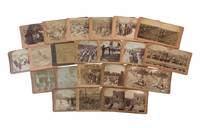
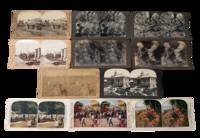
1898231301898. Spanish-American War stereoview archive circa 1898-1899 documenting how the war was pictured through mass-produced photographic views that followed U.S. mobilization battlefield action occupation and military life across both Cuba and the Philippines. These stereoviews preserves the visual system by which the war was circulated to American audiences showcasing camp organization troop movement burial hospital care naval power and overseas deployment. Particularly notable is the archive's coverage of the Rough Riders the Santiago campaign in Cuba and U.S. presence in Manila and Malate showing how stereoview photography helped normalize the war's expansion from anti-Spanish conflict into a broader American imperial presence.<br /> <br /> Archive of 21 stereoviews Various publishers. Spanish-American War stereoview archive. Cuba the Philippines and the United States circa 1898-1899. each measuring 3" x 7". The views are drawn from multiple phases and theaters of the war including camp and drill scenes in the United States embarkation and troop arrivals at Tampa battlefield and occupation imagery from Cuba and extensive and some grisly scenes from Manila and surrounding areas in the Philippines. Captions and images show soldiers in formation cavalry drill military reviews naval artillery hospital interiors encampments burial grounds and troops in active position. Cuban views include Morro Castle after bombardment dead and wounded on the battlefield of Santiago U.S. soldiers preparing to invade Cuba and troops dining near Cabañas Fortress. Philippine views include a departure for Manila American pickets routing a Filipino reconnoitering party the 18th Infantry engaged by Filipino outposts volunteers awaiting orders under the tropical sun Army Hospital Manila and "Our Boys in Camp at Malate P.I." One stereoview identifies Roosevelt's Rough Riders in the mobilization phase linking the archive to one of the war's most publicly mythologized units.<br /> <br /> As a group the stereoviews demonstrate the process by which the Spanish-American War was framed not simply as a short military victory over Spain but as a sustained structure of U.S. troop deployment and occupation extending from Cuba into the Philippines. The Manila and Malate scenes are especially important in this regard since they place American soldiers within the opening phase of the Philippine conflict where U.S. military presence quickly moved beyond liberation rhetoric into imperial control. The archive's mixture of battlefield casualties camp routine naval spectacle and celebratory review scenes shows how stereoscopic publishing converted war into a domestic viewing experience while reinforcing the legitimacy of American expansion abroad. Wear to mounts some toning; overall very good condition. A strong cross-theater visual archive of the Spanish-American War and the emergence of U.S. imperial power in Cuba and the Philippines. unknown
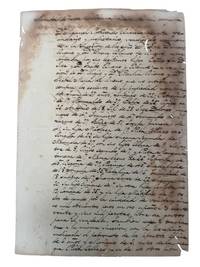
1860234291860. Spanish colonial administration in Havana used port health regulation as a mechanism of commercial and maritime control with the Captaincy General directing military customs and sanitary officials through centralized orders. This December 6 1860 manuscript concerns the "Junta local de Sanidad" "víveres averiados" and Dr. Rafael Cortés placing damaged provisions public health authority and port enforcement within the same bureaucratic chain. The phrase "usando de las facultades que me competen" invokes the vested powers of the colonial government confirming that the matter was handled through Spanish imperial authority rather than local civic discretion.<br /> <br /> Gobierno y Capitanía General de la Isla de Cuba. Secretaría de Gobierno sección de Gobierno. Manuscript order. Havana Cuba: December 6 1860. Single folded manuscript document with printed colonial seal and heading docketed "Habana y Dic. 6 de 1860" and addressed to maritime or port authorities. The text instructs compliance with a petition or order involving the local Board of Health damaged provisions or foodstuffs and Dr. Rafael Cortés with official endorsements and large administrative signatures below. The verso bears docketing and filing marks consistent with bureaucratic circulation.<br /> <br /> The document belongs directly to Spanish colonial governance in Cuba where the Governor and Captain General exercised civil military and administrative power over the island until the end of Spanish rule in 1898. Its contents connect colonial rule to the management of ports food safety and public health all crucial areas in Havana's nineteenth-century Atlantic economy. Folded as issued with toning scattered foxing edge wear and original folds; seal heading date and principal manuscript text remain legible. Overall good condition. unknown
1836231491836. Diario Constitucional de Santiago de Cuba No. 57 November 1836 just months after the restoration of Spain's liberal Constitution of 1812. This newspaper records the transmission of Spanish constitutional government into eastern Cuba in late 1836 through decrees ministerial correspondence and public political dispute printed for circulation in Santiago de Cuba. Issued weeks after the political upheavals that restored constitutional rule in Spain this number shows how the language of the regency government the suppression and reorganization of state bodies and local declarations of loyalty to Isabel II reached colonial readers through the newspaper press. In a Cuban setting where metropolitan policy was filtered through governors ministries and municipal elites an issue such as this preserves the working connection between imperial administration and provincial print.<br /> <br /> Diario Constitucional de Santiago de Cuba. No. 57. Santiago de Cuba 27 November 1836. 4 pages. Folio newspaper issue. The masthead reads "DIARIO CONSTITUCIONAL / DE SANTIAGO DE CUBA" with the date line "DOMINGO 27 DE NOVIEMBRE DE 1836." Page 1 opens with "MINISTERIO DE LA GOBERNACION DEL REINO" followed by a circular and a substantial "EXPOSICION A LA REINA GOBERNADORA" leading into a "REAL DECRETO" concerning the suppression of the Consejo Real de España e Indias. Interior pages continue the decree and carry translatedly legible sections including "MISCELANEA" notices on "Las islas turcas libres" and "Noticias sobre Tejas" and a long exchange under "REMITIDOS" dated "Cuba 25 de Noviembre de 1836" addressing militia service volunteers of Isabel II and the political insult attributed to an earlier subscriber. The issue survives as a complete four page folio with dense double column text throughout and no wrappers as issued.<br /> <br /> Printed in Santiago the issue shows constitutional and monarchist language being adapted for a colonial audience that was expected to follow ministry decrees military loyalty and debates over public honor in the same sheet. Folded as issued with minor edge chipping small losses at corners and margins some toning and closed tears and pinholes; complete and legible. Overall good condition. The juxtaposition of metropolitan government text Caribbean and Atlantic news and the local controversy printed in "Remitidos" gives the number a documentary range broader than a routine official gazette placing state policy beside the contested language of provincial political life. unknown
1894106465<p>1894. Pamphlet format 70 pp. Illustrations; map. 14.3x11.8 cm 5½x4½" pictorial wrappers. Some light staining and wear to wrappers spine a little worn very good overall. Rare tourists' guide book produced under the auspices of the Grand Hotel Macotte with much on Havana transportation options sights to see including bull fights prices a Spanish vocabulary etc. with numerous advertisements for Cuban and some Florida businesses and other hotels. One advertisement features cigar maker La Corona. They even include an illustration of Christopher Columbus. OCLC/WorldCat lists only one copy at the California State Library Sutro Branch.</p> J. Carbonell and P. Montero, Proprietors.
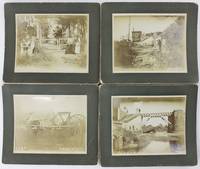
18984079Puerto Principe 1898. Good plus. Thirteen photographs each approximately 4 x 5 inches on original card mounts. A few images rather faded. Light edge wear to mounts. Some photo credits in negatives; each with manuscript caption on mount verso. An interesting group of thirteen photographs taken by an amateur military photographer while deployed to Cuba during the Spanish-American War. The photos are centered around Puerto Principe now Camaguey in Central Cuba an unusual location for photos of this genre and focus on natives local architecture and natural views. Crude credits in the negatives of several images attribute the photographs to "Woodward" or "W.D.W" of the "15th U.S.I.B" i.e. 15th U.S. Infantry Battalion . Each image is also captioned in manuscript on the rear of its mount as follows:<br /> <br /> 1 Rail Road Bridge Near Puerto Principe Cuba<br /> 2 Same Bridge Different View<br /> 3 Natives in Cuba<br /> 4 Military Headquarters<br /> 5 Soldier Camp in Cuba<br /> 6 Cuban Prison<br /> 7 Cemetery in Puerto Principe Cuba<br /> 8 Water Wagon in Cuba<br /> 9 Plaza in Puerto Principe Cuba<br /> 10 Residence in Cuba<br /> 11 Cuban Carriage<br /> 12 Summer Resort in Cuba<br /> 13 Military Headquarters Inside. unknown
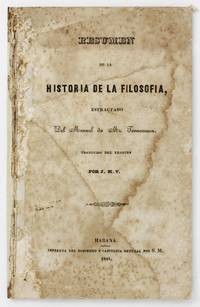
18455307Havana: Imprenta del Gobierno y Capitania General por S.M. 1845. Good. 684pp. Disbound. Some insect damage to gutter of title page ample staining throughout mostly minor foxing. A very rare mid-19th century Cuban imprint translating into Spanish a work by German philosophical historian Wilhelm Gottlieb Tennemann entitled Manual of the History of Philosophy. Tennemann originally published the work in 1812 as a much-abridged history of philosophy after authoring a massive multi-volume work on the subject. According to the translator's note at the beginning of the text the present work was produced in order to provide a text in Spanish for those studying the history of philosophy "at the Royal Academy and in the private schools of the island of Puerto Rico." The translator also notes that the history of philosophy is "one of the subjects.of the general plan of education that must be taught." The work itself is organized as a series of lectures detailing the history of philosophy chronologically from ancient Eastern and Egyptian times through the Greeks Pythagoras Socrates Plato Aristotle and many others concluding with modern thinkers such as Descartes Espinosa Hume Kant Hegel and others. The work ends with an Index and an Errata page.<br /> <br /> "Wilhelm Gottlieb Tennemann 1761–1819 German historian of philosophy was born at Erfurt. Educated at his native town he became lecturer on the history of philosophy at Jena in 1788. Ten years later he became professor at the same university where he remained till 1804. His great work is an eleven-volume history of philosophy which he began at Jena and finished at Marburg where he was professor of philosophy from 1804 till his death. He was one of the numerous German philosophers who accepted the Kantian theory as a revelation. In 1812 he published a shorter history of philosophy which was translated into English in 1852 under the title Manual of the History of Philosophy" - Encyclopedia Britannica. No copies located in the United States. Three copies found in OCLC -- two in Chile and one in Spain. Imprenta del Gobierno y Capitania General por S.M. unknown
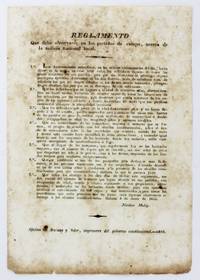
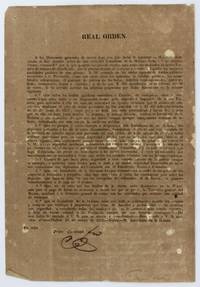
18223190Havana: January 5 1822. Good. Broadside 11.5 x 8 inches. Foxed faint signs of folding a few small wormholes not affecting text. An apparently unrecorded broadside order from the captain general of Cuba Nicolas Mahy directing all able-bodied men under the age of fifty to join up with their local militias in order to keep the peace. The local militias are directed to go out on nightly forays "en nùmero capaz de evitar las incursiones de los salteadores por los caminos y la desercion que pueda acontecer de los negros de los ingenios cafetales y demas haciendas." Additionally all men between the ages of fifty and seventy are told to report to “las casas mas fuertes de los pueblos" to form a garrison that can protect women children and the elderly in case of insurrection. By the formation of these militias and the establishment of "el uso de los pasaportes" it was hoped to identify and arrest "los vagos y mal entretenidos." All mayors within ten days of receipt of this regulation were to report the number of men they had enlisted along with their particulars. In the early 1820s much of Spanish colonial America was gripped by revolution and with these orders the Cuban government likely hoped to avoid similar unrest on the island. Several independence groups had been formed in Cuba as of the promulgation of this decree the largest of which was the Soles y Rayos de Bolívar established in 1821. Signed in print by Mahy; not in OCLC. January 5 unknown
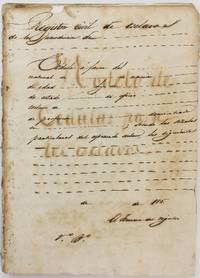
18503976Havana 1850. Good. 138pp. Folio. Stitched with remnants of leather binding along spine. A few blank leaves scattered throughout. Dampstaining and moisture damage at upper fore-edge of scattered leaves slightly affecting text. Moderate offsetting occasional ink burn. Light edge wear and tanning scattered foxing. An extensive list of slave owners in Cuba in the mid-19th century who were issued cedulas for their human property. Cedulas were integral documents for the identification and transportation of enslaved people in the bureaucracy of colonial Cuba and were usually required by the government. In the present manuscript the race and sex of the slaves being issued documents are usually identified -- Negra Negro mulata mulato Chino China e.g. -- though some are just entered as esclavos and there are several entries noted as dotaciones that is complements usually large of slaves on a plantation. The names of the owners are grouped alphabetically according to their first names generally though not in any strict order and the leaves of the manuscript are sometimes bound out of order. Often there are multiple listings of an owner most likely one for each slave in need of a cedula and in all there are approximately 2500 or more separate listings. The first leaf appears to be a model for the cedulas that were being issued to the listed slaveholders with dashes where the information on the slaves and slave owners is to be filled in. The entire document has the appearance of an index with numbers at the right side of each page indicating perhaps the page numbers in the master ledger where the original entry was made. Overall a fascinating and significant document. unknown
18183189Havana 1818. Good. Broadside 11.75 x 8 inches. Heavily tanned. An apparently unrecorded Havana imprint comprising a broadside authorization for increased funding to be extended to the superintendent of Havana so that he can maximize the potential of the island's tobacco plantations. This credit is matched by the superintendent’s promise to use the money "con el preciso destino de comprar y remitir á España las mayores cantidades posibles de este género." The superintendent must also swear to be vigilant and honest in his account-taking reports to Spain and "Avise con toda la anticipacion posible los acopios y compras que verifique à proporcion que tenga de hacerlos y probabilidad en las remesas con seguridad aprovechándo todas las ocasiones que se le presenten para remitir cigarros y hoja de buena calidad á la Peninsula aunque sea con bandera extrangera." Signed in print and rubricated in manuscript by Pedro Carambot a Cuban official of the late 1810s. Not in OCLC. unknown
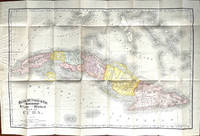
189262697Chicago IL: Rand McNally & Co. 1892. One pocket map. 12mo. sized 3.75 x 6 in. which folds out into 21.5 x 15 in. colour-lithograph map printed index on verso. Brown embossed publisher’s cloth gilt lettering on front cover slight shelfwear very slight rubbing light toning & edgewear to map still a VG bright copy. First edition thus of this “Business†pocket map of Cuba issued by the Rand McNally Co. the same year that Jose Marti established the Cuban Revolutionary Party to organize independence of Cuba and Puerto Rico from Spain. The printed index on verso references islands lakes mountains provinces rivers and towns in Cuba. Although several different versions of this particular map were produced by Rand McNally along with the San Francisco Chronicle and versions including an inset map of Havana Harbor none located in Worldcat are the same maps as this pocket map. Rand McNally & Co., hardcover
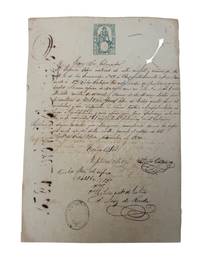
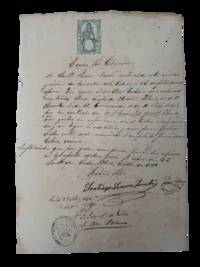
1870231221870. Slavery Cuba Spanish colonial slave sale manuscript recording the transfer of four enslaved individuals in Cuba in 1870. Produced within the official bureaucratic framework of Spanish colonial governance the document reflects the legal normalization of slavery in Cuba even as abolitionist pressures mounted across the Atlantic world. The document records the sale of four enslaved people described as "criollos" and African-born individuals situating the transaction within a labor system that combined locally born and imported enslaved populations. Created at a time when Spain had formally restricted the transatlantic slave trade but continued to permit slavery itself the manuscript demonstrates the persistence of legalized human commodification and the integration of enslaved labor into the island's economic structure sixteen years prior to abolition in 1886.<br /> <br /> Official Cuban slave contract documenting the sale of four enslaved individuals to Don Pedro Catasús by Don Enfemia Ochoa for the sum of 1100 pesos on November 29 1870. Single manuscript leaf written in Spanish cursive in black ink measuring 8.25" x 12". A green "50 cs de escudo" revenue stamp is affixed at the top center with a blind embossed Spanish crest at the upper left and a circular black ink government seal impressed at the lower left. Large vertical docketing appears on the verso. A stylized watermark is visible within the paper. The text organizes the enslaved individuals within a standardized transactional structure while the signatures of Enfemia Ochoa Pedro Catasús and A. Díaz de Rada authenticate the exchange and identify participants within the slaveholding economy.<br /> <br /> By 1870 Cuba remained a central node in the late Atlantic slave system with plantation agriculture especially sugar dependent on enslaved labor despite mounting abolitionist pressure. Although Spain had curtailed official slave imports earlier in the century illegal trafficking persisted into the 1860s and other coerced labor systems including the importation of Chinese indentured workers overlapped with slavery into the 1870s. The presence of both Creole and African individuals in this document reflects the layered composition of the enslaved population during this period. Light toning scattered foxing and edge wear visible. A closed wormhole extends from the upper right margin approximately five inches into the sheet resulting in partial loss of text. Evidence of prior tape reinforcement visible on the verso along with offsetting from previously adjacent material. Overall in very good condition. This document provides named transactional evidence of late-period slavery in Cuba offering concrete material for examining race labor and legal practice within Spanish colonial society. unknown
1875231241875. Slavery Cuba Spanish colonial slave sale manuscript recording the transfer of thirty-eight enslaved individuals in Cuba in 1875 materializing the sheer scale and organization of enslaved labor within the island's plantation economy during the final decade before abolition. The document enumerates a large group of enslaved people including multiple family units with young children demonstrating how slavery functioned as both an economic system and a hereditary condition sustained through the sale and reproduction of enslaved populations. Created eleven years prior to the abolition of slavery in Cuba in 1886 the manuscript documents the continued legality and normalization of large-scale slave transactions despite decades of international pressure and earlier prohibitions on the transatlantic trade offering concrete evidence of how internal markets sustained the institution in its final phase.<br /> <br /> Official Cuban slave contract documenting the sale of thirty-eight enslaved individuals for the sum of 126000 pesetas formalized before a public notary or legal authority. Single manuscript leaf written in Spanish cursive in black ink on both recto and verso densely filled with names ages and relational identifiers. Measures 8.5" x 12.25". The text lists individuals sequentially including men women and children with repeated references to kinship structures such as mothers with multiple children indicating the sale of family groupings rather than isolated individuals. The script reflects extended passages detailing ownership exclusions and conditions of transfer. A partial watermark of the official coat of arms of Cuba is visible. <br /> By 1875 Cuba remained one of the last major slave societies in the Atlantic world with sugar production driving demand for large controlled labor forces. Even after Spain curtailed the official slave trade earlier in the century illegal importation persisted into the 1860s and alternative systems of coerced labor including Chinese indenture supplemented plantation workforces. The scale of this transaction demonstrates the consolidation and redistribution of enslaved labor within domestic markets while the inclusion of children underscores the long-term economic logic of slavery as a self-reproducing system. Moderate toning and foxing concentrated along the edges with numerous small closed wormholes a few affecting portions of the text. Light edge wear present. Overall in good condition. This document provides unusually extensive nominal data on a large enslaved population encompassing the roles of kinship valuation and labor organization in late Spanish colonial Cuba. unknown
1870231191870. Slavery Cuba Spanish colonial manuscript documenting the late persistence of slavery in Cuba recording the sale of five enslaved Creole individuals including women and children 1870. Produced within the official bureaucratic framework of Spanish colonial governance the document reflects the legal normalization of slavery in Cuba even as abolitionist pressures mounted across the Atlantic world. The presence of multiple children within the transaction underscores the hereditary nature of enslavement and the commodification of family units offering direct material evidence of how slavery functioned socially and economically in its final decades on the island. Although Spain had formally ended the transatlantic slave trade earlier in the century illegal trafficking and internal slave markets persisted and slavery itself would not be abolished in Cuba until 1886 placing this document within a crucial transitional period marked by reform debates gradual emancipation laws and continued exploitation.<br /> <br /> Official Cuban slave contract recording the sale of five enslaved individuals identified as "criollos" including one adult woman and four children from Santiago Simón Fambi to Don Pedro Catasús for the sum of 1200 pesos on November 21 1870. Single page manuscript leaf measuring 8.25" x 12". The manuscript is written in Spanish cursive hand in black ink. The upper left bears a blind embossed crest of Spain while a circular black ink government seal is impressed at the lower left partially overlapping the text. The text enumerates the enslaved individuals with ages and names embedding human lives within the formulaic language of sale and valuation while the bold signatures of both seller Santiago Simón Fambi and buyer Pedro Catasús anchor the transaction in identifiable actors within the colonial economy.<br /> <br /> By 1870 slavery in Spanish Cuba remained central to the island's plantation economy particularly in sugar production which had expanded rapidly in the mid-19th century with industrialized mills and global demand. Enslaved people were primarily forced into agricultural labor under highly regimented and brutal conditions though others were used in urban domestic service skilled trades or as hired laborers generating income for their owners. This document exhibits light toning edge wear and scattered foxing throughout. A closed wormhole extends approximately two inches from the upper right margin inward not affecting legibility of the text. Minor losses and small tears along the edges. Overall in very good condition. Given that this document records a woman and four children the family was likely intended for a combination of field labor and domestic or auxiliary work with the children gradually incorporated into plantation labor as they aged reflecting the system's reliance on both immediate exploitation and the reproduction of enslaved labor over time. unknown
1890231711890. Stereoview archive of the post-emancipation Caribbean showing how the islands were marketed to western viewers through plantation labor export agriculture civic spectacle and catastrophe. As a group these photos function not only as an ethnographic travel archive but as evidence of the visual economy that followed slavery. The British West Indies moved through emancipation in 1834 to 1838 the French Caribbean in 1848 Puerto Rico in 1873 and Cuba in 1886 yet plantation production remained central to regional life well into the early twentieth century. These stereoviews preserve a colonial way of seeing in which Black and Afro-Caribbean labor rural discipline and extractive agriculture remained the background condition of "tropical" beauty and commercial modernity. Cuba's sugar economy in particular expanded through the nineteenth century and slavery was not abolished there until 1886 while Weyler's later reconcentration policy during the Cuban War of Independence violently reorganized rural life. Martinique after 1848 likewise shifted into new labor regimes including imported workers from India and China.<br /> <br /> Archive of 11 stereoview cards late 1890s to early 1900s depicting Cuba Jamaica Martinique Puerto Rico and the Dominican Republic. Most black and white with a few colorized. Each measure 3.5" x 7". All with captions on the margins. "Reconcentrado Farming Scene Province of Havana Cuba" links agricultural production to the brutal displacements of Spain's reconcentration campaign; "Cutting sugar cane Montego Bay Jamaica W.I." records cane labor in a colony where emancipation had not ended plantation dependency; and "Harvesting Coconuts Porto Rico" likewise frames Caribbean land through export work rather than local life. Other views extend that economic framing through cacao and coffee scenes while the paired Havana cards shift into urban leisure and public display including "Beautiful Central Park Havana Cuba" and "Holiday in Havana Cuba" the latter with both Cuban and American flags visible a telling image of the new imperial order after 1898. The disaster views from Martinique and the Lesser Antilles show how stereoview publishers also turned Caribbean destruction into consumable spectacle. the Morne Rouge card is accompanied on the reverse by the grim printed text "Dead bodies which were to be seen in Morne Rouge." while the wider context is the 1902 eruptions of Mount Pelée in Martinique and La Soufrière on Saint Vincent two catastrophes that killed roughly 30000 and 1600 people respectively and devastated local communities and agriculture.<br /> <br /> Some corner wear light toning scattered surface and edge wear. Overall very good condition. This collection gives direct visual representation of Caribbean history Atlantic slavery and emancipation plantation labor and U.S. imperial expansion in the circum-Caribbean preserving the transition from slavery to post-abolition labor. unknown
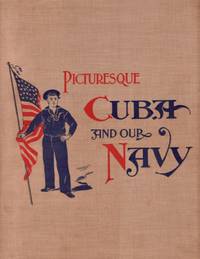
189832565Chicago: Published by Belford Middlebrook and Co. and Printed by Rand McNally and Co. Printers 1898. First Edition. Hardcover. Fair. Folio. Unpaginated. Illustrated. Light tan cloth hardcover with title and red blue and tan patriotic illustrated front cover. Restored. Front and rear hinges repaired with tissue. Tan cloth binding is soiled along the edges with a few spots on the rear cover. Published by Belford, Middlebrook and Co. and Printed by Rand, McNally and Co. Printers hardcover
18095958Havana 1809. Good. 1p. on a bifolium. Printed form completed in manuscript. Previously folded. Small portion of upper left corner torn away and some scattered worming neither affecting text. Upper right of blank conjugate leaf clipped. Some scattered staining and offsetting with even tanning. An early 19th-century bill of sale for four slaves in Havana. The form completed in manuscript approves the sale by Doña Dolores Hernandez of "quatros negros" who had been brought from the coast of Africa on the slave ship Juno captained by Jabez Gibbs 1360 reales. It further states that the enslaved men are "Con la calidad de bozal alma en boca huesos en costal à uso de férias sin asegurar de tachas ni enfermedades mal de corazon gota coral de S. Lazaro ni orta qualesquiera que puede paceder la humana naturaleza porque toas corren por cuenta del comprador." The document is signed by the relevant authorities and dated March 26 1809. A good document of the slave trade in Cuba during the early 1800s. unknown
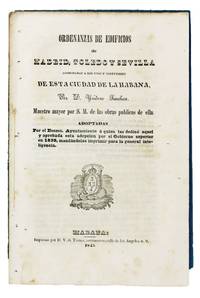
18455182Habana: Impresas por D. V. de Torres 1845. Good. 533pp. Contemporary plain blue wrappers separated at spine. Stitched as issued with additional small stabholes at gutter where previously bound into a sammelband. Light foxing and dust soiling. A seemingly unrecorded architectural pamphlet that prints the first comprehensive building code for Havana developed in 1837 by Isidoro Sánchez y Fuentes the city’s Director of Public Works. The text outlines detailed rules for the construction of buildings and related infrastructure to accord to high technical aesthetic and public health standards influenced by such regulations as had been imposed in Madrid Toledo and Seville. Sánchez’s code proved highly consequential and it resulted in significant improvements to the appearance livability and safety of many Havana neighborhoods.<br /> <br /> In the 18th century Madrid Seville and Toledo suffered from many of the same problems of haphazard urban development as Havana. However great efforts were made to develop and enforce building codes which cleaned up most of these city’s formerly slum-like suburbs of great benefit to public health not to mention aesthetics. Teodoro Ardemans Madrid’s Director of Public Works began the reforms in these Spanish cities and his 1720 work on the subject was fantastically influential for generations going through multiple reprints until 1848. Isidoro Sánchez adapted Ardemans’ concepts but updated and improved them to the requirements of the tropical climate and customs of Havana. He thus developed the first comprehensive building code for the Cuban capital which was one of the most progressive and well-considered in the Americas. <br /> <br /> Two preambles begin the work by discussing the importance of taking architectural inspiration from the buildings of classical antiquity and of considering the historical context and significance of reformed Spanish building codes. The bulk of the text takes up a variety of interesting and practical topics -- erecting urban and suburban buildings; respecting neighbors’ rights when building homes shared alleyways building ovens in light of nearby homes; creating ventanas de medianería large windows that can open or close depending the temperature and breeze; how garages should open onto public thoroughfares; where building materials should be manufactured; building basements; building balconies etc. on public streets; drainage systems and sewers; creating wells and other drinking water sources; where to build forges without disturbing neighbors; large windows for basements; building attics; and air circulation.<br /> <br /> Sánchez presented his proposed code to the City Council on June 10 1837 and in 1839 it was approved in full by the Governor but the printing of the text was only approved in April 1845 according to the introduction. We locate no copies of this significant work in OCLC or available auction records. Impresas por D. V. de Torres unknown
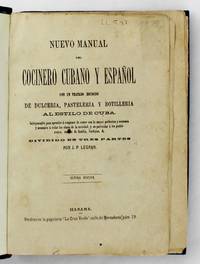
18806249Habana 1880. About very good. 199xxi3pp. Contemporary quarter red leather with modern marbled boards spine gilt. Light wear to binding. Minor soiling and wear to text. "Ultima edicion" originally published in 1857. This charming Cuban production is divided into three parts -- Sopas; Menestras Salsas Legumbres Frituras y Menudencias; and Pasteleria Reposteria y Dulceria. Each section has an index at the end of the text. The work includes local flavors such as Sopa Cubana; Ajiaco de Puerto-Principe; Lengua a la Criolla; Jigote Cubano; Pargo a la Americana; and more. We locate two copies of the 1857 edition of this work. Though we find a listing in OCLC there are no physical locations attached. unknown
1898ZB410896Washington: GPO 1898. 8 pp issued as 55th Congress 2d Session SD 129; light extraction roughness at margin now disbound in self wrappers. - If you are reading this this item is actually physically in our stock and ready for shipment once ordered. We are not bookjackers. Buyer is responsible for any additional duties taxes or fees required by recipient's country. Washington: GPO, unknown
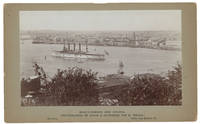
1890LIST110Havana: R. Testar 1890. Albumen photograph on cardstock mount image measuring 7 1/4 x 4 1/2 inches on 8 3/4 x 5 1/2 inch mount. A view of an American warship in Havana harbor likely taken prior to the outbreak of hostilities between the United States and Spain in early 1898. The photographers Leach and Patterson of Calle San Rafael published several views of Cuba at this time mostly of bucolic scenes around Havana and its environs. The American cruiser is similar in design to the U.S.S. Maine with slight differences - two smokestacks instead of three. An excellent example with minor wear to mount and fine image. R. Testar unknown
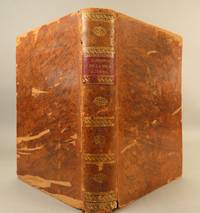
18308598<p>Two volumes in one with continuous pagination. No further volumes were published. Spanish text. Full mottled calf with red morroco label to spine and gilt particulars. Marbled endpapers. Loss to foot of spine see image and to corners. No previous owners' names or other defacements. Very scarce.</p><p>6 x 8.25 in</p> Imprenta de las Viudas de Arazoza y Soler hardcover
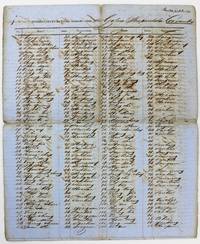
18673978Macau: April 6 1867. Very good. 6pp. on large folio partially-printed forms printed in two columns completed in manuscript. Old folds with minor losses at a few spots along the horizontal fold. Five hundred and fifty Chinese laborers bound for Cuba aboard the Spanish galley "Cervantes" are listed by name with their age and town or city of origin given. The laborers hail from several different cities in China and their ages range from 18 to 36 with the majority of the men in their 20s. The end of the document is signed and dated on the final page by José de Aguilar the Spanish consul at Macau. The left side of the final page contains two separate lists one with five numbers and the other with four numbers keyed to the manifest. The list of five names has an "x" next to each number perhaps noting that these men did not in fact make the trip to Cuba; each "x" could also signal that these men died during the voyage from Macau to Cuba which was a common-enough occurrence that it is often noted on manifests of this kind.<br /> <br /> Chinese indentured servitude in 19th-century Cuba was an insidious practice tantamount to slavery which flourished in Cuba even after the abolition of the peculiar institution in the British West Indies. With their free source of labor no longer available plantation owners in Cuba looked elsewhere; and they looked east. From around 1848 to the mid-1870s over 100000 Chinese indentured servants made their way to Cuba often sailing to Cuba in large groups. Once they arrived Chinese laborers indentured themselves to Cuban masters for terms of at least five years. The treatment of Asian indentured servants in Cuba varied widely with reports of some particularly ill-treated laborers ending their lives by suicide. "Some contemporaries and later historians.have condemned the servitude of the Asians as a thinly disguised revival of slavery. These critics have pointed to a variety of abuses to which the Asians were subjected both legally - with severe laws governing absenteeism vagrancy and insufficient work - and illegally in the form of harassment by vicious masters. Yet other observers have defended the system as a boon to the Asian workers. Voluntary reindenture at the end of their terms was common among the migrants suggesting that many Asians judged the system to be beneficial to them" - Drescher.<br /> Seymour Drescher & Stanley L. Engerman editors A Historical Guide to World Slavery New York 1998 pp.239-42. April 6 unknown