Biblio.com
206 résultats
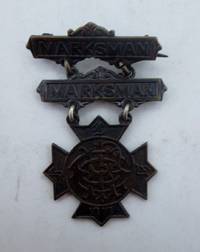
1897019534No Place: No publisher 1897. Unbound. Good. 1897 Marksman Pin to Sergt Sergeant J.H. Mills. No producer or place. 1897 date inscribed on the reverse. Measures about 1 ½ inches tall by 1 inch wide. Safety pin style back. Three pieces attached by metal rings. Top two pieces are the same thin banner reading "marksman with the bottom piece being some sort of stylized cross formation with the date 1818 at the bottom and perhaps an ornate letter L on the other three points. Reverse has 1897 and Sergt J.H. Mills inscribed on it. No indication as to who issued this piece. GOOD condition metal with an overall dark patina with minor soiling and wear. No publisher unknown
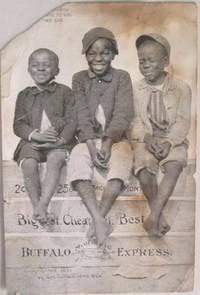
1891020605Buffalo NY: George E. Matthews and Co. Publisher 1891. Unbound. Fair. Single sheet thin card stock. 6 3/8 by 4 ¼ inches. Black and white photo on one side with advertising copy on the reverse along with a small illustration of the printing press. A promotional trade card for the newspaper the Buffalo Morning Express asserting it was the "biggest cheapest best." The reverse touts their typesetting machinery and maps that come with subscriptions. Of note is the front side photo depicting three African-American boys sitting on a wall giggling and laughing rendering this somewhat of an anomaly unfortunately of a 19th century trade card where racist stereotypes were more often than not the norm. FAIR condition. Upper left corner torn off on the diagonal. Moderate dampstaining to the whole piece. Some creasing minor soiling and edgewear. George E. Matthews and Co., Publisher unknown
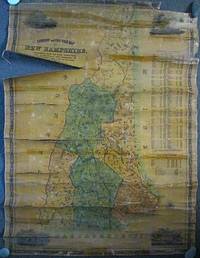
1854020858Nashua NH: Published for J.R. Dodge 1854. Unbound. Poor. Single sheet 34 ¾ by 24 ¼ inches. Linen backed varnished map. A map created primarily to depict the many railroad lines that were proliferating in the state of New Hampshire in the mid 1800s. Some of these lines ranged into to White Mountains to facilitate logging operations in the region. The counties of the state are prominent with towns also depicted. VERY POOR condition. Ex-library with a title label affixed to the reverse. Heavy creasing and tearing to the entire piece with some loss along the extremities and to the face of the map from the cracking/tearing. Map toned and faded with the varnish not doing it any favors. Some soiling and staining. The map is extremely fragile and will be prone to further deterioration with more handling. Any wear you can imagine it's probably on this map no pun intended. Sold as is. Published for J.R. Dodge unknown
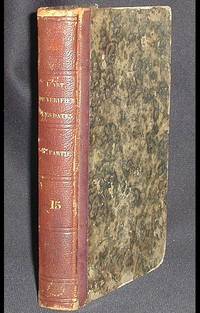
1834002351Paris: A.J. Dénaina 1834. Hardcover. Very Good. Volume 15 only of 16 volumes: 4 536 p.: tables 1 folded; 21 cm. Contemporary calf spine with gilt-tooled spine title; marbled paper over boards. Marbled endpapers. Running title: Chronologie Historique de l'Amérique. The folded table is not included in pagination. This volume covers the history of Guyana from 1770 to 1834. In Very Good Condition: ends of spine and corners rubbed; faint dampstain on upper corner of pages 273-370 not impacting text; minimal foxing; otherwise pages are clean and tight. A.J. Dénaina hardcover
1852026265Government Printing Office: 1852. 686 pages. GOOD HARDCOVER. Hard Cover. Good/Not Issued with a Dust Jacket. 8vo - over 7¾" - 9¾" tall. Government Printing Office: Hardcover
1864031336U.S. Sanitary Commission: 1864. 283 pages with 2 of the 4 engravings "accurately copied from the orginal photographs taken at United States General Hosptial also a small map on page 261 of the Prison at Andersonville. "Prisoner of War in the hands of the rebel authorities being the report of a commission of inquiry appointed by the United States Commission. With a Supplement of the Suffering Of The Prisoner at Andersonville Ga. Memorial from the Prisoners to the President of the United States. A lettter of Major-General Butler U.S. Commissioner of Exchange to Colonel Ould Confederate Commssioner. GOOD HARDCOVER Defects noted: Lacking 2 photo illustrations and folded map. Original blind stamped brown covers heavily chipped and worn. Hard Cover. Good/Not Issued with a Dust Jacket. 8vo - over 7¾" - 9¾" tall. U.S. Sanitary Commission: Hardcover
1882034449U.S. War Department: 1882. Ordance Notes: 126 April 20 1880- ARTILLERY EXPERIMENTS OF THE KRUPP STEEL WORKS EXECUTED AT THE PRACTICE GROUND NEAR MEPPEN IN AUGUST 1879 to Ordance Notes: 167 October 18 1881-ARMOR-PIERCING PROJECTILES. FAIR HARDCOVER complete but detached from covers spine cloth missing a plate of two is torn in half but complete and one page detached from spine but present. RARE. Hard Cover. Fair/Not Issued with a Dust Jacket. 4to - over 9¾" - 12" tall. U.S. War Department: Hardcover
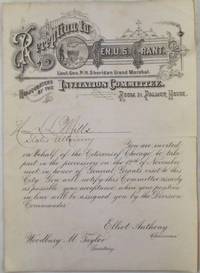
1879021476Chicago: Invitation Committee of the Reception to Gen. U.S. Grant presumed Publisher 1879. Unbound. Good. no date presumed 1879. Single sheet folded into four pages roughly 8 by 5 ½ inches when folded. Printed on the front of the first leaf and bottom half of the second leaf. Ornately decorated title present. An invitation to the Reception to General Ulysses S. Grant given to him in Chicago on the return from his post-presidency world tour. This invitation was addressed to L.L. Mills States Attorney inviting him to take part in the procession on November 12th in honor of General Grant's visit to Chicago. Upon accepting the invitation his position in line would be allotted. Printed signatures of Elliot Anthony and Woodbury M. Taylor present with a list of committee members printed in the interior. The procession presumably preceded the reception at the Palmer House where the Invitation Committee was located. This reception included many speeches honoring President Grant including the finale which was given by Mark Twain. According to accounts a good time was had by all. GOOD condition. Horizontal fold crease present with a 2 ½ inch tear at the fore edge along the fold. Some curling wrinkling and creasing to the piece. General toning minor soiling and staining. Invitation Committee of the Reception to Gen. U.S. Grant, presumed Publisher unknown
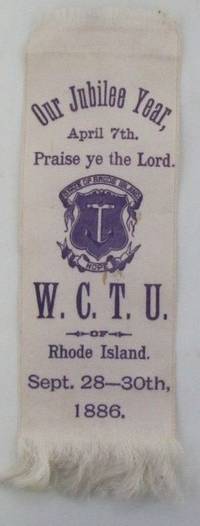
1886018996Rhode Island: WCTU Rhode Island Publisher 1886. Unbound. Very Good. Cream colored silk ribbon with purple printing and fringed ends. 6 ¾ by 2 1/8 inches. A ribbon issued by the Women's Christian Temperance Union WCTU of Rhode Island reading "Our Jubilee Year April 7th. Praise ye the Lord. W.C.T.U. of Rhode Island. Sept. 28-30th 1886." Presumably issued for its annual convention. The Women's Christian Temperance Union was founded in Ohio in 1874 with the principal goal of promoting temperance through religious moral and other methods. It eventually expanded its mission to include social reform such as suffrage child labor etc. The Rhode Island chapter was successful in helping to pass a prohibition law in the state in 1886 although it was repealed in 1889. VERY GOOD condition. A few small spots of brown staining in the center of the ribbon. WCTU Rhode Island, Publisher unknown
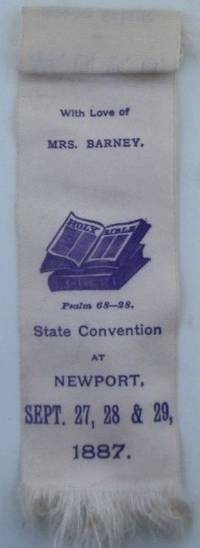
1887019235Rhode Island: WCTU Rhode Island Publisher 1887. Unbound. Good. Cream colored silk ribbon with purple printing and fringed ends. With a sewn fold over flap at the top. About 6 ½ by 2 1/8 inches. A ribbon issued by the Women's Christian Temperance Union WCTU of Rhode Island reading "W.C.T.U. of Rhode Island/With Love of Mrs. Barney/Psalms 68-28./State Convention/at/Newport/ Sept. 27 28 & 29 / 1887." Presumably issued for its annual convention. The Women's Christian Temperance Union was founded in Ohio in 1874 with the principal goal of promoting temperance through religious moral and other methods. It eventually expanded its mission to include social reform such as suffrage child labor etc. The Rhode Island chapter was successful in helping to pass a prohibition law in the state in 1886 although it was repealed in 1889. It's presumed that the Mrs. Barney referred to on the ribbon is Susan Hammond Barney a social activist lecturer and first president of the Rhode Island W.T.C.U. VERY GOOD condition. Minor toning and curling. WCTU Rhode Island, Publisher unknown
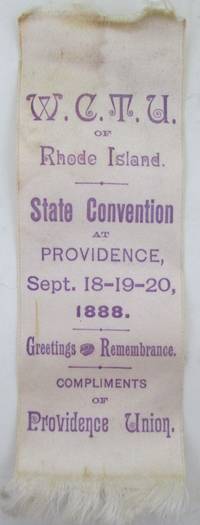
1888019424Rhode Island: WCTU Rhode Island Publisher 1888. Unbound. Good. Cream colored silk ribbon with purple printing and fringed ends. With a sewn fold over flap at the top. About 6 ½ by 2 1/8 inches. A ribbon issued by the Women's Christian Temperance Union WCTU of Rhode Island reading "W.C.T.U. of Rhode Island. State Convention at Providence Sept. 18-19-20 1888.Greetings Remembrance. Compliments of Providence Union" Presumably issued for its annual convention. The Women's Christian Temperance Union was founded in Ohio in 1874 with the principal goal of promoting temperance through religious moral and other methods. It eventually expanded its mission to include social reform such as suffrage child labor etc. The Rhode Island chapter was successful in helping to pass a prohibition law in the state in 1886 although it was repealed in 1889. GOOD condition. Minor toning and curling with light soiling and staining. WCTU Rhode Island, Publisher unknown
183334458v.p. including Antwerp London Havana Pensacola New York 1833. Folio. 12 3/4 x 8 inches. 21 leaves plus two additional manuscript leaves laid in. Contemporary half calf and marbled boards manuscript label on front board. Bookseller's label on front pastedown.<br/> <br/> Account book of Atlantic trading voyages.<br/> <br/> An interesting manuscript ship's log containing financial accounts for the brigs Nimrod and Jasper for an eight year period from 1826 to 1833 while they were under the command of a Captain John Hill. The two ships made numerous voyages between the United States Europe and the Caribbean. The present log book contains line accounts of expenditures for journeys from London and Marseilles to New York and Norfolk in 1827; from Antwerp to London in 1828; from Philadelphia to the West Indies in 1829; from Madeira to the Turks Islands in 1831; from the West Indies to Pensacola to Havana in 1832; from the Indies to New York in 1833; and other similar voyages. The log also contains two copies of an 1832 letter written in Havana by Hill to merchants there inquiring about the price of molasses and a list of port charges at several major way points. A fascinating artifact of trans-Atlantic trade in the 1820s and 1830s. unknown
1831000816London: Printed for C.J.G and F. Rivington for the Society for Promoting Christian Knowledge 1831. Half-Leather. Good/No Jacket. Volume one: 168 pages. With four illustrations as given in the book. Howes P305 calls for 5 plates but this seems to contradict the book's statement. Volume two: 168 pages with four illustrations. These travels by Philips are imaginary as is Philips but contain previously published accounts tied together with the narrative device of the imaginary traveler. Travels in North America contains most of Lewis and Clark's account of their trip through the American West told in somewhat different form. The Mississippi River New Orleans St. Louis the Ohio River slavery Native Americans and other topics are covered giving again truthful facts about America in the guise of an imaginary narrator. Travels in South America is written in the same manner and the preface to it states as much. In half leather with marbled boards. In GOOD condition. Moderate to heavy scuffing to the marbled boards. Extremities scuffed and worn with the corners bumped and rounded the spine pulled with minor loss of leather to the head. Small chip of leather missing from the center backstrip. Leather scuffed along the hinges. The inner text is clean and tight with very minor foxing to the preliminaries. Nice copy of this rather hard to find work a later edition in GOOD condition. Three copies of this edition found in OCLC Travels in North America. None found for Travels in South America. Photos available upon request. Printed for C.J.G and F. Rivington for the Society for Promoting Christian Knowledge unknown
1859017039Washington DC: Gales and Seaton 1859. Tabloid. Good. Side folding large tabloid newspaper. A single issue of this long running newspaper published in Washington DC first published in 1800 and publishing until 1870 with an eventual bias toward conservative Whig policies. Besides the usual ads and political news this issue contains two "Was Committed" notices last page bottom right one pertaining to Mary Norris George Park and Sally King the other pertaining to Lewis West. All four were African-Americans with Mary Norris George Park and Lewis West being enslaved people from enslaver Robert E. Lee. According to the US National Park Service website devoted to Robert E. Lee's Arlington House Memorial Mary Norris George Parks and another man Wesley Norris believed they were free based on a provision in the will of George Washington Custis. Based on this knowledge the three emancipated themselves traveling to Pennsylvania. They were all captured in Maryland. According to contemporary newspaper accounts New York Tribune in June 1859 Lee had the re-captured African-Americans whipped. Wesley Norris himself wrote an article in the Anti-Slavery Standard in 1866 which provides his account of the whipping. Early historians and biographers dismissed both accounts considering them to be accounts used for anti-slavery propaganda. Lee himself was silent on the subject with many of his contemporaries and historians taking his silence as a denial. However modern research suggests the accounts of Wesley Norris and others were true dispelling the myth of Lee as benevolent enslaver perpetuated by earlier historians. The first notice states that Norris Park and West were committed to jail on May 26th and that "George and Mary say they belong to Col. Robert Lee of Fairfax County Virginia." The complexion and height of all three are given as well as descriptions of the clothing they wore. Sally King asserted that she was free living in Washington with a Mrs. D. Bread. According to the piece they all initially left Washington on May 22nd 1859. The second notice contains the same information as the first although it appears Lewis West was jailed on May 27th but also asserted he "belongs to Col. Robert Lee." Both notices request that the "owner or owners" come forward and pay all charges due. Also present is a notice of "young servants for sale" indicating the availability of several girls from ages 11 to 15 as well as young men from 21 to 25 years old. All were apparently located in Georgetown. The newspaper is in GOOD condition. Paper split chipped and deteriorating along the spine with very slight loss of letters to some of the "was committed" ads. Horizontal and vertical fold creases present. Moderate toning along the spine edge. Small hole worn through at the intersection of the fold creases. Some wrinkling and creasing to the paper. Several small tears along the extremities. Gales and Seaton unknown
1835022270Dover NH: J.T. Gibbs Publisher 1835. Quarter Leather. Poor. Folio. Quarter leather with marbled paper covered boards. Large folio. Bound volume of the Dover New Hampshire newspaper the Dover Gazette and Strafford Advertiser comprising of every weekly issue spanning from December 2 1834 to November 24 1835. Of particular note is a printing of the Treaty of New Echota a treaty that a small minority of members of the Cherokee Indian Tribe signed and that sold their land east of the Mississippi River to the US government. This treaty led directly to the forced removal of the Cherokee people from their land infamously known as the Trail of Tears. Also present is a lengthy account of the trial of the Prophet Matthais for murder. This trial also accused Sojourner Truth who at the time worked as a servant for Matthais under the name Isabella of murder. Matthias alias of Robert Matthews was a pseudo-religious figure in the early to mid 1800s establishing a cult like following in New York. He even had a meeting with Joseph Smith at one point although both denounced each other as Satanic according to Wikipedia. Another notable articles is present discussing a racially integrated school established in Canaan New Hampshire the Noyes Academy. Established in 1835 by abolitionists the school educated African Americans and admitted women. This school aroused the racist ire of local residents and was destroyed by townspeople in August of 1835. The August 25th issue has an approving article documenting the destruction and writing as if scandalous that African American men and supposedly respectable white women had been seen walking arm in arm in town. Other articles on slavery antislavery and abolition are found throughout. POOR/FAIR condition. Ex-library with exterior spine labels interior pastedowns and minor markings. Both covers DETACHED along with the first several leaves. Last several leaves also detached. Binding essentially perished rendering the whole text block rather fragile. Minor scuffing fading soiling to the covers. Years written on masking tape taped to the spine. Paper a bit browned and brittle. J.T. Gibbs, Publisher unknown
183245990London: Printed by George Eyre and Andrew Strahan Printers to the King's most Excellent Majesty 1832. Disbound. About very good. Marginal stain along the edges on the first few leaves removed from a larger volume. 31 pp 1141-1171. 4to. Caption title./ "16th August 1832."/ At head of title: Anno Secundo & tertio. Gulielmi IV. Regis. Cap. CXXV. Printed by George Eyre and Andrew Strahan, Printers to the King's most Excellent Majesty unknown
182521618London 1825. Folio. 310pp. Bound in modern blue wrappers with copy of title on front wrapper. Fine. <br /> <br /> A wonderfully detailed report on the structure of the legal system in these colonies with explanations of the courts forms of action and remedies crimes punishments police forces slave codes manumission reform measures fees tables of cases tables with names and races of parties to legal proceedings. <br /> OCLC records nine locations under several accession numbers as of September 2024. unknown
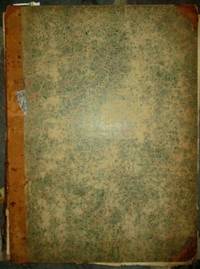
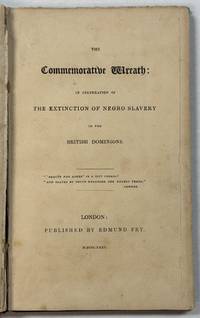
183541420London: Published by Edmund Fry 1835. 2 viii 112 pp. Original cloth rebacked. Title stamped in gilt on upper cover. Frontis engraving with tissue guard of black children in school taught by elegantly dressed white teachers; and with several signs: "The Day of Our Freedom August 1st 1834" engraved by J. Crosland; "That Which I See Not Teach Thou Me"; "Shew Me Thy Ways O Lord Teach Me Thy Paths." Occasional foxing Good plus. <br /> <br /> A scarce work issued to celebrate the abolition of slavery in British colonies with the Slavery Abolition Act passed in 1833 and going into effect on 1 August 1834. "On the memorable day when British Colonial Slavery ceased the 'Peckham Negro's Friend and Instruction Society' held a special meeting with a view to 'signalizing the day of Negro Emancipation by some act of Christian benevolence" and accordingly came to the unanimous resolution of undertaking 'the charge of an Adult School to be established in the island of Jamaica. The necessary steps were taken to effect this design; and it is the hope of aiding the the extension of its practical usefulness which has prompted a few individuals who have long felt deeply interested in the Negro's cause to collect into a small volume such poems as may be within their reach written for the most part in special commemoration of the abolition of Slavery and to apply the profit if any to the furtherance of the object before described."<br /> The authors of most of these poems have signed with their initials only. This is the first edition.<br /> LCP 2587. Published by Edmund Fry unknown
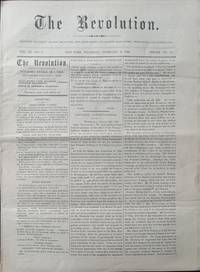
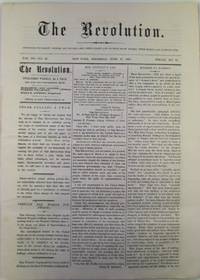
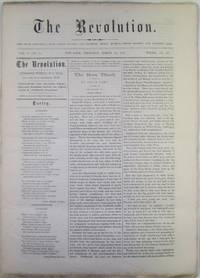
1869020893New York: Susan B. Anthony Proprietor; R.J. Johnson Publisher 1869. Wraps. Good. Side sewn journal. Approximately 12 ¼ by 9 inches. 16 pp. Early issue of the Revolution a groundbreaking and influential newspaper produced by Elizabeth Cady Stanton Susan B. Anthony and Parker Pillsbury. The paper was established to provide a voice to activists and suffragists such as Stanton and Anthony whose voices were marginalized by the mainstream press as well as many abolitionist publications with whom they had been previously allied. Anthony and Stanton advocated for an amendment giving suffrage to women along with the amendment sponsored by abolitionists that would give Black men the right to vote. Many abolitionists actively discouraged Stanton and Anthony from pursuing their amendment until the amendment enfranchising Black men passed creating a rift in the abolitionist movement as well as the women's suffrage movement. Feeling betrayed by abolitionists and Republicans who initially supported them they established the Revolution with financial help from George Francis Train a Democrat who supported women's rights but was openly racist. As the name indicates The Revolution adopted a combative radical tone with Stanton and others unafraid to take on critics. The paper openly discussed sexual and physical abuse in marriage and advocated better divorce laws that would offer women a way to escape abusive marriages. In 1869 the paper broke with Train who had supplied very little of the funding he initially offered. It published until 1872 struggling to make expenses along the way. This issue with editorial correspondence written by Elizabeth Cady Stanton as well as a letter by Susan B. Anthony addressing concerns from readers regarding George Train's contributions to the journal etc. GOOD condition. Several fold creases present with other general wrinkling. Minor toning and scattered soiling in the interior. Susan B. Anthony, Proprietor; R.J. Johnson, Publisher unknown
1869020934New York: Susan B. Anthony Proprietor; R.J. Johnson Publisher 1869. Wraps. Good. Side sewn journal. Approximately 12 ¼ by 9 inches. 16 pp. Early issue of the Revolution a groundbreaking and influential newspaper produced by Elizabeth Cady Stanton Susan B. Anthony and Parker Pillsbury. The paper was established to provide a voice to activists and suffragists such as Stanton and Anthony whose voices were marginalized by the mainstream press as well as many abolitionist publications with whom they had been previously allied. Anthony and Stanton advocated for an amendment giving suffrage to women along with the amendment sponsored by abolitionists that would give Black men the right to vote. Many abolitionists actively discouraged Stanton and Anthony from pursuing their amendment until the amendment enfranchising Black men passed creating a rift in the abolitionist movement as well as the women's suffrage movement. Feeling betrayed by abolitionists and Republicans who initially supported them they established the Revolution with financial help from George Francis Train a Democrat who supported women's rights but was openly racist. As the name indicates The Revolution adopted a combative radical tone with Stanton and others unafraid to take on critics. The paper openly discussed sexual and physical abuse in marriage and advocated better divorce laws that would offer women a way to escape abusive marriages. In 1869 the paper broke with Train who had supplied very little of the funding he initially offered. It published until 1872 struggling to make expenses along the way. This issue with "Who Killed Cock Robin" by Susan B. Anthony; four pieces by Elizabeth Cady Stanton a review of a book on Women's Suffrage "Impunity in Crime" "President Woolsey" "Women's Education" Also present is news on the American Equal Rights Association etc. GOOD condition. Front cover torn along the upper hinge. Several fold creases present with other general wrinkling. Minor toning and scattered soiling in the interior. Some foxing and offsetting along the top edge. Susan B. Anthony, Proprietor; R.J. Johnson, Publisher unknown
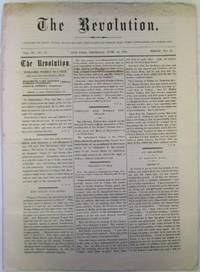
1869020935New York: Susan B. Anthony Proprietor; R.J. Johnson Publisher 1869. Wraps. Good. Side sewn journal. Approximately 12 ¼ by 9 inches. 16 pp. Early issue of the Revolution a groundbreaking and influential newspaper produced by Elizabeth Cady Stanton Susan B. Anthony and Parker Pillsbury. The paper was established to provide a voice to activists and suffragists such as Stanton and Anthony whose voices were marginalized by the mainstream press as well as many abolitionist publications with whom they had been previously allied. Anthony and Stanton advocated for an amendment giving suffrage to women along with the amendment sponsored by abolitionists that would give Black men the right to vote. Many abolitionists actively discouraged Stanton and Anthony from pursuing their amendment until the amendment enfranchising Black men passed creating a rift in the abolitionist movement as well as the women's suffrage movement. Feeling betrayed by abolitionists and Republicans who initially supported them they established the Revolution with financial help from George Francis Train a Democrat who supported women's rights but was openly racist. As the name indicates The Revolution adopted a combative radical tone with Stanton and others unafraid to take on critics. The paper openly discussed sexual and physical abuse in marriage and advocated better divorce laws that would offer women a way to escape abusive marriages. In 1869 the paper broke with Train who had supplied very little of the funding he initially offered. It published until 1872 struggling to make expenses along the way. This issue with a letter on taxes owed by Susan B. Anthony; two pieces by Elizabeth Cady Stanton "Women's privilege in Edinburgh" and a continuation of a piece on Reverend Henry Edgar. Also present is news on the American Equal Rights Association an essay on hygiene vs. fashion etc. GOOD condition. Several fold creases present with other general wrinkling. Minor toning and scattered soiling in the interior. Susan B. Anthony, Proprietor; R.J. Johnson, Publisher unknown
1870022308New York: Susan B. Anthony Proprietor; R.J. Johnson Publisher 1870. Wraps. Good. Side sewn journal. Approximately 12 ¼ by 9 inches. 16 pp. Early issue of the Revolution a groundbreaking and influential newspaper produced by Elizabeth Cady Stanton Susan B. Anthony and Parker Pillsbury. The paper was established to provide a voice to activists and suffragists such as Stanton and Anthony whose voices were marginalized by the mainstream press as well as many abolitionist publications with whom they had been previously allied. Anthony and Stanton advocated for an amendment giving suffrage to women along with the amendment sponsored by abolitionists that would give Black men the right to vote. Many abolitionists actively discouraged Stanton and Anthony from pursuing their amendment until the amendment enfranchising Black men passed creating a rift in the abolitionist movement as well as the women's suffrage movement. Feeling betrayed by abolitionists and Republicans who initially supported them they established the Revolution with financial help from George Francis Train a Democrat who supported women's rights but was openly racist. As the name indicates The Revolution adopted a combative radical tone with Stanton and others unafraid to take on critics. The paper openly discussed sexual and physical abuse in marriage and advocated better divorce laws that would offer women a way to escape abusive marriages. In 1869 the paper broke with Train who had supplied very little of the funding he initially offered. It published until 1872 struggling to make expenses along the way. This issue with a printing of an interview conducted by Susan B. Anthony in which she interviews "Jennie" Claflin Tennie Claflin sister of Victoria Woodhull about her part in the brokerage firm started by Woodhull and herself. They discuss a variety of subjects relating to brokerage and the skills needed to run a business. Tennie C. Claflin partnered with her activist and suffragist sister Victoria Woodhull to open this firm in 1870. Backed by Cornelius Vanderbilt the firm became quite successful tapping into the needs of women who wanted to invest. Shortly after opening the firm Woodhull and Claflin started to publish a newspaper that was considered radical at the time advocating for equal rights free love and other social movements. GOOD condition. Several faint fold creases present with other general wrinkling and creasing. Chipping and tearing along the edges. Minor toning and scattered foxing and soiling. Several pages unopened along the top edge. Susan B. Anthony, Proprietor; R.J. Johnson, Publisher unknown
184954750Madrid La Imprenta Nacional 1849. Small 4to. Contemp. hcloth. Gilt lettering on spine. Stamp on title-page. 2468 pp. 1 folded table. Internally clean and fine. <br/><br/><em>This edition not in Sabin. Sabin 19679 for other editions. </em> hardcover
1896SY-4SWM-RAHD1896. Hardcover. Very Good. First edition 1896. Moderate external wear a little fraying at bottom of spine some foxing to textblock edges gilt and decorations remain bright. Pages somewhat yellowed with an occasional bit of foxing or minor blemish. Binding reasonably firm. hardcover
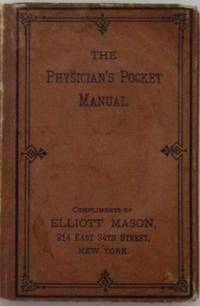
1880021386Boston: Published by the Author 1880. Cloth. Good. Light brown cloth. 176 pp. Several illustrations of bicycles toward the end. A reference work for physicians discussing toxicology clinical diagnosis; forensic medicine etc. Perhaps of note pages 147 to 176 are devoted to the bicycle and its health effects positive including mentioning Columbia bicycles. Text ad for the Victor tricycle at the very end. GOOD condition. Some staining to the covers with minor soiling. Extremities rather scuffed. Owner's address stamp on the inside front cover. Text block toned. Published by the Author unknown