570 résultats
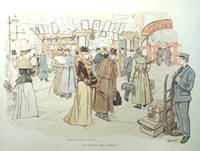
189440849<p>Paris : E. Plon Nourrit & Cie. 1894. First edition. The lighter side of London life and fashion as seen by the popular and irrepressible Belgian caricaturist - Charing Cross Station lunch-hour on the Strand Royal Ascot Hyde Park and Rotten Row Kensington Piccadilly Circus the Lowther Arcade Piccadilly and Park Lane Henley the Music-Hall Christmas parties Kensington Gardens Maidenhead and so much more - sketches studies and wry observation. "Just the most charming Christmas book imaginable full of amusing and smart pictures plain and coloured and as bright as they make them" Lady's Pictorial 15th December 1894.</p><p><em>Landscape foolscap folio. 26cm. 32 leaves. Illustrated throughout frequently in colour with full-page plates and medleys of smaller studies. Original pictorial cloth; lightly rubbed and slightly worn; front endpaper cracked and torn; some minor internal marks and short tears but overall still a good copy of a delightful compilation.</em></p> Paris : E. Plon, Nourrit & Cie., [1894]. hardcover
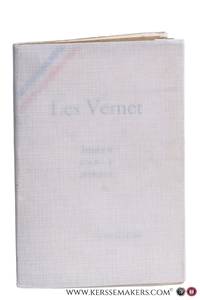
189076206Paris: L'Artisan Moderne André Marty - H. Floury c. 1890. 12mo 19x13 cm. Orig printed wrappers illustrated with 2 soldiers on back cover spine damaged soiled; small tears. 72 pp. Printed on handmade paper uncut. endpapers with spots. - P. 9-30: Les Vernets par Maurice Guillemot p.31-72: Catalogue de 374 objets exposés. - we traced only 1 copy interleaved with 8 pp.of glazed paper for the illustrations at WorldCat. - This edition without illustrations. -See: Cat. De Meuleneere: "Catalogue rarissime". also with 72 pp. L'Artisan Moderne André Marty - H. Floury unknown
1875550068Manchester NH: John B. Clarke 1875. Hardcover. Very Good. First edition. Preface by John B. Clarke. 462 8pp. Illustrated with black and white plates. Green cloth covered boards with gilt. Owner’s label on the front pastedown Randolph Langenbach’s name stamped on the front free endpaper an inscription before the title page the spine slightly cocked and several tears to the cloth of the spine very good. Randolph Langenbach is known for his photography and writing which documents the textile mill towns of New England. His association with this book is of note as some of his important work was conducted in Manchester: “His groundbreaking work on the Amoskeag Mills in Manchester N.H. resulted in a series of exhibitions and the book Amoskeag: Life and Work in an American Factory City†“Art in Embassies†US Department of State. Also of note is the inscription not Langenbach's which reads: "A premium for getting up club of subscribers for Mirror & Farmer for 1877." Mirror & Farmer was an agricultural newspaper printed in the region. It seems one of their employees received the book for a job well done; the employee was very likely the owner of the bookplate M.F. Little. John B. Clarke hardcover
188451786New York: J. W. Bouton 1884. First Edition thus. With twelve full-page illustrations in photogravure by the Goupil process and numerous sketches throughout the text from designs by Maurice Leloir. 1 vols. 4to. Original stiff wrappers with chromolithograph designs in red cloth folding box with gilt- and black-stamped design. Wrappers and endpapers lightly foxed occasional light foxing. Very good box a little soiled with spine faded and ties frayed. Leloir Maurice. First Edition thus. With twelve full-page illustrations in photogravure by the Goupil process and numerous sketches throughout the text from designs by Maurice Leloir. 1 vols. 4to. <br/><br/> J. W. Bouton hardcover
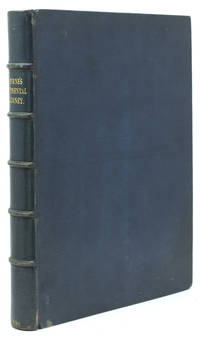
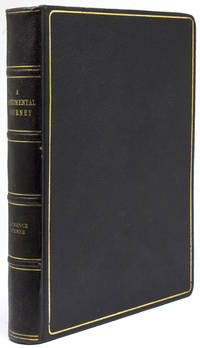
188554074London & New York: George Routledge and Sons Broadway Ludgate Hill 1885. Number 437 of 550 copies printed by H. Launtte Librairie Artistique Paris for George Routledge. With 12 full-page photogravure plates "by the Goupil process" and numerous sketches throughout the text by Maurice Leloir. 1 vols. 4to 12 1/2 x inches. Bound in full blue contemporary morocco gilt lettered spine gilt dentelles t.e.g. original chromolithographed wrappers bound in. About fine. Leloir Maurice. Number 437 of 550 copies printed by H. Launtte Librairie Artistique Paris for George Routledge. With 12 full-page photogravure plates "by the Goupil process" and numerous sketches throughout the text by Maurice Leloir. 1 vols. 4to 12 1/2 x inches. Fine attractive copy of this beautifully illustrated book masterfully incorporating his drawings with the text in style of Johannot. Leloir 1853-1940 was one of the true professionals in the history of French illustration. Books with his designs appeared over five decades. Working by preference with stories laid in the seventeenth and eighteenth centuries he was at pains to make his costumes as accurate as possible. It was his celebrity in this field indeed which led Douglas Fairbanks to bring him to Hollywood as artistic director of The Iron Mask 1929. His illustrations are abundant precise and objective." -Ray French Illustrated Books.<br /> <br /> As for A Sentimental Journey one of his masterpieces Ray observes that "every episode in Sterne's short text finds its appropriate visual commentary." Ray 292 French ed. George Routledge and Sons, Broadway, Ludgate Hill unknown
188414879New York: J.W. Bouton 1884. First American edition thus. With 12 full-page photogravure plates "by the Goupil process" and numerous sketches throughout the text by Maurice Leloir. 210pp. 1 vols. 4to. Full dark blue pebbled morocco gilt lettered spine original chromolithographed wrappers bound in. Very Good. Leloir Maurice. First American edition thus. With 12 full-page photogravure plates "by the Goupil process" and numerous sketches throughout the text by Maurice Leloir. 210pp. 1 vols. 4to. Fine attractive copy of this beautifully illustrated book masterfully incorporating his drawings with the text in style of Johannot. Leloir 1853-1940 was one of the true professionals in the history of French illustration. Books with his designs appeared over five decades. Working by preference with stories set in the seventeenth and eighteenth centuries he was at pains to make his costumes as accurate as possible. It was his celebrity in this field indeed which led Douglas Fairbanks to bring him to Hollywood as artistic director of The Iron Mask 1929. His illustrations are abundant precise and objective . " -Ray French Illustrated Books.<br /> <br /> As for A Sentimental Journey one of his masterpieces Ray observes that "every episode in Stern's short text finds its appropriate visual commentary . " Ray 292 French ed. J.W. Bouton unknown
190052955Elbeuf: A. MARTIN 1900. Fine. A. MARTIN Elbeuf S.d Circa 1900 10.50 x 16.50 cm une feuille Original photograph of Maurice Blanchot at about one year old seated on a pedestal surrounded by his brothers and sisters. Original photograph of Maurice Blanchot at about one year old seated on a pedestal surrounded by his brothers and sisters. Contemporary silver print. Blanchot eluded the photographers and caricaturists of the literary press for a long time. Attempts at producing an image were both rare and minimalist throughout the years. In 1962 in Express a hand holds up a book at the bottom of the page; in 1979 in Libération a blank square in the middle of the page captioned only with Blanchots name and a quotation from lEntretien infini ""a vacuum of a universe: nothing that is visible nothing that is invisible C. Bident Maurice Blanchot. In 1986 at an exhibition of writers portraits he asked that his photo be replaced with a text noting his desire to appear as little as possible not for the exaltation of his books but to avoid the presence of an author who pretends to a separate existence. A photo taken without his knowledge in the parking lot of a supermarket was the only portrait of the writer until his friend Emmanuel Lévinas made public a few rare photos from their youth. That Blanchot did not oppose this act and the fact that it was done by his closest friend can be explained by what Bident calls l'espacement de l'inquiétude the distancing of worry the outdated nature of the portraits made public carry an echo of the delayed publication of L'Idylle Le Dernier Mot L'Arrêt de mort. Only a few photographs gathered in the centre pages of the issue of les Cahiers de l'Herne dedicated Maurice Blanchot complement these unique shots of the most secretive writer of the 20 th century. In his chapter on L'indisposition du secret The indisposition of the secret Christophe Bident devotes several pages to the almost complete absence of images of this invisible partner wondering about the intellectual and psychological motivations of the writer who was nonetheless aware of the inevitable revelation to come. Everything must become public. The secret must be broken. The obscure must enter into the day and make itself clear. That which cannot be said must nonetheless make itself heard. Quidquid latet apparebit everything that is hidden must appear Maurice Blanchot L'Espace littéraire. A. MARTIN unknown
190052956Elbeuf 1900. Fine. Elbeuf S.d Circa 1900 10.50 x 16.50 cm une feuille Original photograph of Maurice Blanchot seated at his desk before his library Original photograph of Maurice Blanchot smiling at his desk before his library. Contemporary silver print. Blanchot eluded the photographers and caricaturists of the literary press for a long time. Attempts at producing an image were both rare and minimalist throughout the years. In 1962 in Express a hand holds up a book at the bottom of the page; in 1979 in Libération a blank square in the middle of the page captioned only with Blanchots name and a quotation from lEntretien infini ""a vacuum of a universe: nothing that is visible nothing that is invisible C. Bident Maurice Blanchot. In 1986 at an exhibition of writers portraits he asked that his photo be replaced with a text noting his desire to appear as little as possible not for the exaltation of his books but to avoid the presence of an author who pretends to a separate existence. A photo taken without his knowledge in the parking lot of a supermarket was the only portrait of the writer until his friend Emmanuel Lévinas made public a few rare photos from their youth. That Blanchot did not oppose this act and the fact that it was done by his closest friend can be explained by what Bident calls l'espacement de l'inquiétude the distancing of worry the outdated nature of the portraits made public carry an echo of the delayed publication of L'Idylle Le Dernier Mot L'Arrêt de mort. Only a few photographs gathered in the centre pages of the issue of les Cahiers de l'Herne dedicated Maurice Blanchot complement these unique shots of the most secretive writer of the 20 th century. In his chapter on L'indisposition du secret The indisposition of the secret Christophe Bident devotes several pages to the almost complete absence of images of this invisible partner wondering about the intellectual and psychological motivations of the writer who was nonetheless aware of the inevitable revelation to come. Everything must become public. The secret must be broken. The obscure must enter into the day and make itself clear. That which cannot be said must nonetheless make itself heard. Quidquid latet apparebit everything that is hidden must appear Maurice Blanchot L'Espace littéraire. unknown
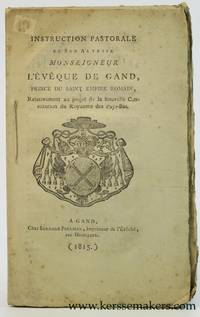
181541685Gand Gent: Chez Bernard Poelman 1815. 8vo 22x145 cm. Pamphlet sewn no wrappers uncut. 43i: blankpp. Title and margins sl. dust-soiled. With coats of arms of the archbishop on title. - Text in French and printed opposite in Dutch Chez Bernard Poelman unknown
190076660Paris: Henri Manuel 1900. Fine. Henri Manuel Paris 1900 11 x 14.90 cm une photographie Rare original silver gelatin photograph. Among the known portraits of the writer particularly those by Henri Manuel we have found no trace of this one. The date is naturally approximate in the absence of more precise data. On the verso stamp: ""La mention Photo Henri Manuel est obligatoire"" ""The mention Photo Henri Manuel is obligatory"". Second stamp with number 761. In grey pencil manuscript: Maurice Leblanc. Thin scratches above the arm resting on the elbow. Superb condition. Henri Manuel unknown
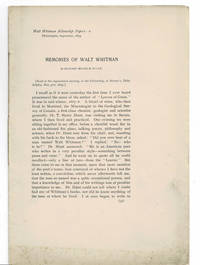
189499767<p>Philadelphia PA: Walt Whitman Fellowship. 1894 & 1897. 1894 & 1897. Good. - Octavo 9-1/4 inches high by 6-3/4 inches wide. Softcovers 2 issues of the Fellowship paper each bound in cream-colored printed self-wrappers. 12 pages numbered 35 through 46; and 8 pages numbered 35 through 42. The edges of the cover page of the first volume are darkened particularly the bottom edge of that page. There is a tiny slit to the head of that spine. The top edge of the second volume's cover page is darkened with a tiny slit at the head. Good partially unopened copies.</p><p>First editions.</p><p>"Walt Whitman Fellowship Papers: 6. Philadelphia September 1894" together with "Walt Whitman Fellowship Papers: Third Year: 10. Philadelphia May 1897".</p> Philadelphia, PA: Walt Whitman Fellowship. 1894 & 1897. paperback
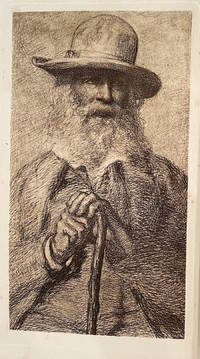
188432820570<p>FIRST EDITION first British issue comprising the American sheets 1883 plus a new section pp. 237-255 Dowden's work on the English critics of Whitman.</p><p>"An unconventional book as much anthology of documents about the poet as a biography. It was also a collaboration; Whitman advised throughout revised Bucke's text and wrote significant portions of the book himself" LeMaster Walt Whitman An Encylopedia. Bucke was one of Whitman's three literary executors.</p><br /><p>Photo intaglio frontispiece portrait of Whitman by Gilchrist. Original olive-brown cloth. Short separation to cloth at bottom of rear joint. Very good.</p> Wilson and McCormick
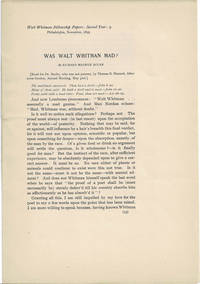
189599776<p>Philadelphia PA: Walt Whitman Fellowship. 1895. 1895. Very good. - Octavo 9-1/4 inches high by 6-3/4 inches wide. Softcover bound in cream-colored printed self-wrappers. The edges of the cover page are very slightly darkened. 8 pages numbered 23 through 30. A very good unopened copy.</p><p>First edition.</p><p>"Walt Whitman Fellowship Papers: Second Year: 9. Philadelphia November 1895".</p><p>An adventurer in his youth Richard Maurice Bucke 1837-1902 was a Canadian psychiatrist. He was the head of Ontario's provincial Asylum for the Insane in London Ontario and was a friend of significant men of letters throughout the U.S. Canada and Great Britain. He wrote numerous professional articles and was the author of "Man's Moral Nature" "Walt Whitman" a biography of the poet and "Cosmic Consciousness: A Study in the Evolution of the Human Mind".</p> Philadelphia, PA: Walt Whitman Fellowship. 1895. paperback
1857E30331Trenton: printed at the Office of The True American 1857. First edition. Hardcover. Very Good. Octavo in dark blue-green cloth with spine lettered in gilt. 205 pp. plus index at rear. 11 plates including frontis and one large folding map tipped in at rear. A tight very good example some spotting to the spine strip and minor wear at the spine extremities. Occasional light foxing to the text as is usual. One of the scarcest and most sought after New Jersey historical volume. Part I describes the physical and geological description of Cape May County its geological age and formation. Part II is "Economical Geology" analyses of soils marsh mud forests agriculture fish and fish by-products building material substances particularly brick salt. The second major portion of the work consists of "Catalogues of Zoological And Botanical Productions of the County of Cape May" that includes lists of the larger wild animals of the county opossums bears raccoons skunk fox squirrels rabbits deer etc.; birds native to the county including bald eagles geese various hawks owls swallows fly-catchers and smaller birds.; fishes black fish mackerel dories catfish mudfish pike flounder herring turbot sole eels shark; plants marine algae. There is an engraving of a Venus Mercenaria with descriptive paragraphs of that fossil and the Buccinum Obsoletum. The final section is "Sketch of the Early History of the County Of Cape May printed at the Office of The True American hardcover
18017966Paris: Henrics 1801. Fine. Henrics Paris An IX 1801 13.50 x 22 cm broché First edition in plain wrappers. Political situation of Europe before the war France's situation with regard to its allies its enemies the neutrals France's internal situation. A manuscript note beneath the contemporary title attributes this anonymous work to Anquetil. Conceived as a manifesto to foreign nations this work was actually composed by the Count d'Hauterive at the request of Napoleon I after the coup d'état of 18 Brumaire. Some minor foxing rare copy in its original wrappers. Henrics unknown
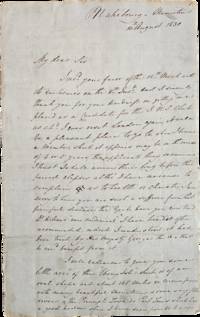
1830List2931Mahébourg Mauritius 1830. Single unsigned fourteen-page letter measuring 8 x 12 ¾ inches. Folded with some stains and pencil marks. Overall near fine. In 1830 Mauritius was a British colony captured from the French in 1810 during the Napoleonic Wars. It was originally a Dutch colony and the Dutch had introduced enslaved labor to the islands. Enslaved people were imported from Madagascar India and Southeast Asia to harvest the valuable ebony trees and later to farm sugarcane. It became a French colony in 1715 and among other provisions the French government awarded upper-class colonists large land grants each with twenty enslaved people to work them. Slavery was abolished in 1835 under British rule after which the planters still farming sugarcane turned to indentured servant labor from India and China alongside illegal slavery.1<br /> <br /> Offered here is a lengthy single letter written by an unknown author to an unknown recipient from Mahébourg in 1830 shortly before this radical change. The letter describes the lives and economic circumstances of the planters and merchants and of the non-white population particularly Malabar people and free and enslaved Black people.<br /> <br /> Noting that “every inch of ground that will produce sugar cane is planted with it†including “the former fine gardens to some of the Habitations†the author reports on the situation for sugar planters:<br /> <br /> “The price of sugar here is not more than 20/per Cwt. for the best quality which does not now remunerate the Planter as his expenses are becoming every day more heavy in consequence of their slaves diminishing . The want of Slaves induced many of the Planters to send for Chinese Labourers and several hundreds were imported at a great expense but unfortunately they did not answer and were obliged to be reshipped for their native Country again at the charge of those who sent for them.â€<br /> <br /> The author later notes that “nearly everyone of the Planters have heavy mortgages on their Estates and are obliged to pay this immense Interest which keeps them poor and will I fear ultimately ruin themâ€. In fact the planters in British Mauritius had extra duties on their sugar exports compared with their Caribbean counterparts. The shopkeepers on the other hand “calculate on retiring with a fortune in five years– therefore you will fancy what must be their prices also their profits.â€<br /> <br /> Though writing from Mahébourg the author describes the capital city of Port Louis at length especially its Malabar Indian and free Black residents—the lives of the latter particularly the free Black women seem especially grim. They write:<br /> <br /> “The Centre of Port Louis is inhabited by all the respectable people and many most excellent houses buildings– the Catholic Chapel the English Church amongst the number. The Suburbs to the West is the part occupied by about 3000 Malabars called ‘Malabar Town.’ – They are dressed mostly in white with Turbans ear rings c c and the females with ornaments in their noses and on their Toes as they generally go bare foot. – Once a year they have what is called a ‘Yamsee’ or a festival in honor of Mehomet which lasts for about a fortnight during which time they seem to get no sleep a continual beating of tom toms – jingling of bells – carrying pagodas which are made of various coloured paper and most richly ornamented followed by all the population of their Caste with their faces daubed with red white c and which has a most ludicrous appearance. The Suburbs to the South is called ‘black Camp’ – the Houses being very small and poor and inhabited by all the free blacks as well as many Mulattoes. – Also a certain class of females of the population of colour – who are visited immediately on the Arrival of a Ship the Crews soon enquiring the way to the ‘Camp.’â€<br /> <br /> As regards relations between the races the author recounts an incident that followed the 1828 abolition of the color bar which would ostensibly give the free non-white population the same rights as the whites:<br /> <br /> “The Theatre is a very good one but has been closed for several months past the Actors Actresses gone to Bourbon in consequence of the promulgation of the act ‘causing all free people of the population of Colour’ to have the same laws – the same privileges as the Whites’ fearing they ought come to the Theatre which they had hitherto been forbidden thereby cause disturbances as the French Whites detest them wd. not sit in the same box it was considered best to shut the Theatre which is a great loss to the Place it being the chief public amusement and indeed the only one we have here.â€<br /> <br /> Overall a detailed letter giving insight into life in a slave colony at a time when significant changes were on the horizon. Of interest to scholars of the colonial history of Mauritius and the second wave of British colonialism.<br /> <br /> 1 Truth and Justice Commission Report of the Truth and Justice Commission Vol. 1 Mauritius: Government Printing 2011. unknown
186223685New York: G. Savage 1862. Fine. Civil War era addenda to the Municipalist a New York magazine published following the "Separation of the United States". The first sentence reads "Since the preceding Letters have been published the United States of America have been dissevered and a new federation under the name of Confederate States of America formed". The Municipalist was first published in 1858; the second edition in 1859. <br /> <br /> Contents include secession enforced union convention of the states Abolitionists Shay's Rebellion the United States a great people no nation; and more.<br /> <br /> Plain paper wrappers. 16mo 303-348pp 1pp "Some Private Opinions". Stitched. Sabin 51330. OCLC: 950932219 one copy at the American Antiquarian Society. G. Savage unknown
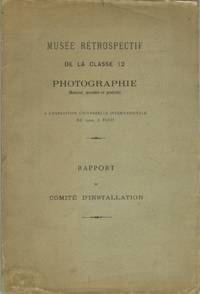
190032023Paris: Piublisher not identified 1900. First edition. 4to. 102 pp. portrait frontispiece with tissue guard illustrations in text 10 plates with tissue guards 1 of these in color. Printed wrappers expertly repaired with a new paper spine. Moderate wear; a very good copy. Housed in a new cloth clamshell box. A history of photography and processes which includes two chapters by Léon Vidal - one is a history of photogravure and the other on color photography. Details several other photomechanical processes and their inventors. Illustrations include those by Robert Demachy and by Puyo. <br /> <br /> There are several issues of this report three of which vary only in size; a fourth a later issue has a slightly different wording to the title and is dated 1903. Étienne-Jules Marey was the president of the committee.<br /> <br /> Roosens and Salu No. 3704. Piublisher not identified unknown
190053064Paris: Publisher not identified 1900. First edition. 4to. 28 cm. x 19 cm 102 pp. portrait frontispiece with tissue guard illustrations in text 10 plates with tissue guards 1 of these in color. Original printed wrappers. Neat ownership signature of a member of the jury of classe 5 on the blank reverse of the half-title page. Fine as new. A history of photography and processes which includes two chapters by Léon Vidal - one is a history of photogravure and the other on color photography. Details several other photomechanical processes and their inventors. Illustrations include those by Robert Demachy and by Puyo. <br /> <br /> There are several issues of this report three of which vary only in size; a fourth a later issue has a slightly different wording to the title and is dated 1903. Étienne-Jules Marey was the president of the committee.<br /> <br /> Roosens and Salu No. 3704. Publisher not identified unknown
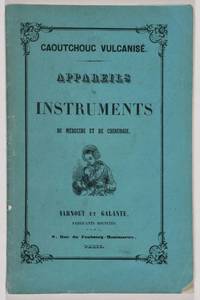
185253892Paris: Imprimerie Administrative de Paul Dupont/ Varnout et Galante 1852. First edition second printing. Softcover. g to vg. Small quarto. 49 1pp. Illustrated blue wrappers with black lettering on the covers. String-tied binding for the book block.<br /> <br /> A scarce illustrated catalog of early vulcanized rubber medical devices manufactured by the French company Varnout et Galante. Included here are more than 80 medical surgical and gynecological instruments designed under the supervision of physician and gynecologist Marie Maurice Gariel 1811-1878. The work includes numerous small engraved figures throughout illustrating various products. Each item is numbered for reference with a description some brief and some longer. The products include not only items related to reproductive medicine and women's health such as breast-feeding instruments vaginal douches tampons urethral probes and urinals for incontinence but also more general medical equipment such as crutches braces bandages protective gloves mattress pads for medical beds restraints compression belts and inflatable cushions. <br /> <br /> This publication is notable and intriguing in that it was produced at a time when both the modern medical field of gynecology was in it's infancy and the revolutionary process of vulcanizing rubber was a newly established industry. Only eight years earlier in 1844 American chemist and engineer Charles Goodyear had patented the groundbreaking process for manufacturing this material on an industrial scale and its wide range of potential uses was just starting to be discovered. The introductory pages extoll the virtues of the new technology of vulcanized rubber and include tables comparing vulcanize to un-vulcanized rubber under various metrics. Table of contents at the rear.<br /> <br /> Text in French.<br /> <br /> Wrappers with minor rubbing to extremities and small chips to the bottom right corners of the front cover and at a few points on the spine. Light foxing at the bottom of the back cover. Interior with a very few tiny sporadic stains but otherwise very clean. Wrappers in good interior in very good condition overall. Scarce. Protected in modern mylar. Full title: Catalogue des Appareils et Instruments de Médecine et de Chirurgie en Caoutchouc Vulcanisé Fabriqués sous la Direction Immédiate de M. Le Doctuer Gariel Par Varnout et Galante<br /> <br /> This second printing is the same in every way to the first printing of the previous year save that the printed year at the bottom of the title page has been adjusted to 1852 instead of 1851.<br /> <br /> Marie Maurice Gariel 1811-1878 was a French physician and gynecologist. He was a member of the Société anatomique de Paris Anatomical Society of Paris and a notable figure in the focus of reproductive medicine and women's health at a time when the field of gynecology was in its early stages. His son was noted French physician and medical engineer Charles-Marie Gariel 1841-1924. Imprimerie Administrative de Paul Dupont/ Varnout et Galante unknown
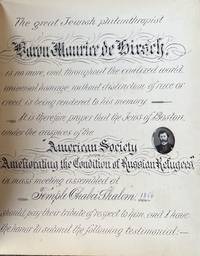
18962430Boston 1896. Manuscript book. In original black leather by Frank J. Barnard signed on the recto of the last leaf with clasp gilt title on front panel gilt edges gilt turn-ins. Pastedowns and flyleaves are covered with white moiré. Moiré detached from the flyleaves discolored at the rear. Some of the tracing paper leaves are creased few with closed tears. Stains to the gutter at the rear no effect on text. Binding slightly rubbed with three small barely visible holes. Overall in very good condition. Calligraphed manuscript in ink by H. C. Kendall signed on the verso of the first leaf. Each page written in different calligraphy style. Text in English. With a mounted portrait transferred on porcelain of Baron Hirsch on the second leaf. Calligraphed manuscript in ink by H. C. Kendall signed on the verso of the first leaf. Each page written in different calligraphy style. Text in English. With a mounted portrait transferred on porcelain of Baron Hirsch on the second leaf. Manuscript book. In original black leather by Frank J. Barnard signed on the recto of the last leaf with clasp gilt title on front panel gilt edges gilt turn-ins. Pastedowns and flyleaves are covered with white moiré. <p><br /> A memorial album commemorating the death of the greatest Jewish philanthropist of the nineteenth century Baron Maurice de Hirsch offered by the Jews of Boston to his widow and family.<br /> <p><p><br /> This delicate memorial album signed by twenty-two representatives of Jewish associations of Boston was prepared by the commission of the Boston Jews under the auspices of the American Committee here Society for Ameliorating the Condition of Russian Refugees an umbrella organization of various groups concerned with the welfare of the immigrants co-founded by the Hirsch Fund and was offered to the widow and the family of Baron de Hirsch. The album is a piece of very fine craftsmanship calligraphed by H. C. Kendall an "artist penman" and Principal of the Normal Writing Institute in Boston and bound by Frank J. Barnard the industry leader bookbinder in Massachusetts. The text consists of profound quotes about human greatness from William Dean Howells and Julia C. R. Dorr and the eulogy delivered at Temple Ohabei Shalom.<br /> <p><p><br /> Baron Maurice de Hirsch 1831-1896 was a German Jewish financier and philanthropist born into a wealthy landowner and banker family in Bavaria. In 1855 Hirsch married Clara Bischoffsheim daughter of a Belgian banker and became associated with his father-in-law's banking house. He amassed a large fortune and became one of the top five richest individuals in Europe at the time. Baron de Hirsch set up charitable foundations promoting Jewish education especially in Russia and after an unsuccessful offer of 50000000 francs to the Russian government to be used for purposes of Jewish education in 1891 he founded the Jewish Colonization Association the greatest charitable trust in the world to provide the funds for extensive Jewish immigration to Argentina. In the same year he established the Hirsch Fund to help the Russian Jewish immigrants in the States and provided the finances for agricultural colonies and trades schools in the US. Through his Galician Foundation he realized the establishment of primary and technical schools for Jewish pupils in Galicia and the Bukowina. "It is impossible to form an accurate estimate of the amount of money Baron de Hirsch devoted to benevolent purposes. That including the large legacy amounting to $45000000 left to the Jewish Colonization Association it exceeded $100000000 is an estimate justified by the amounts given by him from time to time to the foundations already referred to. There were besides many gifts to individuals of which there is no record." Jewish Encyclopedia Baron Maurice de Hirsch died suddenly presumably of a heart attack at the age of 64 on 21 April 1896 at the country house of a friend near his own recently purchased estate of Ógyalla in Hungary now part of Slovakia. His widow continued the Baron's charitable work. Clara died in Paris in 1899 and left the remaining family assets to her adopted son Maurice Arnold de Forest. <br /> <p>. unknown
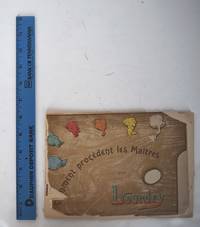
1894161501Paris: Revue Illustree 1894. Original Edition not a reprint. Paperback. Good contents but front covers is edge-worn and back cover if there was one is missing. Also front cover and first two pages are detached and one plate appears to be missing as there are only 23 and 24 were apparently published. Color-illus. front cover/wraps stapled. Twenty-three single-sided bw illustrations. A collection of 24 humorous drawings depicting the painters of the period and their art by "Lourdey" who was Maurice Lefebvre-Lourdet a French painter and illustrator. Revue Illustree paperback
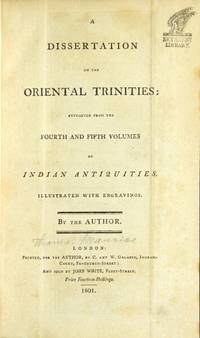
180137101London: for the author by H.L. Galabin 1801. Second separate edition 8vo pp. 4 17-460; folding copper-engraved frontispiece of Vishnu Brahma and Seva plus 5 other folding copper-plates; contemporary quarter calf over marbled boards; very good and sound. Without the 2-leaf Advertisement in the first separate edition of the previous year and with the pagination gone awry at 2E1. Essentially an offprint from the author's larger work Indian Antiquities 7 vols. 1793-1800 but "revised newly arranged and divided into chapters." DNB calls Maurice "one of the first to popularize a knowledge of the history and religions of the east. for the author by H.L. Galabin unknown
18076796London: printed by W. Bulmer and Co. for the author and sold by William Miller 1807. Only edition 4to pp. 8 xiv 1 166; 2 folding engraved plates of Richmond Palace and environs 2-page list of subscribers lengthy preface on the history of the palace; period quarter black roan over marbled boards rubbed and a little scuffed but sound text lightly foxed; good. Handsomely printed by Bulmer. Maurice 1754-1824 was an oriental scholar and historian and assistant keeper of manuscripts at the British Museum. "Maurice was on intimate terms with many of the foremost of his contemporaries. He was an industrious student a voluminous author and one of the first to popularize a knowledge of the history and religions of the East; but Byron in his English Bards and Scotch Reviewers described Maurice as 'dull' and his poem on Richmond Hill as the 'petrifactions of a plodding brain'." DNB. Lowndes p. 1520. printed by W. Bulmer and Co., for the author, and sold by William Miller unknown
182961648Washington D.C.:: War Department House of Representatives 1829. First edition. rebound in modern library-style cloth. Some mis-folding and tanning to folding plates; otherwise very nice in a sturdy modern binding. 8vo. 7 large folding engraved charts. War Department, House of Representatives, hardcover