IRVING, WashingtonLivre Rare Book

6 résultats
1836599461 vol. 8vo, contemporary binding, half leather, Published by A. and W. Galignani and Co., Paris, 1836, XVI-336 pp.
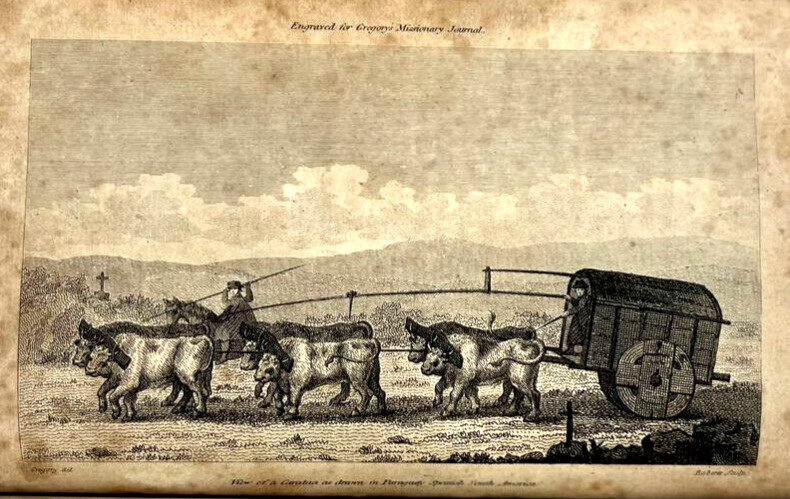
18010065London, T. Gillet, 1801. Second edition. In English. Octavo, 215 x 136 mm, 328 pp., bound in half-calf buckram with red-ochre corners and colored boards, author's name and title in gilt with tailpiece motifs. Header edges. Folding map of the Rio de la Plata. Stamp of the library of the "Sociedade Brasileira de Cultura Inglesa" with book number and the mention "1959" in blue ballpoint pen on the back of the first page of the preface. Preface, table of contents, numerous illustrations throughout the book, and an index of subscribers. The binding is in excellent condition, the slightly yellowish-gray paper is intact and entirely legible. This book recounts the ill-fated second voyage of the Duff, a missionary ship en route to the South Sea Islands in 1798. It was only the second attempt at a missionary voyage to the Pacific. A year earlier, the Duff had successfully undertaken its first voyage, settling members of the London Missionary Society and their families on the islands of Tahiti, Tonga, and the Marquesas. However, this second attempt ended in disastrous failure. Captured first by a French privateer who mistook the Duff for a ship carrying Governor King to Australia, and then again by a Portuguese fleet, the group was forced to return to Lisbon, and William Gregory returned to England in 1800. William Gregory describes the details of his treatment in captivity, life in Spanish America (Uruguay, Argentina, Paraguay), as well as indigenous life in the "enemy port" of Montevideo and the surrounding rich estuary of the Rio de la Plata, its "products, inhabitants, clothing, customs, commerce [and] religion." *************************************** Londres, T. Gillet, 1801. Seconde édition. En anglais. In-8 de 215 x 136 mm, 328 pp., relié demi-veau en percaline à coins ocre-rouge avec plats colorés, nom d'auteur et titre en doré avec motifs de type cul-de-lampe. Tranchefile. Carte dépliante du Rio de la Plata. Tampon de la bibliothèque de la "Sociedade Brasileira de Cultura Inglesa" avec numéro de livre et mention "1959" au stylo bille bleu en revers de la première page de la préface. Préface, table des matières, nombreuses illustrations tout au long du livre et index des souscripteurs. La reliure est en excellent état, le papier un peu jaune-gris intègre et entièrement lisible. Ce livre raconte le deuxième voyage malheureux du Duff, navire missionnaire en route vers les îles des mers du Sud en 1798. Ce n'était que la deuxième tentative de voyage missionnaire dans le Pacifique. Un an plus tôt, le Duff avait entrepris avec succès son premier voyage et abouti sur l'installation des membres de la London Missionary Society et de leurs familles sur les îles de Tahiti, de Tonga et les Marquises. En revanche, cette seconde tentative se soldera par un échec désastreux. Capturé d'abord par un corsaire français qui prit le Duff pour un navire emmenant le gouverneur King en Australie, puis une seconde fois par une flotte portugaise, le groupe fut contraint de retourner à Lisbonne et William Gregory regagnera l'Angleterre en 1800. William Gregory décrit les détails de son traitement en captivité, la vie en Amérique espagnole (Uruguay, Argentine, Paraguay) ainsi que la vie indigène dans le « port ennemi » de Montevideo et le riche estuaire environnant du Rio de la Plata, ses « produits, habitants, vêtements, coutumes, commerce [et] religion ».
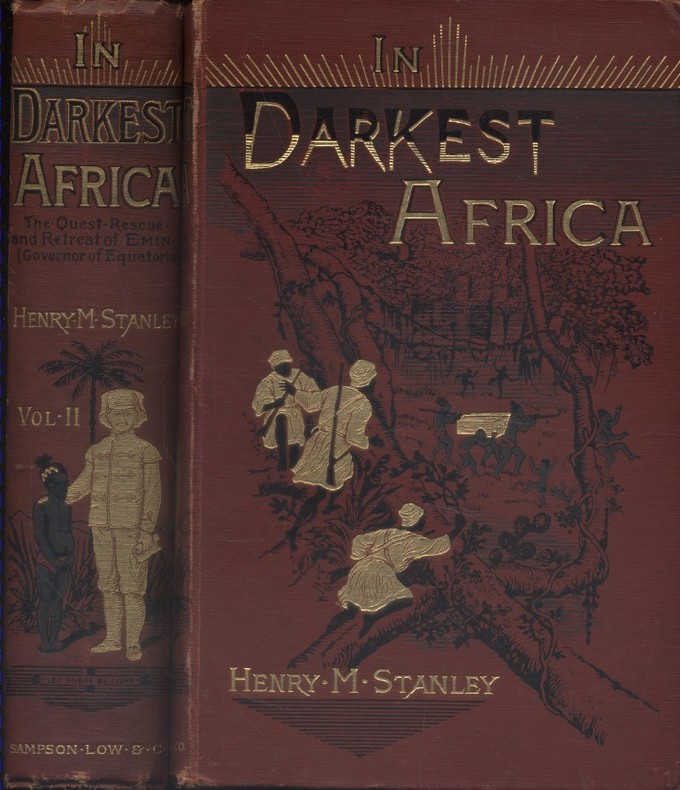
1890128712Couverture rigide. Reliures toile rouge illustrées. 530 + 472 pages. Quelques rousseurs.
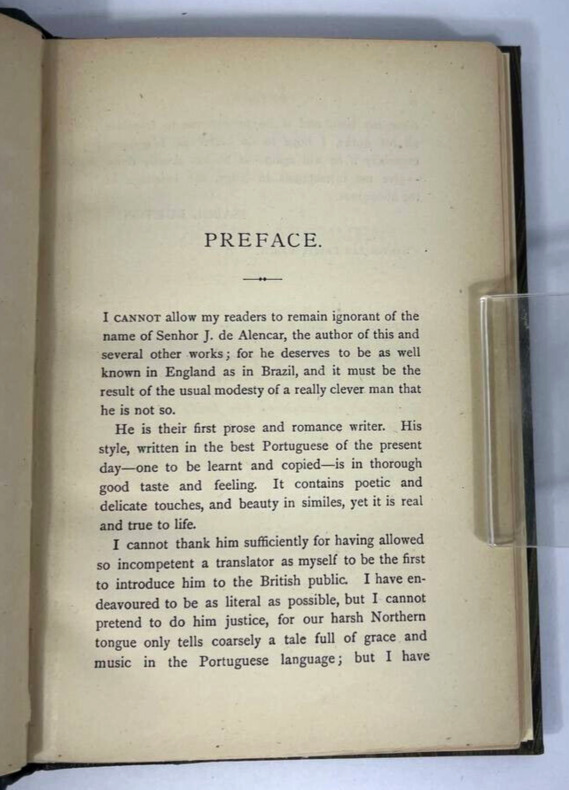
188601002London: Bickers & Son, 1886. First English edition of this acclaimed Brazilian romance. Translated by Isabel Burton. Slim in-12 volume. 179 x 125 mm, (vii) 101 pp. Bound in half algae green morocco, two raised bands, five gilded bands, name printed vertically in gilt print letters, date on the bottom. Marbled papers with a touch of bright copper on covers, multiple white pages on both ends. White and green headbands. Title page, Translator's preface, Historical argument by the author. Each chapter is merely "Chapter XX", no table of contents. "I cannot allow my readers to remain ignorant of the name of Senhor J. de Alencar, the author of this and several other works; for he deserves to be as well known in England as in Brazil, and it must be the result of the usual modesty of a really clever man that he is not so. He is their first prose and romance writer." (Translator's preface) "In 1603, Pero Coelho, a gentleman of Parahyba, then already belonging to the Portuguese, arrived at the mouth of the river Jaguaribe in Ceará, with a command of 80 colonists and 800 Indians. He there founded the first settlement in Ceará, and called it Nova Lisboa. He was abandoned by his comrades when a certain João Soromenho was sent to him with reinforcements... He did not respect even the Indians of the Jaguaribe river, who were friendly to the Portuguese. This proved the downfall of the growing settlement: the natives resented such tyranny. Pero Coelho, with his wife and young children, was compelled to fly by land to his own province." (Alencar's Historical argument)
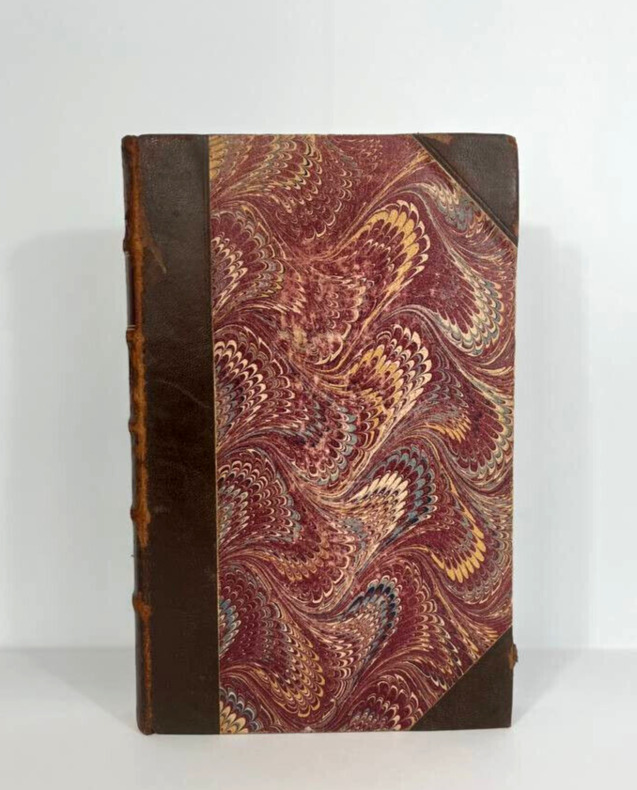
18090036London, B. Clarke for Henry Colburn, 1809. First edition. Octavo, 210 x 130 mm, (6) 304 pp. Bound in original quarter brown morocco with corners, spine with 5 raised bands, wine-colored title piece with author's name and title in gold as well as a double gilt fillet on the higher and lower extremities of the piece, year on the bottom of spine. Purple marbled dishes with tons of yellow and bluish waves. Headband. Title page, dedication to the "merchants of Great Britain", Advertisement and table of contents at the beginning of the book. Twelve chapters followed by two appendices (and not just one as indicated in the table) with "Medical advice for Europeans who emigrate to Brazil" and indications on the coins, change and commodity prices. "As the recent political changes in Europe have naturally attracted the general attention towards the New World, no apology, it is presumed, can be deemed necessary for presenting to the public the following succinct account of one of the most interesting colonies in that quarter of the globe. The jealous and illiberal policy which at all times characterized the [Portuguese] government of Brazil in its intercourse with foreigners rendered it difficult to obtain accurate information respecting the productions, reade and commerce of this colony. The author therefore trusts that the information contained herein cannot fail to prove acceptable to the general reader and highly interesting to anyone engaged in commercial speculations." (Advertisement) ********************************* Londres, B. Clarke for Henry Colburn, 1809. Édition originale. Un volume in-8 de 210 x 130 mm pour (6) 304 pp. Relié demi-maroquin tabac à coins d'époque, dos à 5 nerfs, pièce de titre lie-de-vin avec nom d'auteur et titre en doré ainsi qu'un double filet doré en coiffe et queue de la pièce, année en queue. Plats jaspés mauves aux tons de vagues jaunes et bleutés. Tranchefile. Page de titre, dédicace aux "marchands de Grande-Bretagne", avertissement et table des matières en début d'ouvrage. XII chapitres suivis de deux annexes (et non une seule comme indiqué dans le sommaire) avec des "Conseils médicaux aux Européens qui émigrent au Brésil" et des indications sur le change et la valeur des marchandises. "Étant donné que les récents changements politiques survenus en Europe ont naturellement attiré l'attention sur le Nouveau Monde, aucune excuse, semble-t-il, ne saurait s'avérer nécessaires pour présenter au public l'explication ci-après de l'une des colonies les plus intéressantes à cet endroit du globe. La politique jalouse et illibérale qui a toujours caractérisé le gouvernement [portugais] du Brésil dans ses relations avec les étrangers a rendu difficile l'obtention d'informations exactes concernant les productions, les échanges et le commerce de cette colonie. L'auteur estime que les informations contenues ici seront acceptables au lecteur du grand public et extrêmement intéressantes pour quiconque s'est engagé dans le commerce." (Avertissement, traduit)
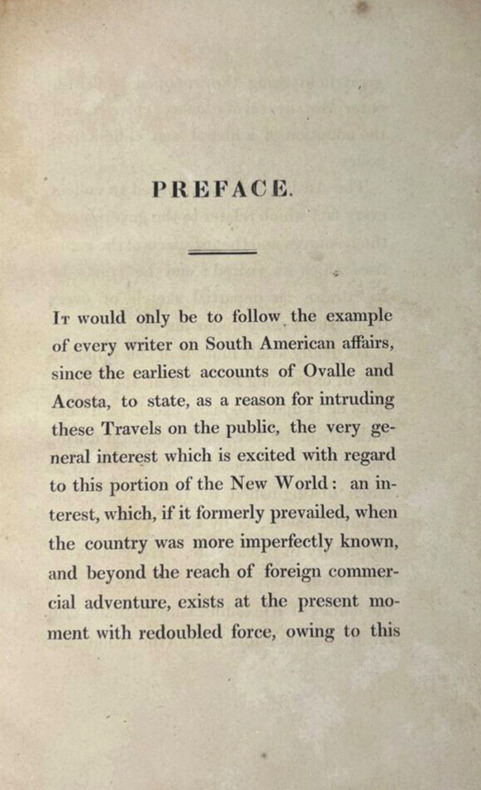
18210032London, John Murray on Albemarle Street, 1825. First edition. Two volumes, 230 x 148 mm, (xii) 373 + (viii) 380 pp. Recently rebound in half morocco leather with 5 raised bands, author's name, title, volume number and year stamped in gold, marbled papers on covers and as endpapers. Headbands. Volume I features a picture of two masked women as "The Usual Walking Costume of Lima", a short preface, 12 chapters, 5 colored plates and an unfolding map of South America. Volume II features four color plates, including a frontispiece as well, chapters 13-19, no less than 26 appendixes and a very long folding map. "Caldcleugh came to Brazil as private secretary to the British Ambassador, Edward Thornton. From October, 1819, until 1821 he lived in Rio, and from there travelled to Argentina and Chile. His return journey again took him through Brazil, and this time he visited Minas Geraes which he describes on pp. 178-288 of the second volume. Caldcleugh's work has great documentary value. An excellent and impartial observer, he describes Rio de Janeiro with great accuracy, and studies the social, agricultural, financial, and political situations in Brazil. The part referring to the mines in Minas Geraes is of great interest. The first volume contains two very beautiful views of Rio de Janeiro." (Borba de Moraes, I:144) "An example of the very important travel literature of the period" (Griffin 3455). Abbey Travel 699, Sabin 9877. This work also includes appendices on matters such as meteorology, the slave trade, and shipping.